AI Filmmakers, Viral Dogs & Teen Diabetes—Plus Trump’s Mascot Meltdown!
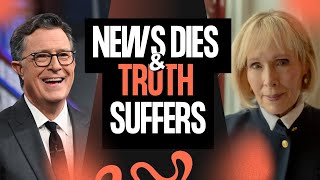
This is a YouTube video titled "AI Filmmakers, Viral Dogs & Teen Diabetes—Plus Trump’s Mascot Meltdown!" published in July 2025. The content is a solo-hosted show by TJ Walker where he discusses a variety of current topics including AI-driven filmmaking disrupting Hollywood, the viral success of Maddie the Coonhound on social media, financial advice from Dave Ramsey about car buying, alarming statistics on prediabetes among American teens, and political commentary on Donald Trump's recent actions and their impact on media and culture. The video blends news analysis with personal development insights, aiming to inform and empower viewers on business, technology, culture, and communication skills.
Today on the Communiverse, an AI creator takes on Hollywood without a single camera. A coonhound builds a viral brand and proves you don't need to go viral, you just need to show up. Next, financial advisor Dave Ramsey says if you're not a millionaire, buying a new car is a financial disaster and a lot of bankruptcy. Athletes prove his point also, 1 in 3American teens is now officially pre diabetic. But where's the outrage? And while the Epstein scandal heats up, Trump tries to distract us with a mascot meltdown. Just as CBS cancels more late night comedy. Let's jump in. All that and more today on the community. Hello and welcome. I'm TJ Walker. This is the show where news meets personal development. I have been working with CEOs, Wall street titans, billionaire fund managers, political leaders around the world for decades, helping them communicate to the media, shape messages and try to have influence. Now I'm looking at things from the other side to help you. Analyzing top stories of the day and newsmakers what they're doing as it influences top news news stories in the business world, the technology world and our culture. Let's dive right in with segment one. AI filmmaker. By the way, I should point out I'm in beautiful surroundings today. I'm in a place called Shelter island in New York. It's way out on the eastern end of Long island in New York here in the United States. It's a beautiful, beautiful morning here. Although I did fall into the trap again. I vowed I wouldn't try to do outdoor shows anymore because it's too hard to see the screen. But I'm in a house full of people and I don't want to wake up my guest and my daughter and family. So here I am outside. So if I don't get to your comments, it's not because I'm ignoring you. It's because I can't see it on the screen outdoor. The visibility is much worse when outdoors. So let's hop right in with the top story of the day. And I'm going to have to manipulate my mouse a little differently out here. So since I can't see where the cursor is on the screen. Top story. AI Filmmakers are beating Hollywood without cameras. There is a revolution happening in film and it doesn't involve cameras, actors or crews. The Doerr brothers are indie filmmakers who ditched traditional production in favor of artificial intelligence. Their most viral video and AI generated Trump rapping in a limo racked up more than 16 million views. Their work is entirely built using Tools like chat, GPT, Runway, and Google's vo. They've generated dozens, even hundreds of iterations before publishing a final cut. Now, critics dismissed their work as AI slop, but Joe Rogan called it incredible and audiences agreed. The doer brothers cleared $1 million in revenue last year, which, let's face it, that doesn't even pay for the catering on a large movie set. But for a tiny company without overhead, it's significant. As reported by the New York Times, their subversive low fi style echoes 90s MTV. Quick, chaotic and unmistakably modern. This is the pattern we've seen with every entertainment shift. Silent film actors mock the talkies, radio stars dismiss tv, and now legacy filmmakers are doing the same to AI. But history doesn't wait. The new talkies are here. And this time they don't even need a lens. Again, I want to point out they made a million dollars already. And when your overhead is extremely low, a lot of that is profit. They don't use Cameras, they're using AI tools. They're using Runway, they're using Google VO, their Trump parody video. 16 million views. This is the future. Now, am I suggesting no one can make a regular film anymore? No, but there's a lot of holier than thou claptrap out there suggesting that, oh, it's not real, it's not serious. Well, nothing in movie making is real. The makeup is fake, the wigs are fake. When you see rain and snow, it's not real rain or snow most of the time. When you see Cary Grant running with 1950s with planes coming up, they're using green screens, they're using chroma key back then. So it's very hard to draw one particular line and say this element of technology, artifice is good and this is fake and bad. Let's not forget when the first movies came out and people saw a train coming at them on a screen, they jumped out of their chairs, they were so afraid of it. When people first heard music coming out of a phonograph, they thought, oh no, the room is filled with spirits. So new technology always freaks people out. This is no different. I think that there's tremendous opportunity for creators. I don't know that I personally am going to get into the realm of fictional feature making. But who knows, if we really do get to the point where you can kind of brainstorm concepts and AI can turn that into a compelling movie, who knows, maybe I, maybe I do a fictionalized version of analysis of the news every single day. I want to know from you have you watched any of these videos by the Door Brothers? Yes, there is a lot of AI Slop out there. But you know what else puts out a lot of slop? Mainstream Hollywood. The average sitcom is garbage. It's the same cliches. You know, there's always the doofus dad where he's the butt of every joke and every kid and every wife is smarter than he is. And there's the laugh track. So I think a lot of this Hollywood saying, oh, there's nothing creative about this AI Slop, that's the pot calling the kettle black. One of the reasons there is so little creativity coming out of Hollywood is because of the expense. And that's why we see all these Marvel movies, all these comic book movies, all this old intellectual property with the new version. That's why we have the Fast and Furious 153. Because Hollywood executives realize, oh, there's a built in audience, therefore that reduces our risk, therefore there's a chance we can in fact make some money on it. Well, if you reduce your cost structure down to almost zero, which is possible with artificial intelligence creating the video, you open up the world to wide, wide ranges of possibility. So that to me is what's so exciting about it. It's one of the reasons why I'm excited to be doing a show like this. Because I don't have to like in the old days, pay a bunch of money to a TV studio, hire camera operators and they're all wonderful people, hire gaffers, hire lighting experts. I've reduced the cost of this show to almost zero. Now you may say, well tj, you're not lit very well today. Fair point. But it allows me the creativity of experimenting and doing new things. That's what ha. That's happening in the reality world, the fact based, the news world, the news commentary world. But it is increasingly happening in the fictional world, the feature world, the creative world. And I think in general it's a good thing. The market will sort things out. I don't think the market solves all problems, but when it comes to entertainment video, I do think the market can sort out the problems and the cream can rise to the top and it can do it in a way that's not distorted through high cost structure. That that is why if you go to the typical movie theater, everything is a part, 2, 3, 4, 5, 10 of something your parents watched when they were kids. Because there's so much pressure on Hollywood to find things that already work, that already have a built in audience. And that's A big problem. That is a huge, huge problem for anyone trying to do something creative. Okay? And as I mentioned to you, it doesn't solve all the problems. Sometimes you do things with a certain level of cost cutting and reducing cost structure and it doesn't harm anything. But in the case of what I just did, I in fact clicked on something and I'm having a hard time finding my notes for the show to come back. There. I have found them and I am going to get back to the right spot and we can go to our next story. So a lot going on here today. Again, if you're just joining me, this is the Communiverse. This is a show where we look at the top news stories of the day related to business, technology and culture and analyze everything through the lens of communication skills, all with the purpose of improving your personal success. That's what we do. We try to make it fresh and interesting by looking at top news stories that are in the news right now so that you can be up to date on top news stories but not just do the doom scrolling. It's so easy to just look at news stories and get depressed and think, wow, the world's getting worse. I want you to be able to consume news and actually feel like you're improving. That's what I try to do as well. Issue 2 A dog went viral by doing almost nothing. Maddie the Coonhound didn't do tricks. She just stood there in strange places, on soup cans, on fence posts, on the roof of a van. If you don't believe me and forgive me, I can't flash this up on the screen today, just Google Maddie the Coon hound. Beautiful, beautiful pictures all over the world. So this dog and let's face it, its owner placed the dog on top of things and created a media empire. This dog built essentially a global audience. Maddie had over 1.2 million followers on Instagram. Speaking of dogs, there's several dogs in the house. Now you might be hearing these several 1.2 million followers on Instagram, which is a lot more followers than I have on Instagram. The dog starred in two best selling photo books and helped her owner, photographer Theron Humphrey turn a cross country road trip into a six figure business as covered by the New York Times. Maddie's story is more than cute, it's instructional. She didn't chase spirality. She didn't just use a weird simple thing consistently or she actually she did just one weird simple thing consistently, stood on interesting things and the world came to her. Influencer dogs with Maddie's reach can influence easily make more than $100,000 a year through books, brand deals and merchandise. And she started with nothing more than a camera and a calm disposition. And the dog's owner, we should point out. So the next time you think, what would I even post? Remember Maddie went viral by literally standing still. It was just a picture of a dog standing on top of things. Sometimes things were unusual looking, nice photography too. And it all started on a road trip with the owner. So sometimes we're all guilty. And I'm guilty of this, of over complicating things. I mean, here I am trying to go live, pull video up, use sound bites. Sometimes I'm guilty of over complicating things. And this dog and its owner just did simple, beautiful photography of a dog sometimes standing in a pool or standing in some place on the ocean. Something a little unexpected and it stood out is interesting. What is the lesson for you and for me? It is, I think we can all be creators now. Some of it is luck. There's no doubt a lot of success in life is lucky, but a part of it is sheer getting out there, producing, putting your work out to the world on a daily basis. This dog and its owners just put out tremendous quality, yes, but tremendous quantity of content, photo after photo after photo. And over time built a brand, built an identity, built connection. I mean, 1.2 million followers on Instagram and you're a dog. It's humbling to me and it should be to you. Because if a dog can do it, why can't you? Why can't I? All of us, I believe we don't have to become influencers per se, we don't have to become media. But if you have something to share with the world in a way that helps people, which is what I think I'm doing, or entertains people, which is what I guess pictures of this dog does or just enlightens them or calms them down, then do so. Maybe it doesn't have to be every day, maybe it doesn't have to be for money, maybe you don't have to go after book deals, but why not try to share some aspect of beauty or insight to make the world a better place? The tools are there for you. In this case, the dog. Use Instagram, in my case, Today I'm using YouTube, LinkedIn, Facebook and a couple of other sites. And soon, starting September 2nd, I will be broadcasting this on every single podcast platform. That doesn't have to be you, but think about what it is you can share and if you think your English or your first language isn't that great, guess what? You speak better than the dog did. And the dog reached 1.2 million people say you don't have to speak. You could just put pictures up, you could just sing. You could do just text and self published books on Amazon, Kindle. There's no one perfect way of doing it. There's no one way you have to share your expertise with the world. It could be through song, through text, through pictures, through images, through AI movies. You're shy, don't want to show your face. That's okay. This photographer, from what I can tell, didn't really show his face much. He put his dog in the forefront and it worked out beautifully. So let this be a lesson for all of us. Maybe you don't have to have a perfect human face, perfect command of language. Maybe you don't even have to have opposable thumbs. You can reach the world with something uplifting, positive, educational or entertaining. Issue 3 Don't buy a new car unless you're a millionaire. So that's the message from financial guru Dave Ramsey. Now, I don't always agree with Dave Ramsey, but quite often he does have solid advice and I want to share that with you. And he's also a media master. He's someone who started in local talk radio and has created a massive, massive media empire. He's one of the few where he's still in traditional AM broadcast radio, but his podcasts are everywhere, his videos are everywhere, and occasionally he'll strike deals with, you know, for a while he was on the Fox Business Channel many years ago. He's a real survivor. He's a media entrepreneur, he's a multimedia guru. And, and he has a huge, huge financial empire himself. Is, does he have his quirks? Yes. Is he above criticism? No. But I want to focus on just one item he put out this week that's getting some attention in places like the street and, and other financial publications. Dave Ramsey doesn't mince words. He's known as very straightforward, abrupt sometimes. Here's what he says. Quote, unless your net worth is more than $1 million, you should not buy a new car. Wow, that sounds harsh. Why? He says it's because new vehicles lose 60% of their value in their first five years. That's money gone before you finished your first round of oil changes, practically. Now that might sound extreme until you look at the number of millionaire athletes, for example, who've gone broke. Just today in the New York Times huge feature story on seemingly countless Numbers of professional as we call it in the United States, Soccer players as they're known around the world. Football players, the athletic and the street document stories like that of Dean Windis. At the peak of his career he was making $38,000 a week. Then came a failed investment, a divorce, quarter million dollar tax bill. Today he's paying it all off at $640 a month. A's not alone. Email Heskey. And forgive me, I'm not a huge football soccer fan so I may be butchering some of these names. He faced a two million dollar tax issue. Trevor Sinclair, David James and Sean Wright Phillips. All declared bankrupt after multi million dollar careers. Why? Well, it's because of cars, entourages, lavish homes, bad advice and zero financial planning. Now we can't all be multi million dollar a year salary professional athletes, but even if we are, you should probably follow at least some of Dave Ramsey's athletes advice. Here's the issue with car. So what's he saying? Walked everywhere? No, he's saying buy a used car with cash. If you have to finance it, you're making a mistake. Now this advice is advice I mostly follow through most of my career. I did buy one new car in my 20s. It was a Mazda RX7. I got it for $14,000. It lasted for 10 years or I had it for 10 years and I sold it for 5,000. It was a great car. Can't buy a new car for $14,000 very easily these days unless you live in China since then for about 30, the next 35 years I only purchased used cars with cash. I'm a big fan of not going into debt for a car with one exception. The problem with debt for a car is that debt's not building value for you if you're going into debt with a house. Even though I think way too many people spend way too much money on houses, at least there's a possibility of getting some of that back. At least it's for savings. Houses not always, but sometimes do go up in value. Cars don't go up in value. They go down the second those wheels, those tires hit the pavement. And that's why it's a usually a horrible idea to go into debt and to finance a car. And also if you're not a millionaire, it's a horrible idea to use your cash to buy a new car down the second those wheels, those tires hit the pavement. And that's why it's a usually a horrible idea to go into debt and to finance a car. And also if you're not a millionaire. It's a horrible idea to use your cash to buy a new car. You could put that cash in an index fund and have it grow till millions spend it. Or you could put that cash in an index fund and have it grow till millions spend as little as possible on a car to get you from point A to point B. I realize that doesn't sound glamorous. It doesn't sound exciting if you're young and single. It doesn't sound like that's going to help you get a lot of dates. Little as possible on a car to get you from point A to point B. I realize that doesn't sound glamorous. It doesn't sound exciting if you're young and single. It doesn't sound like that's going to help you get a lot of dates. I'm not saying you have to have an old jalopy, but Dave Ramsey's point, first of all, being a millionaire jalopy, it's not what it used to be. It doesn't mean you're sitting around in mansions or you have a view like this. It means you have, it means reached kind of a minimum level of security at least in the United States of security, at least in the United. So don't kid yourself into thinking, oh, I can start buying Rolls Royces and bugatti's and and McLaren's just because I reached a million dollars in net worth. No, but if you have less than that, you really need to think about buying a used car with cash the least amount of possible. And if you've got a lot of extra cash and you're not a millionaire yet, you need to be investing it. My advice, and I'm not giving official financial advice here, invest in low cost index funds, broad based market S&P 500. If you're in the United States where whatever country you're in, look for something where you're not picking individual winners and losers. Because all the research shows even well educated financial managers, MBAs from Harvard and Stanford with Bloomberg terminals, 95% of them don't beat the market over a 30 year period. So that's why I'm a big fan and people like Warren Buffett actually advise individual investors to invest not in individual stocks but in broad based index funds, do that long enough, then it's going to be easy to buy new car. Now I did buy a new car and actually financed it last year and that was on the advice of CPAs and accounting teams that help us for financial planning as a As a part of a business, it's better for tax purposes, but it did not in any way impede my regular investments and regular savings. So. And I didn't, I didn't do it for, like I say, decades. I bought used cars with cash. I would recommend that to you as well because you don't want to end up like one of these athletes. Now, the New York Times today put a spotlight on soccer players, but you could do the same thing, especially in the United States, for American football players. An extraordinarily High percentage of NFL former players are bankrupt within 3, 4, 5 years of their career ending. And it's a shame. I remember one player who was a superstar at Clemson when I was at Duke, went to the pros, went to the Chicago Bears, made millions and millions and millions of dollars. And only a few years later, he was having to work as a mover making, I don't know, $10 an hour because he had spent every penny of it. If you, whatever you may, you should be saving and investing some. Every month, I would recommend 10, preferably 20% of your income. But there are exceptions. If you are in a career where you think, I might only be here for three years, work as a mover making, I don't know, $10 an hour because he had spent every penny of it. If you, whatever you may, you should be saving and investing some. Every month, I would recommend 10, preferably 20% of your income. But there are exceptions. If you are in a career where you think, I might only be here for three years making the big bucks, you really need to save more like 80% of your income. If you are a professional football player or basketball player or you suddenly get a hit TV show, you don't know if one of those is coming back. So there are definitely certain industries where you need to think long and hard about really, really saving most, taking the big bucks, you really need to save more like 80% of your income. If you are a professional football player or basketball player or you suddenly get a hit TV show, you don't know if one of your money. This is the community. I'm TJ Walker. Thanks for joining me today. We've got a lot more. This is coming back. So there are definitely certain industries where you need to think well, fun stories coming up. If you like this show, if you like the concept of the show, please let me know. Please post a comment if you're watching this on demand. If you're watching this on YouTube, sign up for regular notifications and please subscribe long and hard about really, really saving most. As I've mentioned to you last few weeks, we're in kind of a test phase here. This is a soft rollout. We're not really talking about it. It's a little bit of a hush hush thing. The show will be officially launching on September 2, 2025. We'll have more bells and whistles and a few more graphics and a little introductory music. And at that point we of your money. This is the Communiverse. I'm TJ Walker. Thanks for joining me today. We've got a lot more fun stories coming up. If you like this show, if you like the concept of the show, plea will be going across all media, all social media platforms, all podcasting platforms. So you're going to want to really stay tuned for that and get ready for that. It's going to be a lot of fun. Issue 41 in 3 teens in America now has pre diabetes and we're barely talking about it. This is according to the center for Disease Control, as reported by the Hill and the Journal of American Medical Association Pediatrics. This is one of the most disturbing public health trends and stories in America and almost no one seems to be alarmed by it. According to the latest CDC report, more than 8.4 million U.S. adolescents between the ages of 12 and 17, that's 32.7% now have pre diabetes. That's 1 in 33 teens with elevated blood sugar and a serious risk of developing type 2 diabetes, heart disease and stroke. As reported by the Hill, the findings align with a long term trend backed by the JAMA Pediatrics. Pre diabetes rates among teens more than doubled from 1999 to 2018, rising from 12% to 28% in just two decades. This is not about debate. This is about consequences. These kids aren't at risk. They're already showing signs of chronic disease and most don't even know it. Their parents don't know it or don't seem to care. This isn't a data problem, it's an environment problem driven by ultra processed food, sedentary habits, poor sleep and endless marketing of sugar and salt. If one in three teens had a contagious virus, we declare a national emergency. Well, this is a virus. It's a silent one, essentially, but it's just as deadly. So here's the problem. Someone dies in a plane crash. That's front page news. Especially if more than 10 people die. If someone is decapitated on an amusement park ride, big front page story. But when eight and a half million kids get a disease, but it doesn't kill them instantly. But it does sometimes reduce their life. 10, 15, 20, 30 years. No one seems to care. It's too slow, it's too gradual. It doesn't get news attention. What's driving all this? If you want to know, do a little investigation. The good news is you don't have to leave your home to do the investigation. Go right now to your kitchen cabinet. Look at everything that's in a box or a bag or a package. Now look at the ingredient list. Quite often you'll see the first or second ingredient is sugar. That might not say the word sugar. It probably has something fructose, sucralose, some kind of oats. It's actually very difficult to find any packaged good from most grocery stores that don't have sugar pumped into even Cheerios that people think are so health. There's still sugar put in that whole wheat bread that's tasting. There's sugar put in it. There's sugar put in almost everything. And it is killing us. It's creating again. It's not about aesthetics. It's not about, oh, TJ's fat shaming. It's not about fat. It's about chemically altering your body, creating chronic disease. Because when you get pre diabetes, you're on the road to getting diabetes that dramatically increases your chances of stroke, heart disease, hypertension, and early death. This is serious stuff. This is not about looking good when you're frolicking out on the beach. It's about your life. And we in Americans are some of the worst in the world because 2/3 of us are overweight. A huge percentage of us are obese. 70% of Americans are overweight or obese. Virtually all of them are pre diabetic or diabetic. And that's why we are seeing our average lifespan go down in some years and be dramatically shorter than countries that are much poorer than ours. Places like Italy and France with lower per capita income live longer lives. And it's not just an extra five years. It's an extra sometimes 10, 15 years of health span. So it's not enough to just make it to 80 the last 15 years. You can't get out of the couch because you're diabetic and obese. That's not very meaningful life. It's about being healthy. It's far easier to be active if you're not diabetic. Easiest way to not be diabetic or pre diabetic is to not consume massive amounts of sugar, processed sugar, artificial sugar, every single day. And it's hard because you may hear me or you may read some health article once a month saying we're eating too much sugar. But today and every day, you're going to be bombarded with thousands of ads for sugary drinks, sugary food products, sugary potato chips that, believe it or not, still have sugar. All of them with enticing jingles and graphics and logos and beautiful thin people with washboard abs and enticing you to buy their product that's got sugar in it. And it's not just the Dunkin Donuts and the mochachinos and the obvious things. It's everything. Go to any restaurant that's part of a big national chain. There's sugar put in everything. Why it tastes good, but it is a silent but deadly killer. So if you are a parent, this concerns me. I have a 12 year old and she's not pre diabetic, she's not overweight, but she is a part of a culture where every single friend in any meal, every birthday party, everything, it's about sugar, sugar, sugar, sugar. So I believe if you want to be a good parent today and you want to ensure that your child lives a long and healthy life, you kind of have to be the bad guy, the bad mom and say, no. In our house, we're going to try to eat real food that doesn't have a lot of sugar added. How do you handle that in your family? I would especially love to hear from so many of our viewers and listeners around the world. Post your comments in the comments section, whether you're watching this on LinkedIn, Facebook, YouTube or Twitch. Issue 5 Now, I deliberately saved the last issue for the day for a topic I don't really like talking about because it does talk about politics, it talks about a particular politician. And I really sincerely want this show to be primarily about business news, technology news and broader culture news. Unfortunately, we live in a time of rising authoritarianism around the world. Not just the United States, Hungary, Turkey, the Philippines, Poland, obviously Russia, China. Authoritarians are making a resurgence around the world. And one of the things about authoritarians is they like to dominate every aspect of business, of culture, of technology. So you can't simply ignore it if you want to talk about these other issues. So that's why I do have to talk once again about the great orange 1 In D.C. the President of the United States. So Donald Trump is once again grabbing headlines, this time by demanding that the Washington commanders return the name Redskins and that the Cleveland Guardians switch back to the Cleveland Indians. So for Those of you in other parts of the world, these are well known professional sports teams, football teams and, and baseball teams. They got so much criticism for so many years, they took the name Redskins off. It was considered racist and offensive to Native Americans. And it's a private business. They did this because they wanted to be responsive to the marketplace. Same with the Cleveland Guardians. So here we have private businesses responding to their own customers, their own advertisers, their own stakeholders. And now we have the President of the United States doing something that traditionally would be considered socialist, communistic, the government dictating what private businesses do. It's certainly consistent with what authoritarians and what, with what fascists do. So he's now threatened to block a new stadium deal if the teams don't comply with his wishes to change the name. So what's really going on here? Donald Trump has patented a system whereby he's guaranteed attention if he does something that makes liberals and Democrats and progressives and centrist and anyone who doesn't like him angry. So he figures out what can I do to piss them off. And it has worked brilliantly for him to change the subject. So when he's indicted, he does that. People forget that when he's convicted of felonies, he changes the subject by saying something extreme. When he's convicted of sexually assaulting and, and molesting someone like Eugene Carroll and forced to pay me billions of dollars, he changes the subject. So it has worked well for him. Well, right now he's trying to change the subject away from the Epstein files. The Epstein case not working for him as well, but he's trying every day now. Well known pundit, someone I like and respect and reference here from time to time. Scott Galloway points out that every single day Trump huddles with his communications team and ChatGPT and he just says, all right, plug into Chat GPT. What are the most ridiculous, extremist, outrageous things I can say to get the news media to focus over here so they stop talking about Epstein files over here. That's essentially what he's doing. And I think Galloway is 100% on the mark with that. It appears to be done. So it's an awkward thing for any pundit, for any commentator is even by talking about what Trump is saying, we're essentially doing his business for him. We're aiding and abetting the possible cover up of crimes. And yet he is the President of the United States. What he says isn't just an opinion. He does have tremendous power. So we have to talk about it. So what's really happening here and how is it shaping our current zeitgeist? Well, what we are seeing is the presidency is consolidating power and in using it to try to influence everyone, to bow down to them, he's, he's trying to get the media to stop talking about Epstein. And we've seen this most recently with his own officials essentially telling the owners of cbs, we're not going to let you merge into a multi billion dollar deal unless you give us money. Because we didn't like a news story you did. That's not something democracies do. Yes, there can be such a thing as libel. That's not what happened in the CBS story. It was by most observers a situation of pure extortion. The President and his henchmen and henchwomen, as is increasingly the case these days, said to the owners of CBA, give us $16 million or we're going to prevent you from making billions of dollars. And their attitude, yes sir, whatever you want, yes, we'll give you money. Oh, you want us to fire host? Okay, we'll do that. So it's gotten a lot of attention in the last week with CBS firing its number, late night talk show host Stephen Colbert. And it's a part of trends going on that I think cannot be ignored that I want to touch on. And I'm going to make some predictions right here that may surprise some of you. It's, it's one thing for the late night show on CBS to be canceled. By some estimates, the show is losing as much as $40 million a year. Late night talk shows in their traditional guys are expensive to produce. The host get a lot of money. The bands, the studio audience rounding them up. It's expensive. And it's not like a sitcom where if it goes well, you can make money off of it 30 years later the way you can with Seinfeld. You don't get to reuse that intellectual property over and over again. And that's what's different about it and makes it harder to do. But still, would they have canceled the show in a different political environment? I think they figured, you know what, why, why fight the trend? We are living under an increasingly authoritarian regime where anyone who criticizes Dear Leader sees punishment can be direct financial punishment, regulatory punishment, in many cases, just specific doxing and attacks by name on social media where next thing you know, you're surrounded by death threats. People show up where your kids go to school when you cross this Dear Leader. And I think the, the owners of CBS and the parent company said enough is enough. Okay, so where do we really go from here? I'm going to make a prediction. And I haven't seen this predicted elsewhere, although perhaps it's happened. Within the next three years, you will see a major American network, meaning either abc, NBC or cbs, cancel their entire news division. I don't mean one host, I don't mean a comedy show. I mean to simply cancel their entire news division. Because news has never been that profitable for the major networks. They're primarily in the entertainment business to sell advertising. And as our world has changed and media companies have become a part of larger conglomerates and larger tech companies, the news is increasingly a smaller and smaller percentage of the overall profits of these companies. But there are increasingly a higher and higher percentage of political problems. Because as you evolve from a democracy to an authoritarian regime, which is what is happening in the United States today, it's too risky from a bottom line standpoint. So if you're the CEO of a giant D giant technology company that owns a million different movie companies and Hollywood companies and cable TV companies and broadcast cable companies, and down here, way, way, way down in the organization chart is something responsible for 1% of your revenues. But you're spending 90% of your time putting out political fires and worried that an authoritarian regime is, is going to cancel you or put you out of business or take away licenses or do something that's going to destroy shareholder value. Then you feel nothing I can do. My hands are tied. I have to cancel the news division. Now we're not there yet, but the lines are changing every single day. The boundaries are changing. And I'm predicting it right here today on July 21, 2025 that within the next three years one of the three major networks, their entire news division. I don't mean just the nightly news, I don't mean the 6:30 news. I mean every single person in the news division is fired and they just put on more sitcoms or more movies or maybe user generated content. And you're going to see a huge outcry among the public and you're going to see the stock price of their parent company go up. Not saying it's a good thing, but it is a prediction. Thanks so much for joining me today. This has been the communiverse where we try to really look at stories through a lens of communication skills and boil it down to personal development lessons for you to make you more successful. So what's the lesson of that last one? It's really about if you aspire to be in the news media or share your ideas about what's new. Don't count on a big network. You got to do what I'm doing. Maybe you can do it better. Grab your own microphone. Buy a $20 ring light, which I have now. Buy a $30 webcam, which I'm using. Get an old laptop, which I'm using, and you got to become your own, own news network. It's never been easier as far as being able to get your ideas across the world. In some ways, it's never been harder to reach a significant audience. But at least the gatekeepers aren't there because every day the big gatekeepers are under assault. They are being attacked. And because they are a part of huge corporate structures, they can't deal with controversy. You, you and I can deal with controversy because we're not as big a targets, at least not yet. So my real message to you is figure out a way of communicating what you want about your business, about your ideas, your vision of entertainment, and start sharing it now. Don't spend all your time pitching the CBS Morning show, which is a great show. I've been in on it before, but it might not be around much longer. You're going to be around, and I hope I'm going to be around a long, long time. And I'm definitely predicting I'll be around tomorrow. So I hope to see you right here tomorrow. Thanks so much.
More from TJ





The Breakout Cases - What Actually Caused Famous Speaking Career Breakthroughs | Ultamize

The Red Circle Sessions Finale - Build the Speaking Career You Came Here For | Ultamize

Two Stages, One Logo, Two Completely Different Realities - Main Stage vs Independent Events | Ult...

Pre-Reset - Why Repetition Builds Better Speaking Decisions | The Red Circle Sessions | Ultamize

Your Decision, Your Framework, and What Happens After - Build Your Speaking Career First | Ultamize

The Red Circle Sessions Trailer - The Speaking Career Truth Nobody on That Stage Will Tell You | ...

The Two-Minute Ultamize Reset - Your Platform, Your Audience, Your Voice | The Red Circle Sessions