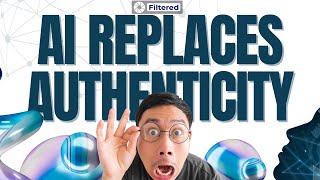
TJ Walker surveys how generative AI reshaped entertainment in 2025. Fully synthetic music acts charted, Disney partnered with OpenAI for $1B, and AI-generated actors like Tilly Norwood emerged. The Brutalist used AI accent tweaks while deepfakes of deceased celebrities raised ethical questions.
Chapters
2025 is coming to an end and somebody had a really big year that somebody was AI Artificial intelligence, it affects almost everything these days. The Times did, I thought an excellent survey of sort of the, the top eight ways that AI really had an impact on our culture. Some of them just culturally, some of them economically. Let's take a look for one Oscar season was affected by artificial intelligence. It's moving big time into the post production award spotlight. The most prominent flashpoint was the use of artificial intelligence tools to enhance actors accents in the movie the Brutalist. It's a historical drama about Hungarian Jewish Holocaust survivors rebuilding life in America. I've not seen the movie. It's supposed to be good, but. But they used AI to sort of tweak some of the actors accents. Now on the one hand this does intrigue me. On the other hand it kind of seems like cheating. Well, if you're an actor and you can't get your accent right, why not just use an AI actor? Which believe it or not, that's also being used too. That's one of the trends that's coming up. So this was a movie with Adrien Brody, Felicity Jones, their accents were tweaked. Now Aden Brody has won Oscars, I believe is an outstanding actor or he's certainly been nominated. Oh no, he won best actor many years ago. So he's a good actor. It also almost makes me wonder, why not go back to all the movies Arnold Schwarzenegger was in and give him an American accent if he's supposed to be playing an American rather than an Austrian accent. Now the controversy forced Hollywood institutions to clarify their rules. In April, the Academy formally stated that AI and digital tools would neither help nor harm award eligibility. Now this had some controversy to it because there are many of the Hollywood community saying, no, stop it. We don't want any AI if we, if we let AI in the back door here, it's going to put all of us out of business for now anyway. They're saying if you want to use it to do some enhancement, but we're not going to penalize you come award season. The next thing music AI has really dramatically had an impact on the music industry. AI crossed from novelty to commercial success in the music industry, producing chart topping artists in quotation marks that had no human performers. Something called Velvet Sundown, revealed to be a fully synthetic project, racked up more than a million Spotify plays. Within weeks. Walk My Walk from AI Project Breaking Rust topped the Billboard country digital song sales charts. Solomon ray is an AI act led iTunes, Christian and gospel album rankings and producer Timbaland unveiled an AI pop singer Tata Tak. Too many, I think is how you pronounce it. Calling it artist development re engineered. So yeah, as if the music industry didn't have enough trouble with album sales tanking and DVDs, CDs, so many revenue streams that traditionally supported musicians gone. And now musicians are seeing some of the last jobs eliminated by artificial intelligence. So there's a lot of panic going on in the music industry now. The successes of these AI musicians, if you want to call them that, force platforms like Spotify to confront questions of disclosure, authenticity and what constitutes AI slop versus legitimate creative output. So lots of turmoil going on thanks to AI in the music industry. The next one. Classic films are being engineered with artificial intelligence at the Las Vegas sphere. I've not been there yet, but I'm looking forward to it. In my next trip to Las Vegas. The wizard of Oz, one of my favorite movies, was transformed into a 75 minute spectacle. It was using artificial intelligence. It put in unusual visuals, it expanded off screen characters, reframed scenes to wrap it around in this giant sphere. Now they spent $80 million using AI, which is supposed to save you money to re engineer this movie for this unique setting of a Sphere. I mean, $80 million is more than most movies have to make them, much less to tweak them for a particular venue. And it outraged some people. Others said, hey, this is a new adaptation. This is creativity. This is a different experience in a sphere. And apparently people are going and a lot of them are liking it. The next clone, if you're, if you're keeping track, this is number four of the big trends as documented by the Times Podcast hosts began cloning their own voices. Now I'm one of those. I'm not using my cloned voice in my podcast, but I have a podcast host and I, I've cloned not only my voice, but my face. TJ Walker AI is around to help people practice their speeches, their media interviews, get personal development advice. You can check it out at tjwalker AI, but that's become more mainstream. I actually did mine in 2024, but it became more and more popular in 2025 and some people are using this in their actual podcast. The voice cloning technology allows host to automate narration, to translate episodes into other languages, and even replace studio recordings entirely. Now I am using AI to make some of my online courses on personal development and communication skills available in other languages. I let people know I'm transparent about it. It's my voice, but it's AI translating it into other languages. If you want to see how that works or see if it's any good, you can go to tjwalker. AI won't cost you anything. And just click at the top right what language you want. It's available in 32 languages. You can check it out now. Some people are upset about this when it comes to podcasts. Podcasts are built on intimacy and trust. Create. Critics argue that synthetic narration undermines the core appeal and what one host called a window into someone else's consciousness. Maybe, maybe not. I mean, there. There are people who. I mean, I'm guilty of this. I took my daughter to a kid's pop concert once. That was just people dancing around in synthesized music and like a real concert, but it kind of isn't a real concert, so. So I think the market will decide for people who like Joe Rogan, who's currently the number one podcaster, at least in the United States. I think they're going to listen to him. They're not going to want to listen to a Joe Rogan AI clone or a digital version of him. But if someone simply wants to listen to perhaps the weather update and they don't want to read it on their phone, they just want to listen to it, latest updates on a podcast while they're driving, maybe AI is plenty good for that. Okay, next trend. Deceased celebrities reappearing as viral deep fakes. Again, this could be neutral. This could be good or bad, depending on the situation. AI generated videos of dead celebrities flooded social media, blurring the line between homage exploitation and outright disrespect. OpenAI released Sora 2, and users were able to relate to create realistic videos of Tupac Shakur, Bob Ross. Zelda Williams has condemned this. She is the daughter of Robin Williams, the famed comedian. She said it's a grotesque distortion of their real lives. There are a lot of ethical issues here. If at some point, when I'm gone, you see video of me or you hear my voice promoting my own courses, my own books, any of my own intellectual property, there's a good chance that it's supposed to be happening because I've authorized. I've actually authorized in my will that my heirs that my estate can monetize my artificial intelligence, digital video, audio, voice, any aspect of me, of my intellectual property can be used, can be monetized because I want certainly my daughter and perhaps grandchildren, if I ever have any, to benefit from my creativity. So. But for people who are dead and didn't authorize it. That gets much, much murkier. Okay, the next big one, number six, a full synthetic actress, if you want to call her that, entered Hollywood's talent debate. AI generated actress Tilly Norwood was unveiled as screen ready, complete with promotional materials and discussions with talent agencies. I remember this handful of months ago. It was the number one rated video I did of that month. People were fascinated by learning and most, most people were appalled frankly at this idea of a so called AI actress. The Hollywood unions are not pleased at all. SAG AFTRA warned that the character was trained on real performers work without permission or compensation. So I think we're going to see some ongoing battles there in Hollywood. But the real danger to actors and the Hollywood Studios is 17 year old is going to come up with a great concept for a movie and the whole thing is going to be created on a laptop in some 17 year old's bedroom and it's going to take off like wildfire. Whether it actually gets into movie theaters, I don't know. But if someone puts it on YouTube and puts a paywall and they make $100 million a year or for the movie, you can kiss traditional Hollywood goodbye. It's not going to come back after that. And I do predict whether it's this year, within the next calendar year or the next handful of years, at some point that's going to happen. We're already seeing comedians say I don't need Netflix, I don't need Amazon prime or hbo. I'm just going to do an absolute great comedy show in a comedy club, hire a couple of videographers, edit it myself, put it on YouTube and maybe have the second half of it for sale on my website. And it's making some stars out of people like Matt Rife. So the cat's kind of already out of the bag there. Top directors have publicly drawn lines against generative AI. Again, they're, they're the incumbents. The incumbents never like change. James Cameron emphasized that AI was not used in Avatar, Fire and Ash, framing his stance as pro actors rather than anti technology. Okay, it is a fine line because so much technology is used in making any science fiction movie or for that matter action movie. We don't literally see hundreds or thousands of people bombed or shot or killed. There's technology in all of that. So where is the line between this technology is fine, we like it, this technology is bad. It's a murky line. And I think a lot of people are going who are incumbents and they make their living, want to draw a line one place and consumers want to draw it another. The final big trend is commented on by the New York Times. Disney formally partnered with OpenAI. This is something we commented on here at Filtered with TJ Walker because it did seem like a big deal. Disney announced a $1 billion investment in OpenAI, allowing its iconic characters to be used on Sear. Now, for anyone who's followed Disney, this was a big deal because Disney was the kind of company that was so jealous of its intellectual property they would, they were known for going to small towns, finding a non profit, barely making a daycare center and say, oh, you have a picture of Mickey Mouse on your wall that someone painted. You better take it down now. We're going to find you. And now they're saying basically the whole world has access to its characters, at least some of the characters. Users will be able to generate AI videos featuring characters from Toy Story, Frozen, Marvel and Star Wars. Big, big difference from Disney. And many people read this and I, I put myself in that camp of okay, this is dignity. Disney throwing in the towel. They're saying, wow, this open AI thing, this generative AI, this AI thing is so big we can't fight it. It's going to take over the world at some point. So we might as well place our bet with the frontrunner, which appears to be OpenAI. That's what they've done. Whether it was smart, I don't know, but a big, big year for artificial intelligence. Is it going to be as big or bigger in 2026? I have no idea. I can't promise you I can look into a crystal ball and see it, but the rate of change with artificial intelligence seems to be growing faster and faster. It's a cliche at this point, but it is true to say that today's artificial intelligence, the worst the world will ever see compared to the future. It's only getting better, which means its rate of change is going to get faster and faster, I predict. One thing, I'll be talking with you a lot about artificial intelligence in 2020.
More from TJ





The Breakout Cases - What Actually Caused Famous Speaking Career Breakthroughs | Ultamize

The Red Circle Sessions Finale - Build the Speaking Career You Came Here For | Ultamize

Two Stages, One Logo, Two Completely Different Realities - Main Stage vs Independent Events | Ult...

Pre-Reset - Why Repetition Builds Better Speaking Decisions | The Red Circle Sessions | Ultamize

Your Decision, Your Framework, and What Happens After - Build Your Speaking Career First | Ultamize

The Red Circle Sessions Trailer - The Speaking Career Truth Nobody on That Stage Will Tell You | ...

The Two-Minute Ultamize Reset - Your Platform, Your Audience, Your Voice | The Red Circle Sessions