Airport Meltdown, Brain Decline, and the Dollar Gets a Signature
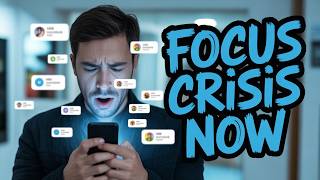
TJ Walker discusses TSA chaos from unpaid staff and assaults, warns that attention spans are collapsing like the 1950s smoking crisis, and argues that putting Trump's signature on currency mirrors authoritarian regimes personalizing state symbols.
Chapters
Ultimize. TSA wait times are now the longest in U.S. history according to, well, everybody, everybody in the media and everyone who's been to an airport this week. People are waiting up to 4 hours just to get through security. 4 hours. At that point, you're not traveling, you live there now. You should be paying rent. You should be able to change your address to Gate B12. Here's why this is happening. As many as 40 to 50% of TSA agents are calling out sick. Before anyone says these workers are lazy, let me give you one more fact. They're not getting paid. Do you show up if nobody pays you? I don't. Nearly $1 billion in paychecks has been missed during this shutdown. So apparently when you stop paying people, they stop showing up. Oh no. This is shocking only if you've never hired a human being before. We now have TSA agents sleeping in their cars and even selling plasma just to survive. This is always comforting when you're about to get on a plane. The person responsible for your safety just sold bodily fluids to make rent. And here's my favorite stat: there's been a 500% increase in assaults on TSA workers. Because nothing calms people down like standing in a 4-hour line with no clear communication and no end in sight. Politicians are doing what politicians do, they're blaming each other. One side says it's funding, the other side says it's policy. Everyone's talking, and that is the problem, but let me be clear, there's no false equivalency here. There is a problem coming from one side. I'll Dig deeper on that in just a moment. If people are standing in line for 4 hours, your communication strategy has already failed. You do not need a better press conference, you need a shorter line. Now, none of this should surprise anyone. This is the completely predictable outcome of putting someone in charge of the most complex organization on earth who has failed at virtually everything he's ever touched. Let's just review. Trump casinos bankrupt. Trump University shut down for fraud. Trump vodka gone. Trump Steaks gone. Multiple real estate deals collapsed. This is not bad luck. This is a pattern. He starts things, he plunders them. He leaves chaos behind. And now we're surprised that the federal government is falling apart? To be fair, Trump has made exactly 2 smart business decisions in his entire life. Number 1, he was born to a wealthy father who was actually a successful businessman and who started giving Trump what amounts to a $200,000 a year salary as a child, as a toddler. Yeah, that's what he was paid as a child. This is not entrepreneurship. This is an allowance with the board of directors. Number 2, he made the brilliant decision to play a successful, obnoxious businessman on a television show. That's it. That is the resume. Oh, and I should note, he was president before and had more jobs lost under his tenure than any president of the United States since Herbert Hoover. That's his resume. And somehow millions of people look at that and said, yes, This is exactly what we need running the United States government. That makes as much sense as hiring George Clooney to perform brain surgery on you because he once played a doctor on ER. He's charming. He looks great on camera. I'm sure he can deliver a compelling monologue right before the operation. That doesn't mean you want him holding the scalpel. So here we are. 4-hour TSA lines, unpaid workers, Airports on the brink of shutting down, millions more travelers coming with no system ready to handle them, and the people in charge are still talking, still spinning, still pretending this is normal. It's not normal. It's exactly what happens when you confuse branding with competence and television with reality. And now we're all standing in line for 4 hours to find out. Okay, folks, this is, this is an unmitigated disaster of epic proportion. Sadly, it is completely predictable. If you want to go to an airport and not stand in line for 5 hours, it's time for new management. And I don't mean a management of Delta— they're doing some good things— I don't mean a manager of your local airport. I don't mean a manager of the Federal Transportation Organization or the FAA. I mean the top management of the entire country. It's time to change, or at least give it a new board of directors, which you could do Election Day in 2026.
Like what you heard?
Don't let the algorithm bury us.
Subscribe now at substack.com/ @tjwalkersuccess. Want direct access to me live? Want to unlock bonus episodes, behind-the-scenes takes, and full access to my premium courses? Then become a member today. Just go to tjwalker.com/members and choose your preferred platform—YouTube, Patreon, whatever works for you. This isn't just another subscription. It's a full access pass to the tools, coaching, and content that can transform your communication and career. tjwalker.com/members. I'll see you inside.
According to the New York Times, bestselling author Cal Newport is warning that our ability to focus is collapsing and most people don't even realize it. Let me translate this into plain English. We're getting dumber in real time, not because we as humans or Americans lack intelligence, not because we lack education, but because we have systematically destroyed our ability to pay attention. And the evidence is everywhere. People can't read a full article anymore. People can't sit through a meeting without checking their phone 10 or 20 times. People can't watch a movie at home without simultaneously scrolling, texting, snacking, and wondering if they should also start a new series halfway through. We've turned our brains into 47 open browser tabs, and we have no idea where the music's coming from. And here's why this article in today's Times by Cal Newport is so important. He makes the case that we are in the early stages of a crisis that looks a lot like America in the 1950s when it came to physical health. Back then, nobody thought twice about smoking. Nobody thought about exercise. Diet meant eating slightly less of whatever terrible thing you were already eating. But then, back in 1955, President Dwight Eisenhower had a heart attack that shocked the nation. Suddenly, people realized, wait a second, maybe our daily habits actually matter. Then came along pioneers like Kenneth Cooper who said maybe you should exercise on purpose. And over time, the culture changed. Not completely. We still have plenty of people eating like it's a competitive sport, but enough people got the message that the idea of taking care of your body became normal, at least to some people. Now compare that to where we are today with our brains. We are essentially chain-smoking distraction all day, every day. You wake up, you check your phone, you scroll, you get a little dopamine hit, you jump to email, you jump to text, you jump to news, you jump to video, you jump to something else. You're essentially doing mental gymnastics if gymnastics involved never finishing a single move. And then we blame ourselves. I just don't have discipline. No, you're in an environment that has been engineered to destroy your discipline. This is one of Newport's most important points. This is not accidental. This is designed. These platforms are built by incredibly smart people whose job is to capture and hold your attention for as long as possible. They are not competing for your time. They are competing for your brain, and they're winning. This is the greatest behavior modification system ever created, and we all signed up for it voluntarily. It's like saying, I decided to enter a cage match with a professional MMA fighter, and I'm shocked I'm losing. Of course you're losing. You're outmatched. Now here's where Newport is especially insightful. He points out that most people assume, well, this is just modern life. This is just how things are now. No, that is exactly what people thought about smoking in 1940. It was normal. It was everywhere. It was also incredibly harmful. We're making the exact same mistake with our attention. We think constant distraction is normal. It is not normal. It is conditioned and it's damaging. We're losing the ability to do deep work, to think clearly, to read complex ideas, to stay with a problem long enough to actually solve it. Instead, we're becoming experts at switching, switching apps, switching tasks. Switching thoughts. We're incredibly efficient at being interrupted. Congratulations. Guess what? It's not a useful skill. That is the mental equivalent of eating junk food all day and wondering why you feel sluggish. It feels productive. It feels busy. It is neither. Now, let me connect this to something I see every day. People come to me and say, TJ, I want to be a better communicator. Great. Let's start with something basic. Can you focus on one idea long enough to explain it clearly? And this is where everything breaks down because communication is downstream of thinking. If your thinking is scattered, your communication will also be scattered. You'll ramble, you'll lose your point, you'll confuse your audience, and then you'll say, ah, I'm just not a good speaker. No, you're not a focused thinker. And Newport's argument is that this is fixable, but only if you treat it seriously. You don't accidentally get in shape. You don't wake up one day and say, wow, I must have had— I must have run a marathon in my sleep. No, you plan it, you schedule it, you protect it. You need to do the same thing with attention. You need time in your day with no distractions. No phone. That's right. I would pick up and hold my phone to show you, those of you watching on YouTube and not listening on podcasting platforms, but my phone's not in the room here with me. I wanted to avoid distractions so I could focus on you. You need time with no phone, no notifications, no constant interruptions, just focused thinking. And yes, at first it will feel awful. Your brain will rebel. You'll reach for your phone. It's like, "Sit, John." That's not weakness, that's conditioning. You've trained your brain to expect constant stimulation. It's like going from eating sugar all day long to eating vegetables. At first you think, "This is terrible." Then your system resets. And suddenly you can focus again. You can think again. You can create again. And here's the payoff: in a world where everyone is distracted, the person who can focus has an enormous advantage. You can learn faster. You can think deeper. You can communicate more clearly. You can outperform people who are smarter than you but cannot concentrate long enough to use their intelligence. That's the real message here. This is not just about technology. This is about your future. Your ability to focus is becoming one of the most valuable skills in the world, and most people are giving it away for free. They're trading it for notifications, for likes, for endless scrolling, and they don't even realize what they're losing. So yes, I strongly endorse Newport's warning. We need a cultural shift. We need to start treating our attention the way we treat our physical health, because just like diet and exercise, what you do every day is shaping your future. And right now, most people are training their brains to be distracted. The question is whether you're going to keep doing that or whether you're doing it are going to be doing it, and is one of the few people who can actually sit down, focus, and think. Because in the world we're heading into, that might be the ultimate competitive advantage. Okay, I'm a big fan of Cal Newport, have been for a while. I have some of his books behind me. I have been following everything he does, his podcasts, his TEDx, TED Talks. And his books. This guy is fantastic. I have used and given him credit in a number of courses I've created. If you're interested in how to create more focus in your life, you may want to take some of my courses on how to be more productive, how to have focus in your life. You can check out those courses at ultimize.com or pretty much any online course platform. I would urge you to check those out. There's a lot of good ways of doing this these days. I've in the past used apps like Freedom.to where it actually prevents me from accessing certain websites during the day. Probably the thing that helped me increase my productivity more than anything else in the last decade, I started going for a long walk each day and I left my cell phone at home and I took this a simple notepad and a pen, and I wrote notes about my creative ideas. You take your cell phone, you're going to be bombarded with other people's ideas. So if you want the course, check it out. I also have free courses on habit building. If you want to go to ultimise.com, you can check out free courses on how to build better habits or how to communicate more effectively. Check it out today, ultimise.com.
We'll be right back after this break. Want to advertise here? You better be legit.
No crypto, no junk food, no supplements.
Go to tjwalker.com/advertise. Most people can't afford a full-time coach, and even if you could, good luck finding one who's available when you need them. That's why I created the TJ TJ Walker AI clone. It's built on my 40+ years of real-world coaching and training.
You get my exact advice, style, and frameworks instantly.
Ask it how to handle a tough question, get feedback on your elevator pitch, rehearse your next big talk. This is the next generation of communication coaching.
It's smarter than an app, more personal than a course, and always ready.
Start using it today at tjwalker.ai.
You'll wonder how you ever did without it. According to the Times, President Donald Trump is set to become the first sitting president in American history to have his signature placed on US currency. That's right, things like a dollar bill. Let me say that again slowly. The guy currently running the country wants his name on our money, not after he's dead, not as a historical figure, but right now while he's still in office. If you're wondering whether this is normal, the answer is no. If you're wondering whether this is controversial, the answer is yes. If you're wondering whether this is the kind of thing that makes historians pour a drink at noon, the answer is absolutely, because for over a century US currency has followed a very simple, boring, stable tradition. You put institutional names on it, the Treasury Secretary, the Treasury. You do not turn it into a personal branding exercise. You do not turn the dollar bill into a business card. You do not treat the currency of the United States like it's a piece of merch at a gift shop. But here we are. And the justifications being offered is that this is to honor America's 250th anniversary. Nothing says celebrating democracy like putting the current leader's name on the money. That's always gone well historically. Let me walk you through how this usually plays out. Saddam Hussein put his face and name on Iraqi currency and everywhere else. Nicolae Ceaușescu plastered his image and identity across national symbols. Joseph Stalin made sure his presence was stamped on everything from posters to buildings to the cultural fabric of the country. And then something interesting happened. They died or they were removed, and suddenly governments had to suspend or had to spend years, sometimes decades, scraping off their names, their faces, their symbols from everything— statues, torn down, currency redesigned, buildings renamed, history rewritten. Because when you attach one person's ego to national institutions, you create a cleanup problem for the next generation. It's like graffiti but with a federal budget. Now let me be clear, I'm not saying we are living in Iraq or Romania or the Soviet Union yet anyway. I am saying this is the kind of behavior that those systems normalize. And it's the opposite of what a stable, boring, durable democracy is supposed to do. In a democracy, the system is supposed to outlast the individual. The office is bigger than the person. The country is bigger than the leader. The money belongs to the nation, not the brand. But this fits perfectly with a broader pattern. Because it's not just the money. This is part of a much larger effort to stamp one name on everything. There have been pushes for coins with his face. That is supposedly a thing now. Thankfully, I haven't gotten that at any restaurant for change yet. There have been many efforts to rename big institutions like the Kennedy Center. There are buildings, programs, initiatives all being nudged toward one central theme: me, me, me. It's the political equivalent of someone writing their name in wet cement everywhere they go. And from a communication standpoint, it's actually fascinating because it reveals the core strategy. If you repeat a name enough times in enough places, it becomes synonymous with the country itself. That's branding. That's not government. That's marketing. And here's where it gets almost funny, I guess, because the same people who will tell you that government should be small, limited, and restrained are suddenly very excited about turning the US dollar into a commemorative souvenir. Imagine explaining this to James Madison. Hey, we built this constitutional system to avoid kings, and now we're putting the king's autograph on the money. He would not be amused. He'd probably ask if we'd all suffered a collective head injury. Now let's talk about the practical side. Currency is one of the most enduring symbols a country has. It circulates, it lasts, it travels across borders, it's seen by millions of people every day. And traditionally we've been very careful about keeping it institutional, not personal, because once you open the door to personal branding on currency, Where does it stop? Does every president now get their signature? Do we rotate signatures like seasonal flavors at Starbucks? Do we start doing limited edition bills? The Pumpkin Spice Presidency, collect all 5. This is how serious institutions turn into jokes. And here's the long-term political reality. There's going to be a candidate in 2028, and I can already hear their ad. I will sign an executive order on day one removing Donald Trump's name from every federal asset, every building, every coin, every bill, every program, every plaque. And that message is going to resonate with a lot of voters because there is a deep instinct in this country that says we do not belong to one person. We're not a brand extension of a single individual. We are a system, and systems are supposed to be boring, predictable, stable, free of ego. Now, here's where I want to bring this back to something I talk about all the time, communication, because this is actually a masterclass in messaging. If you want to make yourself the story, put your name everywhere. If you want to make the institution the story, remove yourself from it. Great leaders understand this. They elevate the system. They do not turn the system into a mirror. This does the opposite. This says the system is me, me, me. And that is where a lot of people across the political spectrum start to get very uncomfortable. Not because of policy, although there's plenty of bad policies here, not because of ideology, but because of tone, because of symbolism, because it feels like something we're not supposed to be. And yes, I'm going to say it, it feels tacky. It is tacky. It feels small. It feels like turning the most powerful country in the world into a piece of personal merchandise. And if you think I'm exaggerating, just wait, because history has a very predictable pattern with this kind of thing. Eventually, the pendulum swings. Eventually, the reaction comes. When it does, there will be enormous effort spent undoing all of this. Renaming, redesigning, replacing, scraping names off things literally and figuratively, because that's what happens when ego gets baked into institutions. The next generation has to come in with a chisel. So yes, from a historical perspective, from a philosophical perspective, from a governance perspective, from a communications perspective, this is a terrible idea. It solves no real problem. It creates unnecessary controversy, and it risks turning something sacred into something trivial, all so one name can be seen a little more often, and that might be the most revealing part of all. Okay, related to this, I'm doing this live on Friday morning, February 27th. Tomorrow, February 28th, is the next No King's Day rally if you're in the United States. I will be attending one in Palm Beach County. I urge you to do so regardless of where you are in the political spectrum. I'm here as a sane, sensible centrist. If you're a liberal Democrat, a conservative Republican, a libertarian, a centrist, a moderate, and you actually believe in what the founders of our nation believed in, which is we're not about kings, we're about limited power, diffuse power shared between presidents, courts, the House of Representatives and the Senate, if you actually believe in that, then I urge you, find where the No Kings rally is in your community tomorrow and show up. It's nonviolent protest, it's peaceful, and it's time to send a message to Washington, to the White House, and to the world that the United States does not want or believe in kings. I'm TJ Walker. Have a great weekend. See you Monday.
More from TJ





The Breakout Cases - What Actually Caused Famous Speaking Career Breakthroughs | Ultamize

The Red Circle Sessions Finale - Build the Speaking Career You Came Here For | Ultamize

Two Stages, One Logo, Two Completely Different Realities - Main Stage vs Independent Events | Ult...

Pre-Reset - Why Repetition Builds Better Speaking Decisions | The Red Circle Sessions | Ultamize

Your Decision, Your Framework, and What Happens After - Build Your Speaking Career First | Ultamize

The Red Circle Sessions Trailer - The Speaking Career Truth Nobody on That Stage Will Tell You | ...

The Two-Minute Ultamize Reset - Your Platform, Your Audience, Your Voice | The Red Circle Sessions