Bill Gates Rips Elon Musk to Shreds - Communicate with TJ Walker
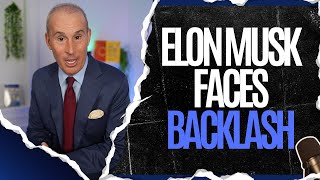
A monologue by TJ Walker reacting to Bill Gates’ forceful criticism of Elon Musk’s role in public‑health funding cuts, using the episode to teach media communication lessons. Walker also discusses health topics—sugar consumption, supplement safety and recalls, and supplement-related liver damage—and criticizes the proliferation and declining quality of TEDx talks while advising how speakers should approach media and public speaking. The piece blends news summaries, personal opinion, and practical media-training advice.
Chapters
Bill Gates rips into his fellow billionaire Elon Musk this week when speaking to the Financial Times. Here's what he said about Elon Musk. The picture of the world's richest man killing the world's poorest children is not a pretty one. I'd love for him, meaning Musk, to go in and meet the children that have now been infected, infected with HIV because of his cuts. So these are very, very strong and powerful words. It's rare for Bill Gates to attack anyone with this much force, much less someone who has the largest megaphone in the world right now as the owner of TikTok. So I have to think that Bill Gates gave a lot of thought to this. Now, Bill Gates at one point was known as a weak communicator. Famously, when he was deposed by the US government, he was seen testifying, rocking back and forth, looking very awkward. He said, become a very powerful public speaker. He does a lot of media interviews, he does his own podcast, he's creating media, he's got his own Netflix series. So this is now a very savvy person when it comes to media and he knows the art of the sound bite. If you attack someone, you're going to get quoted. You can say nice things about Elon Musk or me or anyone else for two hours. If you then have one strong attack, that's the only thing we'll be quoting. And I have to think he knew that he meant it. He is, by all accounts, somewhat, whether you like his politics or not, Bill Gates is someone who is very much committed to public health. He spent hundreds of billions of dollars of his own money trying to promote public health around the world. And he seems quite genuine in his belief that what Elon Musk is doing through his doge efforts to cut government spending is literally resulting in death. But what's interesting is how forceful and vivid his language is and that he didn't just sort of do it in a mealy mouth way and say, well, I think it would have been more effective to continue funding or there may be adverse effects on the populace. No, he didn't say that. He said, quote, the picture of the world's richest man killing the world's poorest children is not killing, killing children. I mean, you accuse another human being of killing children. It doesn't get much worse than that. And to have to meet children who've now been infected by hiv. He's accusing Musk of taking actions that are resulting in kids getting HIV and then presumably dying. These are strong words. He realizes that you do things like that, you're going to get attacked by someone with the largest megaphone in the world. You're probably going to get a lot of death threats. And I don't like to talk about that, but that is the nature of people at his level these days. Criticizing certain individuals is you get absolutely inundated with that sort of thing. So what's the real lesson here? It's certainly not that I want you to be mealy mouthed and never be afraid to offend anyone. No, that's not the message. The message is understand and use with precision like powers, the ability to land an attack on someone. Make sure it's exactly what you want, don't say it in an offhand way. And by all accounts, I'm not suggesting Bill Gates said this in a flippant, frivolous manner. He clearly feels very passionately about this. The lesson to you is if you are in the media and you're talking to any kind of traditional journalist, or for that matter, podcaster, anyone who can talk to you, ask you questions, you say stuff back and they can edit it at any point, realize they're going to edit any part into the story. If you say someone's killing someone, it doesn't have to be that harsh. It can be any kind of attack. Now, when I work with corporate clients teaching them media training, one of the things I have to make them aware of is like, even if you attack yourself, if you say, if a reporter says to you, hey, did you. You must feel great about last quarter considering, you know, a year ago things were really down, the economy was down, it's very easy to say, sure, a year ago I couldn't sleep. I was so distraught over how much our sales were tanking. But. And then you're on talking about good things for the next hour, guess what? The only quote in the story is going to be you talking about how distraught you were, how sales were in the tank and how awful it was because it was negative. It wasn't accusing someone else of killing anybody. It was you attacking yourself. So that's really the lesson I want you to take home here. Use negatives sparingly. Now, some celebrities, some public officials take it so far where everything out of their mouth sounds like mush. I'm not asking you to do that. I am asking you to give real thought and to use attacks selectively for when you truly want to make a point. That's important. And it's one thing if you're a talk show or a podcaster and you just want to get as much attention as possible, then attack, attack, attack, attack, attack. That does work well for some influencers and some who've entered the political arena. But for most people, most of the time, that's not the way they have risen to power. Certainly Bill Gates didn't become a billionaire because he was always attacking everyone else in the computer industry and attacking IBM and attacking all of this. That's not how he did it. He was very focused and clear and mostly positive in his communication about what he and his company is going to do. Now, the world is very different from when Bill Gates started his company in 1970s. You can be more outlandish, more expansive, talk about all sorts of things. But be careful what works for some people. Certain politicians might not work for you and it might not work for your industry. And also realize you got to have a really strong stomach. You attack someone, they are going to attack back. And sometimes it can be quite painful in indeed. So be prepared for that. Okay, let's shift over to health news. I want to put a spotlight on someone who I think has done a fantastic job in the media world. Steve Bartlett, diary of a CEO I recently listened to his show Zero Sugar with Dr. Robert Lustig. Now, Dr. Robert Lustig is somebody who's a great communicator. He it gets a lot of media coverage. And yet still, for every message you've ever heard Dr. Robert Lustig talking about the problems with sugar, you and I and everyone else have heard hundreds of thousands of messages about drink Coke, drink Sprite, drink Mountain Dew. So there's a tremendous imbalance here of what we as average consumers hear. I talked about this before, I'll talk about it again. And that is 100 years ago, the average American maybe had a couple of pounds of sugar a year. Today it's 57 pounds of sugar a year. And there's an explosion of diabetes and obesity and health problems and strokes associated with that and heart attacks associated with that. Sugar is a huge, huge, huge problem. Am I saying never, ever, ever eat sugar? No. But I am asking you to give a little time to this podcast and listen to Dr. Robert Lustig because he's quite an articulate and forceful spokesperson for the position that sugar's killing us. Sugar's poison. You want to eat an ice cream cone every three weeks, go ahead, be my guest. But the problem is you can think of yourself as well, I'm healthier than most people, and that may be true. But let's not forget 70% of Americans are obese or overweight. Some 40% have diabetes. So you can be better than most and still have horrible health. Here's my challenge to you. Go through the grocery aisle. Once you've passed the fresh produce and the fresh seafood, look at every single thing in a box and a bag, and you'll be shocked at how few things don't have sugar added. Now, it might not say sugar. It might have something with O S E in might have other fancier words with Atriol and things like that. It is some type of sugar, processed sugar or artificial processed sugar, and it's killing us. It's dramatically lowering how long people live in a lot of countries like the United States. So I do urge you to take a look at it. He's also a fascinating character, Stephen Bartlett, because his podcast, video and audio, it's not that old and it has just millions and millions and millions of views. He's doing something right now. He's a great promoter. He has a background in Internet advertising, promotions, marketing, but he's really been quite savvy in the way he's put together his podcast and marketed it to have to reach a huge, huge audience. So check him out. You can learn something from him, believe me. Continuing in health news, I mean, this is the sorts of stories that I feel we as humans are just not listening. It's out there, but it just goes in one ear and out the other, and the result is we die. We die earlier, we die prematurely. So this is a story in the Daily Mail about a recall of a supplement. A wellness company called Optimal Carnivore has voluntarily recalled 150, excuse me, 1,500 bottles of its bone and joint restore supplements due to possible salmonella contamination. It was sold on Amazon, sold in 180 capsule bottles. And here's the problem. It was put in a Class 1 designation, which is the most dangerous classification according to government officials. And here's what it means. This means there is a reasonable possibility that the use of or exposure to a violated product will cause serious adverse health consequences. Or death. That's right, death. And people are popping these things like it's candy. So, look, I've been guilty of this. We all have at some point. We have so many people that, oh, I would never smoke cigarettes. Oh, I drink nice clean water that's been purified. And. And yet someone puts something in a package and calls it a pill and says it's for your health. All of a sudden, skepticism goes out the window and we say, oh, wow, yeah, more supplements, more vitamins. I'll Be healthier and healthier. No, it's all well and good to have skepticism towards mainstream medicine and the pharmaceutical industry. And indeed, there are problems with those big industries. But people forget the supplement industry is $150 billion industry. They're in it for profit. The only difference between the supplement industry and the pharmaceutical industry, and I understand the pharmaceutical industry is bigger, but still $157 billion for the supplement industry worldwide. The only difference is you can say anything is a supplement and put a label on it. You don't have to have any testing. You don't have to have any approval from the government. You just say, hey, I'm not making any health claims. But people are saying that you take this, you live longer, you'll look beautiful, your hair will grow, and people buy it because it's got pretty packaging. People talk about wellness. People say, oh, it's all natural. Well, you know what else is all natural? Arsenic. You know what else is all natural? Tidal waves. So just because something is all natural doesn't mean it's good for you. So part of what I'm trying to do in this show is really get people to consume information as it relates to the thing that's most important of all, your own health in a way that's going to benefit you. Here's another story that grabbed my attention. This is an Indian newspaper. Things like this tend not to get as much attention in the United States as they should. But it's a story about how everyday supplements are causing liver damage. This is a whole health problem that I think reserves or gets way, way too little media coverage. A study from the University of Michigan found that several supplements contain potentially hepatoxic, and I don't know what that means, botanical ingredients. The findings are published in the Journal of American Medical Association. And the researchers analyzed data from the National Health and Nutrition Examination Survey. And they found that 4.7% of adults reported using herbal and dietary supplements containing at least one of the botanicals of interest. Turmeric, green tea, ashwagandh, black kahosh, all sorts of other things that I can't even pronounce. And what they're finding is it's toxic to your liver. Some of these things are actually destroying your health. It's one thing to destroy your liver saying, you know what? I know it's bad for me, but I love to drink. I love to get trashed every night. I'm going to get trashed every night. I know it's bad for my liver. I'm certainly not advocating that. But at least most people understand. You drink a fifth of vodka a night, you're going to hurt your liver. Few people realize you take this vitamin and this supplement and this fish oil, but that also can destroy your liver. So I think we all need to be a lot more skeptical about what we're putting in our body. And especially when something comes wrapped in the mantle of, oh, it's good for you. It's, well, it's healthy, it's all natural. We need to become especially critical then, because that's when we let down our guard. That's when people think, oh, it's wellness. It's all natural. It must be good. Let me buy some. I can do this instead of go to the gym. I can eat garbage for lunch or breakfast or dinner and eat this pill and it'll all be okay. No, it won't. There is no pill that's going to make up for a bad diet. Now, that's not some unique philosophy I just came up with. That's something almost any serious medical practitioner or nutritionist will tell you. That's mainstream knowledge. Doesn't get a lot of attention because all the wellness gurus out there, in fact, some of my favorite podcasters who give 98% good information, they're all selling these green, these magic powders, these magic greens that are supposedly going to make up for your bad diet. And they are ways of diverting your attention over, complicating things and confusing you so that you don't focus on what really matters. Eating real, unprocessed food. If you do that, you don't need all these supplements. The vast majority of the time your medical doctor tells you, yes, you need the supplement. Don't listen to me. Listen to your medical doctor. But if you're just out playing around on the Internet and someone who looks beautiful or sexy is saying, hey, I take these pills every day. Look how I am. You should, too. Normally, $10,000 a month. Today they're yours for $19 a month. Forever. Don't buy it. That's not enough of a reason. They're communicating with you. Absolute bs. Okay, switching gears. I am a little reluctant to talk about this because this is an organization I like for the most part. But somebody has to say it, and I'm going to just go ahead and say it right now. TedX has jumped the shark. There was a time when virtually every TED speech was great. And then TedX started, and a lot of those were great. And then more TEDxs and more TEDxs and more TEDxs. And all of a sudden, it's like a cancer. It's taking over and it's destroying things. There are so many bad TEDx speeches these days that it's kind of ruined the brand. TedX has jumped the shark. This brand extension. We've seen it in the corporate world where a company sells one product and before you know it, they're selling lunch boxes and toothpicks and air fresheners. And all of a sudden it's like, what does this even stand for? I think TED has gotten to that point. It used to be, and arguably still is. If you watch a TED speaker, the main TED stage, you would learn something and it would in fact live up to its motto of ideas worth spreading. But I can't tell you how many TEDxS I have seen in recent years where they were trite, they were cliched, they were boring, they were derivative, they were the same old stuff. Now, it is true, generally the presentations are better than what you see in the typical corporate world. You don't see people, you know, reading with their head down, looking at a PowerPoint slide for TED and TEDx. Okay, great, but someone's gotta call it out and say, look, there's this whole thing that's grown around TedX. You've got consultants, you've got coaches for it. You have people saying, hey, we're going to make you famous and you're going to do this. And full disclosure, I have an online course on how to give a TED Talk. I've had major corporate clients and United nations clients hire me to teach people how to give a great TED Talk. Some of them have gone on to huge successes and had millions of views and book deals and movie deals come from, from their TED Talk. So I'm not just uniformly saying all TED Talks are awful. That is not my point at all. But my point is when every single elementary school kindergarten wellness center can start its own TEDx, it doesn't mean anything anymore. And here's what I've seen. I did go to the TEDx in Boca Raton a year or so ago, and I have to tell you, I'd been the year before and was kind of impressed. It was absolutely awful. All of the speakers appear to have been selected purely based on their social media following. Oh, this person has 500,000 Instagram followers. We're going to let them speak. Oh, this person has a podcast. So what we have is sort of a game now of various TEDx communities or all vying for attention from the mothership of ted. How can we get the most attention? How can we get our speakers up more prominent on the main TED website? And it's become a game where it's all about who's got the most followers, who's got the most social media, who has the largest platform. And at some point they lost sight of the fact. Does this person actually have an idea that we haven't heard before that's interesting, useful to the world, that's worth spreading somehow that has in fact gotten lost? And I think it's a shame. Now, do I say we should simply shut down all TEDxs? No, I'm not saying that. But I do want you to think twice because I have people come to me all the time, say, oh TJ, I want to give I TEDx speech. That's my biggest goal in life. I'm like, really? What's your real goal? Well, I have this message and so if you have an idea and you want to help people and you want to share it, why are you waiting for the TEDx Go on YouTube, TikTok, LinkedIn, share your message now on a daily basis. In fact, let's just find out because there's some myths out there that I think are worth addressing. Let's find out the answer. Chad, I'd like to know how many views does the average TEDx, not TED Talk, but TEDx Talk, receive in its first year on YouTube? Because there's a perception out there that hey, you do a TEDx millions of views, you become rich, famous, and you've made your career. What are the actual hard numbers?
So the reality is that the average TEDx talk doesn't come anywhere close to millions of views. Most TEDx talks get a few thousand views in their first year. According to some data analyses, the median view count is often in the low thousands and only a small percentage break into the hundreds of thousands or beyond. The perception that a TEDx talk will automatically go viral and make someone famous is more myth than reality. It really depends on the topic, the speaker's reach and whether the talk gets featured or promoted by larger platforms.
Okay, thanks Chad. That does in fact clear things. So if you want to speak, speak TEDx is only one way of doing can work. Well, as I mentioned, I've had a client who did a TEDxume did a TED did well, got a million views, did another TED, got another million views, got a book deal, got a movie deal. It really was a big thing. But I know countless people who've done TEDx talks, put a lot of time and you know Pitching for six months to get selected. Rehearsal, rehearsal, rehearsal, telling all their friends they do it, and then a year later, 300 views. That's actually much more common than the million views as you just heard from chat. The median is a couple thousand views. A couple. I mean, I get a couple thousand views on just one of my social media channels, and I'm certainly no superstar. I get a couple thousand a day. So if you want to speak to people, speak. If you get invited to speak at a TEDx, by all means, go and do it. If it works, I wouldn't necessarily fly to another continent to do it, as some people do, but it can be a good platform. But in all honesty, should you spend your free time looking at just random TEDx speeches online? These days? I find the percentage of interesting ones where I think, okay, hadn't thought of it that way before. I learned something here. Percentage of TED talks like that, TEDx talks like that versus ones where I think, oh my gosh, this is so trite. This is so lame. This is a bunch of cliches. This sounds like amateur hour at Toastmasters. And again, nothing wrong with Toastmasters. A great place to get more comfortable speaking. But TED was supposed to be more than that. It was supposed to, in fact, be interesting, useful, helpful ideas worth spreading in technology and design and education and entertainment. And it has morphed into something else. And because of that, I feel it's a little sad. What do you think? You can post your comments wherever you're watching that. Meanwhile, in other news.
More from TJ





The Breakout Cases - What Actually Caused Famous Speaking Career Breakthroughs | Ultamize

The Red Circle Sessions Finale - Build the Speaking Career You Came Here For | Ultamize

Two Stages, One Logo, Two Completely Different Realities - Main Stage vs Independent Events | Ult...

Pre-Reset - Why Repetition Builds Better Speaking Decisions | The Red Circle Sessions | Ultamize

Your Decision, Your Framework, and What Happens After - Build Your Speaking Career First | Ultamize

The Red Circle Sessions Trailer - The Speaking Career Truth Nobody on That Stage Will Tell You | ...

The Two-Minute Ultamize Reset - Your Platform, Your Audience, Your Voice | The Red Circle Sessions