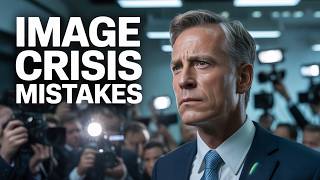
TJ Walker argues CEOs must communicate directly during crises, not delegate to division heads. Stakeholders expect to hear from the chief executive. Walker cites Burger King and Red Lobster as examples of companies that mishandled leadership communication, contrasting them with Steve Jobs, who rehearsed product launches for a week.
Chapters
Ultimize. According to reporting in the New York Times, when major brands like Burger King and Red Lobster faced public pressure recently, the people sent out to speak were not the CEOs. They were division heads like Tom Curtis and Demola Ademola. Not the top person, not the one ultimately accountable, someone else. And that tells you everything you need to know about how many companies fundamentally misunderstand leadership. Because when a company is under fire, when customers are angry, employees are confused, investors are nervous, and regulators are paying attention, there's exactly one person stakeholders want to hear from— the CEO. Not a substitute, not a stand-in, not the senior vice president of explaining things, not the spokesperson, but the CEO. And yet more and more, we're seeing companies treat that role like it's optional, like communication is something you delegate, like it's another task you can hand off the way you hand off payroll or IT support. Hey, can you go explain our crisis to the world? I got a meeting. No, that's not how it works, because the CEO is not just the person making decisions. The CEO is the person who has to stand behind those decisions publicly. And let's be honest about what's really going on here. This isn't strategy, it's discomfort. Some CEOs don't want to be in the spotlight. They don't want to get grilled. They don't want to be accountable. They don't want to risk saying anything that could be wrong. And they certainly don't want to be the face of a problem. So they send someone else, which is a little like the captain of a plane hitting turbulence and saying, ladies and gentlemen, the flight attendant will now explain aerodynamics. No offense to flight attendants, but I want the pilot every single time. Now, I can already hear the pushback. Well, not every CEO is a great communicator. Exactly. And that's the problem because communication is not a bonus skill for a CEO. It is a core competency. If you don't want to communicate publicly, if you don't want to represent the company in moments that matter, If you don't want to stand there and take responsibility, don't be the CEO. Be the COO, the Chief Operating Officer. It's a fantastic job, pays well. You can run operations, optimize systems, build teams, and never have to go on camera and explain why your company just stepped on a landmine. But the CEO, the CEO is the face, the voice, and the accountability center of the entire organization. You don't get to opt out of that part. And this idea that stepping forward publicly is about ego, that's backward. The CEOs who hide are the ones protecting their ego. They don't want to look bad. They don't want to be criticized. They don't want to be uncomfortable. Great CEOs step forward because they know it's not about them. It's about trust. And trust is built when people see the person in charge actually acting like they're in charge. Now here's where this becomes almost absurd. We have decades of evidence showing what great CEOs actually do when it comes to communication. Steve Jobs would rehearse his product launch presentations all day long for an entire week. A week! The CEO of one of the most valuable companies in the world spent a full week practicing how to communicate clearly. Meanwhile, today some CEOs won't even show up to explain a crisis. That's not a time issue. That's a priority issue because communication isn't fluff. It's not just PR. It's not something you do after the real work is done. It is the work. Leadership is not just making decisions. Leadership is making sure people understand those decisions. Leadership is not just having a vision. Leadership is communicating that vision in a way that people believe it. Because if you don't explain what's happening, people will explain it for you, and their version is almost always worse. Silence doesn't calm people down. Silence creates suspicion. So when companies send out anyone other than the CEO in the moments that matter most, they're sending a message, whether they realize it or not. This isn't important enough for the top person to address directly. That's not reassuring. That is destabilizing. So let's stop pretending this is about media strategy. This is about leadership. The spotlight is not a perk of being CEO. It's not optional. It's not something you do when you feel like it. It is the job. And if you're not willing to step into it, don't take the title. Quick thought before we move on. If you're like most people, you don't need another idea. You need something that actually sticks. Because the real game isn't learning once, it's seeing the same useful message enough times that it finally becomes automatic. That's exactly why I created Ultimize. So if this show is giving you even a little value, go to ultimize.com and grab a free course. There's one on communication skills, one on building better habits. Just pick one and start. It takes about a minute to sign up. It's free and it's actually designed to stay with you. Ultimize.com. Ultimize.