Crypto Winter, Media Collapse & the Super Bowl Wellness Scam
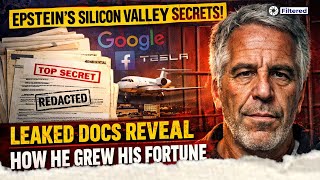
TJ Walker examines Kellogg's $10 million Super Bowl ad selling Raisin Bran as wellness, the collapse of traditional media, and crypto's lack of real utility. He profiles William Shatner's 94-year career, shows how athletes like Caitlin Clark earn most income from endorsements, and details Justice Department documents on Jeffrey Epstein's Silicon Valley connections.
Chapters
A cereal brand spends super bowl money to sell digestion. An Olympic champion earns millions, almost none of it from sport. Americans are rebuilding 19th century cabins to escape modern life. One of America's great newspapers slashes its newsroom. Crypto slides into another winter. And this one may be different. And new documents show how Jeffrey Epstein used Silicon Valley to keep getting richer. All that and more today on Filtered. Welcome to Filtered with TJ Walker. Hi and welcome. Thanks for joining me Today. Raisin Bran goes to the Super Bowl. Kellogg is running its first ever super bowl ad for Raisin Bran starring William Shatner as. As the cereal industry struggles to stay relevant. The ad pitches Raisin Bran as a cure for gut regret after indulgent eating. Tapping into a sudden cultural shift away from protein obsession and toward fiber. The super bowl is the most watched television event in the United States with ads costing up to $10 million for 30 seconds. Kellogg isn't just selling cereal, it's buying cultural permission to rebrand an old product as a modern wellness. Now, the irony is hard to miss though. A serving of Raisin bran contains about 17 to 18 grams of sugar, nearly four teaspoons and a single bowl. But the ad leans on nostalgia, humor and a 94 year old pop culture icon to frame fiber as virtue and to make cereal feel like self care instead of dessert. I'm going to play the ad for you here. It is a clever ad. And then we're going to dissect this from a couple of aspects from your own personal health habits and also for your career habits because William Shatner, wow, he's put it all together. He's 94 years old. So let's take a look at this ad right now. It is in some ways quite clever. Let's take a look. Will Shad here. Bringing fiber to the masses with Kellogg's Raisin Bran. Judy calls Will Shad every darn day. Whoa. Will Shad in the house. It's fiber time. Is that Dr. Shihu? Perfect. Will Shad on the car. You're too old for this. Kellogg's raisin bread. High fiber, Happy gut. Okay, so this is clever at many levels. It does play on nostalgia. A lot of people my age, older and younger, certainly have very fond feelings for William Shatner. But here are the concerns I have. Anytime you see someone spending $10 million on an ad for food and hiring a famous celebrity, the only way they can do that is, is by mixing in all sorts of processing and sugar, typically processed carbohydrates, all sorts of other things in their food. And putting it in a pretty package, usually that means it's horrible for your health. Now, I've eaten Raisin Bran before. I'm not saying it's the worst thing you could eat, but as I pointed out in the top of the newsread, it has 17 to 18 grams of sugar. That's roughly four to four and a half teaspoons of sugar. And that is more than a third of what you need for the entire day. So if you're starting off your day eating Raisin Bran, thinking, well, that was really healthy, now I can splurge at lunch, now I can have a big dessert at dinner. No, you've already had your dessert. So that's my real message to you, is you've got to be on the lookout for people trying to manipulate you. You're the only one who really cares about your health. I care about your health. I'm not giving you ads for Raisin Bran, but most people are. Or they're giving you ads for Coke and Pepsi and Sprite and Mellow Yellow and all sorts of garbage food, whether it's in a liquid format or a solid format. I'm not saying Raisin Bran Bran is good for you, but not when you eat it with all the sugar added. Raisins are good for you and raisins are binaurally sweet. But we live in a world when there's so much sugar in everything, it's virtually impossible to buy food without sugar. I mean, just try going to a normal grocery store in America and trying to find bread that isn't crammed full of sugar. It's extraordinarily difficult. So now we live in a world and this isn't new. I think this has always been the case with Raisin Bran where. Where naturally sweet grapes dried up and turned into raisins aren't sweet enough. They've got to be dipped in all sorts of sugar. So this is a problem. This is why, in fact, we have a widespread epidemic of obesity and diabetes in America and increasingly around the world, it is because of products like this. Now, again, there are worse offenders. Sugar smacks, sugar pops, sugar, Frosted Flakes. When the name sugar is right in it, it's generally even worse. But I want you to be careful about this. Now, let's look at the ad itself. It is quite clever. His name is William Shatner. They're shortening it to be cute will shat with a double entendre of things you're likely to do when eating more fiber. They do it throughout their instantly positioning him in something that doesn't look exactly like the Starship Enterprise, which made him famous from television and movies, but something kind of like a big command center. So it's evoking all of those images. It's fast paced, it's funny, there's multiple wordplay, and, hey, here we are talking about it. And it's gotten a lot of news coverage, which is, in fact, why major brands spend money advertising on the Super Bowl. Because they know that people like me and other pundits and commentators will dissect the ads for cleverness, for humor. And this does a good job. I mean, if I were the account brand manager at Raisin Bran, I would be happy with the ad agency that did this. It's cute. It's clever. Will they get more people to eat Raisin Bran? I don't know. That can be measured in due course. But it's certainly getting a lot of impressions and a lot of extra impressions because I just aired the ad right here and nobody was paying me to do that. So my real message to you is anytime you see an ad for any kind of food or drink product, you instantly need to tell yourself, red flag, red flag danger here. Because the broccoli industry is not spending $10 million on the super bowl for you to eat more broccoli. The kale industry is not spending $10 million a year or a commercial for 30 seconds on the super bowl, nor are they hiring George Clooney or any other famous movie star to hawk kale. That's because it doesn't have tons of sugar. It's not a proprietary mix. It's not that special secret recipe for Coke or special secret recipe for Kentucky Fried Chicken. That's what people can brand and therefore monetize, but they can't do it generally without adding tons and tons of heavily processed gunk into the food to make it melt in your mouth. And yeah, it tastes better. I get it. Coca Cola, a McDonald's hamburger, Raisin Bran with sugary raisins tastes better to most people than raw spinach or raw. I get it. I'm not saying you can never have food like this, but be very, very careful. The sheer fact that you're seeing ads promoting a particular brand of food or drink, generally not 100%, but generally means, beware, you're about to be poisoned or you're at least about to. Let me not get myself into a lawsuit. I'm not saying poisoned in the sense that it's going to kill you. As far as I know, nobody's died from eating Raisin Bran. But by poison I do mean you're introducing things that simply are not healthy to your body. More processed sugar is not healthy for your body. And if you want to eat healthy food, I mean one cereal, and I'm not a paid spokesman for it, but I buy Shredded Wheat with zero added sugar. If I'm going to eat cereal, typically I'll eat oatmeal where I put in fresh raspberries and there is zero added sugar. Now let's switch gears and talk about some other issues. This gentleman right here, William Shatner, he's had an extraordinary career. He's 94 years old. He has been around in Hollywood since the, I believe the 1950s. I certainly remember him doing guest appearances on the Twilight Zone as early as about 1962, which I didn't see the original show. I was born that year. But he's been around a long, long time and he's outlasted most of his critics, he's outlasted his colleagues, people who thought he was a bad actor, a hammy actor. And it's true, he's never won an Academy Award, he's never won an Oscar, but, but he's had an amazing career. Now what many people don't realize is that Star Trek, when it originally played, was not a big hit. It only ran for three series, it was canceled. And he was in for some very, very lean times. At one point after the show was canceled in the late 1960s, he was living in a truck. He was having to go around and do dinner theater, living in a truck. At one point he, according to his own revelations, was almost bankrupt, had essentially no money, had to take any gig that came his way. He was shunned by Hollywood, Hollywood directors, producers and agents because he was just seen as this hammy, campy actor from a canceled TV show. So he had a number of lean years until he started getting hired again in the mid-70s. He had to take any job he could work in really bad, low rated TV shows, movies, and it was hand to mouth a long time. But he stuck with it. He persisted and he has since flourished. The other thing I admire about him is he's not afraid to try new things. He's always experimenting. He's come up with a number of albums where he kind of sings, kind of talks and people make fun of it. And you know what his attitude is? I don't care. I'm going to create songs, I'm going to go on reality shows, I'm going to create music, I'm Going to write books. I'm going to reprise my role as Captain Kirk in a gazillion Star Trek movies. So he continues to experiment. He continues to do commercials, he continues to do reality shows. Now at this point he's quite wealthy. At 94, he could just be sitting on his ranch somewhere in Montana and have a thousand acres all to himself. He could be sitting on an island somewhere, but he's still working. And I have to think that's part of why he's still alive and seemingly very active. I mean, if you didn't know he's 94 and you saw this guy, I think no one would be. If you never heard of him before and you didn't know he's wearing a wig, you would think, okay, this guy looks like he's about 60 years old, but he's 94. He doesn't sound 94. He doesn't sound all enfeebled and grandpa. He sounds pretty much the same as he always did. And yet even in this commercial we just saw, he wasn't afraid to make fun of himself. At the end he says, I'm too old for this, and he's jumping off a car. So that part is funny and shows self awareness or at least projects him in an ad as someone who has self awareness. Again, I don't know him. Chances are you don't either. But it's being projected quite nicely. So that, I think is the real lesson for all of us. Now, you might not aspire to be a movie star or a TV star. I know I don't. But who wouldn't want a long career where you are active, influential in demand, and seen and known and respected by millions to that extent, I think he is an excellent role model. Now he also had this peculiar trait when he was an actor where he would pause in the middle of a sentence for dramatic effect and then continue the sentence, go into the next sentence and pause. It became sort of a. A trademark. It was often mocked, often ridiculed, but hey, it worked for him. So I congratulate him on that. The other thing that I think is relevant here for you and me, because we want to be as productive as possible, we want to live as long as possible, is he's a guy who was never seen as someone incredibly physically fit. Even in the Star Trek days, he seemed a little bit pudgy. I mean, he was of average height, about 5 9, a little bit pudgy, bald with a toupee. And hey, I'm not knocking that. It's not like he's known for someone outrunning marathons and being extra, extra healthy. And yet here he is at 94 and I think in part because he never retired, he's out about, he's traveling, he's meeting new people, he's working with new producers, he's working with new directors, he's working with new actors. Constantly he's getting attention, he's getting praise. There's a lot of research out there that shows one predictor of longevity is simply receiving esteem and prestige. A very famous study showed that Academy Award winners outlived Academy Award nominees by three or four years. Now, he's never won an Academy Award, but he is someone who is greeted with applause and praise everywhere he goes. He is universally recognized, certainly in America, but in a lot of parts all over the world because of specifically Star Trek. But all the other reality shows, TV shows, guest appearances, commercials, he's done. So I give him a lot of credit. Now he is someone with a mixed reputation in Hollywood. Certainly most of his Star Trek co workers and colleagues hated him, couldn't stand him. It's not like he is known for having the absolute best social skills. But he keeps on showing up, he keeps on getting out there and he's not afraid of making fun of himself, trying new things and I think a role, I mean I would love to be in his situation at 94, that gives me another 30 plus years. So whatever you do realize A you don't have to retire. B, just because other people say you're washed up, has been and maybe you don't even make any money for half a dozen years, does it mean you're out of the game? You can reinvent yourself at almost any age. We'll be right back after this break. Want to advertise here? You better be legit. No crypto, no junk food, no supplements. Go to tjwalker.com advertise Most people can't afford a full time coach. And even if you could, good luck finding one who's available when you need them. That's why I created the TJ Walker AI clone. It's built on my 40 plus years of real world coaching and training. You get my exact advice, style and frameworks instantly. Ask it how to handle a tough question. Get feedback on your elevator pitch. Rehearse your next big talk. This is the next generation of communication coaching. It's smarter than an app, more personal than a course, and always ready. Start using it today at tjwalker AI you'll wonder how you ever did without it. Want to Advertise to ambitious, upscale professionals who actually care about communication, success and results. Go to tjwalker.com advertise and no, we don't take ads for crypto supplements or junk food. Eileen goo earns about $23 million a year, but only about $100,000 of that comes from skiing itself. That's her main thing. She's a professional skier. The rest comes from endorsements, fashion, luxury brands, and global media deals. Gu's case exposes the modern sports economy. Athletic performance creates visibility, but visibility, not victory, creates wealth. Even in sports with prize money, endorsements dominate earnings. In Gu's case, more than 99% of her income comes off the slopes. She has crossover appeal in both the United States and China. Millions of social media followers and partnerships with brands that have nothing to do with skiers. The lesson is blunt. Sport is the resume. Media is the business. Gu proves that modern athletes are no longer paid for what they win. They're paid for what they represent. Okay, this, this is fascinating. It's obviously no surprise that many athletes make more money, especially throughout their career and in their later years, from endorsements than they do from prize winnings. That's been the case for a long time. But she's only 22, and the fact that it is so skewed that it's more than 99% of her income coming from endorsements. I mean, she only made $100,000 from skiing last year. And I don't mean to belittle $100,000 income, that's substantially more than what the average American family makes. So that alone would be considered a nice income to many people. But she made $23 million last year. So let's look at some of the facts. It's specifically 99.5% of her income came from endorsements. She did win three Olympic medals. In 2022, she ranks in the top five highest paid female athletes. She's an IMG fashion model. She has 7 million Weibo followers. That's a social media platform, quite popular in China. She does represent China internationally, but she grew up in America, and I believe she's still an American citizen as well. But she is extraordinarily marketable, just extraordinary. Now, she is a tremendous athlete. She's also quite smart, academically credentialed. She's been to Stanford and other elite universities. She is also, and forgive me, this doesn't sound politically correct, apologies if I offend anyone. She happens to be extremely good looking. And certainly if you're a model, there's no surprise there that you make a lot more money. But if you're an athlete and making money off of being an influencer, it really, really helps. She's also quite articulate, which is one reason why I recommend to the athletes I work with when I do media training for athletes is to give your media skills as much time and attention to building that skill as your athletic skills. Because turns out your media skills quite often is where the real money is. Because you can be a media commentator and in the media till you're 95 or more. As we just saw with William Shatner in a previous story today, you can't really play professional sports at 95. Let's not kid ourselves. So it is something I often coach when I am doing media training for athletes is stressing to them, you got to focus on this. You got to be as good at dealing with the media, being a spokesperson, representing yourself, your team at this stage of your career. And then if you're in junior high school or high school or middle school, because quite often in college, you don't have to wait to be a professional. You can be making money, obviously, off of being an influencer when in college, because being a star athlete means tremendous media attention. And in the past, you could be the greatest college athlete in the country in the United States, and make no money. Colleges were not allowed to pay you. Those days are gone. And I would say that's a good thing, because if you can command attention, you can monetize that attention sometimes just with your image and your picture and how you look. But so often it is how you speak in social media, at press conferences, on YouTube, Instagram, and in paid commercials for clients that want you to be their spokesperson. So that's why it's, I think, hugely, hugely significant now. In the past, women suffer discrimination in the world of professional sports. They were paid less. Billie Jean King was instrumental in getting equal pay in a lot of aspects of women's tennis. But in general, there's still a lot less money going to women in sports because the big money winners for modern athletes is professional basketball, professional football, and let's face it, there are not a lot of professionals women's football leagues where people are getting paid a lot of money. But this whole media exposure influencer thing is leveling things out. In some ways, the women are doing much, much better. They are really making big bucks. So what's the message here for you and me? Because I'm betting that you didn't win three Olympic gold medals or three medals of any color in the Last Olympics, I didn't either. I think the message is anyone and everyone can be an influencer of sorts. Now, you may be a local graphic artist in a small town, and you may have no desire to be famous or be a billionaire or anything like that. You could still use your position to talk about your graphic art in videos on social media and showcase the clients you've done art for. For to use that to build your own brand, to get more clients so you can charge more, so you can have more control over your own financial destiny and control over your time. So that's why I want to spotlight that, to make you realize how important this is. Now, let's look at some other facts. Coco Guff, someone who started her career at the Delray Beach Tennis center, where I was a member until just recently. I played there regularly. When I moved to Delray beach five years ago, I no longer live there. But she made last year $33 million. 25 million of that was through endorsements. Only. 8 man. 8 million is a lot to win. That. That's a king's ransom. That's more than most people make in their entire lifetime. She did make $8 million in prize winnings, but still 75% from endorsements. Naomi Asaka, majority of her income from endorsements. Caitlin Clark gets almost all of her money from endorsements. She is by many measures the most celebrated female basketball player of all time. She made about $12 million last year from endorsements, almost none of that from her official pay as a player. So this is what I want you to think about in that if you can establish yourself as the best in the world at something that people are interested in, there are a gazillion ways of monetizing that and creating financial freedom for yourself and financial security for your family. And that's why I think it is important for anyone in their career to spend at least some time thinking about how can I go deeper in something and really get great at it. I know for me, early in my career, I was kind of all over the place. And I was doing political punditry and a little dabbling, little media training, public speaking training workshops, talk shows. I was dabbling all over the place. And then I decided I wanted to be number one in the world on media training. So I created a website and a business, Media Training Worldwide. Now you can argue whether or not I was number one. There's no official ratings, but for more than a decade, I was number one in Google rankings for media training. And I had more videos on media training. And I had more online courses on media training and I set a Guinness Book of World records for being on more media talk shows in a 24 hour period than anyone else. So I had laser like focus trying to make myself number one in something. And that was I was able to monetize that through course sales, through charging a lot more money for my trainings. Now I wasn't making the income of this young skier, I won't kid you, I was not making Eileen Goos $33 million a year. But it did help me in my own so that is what I want you to think about is how can you focus on something to attract attention, to be seen as great world class. Because if you do, there are then numerous opportunities for you to monetize that for the rest of your life. We'll be right back after this break. Want more? Grab my Five Book Success Library for $9.95 at tjwalker.com books. It's the fastest way to level up your communication. Imagine being the most confident person in the room whether you're on Zoom or on stage. That's what thousands of professionals are learning to do right now. Through my online communication courses at Media Training Worldwide, you can access my complete training library on demand. Affordable and actually effective. Whether you're preparing for media interviews, client presentations or TED style talks, I've got you covered. Check it out mediatrainingworldwide.com. you'll never wing it again. Across the country, people are building full scale replicas of Henry David thoreau's Walden cabin. 10 by 15ft, no plumbing, no electricity, no WI fi. Some use them as writing retreats, some rent them out. Some just want quiet. The appeal isn't nostalgia, it's rebellion. Thoreau's experiment in deliberate living resonates in the era of constant screens, noise and consumption. Ironically, even the builders don't believe Thoreau could have constructed his cabin alone as quickly as he claimed. The contrast is striking. The average new American home is nearly 87% larger than it was in 1960. Meanwhile, Europeans live with far less space, especially in France, where average dwellings are closer to 1,000 square feet and they live about seven years longer than Americans. Minimalism here isn't about aesthetics. It's about choosing fewer inputs, fewer possessions, fewer distractions, fewer demands, and reclaiming attention as a finite resource. Okay, so what are we to make of this? This was a huge front page story in the New York Times earlier this week about, you know, people wanting to build these cabins and spending time, energy and money on it. Now I'VE been to Walden Pond, and I've been to what they have there. I believe it's a replica. I mean, it looks really, really old, and it's tiny. So it's interesting to go, it's interesting to visit. But would I want to live there? No, I wouldn't. I do like plumbing, and I do like electricity, and I do like heat. But Henry David Thoreau is someone who lives on his message of minimalism, of solitude, of, you know, marching to your own drummer. His philosophy resonates with people around the globe of all ages, and will continue to do so. So the idea of replicating some of what he did, I think, makes sense. I do believe that more Americans, in particular, but increasingly around the world, need to question the assumption that happiness is about having the biggest possible house you could have. Thoreau certainly seemed very happy. Now, he did have rich friends he could go to and have nice dinners with, who bailed him out from time to time. So I don't want to make it. I don't want to buy into the myth completely that he was just there all alone. And he did this for a couple of years. He did it for two years and two months. It was an experiment, but it's one that he was quite happy with. He published Walden in 1854, was not a huge seller in its time. Now, since then, it's gone on to sell millions and millions of copies all over the globe. But it was not any kind of instant success. Thoreau's cabin cost what he actually spent because he found old, abandoned wood, things like that. It would only cost about 1200 today, $1200 in today's dollars. But remember, there's no plumbing. There's no WI fi. You want the bathroom, walk out into the woods. You want heat, go build a fire. You want the Internet, you are out of luck. Now, there are replicas of these that are used as Airbnbs. Sometimes people use them just as their writing studio. They have one out back of their house. But I do want you to think about what is truly valuable in your life. So many people, especially in America, say, I want to buy the absolute biggest house so I can brag to my family and friends and look like I've made it. And then they spend all their time away from their house and commuting to a job to make money to pay for the house that they're too tired to actually entertain in or enjoy. There's something weird about that. There's something off about that. And to the extent that people are looking at Walden's house and how simple it is, the simplicity of it. I think it's a good thing. Thoreau specifically rejected the philosophy that happiness is about consuming more stuff, getting more stuff. And that is a timeless, timeless philosophical precept. Now, I've made online courses on minimalism, decluttering your home. I'm a big proponent of it. And if you want to say, well, tj, you're a hypocrite, I understand you just bought a house. Yeah, I did buy a house. And it's not a small house. It's certainly not the size of Henry David Thoreau's house. It's a little bigger, shall we say. But even then, what I try to do is just, unless I'm furnishing a brand new house in general, my default is don't buy stuff. When I travel, and I'm often mocked for this. When I travel, even when I'm gone for a month, I take one carry on bag and each one of my family member, my wife and daughter, they do that as well. We travel, we take one carry on bag. Now why do I do that? For one thing, it's so much easier traveling. You don't have to get worried about your bags getting lost. You can switch planes at a moment's notice because your bags aren't already ahead of you. You're saving a lot of money on baggage cost. But one of the biggest reasons is it imposes discipline. I don't have to have tons and tons and tons of stuff with me. I can actually focus on experiencing my travels. No one really cares what I wear when I'm traveling, so I don't have to have 20 different outfits. The other thing it does is when you only have one bag, you, you can't buy stuff. Now, some people love shopping, okay? But the idea that you're not going to remember a vacation unless you buy some trinket that was often made in another country on the other side of the world is nonsense. You can enjoy your travels. You can enjoy experience. I travel for experience. I don't travel to buy stuff. Because these days you can buy any item of stuff with one click at home, in your bed, through Amazon or other websites like that. So there's no reason to buy stuff when you travel. So that's a part of why I'm a big fan of minimalism. Certainly when I travel one carry on bag. That way, if anyone in my family or even I'm thinking of buying stuff, oh, I'd love to buy it, but there's no room in the suitcase. Certainly if you're Henry David Thoreau and living in a 10 by 15 foot house, you don't have to spend your time going around antiquing looking for furniture. You don't have to go to new furniture stores. You're not going to look for the latest appliances for your kitchen. It really simplifies life. And what Thoreau liked to do is think, write, read. Now you can say, well, that's a guy from a couple centuries ago. That's not relevant to me. Have you tried it? Have you tried just giving yourself more time to think, to read? I don't mean scrolling on your cell phone for text messages, but I mean actually thinking and writing. I know that those are three things that give me the greatest amount of joy, which you can't do if you're spending every second doing shopping online, which unfortunately is an epidemic these days. Let's look at some more facts going on. In 1960, the average new home in America was 1,289 square feet. In 2025, it was up to 2,405 square feet. And in certainly in many communities, upper middle class communities, we're talking more like 4, 5, 6, 7,000 square feet. Houses are humongous and unfortunately they can become prisons. Your house is so big, your yard is so big, you don't even meet your neighbors. And it can lead to isolation. That's why I think the contrast with a country like France is fascinating to me and those who care about happiness, your happiness. The average dwelling There is about 996 square feet. Many people live in apartments there. And how does this translate into their longevity? They live seven years longer than Americans do. So when you're buying that big house, I'm not saying you're automatically going to die seven years younger, but let's look at the averages. When your home is a place to sleep and enjoy meals with friends and family and you're living closely with other friends and family in a neighborhood, quite often a neighborhood you grew up in, it creates social cohesion, it strengthens bonds with family and friends. And when you look at the places around the world that has the highest proportion of people living into their 90s and their hundreds, it's quite often people who live in much smaller dwellings and have strong social relationships, they don't say, let me buy the biggest house I can buy, even if it's an hour and a half drive from work and commute from all family and friends. No, they prize family relations, social relations. And that I think is timeless advice for Anyone who wants to be happy filtered is brought to you by the Want to advertise here? You better be legit. No crypto, no junk food, no supplements. Go to tjwalker.com advertise want to become a better speaker, leader or communicator? Start with the TJ Walker Success Library. It's five of my most practical books, covering everything from public speaking to media interviews and persuasive messaging, all for only $9.95. I've trained presidents and Fortune 500 CEOs, and now you can get the same wisdom in a fast, affordable format. Go to tjwalker.com books and download your copies instantly. The Washington Post Shrinks Its Newsroom the Washington Post has laid off more than 300 journalists this week, cutting roughly 30% of its workforce. Sports coverage is closing, local coverage is shrinking, international reporting is being reduced. Leadership says the paper has been losing too much money for too long and must focus more narrowly on national politics, business and health. Search traffic has collapsed, digital output has fallen, and artificial intelligence has disrupted how readers find news. The cuts underscore a brutal reality. Even iconic institutions struggle to survive online. While the Post shrinks, other media models are thriving. The New York Times is growing digital subscriptions and operating profits. Fox News remains one of the most profitable divisions in all of cable television. Journalism isn't disappointing, but it is disappearing. But it is consolidating. Yes, it is disappointing to people who have jobs there fewer reporters, fewer beats, and fewer chances for local accountability. Okay, let's look at some more facts here. Jeff Bezos bought the paper a decade ago. He has more money than virtually anyone else in the world for the money he's lost on this or that he paid for this paper. And lost is the equivalent of you or me reaching into our couch and finding a couple of pennies and nickels. But he didn't get to be rich because he likes losing hundreds of millions of dollars a year. So apparently he's had enough. What are we to make of this? Again, here are the facts. They laid off 300 journalists. That's almost a third of the entire newsroom. That's devastating. Their Post reports daily podcast will end. The Metro section will shrink. International coverage is going to be reduced to just a handful of of bureaus. Their search traffic has fallen greatly over the last three years. Now that's interesting. Why has that happened? My theory is that like so many things in the modern Internet connected world, we have sort of a race to the top and a huge division between just a few winners. Or it's basically a winner take all world. The New York Times, at least in the United States, is the clear cut winner when it comes to news and online news. Because many Americans think, okay, maybe I'll subscribe to my local publication, my local news, and maybe I'll spend money on one national news source. Well, for many of those Americans, their local news source disappeared. So they figure, I want one source. What's the news source that has the biggest a number of resources, the best reputation? It is, forgive me, for those of you who love the New York Post or the Wall Street Journal, it is the New York Times. And so the New York Times has gotten bigger and bigger. I mean, they're printing money like crazy at the New York Times. They have done extremely well, but they struggled too. But they seem to have righted the ship. They seem to have come up with a good mix of getting people to pay for their content, some free content, podcast events, everything else. They put together a good mix. Now, I've seen this myself in industry after industry where a winner takes all and everyone else beneath it is left with crumbs, Whereas there used to be more of an equal distribution of winners and revenues throughout an entire industry. I mean, I know that for many years, you know, I did in person, media training, public speaking training, and I did fine, but so did a lot of other people. But I just got in really early, I guess, kind of dumb luck into online training and exploded my holdings of online training courses to several hundred. Then Covid hit. There was an explosion of demand for online courses, and it worked out really well for me. And many other trainers simply went out of business because they weren't positioned or they did one course and I had 200, and the sheer quantity of what I had was able to overwhelm them. And that's essentially what the New York Times has done to many once great regional papers. You know, whether it's the Los Angeles Times or the Chicago Tribune, Boston Herald, There were so many great newspapers in America, and most of them are skeletons. They are shadows of their former self. Now, I will confess to you, several years ago, I was just. I won't go into the details, but I was tired with the New York Times for a number of reasons. And I was increasingly attracted to the Washington Post. And I paid for a year's subscription and that was my primary daily newspaper source. But after a year, I found that so many things were too predictable and the New York Times just had such a greater range of content. I did not renew my subscription to the New York Times and I excuse me, to the Washington Post. And I went back to the New York Times also when I moved five years ago, go from New York to Florida, I said, okay, I want to be a good member of the community. I know what's going on. So I subscribed to the Palm Beach Post because I do live in Palm Beach County, Florida. And what I found was the paper was nothing like when I lived in South Florida 30 years earlier. The paper essentially had no news coverage. It had coverage about real estate and what celebrity was buying a $50 million mansion in Palm Beach Island. And that was about it. And that wasn't what I was interested in. So I did not renew my subscription to the Palm Beach Post. So this is, I think, a microcosm of what's happening around the country and around the world with media properties is the dominant force gets the spoils, whoever's dominant in a niche. And when it comes to general news about what's going on in America and the world, the New York Times is dominant and nobody needs number two. Seth Godin, the famed marketer, has pointed this out as well as you've got to be remarkable because we live in a world where every single option is available to every consumer with the push of a button. So you've got to distinguish yourself as number one, otherwise you're going to be made irrelevant. So the Washington Post certainly has a famed, well deserved reputation in America for helping democracy toppling the corrupt Nixon regime. They have until recently anyway, been fairly fearless in their journalism and their opinion page regarding the first Trump administration as well as the second, not as much in the second. So I hope they make it, but I'm not particularly optimistic now. They're not going to go out of business anytime soon, but they could cease to be a force in America if they continue making these cuts. They may end up looking like and sounding like a small time local weekly rag run by a small family if they're not careful. So I hope they make it out of there. So what's the real message to you in your career? Because I constantly hear from people say, oh, it's a horrible time to be a journalist. Oh, the media. So no, it's not. It's a horrible time to be a journalist who wants a very traditional career as it was 20, 30, 40, 50 years ago working for a newspaper. But it's the best of times ever. If you're a journalist and you are entrepreneurial and you're willing to wear several hats, if you're willing to be the publisher and the head of ad sales and the head of marketing and the head content creator. You can in fact be a successful journalist because the tools of the trade are all right here in your cell phone. You can write and distribute worldwide. Your journalism, you can record your audio podcast and distribute worldwide. You can record video and distribute that worldwide. You have your own television network, you have your own radio network, you have your own newspaper network. You can do it all for free. Don't mean to make it sound like it's easy. The vast majority, depending on what source you want to use, 97% to 99% of content creators don't really make any money. But if you're a serious journalist and you establish a niche that you're passionate about, there are a lot of ways to make money. I just met James Creedland, who is the publisher and editor of POD News, a well known trade publication that just focuses on the podcasting world. And he's got conferences and newsletters and ads and sponsorships and donors and audio pod. I didn't ask him how much money he's making, but I got the sense by the cut of his suit he was doing extremely well. And I think he is the model or aspiring journalists, you're going to have to pick a lane. It's true. If you want to be a journalist, just reporting on what your local school board is doing or what your local county commission is doing, especially if it's bad news about what your county commission is doing that's harming your community, that's difficult. I don't know how you're going to make money. I wish I had the answers for that. I really don't. But if you have any other passion where you can follow an industry, a trade, a sport, a sector that has a worldwide base, then these are golden times. We'll be right back after this break. Want more? Grab my Five Book Success Library for $9.95 at tjwalker.com books. It's the fastest way to level up your communication. Imagine being the most confident person in the room, whether you're on Zoom or on stage. That's what thousands of professionals are learning to do right now. Through my online communication courses at Media Training Worldwide, you can access my complete training library on demand. Affordable and actually effective. Whether you're preparing for media interviews, client presentations or TED style talks, I've got you covered. Check it out. Mediatrainingworldwide.com. you'll never wing it again. Paul Krugman argues that cryptocurrency has entered another winter with Bitcoin and total market value down about 40% from their peaks. But the downturn, this downturn may be different. Krugman points out that crypto still hasn't become money. It isn't widely used for payments. It failed even where it was promoted as legal tender in El Salvador. And its supposed role as digital gold has collapsed as investors flee to actual gold. During recent times of uncertainty, he also argues crypto has become deeply political. Prices surged when the industry gained political influence and fell as that influence weakened. With no fundamentals to anchor value, crypto prices are driven by belief, leverage, and narrative. Krugman's conclusion is blunt. If a crash is coming, better now, before crypto becomes too big or too powerful to fail. Okay. Of all the things I talk about on this show, anytime I touch on crypto, it tends to attract the most comments and the nastiest comments, frankly, because crypto has become a religion for many people. It's no longer about facts. It's no longer about rationality. It's no longer about value. It has become an actual religion to many people, especially people who believe that somehow all government is evil. Fiat money is supposed to be so awful, and yet that's what they use to buy everything in their life that they want or like or need. And it's just become dogma. And you are, in their view, essentially a horrible, ignorant person. If you don't think cryptocurrency is the best thing since sliced bread. Let's look at some more facts here. Okay? Bitcoin was launched in 2009. In technology terms, that's old. It didn't have massive. I mean, when ChatGPT took off, 100 million people used it in about 30 days, and they're paying for it. And it's taken off very, very quickly and has massive uses. Bitcoin is still, to this day, 17 years later, not really used as a currency to buy stuff, unless you're a criminal or an extortionist or a kidnapper. El Salvador adopted Bitcoin in 2021, had to pull it back, had to kind of say, oops, that wasn't a good idea. Now, there is such a thing as stablecoins that are pegged to the dollar. But again, if the dollar is so bad, if fiat currency is so bad, why would you want to pin the value of a cryptocurrency to a dollar? It makes absolutely no sense. Krugman points out that core stablecoin use appears to be for criminal purposes. Now, in 2022, the crypto winter wiped out two thirds of market cap, the current downturn. As of the day I'm recording this, bitcoin is down 40% and bitcoin still has more than half of all. There's a gazillion cryptocurrencies, but crypt. But bitcoin is still seen as the, the Godfather and the one with the greatest value. It is more than half of it. So again, Krugman points out that a lot of people thought this would replace gold. Well, it turns out, according to Krugman, the future replacement for gold is gold. Gold has gone up, whereas bitcoin has gone down. He points out, and I tend to agree with this, that it's sort of a libertarian fantasy that code replaces law. Now, I love computer software. I wouldn't be able to communicate with you today without a gazillion computer software plans and programs running while I speak to make my ideas from where I'm sitting now get to you. So I'm not anti technology, but the idea that code is so much better than law and we don't need any government and the libertarian values are always great. No? In fact, where did all these libertarians go when their favorite bank, Silicon Valley bank, went bust? Went belly up? They went crawling on their knees crying boo hoo hoo to the federal government, said please, please give me a bailout. And the United Federal Government bailed out all these crypto investors who lost their money in Silicon Valley bank because so much of that bank's money was tied up in silly, unprofitable bitcoin and cryptocurrency scams. So be careful. You don't have to be a Democrat or a centrist or a liberal or progressive or a conservative to make money in this world. You don't. Some of my best friends are libertarians or far right conservatives and they make money. But when you are blinded by ideology and think that everybody agrees with me and anybody would be crazy to think that the US dollar has value, which is essentially the mantra of the bitcoin bros. And they're typically bros. You're deluding yourself. You're putting yourself into a cult at this point. Now, am I here telling you today bitcoin's going to go to zero in 30 days? No, I'm not. I am not giving you any financial advice. I'm not giving you any financial predictions. Do I hope it goes to zero? Do I? Yes, I do. And as Krugman points out, if it does have a complete meltdown, it's still a small enough percentage of the overall economy that it shouldn't destroy the worldwide economy and create massive recession and depression. So if it's going to do it, it'd be much better doing it right now than later. So I'm not predicting that, but I can't hope for it. Why is that? People said, tj, what's your problem with Bitcoin? My problem with Bitcoin is, is I think it is feeding on a sickness that we're seeing not just in America, but in many places around the world. It's the idea that you deserve to get rich quick for doing nothing. Because if you buy Bitcoin at 100,000 and it goes to 200,000 the next day and you sell it, you didn't really do anything. You didn't create value and you didn't invest money in a company that is creating a valuable product or service for other people. And you didn't invest that money on your own education to learn a skill. Now, you can call me an old fashioned conservative if you want. I happen to think the real way to wealth, regardless of where you are, is learning more skills that are hard, that are valuable to other people, and giving value to people and getting payment. That's the way to build well. And then when you have money beyond what you need to sustain yourself on a daily basis, you invest that money in actual real businesses that sell products and services. As Warren Buffett and his colleague used to say, civilized people invest in real businesses. They refer to cryptocurrency as rat poison. And you may say, well, T.J. you're not a billionaire. What do you know? Well, Warren Buffett, Charlie Munger, Munger's no longer with us, but they were and are billionaires, so they do know something. So I'm not coming at this from some sort of left wing ideology anti capitalism. I'm in favor of capitalism. And capitalism, to me is primarily about creating products and services of value to other people competing in the open market. Yeah, there can be casinos in a capitalistic market and hey, I've been to Las Vegas before. But that does not need to be an increasingly growing segment of our society. It's not helping anyone. It's just playing into this idea that life is a gamble. Don't bother learning important skills. Don't educate yourself, don't continue to educate yourself. Don't provide value to other people. Just buy something and sell it at a higher price to some other sucker. And that's the way to get riches. And that I do think is a problem. Okay, we're almost out of time, but I wanted to Hop into one more issue here that has gotten attention for years now. Jeffrey Epstein. I want to come at this from a slightly different angle, though. New Justice Department documents reveal how Jeffrey Epstein embedded himself in Silicon Valley, investing in startups and using elite networks to access deals. Even after his conviction, he invested in Coinbase, pouring billions into tech ventures, and leaned on venture capitalists, bankers and PR professionals to stay connected. Epstein wasn't just buying returns, he was buying access. Tech leaders, investors and intermediaries treated him as a source of capital rather than a moral red flag. Emails showed efforts to obscure his identity so founders wouldn't be spooked. The story isn't just about Epstein. It's about systems that prioritize money and proximity to power over accountability. When reputation can be laundered through networks, predators don't disappear, they circulate. So more and more this guy is fascinating. And hold on, I'm not saying that makes him okay. I'm not glorifying him. I do think he deserves every bit of condemnation for being a pedophile and for promoting pedophilia and for ruining the lives of young women, some of whom have killed themselves since first getting entangled with him. So this is always a bit controversial to say something in any way positive about an odious figure. I'm not going to come on and say, well, you know, Hitler was a vegetarian, let's follow his diet. Because that makes people feel like, oh, you're saying the Holocaust wasn't bad? No, that's not what I'm saying. But people are complicated. And by that, again, I don't mean to whitewash Jeffrey Epstein, but I continue to be not in awe. And I'm not glamorizing this, but I'm fascinated by this guy's ability to basically be the world's greatest networker. Especially for someone who isn't famous. One thing to be Bill Clinton and know everyone in the world, okay, he was President of the United States. Everyone in the world wants to meet you. But this guy was not famous. He wasn't a household name. And yet it's hard to find any industry in the entire world where he wasn't exchanging emails and calls and meeting with the elite of that industry. Let's just take a look. The world of technology. Bill Gates, seemingly good buddies. Elon Musk, emails back and forth, meetings. Elon wanted to come party with him in Epstein Island. Peter Thiel, Reid Hoffman, Sergey Brin, Jason Calacanis, well known Silicon Valley figure. Brian Armstrong, Brian Johnson, the longevity expert that we talk about all of These guys seem to want to deal with him, wanted to get money with him, associate with him, and vice versa at some point, not now, because it would seem like glorifying him or whitewashing his reputation. And I don't want to do that. But at some point there's got to be a serious analysis of how did this guy do it. Until the other day, I never really heard him speak because he does look like Scott Bakula, I believe is how you pronounce his name. A Hollywood TV star, movie star. Again, people are going to get upset with me for saying this. I'm not diminishing the horror, the monstrosity of this guy's career in crime, but he was a very good looking man. And I say that not because it excuses anything, but because I was surprised when I saw him being interviewed by Steve Bannon. A short clip came across my feed the other day. It was really the first time I'd ever heard Epstein speak. And he sounded to me like Woody Allen. He did not sound impressive. He sounded kind of nerdy, kind of outer burrow. Did not sound elegant, refined, eloquent at all to my ear, which again intrigued me. How did he get to know so many people? Because it certainly wasn't him just walking up one day to Bill Gay. Hi, you don't know me. Do you want to hang out with some 13 year olds? Wink, wink, nudge, nudge. There's no way he could have started off any relationship with high powered, influential people doing this. Yeah, let's look at some of the people he hung out with. Richard Branson, Bill Clinton. That's gotten a lot of attention. Former Prime Minister Barack of Israel, Prince Andrew, again, that's gotten a lot of attention. But he was a big shot in the world of entertainment. He was hanging out constantly with Woody Allen. Woody Allen was asking him for advice on who could be a lead in his next movie. I mean, again, I don't mean to glamorize him and whitewash any of his crime, but how cool would it be for Woody Allen to be emailing you or calling you saying, hey, got any ideas on who I should have star in my next movie? How do you get to that? Michael Jackson is, was associated with David Copperfield's name came out in some of these reports. Now some of these people simply were at a party or a big dinner party and he was there and they said hello. I really don't blame anyone for that. Show me someone who does a thorough investigative Google search and research and hires a private detective just to have A meeting with somebody or to be in the same room with someone. And I'll tell you someone who probably doesn't ever leave their house. At some point, you have to give people the benefit of the doubt. If you're just having a meeting for the first time or you're going to a dinner party and someone says, oh, here are 10 other people going to be here. Are you really going to investigate every single person? I mean, that's kind of what got Katie Couric and George Stephanopoulos in these Epstein files. He's just showing up at a dinner party once, so I don't think there's anything wrong there. But again, I'm fascinated. Again, not glamorizing, not saying it excuses any of his behavior. But how did this guy get to know the leaders of major governments around the world, including the United States, major financial gurus and billionaires like Lex Wexner, the guy who owns Victoria's secrets. How did he get to know Elon Musk? There are a lot of people would love to know Elon Musk. A lot of rich people would love to know him. They don't know him. How did this guy do it? So we're going to be hearing a lot more from the Epstein files as they continue to trickle out day after day after day for weeks, months, years. But at some point, someone is going to have to write a book about this guy saying, okay, he's horrible for all the reasons you think. We're not glamorizing him. But here is the world class, masterclass way he made friends and influenced people and connected with people and formed new relationships. Yeah, some of them, I'm sure, were because of sleazy things he did and illegal things he did. But not everyone. I can't imagine every single one of these famous people were all wanting to participate in child rape. I don't think that's the case. So that's a book I would read. If you're watching this and willing to do some research, I think there's going to be a huge, huge market for it. Hey, that's all the time we have for today. I'm TJ Walker. This is Filter. Thanks so much for joining me. Would love to hear your commentary on any topic I've discussed today. Feel free to post comments right here on the YouTube channel. If you're listening on any podcast platform, come on over to the YouTube channel. Search for TJ Walker filtered with TJ Walker. You'll find it. Post your comments there, please. Like subscribe and follow this channel. On any podcasting platform or social media platform. Thanks so much. I will see you tomorrow.
More from TJ





The Breakout Cases - What Actually Caused Famous Speaking Career Breakthroughs | Ultamize

The Red Circle Sessions Finale - Build the Speaking Career You Came Here For | Ultamize

Two Stages, One Logo, Two Completely Different Realities - Main Stage vs Independent Events | Ult...

Pre-Reset - Why Repetition Builds Better Speaking Decisions | The Red Circle Sessions | Ultamize

Your Decision, Your Framework, and What Happens After - Build Your Speaking Career First | Ultamize

The Red Circle Sessions Trailer - The Speaking Career Truth Nobody on That Stage Will Tell You | ...

The Two-Minute Ultamize Reset - Your Platform, Your Audience, Your Voice | The Red Circle Sessions