Economy Freezes, Celebrity Crash, One Man Dominates Everything
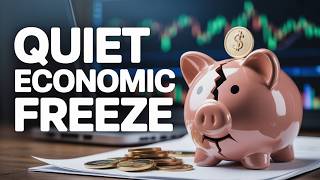
In this solo commentary, TJ Walker critiques the media’s obsessive focus on a single political leader whose reckless actions dominate news cycles, arguing that repeated exposure normalizes authoritarian chaos and threatens global stability. He then shifts to an economic analysis, describing the U.S. job market as "frozen" with hiring at 3.1%, quits at 1.9% and layoffs at 1.1%, warning that this paralysis could turn into mass firing, especially as energy prices rise. Walker offers practical job‑search advice, emphasizing active networking over mass resume submissions, and urges listeners to develop habits through his free Ultimize courses. The segment concludes with a critique of Tiger Woods’ DUI crash, proposing mandatory chauffeur services as a deterrent, and expands the argument to a broader pattern where celebrity and leader echo chambers enable repeated poor decisions. Throughout, Walker blends political, economic, and personal‑development insights while promoting his Ultimize platform.
Chapters
Ultimize. There are days when the news feels varied, and then there are days when it feels like you're staring at the same headline 25 times in a row. Today I opened the New York Times homepage, 25 top stories. Guess what? 23 of them had the same name in the headline or were about something that same person had just said or done. 23 out of 25 stories. At that point, it's not the news, it's a loop. It's one story told over and over again with slightly different costumes. And the story is simple. What did this man do today that was reckless, offensive, illegal, dangerous, or just plain insane? You've got a leader who treats war like it's a casual suggestion. Maybe we hit this country, maybe we don't. Let's see how it polls. No clear objective, no exit strategy, no understanding of consequences. That's not foreign policy. That's a guy spinning a roulette wheel with missiles on it, and somehow we're all supposed to pretend this is normal. You got attacks on judges who ruled against him, calling them biased, corrupt enemies. You've got prosecutors portrayed as villains simply for doing their jobs. You've got the legal system treated like it's optional. Like laws are just suggestions for other people. And layered on top of that, a steady stream of rhetoric—racist, sexist, openly hostile, aimed at entire groups of people, as if cruelty were a leadership skill. And then the cherry on top: a career-long habit of turning public power into private profit. Properties, deals, branding, influence—all blended together into one giant ethical shrug. This isn't one scandal. This isn't a subscription service. Every day, new outrage, same theme. And the repetition is the trick because eventually your brain stops reacting. You start thinking, well, that's just how things are now. That's not adaptation. That's normalization of insanity. And here's the point that's been hitting me harder and harder. I used to read about several places like Stalin's Soviet Union or Cambodia under Pol Pot, and I think, how do ordinary people live through that? How do they tolerate it? And the answer I'm starting to understand is this: it didn't feel like one big dramatic collapse. It felt like this: daily chaos, constant outrage, the same figure dominating everything— news, law, culture, and there was nothing left until the abnormal became background noise. This is what it must have felt like waking up every day wondering, what did the leader say now? Who's the enemy today? What rule just disappeared overnight? Not terror all at once, but a slow drip of instability that never stops. Because when one person becomes the center of everything—truth, law, policy, you don't have a functioning system anymore. You certainly don't have a functioning democracy anymore. You have a personality cult with better marketing. And here's the part no one wants to say out loud: when a country that powerful starts to feel unstable, not occasionally but constantly, other countries notice. They don't just shrug and move on. They analyze. They assess risk. They ask uncomfortable questions about global stability, economic fallout, alliances. And history tells us something very clearly. At a certain point, instability stops being internal. Remember, this country has supported removing leaders elsewhere when they were seen as dangerous or destabilizing. Venezuela is just one recent example. So here's the thought experiment: another nation had a leader behaving like this— erratic, reckless, self-serving— what would we say they should do? What should be done? What advice should we give? Now, I'm not telling anyone what actions to take. I'm saying connect the dots. Europe, free world democracies, because around the world, serious people are already doing exactly that. Quietly, strategically. At what point does one individual's behavior become a global risk? At what point does "that's their problem" stop making sense? At what point do responsible nations start considering options that would rather normally never be considered? History just doesn't judge chaos. It judges the bystanders, the people who saw exactly what was happening and kept telling themselves, "Eh, it wasn't that bad." So yes, 23 of the top 25 stories today, same name, same behavior, same pattern. At some point, it stops being news and it starts feeling like a warning. Okay, some of you may say, well, TJ, you're being hyperbolic. No, I'm not. Just because this is our normal doesn't mean it's something that we should tolerate as normal. When one person's insane actions every day shredding laws, shredding judicial opinions, shredding norms, shredding all boundaries of decency, and that's all our country That's all the world could even talk about. Now, the entire worldwide economy has not gone in the tank yet, but it's not looking too good. Let me ask you something. How many times have you heard a great idea and thought, that's really useful, and then never used it again? It happens to all of us because without repetition, even the best ideas just fade. So instead of just collecting more information, do something different. Go to ultimize.com, U-L-T-A-M-I-Z-E dot com, and grab the free course. You can start with communication skills or building better habits, but the key is it's designed to reinforce the message so it actually sticks. If you're already listening or watching this, you're halfway there. Just go to ultimize.com and take the next step. What if I told you the job market isn't collapsing, it's freezing, and that might actually be worse? According to a new report highlighted in Fortune, the U.S. hiring rate has dropped to just 3.1%, the lowest level since April 2020, when the economy was literally shut down during COVID Let that sink in. Back then, businesses were closed by law. Today, businesses are open, at least legally, and still not hiring. This isn't a crash. This is something eerier. It's an economy stuck in place. Imagine a game of musical chairs where the music just stops, but nobody moves. Nobody sits down, nobody stands up. Everybody just freezes and looks around. That's the job market right now. People aren't quitting. Quits are stuck at just 1.9%. Companies aren't firing. Layoffs are only 1.1%. But here's the killer: they're not hiring either. So if you don't already have a chair, you're just standing around forever. That's not stability. That's paralysis dressed up as calm. And economists are starting to use phrases that should make you very uncomfortable: brutal job market, locked-out market. That means if you're young, switching careers, or just got laid off, good luck. The door isn't just closed, it's bolted. This is the kind of job market that quietly destroys momentum. You graduate, no jobs. You want a raise, you stay put. You hate your boss, you stay anyway. It's like everyone is trapped in a bad relationship with their employer. I'm not happy, but I'm not leaving. And when millions of people feel that way at the same time, that's just not an economic problem, that's a psychological one. Now, here's where it gets even more interesting and more dangerous. Normally, if you lose a job, you can fall back on something— hospitality, retail, construction— but those sectors, according to the data, are slowing down too. The safety net has holes in it. Think about that for a second. The backup plan doesn't exist. It's like jumping out of a plane and finding out your parachute is on back order. And economists are saying this could get worse because if companies can't grow, they don't just stop hiring, they start cutting. The phrase used was chilling: we could go from no hiring to firing. That's not a slowdown, that's the moment the floor drops out. And here's the communication lesson, the part most people miss. This kind of economy is incredibly deceptive because on the surface everything looks fine. Unemployment around 4%, that's pretty good. Layoffs, low. So leaders go out and say the economy is strong, but that's like saying a car is fine because it's not crashing even though the engine has completely stalled. This is where bad communication becomes dangerous because if leaders describe this as stable, people stop preparing. If they call it strong, business delay, tough decisions. And if they ignore it completely, you get blindsided. The best communicators don't sugarcoat. They translate reality early because by the time everyone feels it, it's already too late. And one final factor hanging over all this: rising energy prices and global conflict. Oil prices are already surging, and economists warn this could be the final straw that pushes companies from freezing hiring to cutting jobs. In other words, this quiet, frozen economy, it might not stay quiet for long. And when it finally moves, it's probably not going to move in the direction people are hoping for. Now, let me be clear, I am not predicting a recession. The world is filled with the so-called economic seers who have predicted 19 of the last 5 recessions. There's nothing easier than predicting a recession. Now, there's always going to be a recession at some point in the future. That is the nature of capitalism. But you get no credit for saying a recession is coming and it doesn't come until 3 years later. You don't get credit for that. So I'm not going to fall into that trap. I do think these are perilous times for young people just graduating from college or high school, if you're trying to get a job out of high school, someone who's taken time off, perhaps you've taken time off to raise a young child, now they're in school, you want to reenter the job market. Maybe you're a senior citizen and you thought you wanted to retire and now you said, no, I want to get back to work. These are tough times and it's going to require some adjusting. Here's the number one adjustment I would offer or suggest to whether it's young people out of college or anyone, do not think anyone owes you a job. Now, I'm sorry, and there are some cultures where, whether it's Scandinavia or other places where you kind of do have a right to a job. That's just not the way it is in the United States. I wish you could have a job, but you're not owed a job, number 1. Number 2, sitting at home and doing this. Those of you listening on the podcast, I'm taking my finger and I'm hitting click send, click send. If you think that's job hunting, wrong. I see countless profiles in major media all the time. Someone's saying, 'Well, I sent out 1,000 resumes and cover letters in the last 6 months. I haven't gotten a single job interview.' I'm sorry, that's on you. If you think job hunting is clicking and sending and sitting behind a computer, you're not living in reality. Now sure, some people have gotten lucky that way in the past, but if you're spending more than 5% of your job hunting time clicking and sending resumes, you're wasting your time. You need to be out talking to people, meeting people in the real world, going to lunches, having coffees with friends you went to high school or college with, trying to connect with people in industry, going to free industry events if you can find them. You need to be, if you're online, connecting with thought leaders in the industries and the companies you wanna work with and commenting on their post on LinkedIn and Twitter and X. And Facebook. You need to be making meaningful connections, and then you need to ask those people to help you get in front of the right people for jobs in companies you want. Do not wait until it's officially listed. By then, it's often too late. So there needs to be some new job skills taught in high school and college And the number one thing that should be taught in every one of these classes is if you're sending out resumes and cover letters by looking at a computer screen, you deserve to be unemployed the rest of your life if that's the sole extent of what you're doing job hunting. Again, I would say 5% of your time. So do the math. If you're job hunting 10 hours a day, then okay, half an hour should be spent sending resumes and hitting apply to job ones. All the other things should be out meeting with people, talk, call people, call people you used to work with. Doesn't matter if it was a high school internship. Call people and let them know what you want to do. The other thing you got to think about is Do something of value right now. If you have two hands, if you're not physically infirmed in some way, you can clean houses. I had to wash windows at one point in my career, and I'm not talking about in high school. I was in my late 30s. Things had not taken off yet. I was moving— I remember one day I moved a piano into Roosevelt University. For about $50. I wasn't too good to do that. I did it. I needed the money. So if I can do that at 37 with a college degree, you as a newly minted college student can bartend, you can deliver Uber Eats, you can work for Angie's List, you can post your services on Craigslist and do handiwork for people. You don't know how to do it? Guess what? If you've got a cell phone and you've got YouTube, you can find out how to do anything. Make yourself useful, make money, and continue applying for jobs you want, or start your own business. Might not be what you want to do, but anything is better than having month after month go by, click send, click send, click send. That is not real job hunting. Okay, so who am I? Who is this TJ Walker character? Why are you listening to me or watching me? I spent 40 years coaching executives, people just like you, but also presidents of countries, prime ministers, Nobel Peace Prize winners on how to have better communication skills and personal development habits. And now you can get the same training, but here's the catch. There is no catch. You can get a free course Today, all you have to do is go to ultimize.com. That's ultimize.com. And you can download your free online communication skills course or your free good habits building course. Go ahead and do that right now, or at least right after the show. What do you do and what do you say when you crash your car, get charged with DUI, Refuse a drug test and the whole world is watching. Tiger Woods just gave us that answer again. After a rollover crash near his Florida home, he's now facing DUI, property damage, and refusal to submit to testing. Police say he had bloodshot eyes, hydrocodone, codeine, some type of drug. Thankfully, I haven't had to take it. It was in his pocket and admitted he was looking at his phone and adjusting the radio before slamming into a truck. Wow, that's quite the decathlon of decadence. And now he says he's stepping away to seek treatment, which, fine, that's responsible. But we need to talk about the part nobody's saying out loud. I have one magic word that could solve 99% of Tiger Woods' problems. One word. This is going to be revolutionary. Are you ready? Uber. That's it. That's the breakthrough. Not rehab, not statements, not I'm stepping away. Uber. Tiger, you're worth hundreds of millions, possibly over a billion dollars, and you're still driving yourself around like you're late for a shift at Best Buy? Stop it. Just stop it. Let's put this in perspective. Tiger Woods isn't just rich, he's historically rich, built the rich. Estimates put his net worth well over $1 billion at various points. And back in 2009, after his first scandal, he lost conservatively tens, if not hundreds of millions of dollars in endorsements almost overnight. Some estimates push that into even more. Here's the real question: do you enjoy driving so much that you're willing to risk Hundreds of millions, maybe. Is the thrill of merging onto I-95 really that intoxicating? Oh man, I just love using my turn signal. What I remember. Wow. No. You have the financial ability to never touch a steering wheel again for the rest of your life. That's not a limitation. That's a luxury. And here's where I want judges to get a little more creative. Because the standard punishments clearly aren't working. Binds? Meaningless. Suspensions? Temporary. Treatment? Important but not sufficient. If you're dealing with someone at this level of will, you need consequences that actually change behavior. Here's my proposal: no more driving, ever. Mandatory chauffeur. Mandatory limousine. You want to go to the grocery store? Limo. You want to go to the gym? Limo or Uber Black. You want to go 200 feet down the street? Congratulations, you're going in the back seat with tainted windows. Because at this point, getting behind the wheel isn't freedom, it's negligence. And this isn't just about one person. This is a celebrity pattern. We've seen it over and over again. Justin Timberlake, DUI headlines. Countless actors, musicians, athletes, same story. Rich, famous, surrounded by people, and somehow still driving themselves into trouble. This is the dumbest risk-reward calculation in human history. Risk: public humiliation, legal trouble, financial loss, possible injury or worse. Reward: you get to sit in the front seat and pick the music. That's it. That's the upside. You could literally outsource this task for less than the cost of your morning coffee. And yet here we are again. But there's a deeper issue here, and it's not about driving. It's about what happens when someone becomes so successful at one thing that everyone around them stops saying no. You're great at golf. Amazing. Legendary. But somewhere along the line, people start treating you like you're great at everything. Oh, you can hit a ball 300 yards? You must also be an excellent decision maker while impaired behind the wheel. No, that's not how skills work. That's not how reality works. That's not even how basic math works. And when no one around you says, hey, maybe don't do that, you start believing there are no bad ideas, only misunderstood genius moves. This is what happens when your inner circle becomes an echo chamber. Everyone's nodding, everyone's agreeing, no one's grabbing the keys and saying, "You're not driving." And the result? The same mistake, the same apology, the same "I'm stepping away" over and over again. So yes, seek treatment, that matters. Take time away, that matters. But if there's one real immediate foolproof solution, it's not complicated. It's not philosophical. It's not even expensive. It's one word and you already know it. Okay, folks, that's the show for today. I appreciate you stopping by. Please leave comments here on the YouTube channel. If you're watching any other social media platform, you can leave comments there as well. You know, this issue with Tiger Woods, it's We see it everywhere in our culture. Somebody does one thing well. So, for example, Elon Musk, he makes technology companies worth a lot of money. And then people say, "Oh, so he should know everything about foreign policy and domestic policy and how the government should run." Well, no, he ended up ruining his whole tenure at Doge and doing a lot of stupid things because no one's willing to say no to this guy. We see that a lot in other places as well too. Be careful about that. Look, I want you to be successful and I want you to try new things, but when you try something new out of your comfort zone and you have a big impact and it could kill people, you need to have people around you enough that you respect them and they respect you so they can tell you no. And we've got some comments coming in. Ajuwal602 stops in and says, "I love the way you filter the news." Well, thanks so much for stopping by. I appreciate it. I'm here for you every single day, typically Monday through Friday, looking at the news and then filtering it through the lens of personal development skills. Thanks so much. See you tomorrow. You ever notice how we all say the same thing? I know what I need to do. I just need to do it. That sentence alone has probably cost people years of progress because knowing isn't the issue. It's having something that actually nudges you again and again to follow through. That's the whole idea behind Ultimize. So if you're getting anything out of this right now, take 10 seconds and go to ultimize.com. There's a free course waiting for you, communication skills, habits, your choice, and it's built to help you actually apply what you already know. It's totally free. Just go to ultimize.com, tami.com.
More from TJ





The Breakout Cases - What Actually Caused Famous Speaking Career Breakthroughs | Ultamize

The Red Circle Sessions Finale - Build the Speaking Career You Came Here For | Ultamize

Two Stages, One Logo, Two Completely Different Realities - Main Stage vs Independent Events | Ult...

Pre-Reset - Why Repetition Builds Better Speaking Decisions | The Red Circle Sessions | Ultamize

Your Decision, Your Framework, and What Happens After - Build Your Speaking Career First | Ultamize

The Red Circle Sessions Trailer - The Speaking Career Truth Nobody on That Stage Will Tell You | ...

The Two-Minute Ultamize Reset - Your Platform, Your Audience, Your Voice | The Red Circle Sessions