Elon Musk Communication Skills Secrets
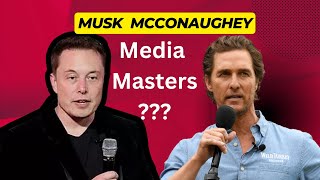
TJ Walker breaks down how Elon Musk and other newsmakers handle media appearances, speeches, and crises. He focuses on what works in presentation, vocal delivery, body language, and messaging, offering real-time critique and coaching tips.
Chapters
Welcome to this Week in Communicators. I'm TJ Walker and this week we'll be looking at top newsmakers like Elon Musk and a recent mini press conference he held. We'll be looking at the CEO of BMW who actually collapsed on stage while giving a speech this week, Ashton Kutcher and Mila Kunis in sort of damage control video they put out. Secretary of State Blinken in a presentation he gave, a news media interview he gave regarding Putin. Senator Mitt Romney had major announcement this week. Comedian Samantha Bee off on a promotional tour and some of her recent interviews. We'll be looking at Supreme Court Chief Justice Roberts and some of his recent pronouncements. The actor Matthew McConaughey promoting a new children's book. Some of his media interviews. Everything again is fresh this week. These are all interviews, speeches, presentations made by newsmakers. This week I'll be reacting, giving my own analysis plus yours. So feel free to post your comments in the chat there. We'll also be looking at someone you might not have heard of. He's perhaps the least famous here, but he's extraordinarily famous on YouTube. Ali Abdaal, who I only recently discovered and found him to be a fantastic communicator, something we can all learn from Djokovic and his recent win in the US Open created a lot of media opportunities for him and he does many things extraordinarily well. We'll take a look at that. Jared Leto, extraordinarily skilled actor and musician, some of his recent interviews and more to come. So all of that right now. And if you like this, we may be coming to you every week, who knows, maybe every day, analyzing top news stories through a communication lens. So I'm going to put some people up, like this gentleman who are very controversial and they're polarizing views. Caveat here. Please realize that I'm not here judging the merits of their arguments, their politics, their philosophy. We are looking at this through a communications lens lens and communication skills standard only. I see Mark James has joined us again. Mark, thanks so much. Mark is asking what camera am I using? It's just a simple webcam. Now when I make most of my longer form YouTube videos, it's with a more professional large canon. This is something called an MEE webcam. So it's, it's pretty simple stuff. So, Mark, I'll be interested in your opinions of these newsmakers and how they're coming across and let me know if the audio is working. Let's take a look at Elon Musk right here in a recent sort of mini interview he did in Capitol Hill. It was very civilized discussion, actually, among some of the smartest people in the world. So I thought so. One thing that does strike me about Elon Musk is for someone who's the richest guy in the world or one of the top wealthiest people in the world, when you actually watch him speak, he doesn't really come across that confident. Those were three ums in six seconds. He also tends to not speak from down here, but sort of up in what we'd call a thin voice. It's sort of not a nasal voice, but a thin voice where he's sort of up in his head. And he also tends to speak quickly, which in most situations is perceived as being nervous and uncomfortable. Mark says the audio is working this time. Great. Let's watch more. Senator Schumer did a great service to him out of here. So notice how quickly he speaks. Now, some highly intelligent people do speak very quickly, and I don't think anyone really doubts that he has a high iq, but it does make it harder to understand. It flattens out his voice, makes things more monotone. He's obviously very, very successful in many different arenas. But I would put him in the category of someone who's successful in spite of communication skills, not necessarily because of them, but he can give good presentations when he's doing a major product launch. But just his normal speech patterns. This, to me, is fairly consistent. Which. Watch more. The rest of the Senate. And I think we'll. I think something good will come of this. This. I think this. This meeting may go down. History as being very important for the future of civilization. So to his strength, he's. He's very positive, and you could say that's too egomaniacal. But he's saying this history will go down as one of the. This meeting will go down in history as one of the most significant events to ever happen. Now, he is talking about artificial intelligence and regulation. It is an extraordinarily important topic. But he definitely is showing that he feels like he has a significant place in history, and arguably he does. But that is the way he's been talking throughout his career. So there is a confidence that comes out of him that really is quite powerful. Senator Schumer, or Leader Schumer did ask everyone to raise their hands in the room to see if they were in favor of AI regulation, and I believe almost everyone did. And in his defense, he does come across as comfortable. He relaxed. He does sound conversational. He does not sound like he's trying to memorize something. His head is moving a little, his face is moving a little. He's not frozen stiff, nervous, frowning. So there are many, many mistakes people could make that he's not making. Yeah. So that's a good sign. I think the probability of there being some sort of AI regulatory agency that stands on its own, similar to the FAA or fcc, is likely at some point. Now he's looking at just one reporter. This is sometimes something that gets politicians and newsmakers in trouble. You're surrounded by a lot of reporters at a press conference and you're doing kind of this. Your eyes are floating around because you're trying to be inclusive. You're trying to give everyone your attention the way you would if you were in a meeting with a handful of people. But when the video camera, the TV camera is just on you, you can look a little lost. The way I look kind of weird right now. Right. So that's one thing. He's doing well at this part of the interview where he's really focusing his eyes just on one reporter, which is generally the best thing to do. You think so? I think so. Now, the reason that I've been such an so many clients I work with around the world are afraid that the words won't come to them right away, that they'll stammer, that they'll say, well, here we see by some definitions arguably the most successful man in the world if you monitor things in terms of major corporations and money. He's stammering all over the place, lots of repetitions, lots of filler words, eyes sort of floating around to think, which is not really the best way to come across on camera. So the real lesson here, I think for the rest of us is don't worry about being perfect. Don't put so much pressure on yourself to never say or because you can still be really successful and not be completely fluid in every interview and every presentation. What do you think of Elon Musk? If you're watching this on Demand later or live, post in the comments section, post on YouTube and I can see it on stream yard, which is what I'm using right now. So feel free to do that. And meanwhile, we're going to go to another newsmaker this week. This is an unfortunate situation. I certainly feel for the guy, but let's just watch it and let's give you full screen for that and you can get your sense. And I should point out he is speaking in German. He's the German CEO of BMW, which is a German car company. So so far everything is going okay. So there's no big problem yet. But watch. In just a moment, things get very interesting quickly. So he just falls down, he is escorted off. And we certainly wish him, the CEO, a speedy recovery, whatever happened to him. But obviously a scary moment for his friends, family and loved ones. But it does make you wonder what happened before that. My advice to people is if you feel a little lightheaded or you feel sick or ill and you're going to be giving a major presentation, best to maybe put it off an hour, do it the next hour, do it after lunch. Because here's the unfortunate thing. This gentleman may never, ever get as many eyeballs again as he did for this. Collapsing on stage. It's sad, but it is true. And Mark is a German speaker. He's watching now and offering comments, says his speech is not perfect. So it may have been obvious that, that he was suffering a stroke or a mini seizure or simply not feeling well that day. When you're speaking and there's a big spotlight on you and certainly the CEO of a major, major corporation, if you're not in top form, it's one thing to say, I have a little headache, the show must go on. But if you feel like you could collapse, there's simply too much negative attention that can go to that. And you're better off either postponing it for an hour or coming back. Now, I do have sympathy for him. Once I wasn't giving a speech yet, but I was on a stage and I was such a clumsy oaf, I stepped off the stage and I went toppling down. I didn't hurt myself, but there were a few people around and it was embarrassing. And Mark is nice enough to point out that the speech was about Elon Musk. So Elon Musk is good at getting attention. And let's just comment on that a moment because Elon Musk is a world class, maybe not communicator speaker, but he's world class at getting attention for himself. Whether it's through his teeth, his tweets, his other antics, he does get lots of attention. Now, next up, we're going to look at Ashton Kutcher and Mila Kunis, his wife. I'm not going to go into all the controversy of the issue here, but they came to the defense of a friend of theirs, a co worker they'd known for 25 years who had been convicted of extraordinarily serious crimes. Now, many people were extremely angry on social media of this couple for them having a. A letter written in defense of their friend and colleague. Let's look at exactly what they had to say of the pain that has been caused by the character letters that we wrote on behalf of Danny Masterson. So this is a classic crisis communication move. You try to put a positive message out to reframe the issue. Because right now they are, as we speak, this happened this week. They are being vilified and attacked, excoriated in social media by a lot of people who claim to have been their big fans. So they're trying to minimize damage, trying to change public opinion. Now, this is a simple video they apparently made on their own cell phone. You can see at the end, Mila Kunis actually reaches out to hit stop. So I give them points for that. It doesn't seem like some slick production, a big studio. They don't seem like they're surrounded by lawyers and PR people, although reports are that they do have PR counsel guiding them through this. Not that they shouldn't, but they're coming across as sincere and genuine and like they just want to share with a friend. Almost as if an angry relative knocked on the door and said, hey, I want to talk to you about this. He's unshaven. She's certainly not looking glamorous here. They don't seem to be made up and trying to put on fancy airs. So I do think in this crisis situation, it does come across genuine. Now, again, caveats here. If you follow this case really closely and you are particularly angry at them, you're more than welcome to your opinion. We're not here to debate the substance of the judicial issue and the larger societal issue. We're really here to analyze the communication skills of what's going on, how they handle it in a crisis communication situation. Let's watch more. We support victims. We have done this historically through our work and will continue to do so in the future. So for background, they are accused of being insensitive to victims because they're saying good things about their friends. So without surfacing it directly, they are trying to rebut that charge, refrain the issue, and to come across in a more sympathetic and empathetic manner, the future. A couple months ago, Danny's family reached out to us and they asked us to write character letters to represent the person that we knew for 25 years so that the judge could take that into full consideration. The other thing is the tone. The tone is somber. It's low key. I would argue it's appropriately low energy. They don't come across as we're so super confident we were right and perfect and everyone is wrong. Their demeanor is almost contrite. And I do think that helps them. Relative to the sentencing. The letters were not written to question the legitimacy of the judicial system. So here she's addressing highly specific charges that they were insensitive and they were essentially trying to get their friend freed from a prison term and a judicial decision overruled. That's not so she's saying right there. That's not their concern. So she is addressing highly specific charges. That is classic good crisis communications, because a lot of people who aren't good at this just come out and they address straw man arguments. Some people say that I hold myself out to be perfect. I have never said that I was perfect. And that's not what anyone was charging. That wasn't the allegation. So I do give them credit here. They took time to really look at the exact, precise reasons why people were upset with them, and they did deal with those reasons. Am I saying they convinced everyone who's angry with them? No, but they did deal with the issues in a way that certainly comes across as sincere or the validity of the jury's ruling. They were intended for the judge to read and not to undermine the testimony of the victims. Or so his voice is lowering here, almost like a whisper, in that he realizes this is very serious issue. People are extraordinarily upset. And he's through his tone saying, I understand why you were upset. Here's what we did as human beings or reach homicides them in any way. We would never want to do that and we're sorry if that has taken place. And he does say he's sorry for hurting people's feelings. Now, some people are never going to be satisfied without someone saying, I was completely 100% wrong for what I did. I was an idiot, I was a fool. Well, he's not saying that, but he did come across as contrite, did tell people that he was sorry for bad feelings that occurred and they put this out on their own. This was posted, I believe, originally on Instagram, but it's now been picked up on social media, mainstream media everywhere. So is this a career destroying crisis for these two? In my opinion, no. Will there be some fans who might not ever forgive them? No. But one thing we do know about both of them, and especially Ashton Kutcher, is he is extraordinarily skilled and savvy at social media and connecting with fans and the public and has a huge following. I do think he needed to do this. And he did about as good a job as he could have done. Now let's look at Secretary of State, the United States, for those of you from around the world, other countries, I don't mean to be US centric, but I am here in the United States. This is the Secretary of State of the United States in a recent interview. Let's take a look at how he comes across station in Morocco. Mr. Secretary, thank you for joining us. I want to begin with that devastating earthquake this weekend in Morocco. What is the United States doing to assist in the relief, recovery, search and rescue operation there? John, you're right. It is devastating. And we've reached out immediately to the Moroccan government, made very clear to them that we are prepared to assist in any way that we can. We have the so he certainly looks polished. He looks the part of a very dapper Secretary of State and global affairs person. He's clearly articulate and poised. I do notice like three ums in the first 10 seconds. So he's not completely smooth the way we think of smooth communicators, not using filler words and things like that. He moves, which in general I'm in favor of people moving so they don't seem stiff or nervous, but there's a wiggle that doesn't seem completely natural to me, the way he's moving. He seems slightly uncomfortable. Let's take a look. U.S. agency for International Development, which takes the lead in our efforts mobilizing, and we're waiting to hear from the Moroccan government how we can be of most assistance. But we're tracking this very carefully and our hearts go out to the people of Morocco. So he's clearly hitting message points. Big crisis occurs right away. There's devastation, death. There's not really that much any government official can do from the other side of the world oftentimes. So our hearts go out to these people is a standard message point and he delivers it okay. There is something a little bit robotic about him. He's a little more monotone. That I think is the ideal way of communicating, but he's certainly not a bad communicator. Suffered this devastating earthquake and we stand ready to help in any way that we can. The big thing I'm noticing about him is there's a slight choppiness to the way he speaks. It's not completely monotone, but there is a slight choppiness. It's almost as if someone had just put the talking points in front of him two minutes before the interview and he had to look at it and now he's in a moment of sort of active recall, which is something that happens when you are in a major position like this, a secretary of State. He can be called on at any moment to have to give significant pronouncements about important developments in a country he maybe never heard of until five minutes earlier. So that is something that is extraordinarily challenging when you're in a high profile position other than being a president or a prime minister of a country. This is about a high profile position as you have and you've got to react quickly, often daily, to media interviews on dozens of topics. So given that, I think he does fairly well. But again, inspiration to all of us, the ums and us come out. It's a little choppy. It's not that conversational. He's still obviously successful at his job. Mark says communication is universal. You're absolutely right, by the way. If you are watching this, I want to know live or on demand, what do you think of the people I'm critiquing? What do you like about how they're coming across? Do you think they are effective? What do you not like? Do you agree with anything I say? And probably more important, where do you disagree? Communication is one of those things where two different intelligent people who are looking at things in a fair way can come to completely different conclusions. Now, I am basing my analysis on having personally coached presidents of countries, prime ministers, Nobel Peace Prize winners, and thousands of people like you and other executives all over the world for the last 30 plus years. So I'm not just pulling this out of, you know, where it is based on having trained tens of thousands of people in person and 2 million students online around the world. But your opinion is valid too. So I would love to know what you think of these people. Let's go to the next one. And this is another political figure. This for those of you around the world might not recognize him. He ran for President of the United States and was the nominee for the Republican Party in 2012. Republican Party today is in the shadow of Donald Trump. He is the leader of the greatest portion of the Republican Party. It's a populist, I believe so. This is Mitt Romney and he has an amazingly consistent look. He's been on the national scene for 30 years and he's 75 years old now and my goodness, he's sorry to sound superficial, but we are judging superficial things. He looks a lot better than I do. I don't think anyone would seriously disagree with that because he's had a very consistent look, almost like he was cast from Hollywood with a perfect head of hair, the distinguished gray temples. He's all you can't tell from this, but he's 6 2, 175, very athletic and always has a nice tan and was alleged to have been caught using excessive bronzer back in his presidential campaign. But he looks great on TV and in speeches. He comes across as highly intelligent and he does have a Harvard Law School degree and by all accounts is extraordinarily smart. So he comes across as intelligent. He's doing some things here that I think don't really help him. Looking around the room as we've talked before. Again, that's natural when you're surrounded by reporters. But the best thing to do when you are at a press conference or a whole bunch of reporters just grab onto you and start asking questions is when a person asks a question, look at one reporter in one direction for the whole answer, then go to someone else rather than having your head floating. It can seem a little disorienting. Let's watch more of him demagogue portion of the party. Look, I represent a small wing of the party if you will. I call it the wise wing of the Republic. So he does have a little smile on his face. He's moving, he's talking about very serious matters without getting we don't have time to get into all the political context. But he was the head of the Republican Party in the United States when he was the presidential nominee. He's now essentially resigning from the Senate, essentially saying he thinks his party is beyond hope and he has no respect for most of the people in leadership positions in his party. So he's coming at this certain sadness, almost despair. But he still does see some light heartedness. You just saw a smile there. He does have some awkward phrasing like if you will, he just said it's something that academics like to use. It really means nothing and is sort of a placeholder verbal tic that I really do not like. He does have come out fairly often too. He's someone who varies a lot. I've seen him in speeches and in debates where he's come across as a very powerful communicator and quite forceful. I would give him sort of middling grades for this one. Let's watch a little more. And I don't believe we're going away. He's putting in these extra ums and I think it's in part because he does feel uncomfortable because slight background here. He's responding to news that he's decided he's not running for re election. He has a new biography coming out in which he cooperated with the biographer. And in the book he talks about how little respect he has for most of his colleagues of his own party. So it's going to be an awkward time for him on Capitol Hill having to sit next to and work with these people for the next two years of his term. That may be in part of why the ums and the slight awkwardness is coming out. I think ultimately we'll see a resurgence and come back into leadership of the party. Look, my wing of the party talks about policy and about issues that'll make it so. He's clearly trying to communicate the point that he is frustrated with politics in America today. He's especially frustrated with his party. And I think his words and his emotions, his movements are all in sync here. He's doing a great job there. Difference to the lives of the American people. The Trump wing of the party talks about resentments of various kind and get and I meant to cut off there because we're trying to stay apolitical on this channel. And the problem with the gentleman's name he just mentioned is it's very hard to have a fair and honest conversation without extreme, extreme polarizing emotions and hatreds spilling out. So I'm going to fast forward and we'll go to the next one. Let's go to something lighter. This is a well known American comic, Samantha Bee in a recent that when I say recent, every clip we're doing on the show today happened this week. It's about communicators. This week in the news, she became famous to a lot of people around, not just the US the globe as the longest serving correspondent on the Daily show on the Comedy Central network. She's had her own show for about 10 years on TBS and now she is promoting a new comedy live series she's doing around the country. Let's look at how she's done. By the way, I can't say I trained her to be good on camera, but I did spend a day with her coaching and rehearsing her for a whole series of interviews she's doing about 10 years ago. It was great working with her. She is just as funny and personable off camera as she is what you see on camera. Let's take a look at Samantha Bee. Samantha Bee joining us live in studio. How are you? I am very well, thank you. How are you? I am well. You have added actually. So right out of the gate she's moving. She's sort of being playful. She is consistent with her Persona of being sort of the fun person, not taking yourself too seriously. Normally, I don't recommend kind of looking up, but for her, it adds to this kind of playful vibe. She is a comedian known for taking things not too seriously. So I think it's working for her. 17 more dates to this tour. So it seems like people are eating it up, right? People are eating it up. How expressive she is. Now, this is a highly skilled talent she's honed. And it's great for anyone who really wants to be a superstar is you want attention because the host, the anchor is talking there. But while the anchor was talking, she went. It was so expressive, the director had no choice but to cut to her. So that is a trick that great performers, great entertainers know how to get more TV time, how to get more of the spotlight for themselves by just being really expressive. But she did it in a way that wasn't rude. She wasn't interrupting the host. She didn't say anything. But through her expressions and movement, she attracted attention. I love. Do I love doing it so much that I just felt. Notice she doesn't say, I love doing this so much. When she said love, you could feel the love just pouring out of her pores. And she was showing it too. So that's the sign of a great communicator. The words were in sync with the emotions, and those were in sync with the body movement. It wasn't just her face, it was her head. It was her whole body. Everything was communicating there. And that's what makes her interesting. TV compelled. If people compelled again, see how she's changing constantly. The speed, the tone, the volume, the pitch, the angle of her head. There's tremendous variety of how she's communicating. That's what makes her interesting. That's why she got her own talk show. People are willing to come and see the show. I am absolutely more than willing to bring it to them. So, so great. The joy of sex education. So we could watch more of that. But she's pretty consistently great now. Not completely surprising, given her profession of not just being a celebrity, not just being a comedian, but being somebody who performs in the medium of television on a daily basis and has so now for decades. A little bit different than if you're a movie star where everything is scripted and you may say the one, the same one sentence 50 times a day, and then you go to the next part of the movie. As a comedian who performs on tv, she is having to Come up with new stuff every day. A lot of it's scripted, obviously, but a lot of it isn't scripted. When she had to do commentary and question and answer back and forth with the host of Comedy Central, they couldn't script out all of that. So you have to learn how to think on your feet, on camera. By the way, I think the clips are around somewhere, but I've been on Comedy Central twice back in the old days when they really made fun of the people they interviewed. And it was a fascinating experience where they spent two full days with me and my team in the studios of Media Training Worldwide in New York City to do a three minute bit where they made fun of spin masters and PR people and media trainers. And you know they're going to do it, but it's still a fun, fun experience. They had a staff, must have been 30 people. Now, if you're getting ready for an interview, whether it's on the Daily show or the BBC or cnn, you may be thinking, I'd like to get a little more polished, a little more comfortable, and I don't want to learn in real time in front of the world. You may want some coaching. A lot of people just like you come to me at the High Stakes Presenter where we do personalized coaching programs to help you get great with every media interview you do, every speech you do. I didn't do it before we posted, but I will post it as soon as I finish. In the description to the link, it's High Stakes Presenter and you can learn more about how we work with successful professionals who are already pretty good at speaking to live audiences in the media become great. So that's what it's all about. So please check that out either now or as soon as you finish watching this. That would be great. So Samantha Bee, we could go on and on, but she's really so consistent. Let's go to the next. Now here's someone who doesn't have to appear in the media very much because he is the Chief justice of the United States Supreme Court and Supreme Court justices, they can keep the cameras out of the court so they don't really have to speak that often. Let's take a look at what he said on C Span earlier this week. I want to assure people that I am committed to making certain that we as a court adhere to the highest standards. So he's reading a speech. Now. There are times when you have to read a speech and certainly if you are a Justice of the United States Supreme Court or the, or the Chief justice, people are studying every word and it has huge impact. So there are certain people who I believe it is important to have speeches written out. If you're president of a country, a prime minister, the chief finance minister, the head of the Federal Reserve in the United States. So often people are scrutinizing every single word. You can create a scandal if you get one nuance wrong. So I'm not faulting him for reading, but he is spending most of his time looking down. And I find for most people, they can get their eye contact up much higher if they do two things. One, just practice a couple of times, get really familiar with it. The second thing is make your font much larger. This is large font here, but making it twice as big. That way you don't have to generally look down. Or we've all seen speakers, they stand up and then first thing to do is, you know, put their glasses down and hunch over. If you know you're going to be reading a speech, just make the font much larger. Now, here's an advanced trick for you, any of you who do feel like you have to use a written speech. A system I use is I use entire sentence fragments and number them so you don't go past one whole line and it's numbered. So you can sort of scoop down, look at a sentence, look up and say the sentence, pause, look down again. It can slow it down. It can feel like you're being too slow, but it actually can be a much more powerful experience for people there to see you, because people there to see you have people there to see you looking at them. Not the end of the world to read a speech, but it doesn't let you off the hook. It doesn't necessarily mean you need to prepare less. Let's listen to him a little more. Of conduct. We are continuing to look at things we can do to give practical effect to that commitment. And I am confident there are ways to do that that are consistent with our status as an independent branch of government. So, again, I don't want to seem like I'm being too hard on him. It's certainly not that he's awful. He's not stumbling constantly. He's not shaking. There's no nervous tremor in his speech. But right there where he said, I'm confident that it sounded like he was saying any other word. He could have been reading the phone book. He didn't sound confident. If you're talking about, I'm confident that that's a really good time to look up. I'm confident we can do this. I'm confident we can accomplish that. You'll come across more believable, more genuine, and yes, actually more confident under the Constitution's separation of powers. I want. He's also in the act of looking down. This happens a lot. You're down, you're not breathing as fully. You can sort of lower your volume and clip your words and they just don't come across as powerful. Someone. And we'll study. Well, we'll study him on this show because this is always about new videos. But Ronald Reagan, the former United States president, was a master at using cue cards and making it sound like he was talking to people. He would glance down, look at the sentence, speak to people, up, out, building eye contact, pause, look down again and keep going. He didn't bite his words and bite the sound and lower the volume. I want to assure people that I am committed to making certain that we as a court adhere to the highest standards of conduct. So again, the words are nice. I want to assure people that we are committed to maintaining the high standards of the court. But didn't really seem like he was giving that much assurance. Again, for I know Marcus and other. Other places we have other people from other countries might no reason to follow our politics because no one can know everything about every country. The United States Supreme Court has been facing a lot of challenges lately in criticism over ethics of its members. So he's doing this in part damage control to help preserve the reputation of the Supreme Court. So he's saying things that his speechwriters or staff, whoever put this together, I'm sure all thought these are good messages and I think they are messages. But it would have come across a lot more powerfully and convincingly if for important parts like this, he could look up and say, I want to assure people we're going to everything we can to maintain the integrity of this court. And then if he has to go through and read other stuff, fine. But for the really important parts, much better to look up. And you don't have to become a great actor and memorize things. But to get the basic gist where you're saying it with a little conviction would be much more powerful. Mark is commenting that he can't wait to see the Ali Abdaal clip and says use big font and number them. Does it work for YouTube scripts? Yes, this can. This strategy can work for YouTube tips as well. In fact, I practiced it today because when we were doing the intro, I wasn't sure I was going to be looking at the videos of the people. So I actually just created a big list of all the names of people I knew we were going to comment. I didn't bother numbering it, but that is one technique you can do. By the way, if you're getting any value out of this, whether you're watching us live or, or on demand, please take just a moment to like the video, to hit the notifications button, to subscribe and to put some kind of comment. I would very much appreciate it. I know it can be annoying so often when you go to a YouTube channel and the first second out of the, out of the gate, the person making the video saying, please like subscribe, share, and they're asking you to do 10 things and they haven't given you any value. Well, I've been talking to you now for 35, 40 minutes. I hope you've gotten some value out of it. This is the first time I've asked you to like the video. So I hope, I hope we're seeing this as a win win. Let's move to our next celebrity. This is well known American actor Matthew McConaughey who is on a recent book tour. Let's take a look and see how he's coming across. I'm best selling author for your memoir Green Lights. What made you decide? I'm gonna go out and write a children's book. Got three children. So you start to, I think every parent knows you start to see life through the lens of having children and you start to think that way. And this came to me. So I like that he didn't have to say so. Many authors especially you ask them, why did you write the book? And they're kind of like, well, I did. And they go into this long, sort of boring, tedious thing. And he's just, there wasn't even a half a second wait there, I got three children. And instantly people could realize, okay, he wants to write a children's book because it's for his kids or he relates to kids. He thinks about kids a lot. So great first response. Right out of the gate. Being a dream one night and I thought it was a really like, like a Bob Dylan Diddy. A Bob Dylan Diddy. See how comfortable he comes across? He seems relaxed. He's coming across friendly. He's instantly going into story. Now, whether you're giving a speech, a presentation, or even doing a media interview, there's nothing more powerful than a simple story. So she asked, you know, how did you come up with the idea for, why did you decide you want to do this book? I'VE seen other celebrities say, well, you know, my agent had been asking me to for several years and the marketing seemed right. This is much more interesting. You always want to be interesting. And he's instantly talking about a dream he had and referencing Bob Dylan. Other. Well, let's just look at a couple more seconds of that part one night. And I thought it was a really like, like a Bob Dylan Diddy of a song. And it had this little meter in my mind and I was dreaming to it and just see how he's changing his, his whole vibe. He's moving, he seems relaxed, he seems like he's having fun. One of the things you need to do if you're going to be good at dealing with the media is you need to have fun during the interviews or at least seem like you're having fun. This is a, this is a really crucial point because there are a lot of actors in the world, some great actors, some of my favorite actors, Warren Beatty, Robert De Niro, fantastic actors, but generally horrible in media interviews because as they've told people for years, they don't like it. They don't want to have to do it. It's not their idea of fun. They want their work to speak for itself. All sorts of reasons. And they, at least in the past, used to give a lot of one word, two word answers to questions. Kind of frustrating for interviewers. Matthew McConaughey is here. He knows he's there to perform. He knows that this is a part of the show, this is a part of the business. And I think he's doing a great job so far. Just because they threw the dart doesn't mean that it stuck. And just because you got skills don't mean there is no luck. Just because. And so I woke up and I kept that. You know, when you wake up from a dream, you don't want to stop the rhythm of what you saw. So look at the movement. It's totally consistent. Now. Some people can move. I could do this and it's movement, but I would just look weird and nervous and stupid. He's moving a lot, but he's bringing us into his life. He's bringing us into this dreamlike moment where he's remembering what happened and what inspired him to write this. And he's having fun again, similar to Samantha Be notice there's constant variation in his voice, his tone, his speed, the pauses, where his hands are, where his face is, whereas body is. The expressions, the angle. There's constant movement and none of it seems nervous. None of it Seems jittery. It all seems entirely purposeful. Let's watch more. Got it. I started writing it down and it sort of just came out on the page. And after four, totally relaxed again. He's not afraid to, you know, do that. Sometimes people are on a media interview, they think, oh, I have a horrible itch on my nose, but I can't scratch because I'm on tv. He just did a quick scratch. Doesn't bother anyone. My only suggestion there is, in general, if you're doing a TV interview and you need to scratch yourself, by all means do a tiny bit. Better to simply wait when you're not talking and when the host or the reporter is talking, because then it's much less likely to be noticed at all. And you do want to address it because you don't want to be thinking the whole time there's an itch or something. Famously, a former vice President of the United States was in a debate and a fly landed on his head. And it stayed there for what seemed like a tremendously long time. He never brushed it aside, never touched it. And that created a whole catalog of ridicule and commentary about that. In that case, if a fly were to land on me while not speaking, I would then just quickly brush it away would be my advice. Let's look more at what else he's done and what we can learn from him. Four hours of writing. I decided, well, okay, I think I got my dream down. I went back to sleep, woke up to come back and check it, because you want to check those 2:30am ideas to see if they still hold the next. So again, the smile on his face. He's being self deprecating. He's basically admitting, hey, we, I have stupid ideas. We all have stupid ideas that seem brilliant in the middle of the night and then the next day they might look stupid. So he's, he's taking us through his process and that's what makes it interesting and captivating. If he were not a famous Hollywood celebrity and movie star and he were just an author, this would still sound like a fantastic interview. And Omar is saying hello. Omar says that sounds like a good idea to brush the fly off if it lands on you. Yes. And Omar, thanks for joining us. Let us know what you think of anyone. I'm critiquing what you think of them and if you have a different opinion, that's perfectly fine. Let's see what else we can learn from Matthew McConaughey. And it did. Just because you follow doesn't mean you're not a leader. Just because I keep winning doesn't mean that I'm a cheater. It feels like this is not just for children. I mean, for the adult reader, there's a takeaway here. I hope so. I mean, I've learned that through life. I used to think that if you're going to be a leader, you had to be in front. And I got in front many times where I should have been in front and I got in front many times where I didn't know where I was going and I shouldn't. So again, he is self deprecating. He's not afraid to criticize himself. And that's a problem a lot of people have. They're in a media interview and they will. All they want to do is say, I'm great, I'm wonderful, and don't anyone say anything negative about me. He's saying, hey, I've basically made a fool out of myself before. And hey, I've gotten out front before when I shouldn't. I didn't know what I was doing. So when you do that, when you admit your own flaws, when you admit your own failures, it tends to increase your credibility. And you know what? Let me practice what I preach. We did two other versions of this show today, and I botched the audio earlier and I got software wrong, so we had to stop. And Mark has been nice enough to be with me the whole time, but we had to stop. I had to delete and come again. Because as much as I have done a gazillion videos in my life, this is the first time I've done it stream yards on my own. Also going to YouTube, also trying to pull other video feeds. And it's a little bit different. And I screwed up. It's hard to learn new things while talking at the same time. So Matthew McConaughey, great job. One of the reasons he's a movie star is that he's great at promoting movies. Now, there are some people who are great actors, some people who are great promoters, but some people are pretty good actors and really good promoters. You put that together and it's extraordinarily powerful. Arnold Schwarzenegger might not be the single best actor in the world. He might not be as good as as Meryl Streep at using different accents, but he's another example of someone who is just world class at promoting. He'll sit and do a hundred interviews in a day and he'll make each interviewer feel like they were the most interesting person he talked to all day. He brings the same energy level to it as well. And Matthew McConaughey has had an extraordinarily long and successful career in Hollywood now over 30 years. I, I remember him from Dazed and Confused, which was I think his first big role. And he continues because he is good at being interesting to the media. Because here's the thing, a movie can come out, maybe a million people see it and pay for tickets, but the promotion for the movie, when you're going on TV shows and radio shows and podcasts and news interviews, maybe you reach 100 million. So actually more people might see you from your promotion of anything you create than the creation itself. So please keep that in mind why it's so important. Omar says, super respect for getting out of your comfort zone and venturing into streaming. Well, thanks. And without me sounding like I'm so wonderful. I've done many streaming things before, but I've done it with other people around helping me, other assistants and other nice colleagues helping me out. Or I've done it on just one platform. Here we're sort of merging two platforms of stream yards and YouTube together because there's some extra functionality with Stream Yards and people can just come on and join me live if I promote the link out. So I shouldn't get full credit for it because I have done a lot of streaming for years now. I don't know if it was Mark or someone else. Wow, tj, great that you're. You're a legend. Some of your videos are 10 years old. I had to laugh because I have some videos on my YouTube channel that are 20 years old at the end. I may play one or two, but I did my first video not for YouTube but long before YouTube was ever even dreamed of or probably the creators even born. I did my first video in 1975 for my junior high school newscast after winning a Fonzie lookalike contest. He was a well known sitcom character who had thick black hair slicked back and a different time for me and and the world back then. Let's go to the next clip. Let's take a look at Gary Vaynerchuk, who is about as famous as you could be in the world of social media and not actually be a Hollywood movie star. He is extraordinarily energetic. Let me let him. Let me let his own words speak for themselves. There's 100% rationale to what time you post. And I'm talking not at night. I'm talking. You might be in a place on your platform where you need to be posting at 7:09pm so the interesting thing about Gary, this is one of the few times when you can pull a clip of him and he's not using the F word constantly. His, his brand, his style is he's incredibly full of energy, he's irreverent, he drops F bombs constantly and it's contagious. His enthusiasm. Every book he's ever written has become a New York Times bestseller. Anytime a new social media platform comes out. He's one of the first early adopters. He's one of the first to get a million subscribers, fans, followers. As you can see here. He has four, as you may or may not be able to see, has 4 million subscribers just on YouTube. And that's not even one of the main platforms for him these days. He's huge on everyone, in part because he is speaking non stop. Never from notes, never from a teleprompter, never from a script. It's always just erupting from him with pure, pure passion. So that's one of the reasons why he has so many followers now. His style is different from other people. His, his style, his whole Mode is work 20 hours a day. I mean, he started doing live streaming in the very, or excuse me, not live streaming, but just creating YouTube videos, talking about wine more than 15 years ago. He was the TV wine library guy. And excuse me one second, my, my earpiece has fallen out and I want to make sure I get that just right. And he would speak for 15 minutes doing a wine show every day, but then he would spend five hours till two in the morning answering people's questions. That's what built him a loyal, loyal following which he's been able to take from wine to his social media agency, to his NFTs to his own shoe line, to everything. One of the things he does very well is he repackages all of his speaking and slices and dices it to every platform so he will give a speech and that will be chopped up into YouTube longs and TikToks and shorts and everything else. He'll do a question and answer session, the audio is pulled out the for a podcast and the content is used everywhere. Now he has a team of 30 people that do nothing but edit him and follow him around with cameras. Few of us will ever get to the point where we even want to do that, but it certainly seems to be working well for him as he's amassed a huge client list for his social media agency and has so many other projects where once he puts his spotlight on through the Power of speaking. He's able to bring in millions of people to almost any project, any new business, any new app he wants. So he's not everyone's cup of tea, but he is a great reminder that bringing passion and insight to a subject is crucial if you want to be a good communicator. And he does that. And as he rightly admits himself, it's not because he's the best looking guy. It's not because he looks like a movie star. It's not because he's tall and handsome. It's because of the passion he has and his work ethic. And his work ethic isn't just the long hours back in his old wine store, which he did. It's also working on his craft of speaking and speaking to more people more of the time. He's one of the top keynote speakers in the country, if not the world now. Gets asked for and receives $200,000 a speech because people like his message, they like his packaging, they like his style, they like his energy and his enthusiasm, which this does remind me. I often get asked and I have clients ask me, well, tj, how do I become a motivational speaker? The old way of doing it was knock on a whole bunch of Rotary Club doors, give a speech, get someone to video record it, polish it up, mail it out to a bunch of of bureaus, speaker bureaus, call them, beg them, send them one sheets, start off charging a thousand dollars, work your way up, and after 20 years, you'll be a motivational speaker on the big stage with the Anthony Robbins. That's not how it works anymore. You want to be a motivational speaker, you need to watch every single video that Gary Vaynerchuk. He goes by Gary V, but Gary Vaynerchuk does. That's how you become a motivational speaker in 2023. You speak every day to as many people as possible, which the only way to do that is on YouTube and other social media platforms. Build a community of people who really care about your message and like your style, even if 80% of the world hates you. And there are a lot of people who cannot stand Gary Vaynerchuk. They're not getting asked to speak for $200,000 a speech. Again, I'm not asking you to copy his style, but his strategy, which is just communicate every single day on at least one major social media platform, but ultimately all of them. Build a huge, huge fan base, a huge tribe of people, emails, connections, and then they're going to be asking you, they're going to be begging you to speak at your events, to be their motivational speaker. What organizations these days want of motivational speakers is someone well known who's already really accomplished something and is known for that, and the people at that conference will know that person and and be more likely to come and pay for the conference fee. That's how you get to become a motivational speaker in 2023. Omar writes, I know that getting feedback is important for getting better at speeches. How do you recommend getting objective feedback? Omar, here's the most important thing you can do. After you give a presentation, if you're talking to more than three people, someone's likely to come up to you and say, hey, good job today. Good presentation. What most of us do is say, oh, thanks a lot. Appreciate it. Completely meaningless exchange, meaningless feedback. Here's the trick. When someone comes up to you and says, good speech. Say, thanks, of course, be gracious, but then say, hey, tell me, what do you remember from the speech? Any particular examples or stories? How would you explain this to your colleague Samantha, who wasn't here today? And then really listen. I do that all the time after I speak. And if someone says, after I ask that, if someone says, well, tj, you were just so charismatic and great and commanding and confident, you are wonderful, then I know my speech was a complete, utter failure. I didn't really communicate anything. If all they can do is comment on my style, I didn't communicate anything. You want them to reference highly, highly, highly specific takeaways, specific examples, specific stories that resonate with them, that connect important messages. That's how you know it really worked. Because what happens quite often for many speakers is they'll say something in the question and answer session, an answer to a question that really resonates because they use a great story or example that they didn't give in their presentation or speech. And that's what people remember coming up. So what a great speaker will do is make a note of that. Ah, that example I gave about the time I fell off the stage is what they remembered and it made a point. So next time I won't wait for someone to ask about that. I'll mention that right in the speech where it's appropriate. So you make constant changes to make every little speech a little bit better. Let's go to the next newsmaker. This is. And Mark had mentioned you were interested in this Ali Abdul. And I confess I had never seen him to my knowledge, until a couple of weeks ago. He's a YouTuber. Fascinating backstory was number one in his class at Cambridge Medical School gave that up. It was a practicing doctor, certified practicing and everything, and gave that up to be a full time YouTuber is wildly, wildly successful, has almost 5 million subscribers. But that's not what we're interested in today. We're interested in how does he actually speak on camera. I think there's a lot to learn from him. So let's take a look at Ali. Right now we're talking about how to build a productivity system. And the first question to start with is why do you in fact need a productivity system? And really the main reason is so that we can can do the stuff that we want to do. We can do things that are meaningful to us in an efficient way without wasting our time. And so that we're less stressed out doing it because then we don't have to rely on our brain to do things that it's not designed to do. And we can almost think of this as like a bit of. So he is a bit of a fast talker, but I find him, and I think most people can find him relatively easy to understand. He's extraordinarily clear and articulate. Now, in many of his other videos, he does speak in a slower, more conversational way. Let's look at a different now there's an approach to email that I really like from my friend Thiago Forte, who is again, productivity expert and it's called One Touch to Inbox Zero. So here's the thing about being a fast talker. It's okay to speed up on certain sentences and certain phrases if you then punctuate it with pausing. And I do think he does a nice job of pausing. So it allows the brain time to process what he said. It doesn't get distracting. Basically, the idea behind this method is that every email touches your inbox only once. If it hear now how the speed is to every email touches your inbox only once. I maybe slow down just a little, but still there's a real range to it. He's punctuating certain words faster on some, slower on others, louder on some, softer than others, and he's punctuating this with a few more pauses. So I would recommend certainly if you're interested in being a better communicator or if you have any ambitions as they relate to YouTube. He's a great person to study. And I have not taken his course on how to be a YouTube star, but he does have a course on that as well. And based on what I've seen, this is somebody who really Walks the talk and knows what he's doing. You do have to be careful about taking courses from YouTube gurus on how to be a YouTube guru because quite often you do a little scratching around. You go to their YouTube channel and they have seven followers. Why would you follow someone? Why would you pay money to someone to teach you how to be a YouTube star if they have seven followers or they only have a few thousand views? This guy is living in it every day. And what I see is a masterful communicator because he's gesturing, he's moving, he says eyes are expressive. Let's just look at one more segment, get a sense of how he sort of comes alive. But then again, I get derailed by an article recommendation and go down this Wikipedia of rabbit holes trying to figure out all these conspiracy theories that ends up actually taking time away from the thing that I actually care about and kind of stopping me from kind of being productive and being intentional with how I'm spending my time. And because time is the most valuable, non redeeming. So again, he, he's a faster, he's certainly a faster talker than I am, but because he's communicating with his hands, with his face, with his body, and pausing a little, it still works. You do have to be cautious about being a fast talker because in so many cases when people speak quickly, it makes them more monotone. It flattens out their voice and that is less interesting. He's speaking quickly but he's not flattening out his voice and he's doing enough other things. Many people, when they're nervous, they start speaking like this. Hello, my name is TJ Walker. I'd like to invite you here today. Nothing moving but my mouth that doesn't come across well. But he has a lot of movement going on. Hands, body, face and variation. And so it's working very well for him. Now Omar writes, ali Abdaal inspired me to start my YouTube channel. Well, that's fascinating. So Omar, I'm going to check out your channel and you know, Omar, I'll let you decide when we're done critiquing the newsmakers. If it's okay with you, I'll pull up one of your videos and give you a critique too. But I don't want to put you on the spot if you don't want me to, I won't. But just leave in the comments if you want us to look at your channel, I'm happy to take a look at. Now let's go to Djokovic, the Well known tennis superstar, Open champion, looks like, hello, Novak. Hello, Djokovic. Not that great the morning after floating. But this is nice here. So great start for him. Djokovic is a bit of a controversial figure around the world because of his stance on vaccines, things like that. When he's on the tennis court, he's all business and he has an extraordinarily stern look. So it's fantastic for his image and reputation where the first thing people see is this nice smiling guy, this laughing guy. He seems loose, he's dressed comfortably. He's touching. He's there with his trophy, he's touching it. So it's showing people another side of him now, an interview that I didn't pull up to show. But where he deserves a lot of credit is a reporter at a press conference asked him a question in Spanish and he answered fluently in Spanish. So not only is he fluent in English, but Spanish, his native Serbian language, and who knows how many others. So that in and of itself is impressive and makes him a better communicator. Know when you're down on the court and you're, you know, you're, you're bending down like this, you're thinking, God, it's over. I did good. Or, that was hard. What were you thinking in that moment? I'm thinking, God is great. I felt the humor. So he's coming, he's coming across fluid, natural, relaxed and comfortable. And he's coming across as likable. It would melt me, you know, because there was a lot of, he would melt me. Look at the hand motion. Hands are very crucial for those of you who have heard of me before, in that the biggest mistake so many people make is think, I'm going to be professional. Let me hold my hands down. When you don't move your hands, you look stiff, scared and uncomfortable. So when you move your hands, Point of order here. So these are earplugs that normally are great because they bend around your ear. I'm doing this so that when I play the audio, it doesn't get feedback and distort the audio for you. So this is what gives you the best audio quality. I'm bending it down around my ear, but for some reason today it's popping out. So back to Djokovic. He's coming across as comfortable and relaxed here in part because his hands are moving. This is something you'll notice with a lot of really young athletes if they're 18 and have never won before and it's their first press conference. You will generally see people Very stiff, their hands are not moving. And I see this with the business executives I train all the time is you sit them down over a conference room table or their own desk and they're wildly expansive and confident, moving. And I turn the camera on and all of a sudden they freeze up, their hands freeze. Or someone like Angela Merkel does this thing because she doesn't know what to do with her hands. And for our German friends, as you know her, your former chancellor, she would always stand like this and it would look awkward and nervous. So I really like that Djokovic is moving his hands and arms. Stress and obviously high, high tension moments, particularly in the second set. And you know, I needed something. I saw her and she just kind of channeled that divine energy. I felt, I felt it. Well, Tony was there, I was there. It was incredible. There were moments during that. So he's doing everything right. He is communicating with his eyes, with his hands, with his face, with his voice, with his energy. Really looks comfortable, confident and relaxed. And you know, he's had a long, long successful career, arguably the best ever in men's tennis. And he's done a lot of interviews. Not everyone grows into the role, but he certainly doesn't seem to be having any problems there whatsoever. Now let's take a look at someone else. This is one of my favorite actors who, he can do almost any accent and this is sort of the opposite of the Arnold Schwarzenegger model. He can do any accent. Is also multi talented in that he's a fantastic musician as well as some of critics did said about his performance in the the Weworks movie where he, he portrayed the Israeli born Adam Newman. And people say I've never heard of an Israeli accent that good. The guy's from Louisiana. Again, that doesn't mean he's good as a speaker or as a media communicator. I just point that out to show that he does have a strong base and really listening well and having some good communication skills. Let's listen to him promote one of his latest ventures to the early days of COVID And that was the first time that we were in kind of on solid ground and in one place since we were little kids. We'd been touring for so many years or maybe being buried in 200 songs. And as we came out of COVID we kept writing. And so this is simple. I mean this looks like he did it just on his phone. The audio isn't that great. It's the vertical screen. But again, he sounds relaxed, he sounds comfortable. His hands are moving. His body's moving. And he seems to be happy being there. I mean, this is crucial if you're promoting. Doesn't matter if it's a book, a movie, your software company, your campaign for Congress. You need to show that you're happy to be there, that you're happy to be promoting this thing. And the positive energy doesn't mean you have to laugh and smile every second, but you do want to have a lot of positive energy coming out when you're. You're in media interviews. And I think he does a pretty good job there. Let's look a little bit more. The songs took on kind of new feelings, and we explored a lot of new territory, and he told us who the band is. Still dying. So he's a solid professional. He's not as well known as some movie stars. He's not constantly on the talk show circuit, as many as much as some are. But by all accounts, he knows what he's doing there and certainly seemed very, very comfortable and relaxed. And by the way, Omar has given consent for us to look at his video. So let's just go ahead and take a look at Omar's right now and very much appreciate his willingness to do this. Omar points out we are both in the same YouTube class. We're taking a class called Video Ranking Academy. I've only been in it a few weeks. I have learned a great deal. I'm not ready quite yet to endorse it with everyone, but I have nothing but good things to say about it so far. Okay, so Omar is new on his YouTube journey. He's a med student and a psychology researcher. Let's take a look at a video he posted five days ago. First of all, one of the things we're learning. Let me go big screen on this. One of the things we're learning from the course we're in is that the thumbnail you have for a YouTube video is very much a part of your communication. It's the hook to bring people in, to even listen to you. So by my eye, this is a great thumbnail because it. There's sort of a. An axiom. You don't want more than three or four words. Well, that's what he's got. You want no more than two or three images to not distract people. Well, that's what he's got. His own face, the tomato. And then the image is arousing curiosity because one eye is closed, one eye is open, the tomato is levitating. That's arousing curiosity. I'm familiar with the Pomodoro technique. But this is the ultimate guide. So that's aroused my curiosity. So let's, let's take a look at this and see what he has to use the Pomodoro technique without screwing up your productivity. The Pomodoro technique is famous. It works by alternating between getting things done for 25 minutes, resting for 5 minutes, and alternating between. There is a larger version with 15 minutes of work and 10 minutes of break. The Pomodoro technique is potently helpful in various cases, but it can get poisonous. All right, so I'm seeing an awful lot of things I like here. And let's just go back right at the beginning. How to use the Pomodoro. So so much of the trouble or the challenge with YouTube is people get bored easily. You can't just put a talking head. I mean, that's frankly the problem with a lot of my earlier videos. It's just, I went live, I hit record. It's just me talking. And sure, you can get some views, but you're not going to get a larger audience without mixing it up, creating a hook. So Omar's done a good job right away of sort of. There's a zoom in and out. There's a little variety. That's great. Without screwing up your productivity. The Pomodoro technique is famous. He summed up, he got the hook. This is how you're going to learn the Pomodoro technique without screwing up your productivity. So he's giving us value right from the beginning. An interesting graphic. Some B roll and the tomato. And if you're not familiar with the origin of it, let's just listen more and you'll hear. It works by alternating between getting things done for 25 minutes. So especially crucial for YouTube success. The first 30 seconds, you need a lot of variety. You can have the greatest message in the world. If it's just talking head, you're not going to go viral. Now, that might not always be your goal, but if you're making a video that's on demand that people can see for a long time, why not attract as many people as possible? So I really like that he's giving us variety. There's no chance to get bored. They call it the pattern interrupt. He is interrupting our chance of getting bored because he's different images and different zooms and different cuts. Resting for five minutes and alternating between. There is a larger version with 15 minutes of work and 10 minutes of break. The Pomodoro technique is potently helpful in various cases. But it can get poisonous and negatively affect your productivity in many other cases. So I like the hand motion. That's good. I like that you're using the range of your voice. You sound comfortable and confident, and you may have it scripted, but you don't sound certainly like you're awkwardly reading or awkwardly memorizing it. And there's nothing wrong with scripts if you get comfortable with it or if you rehearse with a teleprompter, but you're coming across pretty comfortable. That's great. Keep watching to find out when to use the Pomodoro technique and when not to, how it can actually affect your studying or your working and what the sign says. I'll explain all this and more. And now you're laying out more of what people can expect in the video, giving them guidepost. And that's great. So here's a couple of suggestions I would have on how to improve. The biggest suggestion is I would like to hear you talk a little louder at a bigger range of your voice. It's in my mind, a little too soft spoken. And it's keeping you in the lower registrars, the lower, excuse me, the lowest, the lower registers of your voice. So I want bigger range. Now, I don't want you to yell and scream and try to be a big phony like an infomercial guru, but I want you to think that you're in a restaurant, let's say a noisy restaurant with a bunch of friends from high school, and you're talking about some big game and there's a birthday party over here and a band here and everyone's having a good time. You're just more animated than usual. Part of it is volume, but a part of it is a little higher tone, lower tone. Everything is bigger. Because when you get in front of a camera, it can shrink you. Especially by the time someone is looking on a little cell phone. It shrinks you and it can make it seem too low energy. It's not that you're completely monotone, but think of it this way. On a scale of 1 to 10, if 10 is yelling and screaming and blood's coming out of people's ears and one is whispering and no one can even hear you and there's no communication. They're both bad. You want to be in sort of a healthy range of, let's say a three to seven or eight, you want to be in that range. The way I'm hearing your energy level and your volume, you're kind of in the three to four range. You're not a one or a zero or a two, but you're in the lower parts of that lower range of energy. And if you went up a little more, a little louder occasionally and brought in variety, it would be even more compelling. And I don't mean talk loudly like this the whole time. That's monotonous. But contrast, sometimes louder and then a whisper for contrast. I want more variation with your voice. The other thing that I think would be help, and I should have done a split screen for that while I was doing. The other thing that would be helpful is framing it. Your head is too low. Your head is sort of in the center of the screen, and that's minimizing you. The most professional way for YouTube or anything else is your. The top of your head should be almost touching the top of the screen. It's going to frame you the best. It's also going to allow people to see you more and see more of your. How you express yourself in your torso. Because when you're down this low, then people can only see this much. The final visual tip I would suggest is I would get rid of the big headphones. Now, I've broken my rules today because these have been a little distracting, because they've fallen out some. But when I see the big headphones, I instantly think of World cup soccer or NFL football, Super bowl, where the announcers have to have those because they can't hear themselves think because of the roar of the crowd. Well, you and I are in studios or in rooms where there's no one there, so we don't have to block out the roar of the crowd. So I would avoid. It's. It. It attracts so much attention. It's dominating. Now, what I have, which normally are great but fell out today, are these plugs where they're clear. They're clear and they connect in the back and they have wire in them. So you put it in and you bend it around your ear. And because they're clear, they just don't attract much attention. And forgive me, I forgot the brand name of these, but if you just go to Amazon or any online store you like and type in clear headphones for broadcast. I mean, I think they were like 20 bucks or something, were very inexpensive. But this way I don't have all the plastic and all the metal around my head. It's much less noticeable. So a minor tip. But overall, you're. You're on the right track in part because you're trying to learn the right way. You don't want to be like me, I've been on YouTube for 18 years and I had 2600 videos. And until two weeks ago when I got into the video ranking academy, any new video I was doing was often getting less than a hundred views, which is frankly pathetic between you and me. So. And I see you're writing three monitoring headphones off to two head higher. More of me. Yes. Bigger range. Yes. Oh, now I see what you're, you're, you're doing like you did in your video. You're organizing your thoughts. First point, bigger range and voice, more energy. Second, head higher. Third is monitoring the headphones off or any other kind of earplugs like this. What I don't like, even though they're high quality, are the, the Apple headphones that plug in with the white line dangling down because it's just too noticeable, a little too distracting, and sort of makes things look amateurish. The white earbuds that are wireless are okay in a pinch, but I just don't like having the white color and I don't want to use that microphone, so. And I'm not a techie. This is a, this is a sure mic. You probably know a lot more about mics than I do, but that's why I don't. Unless I'm on the road using my, my laptop, I'm not going to use the earbuds to do a broadcast or an interview or a live stream. But if you're on the road and there's nothing else around, it's okay. But that's why I also just don't like the bright white light color of the earbuds. The beauty of this is since it's clear, it's just much less noticeable. I want to thank everyone for joining me today. This is a pilot program. What I have found during my 30 plus years going on 40 years of doing media training and public speaking training is that everyone in the world at some level has some anxiety or some questions about public speaking, but at some level, it's kind of like flossing your teeth. Everyone knows they need to floss their teeth, but once you've learned how to floss your teeth, you don't want to go watch more videos on how to floss your teeth. So what I have noticed is if I give just pure good information about public speaking, communication skills, media training skills, people don't really watch it and other channels. Other competitors of mine, for the most part, are larger organizations in the industry. Toastmasters, Dale Carnegie, National Speakers Associations. When you look at their videos on YouTube and their channels, they really have many followers and have relatively small audiences. And so who is getting it? Famous people who are famous for other things but who also speak have a lot of views. Whether it's Zig Ziglar in the old days or Tony Robbins, they're the ones getting a lot of views. And what I've also found over the years, especially if I travel to foreign countries, is I'm often asked to come in and critique on a major newscast how their prime minister did or the most famous soccer coach in their country did. Sometimes they'll just throw the videos, say we're not going to tell you who they are, critique them. And they love hearing critiques of people already well known in the news. And indeed I've been asked to go on CNN and almost every major network to critique presidential candidates, presidential debates. People are interested in that, whereas it's hard to get people interested with just a pure, straightforward information about here's how you tell a story, here's how you start a presentation. So that's why I experimented today with this format of just looking at famous people in the news and analyzing their presentation skills so that people can learn from that. The famous person is sort of the hook to get them to pay attention but then relate to it. I also think it, it does help people realizing that, you know, even someone like Elon Musk can say every five seconds and they're still really successful and excuse me, I think I missed some comments there. Oh, and I did get the last one. I want to thank Omar for joining me, Mark and several others who left comments. If you did watch this live. Thanks so much. Please like the video, share the video, get notifications for the channel, subscribe to the channel. But even more important, let me know if you'd like to do something like this on a regular basis because I love doing this. So let me know if this is something you think could be a once a month looking at top communicators. Once a month, Is it something people would be interested in? Once a week, Once a day? I'm open minded. I'd like to know from you. And if you do want to see more of these, then please post in the comments section who you would like me to analyze. And feel free to post links to anyone who's in the news, whether it's a speech, a presentation, a crisis that you think is worthy of analysis. So thanks so much. I'm TJ Walker. Please go to the channel and watch some of the other videos on demand right now. Thanks, bye.
More from TJ





The Breakout Cases - What Actually Caused Famous Speaking Career Breakthroughs | Ultamize

The Red Circle Sessions Finale - Build the Speaking Career You Came Here For | Ultamize

Two Stages, One Logo, Two Completely Different Realities - Main Stage vs Independent Events | Ult...

Pre-Reset - Why Repetition Builds Better Speaking Decisions | The Red Circle Sessions | Ultamize

Your Decision, Your Framework, and What Happens After - Build Your Speaking Career First | Ultamize

The Red Circle Sessions Trailer - The Speaking Career Truth Nobody on That Stage Will Tell You | ...

The Two-Minute Ultamize Reset - Your Platform, Your Audience, Your Voice | The Red Circle Sessions