Episode 14: “Achieving Sales Success Without Burnout Featuring Rebecca Gebhardt”
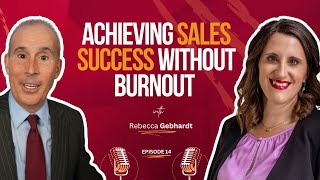
Rebecca Gebhardt, sales consultant and author of Beyond the Board, talks with TJ Walker about setting goals without burnout using her what-why-who-how framework. She draws on door-to-door sales experience to explain cold-calling fundamentals and the shift from individual performer to sales leader.
Chapters
Tell us the number one insight people gain after reading your book.
The ability to go all in without burning out. And so that's what beyond the board is. It's a step by step, here are your goals and then it's followed by four questions. Why? Why do you want them? Who, who do you have to be? Who do you need around you and how? Right, so it's what, why, who, how?
So it's not just as simple as visualizing it and the law of attraction coming to make your goals become a reality and getting the big mansion you fantasized about. Is that correct?
That's correct. That's.
What is it like to set a goal and know you're going to sell? You're going to sell all day long. You're going to have the tenacity to knock on doors and actually make a living that way. Our guest today doesn't just give theories about this. She doesn't just give strategy advice. She has lived it. Rebecca Gephardt is, is our guest today here on Amazon Live and all the social media platforms we are on. She's the author of beyond the Board. She's a renowned sales consultant and expert on goal setting. Very happy to join and bring to the program Rebecca Gephardt. Rebecca, thanks for joining us.
I'm excited to be here this morning.
Now you've written beyond the Board, which we are showing right now on Amazon and people can buy that with one click. You also have a new book coming out shortly, Leaderboard to leadership, how to earn and excel in your first sales leadership role. We'll talk about that as well. And you're an expert on sales, the sales process for leaders and for goal setting. Let's dive into beyond the board. Tell us the number one insight people gain after reading your book.
The ability to go all in without burning out. By by far. So there's a lot of talk about, you know, writing your goals down, but then the, the blueprint to how am I supposed to actually do that? Is really challenging for people. And so that's what beyond the board is. It's a step by step, here are your goals and then it's followed by four questions. Why? Why do you want them? Who, who do you have to be? Who do you need around you and how? Right. So it's what, why, who, how? And the ability to go all in and focus on goals, putting your best self forward, using your time and energy wisely, but without burning out, which is such a huge issue for so many people, sales or non sales.
So it's not just as simple as visualizing it. And the law of attraction coming to make your goals become a real reality and the getting the big mansion you fantasized about. Is that correct?
That's correct. That's correct. I'm. I'm a. A huge fan of visualization. I think that that's really important. But it's just a part of the process. I feel that we need to think that the world is conspiring to help us versus hinder us. And. But there's a lot of work that needs to go in. And sometimes the universe or whatever you want to call it is just testing how bad you want your goals.
Well, you use two words that jump out at me. Work, process. And a lot of people don't want to hear those words. They want to hear the sexy sizzle. Visualize losing 50 pounds. Visualize becoming a millionaire. And it works. So what jumped out about me, about your background is the fact that way back when as a college student you worked for the Southwestern Book Company and I think I went to, you know, one of their pitch seminars and thought there's no way I'll make it there. But I know a bunch of people who did it and every one of them pretty much kind of hated it. But if I. They stuck through the whole summer. Every one of them has become a success in life. Because if you can sell books door to door, everything else is kind of a piece of cake. Is that part of what sets you on this path of sales? And not just sales success, but success in setting goals and then figuring out a process to make it work?
Yes. Yes. And I write about my failures and my journey at Southwestern in my next book. I think I mentioned it in the first one.
It.
That was. I was a freshman at Marquette University when I got recruited to sell books and I. A lot of people do that for different reasons, but I needed to pay for college. I'm the middle of seven children and my parents. Yeah. So do you want to talk about that? No. But I needed to work to pay for school. And I saw, you know, the average person make $7,000. That was back in 2000. That was my first year. But yeah. And I met some amazing people and I think the. It's very cult like and I mean that as a compliment. I was just rereading. Oh my gosh, I'm always forgetting this. Built to Last. I always think. I always think of like Jim Collins others book. But. But Built to Last and they talk about these great companies that form these cult like cultures and that really was what it was. And yeah, so I moved to a different part of the country every year. And I worked from, as we all did, 759 because you start earlier than other people. Stopped at 9:31 at night, six days a week, recruited people. I then went on to work with a sister company, which is now Globe Life Family Heritage Division. And I spent another nine years cold calling there.
Oh, wow.
Yeah, so I wasn't, you know, glutton for punishment. Yeah. And that was also door to door, but business to business. And so when I speak to people, especially in sales or just, you know, entrepreneurs who are trying to be successful, it's like you may not like what you have to do to achieve your goal, but if you put in the work, you combine it with the right mindset and the skills. These are, these are like my three prongs of what I teach and mindset skill sets and behaviors, you can really achieve it. And yeah, we didn't all like the process. I don't think anyone, I mean, I didn't hate selling books every day because you can meet some amazing people and you work with really amazing people, but you do it because you want something in the future that others won't have. So yeah, I'm not saying you didn't want that. Right. You just went to that meeting. Like, I don't, I don't know. There's a lot of people who, who didn't sell books that are also very successful, but if they. Yeah, it takes a little.
Takes a lot. Although there's, there's motivation. If you, I imagine you want to get out of the house with seven other kids or six other kids. That alone can be motivation.
Uh huh. Yep, it sure was. Yep.
So what prompted you to write beyond the Board and what can our own viewers get for their own life after reading your book?
Well, after I. So I retired from insurance at 33 and I say retire because I still get a paycheck. I haven't worked there in 10 years and they still pay residual income. But I, and I had just had my second child, so I spent a few years at home and so I relaunched my consulting business in 20. Or not relaunch. I launched it. I didn't relaunch it. It was my first launch, but in 2018 and I was trying to get back into work mode, you know, goal setting mode. Not that I didn't have goals as a stay at home mom, but I was trying to collect my thoughts that I could then create a duplicatable system for my Coaching clients at the time. I wasn't working with corporate clients. I was working with one on one clients at the time. And I really wanted my kids to know what their mom was about. So. And I dedicate the book to my kids. It really was, it was first and foremost, you have this forever on what mom has chosen to do with her life and her calling and something to help demystify achieving your goals. And you're right, it's not sexy. It's not here's a shortcut, here's an AI tool, here's. It's, it's, it's because there is no shortcut. Right? You either shortcut to short term success, but long term sustainable success. You don't get around it. You have to work hard.
The hard work. And that's always, that's. I find the hard part when you're communicating this because I teach courses on habits and your book helps people with goal setting and it's human nature to kind of hear what you want. I well remember, and I'm sure you do when the Secret came out and it was a huge, huge deal and everyone wanted to talk about it and there's Mark Victor Hansen saying, I visualized Chicken Soup of the Soul being number one bestseller in the New York Times. And it was. And people think, oh, it's that easy. I can just sort of sit back and visualize. To his credit, he also talks in detail. And to make it happen, I did a talk radio interview every morning at 5am and I did half a dozen interviews seven days a week for the next year. And I flew all over the country and spoke for free when I had to. Insane amounts of 80 hour weeks went in to making it a bestseller. The visualization is a nice, I guess, first 1% but completely irrelevant without all the hard work. Our guest today is Rebecca Gephardt and her book is beyond the board. If you're joining us live on Amazon, thanks so much for spending time with us. You can check out the book, you can get a free chapter. You can look at all the reviews. All you have to do is click on the link. Depending on what platform you're on right now, it'll be either top left, bottom of the screen or on the top right. Rebecca, let's talk more about the book. What messages are most meaningful to you when you put together the whole book that you thought, well, if someone just takes this away, it'll have been worth the time to write this book?
Yeah, it is the, the only thing that stops us from achieving anything is really ourselves. And you can accomplish anything that you want if you use your strengths and what you've got going for you. So I think a lot of times, myself included, I. I fight this. Sometimes when we're. When we're giving advice, we're actually speaking to our inner child. You know, people who. Who are exper. Keep talking to themselves. But I. I do struggle with this. It's always like, oh, this person has that, or they have this, and I don't have that. We forget to take into account the things that we do have, what we have working for us, the people we have in our corner, how we show up for others. And so that's what I think that the. The book's about. It's just, it's. It's thinking through and planning ahead of time. One of my most favorite chapters is the very last one. It's about leaving a legacy, but really it's about starting with the end in mind, which is not my concept. It's a very common concept, but just, you know, looking forward, being like, what. What do you really want to have said? Because we have all these regret. There are books that come out on regret, or people on their deathbed, or people interview, you know, nurses or hospice care and what people regret. And I just think we don't want to. We. And you and I will have regrets. We all have regrets for human. But I just think there's so much power in going. I took what I was given, I added some really hard work, and I was able to collaborate and create some amazing things with amazing people during my time here. And so there's a deeper level of significance I don't really operate on. And a lot of. And a lot of salespeople do. This actually makes me a little bit rare in the sales and sales leadership world, where people are so titles and money, and I don't think that stuff's bad. I just operate on a, let's do something significant. Let's make money and make an impact. But that's really, I think the big takeaways people will get from beyond the board.
Now, a lot of people hear your bio and say, wait a minute, she retired at 33 from insurance. What did she do to skyrocket herself to the point where she could even think about retirement? Obviously, you're grounding in sales, and being able to not be afraid to pick up the phone and do a cold call was a huge asset. But what else led you to such early success in the insurance world?
I picked the right people to work with. You will Have a much easier time succeeding at life, at work, with your health, whatever goals you're working on, if you align with the right people. And I intentionally chose the team I would be working with because you get recruited all the time, you know, But I actually was like, I'm going to be on this team. These are the people, these are who I'm going to be working with. And that made a huge difference in my career. And I chose a company where I had the ability to make residual income not just on my own sales, but the sales on my team. And. And then to have lifetime residual income. And what's actually interesting about this is if something were to happen to me, my family gets my residual income until there's. There's no. It's no longer being collected by my former employer.
So, and I should point out, typically when I hear people say, oh, I've got a great opportunity to make passive income, my first reaction is, run, hold your wallet. Someone is about to con you. But in your particular industry, there literally is something as passive income. You made a sale and you're going to get a revenue stream, maybe not for a thousand years, but for quite some time, as long as that customer is alive and paying for it. Tell folks a little bit more, whether it's the insurance industry or other industries, how you think they can position themselves. Because so many people do. Just focus on, I want the quick sale now. I want to become a bitcoin billionaire tomorrow without putting in the hard work. Because that didn't come to you instantly.
No, you have to get over the learning curve and the hump, which I do talk about. And beyond the board, you have to these expected, unexpected. There are challenges that are going to come up for everyone. But in regard to the passive income, that is when one of your previous episodes you were talking about, you were like, I laugh when people like, I have rental property and that's my residual income. It's like, you have to still show up. You have to make sure you have to fix things at those rental properties. Yeah. Passive income is where you don't look at it. You get mailbox money. Right. And you're no longer working. You know, I haven't worked there in a decade. It's literally been 10 years since I worked there. And that's real passive income. But I will say that now in this world, a good. It's not necessarily passive because you still need to be there. But these subscription models for businesses are very, very smart. There's a phenomenal book called Subscription, and it's how everyone's not everyone, but a lot of most businesses are moving from selling products to selling subscriptions. And I think that's one way it's not true residual income. Right. You still have to show up, but it's more predictable revenue. And so I think getting creative and looking at how do I predict revenue streams in my business? Because if you don't do that, you won't be in business, no matter how good you are, whether you're managing your pipeline or your subscriptions or whatever it is. I just think that's a smarter way to work. A way that I do that is through book sales. Right. So I don't want, you know, beyond the board. I haven't looked at that. Amazon sends me an email. Here's what we're going to deposit into your bank account. The same thing will happen with Leaderboard of Leadership. That's another residual income business. But there's a lot. There's. There's a lot. But careful on the ones who, like you were saying, who say they're residual and they're, they're not. It takes active work.
Yeah. Our special guest today is Rebecca Gebhart. If you're listening or watching to this program, this is the TJ Walker Success show where we try to help you become more successful by learning how to communicate more effectively and set goals more effectively and actually accomplish what you want out of life. Rebecca, by the time a lot of people are listening to this, your next book will be a leaderboard to leadership, how to earn and excel in your first sales leadership role. I know many people, star salesmen. Saleswomen just killed it when they're off on their own. And so I guess the so called Peter principle, they're elevated. They're promoted to managing 10 salespeople and complete flops. I mean, there are different skill sets of being great at sales and managing other people at sales. What's that difference? And how do you help people do well in both?
Yes. I, I am not of the assumption that because you're, you didn't say this, but because you're a phenomenal salesperson, you can't be a great leader. I think it's actually just harder. It's harder than being a quota performing salesperson moving into sales leadership. We did some data on this and so the nutshell, no one talks about this. Absolutely no one talks about the transition from sales to sales leadership. It is, there's general sales advice. And what we do, tj is we set up really successful salespeople to fail because they're not given training. They're not guided in the process of transitioning their mindset, their skill sets, their behaviors into what. What do you need to do now? And so the leaderboard of leadership is based off of my trademarked program that I do with sales leadership teams at organizations. But I just break down this process and, and, and the ROI on how much more you can get done. Sales go up, retention goes up, your ability to recruit goes up. But there's so many little nuances and people just don't talk about it. They go, they think that previous success predicts future success and that's not true. Previous behaviors predict future behaviors because of the habits that people create. But you get caught up and I'm a super seller. No you're not. You're a sales leader now. Okay, what do I do? I'm still have, I'm still a quota caring salespeople, but now I'm managing three people. Okay, how do you divide your time? What are you responsible to. So that's the whole book is just taking people through that transition. Do you really want to lead? How are you supposed to do it? And then the top struggles through our research we talk about and then the top skills that will really help set a foundation. Last thing I'll say about it is that we spend so much money trying to fix bad behaviors of leaders instead of investing money when they're new to start the right habits and behaviors. The 80% of sales leaders are given no training once being promoted into sales leadership. That's our stat which correlates to the Harvard Business Review stat. It's 12 years. Average age someone gets their first leadership promotion is 30. Average age to get their first leadership training is age 42. And so this is a massive status quo problem that we've been addressing for the past five years. And it makes me so proud to see really great hard working people get that little adjustment and then go off and run and scale and succeed. It's, it's, it's one of the most rewarding things.
So beyond beyond the board, the newest book coming out by the time you're hearing this, if you're listening to our podcast, it's a leaderboard to leadership. How to earn and excel in your first sales leadership role. If you are watching this live, you can look at the show notes now. We've, we've posted links to Rebecca's website, to her Instagram page. You may want to go ahead and get on her newsletter, follow her on Instagram. That way you can be the first to know when this book comes out, Rebecca, how do you give someone. Is it possible to give someone the fire to sell if they don't have it? I look at someone like you where I think just being one of seven kids, naturally you've got a motivation to sell, just to get food and attention. I look at someone like a Gary Vaynerchuk that most of our audience is familiar with, who was a child of Soviet refugees coming to America, living with umpteen kids in a small studio apartment. You've got that immigrant drive up. You've got absolutely nothing. So working in his case, working seven days a week, 14 hours a day in a liquor store till he was age 34 was just second nature because the alternative was eating a potato and starving to death. So it's some level. It's very easy to get motivated when you've got. And I'm not suggesting that was your family background, but certain people have not potatoes, pasta. People have certain background stories that almost make it hard not to be motivated to be very hardworking. But today in the United States, and we have an audience all over the world, but let's just say for those of our audience in the United States, if they grew up middle class and never really wanted anything, can they be taught how to be good at sales? Or is it something you just, you need certain background to get that way.
You don't need a certain background. Not there are people who grew up poor, lower middle class. My parents were teachers. We didn't have, I mean, tons of money by any means. I don't think it matters the background. It matters the person. You cannot, as a sales leader or a leader in general, you cannot bring out or make someone more motivated. You cannot do that. You cannot change how people are. People need to change themselves. What you can do is align what people want most by helping them think about what they want and align it to achieving that with your business, your team, your organization, whatever that is. So there are. I am always diving into the generational data on millennials and Gen Z and I don't know every stat and everything, but we see different trends. And there's a thing now where, oh, those Gen Z don't want to work or millennials don't want to work. I was told that when I was working 80 hours a week, the young generation doesn't want to work. I'm like, I'm surrounded by a ton of people who want to work. So we can't make blanket assumptions about people. But younger generations are different. They want different things. It doesn't mean they don't want to work hard, but if all of the messaging that they're getting is get rich quick or millionaires drive fancy cars or what, they're getting the wrong messaging. And so our job as leaders with integrity is to, is to educate people on what reality really is, where this comes from and what do they really want? How can we help them win today while winning tomorrow? So, but you cannot, you cannot make a talent, someone who's untalented, talented, you can manipulate, I mean that in a good way, ways to help make them successful. But no, I wasted a lot of time on people who just didn't have that fire in their belly. And you need the fire in your belly for sales.
We want to say thank you to Amazon for letting us appear on their website, Amazon Live. And to those watching on Amazon, if you have questions for Rebecca, she is available. We're going to be turning off Amazon now and continuing our conversation on other social media platforms. But again on Amazon, available right now. Today is beyond the board. If you're watching on Amazon, there's a link either on your left side of your screen, the right side or the bottom. You go ahead and click that, you can get a free chapter and check it out. You can look at the reviews, you can find out more about the book and see if it's a good fit for you. So thanks so much, Amazon. We will see you again next time. And okay, so we're going to continue now our conversation. And now we can talk about anything and no one can get upset if we Want to promote RiseUpConsultingGroup.com for example, if they want to find out more about you. So let's talk. We have a lot of viewers here and listeners who either have written a book or want to as recently as yesterday. I'm at lunch with a friend and he has a nice guy, no social media platform whatsoever, no presence. And he's telling me about his idea for a provocative non fiction book that he's going to write. And let's call, I'll call him Sam. I say, Sam, please. This is not 1972 and Wayne Dyer can just go on the Tonight show and go from nothing to famous. Don't start with a book. No one's going to buy your book, even if it's the best written book in the entire world. You need to establish a fan base, a tribe, a community through Instagram, LinkedIn, YouTube, build an audience, then put a book out there. But I want to get your thoughts because you're active in social media, LinkedIn on Instagram and others. Tell me about the, you know, when did you decide it was the right time to write a book? And then how does that piece together in the bigger picture of bringing in presumably prospects that become profitable clients that even, even if the book didn't make a lot of money, it won't matter because the back end is so worthwhile to you?
Yeah. Well, it's interesting, I kind of giggle. The. It took me five years before I made my, before I had my first six figure month in income, but I think that month I averaged 2 likes per post on Instagram. So it's kind, I think that, I think if you, if you want to write a book, write a book, but if you are not, don't count. If you have no social media presence, do not count on that book being the thing that makes you money.
Oh, yeah.
Or, and I think that was kind of your point. Right. It's like I had met a woman at a networking event who went into debt. It was just, she said, I have this book and the book's gonna like, save her, you know, save her. And I'm like, it's not gonna save you. That's not really how it works.
But I do think the old saying I think is true is writing a book is a great way to become a millionaire if you start off a billionaire because you can actually lose a lot of money writing a book.
No joke. The investment of writing a book. And I'm, I'm choosing to self publish again for leaderboard or leadership. But it is, you know, it is not cheap. Well, if you want to do it. If you want to do it well. Right. If you want to do it well. But it's, it's less than paying $30,000, but still half, you know, it's still half of that. But I think that paying attention to where your prospects are is really important and speaking to them and the community and the base. So I'm on LinkedIn, I'm on, I'm on Instagram, I'm on Facebook, but I'm on LinkedIn because that's where my buyers are. I have corporate buyers. The people who end up using my products are Gen Z millennials. Right. And so, but yeah, I firmly believe I'm, I'm, I, I'm with you where you need to get out there. And I, there's so many best kept secrets. I mean, I, I was reading through the, my manuscript, I have like right next to me and I had screenshotted a couple pictures to my former manager. Just of just. There was three pages I talked about trying to be like her, where I wasn't her. I couldn't. You know, it's about using your own strengths. And I just got really emotional of how amazing she is. She's not on any social media, you know that she's like the world's best kept secret. And. But I think if you're serious about being an expert and being influential, not because your ego needs it, but because the world needs it, you've got to get out there. Things like this. I, I am an introvert. I would rather be, you know, I'd rather be, you know, hold up. But that's not how it works. So we.
No, wait, I gotta challenge you there. These days it seems like every single successful person I've ever met claims to be an introvert. I met a woman recently, it was a summer camp for families who talked about what a huge introvert she was. Well, she's a professional public speaker, podcaster, speaker trainer and she was talking to everyone. She just didn't strike me as an introvert. How do you. How going back to your college days, how could you go door to door, knock on strangers doors, talk to strangers all day long? To me that just doesn't seem like you are on the introversion extroversion scale that far on the introversion. So what does that really mean to you?
There's a lot of introverts in sales. So what it means is it doesn't mean antisocial. What it means is that it zaps your energy. And so I.
Wait a minute, I gotta challenge you. You are working from 7:59 till 9:30. So you had a lot of energy.
I was in college and I was exhausted and it was 13 weeks.
Okay.
You know, like it's. But I know it seems really weird and I know people say that and people go, what do you mean? You seem like you really like. I enjoy being with people. I do, but I can't be with people too much. What I mean by being an introvert is I have never worked in corporate America. I have been self employed since the summer of 2000. I had an internship my senior year of college and I got fired. Told not to come back with two weeks left because I wanted to go to the final four game of Marquette with Dwayne Wade. Anyway, that was the last time I worked for someone else. And, and I, and it's, it's exhausting. But the, and, and I, I speak as well. And I, and I. People go, you're so great on Stage, I'm like, I know I'm good at it, but then I go home and I'm really exhausted for three days. And so I know it's hard doesn't mean antisocial. It just means. Yeah, it just means I need my.
When you retired from the insurance industry, I was imagining you had a big executive position at a major company. You were a. Basically, you had your own brokerage firm, you were representing, and you were sending them deals.
Yeah, so I just hung out.
Your own shingle, Basically.
Yes, yes, yes. So I recruited and trained agents around the country. So I sold. And then I kind of explained this leaderboard of leadership, how I went from sales to player coach, just to coach. But that's what. That's exactly what I did. And so trained, but I did not work for them. I had a broker agreement with Globe Life Family Heritage, which was just family heritage at the time, but it's Globe Life Family Heritage Division now. But never. No one told me when I have to clock in or clock out, even at books. No one told me I had to do that, but I did.
Okay. Now, you said something earlier that really intrigued me about, hey, everyone's recruited all the time. And, you know, these young people today, people say they're this and that. What I find with a lot of young people these days is their. Their concept of job hunting is not saying a word to anyone, sending out resume. They're not being recruited. And a lot of them. Major New York Times story came out just yesterday that the economy is really slowing down for new hires out of college, and they're not getting the job offers they were. They're not getting recruited. What is your advice to young people? Because I. I feel like I fail. I have family, extended family members where I tell them, okay, you want to send out resumes, be my guest. Do that for an hour a day. But go out and have at least one meeting with someone in your industry every day. Go attend a meetup. Follow people on social media that you respect their companies. Don't ask them for anything. Give comments on what they're posting and ask them questions. Build relationships with them. For the most part, it goes in one ear and out the other. So how did you get to the point where people were recruiting you? And what is your advice to someone young these days who maybe thinks they'd like to have a career like yours selling, not working for some big company, kind of being in charge of their own destiny?
You get recruited while you're doing the work. People don't recruit others who aren't doing anything. And I, and I don't mean that as a slight to those who have, you know, open for work banners on their LinkedIn profile, but they're, they're. You get recruit. I always got recruited when I was giving my sales pitch, I'd knock on, you know, an executive store. I didn't know they were executives or whatever, and be like, wow, you do this. They just, they see someone working hard who is good at their job. That's why I got recruited. I didn't get recruited because I was sending out resumes, but that is, that's important. You have to. I think the thing I learned from selling books and insurance and still today, when I have to put myself out there, and I don't want to put myself out there sometimes times. But is the getting out of your comfort zone the magic side of the comfort zone. And it's like, it just feels weird. Do it anyway. Right? The. But. But again, if you grow up and this is what you know is you are a tech first. I think companies, there are great people who are tech first who just don't want to have that. So I think we need to help both. But yeah, you get recruited while you're doing work.
So walk us through your trend. You were selling books. You did that. How did you just start your own agency? Because I'm constantly telling young people, really, people of any age, don't wait for that perfect corporate job. Just start doing the work. If you want to spend some time sending out resumes, fine, but start doing work. Call yourself a consultant, freelancer. Get in the mix. How did you start in a regulated industry the way you did?
Okay, so the. So to Uncle Sam. I was 1099, right. I was a. I, I found a company. Well, actually I was recruited because they were a sister company of the book company at the time. Right. But. But they, they had a setup where I, I was recruited. I had a manager and we had a formal training. So it was. I was in business by myself. This is actually a tagline. They say, I can't even believe I'm saying this, but I was in business by my, by my. For myself, but not by myself. That's how you say it. For so you. I had people who were helping me. I was given training. I didn't have to like come up and write a insurance policy. You know, that stuff was there. But what, what I had to do. And, and this is. I. You need to pick jobs based on the people. The company you work with is more important than the company you work for, you know, again. And so I had phenomenal people around me to help me, but then I had to go and do the work. And I was willing to do the work because I knew that if I did the right behaviors and did the right work, it would pay off in the long run. And it did. Okay.
Our special guest is Rebecca Gephardt. She's the author of beyond the Board and Soon Coming Out Leaderboard to leadership. How to earn and excel in your first sales leadership role. We've posted in the notes and in the description anywhere you're seeing this or hearing it in social media links to her website, which is riseupconsultinggroup.com she's on LinkedIn and Instagram and a lot of other places in social media. I want to just basically agree with you on the concept of LinkedIn being important and you don't have to have a huge audience. Literally, as soon as we finish, I'm going to be working with a client who I got just because of LinkedIn. Now it was with, coincidentally, a huge insurance company, someone I'd worked with 20 years ago, had not been able to stay in contact with. He saw my social media post on LinkedIn three times a day for the last five years and then called me and said, TJ, come on out to Arizona. I'm going to be spending a couple of days doing presentation skills training next week. And it wouldn't have happened A, if I hadn't done a good job with him 20 years ago. But B, if I hadn't posted regularly on LinkedIn. Yeah, I post on, on YouTube and TikTok and all those. That's not what he's watching. Business people, as you mentioned, are on LinkedIn. And a lot of my posts on LinkedIn have embarrassingly low view count. Maybe 38 views. But if you get the right views, who cares? Because when they hire me for a day or two, it costs them a lot of money and is good for them and good for me. So I really think that's important. What I'm curious, I don't mean to be overly personal. How are you going to treat your own kids when it comes to work? Because I have noticed among middle class, upper middle class, wealthy parents I know with kids, asking them their high school or even their college kid, oh, what, what kind of job do they have this summer? It's like asking them, have you encouraged them to start heroin work? That's the craziest, most bizarre thing. They're going to take an extra summer school session. They get Anything but an actual job where you actually have to show up on time. Please, someone who isn't a family member, be accountable. And I realize I sound like the grumpy old man talking, but it really is a social phenomenon basically. Only in America. Poor kids and lower middle class kids from what I see are working summer jobs. Certainly in high school that's the case, but in college as well. Your thoughts?
Yeah. I got in a fight with my older sister, who's seven years older than me, about my nephew. And he's a great kid, but I was like, well, he's not working. And she got really mad. She got really mad at me and I shouldn't have gone after a 6 year old, 16 year old. Now also I remember the mothers were like, I'm never giving my kids candy during church or you know, Cheerios to you during. And then like feeding kids Cheerios. But I've already started my kids working. This is something I feel, my husband and I feel very strongly about creating the right foundation for our kids. And we've got two. We've got a sixth grader and a fifth grader. And our, our sixth graders son. Our daughters, the younger one, they are very different, but I, I pay them. They actually work for me right now. And, and so the money that they make then we can put in a Roth, you know, which we do at the end of the year, but custodial Roths. But teaching them the, the value of work. And not just there's a value creation kid. Look at me, I'm like recommending all these books, but Value Creation Kids, a phenomenal book that teaches you like, you know, kids can make their own money. My kids pay for their, they go to a birthday party, they pay for that gift for their friend.
Oh, great.
Yep, yep.
Because I have a six, I have a sixth grader daughter. Yeah, yeah.
Because it means something to them when they give it from them.
Yes.
Yeah, that was from value.
Oh, she's gonna, she's gonna hate.
Who's that Rebecca lady who gave you that idea? But we, we want, we don't want to see our kids go through pain, but we know that that's what they have to do. But really teaching them the value. You get paid more money for thinking work than manual work. And I have done manual work. I have done a lot of manual work, but I've also done thinking work and we get paid more for that. So teaching our kids ways to get creative, not just cleaning the house, but hey, we are going to go to on a little family vacation. Out to South Dakota. Do you want to research places we should go? They can do that now. And putting them to work and thinking, so yeah, I'm a no. They need, they need to work. They need to work and balance it. And now, you know, when I was younger, I was in sports and I was valedictorian and you know, I had jobs and, and, but sports now are different than, than what they were. We weren't required to do that much ice time if you're in hockey or we just. It wasn't the same way. But you can still figure out a way to work. And our kids are gonna work. Our kids are working.
Well, it sounds like we have similar philosophies because I, I do have my daughter work. She makes court, you know, she makes courses. We have a part of her and I actually have her do Amazon influencer videos. And you know, we pay her through the raw thing as well. So we're what. My main thing with her is not that every minute of her childhood has to be spent working, but to build a mindset of, I'm a creator, I'm an entrepreneur. I don't just wait for a handout from mommy, daddy or a company. I can create my own value. That's what I'm trying to instill in her. So it sounds like we're on, on the same page. Tell us about your typical client. When the company comes to engage your server, is it an individual? Is it a company? Says, oh, we got a new sales manager and they're horrible. How do people engage your services?
Yes. So we have. Yes, yes to everything. I work primarily with sales leadership teams. We have products on our website that I have an on demand leaderboard leadership program that individuals can actually take. If an organization reaches out to me and says, we have one leader who can do, can you do some coaching? I'm like, yeah, I don't do a lot of that though. It's more of the scaling companies. But a typical company is sitting revenues all over the board. But most of ours have been sitting at a minimum of $10 million in annual revenue all the way up to 450 million when I started the engagement with them. But it's, it's sales teams that need to scale. And you cannot scale through sales coaching or sales training alone because the manager, and this is a well known stat, but the manager has the biggest influence over someone's success and the implementation of any coaching someone's actually received. It's not the outside coaches, it's our inside allies. And so that's what happens. So my clients are people who have typically hit a bottleneck in their business. They're usually the bottleneck they need to empower their sales leaders. There's usually challenges happening that are going on, but they are like, we're ready to roll and they're going to double down on their leaders. And then you can look at any management book or leadership book or a case study. The organizations that have always double down on their leaders, no matter how tough things get, are the ones that sustainably outperform all the others. It's, it's, it's so common and it's such a known stat. I just go, why doesn't everyone do leadership development? But that's, that's what's happening. And it's, it's the. I was at an event with some learning and development people earlier this week and one guy goes, are there? We were talking about emerging sales leaders. And he goes, are there companies that actually train new leaders? And I was like, hello? Yeah, we actually specialize in that. But what it does is that the new leaders, it's not just for the short term roi, and there's a lot of short term roi, but it is the pipeline, leadership pipeline and succession planning. It's those leaders, you're either going to fix their bad habits or you're going to help them get off on the right, right foot. And it's much easier. People are more open to coaching when they're new in a role versus 30 years in. Right? They just are.
Yeah. Everybody looks at really everything but leadership, in particular through their own lens of expertise. I look at leadership through the lens of communication because from my perspective, being a great leader is synonymous, typically of being a great communicator. It's very hard to be a great community, a great leader if you can't also communicate. How did you make the transition from being someone introverted and maybe you were okay knocking on a door, talking one on one, but how did you make that jump to then speaking in front of a lot of people or giving a sales pitch maybe for the first time to 20 people? When before you never talked to more than a couple at a time?
Oh, it's a process. I am very. My mo. My is. Is intentional, scalable. I do something a little bit right, a little bit better every day. Some people are just, they massively go for big, big action. And I'm not against big action. I just, I get better results when I'm very intentional about, okay, now I'm going here, now I'm leveling up over here now, you know, and so that's what I did. But I will tell you that that transition from sales to sales leadership, from small sales to big sales, was a lot of internal mental work. It's always. It's always an inside job. There's a lot of nuances, you know, to that. But I will say that I could get over being uncomfortable. I could, you know, my, My. My introvertedness when I moved in, very intentionally. I was 23 years old when I figured out that I can't just be motivated by what I'm going to get. And my accolades I had. I went, you know what? I actually. That's nice. But what I really want is I actually really want to leave a legacy. I really want to help other people. I went from selfish to servant, and that helped make that transition to better. And I think that we can all look to. Okay, I want. I really want to hit this trip, or I really want to hit this bonus, or I really want to be on the leaderboard. And you should. You should do that. But, you know, but if you could also combine that with a servant mindset, you can get over about anything.
I want to extend to you the same courtesy we give all our guests here on the program. I want you to just shamelessly promote, and I'm. No questions, no prompt. I'm going to take myself off the screen and I want you just to talk for two minutes to promote your business, your website, your books, anything you want to promote. And in part, I'm going to come back to you afterwards and say, why did you do it that way? And in part, I want people to get a good role model of how to actually promote yourself. Because, you know, people come to me all the time and say, well, tj, I don't have a platform and I don't know where to start. Well, start by just talking. And you don't even have to be on my podcast or anyone. Just start, record and share it on LinkedIn and other places. You don't have to wait for anyone to anoint you or to invite you on the Today show or cnbc. So I'm going to take myself off the screen and just go ahead and pitch away anything you want for the next two minutes, starting now.
It is our mission at Rise Up Consulting to empower new sales leaders and visionary leaders at organizations to be able to scale. And everything that we do is around helping people become better people so that they become better leaders. And when they're better leaders, they have an immediate impact on recruiting Retention and revenue. So that's what we do. We, you can check out our website riseupconsultinggroup.com or connect with me on LinkedIn. There's a newsletter on there, I have an email list. But what we're really focused on is providing value added content that people can take and run with. And if then you feel inclined and say, you know, I think I need to reach out. Maybe you need to have a workshop at your organization for other like minded growth focused sales leaders. We do that. If you need a speaker at your next event, we do strength based goal setting, strength based sales coaching. Rise up the ranks. Love, love, love. Speaking about the transitions that need to happen from the minute we start our career till we are retiring and still not done. Because when people retire they're not done growing. But all the transitions that need to happen with the stories we tell ourselves, how we're showing up at our best and how we're serving others. So that's what we do. We just do that. Geared towards sales leaders. So if that's something that you're really interested in and, and you want to get better, you can buy our books or check us out there. The last thing I will say is I am a big proponent of being self aware of how you're perceived and what's really happening. And we all have blind spots. But I think any assessment that you can take that helps drive home your greatest strengths is really good. So there's two assessments and we do separate workshops not just for sales leaders but I do a Colby assessment which is about your innate talents that never, never change and your, your mo, your modus operandi. And through that you can learn how to maximize your strengths for you, how to get along with others, create synergized teams and then create a recruiting plan that you'll know someone will be successful in the role. So that's the Colby and, and the other assessment that is phenomenal to 360 degree assessment called the leadership circle profile. And this is about how we show up as leaders. We all have strengths. It's this big circle. But sometimes we over index on strengths and the harder we work, the more we get in our own way and then other times we use our strengths to scale and to thrive. And that is a phenomenal assessment that's actually connected to business outcomes. The more creative a leader is, the better performance they get from their organization and that is a longer term growth plan and coaching on leadership. But it does amazing things because at the end of the day we are complicated people Working with complicated people and anything we can do to help support them and ourselves elevate because the tide raises all boats, the better off we are. So that's just a little bit on what Rise Up Consulting does.
Fantastic. And I should point out for our audience, I didn't tell you in advance. You know, it's like I said two weeks ago, be prepared to give a speech. But I found really all successful people, if you give them an opportunity to talk about what they do to help other people and help themselves, they take that opportunity. They don't say, well, I'm not prepared today to get of that presentation. I'm pretty sure if you went to a major industry event or a chamber of commerce event and the organizer came up to you and said, oh, Rebecca, we have a problem. Our keynote speaker just got stuck at the airport. They're not going to be here. Do you mind standing up and, and just giving a talk for the next 15 minutes? I'm pretty sure your response would not be, oh, no, I'm not prepared today. You would say, I'd be happy to. I'm just guessing that, Rebecca, in our final time, I, I want to plunge a different area that, that deals with motivation because I know a lot of people. I'm sure you do. They were hard charging, ambitious. They went into the insurance industry or financial services or something and then reach the level of success. Everyone has a different level. And maybe, maybe it's, they wanted $10 million in the bank, knowing that with their investments they're making a million dollars a year, or with their trails, they can make a million dollars a year if they do nothing. And all of a sudden they can feel lost because they have the money to do all their dreams, all their travel, have the house they want. So getting up to do that next sales call or to do that coaching call, there's no motivation there. And we're constantly told in popular culture, you know, Steve Jobs, follow your passion, follow your passion. Scott Galloway and actually some authors that I admire right behind me, Cal Newport, one of them saying, no, don't follow your passion. Find what you're good at and just go deep in that. Where do you stand on that divide? Because at some point, if you are just working to fulfill your financial needs, once you've done that, it's very easy to just sit on the couch and rot.
It is. It's almost like you pre read my Leaderboard to Leadership book because I, I share a few stories where I went, oh, look at that bank account balance. I've made it I can relax now. I think that that's a very natural process for every human being. Truly where you get. And this is why people have a midlife crisis. So I'm 43. My husband's 45. And you wake up one day and you go, oh, my gosh, we've had everything that we dreamed of, you know? You know, like, you're able to take the dream vacations. You need a new goal. You need a new goal. And the. Because what happens is. And that's okay if someone's actually there, it's not okay to stay there. So my advice would be. You kind of said a few things. It was about how you define success. You need to start asking yourself different questions. It's not what do I need to feel secure? It's what do I need to do to contribute. How am I using my. You didn't ask yourself completely different questions. And the passion. I do not believe in following your passion. I think that's actually terrible advice because people. What. What happens is people are expecting. It's like a light. They're just waiting for a light bulb or a sign. Like, that's what I'm supposed to do. You find your passion as you are doing the work. You know, that's how you find your passion. So I believe in passion and purpose together. I don't. I don't think I'm very passionate about what I do. I'm not saying you don't do with. But just that alone. And I think that we were taught alluding to that earlier in this conversation, the just manifesting done work, just passion does. It doesn't work. It may have worked for a few people, but what really works for all of us is to keep peeling back the onion layer and. And there's more that you can do. And I think it's. It's changing that. How you're motivated. If you're still motivated by filling yourself up with accolades and money and accomplishments, that's really just not fulfilling. It. You can absolutely have a lot of money. It's not fulfilling. So continuing to say, how. What. What vision am I working for? What's my purpose? That's how you continue to. And that's. That's something I personally went through. I think a lot of people do. It's okay if you do that. It's not shameful. It's. It's part of our human development. But staying in that space of going, I'm good. You're not going to be happy.
Yeah. Well, Rebecca Gephardt, this has been a fulfilling conversation. Thank you so much for being our guest. For more information on Rebecca, go to her website, riseupsconsultinggroup.com check out her latest book, beyond the Board and Leaderboard to Leadership and check out her bio or description. We posted everything in the show notes. Thanks so much Rebecca.
Thank you for having me.
More from TJ





The Breakout Cases - What Actually Caused Famous Speaking Career Breakthroughs | Ultamize

The Red Circle Sessions Finale - Build the Speaking Career You Came Here For | Ultamize

Two Stages, One Logo, Two Completely Different Realities - Main Stage vs Independent Events | Ult...

Pre-Reset - Why Repetition Builds Better Speaking Decisions | The Red Circle Sessions | Ultamize

Your Decision, Your Framework, and What Happens After - Build Your Speaking Career First | Ultamize

The Red Circle Sessions Trailer - The Speaking Career Truth Nobody on That Stage Will Tell You | ...

The Two-Minute Ultamize Reset - Your Platform, Your Audience, Your Voice | The Red Circle Sessions