Episode 5: “Unlocking Speaking Success with Leisa Reid”
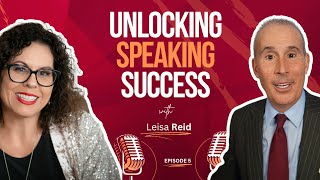
A recorded interview (TJ Walker with Leisa Reid) focused on practical, business-oriented advice for people who want to become paid speakers or use speaking to grow a business. Reid emphasizes the importance of having a focused talk ("grocery store test"), positioning as an expert rather than just a speaker, and building relationships with other speakers (International Speaker Network) rather than cold-calling. She recommends multiple monetization routes (speaker fees, client acquisition, paid products) and provides tactical steps (a 7-step program and a 30-day "get your talk ready to rock" routine). Reid references her own results (booked 83 engagements in her first year) and offers resources: getspeakinggigsnow.com (book and assessment) and ispeakernetwork.com (membership, $99 entry).
Questions this video answers
$99
83
Nine years
Get Speaking Gigs Now
411
Chapters
Because a lot of times people will say, oh, I can speak on anything. And I'm like, no, not that you're not comfortable speaking spontaneously. That's a different.
The most successful speakers in the world that I see, people like Gary Vaynerchuk, Barbara Corcoran, they don't call themselves speakers.
One of the things that I hear speakers or people who want to be speakers, get challenged with is I'm not sure where I should speak. I'm not sure who would allow me to be on stage, who would even have me speak. How do you do that? A lot of the times I work with people who secretly have been dreaming of being a speaker for quite some time. Maybe it's written in their mind or they've recited that this might be you, you've recited your talk, you've imagined yourself on stage, but it just hasn't actually happened yet.
She is the founder of Get Speaking Gigs now and the CEO of the International Speaker Network. She's the author of Get Speaking Gigs Now. You know, people are shocked when I tell them the following fact, which I'm sure you've heard. The median number of views of a TEDx speech is 411.
And that goes for paid SPE speaking where you're waiving your fee. Speaking where you might be have an opportunity to pay for it, like you are the one who's paying. That might be a great opportunity for you as well. It's designed to help an entrepreneur or business owner, small business owner, who really feels called to speak and you want to use that model to grow your business.
So I tell people, don't waste time on the speaking for free. If it involves traveling somewhere, I'd much rather you make five videos and share it with the whole world and build a social media following.
Now, I'm going to share something with you that I don't know if you're going to believe me or not, but I haven't cold called her speaking in nine years.
Imagine yourself on the stage. You're looking at the audience, they're looking at you. They're hanging on your every word. You are reaching them, connecting with them. They're hanging on to your stories. More important, they're remembering the key concepts you're delivering. You are a professional speaker now. That is the dream of a lot of people. A lot of other people said, oh, I'm afraid of speaking. That's the worst thing. I would never want to do that. Well, you're not a bad person if that's your belief. But many people, including yours truly, we love to speak, we love the attention, we love the limelight, and we love helping people. Our guest today is an internationally renowned expert on helping you get on stage, getting gigs, building your business through speaking. She is the founder of Get Speaking Gigs now and the CEO of the International Speaker Network. She's the author of Get Speaking Gigs now and she's got all sorts of tips on how to really build a business that involves speaking, professional speaking. It's my pleasure to invite to the stage Lisa Reeve.
Thank you, tj. It's exciting to be here.
Thanks for being with us. So let's just dive right in. So many people, I think, are mystified by professional speaking. On the one hand, it's rare for me to ever go at a professional meeting where someone doesn't say, well, I'm a speaker, or I want to be a speaker. I'm a great speaker. I was at a TED conference, TEDx, this past weekend. Everyone said, oh, I'm a speaker, too. What really separates between people who want to be speakers and those who get on stage and get paid?
Yeah. And I don't. I look at it a different way. One of the things that I always tell people is once you say you're a speaker, usually the next question someone's going to say is, oh, well, what do you speak on? And I have found that's the first delineator is do you actually have a talk in your back pocket that you could whip out that you know the title of, you feel confident in, you've put that stake in the ground and you know your stuff? To me, that's an indicator right away. I can tell if someone has never actually given their talk, but they do want to be a speaker or they've been around the block a few times. So that's my first, like, okay, now we're talking serious. And I always tell my clients, you want to be able to.
Lisa, I apologize. I interrupted you. If you could please elaborate more on having a speech, because I agree with you. I hear so many people. I can. I can speak and I say what topic? Oh, I can speak on change and communication and management. And if you speak on everything, you speak on nothing.
TJ you are speaking my language right now. That's exactly what I say. Is that you. Because a lot of times people will say, oh, I can speak on anything. And I'm like, no, no, I did not. That you're not comfortable speaking spontaneously. That's a different. But I want any client who works with me to be able to. If there's an opening and the speaker canceled or whatever happened and they could just jump on that stage the next day. I want them to be completely prepared. But when it comes to the title and just knowing your stuff, I don't know what's going on with my voice today, but I would say I want you to be able to pass the grocery store test. Meaning imagine you're standing in line at the grocery store and you get to talking to the person in front of you or behind you, whatever, and you say you're a speaker. And then they'll say, what? What do you speak on? You want to be able to pull that right out of your back pocket and say, this is my topic without any hesitation. You don't want to look it up. You don't want to be thinking about it. You just want to have that confidence. And I think that's the key to start building your confidence and certainty about getting on stage and actually becoming a speaker.
We were speaking in the pre interview a little bit. Do you recommend people position themselves as a speaker or position themselves as an expert? Because to my eye, the most successful speakers in the world that I see, people like Gary Vaynerchuk, Barbara Corcoran, they don't call themselves speakers. That's 1/10 of maybe what they do in their professional life. They're known primarily for something else.
Yeah, an expert.
Can you address that?
An expert, because you want to be known for something. Like I'm actually known for speaking, not speaking, being the speaker necessarily, although I'm known for that as well. But when someone says that they want speaking engagements or they want to learn how to get on podcasts or they want to learn how to create their talk, people in my network go, oh, have you met Lisa Reed? Like, you should talk to her. That's what I want to be known for, is helping them get their speaking out there and to more. To more audiences. So I think it's important to be known for whatever that thing is that you do versus the job that you do.
What is the International Speaker Network?
That's a network that I created back over 10 years ago. Now, off, off camera, you and I were chatting about some of the speaking organizations at the time. There was nothing near me there. I'm in Southern California and it was going to be a couple hour drive to get to any other kind of speaker network meeting. But I was tasked with being able to speak and I wanted to hang around other speakers because I know, just like you said, if you're going to rob a bank, that's where the money is. Right. I believe that where the speaking leads are, are with the speakers. So I want to surround myself with other people who are doing what I want to be doing. Because this is when I had first started, and what I didn't realize was that there was such a need for that. And our speaker network's a little bit of a different animal. It's definitely designed for entrepreneurs or people who are utilizing speaking to build business, to grow business. And now speaking. Speaking is more than just speaking on a stage. It's virtual. It's summits, it's being a part of giveaways, it's being on podcasts. Anything that's going to help you gain clients, help you build your list, potentially all those things that we do for marketing to help, you know, grow, grow profits, but we do it in a really fun way. And. And I say the one requirement is you need to be nice. That's the requirement to be in our group. You need to be a speaker, and you need to be nice to other people.
What's the mix of. I mean, I see there's two types of professional speakers. There may be the professional speaker who's charging 10, 15, 20,000 a speech, maybe Gary Vaynerchuk, 200,000 a speech, but in my mind, those are not the people who make the most from their speeches. The people who make the most from their speeches are people like Mark Zuckerberg and Jeff Bezos, people who basically speak all day long to build big businesses. They're speaking to industry conferences, they're speaking to investors, they're speaking to clients, customers, advertiser, they're speaking. They're professional in the sense that, hey, they're making tens of millions, if not hundreds of millions of dollars a year. How do you differentiate, in your own mind, people who are speaking at a high level because they're building a huge brand and a business, or it's already a big brand, versus people who are viewing an individual speech as a significant revenue stream.
Yeah. And I mostly work with the individuals who are. It's perhaps a solopreneur or someone who has a small team or a smaller business, because you can make thousands and thousands of dollars even in a room full of 10 people, if you have the correct message, that's going to provide value for them. If you are in a room with potential clients, like, if it's a match, you want to make sure that you know what you're going to be speaking on and know who you're speaking to so that you say yes to the right Opportunities. And then I think you can monetize every scenario, right, Whether there's a speaker fee or not. And I think there's a lot of misunderstanding for the, the little people, like, meaning like the solopreneurs, the new business owners, the person who's got a dream that they want to be speaking, but they think it's possible because they see like those big famous, you know, icons and tech, tech geniuses out there and they think, well, I can't. Who am I? I can't do that. No, absolutely you can do that. And that's where I'm championing anyone who has a dream to speak and can provide value to other people. To me, that's that ripple effect that a lot of us can relate to.
I want to ask you in a moment about how you provide value and sort of the ideal case study for you. But let's show your book to everyone because there are really not that many good books specifically about how to enter the speaking industry. And a lot, not many recent ones. So get speaking gigs now. Learn the secret to getting 500 plus speaking gigs. So clear, focused. But I want to hear a case study. Tell me about the ideal person who comes to you. Where are they on their professional journey? What have they tried to do that isn't working? What brings them to you? What happens immediately in the first month? And then where are they, let's say a year after working with you?
Well, I'll share a more recent story. So it hasn't been a year yet, but a gal I've known for quite some time has been dipping her toe in speaking. And I know she had had some coaching in the past, but she still had something that was holding her back. So, and she had changed her business. So she was still like muddling in her mind, like, what am I going to talk about? How's this going to work? And I just said, let, let's just let me help you. Like, I know that I could. I, I knew I could help her. I just knew it. I just, there was just a couple little tweaks that we needed to make and she trusted me, thank goodness, and really leaned into the process and she, we created her talk that felt really good to her, that allowed her to be her. I think she was so busy following other people's formulas and trying to make it perfect and reading from a script and just worried about doing it right that her personality was getting lost in the process. And she's got this great, welcoming, warm personality. So once it clicked that she could let go of that perfect do, perfect model of doing it. She started to shine. And just the other day I saw her at an event and she said, lisa, I owe everything to you. I, I thought, oh yeah, I don't know about that. But she was very, very complimentary. And she said, I am speaking all the time, I'm attracting clients, I've got people in my network now. Like she has a community of women. She goes, I cannot believe how much you've changed my life. What I thought was so hard, now I can do it all the time. It's flowing, it's easy and I'm having fun and I feel like me. And to me that was like the highest compliment. I'm like, I know the money is going to come for her continuously. But just that she unlocked that, that fear and let it go and was able to shine to me is amazing.
And let's get really, really practical and tactical. What did you do for her to actually get the phone to ring or the email to come in saying, hey, we want you to speak, you know, four and a half weeks from today, from 11 to 12 and our budget is $10,000. Let's really get practical and tactical.
So it, I love that question because of course we all want the exact formula that you do to make this thing happen. And I have a seven step program that what is what I call the general education of learning how to use speaking for business. But it's deeper than that, right? Yes, you can follow all the steps and do exactly what I tell you to do. But what I have found is that actually as entrepreneurs, we are not cookie cutters, right? Like we are not all the same. And what's really helpful is having someone look at your stuff, listen to you, understand you and think, okay, let's try this. How does this feel? What do you think about if we did it this way? And allowing the person to start to create their own way of doing something that feels right for them because they could do my stuff, but if it doesn't feel right, they're not going to do it. And what I'm talking about is, is the sales part, right? Like if I always say you have to have a call to action, I think you should have a call to action at your talks. Now if you're a paid keynote speaker, that might be a little bit different situation. Again, all situations are going to be contextual. But let's say you got invited to speak, there's not a speaker budget, but you're allowed to offer the audience something, whether it's a monetary Thing or a free thing, whatever it is that helps you get your business. If you're not clear on that, the audience is not going to be clear on that. And that's usually the thing that people forget to do. Now, do you have to do it exactly the same way I do it? No, but you have to be in love with whatever you're doing. And I think that's the key missing ingredient that people just don't feel comfortable selling from stage. So they just forget, quote, unquote, to do it or they run out of time or it feels awkward or weird because they feel awkward or weird about it. So there's all these little components that go together to help you be successful.
Well, here at the TJ Walker show, we love selling from the stage. In fact, in a moment, I'm going to do what I do with every one of our guests. I'm going to say, lisa, you got two minutes. I want you to blatantly sell. Give us your best pitch. We want to help you. We want, and we want our people to see a good pitch in action. So I want you to pitch your book, I want you to pitch your practice, I want you to pitch your organization, your consulting. So I'm actually going to take my face off, and it's going to be you on screen for a couple of minutes. And again, this isn't, you know, some podcasts don't like that. We want you. We're all about empowering people to commit, to be more successful by communicating more effectively and having more confidence in their communication. Because you're absolutely right. Nothing's worse than someone. I've seen it. Well, well, I have this new CD here on how you can sell products and make money, and you probably don't want it, so I'll just leave. I mean, we've all seen and they, of course, sell nothing. And I've been fortunate enough to see Zig Ziglar selling from the stage. And he's, he's. This was, you know, 17 years ago. He would sell his $2,500 cassette tape package, and he would treat it like it was gold. And he got you really excited about it. Wow. He would sell six figures worth every time he spoke. So with that, I'm going to take my own face off, and I want to hear you give us your best pitch, your best ask, starting now.
All right, well, one of the things that I hear speakers or people who want to be speakers get challenged with is I'm not sure where I should speak. I'm not sure who would allow me to be on stage. I don't know who, who would even have me speak. How do you do that? And that's why I created the International Speaker Network, which is on ispeakernetwork.com because what I found is that over many years, the easiest way to get speaking engagements without cold calling, yes, without cold calling, is to hang out with other speakers, have that virtual handshake. You would be so surprised how generous people can be when you just get to know people and you know what speakers have, they have all the information that you want. They have the name of the meeting organizer, they have probably the phone number and the email and the website. And when they meet and what the event was like, they have all that information, whether it's in their head or written down, but they have that. So why not hang out with a whole bunch of other people who have the information that would be really helpful for you? And at the iSpeaker, it's @ispeakernetwork.com is where you can go find out more information and join. It's very low entry point to join. We meet virtually once a month. And our goal is that you get to have relationships with other speakers that can help you minimize your cold calling, get booked more often, more easily, get exposure. We use the whole community to lift you up. It's only $99 to join, so it's such a no brainer if you're out there struggling, going, how can I get on more podcasts? How can I get more speaking? How can I actually do this and get my message out there and help people? The I Speaker Network is where you're going to want to go. And it's short for the International Speaker Network. Now here's another opportunity I want to share with you. A lot of the times I work with people who secretly have been dreaming of being a speaker for quite some time. Maybe it's written in their mind or they've recited that this might be you. You've recited your talk, you've imagined yourself on stage, but it just hasn't actually happened yet. And you know that you can help people, right? You know that you can help people and just think it would be so, such a big dream, so fulfilling to share that message that you have with a group of people, whether it's virtual or in person. If that's you and you just need support and you don't know how to get started and you've been looking for somebody to help guide you through the process, then I'm going to give you A different website. And that's get speaking gigsnow.com chat. That will lead you to a speaker readiness assessment. And I'd like you to just put your heart and soul into the answering those questions and let me into your speaker journey. I'll read those and we will have a meeting and talk about what it is that you're trying to create and we'll go over some different options that would be helpful for you. So that's@getspeakinggigsnow.com chat. I don't usually offer that publicly, but TJ you.
Well, let's go ahead, put that out there. Ben, if you could post that in the comment section. And let's get a little extra traction for Lisa. And now tell us, let's give a full throttled pitch for the book. Because been an author myself, I know you put a lot of time and energy and effort into creating a book.
Absolutely.
And very few of us really make a fortune off the book sales. It's because of the leads, the other business, the speaking gigs that can come in from it. So now let's hear the pitch on the book.
Yeah. So the book is available also at Get Speaking Gigs now. And there's another URL to that, but I don't have that memorized. Sorry about that. Oops. So here's a tip. When you're holding your book up. Sorry, I'm Streamyard. So you always want to hold it up nice and tall and right near your face so that people can see it and show the whole thing, Right? So this is what I created when people kept asking me, how do you get so many speaking gigs, Lisa, what are you doing? How do you do it? And I'm like, well, let me write out my ideas and give actual scenarios. What is it that I do? And it's divided into these seven steps, right? Talk about getting your talk created. How do you monetize your talk? How do you start to figure out your ideal prospects and audiences? Where are they? How do you actually have conversations with people who are potentially the meeting organizers? How do you keep following up? How do you keep your speaking gigs the pipeline full? Right. All these are questions that I know you have if you're thinking about being a speaker. How do I know? Because I work with speakers all the time and we all think our scenario is totally unique, but we have a lot of things in common. We also talk about what do you need to do to get your speaker sheet put together and what kind of systems would you need to have in place to stay booked? So all of it's about keeping you, getting you booked and staying booked. Not just a one off. Right. You don't want just one speaking engagement. You want multiple speaking engagements for the rest of your career. Why not make it hard? We don't want to make it hard. We want to make it easy. So you just go to getspeakinggigsnow.com and then I know the link will be in the chat for the actual Amazon link, and you can find it there as well. So get the book. What are you waiting for?
So, Lisa, here's a common problem. I've faced this before. Many of our listeners have, is there are people who are trainers. They train very specific skills. But in the mind of a speaker bureau or a convention planner, it can be easy to put. Be put in this ghetto of the. Of the trainer. Oh, you're a trainer. You're a skills person.
Yeah.
TJ, you can train 4, 5, 10 executives on how to give a speech or how to speak to the media, but we're not going to have you on the keynote stage. And I have seen in the past a lot of speakers. Excuse me, a lot of trainers, they sort of position themselves stylistically, everything from how they dress to how they speak to being more like the, the high school biology teacher, homeroom teacher, there's not a lot of polish there. And so they permanently get stuck in sort of the training ghetto. They don't get on the main stage. And yet I know I've used that as an excuse myself because we just had on last week Julian Treasure, who has the fifth most viewed TED Talk of all time. And he talks about the same things I do, public speaking, communication skills. And he's, he's had 160 million views and gets invited to speak all over the world. So do you have any particular strategies for people who are already trainers, maybe are in the marketplace? Corporations hire them for trainings and they want to make that jump to the keynote speaker slot.
You know, I don't work with a lot of people like that, but I would imagine that the clearer that you are on what it is that you're trying to do and why, that would be helpful because you have to have a strategy of why you're doing it. And I'll use an example of TED Talks, since you brought that up. Sometimes people will come to me and they say, well, I want to have a TED Talk. And I'm like, oh, okay, why? Like, what's that about? And they'll say, well, I've heard that's what you're supposed to do and that's how you get famous. I'm like, well, not necessarily. It depends. So it's a lot. All these things require energy and effort. So it depends on like, well, how, how badly do you want it and what is it that you want? And then we can get narrow and like figure out, okay, this is the best resource for you or this is the best direction for you. Because keynote speaking and being a full time speaker or is a different strategy than building a business. You can dabble in both, of course, but it's just, it's a different strategy. You know, often I'll say that speaking is like a deck of cards. You can play lots of different games with the same deck of cards. But solitaire and strip poker are two very different games. Right? Same same deck of cards.
Let's talk about TED a moment. I like ted. I like to watch TED speakers. I've trained a lot of people for their TED mainstage speeches as well as TedX speeches. I was at Ted Boca just two weekends ago. But you know, people are shocked when I tell them the following fact which I'm sure you've heard. The the median number of views of a TEDx speech is 411. People think, oh, you get on the TEDx stage and you know, millions of people, what will to a tiny percentage. Yes. And I see so many people almost fetishize TEDx like it's the gatekeeper. Well, you do that. Wow, the millions of dollars are just flowing in. And I see the vast majority of people who do a TEDx, I mean they spent so much time, effort, energy on gets 1100 views. The amount of time they spent on that, maybe they could have built a YouTube channel that now has 10,000 followers and subscribers watching them every day. So your thoughts on where TEDx really comes into play? Also some questions. Joanne says thanks for the advice. Is it best way to impress the audience, storytelling to relate your messages? Let me let you answer that after we talk about the TEDx.
Yeah, I have a similar questions about TEDx. When someone wants to do that. I think as long as you're clear on your intention and what your goal is and what your expectations are in line, then it can be a great vehicle, it can give you credibility. But you're right, it is a lot of work. It's a lot of effort. So the other thing is, do you have a marketing plan after it's over? And this is similar to when I help people like within the first 30 days we do a thing called get your talk Ready to rock. Meaning we're going to work on your talk, get it ready so that you have that product on the shelf. If you don't ever use it, it's not going to do you any good. If you don't use your TED Talk in marketing, your views are not necessarily going to go up. So a lot of times people think, oh, I have to just put the effort into the content of the talk and forget that, oh yeah, I'm building a business and there's this other part to it. Or like writing a book. You could spend all this time writing a book if no one reads it and no one hears about it. It's not going to make that cash registering either.
Yeah, I mean, well, don't even get me started about books. I find so many people waste their time. Let's switch gears for a minute. First, take Joanne's question about storytelling. Because everybody says they like stories, and yet the first thing I see so many people who tell me they want to be a great speaker and maybe get on the TED stage is they get up and they've got bullet points on a slide. I'm like, where's the story?
You know, I think it really depends. I think storytelling is important, but it, it has so many different formats that can, that it can take. Also, some people are naturally gifted in it and some people are not. So I think also it's a matter of finding what are you excited about, what lights you up as a speaker, what part of your personality and your expertise can really make you shine on stage to, to give value to the audience. And that might be in a story, it might be in your own story, it might be in a client success story, it might be in an industry story, But I'm not as strict about it because I think it can freak someone out if they're just brand new thinking, oh, I'm not a good storyteller, I can't do this. And I don't think that's true. I think you can absolutely do it even if you don't have a story. But if you're a really good storyteller, certainly that's a superpower. So, yeah, I could talk about that for a long time.
So if you hear anything you like about the book, why wait? When I hear something that I think is going to help my business, build me business, help me in any way, I just try to get it right away. And don't even think about it these days, because I do believe you've got to keep investing in yourself, especially in a business. Like speaking, you've got to be up on every trend. Lisa, tell us, Bre, we're going to come back to the book, but tell us briefly what the book is about and how it's going to benefit someone who's hoping to get more speaking gigs.
Right, well, I'll start by telling a story because we were talking about this earlier. About 10 years ago, I started speaking and I had zero speaking gigs, zero clients, zero email list. I didn't have an opt in. So ground zero. And my first year, I booked 83 speaking engagements in my local area. And I started a network which is now called the International Speaker Network, because I thought, I want to hang out with other people who can help me and who I can help too. And what I wasn't expecting was for the people in the network to consistently ask me, how did you get booked? What did you do? Can you help me? Can I pick your brain? Right, So I knew there was some kind of gap in the industry. Like, there's all these people, like you said, tj, there's all these people who want to start speaking or want to speak more. I mean, what speaker doesn't want is a microphone, right? Like, we all want to have that microphone, but how do they get it? That was the trick. So when it came to creating my company, I thought, I think this is, this is it. It's not about how to be a better speaker, it's how do you actually get the gigs. And so in the book, I, I outline the seven different strategies I use when I really narrowed it down. Like, what strategies would someone really need to consider if they wanted to get booked and stay booked for their, their entire career? And that's what's in the book.
Walk us through the transition of speaking. You know, even paying someone to listen to you versus speaking for free versus getting paid. I know back when I was active in the National Speakers association, there was always this divide where a lot of the old timers would say, if you're a professional, never speak for free. You've got to charge. And if you don't charge $5,000, you're demeaning yourself. And others say, hey, the best way to get speaking gigs is to be a great speaker. And someone there to know what you were paid says, hey, you got to come speak to my group. And then you charge. Where do you fall on that line?
I am probably a disruptor in this conversation because I know that there's been in the past that divide. It's kind of like people arguing over Mac or PC I'm like, I don't know what computer works best for you and what you're trying to do. So I think of it as. It's actually a chapter in the book, and it's a module in my online curriculum. I call it monetize your speaking. And a keynote speaker fee is one way to monetize your speaking. It is not the only way. And I've made thousands and thousands of dollars in a room of 10 people who are ideal prospects for me. I've seen my clients do the same. And in that room, they did not have a speaker fee budget. Right. Am I going to turn that away? No, because it's in line with what I do for my business and in line with my mission to serve more people and help more people. It's not about the speaker fee. I think sometimes people get hung up on the speaker fee because they want that guarantee. We like guarantees. We want to, like, make sure we get our money right. And it takes the pressure off you. You're like, well, I already got paid, so I can do. I don't have that pressure of having to make money. But if you could suspend that belief for just a second, think like, well, if you have something that's really valuable for people to offer and you're in the right room, it's probably going to work out. Like, it's. It's a good bet on yourself. So it, you know, that depends on the person's risk, comfort.
But I agree with you completely. There's a lot of different ways of making money. I always ask aspiring speakers, who makes more money. This speaker who gets $25,000 every speech, or this lawyer who speaks for free, but picks up three clients who pay $100,000 a year.
So that's what I mean. Like, it's just like, we just. Instead of doing it how you think it's supposed to be done, this is where. And you had asked me earlier, like, what should we talk about that I don't usually talk about? And it's your intuition, your own inner guide, what feels right for you and why. And get really clear on that, because after you're done working with me, if someone. If someone works with me, they're on their own. They gotta, like, my. My goal is that you have a clear yes and a clear no, because you are constantly gonna be berated with opportunities. And it's important to know, does this opportunity, is this a good opportunity for me or is this one? I say, no, I don't think so. I'm gonna pass on that. Cause that's not in align with, with what I'm trying to do. And that goes for paid speaking. Speaking where you're waiving your fee. Speaking where you might be. Have an opportunity to pay for it, like you are the one who's paying. That might be a great opportunity for you as well. Or not. This is where we all have to get really clear on our own yeses.
And nos of Alan Weiss's million dollar speaking. But it was written now, what, a quarter century ago? Your book is much more recent and perhaps people should have both on their shelf. But tell us more specifically about how people get value from your book. Who is it designed to help right now?
It's designed to help an entrepreneur or business owner, small business owner, who really feels called to speak. And you want to use that model to grow your business. So, for example, you might be a coach or a consultant, and you just get a lot of excitement out of speaking to an audience and maybe teaching them something or sharing something really valuable, but you're not really sure. How do you put that all together? How does that. How do you create that machine? And that's what the book, who the book is for.
Okay, Lisa, I want you to rip me apart now. I'm being very sincere. I want to tell you the advice I give to people. I think you're going to say something different and I want you to tell me where I'm wrong. Everyone has strengths and weaknesses and certain biases. I've been speaking at some level or not professionally, whether it's hosting shows or whatever, since 1984. That's when I did my first training. So I've been at it a while. Went to the national speakers Association early 90s, was president of the National Speakers Association, New York chapter, I don't know, 15 years ago. So I've seen a lot of changes in the industry. So way back in the day, someone wanted to be a speaker. You said, okay, put together a one sheet, figure out what you want, mail it to every Rotary club in your town, knock on doors, beg to speak for free, have some kind of freebie at the end to try to collect people's business cards, follow up with them, and ask them if you can speak to their group. And over time it can build. And you can build a professional business. That's, that's. And then you can take that video of that and send it to speaker bureaus and then you can call speaker bureaus all day long. What I have told people in the last seven years or so is that model is Completely broken. The people I see who are most successful, it's speaking and everything else. The people who seem to have the most fun speak in social media. They build significant followings, doesn't have to be as large as Gary Vaynerchuk, but they figure out some core aspect, some niche, something they're passionate about. It could be on Twitter, it could be on LinkedIn, but they are creating content almost daily. They're creating video where people see them speak and they amass significant audiences. And that is the far and away the best way to get the phone to ring for you to call you people. Gary Vaynerchuk does not have to cold call anyone to get a speaking gig, right? He's got to have someone just answer the phone to say no to the 99 out of 100 people who can't afford his $200,000 fee. So my advice is, if you want to be a professional speaker on the stage, speak every day in front of one of these, build a community and then your own fans will want to recommend you hire you. And the number one thing most conferences want these days is someone with some name ID who if they announced Gary Vaynerchuk is speaking in our event, boom. Another 500 people are willing to pay the thousand dollar fee because they want to come hear you speak. So I tell people, don't waste time on the speaking for free if it involves traveling somewhere, I'd much rather you make five videos and share it with the whole world and build a social media following. Don't waste time calling speaker bureaus if you have to reach out to them. Almost by definition they don't want you for the most point. So that's what I tell aspiring speakers is there used to be a time when the only way to speak was to beg to talk to the Rotary Club. Now anyone can speak to the whole world. Mr. Beast speaks to hundreds of millions of people and he doesn't have to knock on a speaker bureau or have some gatekeeper come after them. It's this whole concept of don't worry about the gatekeepers, speak to an audience in the technology of the moment, which is not a live stage, it's a video camera. Then the gigs will come to you. I apologize, that's a very long question. I'm going to be quiet and I want to hear from you why I'm wrong and what you think the better strategy is.
Well, I think that this comes back to a conversation you and I had had earlier about cookie cutters, right? If I suggest an idea to my client that they would hate and they would just be miserable doing. They will not do it. So I am much more of a fan of finding what suits you. What strategy is going to suit that individual that's going to help them get to that next step of where they want to go. There might be people who heard your. Your advice, which is working great for you because you're great on video and you love speaking. You've been doing it for so long, right. You're not at the beginning of your speaking career. So for you, you're like, well, rather than get on a plane, I want to build up my YouTube channel. I want to go live on all the platforms, and I love speaking and I want to do it every day. That works perfectly for you. For someone else, it might be super intimidating. Maybe the tech is too out of reach for them or they just don't know what to say. So again, we. It's not that one strategy is bad and the other one's good. It's more of like, really finding the one that you're going to do and you're going to do consistently. Right. Not just a flash in the pan. Sure, you could go live one day. Is that going to make a difference? No, you need to build it up regularly. So I think it's important that, especially as entrepreneurs, when you have a whole. Your whole day, you know, just have this white calendar, you know, this blank space. What am I going to do with my day? I had a client asked me that. She's like, I don't know how to, like, organize my day now that I'm an entrepreneur. Too much white space. We do nothing. So it is important to have, okay, these are the activities I'm going to do on a daily basis, or these are going to. I'm going to do on a weekly basis. This is what's going to help me with getting clients. What's going to help me get clients? Oh, going and speaking. Those kind of things. Now, I'm going to share something with you that I don't know if you're going to believe me or not, but I haven't cold called for speaking in nine years. Okay. Because I hang around other speakers and I create deep relationships with other speakers. And those deep. Just a few relationships have saved me from cold calling for years. And I still speak 50 times a year. Ish. You know, like it's range.
Well, I definitely believe you that you don't cold call, because I don't even receive cold calls anymore.
Yeah, we don't.
I can't imagine how anyone could do it because I mean there's still people doing it.
There's still people like my phone.
I don't think it's even possible for someone to cold call me because my, I've got a spam filter for calls. It just instantly goes to voicemail.
Well, I mean like cold email or, or like let's say Google searching. Like say you go Google search down a rabbit hole, right? You put in I want to, where can I go speak, right? And you just start Google searching in rabbit hole, rabbit hole, rabbit hole. You're there for two hours, you've got nothing. You maybe found an application that you read through for 20 minutes and filled it out and then never heard back. That is not usually a very. That's what I call a soul sucking activity. As a person who loves to speak and gets excited about being, you know, transforming people's lives, that you'll give up real quick after a few of those, right? That's just not an ideal why we get into this business. So when I. That's one of the reasons we created the international speaker network is like hang out with other people who are trying to do something similar to you and create relationships so that you can build each other up. And I think it's a little bit more of a. Here you had said, give you, give you a different opinion. If we were to compare, it's a little bit more of a feminine approach. A lot of the examples you said are more masculine approaches. They're not wrong neither there's not a wrong or right. But it's a, it's just a different way. And I work with a lot of really soul filling type, purpose driven women. I work with men too, but usually there's, it's just a little bit more heart centered than like likes and clicks and this and that. And so it's a little bit of a different approach.
Right? I mean I would point out a lot of the role models I'm thinking of on who are huge YouTube stars are women. Certainly there's bias in the world. I'm not suggesting there's not sexual bias in the world, but there are a tremendous number of women who have millions, tens of millions. Maybe not Mr. Beast, but tens of millions of followers and subscribers who then have big speaking businesses around it as well. So let me. It brings up a tough issue. We live in a world where there are no gatekeepers. Anyone can be a TV network, anyone can start a podcast and be a radio network. Anyone can be an author. These days you don't have to spend two years banging on doors of HarperCollins and major publishers. But because of that, because there's no gatekeepers, it's very hard for most people to figure out a strategy because you could spend 22 hours a day following up on LinkedIn and polishing a new demo video and reaching out to all your prospects, starting a new newsletter. There's, there's almost an infinite number of ways you can market yourself as a speaker, do things that arguably are productive, and six months later, maybe you've made $0. How do you help people really figure out a strategy when they don't necessarily have a strong base yet?
Yeah, again, it's. Sometimes you might have to do a little quote unquote, cold calling in the beginning if you don't have a strong network these days. I know, I remember, I don't know how many years ago, 15, 20 years ago you'd say like, oh, most people know 300 people. Well now with our social media accounts, we know way more than three or access way more than 300 people typically. And most adults are on some social media networks. So we have a network. I think what happens is that people don't know how to utilize their network. Some people are naturally gifted at seeing those opportunities and some people just really have. They're like, I don't know, what, what do I do? Just spam everybody or like email? No. So what we'll do is we'll figure out how do you work with what you have when you have it, and then you just build upon the strategy after that. So say you have zero speaking engagement. Like me, I started with ground zero. Okay, what's my first step? What's the thing that's going to help me the most when I work with people? In the first 30 days, we do the get your talk ready to rock session. In that session, they have their call to action, their learning points, their description of their talk and the title of the talk so they know what they're going to be doing. And I call that a product on the shelf. Because now you can say really proudly and shout it from the rooftops. I'm a speaker and I speak on X, right? I speak on this thing. And that can help you all of a sudden get booked, even when you don't even have one slide created. Like, they don't need to know that you can create the slides. I mean, be good if you had it all ready to go, but, you know, you don't need that to get booked. And then another speaking engagement can happen from that speaking engagement. So it's that domino effect. But how do you start to figure out where you're going to be speaking? That's unique as well. What's your history? What's your background? What's your personality? What, what kind of speaking avatar do you want to have? Like, I have a client who speaks English and Spanish, and he is very passionate about Hispanic business. So he was like, let's look at that angle. So he speaks to universities and organizations for business, but also for Hispanic business. And he's spoken internationally and all up and down the coast for Hispanic business owners and business associations because he likes. That's something he's excited about. So that's one avenue that's an example of how you can get really specific on where you're looking.
Lisa When I was at the active International Speakers Association, New York chapter, I mean, here we are in New York City, a lot of successful media personalities, authors, arguably, there's more highly paid professional speakers in New York City than any place in the world. But they tended to be, you know, if you're an anchor on cn, if you're Anderson Cooper, you make a lot of money speaking. Yeah, but that's 1/100th of what you think about in a typical month because you're so busy with other things, you got a speaker bureau to handle all that details for you. These were not the workaday speakers. What I found was in an organization like the National Speakers Associate. And there's good, there's pros, too. So many people who came and said they are a professional speaker, once I talk to them, they don't actually give speeches. They are therapists or consultants or salespeople who want to be speaking. So everyone is trying to pick each other's brain, trying to get leads, and no one had actually done any speaking. So I'm wondering, how do you judge when you're meeting with someone and people in your speaker's network? How do you. Not in a snobby way, obviously, but how do you really figure out who. Who has enough here to add value where they've done it versus just people in the aspirational mode? And there's nothing wrong with being aspirational. But if everyone is there in the aspirational mode, it's very hard for people to, to bring each other up.
I think of it as kids on the playground, like at recess, right. And you don't need to play with every kid on the playground, but you need to have a couple. So why not put yourself in a situation where there's a bunch of people that you might potentially play with, and you just find your couple. I think a lot of times people think you need to know everyone and do all the things and give out, you know, give your. And we were trained like that a long time ago, you know, like, give all your cards to everybody and get everyone's information and all that. And I think it's different now. I think you didn't utilizing your intuition again, of, like, who, like, say you're in a virtual meeting and you can see all the little boxes on the zoom, right? Who do you feel like you would really want to connect with? Who are. Who's floating your boat? What are they saying? That sounds like it would be really helpful for you. And like, for example, in the international speaker network, we talk a lot about your ideal audience. Who's your ideal audience? What's your topic? What's your speaking avatar? Are you speaking virtually? Are you speaking in person? Are you doing paid? Are you doing waving your feet? Are you pay to play? Are you going for summits, podcasts, like, and getting to know what your fellow networkers are focusing on that will help you determine, okay, this person I want to chat with, this person I want to chat with. I can tell pretty quickly if somebody is a, you know, seasoned speaker or just at the beginning. And like I said, at the. It starts off with, oh, well, what do you speak about? And if they say, oh, I'm working on my talk, or, oh, I can speak on anything, I know they're at the beginning of their journey, and that's totally fine. But if they say, oh, I just got back from, you know, Minneapolis and I was speaking at a conference, and next week I'm going to this place, or I have a virtual show that I give. I'm a podcaster. Like, I'm like, okay, now we're laying some tracks. I can sort of see where you're playing, right? And that's very common.
I mean, to me, professional speaking is a. Is a broad term. And I certainly think of part of my professional speaking is speaking in online courses. What I like about online courses, there's no gatekeeper. I can just create. You have an online course. I want to hear more about your course and also about how hard you stress, if at all, to your clients that, hey, you need to have an online course because it's another way of speaking, it's another practice. It's the ultimate sort of demo reel in some respects. So tell us your philosophy of online courses as it relates to professional speaking.
I don't have A super strong opinion about online courses. I have my own, and it was so that I wouldn't get in the way of anyone's learning speed. Like, I don't. I want you to be able to watch this at 2 o' clock in the morning, if that's you, or 4 o' clock in the morning, any time zone that you're in, I want you to be able to have access to that information so you. So that when you and I are together, we're talking about really, like, the deeper stuff. Like, okay, how do I apply that to me and my business? That's the conversation that's really valuable. And I think a lot of entrepreneurs are like, feeling stuck and alone. Like, they watch the course and then they're like, okay, but I don't know how to. I got stuck on this part. Like, that's why I'm. I'm here. So that's just for.
Do you bundle your course with consulting services or with membership in the international speaker network, or do you sell it on its own?
I do both. I sell it on its own and then I also, for my speakers training academy, they get access to the course as well as access to me and masterminding and other access. So that, that way my whole thing is no speaker left behind. Like, I don't want you stuck in the station not moving. We got to keep you moving so that you can go out there and help more people. In terms of referring my clients or recommending my clients have online courses, I don't. I think that's a separate issue. Like, just, I don't know about you with working with entrepreneurs. We all have a whole bunch of things cooking on the stove, Right. But we only have four burners. So, like, how are we going to do this? How are we. What are we going to focus on? How do we build the Roman Empire? And I just say we're going to just build it one house at a time. And your speaking is probably a house. Right. And then if you want to have a podcast, then that's a how or an online course. Okay. But we don't need to do all the things all the time, all at once. We need to decide what's going to bring us the cash the most quickly.
Lisa Reed summed it up quite nicely. Again, the book is get speaking gigs. Now, can they find out more information about your, your course, your consulting, your program@getspeakingigsnow.com is that really the best place?
Yes. And you can look at the speaker training academy there.
Great. And you're on LinkedIn, all social media media. We posted those links. And those of you seeing this perhaps on demand later on Amazon, the book is available. You see it right there in the carousel. One click and you can get it. Lisa Reed, thank you for being our guest today. Take care.
Thank you.
More from TJ





The Breakout Cases - What Actually Caused Famous Speaking Career Breakthroughs | Ultamize

The Red Circle Sessions Finale - Build the Speaking Career You Came Here For | Ultamize

Two Stages, One Logo, Two Completely Different Realities - Main Stage vs Independent Events | Ult...

Pre-Reset - Why Repetition Builds Better Speaking Decisions | The Red Circle Sessions | Ultamize

Your Decision, Your Framework, and What Happens After - Build Your Speaking Career First | Ultamize

The Red Circle Sessions Trailer - The Speaking Career Truth Nobody on That Stage Will Tell You | ...

The Two-Minute Ultamize Reset - Your Platform, Your Audience, Your Voice | The Red Circle Sessions