Episode 9: “Building a 7-Figure Business from an Airstream: Heather Holmes’ Journey”
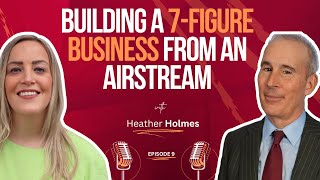
Heather Holmes quit her agency job on June 15, 2015, and built Publicity for Good from an Airstream into a seven-figure firm with 30 people. She shares how she moved from local media placements to national coverage, scaled a subscription PR product called Signal Raptor, and measures ROI in ways the industry is only now catching up to.
Questions this video answers
June 15, 2015.
Almost 13 years.
30 full-time employees.
A 23-foot Airstream (silver travel trailer).
The year of the COVID-19 pandemic (she states "the year of the pandemic was our first million dollar year").
Chapters
And then the pandemic hit and Covid happened and I was living full time in a 23 foot Airstream with my husband. So it's everything as there are so many independent websites that are privately owned that you can write for. Right. Like legacy media will always be here. But there's been a lot of consolidation.
Because what I have found the easiest way to get traditional media attention is, is to have a huge following. And I think back to Gary Vaynerchuk. I mean, he got so much media attention.
It was consistency, it was pitching the media every single week. It was looking at trending topics, it was building out awareness days.
Our guest today is the founder and CEO of Publicity for Good. It's a purpose driven communications firm.
She works with clients who she thinks.
Are helping the world and she helps spread the message by getting publicity.
So it's everything from tracking web traffic, media impressions, consumer demand, building community size, driving product off the shelves. Those are probably like the most important metrics we look at. And that's part of the reason why we're building the infrastructure around me. Because what am I best at is that I'm world class at PR and getting people in the media. And my favorite days are staying, studying and getting better and perfecting my craft.
You're not even allowed to walk across the street anymore. That's seen as dangerous. Your parents want to minimize every single risk. Well, being an entrepreneur is inherently risky. Public relations, the publicist. It has a mixed image in popular culture. I can think way back to the Sweet Smell of Success with Tony Curtis portraying a sort of a slimy PR consultant doing all sorts of unethical issues. But that's the past. Public relations can in fact be a force for good. Our guest today is the founder and CEO of Publicity for Good. It's a purpose driven communications firm.
She works with clients who she thinks.
Are helping the world and she helps spread the message by getting publicity. I am very happy to bring to the show today Heather Holmes, the founder of and the CEO of Publicity for Good. Heather, thanks for joining us today.
Yeah, I'm so excited to be here and we're sharing it to my LinkedIn followers too. So I'm excited just to learn more and, you know, pour into your community.
Yeah, Heather, we. We have a popular culture that idolizes the idea of being able to work from home, make a seven figure income, not have a boss, have plenty of money, live where you want to live, have a family, have a real life, have kids, have a spouse. A lot of people talk about that, not Many people do it. Yes, there are people who don't have a boss, they're unemployed. Yes, there are people who make a lot of money, seven figure income. But most of the ones I know who are doing that are slaves to a Wall street job and they never see their family. You're doing it all. How did you do it?
Oh my gosh. It's not easy and it's messy for sure. But I first got my start as a publicist. I worked at an advertising agency doing PR. Okay. And I've been doing PR for almost 13 years. So I'm one that is obsessed with the craft of getting people in the media. I was at the agency for three and a half years. Everything we were doing for our brands was very archaic. Meaning we would have brands pay our agency a lot of money to manage social media. But then I did not understand how do I as a 20 something year old have more followers than these big brands who are paying our, you know, our agency a lot of money. Even know you add that, typically you're right. Like, you know, when you work for an ad agency, it's 20 hour days. It's toxic. Right. It's around the clock. And I wanted to find a different way. So June 15, 2015, I quit. I moved home to my mom's basement. I got a minimum wage job at Lifetime Fitness. It's a gym, an incredible gym. I slowly started building my PR agency and I literally worked at the gym while building my agency. And I literally worked at the gym and built my agency for three years. I didn't leave the gym until I was, you know, probably at like three to five thousand a month. Right. And then the year of the pandemic was our first million dollar year. And what happened is, well, I went, I moved to San Diego for a press tour and I stayed. I was about 25. I ended up living in San Diego. San Diego is great for business.
If you wouldn't mind doing that. Because I do want to point out, having checked out your website, I do. We're going to show this later. I love the fact that you're showing video testimonials from actual clients. It's something I stress to people for years. And what I found is those of you my age, 10 years younger than I am, 20 years younger than I am, you need to leave the room now. But Heather, what I found is people under 35 still think video is some crazy exotic thing where you have to hire a Hollywood production crew and it's therefore impossible. And they never put video testimonials from their clients on. I love the fact that you did that. Now, Heather, you're not an old timer like I am. I started working at Ketchum public relations in 1985. But 13 years is still a long time. There's been a tremendous change in the PR landscape. I mean, 13 years ago, I don't know any author who wouldn't have, you know, cut off their arm to get on Oprah Winfrey or to get on the Today show.
Yeah.
Because boom, that major. Well, today there is no Oprah show, at least on broadcast tv. And most authors I know would say, given a choice between going on the Today show or having their own YouTube channel that's got 20,000 regular followers, they'd much rather have their own YouTube show or they'd much rather be on a podcast that is the most respected podcast in their niche. So you've seen tremendous change in the industry in your 13 years. What's been the biggest change that you see? And, and I also want to know where you think things are going in the next five years.
Sure. So, so much has evolved over the years. If we look at big media companies, there's an editorial department and an e. Commerce department. So if you're a product based brand and you want to feature in men's health, eight of the 10 features typically have an affiliate link. So there's definitely been a change to move over to metrics. So media members are looking at what's trending, Right. What's the search volume for this story? And they're utilizing that as part of their metrics. So that's really the first difference.
Let's dig deeper on that because I want to make sure I'm understanding carefully. Let's say I were your client and I said, hey, I've got my new online public speaking course. It's a thousand bucks. Can you pitch? Men's Health has been nice enough to quote me several times in the past. Can you get them to do a profile article of me and a part of your pitch? Hey, we have an affiliate link that every, every person who buys the course from your link, Men's health will get $200. Is that a part of the publicist pitch now or does that instantly put you in the advertising category where they want you to buy time?
So there's two different, separate, separate entities. So the editorial department works with the E Commerce department, meaning they want to maximize their articles. So yes, they would include an affiliate link to buy your course. They want to see that. And they have databases and they'll search to see who has an affiliate link. On the separate side, there are way more sponsored articles, sponsored posts, people selling articles. That's a new change as well. People selling over time.
Can I apologize for interrupting, but I find this fascinating and I don't know what the answer is. When you as the publicist are pitching someone to Men's Health or any publication, are you now using as a part of your pitch? Hey, your e. Commerce department is going to love the fact that we have this affiliate link. Is that a part of your pitch?
It is, but it's also saying, hey, this many people are searching, you know, looking at Google and Google trends, like a million people last month searched for this topic. So we in our pitches too.
Okay, and then how much of your time is creating a sponsored article and then just buying the time which you know, has been around forever. I remember, you know, mobile did that front full page ads in the New York Times 40 years ago. So it's not necessarily something new. But you're right, more and more online publications are doing it and that's kind of the fine line. Is it pr, Is it advertising? What is it? How much of of what you're doing for clients now is you're, you're buying the space for sponsored content.
So 110% of everything we do is all earned media. So emailing producers, texting them, emailing them, building relationships, Building an incredible relationship with one producer in one media market and sending them ideas for the next 90 days, it's harder. It takes a lot more time and hustle. But I love earned media and it's really based on relationships. You know, we have gotten people on the Today show and entrepreneur, but it takes time and your story has to be special enough. And that's not a mean thing or ego thing. But a lot of times it's a timing thing. Like on a personal level. I've been in the media 700 plus times. My story has evolved over time, right? Like my dad died of cancer when I was in high school. So the first like set of my publicity locally was supporting the lung cancer association and what that meant to me. But I didn't even have a business. I was just promoting a cause I cared about. Then a couple years later I was a part of the Ms. International system. I was Ms. Ohio and I was doing a bunch of Ohio media, TV, radio, print. I probably did like 20 plus interviews and I was going on as Heather. But I was talking about why businesses need to have add a four good component to their business. And my Company publicity for good was mentioned, but it was not like an advertisement about publicity for good. Right.
And then I want to make sure I'm understanding it. You had started a publicity firm while in the pageant world.
I slowly, like slowly, slowly. And I did the pageant as a way to reach more people and have a platform.
And pageants are an interesting. You know, there's a lot of contention and debate. We won't get into that. But disclosure, I've trained a couple Miss Universes, Miss usa, Miss Teen usa, and a lot of pageant winners in European pageants. And I'm not discounting criticisms of the pageant world, but I can tell you we do live in a world now where so many young men, boys, get so much publicity for high school basketball, college football, college basketball, and there still are not as many media opportunities for women. One of the things the pageants do is they really give a lot of opportunities for media coverage for women. And some of them give training through people like me for training. So it does, it is an opportunity to get a lot of exposure earlier in your career. I mean, you know, people forget that, that Oprah Winfrey was Miss Tennessee and Diane Sawyer was a Miss usa. I can't remember if she was a winner or third place, but did very well in the pageant world. So some, some good grounding there and just facing your nerves and speaking to people. And most young people think that would be the last thing in the world.
They would want to do for sure. But it's definitely a good experience to get your name out there to support a mission that you care about and honestly build relationships with some incredible women who honestly want to make a difference. So that was like one of my media stories. And then the pandemic hit and Covid happened and I was living full time in a 23 foot Airstream with my husband, and I was like, okay. We were living in an Airstream and it's one of those silver travel trailers that are very.
Those are fancy.
And I'm like, I'm a publicist. We're living full time in an Airstream. You know, like, we have a really cool story, like living full time in an Airstream during the pandemic. And at the time, we were a six figure business. And when the pandemic hit in March, we lost like 60% of our revenue because people were so unsure and they didn't want to invest in pr. Right. So I pitched myself, or they wanted.
To, and their business plummeted and they had no money.
Yeah. Oh, for sure. So I pitched myself to the media and you know, it is based on timing. But I before this I had hundreds of local interviews, podcasts. It wasn't like I showed up on WGN News tv, which the reach is bigger than Good Morning America or Fox News or Business Insider. It's not like it happened overnight. I had interviews for them to watch. So that was probably five years of me being in the inner in the media before national media was the right thing. But a lot of it was timing in that the world provided an opportunity for me to be in the media based on my story. So I'm saying all good things take time. You need to get local media and interview practice before you go on the main stage. You don't want to look like a one hit wonder and things happen in the world that provide an opportunity for your story story to be amplified and take the national stage. So a lot of it is based on timing as well.
Yeah. So many, so many publicists talk about what best practices are and then you go to their own website and it's the classic case of the cobbler's children wear no shoes, they have no testimony. Forget video testimonials, they don't have any testimonials. And they're like, oh yeah, we're busy working on clients. So many publicists take the attitude of, well, I want all the spotlight to be on my clients, not me. I always thought that was short sighted because if you can't do it for yourself, why should anyone trust you to do it for them? And if you don't believe in publicity, why should anyone else believe in publicity? So I have to applaud you for that and just, you know, your willingness to say yes to us and spend time with us, I think it's great because so many people in the publicity world say no, we're not going to do that. I'm going to pull up your website in a minute. But before I do that, I want to get your sense of where this is all going. Because again, I grew up in a time period where a little ahead of my time, but someone like a Wayne Dyer can write a book. Your erroneous zones. He's completely unknown.
Yeah.
No newsletter, no list, no name id, no fame, no nothing. A book that maybe it wasn't a self published, but a small publisher. He somehow got on the Tonight show with Johnny Carson at a time when tens of millions of people watch the Tonight Show. Boom. His book took off bestseller and that made his entire career. He published 50 books. He was rich and famous the rest of his life. And I like him. I'm not saying that as anything negative. Those days are gone. Yeah, those days are absolutely gone. In a sense, it's never been easier to get publicity and get in front of someone because there's no gatekeepers, because anyone can host a YouTube show and have an Instagram account and blog and Facebook. But in a sense, it's never been harder because it's harder to actually build enough of an audience to get to the point where it's very meaningful. What are you seeing as the biggest trends that you're trying to stay ahead of right now in this whole attention game?
So it's everything as there are so many independent websites that are privately owned that you can write for. Right. Like, the legacy media will always be here. But there's been a lot of consolidation. So there is way more independent websites. There's rumble, there's people starting their own media companies. So there is such an opportunity for you as an entrepreneur to get in the media. There's platforms that you can write on and become a contributor. Right. So we're definitely trying to stay ahead of those trends. When I think of public relations, it's also looking at, you know, doing an Instagram live, It's also looking at YouTube. It's also looking at micro influencers, getting influencers to talk about your brand. And then where I'm extremely passionate about is, well, how do you integrate it into your marketing? What does that look like? And what is the next steps to really build, you know, a brand that is seen as an industry leader? Because to me, it just starts in this moment of doing the interview from when I get the. When I get this interview and it's done. I have a promotion plan in place. I'm going to promote it. I'm going to utilize this content.
Yes.
You know, like, that's where I'm really passionate. And part of the reason, kind of going back to what you said about doing interviews is I like to do a lot of these interviews to be in the shoes of my clients, to feel their stress. Like, I have two kids under two, I have one on the way. All those things that come with it, the mess. Like, I want to understand it so I can better coach them through it. Right. I always want to get better, too. But the reason why this is so valuable is on this podcast with you today, I should get 30 pieces of content. So you have to post on social media.
And you are. And I mean, this is a compliment, but your life story, how you started, what you just said, you're sounding More and more to me, like Gary Vaynerchuk, who is someone I follow a lot. And I'm just guessing he may be someone that you have some respect for. Love him because, because he's certainly a bit. I mean he suggests you should have 245 pieces of content every single day, but he's got 27 full time people working for him. So I don't do that much. But I, but I am a big believer in putting out a lot of content. There's no doubt about that. What. And I'm interested in knowing how you would do that. I think that would be a very interesting case study for our audience. But I do want to put a spotlight on your website because again, I, when I went to it earlier today, I thought, okay, there's nothing special about this as far as what people say in books you should do. But if I actually go to people's website, it's very special because most people just, just don't do it. They just don't do it. And I'm always shocked when I see companies, entire companies that are based on like communication and video communication and they don't even have video on their website talking about what they do. Now again, this is the website publicity for good.com and there's a role for both. Yeah, my only qualm with showing the fancy highly produced ones people like, well, I can't do that so I don't bother. And sometimes just a simple cell phone in front of someone saying how you benefited them and helped their business a lot can be the most meaningful thing. You know what I forgot? I want to just make sure I hit the settings correctly. So I'm going to start over. I'm going to share my screen. I've got my audio system on with Streamyard. Sometimes there's two buttons you have to push to get the audio. So it's sometimes forgotten. So let's just take a look at this a minute and see what we think.
The Prospector is a nonprofit dedicated to providing meaningful, competitive and inclusive employment for people with disabilities. So through the mission of competitive and inclusive employment, we have a first run movie theater here in Ridgefield, Connecticut. Connecticut, where we show all new movies. And there's so many kinds of jobs within the movie theater. We also have a popcorn business, Prospector Popcorn. It's an online e commerce business. And just like a movie theater, there's so many jobs within one bag of popcorn.
Prospector has the commercial kitchen where we make everything. The baking and cooking process to the packaging, everything is done in house, certain prospects have different strengths or sparkle. We really like to accommodate anyone who would love to be in the kitchen that it can only make our teens stronger.
Since opening in 2014, we've had so many people reach out to us asking, how do we have your sparkle here in my state? How do we share what you're doing? What's the secret recipe? We believe we have the most delicious, tastiest popcorn on the planet. And we believe that there's so much sparkle that can be shared within one bag and we need help to share that reach across the country. So we were able to find a firm called Publicity for Good. And Heather and her team has been instrumental in helping get our brand and mission out into the public eye.
When I started here about six months ago, I would describe gourmet popcorn as a well kept secret. We made a lot of change to the site and the way we operate, but we decided it was time to bring in outside help when you're in the gourmet popcorn business. National Popcorn Day, January 19th. It's like your super bowl. And on that day we had two live television appearances and traffic spiked. In terms of sales, we had 3,000% growth over national Popcorn Day last year. We've reached out to 80 media outlets, we've generated 50 new backlinks and our search spike is actually sustained at about 20% growth since we started working with them.
And we make about minimum four batches a day, which the yield, average yield would be about 350 bags a day. And then we make many different flavors. We have our standard flavors and our number one seller which we have to make, which is the Belgian chocolate toffee. And we usually have to drizzle about six to eight trays a day.
So working with PFG has been smooth since the very beginning. We started in early January. Within the first month we've already been booked on CVS and local Connecticut stations. We've been featured on PureWow's website for top 14 Valentine's Day gifts. So they've been doing a lot of work and their company, they're all about brands with a purpose. So they understand that it's not just about the product that we're selling, it's about our mission behind it.
Wow. So really very powerful. What I especially liked is it wasn't just, oh, we got a lot of publicity. They're great. I really like that you specifically tied it in to metrics of growth. Specific numbers of placements, you know, specific outlets, specific outreach, lots of specificity because let's face it, a lot of us in the PR business like to kind of just talk about smoke and mirrors and we don't always like to have all of our work held to a strict accountability. So I like, I like what you put in there. This does bring up a big question that I think some of our viewers have. And that is just as a time management standpoint, how do you manage the time to do your own PR and your own website and do that and have seven figure clientele without having some big office and having to manage 50 employees and all the headaches for that and working 18 hour days? How do you do, how do you scale the business? Number one, how do you manage all the things of family, your own publicity and website? Because I see so many young PR firms are not young, but smaller, less than 50 people. PR firms, they just let that slide and scaling up to major growth. How do you do that?
So it's a couple of things. It's making it a priority and putting it on my calendar. That's the first thing. The second thing is I want to understand what the experience will be for clients. I want to build a relationship with you so that you say yes to amazing clients that we serve. I want to know what the experience will be like for my clients. So to me, I'm creating opportunities and relationships for our amazing clients. Like that's part of the reason why I do this. I do have a full time team helping me. We, you know, when I started we were virtual. We do have an office in North Carolina, but we got the office because at the time we were living full time in the Airstream and we needed somewhere to go outside of the Airstream. So we have an amazing office in Morganton, but of course we don't. We're not paying New York City and LA prices.
So how big is your, how big is your team now?
So we're a full time team of 30.
Oh wow, you are big. Okay. I didn't realize you were that big.
Full time, only working for publicity for good. We also, because we're so passionate about making PR accessible in that not every brand or person has 5,000 to 10,000amonth that invest in PR. But I've seen PR, you know, build a business, build a brand, bring in sales, build a community. Right. I'm really passionate about making PR a little more accessible. So we created a software, a service and a software called raptor to make PR more accessible. So we're a full time team of 30. Also have some full time developers because we wanted to create a subscription model for PR that was 80% of what you would typically pay an agency with just the same benefits.
So okay, is your subscription service model up and running or is that still in development?
Yeah, it's up and running. It's called Signal Raptor. We haven't really like started promoting on social media because we've just invited old clients or people on a sales call with that. Really don't have, you know, revenue to justify in 5,000 or above. But yeah, and I'll give you it so you can put it in the show notes. But I'm very excited about what we're doing for brands and individuals and entrepreneurs who want pr but you know, they should not be investing thousands of dollars a month.
What is your advice to a new company? Let's say it's someone, they started a home business, they're, they're getting some traction. Maybe they had their first six figure year. They've kept expenses really low. Yes, they've got a Facebook page, they have a LinkedIn page. And let's say they have some kind of, I mean let's say it's a home decor business where it combination of in person stuff but they also have designs that they sell online and Etsy and places like that. Tell me where I'm wrong. Where I would tell someone like that is to focus, you know, a couple of hours a day creating content, Whether it's for YouTube, whether it's Facebook, whether it's Instagram. Build an audience, a community of people who love your stuff. Do that first, spend money on that. Whether you need an extra camera, a little better microphone. Build a community first. Because what I have found, the easiest way to get traditional media attention is to have a huge following. And I think back to Gary Vaynerchuk. I mean he got so much media attention on the Tonight show and Ellen DeGeneres because his TV wine library was so new and fresh at the time when he started that some eight, 18 years ago. It is funny, you go back to that show now and I think, oh, it must have a billion views and a billion. I mean it's, it's, it's total audience is pretty small, but compared to everything else at the time, it was big and it made him famous. Because what I do see is small businesses hire a publicist. Maybe not a good one like you, but they hire a publicist, they try to say, well let me just test this, let me spend $3,000 and they get on half a dozen talk radio shows in three months, a couple of AM Talk radio shows, one local TV hit and in month four, their revenues are down, they see no measurable way and then they retrench and they got no benefit out of it. So that's why I tell them build a community first that because every single day newspapers are going out of business. TikTok social media is going, let's focus on where there's growth. But you have a full time publicity business. So there are different interests there. I want you to tell me why I'm wrong and go a little deeper into this interplay of strategy of how much time, money, effort should people be investing and essentially creating their own media channels versus trying to get publicity in other people's media channels, whether it's a traditional media outlet like you know, the Asheville Times, or a new media outfit like TechCrunch, something like that.
So you have to have a social media following regardless. Because if people go to your Instagram account and you're not posting or well, they're going to think you're not in business. So you need to have a social media following. Building a robust following that's engaged is a long term strategy. It's going to take time and it's going to take money. Right. Why I really value PR is you could literally, if you have a thousand followers on Instagram, you could go in your local morning news three minutes, reach 2 million people and you're in front of other audiences. Right. Like there was a mom that had a cookie company in Texas and she just had her website and had no sales and her One TV segment because of her story brought in $12,000. So I'm seeing local media convert extremely well when it comes to brands or people that have a heartfelt story. Typically more though on it's easy to buy cookies now if you're a business coach, sometimes that's harder because everyone loves cookies and it's understanding. It's easy to buy cookies. But if you're trying to sell your services, that's a little harder. But I believe that it's very easy.
For me to ask my daughter to, hey, should we buy some cookies? These look, that's an easy sell.
That's an easy sell.
It's very hard for me to say to my daughter or anyone else in my family, hey, let's buy some professional business consulting for 6,000amonth. That's a harder sell.
Yeah. So I've seen people like Regina Bonds, for example, she had an Instagram account, but from publicity her business grew by 40% and it was really just her instagram account. It was a mixture of reaching new people, reaching new audiences, integrating the media logos into her Instagram account, into her marketing. People that were on the fence of working with her started working with her. She had a higher sense of confidence. She had a higher sense of credibility and street cred. She gained confidence. So it's a mixture of, you know, getting in the media, but then, well, what do you do with the media to scale your business? She did increase her prices over time because she was in more of a demand.
Tell me about the success story you're proudest. I'm not necessarily the most profitable client, but the person you took, they were here and you worked with them for you know, a year or two, however long you got this outlet, this hit, this hit built to this, this. And now their business is here.
Yeah, I mean it would be anything from like a consumer brand, a beverage of hard kombucha. In 16 months time, 84% of all the media mentions for all the brands in their category was that brand. When we first started working together just had distribution at retailers in Washington, California and Arizona. They went national, they had an exit which was exciting. Right. They were bought by another company and that growing that, that consumer demand and interest. I remember when press would go live, I'd posted on the founders LinkedIn page and the amount of engagement, like hundreds of comments on his interview supporting him and it helped him behind the scenes having conversations, which was incredible. Or even someone like Regina Bonds, who we started out with local media, blogs, syndicated blogs, articles, radio, just that layering effect. And then four months later, article on Martha Stewart, another month later, later the Today show. So it's definitely the building approach. But now Regina is paying for paid like she gets paid to speak week. Right. Like the media always wants her on. Her business grew by 40%. So here are two different examples back to the kombucha.
That's a type of tea, if I understand correctly. How do you differentiate that? Because they're. First of all there's a lot of tea companies, number one. Number two, there are a lot of huge, huge established brands in that market. How do you, how do you cut through the clutter? I mean I have experience working with, with Sambazon media training for them, but they were sort of their own new category in a sense you could say that's easier. How did you get something for a category which in some ways is established? How are you able to get the media to pay attention and come up with a different story?
It was consistency, it was pitching the media every single week. It was looking at trending topics. It was building out awareness days. You know, National Nutrition Month is in March. Let's, let's look at the health benefits of probiotics. In June, it's Wildfire Awareness Week, and the name is Fly with Flying Embers because they almost burned down in Ojai. So it's just always creating stories and always being proactive instead of reactive and having a plan. And it's that consistency piece.
What an inspiring entrepreneurial journey, living in an Airstream while starting out, Heather. And thanks to me for bringing you on today. Well, thanks, Heather, for joining us today. And by the way, Airstream is considered like a Rolls Royce of trailers. Are you still living in the Airstream or you keep that as a guest house or what do you do?
We have it on our property. We ended up in North Carolina. We live on 2 acres, and then we have 22 acres where we're building a homestead. But once it became pregnant and had Rose, and now we have Rose and Benaiah, who Rose will be two in June and Benaiah will be one in June, we had to get a home. So it's just on our land with us.
Well, it's a beautiful area and many, many people who know me will laugh because they'll find this shocking. I actually cleared brush in the lands near you in Morganton back in the 1970s. We were building a Boy Scout camp, Camp Grimes, named after the late Gene Grimes. There's a Boy Scout camp for the Boy Scouts in Charlotte, North Carolina, where I grew up in your area. And I helped build the camp with other Scouts and still, still remember that and have fond memories of it. So very pleasant area and always nice to be back, North Carolina, whether it's the Asheville area and Charlotte, which I'm going to this Friday. So I'll be back not too far away from you. Yeah, Nice, nice part of the world. We do live in a time where if you're a great publicist, people don't care if you live in the North Pole. When I started out in the 80s, I mean, my only thought was, well, I live in North Carolina. I was attending, just graduating from Duke. I'd have to go to New York City because that's where all the PR firms and I did, and I loved it. But you don't have to do that anymore. You can live anywhere.
Right.
How has that been? And what are the strengths and the weaknesses of living where you are? Dealing with national media, people competing with publicists who can take producers out to lunch and buy them drinks if they're. They work right down the street from 6th Avenue and down the street from Good Morning America and the Today Show.
Yeah. So definitely with the pandemic and everything, things have evolved. There's been a lot of consolidation of media companies, a lot of writers working from home. So that has changed. Death sides used to be really popular. Media is way more. Now that we're in a zoom virtual world, if you will. Like media members are way less committal, meaning that they used to be way more, yes, I'll do this press tour or death side. And they're a lot more resistant or say no. So that's changed. I do think because we focus and partner with purpose driven brands, media trusts us or they know we're really working with people and businesses that are making a difference. So I do think that, you know, makes a difference. Yes. I have media that I've literally worked with for over 12 years and I'm so thankful. But we've just had to find different ways to build relationships. So a lot of it honestly is through social media and finding those common connections that way.
Some of our audience, especially the ones watching this on replay, they're rewinding, oh, wait a minute. How do you keep a client for 12 years, especially in a field like PR? Now, I have a lot of respect. I've worked full time, long time ago in pr. I deal with PR people. I'm a part of the PR world in the sense that PR people hire me to do media training for a day. But I can tell you, I do think PR is a very tough job for a lot of people because people think, oh, you're Samantha from Sex and the City, you're going to parties all the time. And that's just completely irrelevant for the most, for the most part for 99% of PR. But what I've always noticed with, with PR people is, you know, you could spend six months trying to get someone a placement. You get the front page profile of the Wall Street Journal.
Yeah.
Or Barron's. And 24 hours later the client is like, how come you don't have me on 60 Minutes? I mean, they always want more. There's so many variables you can't control. As far as, you know, certain media people will promise you will sweat. They'll do the interview, swear to you it's coming out. And then the producer involved or the editor or the writer involved was fired or left. It disappears. And it's, it's a very, very tough profession. And what a lot of firms do Especially here in New York City. I won't mention the name, but a very, very big one where the founder just died in the last few years. It was nice enough to blurb my book a media training az. I don't want to trash him, but they're notorious for the big. The big name guy gets the big famous clients and with his name they bring in and it's a very famous PR firm. They're able to bring in hundreds of other clients who can say, well, I now have the same PR firm as. And they mentioned a very famous person and they, they pawn that assignment off to a 23 year old and told just get placements. We're going to measure you by the stack of placements you get. And they signed them to six month contracts. And at the end of the six months, I've heard countless people say, yeah, we only, it was a famous firm, we only paid 5,000amonth. We were only locked in for six months, but we got two small placements or zero placements in six months and then they quit. But it doesn't as a business model, they churn so many in and around, they're making millions. Sounds like you have the opposite. How do you keep a client for 13 years? How do you keep from not getting sick of them? Number one.
Yeah.
And how do you, how do you monitor their expectations? Because we're all human. You get me on the Today show today, I'm thinking, well, she's going to get me on 60 Minutes tomorrow. And it doesn't necessarily work that way.
Yeah, it's hard. Whenever we have client calls, we're always asking like, what can we do better? What do you like? What don't you like? So we have that as a part of our dialogue for sure. There's definitely things that happen that are out of our control. Finances, priorities change and all those things. But we really try to have like those direct questions on our client calls, like directly asking our clients and everything.
What keeps your clients awake at night? I mean if, if you're a bigger company and you're all dependent on your founder who's, you know, 90 years old, getting publicity, the founder goes, it's gone. Are they worried that they have a huge, huge presence on Tick Tock and oh my gosh, Tick Tock might not be available in the United States next year. What, what is their biggest concern when it comes to ongoing communications with clients, prospects, the industry.
So for brands that we work with that are like international 800+ million, it really is brand awareness or you know, when you poll the market. Do people know your brand over others? For smaller brands, really, I hear we need to move products off the shelf. It's sales. We want to build our community. We need brand awareness. But I hear sales a lot.
So how do you deal with that? Because I know so many PR firms, publicists, the question they hate more than anything is, okay, I'm a small business, here's my product. How can you show me return on investment from other clients? And then how can I hold you accountable after the first couple of months as we get going? Most publicists I know can't stand that because they like to talk about, well, we're really building the big brand and the mega positioning and the strategy and not knocking. All of those things are important. But for a small business, I mean, if you're a small business with a couple hundred thousand dollars in revenue and maybe a couple of freelancers, every single penny you don't spend goes into your pocket. You can invest in for your family, you can invest in a index fund. It could be getting 10, 15% a year. So people do scrutinize it differently than just a mid sized bank that automatically has a line item of $2 million for communications this year.
Sure. So it's everything from tracking web traffic, media impressions, consumer demand building, community size, driving product off the shelves. Those are probably like the most important metrics we look at and aligning it with the business initiatives too.
And how, I mean, look, I fail all the time. Everybody has failures. How often do you have a failure where you've got a client, you're getting them good publicity, it's just not resulting in sales and they can't afford to continue how. What do you do in a situation like that?
So a lot of it has to do with their landing page is not optimized or it's not optimized for Shopify, or they're using PR as their Hail Mary and they're doing nothing else to grow their business. So Right. Like we try to have those tough conversations, let them know what infrastructure they need, place, etc. But it still happens. It has happened. I just try to do a better job of asking pre qualifying questions and then setting expectations, you know, before you know, signing an agreement.
And does your team help them with these weaknesses? Do you have a team that will rebuild their website, that will handle their email campaigns and get them on Mailchimp or ConvertKit? Do you help with all those things or do you just say, look, you got to do it? Here are three vendors we trust.
Yeah, so it's more based on referral partners for us. We really specialize in earn media with media relations, getting our clients awards, securing micro influencers, and then really looking at local media to drive awareness for local retailers and consumers.
How much of your time do you spend literally picking up the phone pitching a producer or an editor or a writer? Is that even a thing anymore? Is everything all text or email?
Yeah, mostly everything is text and email. And most producers don't want to be called. I will call like when we have an event and we're working with local media or we like are trying to get media to come to an event. Right. To get photos. That's typically when I call the newsroom when it's event based. But everything else typically is like text and email.
And is the right text at the right time with a strong hook in the first 10 words. What's most effective or what, what really generates bookings most effectively?
It's really just getting them to respond to our initial interest and then from there going deeper into the story.
Okay, in a moment now I'm going to ask you to pitch away. A lot of talk shows, a lot of blogs, a lot of communities on Facebook say, well, you know, no pitching, no pitching. We're the opposite here. We're, we're here. This is the TJ Walker Success show. We're all about helping people become more successful by improving their communication skills and by improving their confidence in their communication skills, specifically spoken communication. So many people are nervous, even PR consultants, about talking about why people should hire them, why they're great, what's unique about them. And here we embrace that. So what I want to do is help have you pitch away. I want you to, before the pitch starts, define who is your target prospect. Who is your target client? You are not after a college student who self published a book who has no money. That's not your client. Define for us your client, your ideal client prospect. And then imagine they're sitting right here. It's a one on one conversation and you can just talk to them for two minutes because you've already introduced each other and they say, so tell me about your firm and what you do and how you could help me. That's the scenario. So I'm going to get off camera, give you a couple of minutes to pitch away. Anything you want. You talk about your website, your, your new software as a service, anything. It's up to you. Ladies and gentlemen, here is Heather Holmes.
So I'm Heather Holmes and I'm the founder of Publicity for Good we are a purpose driven communications firm where we make you become an industry leader. We have been in the space for over nine years and I've been a publicist for almost 13 years. And we are obsessed with partnering with mission driven brands. So that is consumer brands that you would find at the grocery store or individuals and influencers who have a story and are trying to make a difference. The media. We really specialize in media relations. So when we partner with you we do get media interest in the first 30 days we make you become an industry leader. We also work with micro influencers and manage your awards. We partner with more than 300 brands. We work in every English speaking country. So if you dream of becoming an internationally known brand or voice, we can help you. And because we're so passionate about making PR accessible to purpose driven brands and people and businesses, it typically is 5K or above to invest in PR services. It is a premium price, it is a premium experience. But we realize not everyone has thousands of dollars to invest in pr. So that's why we created Raptor. Raptor is service first with the software where you are getting the support of a PR agency. We're pitching you every single week. We're sending your product to a micro influencer, we're writing an article once a month. You also get access to a community where we're bringing on experts. You get that mastermind component and that's 80% of what your typical investment would be for a PR firm. So we're really passionate about helping you scale your business, your community and reach more people through publicity. And this is our mission. We've been doing this for, you know, company we've been around for almost nine years. We're going to keep doing it and the best way to reach out is through publicityforgood.com or to find me on social media. And then in the show notes will be all the direct links if you need anything. If you want to do a free discovery call as well.
Other great job. We appreciate that Page. Let's turn the tables a little. What questions would you ask you if you are looking for a publicist yourself? Let's say, you know, let's say your software business has taken off so much, you've gotten investor, you've got venture capitalists giving you billions of dollars because they're convinced this is going to be a billion dollar industry. You, you're now spending all your time running a high tech industry and even though you could do the pr, you just don't have the time and nor do you have the time to manage it. You want to actually hire a PR firm. What questions would you ask PR firms pitching your business?
It would be everything around, like, give me examples of other brands or companies or tech companies that you've done PR for. It would be really understanding your metrics and what you track. It would be looking at case studies as well. And then it will be really understanding what success looks like to the agency when they partner with brands and clients.
And where are the easy spots to poke holes in? Because I have. I mean, I've worked with hundreds of PR firms all over the world, and, you know, a lot of them are my best friends, wonderful people and great to go out and have a drink with. But a lot of them, after they've been in the industry for 15 years, don't want to pitch, whether it's by phone or text. They just don't enjoy pitching journalists anymore. They want to sit back and talk strategy and concepts and messaging, and they lose that fire in the belly. I don't want to be ageist and say, never trust a publicist over 38, but do you notice differences in PR people who've been in a long time? What's the difference of those who keep their edge versus those who want to coast?
There's a lot of people that run agencies that don't even love PR and don't pitch anymore. I would say that's like 80% of the industry.
Okay, like, that's a high number. But it does not surprise me. And I'm not asking either one of us to name names, but buyer, buyer beware, shall we say?
And that's part of the reason why we're building the infrastructure around me. Because what am I best at is that I'm world class at PR in getting people in the media. And my favorite days are studying and getting better and perfecting my craft. So it allows me to coach the team better. Because if I'm sending a pitch out and I'm not getting responses, well, then I have clarity and I have feedback from my experience to help my team. Right. Like, things happen. Things happen in the news and, you know, like, not everything is black and white. So when I'm able to do it alongside my team, I'm able to coach and redirect and, you know, be a consistent student to better serve our clients and come up with breaks and all those things. So I'm obsessed with the psychology of media relations and pitching and the whole framework behind it. So who.
Who do you think is an example of a business leader who gets Publicity. Who do you think does it? Right. Who do you really admire or respect as someone who just has a business? I don't mean a media person like Oprah, but someone who has some kind of a business, and you just constantly see them out in the media, being interviewed, promoting their brand. Who do you respect the most? Or one of the people you respect the most doing that?
Yeah, there was a founder of a beverage brand, and she's not the founder anymore, but the brand's called Hint Water. Hint Water. And the founder was Kara Golden. And her publicity was so good about the hero's journey and building the brand and her personal story. So it was such an incredible job talking about from her working at AOL to where she was now. So her publicity probably has been my favorite over the years because it's very much been profiling her as a leader. The hero's journey.
Who were your heroes growing up in terms of people in the media? Speakers, spokesperson. And I grew up in North Carolina, and one of my hero people will find this amusing if they know me well, but one of my heroes was Jesse Helms. Not because I liked his politics, but because I was a former US Senator, but because his rise to power was by being a TV commentator, radio commentator, and newspaper columnists. And I found that fascinating. But that's way before your time. Tell me who your role models were growing up as a community.
When I was in Columbus, Ohio, and I lived there for 27 years, there was a local TV station, Channel 10, and there was a woman named Angela Pace, and she was in charge of community affairs. So every charity event she covered, every local event she would go to. And that was who I aspired to be. And then I even, you know, in my early 20s, created a blog where I highlighted local businesses making a difference. And then in my early 20s, I was probably 24, and Channel 10 came to my house. They were doing a story on boomerang kids and kids that went to college and then moved home because the job market was so horrible. And it was that interview experience that I was like, I really want to do this. So I like. My favorite vertical has always been local tv, local news, you know, booking guests on the morning.
That's interesting. Where do you see that going? Because, I mean, I grew up in a time when the local news anchors were gods. I mean, if you saw someone who was the local news anchor out at a restaurant, I mean, you'd be talking about that at school for the next two weeks. Like, that was. That was more exciting than seeing the most Famous movie star. Now I could walk down the street and pass every single news news anchor in South Florida, which is the sixth largest media market in the country. I wouldn't recognize a single one of them because I'm like a lot of people, I'm a news junkie. But I haven't watched local TV news in years and years and years. Their ratings are plummeting, their, their ad base is plummeting. It's kind of dying, isn't is.
But I still think they'll be, there'll be local media and a lot of people are building their following with Instagram. So that's where I find like all the influence comes into play.
Do you, do you predict the rise of just of independent local journalists who are not associated with the traditional, traditional media, TV station, radio station, newspaper, being able to create enough of a following through Instagram, through a YouTube Daily show where they can actually make a living? Because that is one of the problems with social media is it's so much easier to just say you hate some national politician or you love a national politician to build audience. Whereas if you're just talking about some, you know, local school board official, it's very hard to get anyone to pay attention. Therefore it's almost impossible to monetize it. Newspapers could do it in the past because they had all the classified ad revenue which is now all gone to Craigslist.
Yeah.
So do you see a possibility for local reporters slash journalists slash talk show host to be their own thing and making it independent of traditional media?
No, I see more of it on like the influencer side, not necessarily connected to a media company. People starting their own channels and getting their own followers that way and then monetizing it?
Well, I guess that's, I mean that's really what I'm asking. Is it going to be possible to be an influence, let's say your, your old town, Columbus, Ohio, I forgot where they are in the media market. 53rd or something like that. Is it going to be possible for someone to just say, I'm going to be a Columbus community influencer and I'm going to post on Instagram what's going on in our community and I'm going to do a live show on YouTube and social media every day and interview mayors and city council people of what's going on and I'm going to cover the parade and frankly do a lot of things that local TV and newspapers used to do and I'm going to review the biggest show, live show, Broadway style show coming to town. Will it be possible for someone to do that and make, let's say, $80,000 a year, because from what I see, unless they really specialize in some narrow niche, and even then it's got to be international. I mean, makeup is an international niche. If someone focus on local News and make $80,000 a year in most communities in America.
So I mean, they would need to have a revenue stream whether they're making money through Amazon or selling products or selling ebooks or those things. So they would need to be able to sell something to make money.
But can they do it with an audience as small as most local audiences tend to be? That. That's the bigger issue. You can monetize audiences if you get a certain enough size. But if you, if you're in Columbus, Ohio, no offense to Columbus, if you. There's plenty of authors who probably have some book on gardening who live in Columbus.
Right.
But you do a whole show, maybe you sell one book on Amazon, you get 89 cents. That's not going to pay the bills. Is there a sustainable way for them to do that?
So they need to have a separate business where they're selling a product on Etsy or they're selling an ebook or they're promoting products on Amazon and they're bringing in affiliate money, but they need to have physically another infrastructure in place to bring in revenue.
Yeah, I mean, I don't know what the solution is. I'm not in favor of turning back the clock and saying Craigslist can't exist, but I do think it's very difficult for communities for people to know what's going on and whether their local school board is ripping them off or doing a good job. It's harder to find out about that.
Because there's no local media.
We've had a couple of people. How can you encourage a new generation to be entrepreneurs? How do you market your business when it was a startup? Now you've covered the last part some and Mary, that'll be available on demand. But specifically the question of a new generation being entrepreneurial because we do live in a time. I'm thinking of specifically the book Anxious Generation by Jonathan Haidt where he talks about young people today are coddled to such a degree where their parents are preventing them from failing at all. You're not even allowed to walk across the street anymore. That's seen as dangerous. Your parents want to minimize every single risk. Well, being an entrepreneur is inherently risky. So to Mary's question, how can people. And what are you doing in particular to generate to encourage a new generation of entrepreneurs. And just quickly I see Modi has wrote in says best views on URL that looks like a spam and modular entrepreneurs.
So it would really be you have to connect them with other entrepreneurs, give them content, show them Instagram accounts of other entrepreneurs who are doing the thing too. But it's really, you know, surrounding them with resources and people to follow, maybe taking them to a local conference, finding another teen entrepreneur. You know, like it's really about getting them involved in those communities to be inspired about what's possible.
And how do you connect with no offense to my, my people from North Carolina and Morgan Morganton in particular, but it's not known as a hotbed of entrepreneurialism. I think there are a lot of school teachers there, farmers, lawyers, doctors, all needed by society. But how do you personally find connections.
With other entrepreneurs where you can have.
Face to face conversations?
I mean I go to a lot of trade shows, I travel a lot. I mean it's really through building a social media presence, I've built a lot of really good friends with entrepreneurs that way. And then a lot of it is just referrals like taking care of our clients and getting referrals as well. But I don't really like your success now with virtual like you can literally build a social media following or get in the media and build a brand no matter where you live.
Great points. I want to end it's really kind of a two part complex question. I want to give you all the time you're willing to spend with us. We appreciate you going into overtime with us here and want to be respectful of your time. But it's a two part question. What technology platform are you most excited about that is either just started or is coming?
Whether we think of it as the.
Next TikTok or whatever it is, what platform? The other thing is what technology are you most excited about for communication for me, and something we spent a lot of time talking about in just the last four weeks on this channel is digital clones. I see that frankly as the absolute most transformational communication tool of the last 30 years. And I spent a lot of time building my communication, my AI digital clone. And there's going to be video coming to it soon, possibly even in the next four to six weeks. But I want to hear from you again. What platform are you most excited about and what communications technology are you most excited about?
Sure. So really we're going all in on AI, figuring out how we can utilize it to streamline things, make it better, create brand Personas and all those things. I absolutely feel like it can, you know, maximize your creativity, what you create for your clients and yourself and your business for any. Right. Which is incredible. On the communication technology side, I don't have enough, I think, context or knowledge to answer that question, but definitely AI. We're very excited about AI.
Okay, well, you know what? I wasn't planning on doing this, but you're here. If I could pick your brain for a minute, because I. I do have my own clone and I'm using it for a lot of different purposes. My clone has been fed every online course I've ever done, more than 100 communication skills courses, and it has been fed every book I've read. It will be fed this interview itself. And we'll note it will only pull from my voice. As far as attributing anything to me, it would not use your ideas associated with me.
Yeah.
So one of the things that I've written about extensively and have online courses on is a very specific skill set of creating sound bites. So I haven't done this publicly for anyone else, but let's just try it, if you don't mind, right here, and I'll get your honest assessment. So one of the things I teach people in a day of media training is a process of how to turn a message point into a sound bite. A message point, of course, can straightforward idea, but it could be bland, generic, unquotable sound bites, quotes, and I use those terms interchangeably, I find typically come from one of 10 speech patterns. They've got analogies, pop culture references, cliches, attacks, absolutes, emotion. I have 10 things that I find fit. So what I have done, started doing with my own digital clone is to figure out specific ways someone can access it to find a useful meaning. So I'm gonna, if you don't mind, I'm gonna see if I can be. I want your honest, independent analysis of its ability to turn a message into a usable sound bite that you could use in a press release or that you could actually use as talking points for a client about to do a show.
Nice.
So let's go ahead and we're going to call my clone and I'll ask it the question.
Hi, I'm TJ's clone.
How may I help you, TJ? I need help with creating some sound bites. I am putting out a press release to promote my business and I'll be doing talk shows. Shows. I have a publicity firm. It's called Publicity for Good. My message is that our firm is going to work harder for you to generate lots and lots of consistent publicity tied to your return on investment, not.
Just for vanity purposes.
That's my message. I would like you to give me at least 10, 10 sound bites on that message. And in most of these sound bites, I would like to have multiple sound bite elements. If you could give that to me now.
Absolutely. Let's craft some powerful sound bites for your press release and talk shows. Here are 10 sound bites that emphasize your firm's dedication to generating consistent publicity tied to return on investment. 1. At publicity for Good, we don't just chase headlines. We deliver measurable results that boost your bottom line. 2. Our mission is simple, relentless publicity that translates into real ROI for your business.
3.
We turn media exposure into tangible growth, ensuring every mention counts towards your success.
4.
Publicity for good is your partner in achieving sustained media presence that drives profitability.
5.
We focus on strategic publicity that aligns with your financial goals, not just vanity metrics. 6. Our team is committed to generating consistent, impactful publicity that enhances your ROI. 7. With publicity for Good, your media coverage is a powerful tool for business growth, not just a fleeting moment of fame.
8.
We work tirelessly to ensure your brand gets the attention it deserves with a clear focus on return on investment. 9. Our approach to publicity is all about creating lasting value and measurable success for your business. 10. Publicity for good transforms your media presence into a strategic asset that drives long term profitability. Now let's take this further.
Hang on, tj. That wasn't bad. But I want you to be even more creative. I want you to go completely over the top.
This is for People magazine.
This is for USA Today. I want you to be even more colorful. And. And this time I only want three sound bites. But after you give each one, I want you to tell me what sound bite element was in it and why you think it would be quoted.
All right, let's go all out and make these sound bites pop for People magazine and USA Today. Here we go. Publicity for good is the rocket fuel your brand needs to soar past the competition and land on the moon of success. This sound bite uses bold action words and an analogy. The imagery of rocket fuel and landing on the moon makes it vivid and memorable, ensuring it grabs attention and sticks in the reader's mind. With us, your brand won't just make headlines. It will become the headline everyone talks about at the water cooler. Here we have a pop culture reference and a bold action word. The idea of being the talk of the water cooler is relatable and paints A picture of widespread buzz, making it highly quotable. Forget fleeting fame. We turn your media presence into a legacy that echoes through time. This sound bite employs an absolute and an emotional appeal. The concept of a legacy that echoes through time is grand and dramatic, making it stand out and resonate deeply with readers. Now let's put these in.
Okay, tj. Tj Switching gears. Tj, Last question. Let's switch gears. Now. I need sound bites, just three of them for Barron's magazine. My, my readership is very, very sophisticated. Mutual fund managers who are either billionaires or work for billionaires. So it's got to be sophisticated. Nothing cheesy here. Give me three great sound bites on this same message.
Publicity for good is your strategic partner in transforming media exposure into substantial financial growth. This sound bite uses sophisticated language and emphasizes the strategic partnership, making it appealing to high level financial professionals. Our relentless focus on ROI ensures that every media mentioned translates into measurable value for your portfolio. Here, the emphasis on ROI and measurable value speaks directly to the financial acumen of your audience, making it highly relevant to and quotable. With publicity for good, your brand's media presence becomes a powerful asset, driving long term profitability and market leadership. This sound bite highlights the transformation of media presence into a strategic asset, appealing to the sophisticated nature of your readership. Now let's.
Okay, thank you, tj. And now I really, I am sincere. I mean, nobody likes to just criticize, criticize someone who's had them on their show. But I do want some honest feedback because I had not done that before.
It was cool.
I mean, it's. I did it once for myself, trying it, but I hadn't done that before. Give me your honest assessment of whether you think something like that could be helpful. I wasn't. Well, let me just be quiet before I give any opinions.
Tell me what I think. It's great to have a tool that you can talk to and it kind of brainstorms things, which I love. I think it definitely can be used as a good baseline for the work that I'm doing. I'd probably tweak some words, but I mean, starting off, I would give it like an A minus. Like, I thought it was great. I think the user experience is great too. You just speak and it creates it for you.
And I should point out, I mean, if you're writing a press release, text is going to be more helpful. The default option is you text. You, you, you can write your question or you can speak and it turns it to text and then the answer comes back in Text. So if you were looking to have three sound bites to go into a speech or a press release, it could all be done on a text basis.
Are you able to get that copy or. No, because he didn't type it too.
No. So that's one thing. It would be nice to switch modes to say, hey, hey, thanks for telling me. Now email me what you just did or post it.
Yeah.
But if you ask it the same question, it'll probably give you something similar, so feel free. I mean, it's, it's. I wasn't, I didn't invite you on to promote this. It just sort of came to me. But it's, it, but it's right on my YouTube channel, right in the about section. I have it listed on social media, but it's, it's just deli AI TJ Walker. And you'll see my, my clone. I do think that once the video component comes and you actually see what looks to be the real person talking.
Yeah.
That is going to be transformational and that any, anyone seeking publicity I think is going to want to have their digital clone. It might not filter out for five years to a lot of people. Podcasts have been around a long, long time and most people didn't have one for five years and then they did the same with YouTube. So it takes a while for technologies to filter out. But I see it as so transformational because unlike a YouTube video, I mean, you and I are having a one on one conversation now.
Yeah.
But for everyone else they just have to kind of receive it unless they happen to be live and typing in a question. But the beauty of these digital clones is you can be anywhere in the world having what feels like and seems like a one way, a one on one real conversation. Because as you noticed, it didn't, it didn't give general comments, took the exact message I gave the scenario the company and filtered all the conversation through the lens of that. I mean, it wasn't thinking, obviously. It's pulling data and reassembling it the way artificial intelligence does, but in a way that's meaningful and it can do it in any language. I don't have mine set for every language, but I know you mentioned your international. It does, it does introduce the opportunity for any of your clients to be interviewed by any media out in the world in any language, because it can instantaneously translate it. We've had a few more comments coming. Oh, Rick says thanks. Tested out the AI coaching and it was pretty useful. Thanks. Hugo says. Impressive, Heather. You've been very Impressive. I appreciate you sharing your time with us today, so thank you so much. We wish you continued good luck in all of your ventures for all of your clients. Do you have something we can look forward to? Do you have another media appearance planned that where we can find out if we. If we see on your LinkedIn page or other place where we can see you in action?
Oh, yeah. Let's see. I'll be on a bunch of podcasts in the coming weeks. I'm gonna start promoting our PR software soon. I'll send you the link to that. I'm really excited for that. And then on a personal level, like in three to four weeks, I'll have another baby.
So if you like baby, congratulations and good luck.
Yeah, LinkedIn, we'll have three under three. So that's. I think it's better than being on national news, having another. So those are the things ahead that you can follow me and my journey on. And again, we're really passionate about making PR accessible. So I will be sharing details About Raptor on LinkedIn. And if you need help, you want to talk about strategy, you think you're ready for pr, you're not sure. We can always do a free discovery call.
One of the things I like to do is, you know, kind of like movies and stuff afterwards that the closing credits. Anything that you really wish we had done differently there? Anything you wish I'd asked you that we didn't get to. Any way that this interview could have been better for you?
Frankly, no. I think this is probably one of my favorite interviews that I've done transparently and I've done so many interviews. So no, I have, like my websites here. We've gotten to answer questions of people is on LinkedIn. So I give it a 10.
All right, well, thanks so much, Heather, very much. Appreciate your time. Thanks so much.
More from TJ





The Breakout Cases - What Actually Caused Famous Speaking Career Breakthroughs | Ultamize

The Red Circle Sessions Finale - Build the Speaking Career You Came Here For | Ultamize

Two Stages, One Logo, Two Completely Different Realities - Main Stage vs Independent Events | Ult...

Pre-Reset - Why Repetition Builds Better Speaking Decisions | The Red Circle Sessions | Ultamize

Your Decision, Your Framework, and What Happens After - Build Your Speaking Career First | Ultamize

The Red Circle Sessions Trailer - The Speaking Career Truth Nobody on That Stage Will Tell You | ...

The Two-Minute Ultamize Reset - Your Platform, Your Audience, Your Voice | The Red Circle Sessions