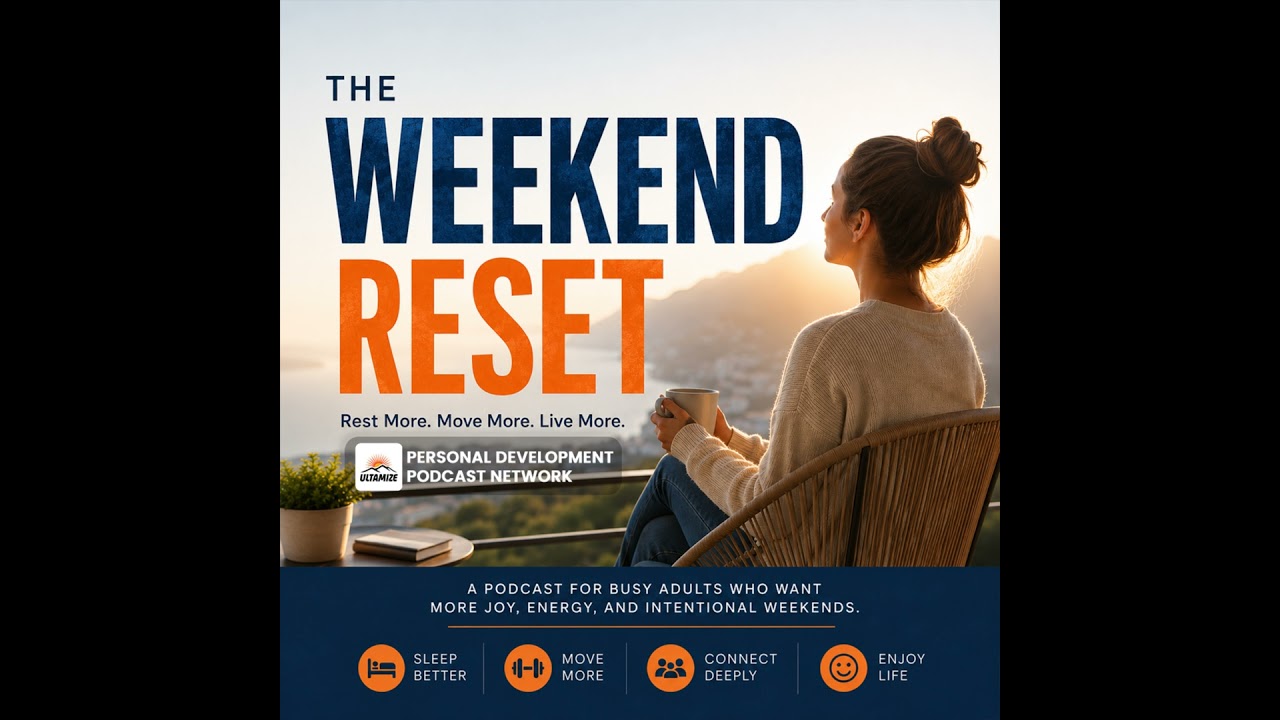
TJ Walker argues that exercise sustained by joy beats exercise driven by guilt. Tennis, pickleball, and other social games work better than punitive workouts. He also says weekend screen time and irregular sleep sabotage motivation more than lack of time.
Chapters
Ultimize. One of the biggest mistakes people make about exercise is assuming that motivation should come primarily from discipline. Now, discipline does matter, but if discipline alone were enough, millions of people would not buy treadmills that eventually turn into very expensive clothing racks. The deeper problem is that many adults accidentally turn movement into punishment. Instead of enjoyment. Exercise becomes obligation, guilt, optimization, calorie burning, or another item on a quick productivity checklist. Now, that works for some people, but for many people, it creates constant internal resistance, especially during weekends. By Friday evening, most adults already feel mentally tired. Emotionally tired, decision tired, and then they expect themselves to suddenly become highly motivated to do something they don't actually enjoy very much, like go to the gym and do an hour on the treadmill. That's one reason recreational sports and social movement can be so powerful psychologically, because enjoyment changes the emotional equation completely. I've experienced this very directly through playing tennis and pickleball. I know you've heard me mention that. I'm not trying to recruit anyone to my sports. I want everyone to do the thing they love to do. The important thing is finding some form of movement that creates genuine enjoyment, anticipation, social connection, and emotional reward for you. For me, it's certain racket sports. It does a lot of those things. I'll notice myself looking forward to it Friday afternoon. That's if I didn't play Friday in the morning. Not because I'm thinking, "Oh good, I get to burn calories on the pickleball court." No, I'm thinking competition, friends, laughter, movement, sunshine, conversation, and the fun unpredictability of sports. Am I going to beat Kevin this weekend, or is he going to beat me? That anticipation matters enormously. And what's interesting is that many people who insist they don't have time for movement during weekends often spend multiple hours staring at phones, staring at televisions, laptops, or tablets. You know who you are. Let's not kid ourselves. Now, to be clear, this isn't about guilt. Relaxation matters. Movies are fine. I like to watch movies. Television is fine in moderation. Rest matters. But if somebody spends 4 or 5 hours passively consuming screens every weekend while at the same time believing there's no time for movement or recreation or social activity, the issue usually isn't the lack of time. Its lack of intentional design. And one reason this matters so much is that movement affects far more than physical health. It affects your mood, your energy, your sleep, your stress, your ability to focus, social connection, and emotional resilience, especially movement connected to enjoyment and other human beings. One thing I've noticed personally is that active weekends often leave me feeling more energized Monday morning than passive weekends do, even though the active weekends technically involve more physical exertion. Now, that surprises people sometimes, but emotionally restorative movement often creates energy rather than merely consuming it. And there's another important point here: many adults unconsciously maintain the sleep habits of exhausted college students. They stay up until 1 or 2 in the morning watching screens all weekend, sleep late, disrupt their sleep rhythm, and then wonder why, why on Monday morning they feel terrible. The sleep experts consistently warn that wildly inconsistent or even a little bit inconsistent sleep schedules can leave people feeling jet-lagged, foggy, irritable, and exhausted even though they didn't switch time zones. Now, you can absolutely enjoy weekends without turning your sleep schedule into chaos. You can watch a movie at 7 or 8 at night instead of 10 or 11 or at midnight. You can socialize without staying awake till 2 in the morning. You can have recreation, fun, movement, and connection while still protecting the consistency of your sleep. That's an important distinction. Because one of the goals of a great weekend shouldn't be merely temporary escape. It should be returning to Monday feeling more restored, more energized, and more emotionally alive than when the weekend started. So please do this for me. Figure out what time do you go to bed typically on a weeknight and try going to bed the very same time this weekend.