Gas Prices Surge 35%, Why This Crisis Hits Every Household
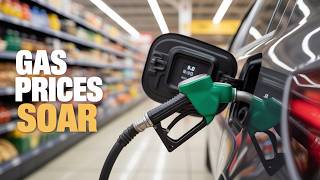
Gas prices jumped 35% to over $4 a gallon, costing families an extra $700-$750 yearly through higher diesel, groceries, and airline tickets. Air Canada's CEO resigned not over finances but for sending an English-only condolence message, violating Canada's bilingual requirement. TJ Walker examines how communication failures and authoritarian control reshape economics, leadership, and politics.
Chapters
Ultimize. There's one thing in politics that's almost impossible to spin, and that is the number staring you in the face at the gas pump. You can argue about statistics, you can argue about forecasts, you can argue about what might happen next year, but when someone is holding a gas nozzle and watching the price climb past $4 a gallon, there is no argument left. According to the Times, gas prices just crossed $4 a gallon nationally, up roughly 35% in a single month since the war began disrupting oil supply. And here's the real problem for any politician, but especially for Trump. You can persuade people with words. You cannot persuade them that what they see with their own eyes is wrong. This is the political equivalent of trying to sell someone stepping on a scale. No, no, no, that number isn't real. Trust me instead. The scale always wins. And right now, the gas pump is the most trusted source of information in America. Now, politicians have been taken down by energy prices before. Jimmy Carter didn't lose power because of a speech mistake. He lost power because people were sitting in gas lines and, and other problems. In France, fuel prices sparked protests that nearly broke Macron's presidency because energy prices aren't theoretical. They're emotional.
They are daily.
They're unavoidable. But here's what makes this situation completely different and far more dangerous. This wasn't some slow-moving global trend. This wasn't a surprise hurricane. This wasn't a coordinated move by oil-producing countries. This traces back to a single decision, not a bipartisan decision, not a consensus decision, not something demanded by the public. A single decision by one person that almost no one else in the world wanted. And that matters because when you look at the global picture, this wasn't something where allies were all aligned and moving together. This was the opposite. You had countries around the world, allies included, either reluctantly going along or openly breaking away. You had governments essentially saying, we don't I don't agree with this, but we're dealing with this because we don't want to alienate the US. This is not leadership momentum. This is isolation. And that's what makes this feel so unusual. Most major decisions come after debate, pressure, buildup. This felt more like something that appeared suddenly on a whim with massive consequences attached. Like waking up one morning and finding out, oh, by the way, everything just got more expensive. Now let's talk about what this actually means for real people because it's not just gas. Gas is just the beginning. Diesel prices are up sharply, which means every truck delivering food costs more. That means groceries go up, restaurant prices go up, Amazon deliveries get more expensive, furniture costs more to ship. Airline tickets— don't even get me started about airlines. Airline tickets increase because jet fuel is higher. Even plastics, which are tied to oil, become more expensive. That means packaging costs rise, consumer goods rise, medical supplies rise. This spreads through the entire economy like a slow leak that turns into a flood. You don't just pay for this at the pump. You pay for it at the grocery store, at the airport, on your Amazon cart, and eventually on everything. It's like inflation with a gasoline engine. Now let's quantify this because this is where it really hits. A typical US household was already spending thousands per year on gas. If prices stay around $4 instead of $3, that's roughly $700 to $750 extra per family per year just on gasoline alone. Not the groceries, not the flights, not the deliveries, just gas. When you layer everything else on top, this becomes one of the fastest ways to squeeze the middle class. And here's where the political communication problem becomes almost impossible to solve. Trump built a brand on one core idea: I make things better, I make things cheaper, I make life easier. Now, every gas station in America is broadcasting a competing message in giant glowing numbers. Those numbers don't care about speeches, they don't care about messaging, they don't care about press conferences. They just sit there quietly and say, everything just got more expensive. This is why gas prices have always been one of the most dangerous political indicators in the world. Because they don't require explanation. They don't require education. They don't require trust. They are experienced. And when people experience pain directly over and over again, no communication strategy can fully override that. I'm TJ Walker. This is Filtered. Thanks so much for joining me. It's Tuesday. We are live just before 10:00 AM Eastern time. Appreciate you spending time with me. This is the show where we look at top stories in the news and filter them through the lens of communication skills and personal development skills. So I'm happy you're here. There's lots more to come. Don't go away.
We'll be right back after this break.
Want more?
Grab my 5-book success library for $9.95 at tjwalker.com/books. It's the fastest way to level up your communication. Imagine being the most confident person in the room, whether you're on Zoom or on stage. That's what thousands of professionals professionals are learning to do right now through my online communication courses. At Media Training Worldwide, you can access my complete training library on demand, affordable, and actually effective. Whether you're preparing for media interviews, client presentations, or TED-style talks, I've got you covered. Check it out, mediatrainingworldwide.com. You'll never wing it again. Want to advertise here? You better be legit.
No crypto, no junk food, no supplements.
Go to tjwalker.com/advertise.
Did you see the latest from Air Canada? Their CEO just got the boot. This Air Canada story is one of the clearest reminders I've seen in years that communication is not some decorative extra for CEOs. It's not frosting. It's not a soft elective. It's not the thing you work on after you master the spreadsheet. Sometimes communication is the job. And in this case, the numbers were not the problem. It's common for CEOs to get canned when they don't hit their numbers, but that's not what happened here. Air Canada just reported 2025 operating revenue of $22.4 billion, operating income of $918 million, adjusted EBITDA of $3.1 billion, $3.7 billion in operating cash flow, and $747 million in free cash flow. Those are not distressed company numbers. Those are the finance team did its homework numbers. And yet the CEO is leaving. Why? Because a CEO cannot run a major public company as though human beings are a rounding error. Michael Rousseau is retiring after the backlash over his English-only, or near English-only, condolence message after the fatal Air Canada crash at LaGuardia. Prime Minister Mark Carney said the message showed a lack of judgment and compassion, and said it was essential that the next CEO be bilingual. Air Canada itself said French ability will be a part of the successor search. That's the whole lesson right here. You can have record revenue, you can have positive cash flow, you can buy back stock and still lose the room because you never learned how to connect with actual human beings, especially in their language. A balance sheet can tell you whether the airline made money. It cannot tell you whether the country feels respected. Now, most Americans do not realize how charged this is because they hear Canada And they think one big polite English-speaking snow globe with better manners and more hockey. But Canada has two official languages, English and French, under the Federal Official Languages Act. And Quebec is not just another province with a cute accent. French is the common and official language of Quebec. And Quebec law says people have the right to be informed and served in French. Statistics, here they are. Canada says 82.2% of Quebec's population had French as its first official language spoken. This is as of 2021. That means this was not some obscure etiquette error like using the wrong salad fork in Montreal. This was the CEO of the country's flagship airline headquartered in Montreal stumbling into one of the most sensitive identity issues in Canada. Reuters notes that frustration over the dominance in English helped fuel the rise of separatist party Quebec— and forgive me because I don't speak French— Quebecois in the 19th century. I'm sure I botched that, apologies. AP notes that Quebec's identity has been contentious since the British takeover of what had been New France in the 1760s. A little bit of history here. In other words, this is not just about vocabulary, it's about history, power, respect, and whether French-speaking people in Quebec are being treated as central to the country or as subtitles. And that's why this became a leadership story, not just a language story. If you are a CEO of a Montreal-based airline and you still treat French like an optional app you forgot to download, you're telling people something. Not with words, with your priorities. Now, to be fair, there is a serious counterargument. Some people say, I would rather have the CEO focus on safety, operations, fleet, margins, and labor than spend time conjugating verbs. I understand the argument. It sounds practical, sounds hardheaded. It sounds like the sort of thing a spreadsheet would say if a spreadsheet could talk. But leadership is not just optimization. Leadership is trust, and trust is built through symbols. Empathy, and cultural fluency. When there's a tragedy, people are not grading you on your route network. They're asking a much more basic question. Do you understand who we are? Carnegie said companies have a responsibility to communicate in both official languages regardless of the situation. In a crisis, especially a fatal one, that's not a side issue. That is the moment. And this is where the so-called soft skills become very hard skills. Call them soft if you want. I think that's one of the dumbest phrases in business. If a missing communication skill can help end a CEO's tenure at a company with strong financial performance, that's not soft. That is a core executive competency. Cultural literacy is not a garnish. It's a part of the engine. Because let's be honest, and this was not an impossible assignment. Rousseau became CEO in 2021 and had already drawn criticism then for not speaking French. AP reports Quebec Premier François Legault noted that Rousseau promised to learn English when he was appointed. Oops. Reuters reports Rousseau apologized again in 2026 after delivering only 2 French words in a 4-minute video. And that's the killer point for any ambitious executive watching this. Nobody was asking him to become 100% fluent. Nobody needed him to start writing French poetry by candlelight. If you're the CEO of Air Canada and you lived in Montreal for years, half an hour a day— make that 10 minutes a day— of disciplined language study over a decade is not some unreasonable burden. That is One less doom scroll session. That's one less executive dinner. That is one less round of, let's circle back. Over that span, he could have been comfortably bilingual. He could have delivered condolences fully in both languages. He could have sounded like a national leader instead of a visiting consultant who took a wrong turn off the highway. That's what people miss about executive presence. Executive presence is not just a low voice or a navy suit and the ability to say synergy without laughing. Sometimes executive presence is simply this: you bothered to learn how people speak in their own words. And that's the broadest lesson for you CEOs. Yes, know finance. Yes, understand operations. Yes, master capital allocation. But if you want to lead at the highest level, especially in a multinational, multilingual culturally loaded environment, you also have to study people, study history, study symbols, study what your employees, customers, regulators, and citizens hear when you open your mouth. Because anyone can learn a discounted cash flow model. Far fewer people learn how to avoid telling millions of customers, employees, and politicians all at once, I still do not really understand you. And that in the end is why this story matters. Air Canada's latest financials say the business was strong. This resignation says something even more important. A CEO cannot live on numbers alone. If you neglect the human element long enough, eventually the human element sends you an early retirement package. Okay, let me be clear here and transparent. I'm awful at this. I'm the typical ugly American, not ugly Canadian, but ugly American, and that I only speak English. And I realize that's a flaw of mine. But since I live in America and America is a big market, and because of England's domination of the world a couple of centuries ago, English is a pretty good language to speak if you only speak one. It is been to my benefit and I'm just lucky. But if I were going to try to represent a whole lot of constituents or most of my customers spoke another language, I would learn how to do that. Now I've tried to do some workarounds. My digital AI clone at tjwalker.ai can speak in 32 languages. It's my voice, it's my ideas, but it instantly speaks in these other languages. Now, that can work for me as a trainer, doesn't really work for a CEO of a gigantic publicly traded company. So those of you who are wildly ambitious and wanting to become CEOs of huge publicly traded companies or take your own company public one day, and you have some geographic positioning that makes you really related to a particular people, you need to learn how to speak their language. That's really the bottom line. Now, I throughout my own career have worked with presidents and prime ministers and business leaders, members of parliament around the world where I've had to train them and they do practice their speeches, their media interviews in foreign languages. Sometimes I use translators, Most of the time the people I'm working with speak English. I do my part in English. They do their answers or their speeches in other languages, and it's worked out. But would I also be more effective if I spoke a bunch of languages? Yeah, I would. I'm TJ Walker. This is Filtered.
Filtered is brought to you by the following. Get the deeper takes I don't post anywhere else. Subscribe now at substack.com/@tjwalkersuccess and stay in the loop.
For years, people have asked how they could get one-on-one coaching from me inexpensively.
Well, now you can anytime, anywhere with the TJ Walker AI clone. It's like having me in your pocket. Ready to help you prep for a speech, polish a pitch, or calm your nerves before a big meeting. You talk to it, it responds like I would based on my real-world coaching of thousands of leaders and communicators. Check it out at tjwalker.ai. It's not just smart, it's personal.
Imagine living in a country where your internet just turns off, not because of a storm, not because of a technical failure, because the government decided today you don't need it. It's not a glitch, that's a policy. According to the Times, Russia is now periodically shutting down mobile internet, throttling apps in Telegram, and building systems to monitor 100% of all internet traffic. And this isn't theoretical anymore. In Moscow, during a recent emergency, reporters couldn't send photos or video. They had to call in updates like it was the 19th century. 1990s. Right now in Russia, the government can shut off your mobile internet whenever it wants, no explanation needed. Imagine you're trying to text your family, call a ride, or even check emergency alerts, and suddenly nothing works. That's not a bad signal. That's the government deciding what you're allowed to see, say, and share. That's what life looks like when a country starts controlling communication instead of protecting it. Now, here's the part most people miss, and this is where communication and leadership come in. This isn't chaos. This is logic. If, if you are an authoritarian leader, this makes perfect sense. If you believe you should rule forever, it makes sense. Then criticism is not feedback. It's a threat. Bad news is not information, it's a danger. Free communication is not a value, it's a weapon that can be used against you. This isn't random censorship, it's a strategy, and it's a big, big problem. We're seeing it every single day in Russia, but guess what? That's not the only place we're seeing it. More in a moment. Hey, if you're enjoying this kind of take and want to hear more stories filtered through the lens of communication. Make sure you're following the show, whether you're watching or listening. New episodes drop every single day. And if there's a little notification option where you are now, go ahead and turn it on. It helps you stay in the loop. If you're a leader who wants to stay in power forever, the last thing you want is millions of people freely sharing information and criticizing you. So instead of debating critics, You silence them. Instead of responding to bad news, you block it. Shutting down the internet isn't a failure of leadership. For a dictator, it's the plan. And that is exactly what is happening. Russia is blocking foreign apps, slowing platforms like YouTube so they barely function, creating whitelists of approved websites, tracking devices by unique ID numbers, spending millions to block VPNs, the very tools people use to escape censorship, At the same time, they're pushing citizens toward a state-approved super app, a controlled version of the internet where everything can be monitored. This isn't about safety. This is about control. When Russia shuts down apps and internet access, people don't become more loyal. They panic. They switch to cash because payments don't work. They can't call rides, can't send messages, can't get information. Some are even buying walkie-talkies just to stay connected. That's what happens when a modern country suddenly starts acting like communication is optional. Now, here's where it gets even more revealing. Even people inside Russia, including pro-government voices, are pushing back. Officials warned that blocking Telegram could lead to, quote, needless deaths because people rely on it for emergency alerts. Soldiers said they needed to communicate Citizens are scrambling for VPNs with tens of millions using them, and yet the government keeps tightening control.
Why?
Because again, the logic is consistent. If your priority is staying in power, you don't optimize for prosperity, you optimize for silence. Here's the real goal of all of this. If people can't communicate freely, they can't organize. If they can't organize, they can't protest. They can't protest, they can't challenge power, and if they can't challenge power, you stay in charge forever. Now let's zoom out because this is where it becomes deeply disturbing from a US perspective. This is the system Vladimir Putin has built, a country where internet freedom is collapsing, population is shrinking, economic growth is limited, average incomes lag far behind Western nations. This is not a model of success. This is a model of control. And yet there are leaders in the United States, or at least one, who openly admire this, not for the outcomes, but for the power. Think about that. Not admiration for innovation, not admiration for economic success, admiration for a system where one person can control information silence critics, and stay in power indefinitely. That's not leadership. That's control dressed up as strength. And that's where this story stops being a foreign story, because the real warning isn't about Russia. It's about the mindset. If you start believing that strength means never being questioned, never being challenged, never being criticized, then you are not describing leadership. You're describing control. Putin's system works if your goal is to never lose power, but it comes at a cost: a weaker economy, a shrinking population, a less informed public, a more isolated country, needless ridiculous wars, and ultimately a more fragile society. And here's the final irony: the more a leader tries to control information, the more they reveal they're afraid of it. Because truly strong leaders don't silence communication, they compete in it. Now, it's easy as an American to point fingers at Russia, but the problem is our guy in the White House seems to think Putin is his role model. Maybe I've missed it, but it sure seems like Trump is very quick to criticize certainly any Democrat or Biden or Clinton or Obama, never seems to have any criticism for Putin. Seems to really admire a guy who can crack down on his own people, control all information, start wars anytime he wants, silence critics. And it is profoundly, profoundly troubling. Especially so many MAGA types embracing Russia because Putin, you know, prances around without his shirt on. I guess we'll analyze that one another day. I'm TJ Walker. This is Filtered. Thanks so much for joining me today. Please tune in tomorrow. If you watch live, we're typically this time live each day, but viewed on demand every day We're here Monday through Friday analyzing top stories of the day. Thanks so much. I'll see you tomorrow.
More from TJ





The Breakout Cases - What Actually Caused Famous Speaking Career Breakthroughs | Ultamize

The Red Circle Sessions Finale - Build the Speaking Career You Came Here For | Ultamize

Two Stages, One Logo, Two Completely Different Realities - Main Stage vs Independent Events | Ult...

Pre-Reset - Why Repetition Builds Better Speaking Decisions | The Red Circle Sessions | Ultamize

Your Decision, Your Framework, and What Happens After - Build Your Speaking Career First | Ultamize

The Red Circle Sessions Trailer - The Speaking Career Truth Nobody on That Stage Will Tell You | ...

The Two-Minute Ultamize Reset - Your Platform, Your Audience, Your Voice | The Red Circle Sessions