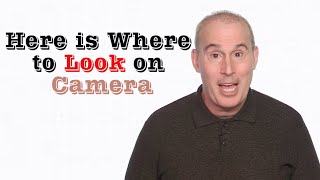
TJ Walker (instructor) explains how to manage eye contact on camera: keep your eyes focused in one place rather than shifting around; when someone is speaking to you (reporter/anchor/host/in-person), look at that person; when alone on video or hearing someone only via earpiece (satellite/Skype), look directly at the camera and treat it like a human being. He emphasizes avoiding shifty, back-and-forth eye movement because it appears phony or untrustworthy.
Chapters
On video, your eyes are very powerful. They're much more dominant than they are if you're just in a room with someone speaking. So if you're doing things like this, hi, I'm TJ Walker. I'm very honest and trustworthy. I'd like for you to send me your credit card so I can help you save money. Is that believable? I don't think so. I become literally shifty eyed if I'm trying to look at the camera, look at the reporter, look at the camera, look up for inspiration, look down. The rule of thumb with video is to look in one place. If a reporter is talking to you, an anchor, a host, then look at that person. It's not going to be odd that you're not now looking at the camera. That's the grammar of television news. Look at a human being. You cannot go wrong looking at a human being during a meeting, interview. Don't try to play to the camera. Don't start off looking at the human being. And then, well, well, Jim, I'm glad you asked me that. And going back and forth, it looks phony, it looks contrived, it looks weird. And you don't need to do it now if there's no one present. If you're being interviewed through satellite, you've got an earpiece. Perhaps it's an interview through live Skype video, something happening increasingly common these days. And that case, look at the camera, look at it like it's a human being. Don't have your eyes floating all over the place. So that's what you need to know about eye contact. This is constantly a source of confusion for people. Because I'm in one on one and small group media trainings all over the world. I'll tell people this, I'll demonstrate it, I talk about it in my books, my online courses, and still people will get up, tj, where do I look? When you're feeling a little bit nervous, scared, tense, your brain shuts down and confusion starts. So I want you to really get this down. Just look at the human being. If anyone's talking to you, if it's just your own video or any kind of connection where you're hearing someone through an earpiece, then, then look right at the camera.


