Huang Persuades, Anisimova Inspires, and One Scandal Trump Can’t Spin
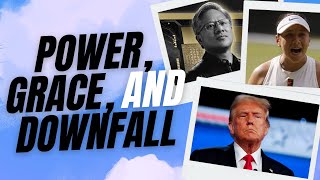
YouTube episode (TJ Walker) analyzing three news stories through the lens of communication skills: Jensen Huang's disciplined persuasion that helped reverse an AI-chip ban to China and boosted NVIDIA's reputation/valuation; Amanda Anisimova's emotionally effective 5-minute post‑match interview after a 6–0, 6–0 Wimbledon final loss and the public-relations benefits of her vulnerability; and a mention of a Trump-related scandal (segment teased but not fully covered in this chunk). The host frames each story as a lesson in persuasive communication for leaders and professionals; episode recorded while the host is on vacation in the Poconos and includes a promotional note about a Sept 2, 2025 show launch.
Chapters
Today on communityverse, how Jensen Yang, the CEO of Nvidia, pulled off a communications coup. Some say it's a geopolitical miracle. He got Trump to reverse an AI chip ban to China with nothing but strategic communication and sheer discipline. Then Amanda Anisova loses 6060 in the Wimbledon final, but wins over the world with a raw, emotional and pitch perfect postmatch interview. And finally, Trump's Epstein scandal explodes. And for once, his usual media spin machine fails to shut it down. All that and more today on the Communiverse. Hello, I'm TJ Walker. This is the Communiverse where we do a deep dive into the top business, technology and cultural stories of the day, analyze it through the lens of communication, all with the goal of improving your personal success. So let's dive in with segment one. Jensen Wang out sells Washington. If you want a master class in persuasion, skip the TED Talk and study. Jensen Huang, the Nvidia CEO, just got the Trump administration to reverse a ban on selling AI chips to China, something that seemed politically impossible just months ago. And he did it not with threats or outrage, but relentless communication discipline. He made one argument, American tech should be at the global standard. And he stuck to it in every setting. Oval Office meetings, congressional testimony, podcast and think tanks. He played the role of educator, not overt lobbyist. Even though, yes, he was a lobbyist. Here's what he told reporters. Not my job to inform the president or even lobby the president. He flattered Trump without coming across as fawning. He did say, without the president's leadership, manufacturing wouldn't have accelerated. He said this with a grin. At the White House, he was very careful to build strong relationships with key insiders like David Sachs, who helped dismantle export limits and cut deals across the Middle East. David Sachs is Silicon Valley's emissary to the White House and sort of the crypto guru. Even when ban chips cost him billions of dollars, Hwang never lashed out. He just kept showing up and kept reframing the narrative. The export control was a failure, he said. Calm, clear, persuasive. In the end, the President called him a friend. Nvidia got its China access back. It's able to sell some of its most important chips again to China. And Huang walked away not just as head of the world's most valuable company. It's now valued at $4 trillion, almost an unfathomable number. But he's seen as one of the most effective communicators in the business world. To reiterate, he had a Consistent message. AI chips is good for United States dominance. He framed the lobbying as technical education, not corporate pleading. He did flatter the current administration and president, but without seeming like a complete pander bear, he did it with some grace. He built insider alliances across the scenes. He reframed setbacks as just more evidence for change. And he communicated in a calm way, with outrage. Now, if you're a politician, the case can be made that using a lot of outrage is very important. But if you're a CEO of a $4 trillion company, you simply cannot afford to be the wild man, spouting off all sorts of anger and charges. As a startup, you can get away with that. But the stakes are too high for someone head of the world's largest, most valued company. So he consistently communicated in a calm, rational way. And ultimately the result, the ban was reversed on access to China. And his reputation, the reputation of his company went up. So what other lessons are there for you and me and others when it comes to communication? For starters, it's important to realize the founder and the CEO of the company, Jensen Huang, was not someone who majored in communications in college. He's not someone who saw himself as primarily a communicator or a lobbyist. This was an engineer. This is a guy who has engineer baked into his bones. But he realized that if he wants to be successful, he had to really embrace this role of being a supreme communicator. Because as the CEO of a company, especially a large one, what does he do all day long? Is he actually building the chips? No, he is spending all day long communicating, communicating with investors, communicating with employees, communicating with vendors, communicating with policy leaders, communicating with the President of the United States, communicating with leadership in China, communicating with his most important customers. So a great CEO, by definition, has to become a great communicator. I don't mean that they all have to become Anthony Robbins style keynote speakers, but in their own way, they have to become absolute masters at communication. And Jensen Wang has embraced that role. He's grown in that role, even down to things like, you know, signature stylistic affectations. I mean, the leather jacket, it is distinctive. It does make him stand out. There's a part of me that says that seems odd in a warm place, in a warm room to wear a leather jacket. How do you keep from sweating constantly? And yet it does make him seem, arguably, a little hipper, a little cooler. When you see any picture of him in social media or online or newspapers, you instantly know it's him. Because no other CEO is consistently wearing a leather jacket. So whether that's a direct homage to, to the former, the former CEO of Apple, Steve Jobs, always wearing the mock turtleneck or not, it is a distinctive look. It helps define him and it helps give him sort of a sense of being unique, special, different. So once again, he is showing he is a master political player. And as a part of that, as a master communicator. So I know a lot of you who watch this program and listen to this program are in fact engineers. And the problem many engineers have is not they're in a ability to learn how to be great communicators. The number one problem many engineers I work with face is simply telling themselves, I'm an engineer. I don't have to be a good communicator. I'm not a good communicator. I'm someone who's just supposed to sit there and read the bullet points. Well, that's not how you get to be the CEO. That's not how you create a $4 trillion company or even a $4 million company. Any engineer can become a great communicator if they use the very same principles that they do in engineering. If you want to solve a problem, if you want to build a new chip, if you want to build a bridge, for that matter, that lets a car get from point A to point B, you have to look at the desired outcome. The car driving across the bridge without falling in, caving in, and people dying and drowning, you have to look at the resultant. Everything has to be engineered with that result in mind. Well, it's exactly the same thing when it comes to engineering. A presentation, a speech, you have to look at what the desired outcome is. And if you're the CEO of a company, or for that matter, a junior engineer aspiring to be a senior engineer, you have to look at every presentation through the lens of what is it I want this audience to do? Doesn't matter if your audience is the President of the United States or one boss ahead of you who controls the budget for what you're going to spend money on in research and development in the next quarter. You always got to look at the goal, then reverse engineer, figure out what arguments are going to be most compelling, what stories, what examples, what facts. Facts are going to be remembered and will motivate my audience to take the actions I want. So please keep that in mind. I know a lot of you are not trying to be politicians. You might not even want to be a CEO, but you do want to advance. You do want to reach your full potential. In your career and becoming a great communicator can do that. Hello and welcome. This is the communiverse. I'm TJ Walker. This is a daily show where we look at the top news stories of the day, analyze it through the lens of communication skills, all with the goal of helping you improve your own skills, your own personal development. This is the show where news meets personal development. Now, I'm on location today on a family vacation, a little reunion in the Poconos, a part of kind of rural, mountainous area, mountain range in Pennsylvania in the northeast of the United States. So having fun here, but wanted to take some time off with you and spend some time looking at the top stories of the day. So that's why we're here. And I'm just in a basement right here today in the house, but here with my laptop, my mic, and I'm not going to pick it up today. Yesterday I did, and the mic fell out and with the little ring light. And we're trying to make this as professional as possible. In a moment, I want to share with you what I thought was one of the best presentations I've seen in a while by an athlete. We do look at stories from all across the news spectrum, sometimes business, sometimes the world of finance, sometimes the world of sports. Yes. Sometimes in the world from politics. But this is not primarily a political show. I do want to stress that. So I want to show you this story in just a moment. But first, a little bit of the setup. Amanda Anisova's grace in defeat. That's what we'll be talking about. She. Excuse me, Amanda. She lost the Wimbledon final, 6060, which is unprecedented, and it's frankly a little embarrassing. But Amanda Anismova gave one of the greatest post match. It's called an interview. It was really a mini speech, one of the best ones in tennis history. In just five minutes, she turned public humiliation into emotional triumph. She fought back tears, thanked the crowd, complimented her opponent, honored her late father and promised to keep working. She said, quote, I know I didn't have enough today, but I always believe in myself. Harvard leadership expert Amy Edmondson called it a textbook case of intelligent failure, the kind that leads to growth, not shame. Instead of hiding, Anisa embraced vulnerability. She didn't spin. She didn't excuse. She told the truth and looked ahead. She reminded us all that the way you handle failure is often more powerful than the failure itself. So I'm going to give you a little more detailed critique of what happened in this. We're going to Watch some of the clips together. I'll be giving you my critique, and I hope you can learn from this. I do predict that Amanda is going to get tens of millions of dollars of additional lifetime endorsement dollars than she would have otherwise just because of the way she delivered this speech. In fact, I'm going to go out there and be so bold as to predict she'll actually make more money in her lifetime because of the positive reputation she built from this speech than she will from all the actual prize winnings from her entire career. I feel that strongly that she did so well. So bear with me one moment. I have to do a quick little transition here, but you will see it. I realize it looks a little odd right now. Okay, now you should be able to see the video and I'm going to share with you my critique. Let's look at the beginning. Just as she. Just walking out. She knows the eyes of everyone in the stadium are on her. She's walking with poise. She doesn't have her shoulders rolled down. She's not dejectedly walking out there. She's walking out with poise. Before. And anyone in the stadium can hear her say or anyone on the live national TV seen around the world from the Wimbledon final. Before they hear her. They're. They're looking at her body language right away. Next. She's not rushed. She puts her. Her trophy that the Wimbledon plate holds it comfortably. She doesn't jostle it around in an awkward way. She gives people the opportunity to applaud her. She's not rushed. She's not crying yet, but she's simply poised and in the moment.
Amanda, I know this has been a very difficult day for you and a difficult match. You up against such an experienced opponent in eager today. Would you.
And she's not afraid to be emotional. But she. She does keep it together. If all she did was blubber, I don't think that would have gone over well. But she went back and forth between communicating effectively to being a little overwhelmed. But overall I thought it was the right balance.
We'll just give you a moment.
Doesn't rush. Allows herself the opportunity to compose herself. Gives the audience time to communicate back back to her by giving them time to applaud and cheer.
Thank you, iga.
And she kind of levels it out crying one moment. A little nervous laugh at the beginning. But coming across genuine and likable. Yeah.
You're. You're such an incredible player. It's obviously showed.
So she looks directly at her opponent. You can't see it from this camera angle. But she looks directly at her opponent, who just really delivered a beating to her and is quite sincere in her praise. Coming across as sportsman like. She's not criticizing the. She's not saying, well, it was because I was injured yet. No. No excuses. And she's giving genuine thanks and appreciation to her opponent in a classy way today.
So you've been such an inspiration to me.
Just an unbelievable athlete, speaking in emotional terms, telling your opponent, you've been an inspiration to me. Not angry and upset with myself for losing, but you have been an inspiration to me. So extraordinarily positive.
And you've had such an incredible two weeks here and winning. Getting to the final, first of your.
There's emotion in her voice, but now she's keeping it together. We can understand her clearly. She's coming across as genuine. Now, she may have scripted this out in advance, but she doesn't sound. Can. She doesn't sound memorized, and she's certainly not holding a piece of paper.
First Wimbledon and winning the championship. It's so special. So congratulations to you.
And so she's congratulating her and she's looking at her. Sometimes people say congratulations, but you can tell they're kind of going through a teleprompter in their own brain, and it's not really that sincere. She's looking directly at the woman chronicling her successes, and they have a moment where it's a type of dialogue. Even though the other woman's not speaking, they're able to look and nod at each other. Very your team.
Foreign.
She's not afraid to grimace, she's not afraid to cry a little, but she is keeping it together. And also, I like that she's not rushed. When the crowd cheers, applause gives its feedback, she doesn't step on it. She allows the audience to be a part of the dialogue. Very.
Thank you to everyone who supported me since my first round match here. It's been such an incredible atmosphere and you guys have carried me through this entire channel.
So now she's looking up at her box where all of her friends, family, coaches, they're all kind of sitting together, so she's looking at them directly. Got a lot of nervous speakers, whether they're athletes or executives or even politicians, are so focused on the script in front of them or memorizing something or their teleprompters. She's looking at the people she's thanking, therefore making it come across much more genuine.
Championship. And it's been an incredible fortnight for me. And even though I ran out of gas a bit today, and I wish that I could put on a better performance for all of you.
So very humble. She didn't make excuses. She didn't say, oh, I caught a cold last week. She's just, yeah, I ran out of gas. I wish I could have given a better performance. So she is acknowledging kind of the elephant in the room, which is 6060. The thing lasted, you know, it was over like that. She is acknowledging that. So that's part of a good speaker is recognize reality as it is. She didn't say, oh, if I had just gotten, you know, two more serves in, I would have won. Because obviously she didn't. She wasn't trying to. She, she wasn't trying to spin this. Therefore, she came across as very credible.
You guys have still been there for me and lifted me up today, so thank you so much.
So really thanking her team in a, in a sincere way, in an emotional way. And once again having that discipline to simply stop, let the audience have its time to give reaction back. So you see luminaries like Billie Jean King in the audience. I mean, this does attract. So you see luminaries like Billie Jean King in the audience. I mean, this does attract the, the creme de la creme of tennis elite as well as celebrities and royalty from around the world. The la creme of tennis elite as well as celebrities and royalty from around the world.
Thank you to everyone who's put on this incredible tournament. I mean, it's been such a privilege playing here and making it to the championship match.
And so here's something I think doesn't get enough attention. The fact that she's not rushed. Now, a lot of people, if they lose a match. Thanks a lot. You know, my opponent played better today and they want to storm off. They want to go sulk, they want to go feel sorry for themselves. She gave a five minute answer to a question. She could have left after 30 seconds. She's not rushed because she realized this is an opportunity on the world stage. More people will hear her speak than probably have ever heard her speak in her life. So make the most of it. Really. Thank. And she's thanking the tournament now and being, again, extraordinarily gracious. She sounds very, I have no idea if she's sincere, but she certainly sounds.
Sincere to be able to compete.
And now a little bit of a smile is coming back. So I love the fact that we're on this sort of emotional roller coaster with her. It makes her interesting, it makes her believable. There's the sadness, there's tears, there's joy, there's some happiness, there's some smiles in.
Front of all of you.
The smile is coming back. So I love the fact that we're on this sort of emotional roller coaster with her. It makes her interesting.
You has been so, so, so special. So, yeah, I mean, I'm never gonna forget this, this experience and all of.
Again, the smile, never. It makes her believable. There's the sadness, there's tears, there's joy, there's some happiness, there's some smiles in.
Front of all of you. Has been so, so special. So, yeah, I mean, I'm never gonna forget this. This experience and all of again, this.
I'm never gonna forget this experience. It doesn't sound scripted. She sounds like a real human being and that is going to really boost her reputation. It's also going to make her extraordinarily marketable to any kind and every kind of commercial product endorsement. I'm not suggesting that's why she did it, but it certainly enhances her marketability, these memories.
So thank you to everyone who's. Who's been a part of this.
Thanking people and then giving the audience a chance for them also to thank the people that she's thanking.
And to my pretty small box over there.
So again, look at this smile, the joy on her face. She's talking to her biggest supporters, her family. The. The warmth and the love being expressed on her face is extraordinarily genuine. You don't get that if you're just trying to memorize a speech or you're looking at a teleprompter.
I don't think there's one seat left. You guys have been there for me and some of my family flying in. I mean, I. It was so unbelievable.
Again, let's put this into context. How relatively difficult this is compared to what you and I go through in a typical presentation. You and I had to give a presentation. It may be the most important. It's probably the most important thing we do that day. We have time to think about it. We can prepare in advance the hour before, just a few minutes before. She is playing the tennis match of her lifetime. Imagine the adrenaline, the flows up and down, the sheer expenditure of energy. Even though it was only an hour long. You've got to be physically tiring because of the grueling atmosphere, playing in the hot sun, the emotional roller coaster of this could be my chance to win the biggest tournament of all time. And two, wow. I did worse than anyone has ever done in the final. So all those emotional and physical roller coasters to. To still be able to put it together like this is extraordinary.
Well, to experience this with you all. And I wouldn't be standing here if you guys didn't fly in and support throughout the rest of the tournament. I mean, you guys were that extra motivation and inspiration that I needed, and you kept pushing me forward. And you guys have always believed in me and my mom who flew in this morning, I definitely would not be standing here.
Very sincere thanking your mother, allowing the camera time to show the mom. Clearly emotion. You. You clearly get the sense that she loves her mom and appreciates her mom. Now she's emotional again, but she's giving the audience time to react and applaud. So if she needs to cry a little or wipe her eyes, she can do so. And now the emotion's contagious. The mom's crying, Daughter's crying.
My mom's put in more work than I have. Honestly.
So very selfless. Talking about her mother who's actually put in more work than she has. Quite crying. But again, what I appreciate from a communication standpoint is she doesn't just start blubbering and crying and have to walk off without finishing the thought. She is able to get through all the thoughts with emotion. And that's what makes it compelling, sincere, and believable.
Guys, I'm so sorry if you were wor. Sorry. Now, my mom is the most selfless person I know, and she's done everything to get me to this point in my life. So.
So even though she's extremely emotional, you can understand every. Yeah. Thanking people and then giving the audience a chance to. For that single thing she says. And also to thank the people that she's thank.
And to my pretty small box over there.
So, again, look at this smart. The joy on her face. She's talking to her biggest supporters, her family, the. The warmth.
So thank you for being here. And.
And the love being expressed on her face is extraordinarily genuine. You don't get that if you're just trying to memorize.
Breaking the. The superstition of flying in. I mean, it's definitely.
And now there's a transition. She's a speech or you're looking at a teleprompter.
I don't think there's one seat left. You guys have been there for me.
Composed herself even though.
And some of my family flying in. I mean, I. It was so unbelievable.
Again, let's put this into context. How relatively difficult this is compared to what you and I go through in a typical presentation. You and I had to give a presentation. It may be the most important. It's probably the most important thing we do that day. We have time to think about it. We can prepare in advance. The hour before. I mean, this is all done live. Just a few minutes before she is playing the tennis match of her lifetime. Imagine the address. She's smiling again. She's upbeat rental. And the flows up and down again. She has composed herself again, not why I lost today.
I'm sorry.
Again, not blaming your mom. Getting a little joke, laughing at herself. So going from crying to laughter. It's an emotional journey. That's what great speakers are able to do.
Happy that I get to share this moment and for you to be here and witness this in person. I know you don't get to see me live playing that much anymore because you do so much for my sister and I, and you always have. So I love you so much. And to the rest of my team.
Over there, so the gestures, I mean, again, nervous people don't do that. Nervous people either freeze their hands or they want to hold a script, or their hands are down by the side, or they grab a lectern. She's gesturing at the people she's thanking. And it's coming across very sincerely.
I mean, thank you so much, not just for the last two weeks, but for the whole journey. It's been this whole past year. You guys have. Have made it so enjoyable with the process and just. Just taking care of me and wishing the best for me every single day. And everything you guys do for me has been. I honestly don't have the words. I'm just so, so.
So again, she's extraordinary. Not completely honest, but I know what she means. I don't have the words. She does have the words. It's amazing how articulate she is again, at a time when she's got to be physically exhausted, emotionally exhausted. The entire world is looking at her. So you could argue this is one of the most extremely difficult situations to deliver an effective, coherent speech. And she's handling it beautifully.
So thankful. And everyone else, I just love you guys. You know that.
So the love is. She's not just saying I love you. She's saying it with her voice, her tone, her body language, the gestures, looking at them, a little bit of a laugh. So she's coming across extraordinarily genuine. She's been out there for more than five minutes. She could easily say, let me get out of here and go sulk away. She's not rushing. That's key.
And lastly, I know I didn't have enough today.
Lastly. Okay, she's. She's given this thought, and I don't mean that in a bad way, like it's contrived or phony, but she clearly thought about the arc of this presentation. So, yes, it sounds spontaneous, and yes, she's coming across genuine and in the moment. There's a freshness, a conversational quality to it. But she has clearly thought this through. There's clearly a structure. She knew she wanted to hit this part, this part, this part, and conclude with what she's about to say now. And that's why she gave a little bookmarker for us of the lastly.
But I'm gonna keep. Keep putting in the work. And I always believe in myself. So I hope.
Keep putting in the work. Always believe in myself. Prediction. You're gonna see clips of this, actually in various endorsements for products, especially if she wins Wimbledon at some point or the next time she wins a major, they'll show this clip, they'll show her winning, and they'll tie it together to the enduring values of the product. And I don't mean this in any way to sound like I'm suggesting she's cynical. She's coming across in an extraordinarily appealing way, and that's going to make her appealing to advertisers.
Be back here again one day. And thank you, everyone.
Smiles. Coming back. She's ending on a positive note. And look at that smile. I mean, it does seem genuine. She's smiling. She's not rushing. I hope to be back.
You'll run her up, Amanda. Anisa moving.
She's essentially saying, I will return. Ending with a smile, walking off. Not the triumph that she was hoping for, necessarily, but definitely a triumph of sorts where she really, really came across extraordinarily well. I see Bathing Recreation Way has stopped by to say hello, and that may be a spammer. But anyway, we appreciate folks watching and joining us. I know at the beginning I sort of tease the idea. I would talk about some of the crisis communication issues going on in Washington, D.C. today, but I feel like we've run out of time. And this was such fun talking about this. We'll be able to talk about that later in the week. So this is going to be a truncated version. I am on vacation today and this week in the Poconos with family in upstate Pennsylvania. I don't know if they call it upstate, but in Pennsylvania, in the Poconos. So offer a fun day of more boating, swimming, hiking, having fun with family. Thanks so much for joining me. Again, if you like this type of a show, this is a show about news meeting, personal development. It's a show where we look at the top news stories for business, technology, sometimes sports and culture and then we analyze it through the lens of communication skills, all with the goal of building your personal development. And Janice writes in a future tennis champion in the works. Well, she's, she's already a champion in many people's minds, certainly if you get to the finals of Wimbledon and I don't, excuse me, I don't know enough about her record. I assume she's won other tournaments. I don't know if she's won majors, but something tells me we're going to be seeing a lot of her in the future. So thanks everyone for stopping by again. If you like a show like this, please like the video. Please leave comments. Subscribe if you're watching on YouTube or any other platform and get ready for the big launch September 2, 2025, where we'll be coming to you with a little more production values, a brand new studio and a little fancier show. So there's a lot going on to be excited about. Thanks so much. See you tomorrow.
More from TJ





The Breakout Cases - What Actually Caused Famous Speaking Career Breakthroughs | Ultamize

The Red Circle Sessions Finale - Build the Speaking Career You Came Here For | Ultamize

Two Stages, One Logo, Two Completely Different Realities - Main Stage vs Independent Events | Ult...

Pre-Reset - Why Repetition Builds Better Speaking Decisions | The Red Circle Sessions | Ultamize

Your Decision, Your Framework, and What Happens After - Build Your Speaking Career First | Ultamize

The Red Circle Sessions Trailer - The Speaking Career Truth Nobody on That Stage Will Tell You | ...

The Two-Minute Ultamize Reset - Your Platform, Your Audience, Your Voice | The Red Circle Sessions