Hulk Hogan Dies, Trump Storms the Fed, and Neil Ghosh Says "Do More Good" | COMMUNIVERSE
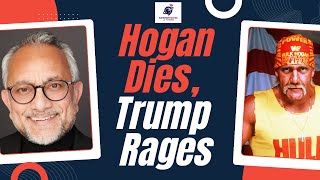
TJ Walker covers Hulk Hogan's death, Trump's confrontation with Federal Reserve Chair Jerome Powell, and interviews Neil Ghosh about bridging political divides through better communication and dialogue.
Today on the community verse, Hulk Hogan is dead at age 71. Hulk Hogan is an outrageous character, a prolific entertainer and a wrestler a lot of people liked. He has passed away. Issue two, Trump storms the Fed in a hard hat, accuses Jerome Powell of wasting billions and somehow makes central banking feel like Wrestlemania. And we wrap things up today with an inspiring solutions focused conversation with global change maker Neil Ghosh, whose new book do More Good is actually filled with people doing good work. So a lot of fun coming up today all on the program. Get ready for this and more on the community. Hello and welcome. I'm TJ Walker. This is the Communiverse. This is the show where we do a deep dive into top business stories, technology stories and culture stories that analyze it all through the lens of communication skills. So as I mentioned to you, we're going to be taking a look at at Hulk Hogan, Trump attacking Fed renovations and Neil Ghosh, his latest book, all that and more. But first, let's look at what's going on with Hulk Hogan. He has passed away. And let's go through some of his highlights of his career because he did have fascinating, fascinating career. His real name was Terry Bola. He died Thursday in Clearwater, Florida after suffering cardiac arrest. He was 71 years old. As a wrestling icon, he helped turn the WWE into a global spectacle. He headlined the first WrestleMania. He feuded with Macho Man. He tag teamed with Mr. T and even slammed Andre the Giant, who weighed 500 pounds. But his legacy includes more than the 25 inch pythons. His arms and mine are not 25 inches, by the way. And he's known for ripping his T shirts. There were scandals, racial slurs, lawsuits and leaked sex tape. And most recently, a bizarre turn as a MAGA hype man. He even tried launching an unscripted wrestling league. Still, Hulk Hogan was a pioneer of performance communication, proving the line between truth and spectacle is paper thin. So why do I find him so interesting? And what's the relevance, frankly, for you and for me? So he was a big guy, six eight, three hundred pounds. He was a good wrestler. But here's the caveat. On many occasions when people in the wrestling community were asked to rank most overrated wrestler, Hulk Hogan's name came up. That's right. His actual technical proficiency as a wrestler wasn't really that high. So how did he go on to become the number one guy, the guy with the most belts? And again, wrestling is fake if you didn't know it. It's all scripted in advance. But why was he chosen by Vince McMahon and others to represent the pinnacle of success in wrestling. It was, I would argue, because of his ability to communicate. Hey, brother, I'm gonna be coming to San Diego, downtown. I'm gonna be a ripping. Now that's a very bad Hulk Hogan impersonation. But my point is this. Professional wrestlers, and especially those who get to the level of a Hulk Hogan, are primarily not just entertainers, not just sports figures. And there is a lot of athleticism involved with throwing yourself around and spinning up. They are communicators. It is a type of public speaking, because for every minute Hulk Hogan was in the ring, he was spending probably an hour in front of a microphone, being interviewed, being on set, promoting. On other talk shows. He went on everything from the CBS Morning show to the 700 Club. Promotion, promotion, promotion. Now, it is true he went into a character of the Hulk rather than the guy, the father, the dad, the neighbor of Terry Bola. But he was a character. He played a character. And he had to do it not just in the ring, but in front of microphones. And so, to me, it's fascinating because it's yet a perfect example of how if you merge one talent, wrestling, maybe not even world class, but you merge one talent with another talent, of being a great communicator. You put the two together, you have real synergy, and you can rise to the top. If you look at the CEO of any major corporation, quite often they're not the best technologists, they're not the best engineer, they're not really the best at anything, but they have a number of skills, plus they have the ability to communicate to investors, the media vendors, stakeholders. That's essentially what Terry Bola was, the Hulk. He was a master communicator. He had to communicate with fans. He had to communicate with the live audience, the TV audience, reporters interviewing him, the. The people playing the role of reporters in the wrestling world. He also had to talk to real reporters when traditional media interviewed him. And at some point, he actually had his own reality TV show, which I occasionally watched a while back, where he's in front of the reality TV cameras without being interviewed. What do all those things have in common? Speaking. Now, he developed his own style, his signature catchphrases, but ultimately it was about communication. So that's really my message to you. It's not that I want you to start ripping your shirt off and doing body blows to people. That's not it. But I do want you to think about how whatever it is you do, whether you're an entertainer, whether you're an author, whether you're a consultant, whether you're a government official, whether you're a politician, how do you take your strengths in one area and communicate those strengths better than anyone else? That's what I think is the real secret for you. And that's what we're here for. Hi, I'm TJ Walker. This is the Communiverse where we look at the top stories of the day, breaking news as this has just happened in the last 24 hours, and analyze business, technology and culture stories through the lens of communication skills, all with the goal of building your personal success. So that's what we're about right here today on the Community. Coming up, we've got some interesting interviews. Other top stories will be talking about in just a moment. But now we're going to go to issue two, and it does involve, that's right, this guy, the guy on the far side, Jerome Powell, you might not be as familiar with. He is the chairman of the Federal Reserve. So it's Trump versus Powell regarding the bed renovation. The war escalates between the two men. In a rare presidential visit to the Federal Reserve, President Trump clashed with Fed Chair Jerome Powell over the central bank's $2.5 billion renovation project. Trump claimed the cost has ballooned to $3.1 billion. Powell denied it, calling the number misleading. Now, hold on. In a moment, I'm going to show you the actual video clips. There's some real lessons to be learned from the on camera appearance of these two men. The visit, with GOP allies and cameras in tow, amplified Trump's ongoing frustration with Jerome Powell over high interest rates. While he didn't fire Powell on the spot, legal experts say the spectacle may be a part of a broader campaign to undermine the Fed's independence. Well, that's stating things mildly, shall we say? Let's take a look at the video clip. I do want to show this because there's a number of lessons for you and for me to take away from this. So let me go ahead and show you the clip. We'll go ahead and go, we'll go full screen on the video clip and take a look here. They're side by side, what's happening.
And it's a, it's a tough construction job there, building basements where they didn't.
So again, in this spot right here, we have the president, Donald Trump at a construction site at the Federal Reserve with Jerome Powell, who is somebody he appointed to the job initially in his first term.
So let's take a look exist or expanding them. A lot of very expensive work, there's no question.
So you could see Trump obviously very comfortable in front of a camera. You can make all sorts of cases that Trump is not an actual businessman prior to entering public life, but you can't make a case he's not experienced in front of a camera because he is, if nothing else, a skilled TV performer.
Question about looks like it's about 3.1 billion. Went up a little bit or a lot?
It went up a little bit or a lot. That's part of Trump's signature. Stick it to you the way he goes. And ah, there's the sarcasm coming out there. There's the stick it, there's I'm going to get you, buddy. Get ready. And you can see that Chairman Powell does not look particularly happy to be here right now. Oh, very interesting. What happened there? So Trump is making an allegation. He's saying the budget went up a little bit or a lot. Powell, I think correctly did not interrupt the President right there, but he knew all the cameras are on. This is a tense filled situation. You know, you're stand, you're Chairman of the Federal Reserve, you're standing next to the President of the United States. He's been begging you, doing everything he can to get you fired. It's a tense situation. You know, the world is looking at you. If you're Jerome Powell, he's not a full time TV personality, so he shouldn't be that comfortable here. But I give him credit for tremendous poise. He heard something, he shook his head because he understands that if you just let someone attack you, it's factually incorrect and you don't say anything. People will assume that it was accurate. So very important. It's sending a mixed message. People are hearing Trump say the price went up. Powell saying, no, it didn't. So if nothing else, anyone watching the two will at least be confused rather than automatically accepting Trump's allegations. This is something I train people to do when I'm doing debate preparation for politicians. For example, your opponent is making allegations against you that are factually incorrect. Silently shake your head and the cameras will go to you, they will show it and they will show that this is not in fact a proven fact. Let's watch more.
The 2.7 is now 3.1.
I just love how the Chairman of the Federal Reserve is looking at him like you're just making stuff up. That's crazy talk. Now, this may seem obvious, but here's what happens to most people when you're In a situation where there's tremendous pressure, you've got all kinds of TV cameras, every TV network in the world is either there or they're taking a feed from there. It's extraordinarily easy to be scared. And when you're scared, you can't listen carefully. It's very easy to have almost an out of body experience. You can be kind of numb. So I have to give tremendous credit to Jerome Powell for having the wherewithal to be able to still listen. He's listening to what's being said, he's concentrating on what's being said and that's allowing him to react. So he's looking at it and he's sending a clear cut message without being rude, that you don't know what you're talking about. And then the media summary, the journalism reporting on it, did pick up on that. In fact, let's look at the next exchange. He says, I'm not aware of that at this point. He does articulate something verbally. I'm not aware of that. Trump was clearly prepared for this. He brought a document that he's about to show. So you can see the confidence in Trump's face. I'm going to show this guy, I'm going to put the facts right in front of him. Let's see how it goes.
I haven't heard that from anybody.
So again, Powell's stating, I haven't heard that from anybody, that there's been these massive cost increases. So now Trump is getting corroboration from an ally. I believe it's Senator Tim Scott right next to him. And pal, again, he came prepared. He brought his reading glasses. So he's not asking, he's not saying, well, I don't have my glasses. He's not acting embarrassed. He takes the time to pull out his glasses. He's going to look at the document. This came from us.
Yes.
I don't know who that is. So he's taking his time. Again, I have to stress, this is a tension filled moment. The guy who gave you the job, which Trump did to Jerome Powell, who is trying to get you fired, is trying to humiliate you and embarrass you in front of the whole world on live, not national tv, international tv. And pal, I give him credit, is taking the time to actually read, think and process information. This is extraordinarily difficult for most people to do because you're feeling such tension and pressure, thinking, how do I get out of this? And PAL is showing he has tremendous composure. You're including The Martin renovation you just added in the third building is what that is. Okay. So he took the time to read it, process it, figure out his counter argument, figure out what the flaw was in Trump's reasoning, and say, this is a third building. This is not the building we are in. So he politely yet forcefully and factually corrects the President, which is. Is a tough thing. Is not something Trump is used to anyone doing.
It's a building that's being built.
And I like the fact that he hands back the papers like, you know, your facts are completely irrelevant here. This does not factually back up what you're saying. So he, he hands it back to him as if to say, you don't know what you're talking about. No, it's plenty of. Was built five years ago. We finished Martin. So he knew his fact. That building. You just gave me a paper talking about what a building cost. It was built five years ago. Thus deflating Trump's argument completely about cost overruns for a current building. And he seemed to do it factually. He didn't say, you're an idiot or a fool, although that was the clear implication.
It's part of the overall work.
So I love this, but Trump is trying to reposition. Well, it's part of the overall thing. And Pal's like, no, it's not. Didn't yell. Wasn't. Wasn't rude. But he is fact checking Trump in real time, which is not something most people who work in the federal government do, or foreign heads of state or journalists do, for that matter.
We're going to see what's happening, and it's got a long way. Do you expect any more additional crossovers?
Don't expect them. We're.
We're ready for them.
But we, we have a little bit of a reserve that we may use.
But no, we don't, because it looks like.
So, again, answering questions feels comfortable. Now they've taken their hard hats off.
It's got a long way to go, sir. So are there things the chairman can say to you today that would make.
You back off some of the earlier criticism?
Well, I'd love him to lower interest rates.
Okay, so this is interesting because here Trump seems like the affable guy, and he's sort of laughing, he's sort of, you know, he pats him on the back, gives him a little bump on the back. And this is Trump as sort of the entertainer and as the showman, is sort of in on the gag. But it does totally deflate his argument because his argument is wow, Powell's going crazy, wasting all this money on the building. And at the end it's like, well, all I really care about is I want him to reduce interest rates. And here's the thing, no serious economist on any part of the spectrum really believes that politicians in office should tell the head of the Federal Reserve when to lower interest rates. Because every politician of any party is always thinking about what's the next election, six months from now, 18 months from now. They always want interest rates lower short term because it doesn't typically generate sky high inflation until after the next election. So they have short term thinking. The whole beauty of of the Fed of any Federal Reserve bank for any nation is the idea that there is independence, that it's not just giving politicians the ability to pour more punch in the punch bowl and not worry about long term consequences. So in this exchange, I have to say Jerome Powell did extraordinarily well. He got a lot of good press, deservedly so, for fact checking Donald Trump in real time. Most people in public life, whether they are journalists, talk show host, senators, heads of state, prime ministers, are afraid to do that. Well done Jerome Powell. Back in a moment after these commercial messages. Imagine having a communication coach who never sleeps. Meet your new secret weapon, the TJ Walker AI clone. Go to TJ Walker AI and start getting custom coaching 24 7. No scheduling, no hourly fees. I train presidents, prime ministers and Fortune 500 CEOs. But the same exact communication I've delivered to world leaders is now available to you online, online anytime@mediatraining worldwide.com. whether you're speaking on camera, pitching a client or handling a crisis, you need these tools. These aren't fluffy motivational videos. They're practical, battle tested techniques to help you speak clearly, confidently and persuasively. Go to mediatrainingworldwide.com and take your communication to the next level. Got feedback or a question for me? I actually read them and if you send one I'll send you a free mini course as a thank you. Just head to tjwalker.com feedback ever wish you could just ask me your question live? Now you can't? Every week I go live with members only on YouTube. It's called TJ Live. I review pitches, fix presentations and answer your questions on the spot. It's interactive, personal and hands on. If you want real time pictures, coaching in a small group setting, go to tjwalker.comlive and become a member. This isn't passive content, it's a two way conversation. Want to make sure we stay connected. Even if YouTube deletes me again. Join my newsletter at substack.com @tjwalkersuccess. It's free, fast and packed with exclusive insights of insights. Okay, don't go anywhere. We've got a lot of fun coming up. I had a fascinating interview with Neil G. And you're going to want to see this. So do not go anywhere. A lot of fun coming up in just a moment. We will see it. My special guest today has been endorsed by everyone from the Dalai Lama to the former president of the United States, Bill Clinton. He has written books on how to really look at the best aspects of people. We live in a world where everything is so negative and nasty and expose and canceling people. His newest book is called Do More Good. He is an excellent communicator and actually is the author of the Building Bridge column on Patheos. You've seen them all over the place. Cnn, Washington Post. And now you see him here on Communiverse. We're very happy to welcome Neil Ghosh. Neil, thanks for joining us today.
It's a pleasure. I enjoyed your show. Thank you. Thank you, teacher, for inviting me.
Thanks. And we're going to be talking a lot about your latest book, Do More Good, inspiring lessons from extraordinary people. But first, I do want to dive into a topic that's near and dear to my heart of how do people actually build bridges with family members, friends, neighbors? Because I'm sort of of the school of thought for most of my life until a few years ago that most people were too quick to hear something they didn't like and say, oh, you know, you're a communist, you're a socialist, you're a Nazi. I don't want to talk. People are too quick to just hear something that's an inch away from their perspective and say, well, you're so extreme, you're beyond the pale. And I have been in that camp of thinking, timeout, that's too much. That's too extreme. But I have to tell you, I do think we live in new times. I increasingly see members in my own community here, where I live in Florida, openly espouse principles that are clearly authoritarian in nature. You know, I know people who say, yeah, we really need to have a dictatorship more like Victor Orb and things that, you know, I'm 62 years old. I've been active in politics my whole life. I never heard people on any part of the spectrum say, essentially, we don't want democracy anymore. We want an authoritarian dictatorship. And I am seeing that all over the place. I personally am having a hard time figuring out how do you even have meaningful conversations? How do you do it?
Thanks. This is maybe the most important question of our time. I will address your question, but please bring me back a little later in the conversation about democracy because I do want to share some. You touched on something also very close to my heart, but park it for a moment. Let me address the first question. We'll come back to democracy a little later on the first part of the conversation. TJ I think I'm no different than you other than that we are the same age of the struggle that you're going through. We are living at a time of deep division and I also call it a digital overload. And I was reading something I think in the Hill and they talked about we are now at a time we fear our government, we fear our leaders, we fear illegal immigration, we fear fentanyl, we fear climate change, we fear woke culture, we fear pretty much everything we are afraid of. And it's across the board somebody's afraid of something. And I think at this particular time, irrespective of what you believe, who you are, I think we have to find a new way to find courage to speak up. We have to find a new way to find common ground. As you say, as difficult as may sound, we have to do that. I think then if I break it down, we have to speak with dignity. I mean, without fail. Without fail.
But how do you do that? If.
How do you do that?
One side is specifically always talking in a degrading way. Those people, they're rapists, they're vermin, they're animals. I mean, we are hearing that in the United States on a regular basis. And it is in fact only from coming from one side.
It's. That's the point I'm trying to make and that's the reason I'll give you some macro premise and it will drill down to micro level because we have to start with the macro, right? That's a macro, macro conversation. So I think what I'm trying to do, and I'm used to, I'm trying deliberately not to convince someone that they are wrong right away because the moment I do that I lost it. So I think what I'm trying to, I want to stay in the conversation, right? If I go in and they realize I'm trying to convince you that you are wrong and I'm right, it doesn't work. I think if they understand that I have a reason to listen to them, that I'm in This for a dialogue and a genuine dialogue. Dialogue without agreement is a progress. And sometime, as hard as may sound to you, disagreement sometimes I find healthy because disagreement also sometimes creates innovation. So mutual respect, not total consensus. I know it's very hard for me to say that I'm. All my life I've been a consensus builder, whether I'm in a meeting format, in a corporate setting or in wherever I am. And I realize sometimes consensus is becoming extremely difficult. So my choice is to leave the conversation. But then the other person win.
How do you, how do you maintain mutual respect if one side says, basically, I don't respect the other side. I mean, we had here in the United States in 2020 where there was a, by all accounts, a fair election. Traditionally, Republicans, Democrats, anyone of the political spectrum said, okay, whoever gets the most votes and you know, with our electoral system, whoever has the most votes in the electoral college wins. We accept that. For the first time ever, we really had one side saying, nope, we don't accept that. Votes only count if they show we won. If votes showed someone else's voice, someone else's part of the dialogue won the debate, we're simply going to say, no, that was fraudulent, that was fake news, and let's use violent means to overturn that. So how do you talk to someone about that who simply refuses to acknowledge that that's a radical departure of norms in the United States?
I'm not going to say it's easy. I'll you a couple of very specific example because sometimes example matters. When the young lady was killed in Charlottesville, Heather Heyer, you may or may not remember there was this rally in Charlottesville of neo Nazi group and the car smashed her and she. She died in Charlottesville, Virginia. I'm not a journalist. I never claim to be. I'm just a regular guy like you are. I think thoughts and I write. That's pretty much how I define myself. I'm not even a historian. But I went there because I couldn't accept sitting at home and not do anything. So I went to Charlottesville. This is the day after Heather was killed. And what I started doing, I would just started talking to anyone on the street. I talked to some olderly people who I knew have a very different view than I had. What I was asking them is this one question because they know this young girl died. There's no question about it. Nobody debated it. So what I was asking, and you could see the tension and it's in the air because there was a rally and the protest rally and Violence happened. So what I was asking what would you do if you are the president of the United States tomorrow? I asked this question to a young girl who was walking with her mother. I asked this question to two older gentlemen sitting next to a police station and I had a piece of paper. I was writing their answer down. And the reason I'm giving this example, I didn't want to take a side as much as I thought it was wrong what happened. But if I have taken a side, I will not none of them will open up. So I asked a simple question because they all were sad that the person we lost our life. Nobody enjoys losing a life other than the horrific feeling that her mother which I spoke recently. But teacher, what happened was because the way I structured the question without coming from a position of right or wrong, even that couple of gentlemen who had a very different view than I did, they open up what they don't like about the current system. I think give me a perspective. I know it's hard for me to say this in sometimes it's very difficult. But I did it because if I haven't done it, if I've gone to a position, this one crowd will not even open up to me. They will not say anything. They will know where I stand and that's the end of the conversation. So I am really trying to hone this point. I'll give you one more story just to make not exactly same, but I think it's a story to think about. It was 2016 since you talked about politics. I don't talk about politics a lot. In my book, as you know, I have characters from John McCain and I believe there are one of the things I say and I know there is a pushback on that, that empathy is not a blue state value or a green state value or a red state value. Sorry or not a purple state value. It's an American value. I have written it 10 years ago and the article name was the Secret of America's Success. But we'll come to that later. Coming back to your question, in 2016, Washington Post journalist where there was at a rally of that term candidate Trump and there was an elderly couple who attended the rally. And journalist asked something why are you here? And T.J. please, it's 2016. So I'm paraphrasing. I'm not exactly sure the exact conversation. And the lady said, well, I like what Mr. Trump is saying. He's a businessman, but I'm also here for another reason. And journalist said why? Well, I'm buying a bread all my life, from the store, all my life I buy a bread and all of a sudden I go there and they don't speak English anymore. Now TJ we have a choice. I can immediately label her as a racist, but I don't, I don't do that because my question is maybe she's afraid. We talked about fear as we started the conversation. She's afraid of the unknown. She's afraid of something. All her life she's going to a place in a very her little town. I don't remember where she's from. So TJ all I'm trying to ask, both side, try not to make such a quick judgment of the person, see where they're coming from, have empathy. And I talk about empathy on a constant basis. The whole pillars of my book is three Empathy, purpose and action. So that lady, if I immediately judged her in my mind that she is all about hate, that's not fair judgment because I don't know what she's thinking. So she was maybe afraid. So all I'm saying in this discussion with you that we have to understand the other side because then I have a better chance of having a dialogue. I'll give you one more data as we speak. There are 50 million people in America. Five zero according to USDA. They are dependent on some kind of a food stamp or some help of need of food. That's mind boggling for me. Absolutely mind boggling. Somebody who worked in Africa, in East Africa, West Africa, Latin America, Asia, I saw hunger as close as you can see hunger, you know. And I grew up in a family which a lot of resource issues. So all I'm trying to bring to this conversation that without getting angry with the other person or so like wow, how can I even say that? We have to have some understanding where they're coming from. So I'm going to pause not answering all your question, but it's all about having some understanding where they're coming from.
Our special guest today is Neil Ghosh. He's the author of a fantastic new book that has been endorsed by the Dalai Lama, Bill Clinton and other notables. It's available currently on Amazon. He is also the author of the Building Bridge column and Patheos and he's a worldwide respected communications expert. We're happy he's here with us today. Let me ask you, how do you talk to friends and family just in your your own life? Because maybe I'm doing it wrong, but I find that so often I just try to avoid any talk about public affairs and that hurts me because I'm someone. I've had a passion for politics my whole life, but I moved from New York four and a half years ago to South Florida, which has a different political environment, as you could imagine. And I just find that, especially if I'm around anyone else who looks like me, an older guy, gray hair, the chances of us sharing political values is about 5%. There's about 95% chance they share the values of the great orange one, which I find antithetical to democracy. I find increasingly we are seeing overt authoritarianism being pushed as public policy and the norms of democracy are being chipped away day after day. It's fine to disagree with people, but to say, for example, one of millions, oh, Rosie o' Donnell criticized me, I'm going to strip away her citizenship. That's just nothing John McCain would have ever occurred to John McCain or Ronald Reagan or even Richard Nixon, frankly. And it's, it's so beyond the pale. I have a difficult time, you know, explaining it to people or having a conversation with people and, and having much sympathy for something that is so overtly modeled after authoritarian regimes, not only in Hungary and Turkey, modern day, but going back last century in places like Italy and places like Germany. And it's, it's, once you go down that route, it's very hard to, to start and maintain civil conversations.
I'm going to move this to common people because that's where I think I'm most comfortable in terms of my dialogue and communication. That's what you all have to do and I have to do in my daily life. So, TJ When I speak with a smallholder farmer in Kenya, or when I sit down with a student in Morocco, or when I discussed the life of young people with a teacher in India, or when I speak with a small business owner in the United States of America, what I bring to the table is as authentically as I can, because you cannot really fake authenticity for too long, is I want to know about their lives. I want to know about their fear, their dreams, and they matter. That may be the best thing I can tell you in this conversation. I try. I try. I keep using the word try because what that does, if I can bring to the table that I'm listening to you, your dream matter, your dream may be very different than my dream. Your fear may be very, you may be fear about illegal immigration because you heard they're eating cats and dogs. My fear may be completely different about my, my children's future. Our fear are different. But I am not Going to ignore that fear. Now let's bring to the second point. I'll give you a story every time there is a story I want to share with you. I was in Morocco many years ago and I met this young lady, she's from Tunisia and she told me a story. Till today I get a goosebump because this thing happened. I never came across such a incident in my life. She was sharing a story because she used to get this on her mobile phone video clip of trying to recruit her as in the terrorist group. And at that particular time she was very unhappy with her family, with her friends, with her neighbor. She was very isolated and a perfect target target for a terrorist group to recruit her. She was getting all this video clip showing empathy towards her and she was inch away from joining a terrorist group. Inch away and there's somebody like TJ showed up in her life. I don't know whoever showed up. There's a person that showed up in her life and it was like a fork. She could have gone that way but she went the other way. And of course that's the reason I met her in Morocco. She came to speak there, that story. I stayed in touch for some time and she got married and I lost her touch. But that story reminded me that how easy for misinformation to get a vulnerable population on their side because you're feeding them whatever you're feeding them and we are, most of us are vulnerable. So that's a story I share with you and then what do we do about it? So I actually recently wrote another piece at, I think at Path heels I called 5 Ways to Spot misinformation because that is the best thing I can do. And I give examples of website, you know, ask the expert. Learn to library before you believe in something, before you share the information with your friends and neighbor, check it out. And there are actually some legitimate sites now that you and I can check. So I'm encouraging people please don't share. Check the information out I talked about. Check the source, read beyond the headline. Check your own bias. We all want to believe something we already believe. So if somebody, we guess we say.
Oh, this confirmation bias is one of the most powerful forces working in the world today.
So I am really, you know, in my role and also I think similar to you because I'm just hearing about you and I can see the frustration and, and sadness. I have a deep sadness in my heart. Unlike you, I was not born here. I came here when I was 22 years old and I deeply love my country. So another thing I will share with you, tj, I think it's important for your audience to understand when people see you and me are walking in the street, they will see, you know, white guy and they will see a brown guy. You might come from a different religion than I can. I come from. You're born in the United States. I was born in India. But right after that, if they dig a little deeper, they will know that you love your family. I love my family. You love your neighbor. I love my neighbor. You love your country. I love my country. And chances are, in my own way and your own way, we will defend and protect our country we love very dearly. So the answer is unity does not require uniformity. Unity does not require uniformity. And I know it's going to take some time. Just anything takes time. Democracy is messy. Coming back to democracy, democracy is slow. Democracy is imperfect. But for TJ and Neo, this is the only form of government that we have a voice. We are having this conversation.
Well, but that brings up a big, big question is, can a democracy survive when one faction, it only takes one faction says, we don't agree with democracy in it. Democracy is good just for our election and then we don't need them anymore. Because that is essentially what happened in Turkey, in Hungary, last century, in Italy and in Germany. I mean, that's how right wing authoritarian leaders take power. Democracy is good only the first time when they get in and then they abolish it in part.
More from TJ





The Breakout Cases - What Actually Caused Famous Speaking Career Breakthroughs | Ultamize

The Red Circle Sessions Finale - Build the Speaking Career You Came Here For | Ultamize

Two Stages, One Logo, Two Completely Different Realities - Main Stage vs Independent Events | Ult...

Pre-Reset - Why Repetition Builds Better Speaking Decisions | The Red Circle Sessions | Ultamize

Your Decision, Your Framework, and What Happens After - Build Your Speaking Career First | Ultamize

The Red Circle Sessions Trailer - The Speaking Career Truth Nobody on That Stage Will Tell You | ...

The Two-Minute Ultamize Reset - Your Platform, Your Audience, Your Voice | The Red Circle Sessions