Influencing People in the Digital Age: Strategies for Success
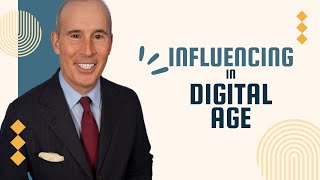
TJ Walker argues that face-to-face connection beats digital tactics for real influence. Give more than you ask online, engage thoughtfully with comments and shares, and practice communication skills in person. The myth of the natural-born communicator is just that: a myth.
Chapters
Ah. So how do you win friends and influence people in the modern digital age? Dale Carnegie wrote a book with that title and it is hugely influential. More than a hundred years ago. But that was practically prehistoric times compared to today, right? Well, yes and no. There are things that you can do to win friends and influencing people that Dale Carnegie never dreamed of because there was no Internet. But guess what? The number one thing you can do today in the modern world is exactly the same thing Dale Carnegie was talking about 110, 120 years ago, and that is have real face to face connections. Believe it or not, I know that sounds crazy to some of you who want to spend all day long looking at your cell phone and typing in front of a computer screen. But the way to really have an impact on people, to connect, to have influence, is to spend some time in real life. And I realize you can't be everywhere all the time. Your most important clients and mentors may be in another continent. But I urge you, if you are successful or aspire to be successful, if you're trying to build your career, I don't care if you're 18, 24 or 84, if you're looking to grow, if you're looking to build your career, if you're looking to have more connections, some of your time has to be out in the real world. Because yes, we've never been more connected than right now online and ways of connecting WhatsApp and email and text messages and every social media platform like this one. And yet there's never in the history of the world been more meetings, conventions, conferences, seminars where people get together. The more people are disconnected through bits and bytes and digital communication, the more people crave real life connection. Now, maybe you don't have the budget to fly to another country, to a fancy conference in Berlin or Paris or Las Vegas, okay? But you do have time and resources, I'm betting, to go to a meetup in your town, maybe in your neighborhood. So I'm urging you, don't spend all of your time hiding behind an avatar, hiding in a digital world. If you physically are able to get out and meet real people, there's nothing like meeting someone, having a real conversation, looking them in the eye, talking to them, perhaps sitting down over coffee, perhaps out in the hallway while a speaker is droning on inside a convention, or really connecting to people so that when you are back at your computer, when you are back at your desk, at the office, home, office, remote office, and you see their post and you click on it, you like it, and Leave a comment. They know who you are. And they're more likely to put a like on your comments, to like your post, to spread your post, to perhaps invite you onto their podcast, to invite you onto their YouTube video interview program. It's so much more powerful because all of us at some level feel like we're connected to thousands, sometimes millions of people online. You may have 5,000 friends on Facebook or 10,000 connections LinkedIn. What does that really mean? Do you really know more than 150 people by name, by face? If you see them where you'd be comfortable saying, hey, let's go have lunch together, most people don't. So if you want to build connections in your industry, in your field, in your profession, you've got to spend some time in real life. That is the first principle. And you know what? Go ahead and read or reread Dale Carnegie's how to Win Friends and Influence People. Some of it is dated and sexist. He talks primarily about men and he okay, times change. Some of it can seem a little cheesy where he talks about the sweetest thing any human being ever wants to hear is their own name. Is it possible to overcome? Do it well, yes, Jim, that's a good idea, Jim. I'm glad you mentioned that. Yeah, it's possible to overdo it. Yet a little bit goes a long way. People do like to hear their own name at least once or twice. It's nice to know the person you're talking with knows who you are. Because let's face it, we've all been to industry events, social events, and you're seeing someone for the fifth, sixth, 10th time, and it's obvious to you they have no idea what your name is. And you may know their name and it's a little bit awkward. So yes, here we are more than a century after Dale Carnegie wrote his classic how to Win Friends and Influence People, and it's still critically important to get someone's name right, to mention them by name so that it helps you have more influence. If someone feels like you don't even want to invest a second in learning who they are, why should they care about you? Why should they let you influence them? So, yes, learn their name. Talk to them. When you do have time to be face to face with people, ask them questions, really listen to them. Try to figure out what is the most important thing going on in their professional life. Ask how you can help do this without seeming like it's Note to editor. Scratch that out. Try. Let's do that part Again, talk to them and ask them questions without making them feel like this is a quid pro quo arrangement. Don't instantly say, well now, I did this for you. I now can you please post a link to my new ebook? No, you don't want to do that. Just give to people, see how you can help them build a relationship. Then later, maybe it's a year later, but then when you do ask for something, a review of your book for them to be a guest on your podcast, for them to promote to their community, your latest online course, they're going to be much, much more receptive to people. Okay, now let's switch over deeper. In the pure digital environment, how can you win friends and influence people? The biggest mistake most people make, and I'm guilty of this sometimes, is just saying all the time in the digital world. Me, me, me, me, me. Here's my latest post. Here's what I had for breakfast, here's my fabulous vacation, here's my brilliant insight, here's my brilliant new online course, Me, me me me Me. That's how unfortunately too many of us use social media. And it's very hard to gain influence that way. It's very hard to make friends that way because everyone else cares about me, me, me, me, me themselves. And it's a whole lot of people talking past, past each other constantly. So what is the way of doing that? Look at someone like Gary Vaynerchuk. How did he really gain influence before he was Gary Vaynerchuk? Now so many people know him as this guy with 10 bestselling books on the New York Times best selling list and this huge agency and super famous giving speeches for six figure fees at conferences all over the world. He's huge, right? How can we ever be like that? Well, that's not where he started. When Gary Vaynerchuk started his career in online media, he did create content daily. He created a 15 minute wine show. He did it live with essentially no editing, uploaded it. But then after that, he spent hour after hour after hour till two in the morning, three in the morning going to chat rooms, answering other people's questions about wine. Didn't matter how many times he'd heard the question, how trite it might be to him, hey Gary, what's the best wine to go with fish? He would patiently give them answers. So he responded to other people's concerns, thousands and thousands and thousands of them for several years. That's what created influence for him. That's what built friends for him. So you got to figure out how you can connect with people on their terms, not necessarily with your terms. So you need to give more than ask. Every time you post a video, post a picture of your latest book cover, your latest accomplishment, your latest award, your latest certificate, you're asking other people to take time out of their day to help you, essentially to make you feel good. And I get it, we all do that. I've done that. But it's got to be balanced out. You got to spend more of your time focusing on other people's content, other people's lives. If you want to build a relationship with the top people in your industry, don't just find them on Twitter X or LinkedIn and say, Hey, I admire you. Can you meet with me for a half an hour and let me pick your brain for free? Again, that's all about you, you, you, you, you. You don't do that. That's not a way to build new friendships. It's not a way to influence people. You're far, far better off following them on all their social media liking posts. You genuinely review. Watch podcasts, you hear of theirs giving ins, showing you really trying to understand what they're doing and you're trying to add to the conversation. Don't just say, oh, great podcast. Talk specifically about what you learned because that's valuable feedback for that person. And you may be following someone in your industry that you think of as a titan, someone hugely successful, famous in your world. But they may have just started out a podcast and only get a couple comments a week. So your comment is really going to stand out. They might get 100 emails a day of people trying to sell them stuff and set up meetings, but only one or two substantive comments about their podcast, their online video, or their blog post. So it's going to get attention, it's going to stand out. So add insightful comments. You also need to share the best post you see of these people you're trying to build relationships with that you want to become friends with. Share it with that. You're not asking for anything again, you're not saying, oh, I share two of your posts now you have to share my book that I've linked to right here to my Amazon. No, again, just share it because you think it's a genuinely great idea or has a lot of good ideas that you think other people you know like and respect and in the same universe would gain from. And then finally ask questions. But make sure there are intelligent questions. It can't just be generic, like, how'd you get to know so much about your industry or how can I be like. You ask highly specific questions that are based on what you read in their blog post, what you heard in their podcast, what you watched in in their online video that will make them want to respond. And ideally, you ask a question that's going to be interesting for that person to answer and will be interesting for that person's community. Very few people do that. If you do that, it will help you build friends and influence people. Okay. Hi, welcome. I'm TJ Walker. Thanks for joining me Today started off, I'm going to hit stop on the record button, recording this in 4K today. I'm TJ Walker. We are live today. That was just sort of an opening segment where I was creating a rough draft for a long form video. Long form is really anything on social media longer than 60 seconds. But what I try to do is hit sort of the 8 minute mark to increase the odds that it gets more play, more watch time, that sort of thing. And Stevenson says, hello, Professor T.J. i'm not a professor, but I don't mind the honorific just as long as you know that I'm not telling anyone I'm a professor anywhere. I love your teachings. Would you mind please sharing some electronic documents to me? Okay. I'm not quite sure what you mean by that. What electronic documents are you referring to? Let me know, Stevenson, if you want to just come on live. I've posted the link in Streamyard, so if you want to come on and ask me a question directly. I'm not opposed to text. I like reading. I've read books every day. I've written half a dozen books. But nothing beats just talking to people where they can see you and you can see them. Because I'm not quite understanding what you're saying there. And oh, Ben is saying, hey TG, you're not live on TikTok today. You're right, Ben, that was by design. I should have mentioned it to you. I'm just trying to focus on creating long form videos today and it just, it takes a little extra time going from our Streamyard community on all the social media platforms back to the cell phone for TikTok. So to any of our TikTok friends, we will bring you back soon, but just not doing that today. But thanks for asking, Ben. Okay, so I'm going to go through, I'm going to be answering your questions today and trying to do those in a way that helps you directly benefits you, but also benefits me because I can then create content in a short form format and a long form format as well, so that my editing team can edit it down, refine it, put in B roll graphics music, and we post it on the channel later. So that's what we're doing. So Stevenson, if you do want to clarify, I. I'm not quite sure what you're talking about. I, I can tell you that for people in my online courses, I do give them at no extra charge, the PDF versions of a number of my books. I mean, I've got secret to bulletproof presentations get out of the way. So it's not messing up the autofocus. There's media training A to Z, so students get those. You can also just buy these books on Amazon as well, if that's what you mean by electronic documents. I'm not quite sure, but. So Stevenson, you'll need to clarify that. Okay, so what I do here, for those of you joining me for the first time, is this is a live community, a live forum, typically 9am to noon Eastern time, Monday through Friday, unless I'm conducting a training or giving a speech somewhere, having to travel or on vacation. The other thing we do here is this is my workshop, this is my training studio and my TV studio where I create content that is then distributed across all social media on a daily basis. Typically two short form videos a day, one long video a day, plus what we're doing here live. So that's what we're doing. People email me questions. Sometimes people come right on camera and ask. Sometimes they post them on my Facebook page and other platforms. And then sometimes what I do is I use the power of artificial intelligence and chat GPT to cull sentiment from the Internet and turn those into questions that I then answer in the form of short form and long form videos. Facebook user says good morning Dr. Walk. I'm getting all the honorifics today. People calling me professor and doctor. I am neither. But I do appreciate you being respectful. Thanks so much for sharing all your knowledge. Do you think it's a good idea to invite your friends and family to watch your content, my content, and comment and ask leading questions. Currently I make content. No one will watch it. I feel like I need a kickstart to get people to start watching. So this is a tricky question and, and if you want to come on, I'd be happy to chat with you about this in more detail because a lot of times you may have great ideas, great content, but your family just isn't interested. Ali Abdaal is perhaps the foremost productivity expert on all of YouTube. He's got millions and millions of followers and subscribers. He's wildly successful by his own count. Not that money is everything. He makes five, $10 million a year. But he says, I don't invite my family or friends to watch. They're not interested in this and it would be a waste of their time. So if you need to ask yourself, is the content you're creating interesting to your family or friends? Because if it's not interesting to them, they're going to get tired of it, quickly resent it. And I, I like the idea that you're trying to find an audience and you're trying to get things going. I think you're far better off becoming an active member in a LinkedIn community or a Facebook group. Post, ask questions and then gradually over time, let people know you're posting content. Also, perhaps have a get. If you're normally just pontificating and you're the solo host, have guests on of people who are heads of thriving communities on LinkedIn, Facebook and other places, heads of meetups so they can let their own community know about it, that can build you audience. If you say no one is watching, sometimes that means you've got to retool the content and you've got to come up with a different form. You got to experiment. I mean, Mr. Beast had basically nobody watching for a couple of years when he started because he was just kind of slumped over his computer talking about Minecraft or something like that. He had to change, he had to adapt, he had to try new things. So again, am I telling you I've never had a family member, friend watch my stuff or leave a comment? No, I'm not telling you that. But you're not going to build a long term channel or community or thriving audience just with family or friends. My other question to you is how long have you been doing it? If you've told me you've done three podcasts or three videos and you don't have a big audience, I would say what's your hurry? Let's get a lot more, let's get six months under your belt. If you're telling me that you've been posting a video every single day for two years and you're only getting two views on your videos and you're one of them, then I would say we've got a real problem. We've got to change your format. Sometimes people do video, you know, vlogging, talking about their life and it takes off. People love it for some inexplicable reason. Most of the time when People do that. Not interesting enough. And it just never goes anywhere. So I can help you more, but I need more information. So you can either type more right in the comment section or you can come on live. I've given you the connection right here on streamyard to chat with me, so feel free to do that. Mohammed says, hello, sir, I'm Mohammed Asif Dharani. I have been learning English for more than one year, but yet I understand English, but I can't speak it fluently. Would you please share some tips with me? Well, Muhammad, the number one thing is you need to speak daily in English and make mistakes. That's right. You heard me right. You need to speak daily to an English speaker and make mistakes. And when they look at you like, huh? What do you mean? That's how you learn. You learn where you make the mistakes. You can learn to correct it. Also, you're going to learn when they do understand you and they're shaking their head and they're asking you a question based on having understood what you said. This is talk to any language expert or any expert on learning. And they all essentially say the same thing, which is that's how people acquire language the fastest. And the people who are really super learners of languages, that's what they do. They go to a country and maybe they've never studied the language at all, but they do not surround themselves with people from their native country. They instantly are out talking to people in that country. They're at coffee shops, they're at bookstores, they're at meetups. They're going to hear bands play, and they are engaging in as many conversations all day long, and they're going to make mistakes. They know they're going to make mistakes. They're not trying to be perfect. Muhammad, the thing that holds back so many people is this idea of, well, I want to be good at a language, let's say English, and it's not your first language. And they spend all their time talking to their friends and family in their native language. They spend all their time watching someone give insights in that language, reading about it. And they give one presentation a year, and they type it and rewrite it and rewrite it, and they're not actually speaking it. So that is the number one way. And you know what? That's such a profoundly important topic. Let me try to do my best to answer you in more detail now in a long form video. So I'm going to switch to camera one and I'm going to try to talk for about eight minutes. If anyone is posting comments, I apologize. It'll be probably eight minutes before I see it. I don't mean to be rude to you, but this is sort of, this is a working environment we're in here where I'm creating the raw material for all my social media channels. So I'm not just gift showing you the finished product as I did in the first one today. I sometimes make mistakes and I have to make a note to the editor. But first, we have Abhishek joining us. Abhishek, are you the Facebook user who posted the comment or are you coming on? And we're happy either way that you're with us. You don't have to turn your camera on, but if we're going to talk, I would need you to turn your microphone on. Avisha, can you hear me and do you want to talk? Sometimes people like the Streamyard link. It's just a better connection. They kind of like the feeling of being in the green room for our Streamyard. So that is okay. But Abhishek, if you do want to speak, I'm going to need you to at least turn your microphone on. Otherwise I'll assume you're just here to watch from a front row seat. And either way it's, it's completely fine. Okay, Avishek, we've lost either through technical reasons or they were simply wanting to listen that way, but always fine to do that. Okay, so Mohammed, let me try to answer you in more detail. And I'm going to do this in a long form video. So I'm going to hit record for my 4K version of this. I'm going to go to the camera one so that this can be turned into more of a long form video. And again, the question is, you've been learning English for more than a year, you understand English, but you don't feel like you can speak fluently. Okay. And I want to get a sense of time because I am trying to do these for eight minutes or longer. What do you do? If you've been studying English perhaps a year, two, three, you understand reading English, you can even understand hearing people speak in English, but you still feel like you're not fluent. You're not really good at talking to people in English, you're holding yourself back, you're tentative. How can you get fluent in English to the point where you're confident speaking up in social situations, in professional situations, whether you're talking to one person, five, ten, fifty, one hundred or a thousand? Well, I'm here to tell you, you do it by failing. What do I mean by that? The fastest way to become really good at a language, any language, is to speak a lot every single day in that language you're trying to acquire. And you've got to do it knowing you're going to make mistakes, you're going to use the wrong verb, you're going to use the wrong tense. Occasionally you may say something that is offensive to people and you're going to see a look of horror. That is how you learn when you look at super learners of languages. They may have different intellects, education backgrounds, even IQs. But one thing most of them do is they go to a country or a place where they can surround themselves with people who just speak that language. They do not surround themselves with friends and colleagues from their native country or people who speak their native language. So they create an environment where they are forced to speak that language, and then they do it. They don't stay at home and hide behind their laptop or their cell phone, just taking more courses and doing more duolingo, although that can be a great app. They actually get out in the real world and they talk to people in that new language. And let's say it is English. Go to a coffee shop, order coffee. Order your breakfast. You might get it wrong. Occasionally, if you order an omelet and they bringing you fried chicken and that's not what you wanted for breakfast, then you're now going to learn exactly the proper way of saying fried chicken and an omelet. Because it's a powerful lesson. Talk to people in bookstores, talk to people in meetups. Go to restaurants, go to bars, if that's your thing, and talk to as many people as possible. Don't worry about getting it just right. Worry about communicating some idea. Look into their eye. Are they nodding and looking at you like, oh, I get it. I understand what you're saying. That means you are learning. Are they looking at you like, huh? What? Then you have to tweak something. You're using the wrong word. Ask them for help. Are they asking you questions about something you just said? If so, that's a fantastic sign. It means they understood what you were saying. Becoming fluent in a language involves speaking. You have to speak to become fluent. To become a great swimmer. It's not enough to watch videos of Michael Phelps winning Olympic swimming races. It's not enough to watch other videos and how tos from coaches. It's not enough to read books and autobiographies by great swimmers. No, you have to get in the pool every Day you have to swim every. Every day. You have to work on specific things to get faster, better, different strokes. It is exactly the same thing with becoming fluent in English or any other language. Now, let's talk about what's really holding you back, holding most of us back. Well, T.J. i'm afraid my vocabulary isn't good enough, and I'm going to look stupid and people are going to laugh at me. Well, you know what? They could. That is the price to pay if you want to become truly fluent. Now, English is my native language. People still laugh at me. Occasionally. They still think I said something stupid. So no matter how fluent you become, there is no way of completely eliminating the risk that someone could make a negative judgment of you. You. You got to get over that and realize that the reward is worth the risk. The risk of occasionally saying something wrong, using the wrong word is pretty low. It's very rare that you're in a coffee shop and you think you're asking for coffee and you get water, and somehow it's the end of the world and you've destroyed your reputation. That doesn't really happen even in an academic situation. Let's say the teacher is teaching in English. It's not your first language. You want to ask a question. If you use the wrong word or you say something that doesn't quite make sense, what's the worst thing that's going to happen? Do you really think your teacher is going to flunk you in that course because you used the wrong word? No, that's not going to happen. Even in the business world, you have an opportunity to give a speech, a presentation, a talk, or even ask a question at a major conference. If you get a word wrong but people can understand the general gist, that's what they'll remember. That will build your reputation, not bring it down. Yes, there is risk of saying something stupid or wrong. There is a risk of someone saying, oh, that person isn't 100% fluent. But you know what the other risk is? The risk of staying silent is people ignoring you, never knowing you exist, never having any opinion of you, or holding the opinion that you have nothing interesting to say. You have nothing to contribute here. You have nothing to add here. You're not adding any value. Why should we invite you here next time? That is a very real risk that people discount in an irrational way. So I am begging you, I'm urging you. If you studied a language, whether it's English or anything else, and you still don't feel fluent, you've got to Find ways of talking to people every single day. Now, it could be in an online forum, it could be in a meetup that is about model airplanes and it's a passion of yours, a hobby. But that's not your profession. Therefore, if you say something stupid, it will never, ever, ever affect you professionally. Find something if you're nervous about this, that has low stakes, a low threshold. Maybe it's just getting together with people who their first language is English or the language you're trying to learn, and all they do is get together and talk about soccer or football and you happen to follow the same teams. The stakes are low because people are always going to argue about sports anyway. You can be perfectly fluent and someone can disagree with you and call you a moron, right? So the stakes are very, very low. That is the first step. Figure out some arena where you get away from your friends and family who speak to you in your native language where you can speak every single day and see them. You could be online, but you need to see the person's face. They need to see you. Even better if you can do it in real life. That way people can see your body language. If you get one out of ten words wrong, but all of your body language is in sync and your facial expressions are in sync and your voice is in sync, chances are they'll still understand you. Now, you can't get nine or 10 words out of 10 wrong, but the occasional misplaced word. If everything else is in sync, they'll probably still understand you. So that is far and away the most important tip. Find a way to speak every day. Make mistakes, embrace your mistakes and learn from them. And have fun talking to people about any subject you like. Okay, so that was, I think I got the timing right. That one was just a little over eight minutes. Those of you wonder why is he after eight minutes, it is because I'm trying to create long form content for places like YouTube and other places where they value watch time. And YouTube says, okay, if TJ is able to deliver people and hold their attention for eight minutes, he's done us a favor because we can put those people in front of more advertisements. If he does that us that favor, we'll do him a favor and show this video to more people. Put it in their suggested viewing list so it becomes a win win situation. So Mohammed, I hope that was helpful. If let me know, please leave a comment or better yet, hit the streamyard link, come on and join us. That would be great to chat with you. If you're just joining us. I'm TJ Walker. This is the TJ Walker Success Channel. This is the place where we try to help you and everyone else become more successful in life by improving your communication skills and improving and building your confidence in your communication skills. That's what we're about. That's all we do here. We don't debate politics. We don't give stock tips or tell you to buy crypto or anything like that. We're very, very focused on, on helping people build communication skills. So what I do here also is sort of bring you into my workshop. I take you behind the scenes, behind the curtain, just like Oz, and show you what's really going on in a content creator's workshop. In my case, a communication skills expert who creates content. I make my videos here. I make online courses right here. I've made more than a, then I was about to say 100. I've made more than 200 online courses. They're on about a hundred different platforms around the world. Udemy being probably the most well known couple million students there. I also train people face to face around the world. In fact, quick program note. I will be out next week, Monday and Tuesday conducting media and presentation skills trainings in Washington D.C. so we won't be live next Monday and Tuesday, but by the end of the week we'll hope to be back. So everything I do here is not based on scholarly research and theories from the academic world. I do not hold a PhD in communication. I've never taken a single communications course. I have a bachelor's degree in philosophy from Duke University. Everything I've done I've learned in the real world of communicating with people, working in political campaigns, and training more than 10,000 people face to face one on one in small groups in 45 countries around the world and then training 2 million people in the online world environment in every country in the world except for North Korea. Although I do know I've had some students who have spent some time in North Korea on United nations missions. Excuse me for scratching my nose in the process of putting on a very light mosaic powder to eliminate shine. I think I just put a little too much around the nose area and it's creating a slight edge. So apologies for that. Okay. Interestingly, I've had several people posting comments today. Stevenson, someone named Facebook user. I can't see the name Muhammad. I've attempted to answer each question I think I have, but I've had follow up questions for you because I don't really know if I got it or not. And I haven't heard from you, so it's perfectly okay to post a question and I'll do my best, but I, I'll try to be even more helpful if we can have a conversation and a dialogue. So if I ask questions back to help me know more about your situation, I can give a more specific answer. And of course the best way to have a dialogue is for you to push the button, turn your mic on, and you can be right here on the screen with me and we can have an actual conversation. But you don't have to. Okay, I'm going to go to the next topic. These are topics. A lot of times people just post questions right here. Sometimes they post them on my Facebook group, LinkedIn, other pages, sometimes they email them to me. And then quite often I'll also use the power of chat GPT to come up with questions that people are talking about issues people are talking about in online forums, Google searches, things like that. Okay, so here's one. This is courtesy of chat GPT Debunking the niche, the myth of natural born communicators. Skills you can learn. Okay, so I'm going to talk about that in just a moment. But first we are going to take a brief commercial break. I'm going to share with you some commercials. These are commercials. I actually made a part of the Amazon influencer program. And so periodically we play these in part to give me a chance to sit down and relax for a minute, give you a chance to go get a fresh cup of coffee or tea if you're watching this. And also in the attempt of motivating you to see how relatively easy it is to make advertisements and influencer videos in the modern world. Because most of these videos you see, there's zero editing and they were done in one take. Now the editing you will see is after the fact, where my team has added some music or occasionally a little bit of a graphic. But the way these ads are run, initially it is just as a simple, straightforward talking head video hydropeak thermos seems like to simulate my show. I will be back live in just a couple of minutes. Thanks. On public speaking skills all over the world, I've had to almost overwhelm it, putting in cameras and mics and so many mixers, and yet it handles everything perfectly. I'm so pleased that I've not had any technical problems. It hasn't been overwhelmed. It doesn't just decide not to work one day. This laptop has worked for me efficiently, no matter what demands I put on it every day. For the last year and a half. If you're looking for a reliable laptop, Dell really does know laptops. This hydropeak thermos seems like a part of the family. I use it every day. I carry it with me to the pickleball court every day. I live in South Florida where it is hot, hot and muggy, and it's important to me to be properly hydrated. I don't want to rely on a vending machine that's pedaling other stuff. I want to take my own filtered water. That's why I use this hydropeak. It does a fantastic job. It's durable. I've dropped it many times, have a dent or two in it, it still works perfectly. If you're looking for a thermos that is durable, sturdy, doesn't leak, I don't think you can go wrong with a hydro pack. Are you looking for something light and easy to take around to bring your music to your next party, beach, barbecue, pool event? This speaker does the trick. I've had this for several years, have used it countless times with friends, family members, gatherings we've had, and it turns any normal gathering into, into more of a party. It sounds great without me having to lug around big speakers or find outlets. It holds its charge, it lasts for hours. It sounds great. It syncs up easily and quickly to my cell phone. I'm not the greatest tech wizard, but it's easy, easy to use. If you want a nice sounding speaker for your events, home office out at the beach, this speaker will do the job. Reading is important to me. That's why I love this reading lamp. It's very flexible. You can adjust up, down, you can adjust how bright or dim it is. Hi, I'm TJ with the TJ Walker Success channel and so much. We're back live. Interesting thing about that lamp is I've had several of them. I really do like them and use them and I, I won't mention who, but someone in our household actually knocked it over. It's been knocked over many times, but it was knocked over one time too many a week or so ago and it shattered and it was completely useless. And I didn't even have to think about what to do. I just, I went to Amazon, I went to my orders, I bought it, got another, I think it's only like $15. Put it up the next day and it was great. So if you want a really nice, simple adjustable light that's got, you know, easy dimmer and bright, great for reading angles in any way, it is a good lamp. Now, am I trying to make a living or a killing out of selling lamps? No. What I am trying to do is to help you and other people to figure out how can you speak more and how can you speak in a way that helps other people and helps yourself? To me, that is the sort of the beauty and what's fascinating about a lot of these modern influencer programs because there used to be, you had to be so famous, you had to be Martha Stewart, you had to be Kim Kardashian, you had to be, you know, Michael Jackson to get big endorsement deals. Today it is different. Today, if you're willing to speak on something and share your perspective on a product, how it's been useful to you, there are ways of getting in front of people and making money on it. Amazon Influencer program is one of those. That's something I joined several months ago and I spend not a lot of time but a few minutes every day making new ads and showing you how I do it. So later on in hour three today of our program, I'll be going live on Amazon and doing sort of home shopping network style, QVC style promotion of products. In this case it'll be books. And then I'll also be making videos at the end of that that will be eligible to go on the product pages. So if you're at all interested and possibly how to become an influencer and you don't have some big huge following and you're not already famous, you may want to stick around for that. I hope you get a lot out of it. Okay, we're making long form videos today. The last couple of days I did a lot of short form videos where I tried to really deliver pithy insights in 25 seconds or less. I found that is the sweet spot for a lot of my short form videos that do well, they have to be less than 60 seconds otherwise it's turned into a long form video and a horizontal video on a lot of platforms. So right now I'm taking your questions. Stevenson, one of our Facebook friends and Muhammad all wrote in with questions. We when dealing with those, if you have questions, you can post them right here on any platform you are on and I will see it in Streamyard and we'll share it with people. We also have the option of private chat and you can send me a private chat on that as well. But now we're going to go to questions generated through the power of artificial intelligence. And the one that just jumped at me is debunking the myth of Natural born communicators. Skills you can learn. So this is, I find persistently kind of a debilitating idea. People have let me hold my thoughts and just go to camera one and shoot this. And I gotta get the time right. So I build my own skill of getting timing better. So I'm going to try to do this one at around eight minutes. You're either a natural born communicator or you're not. You've either got it or you're not. You're either born with a silver tongue or you should just stay quiet. You should stay in the background. You should stay hidden. You've heard that before, right? Well, guess what? It is complete, utter nonsense. It's bs. Nobody's a natural born speaker. It is a learned skill. Now, we're all natural born communicators in the sense that pretty much every baby can cry. A baby is hungry, it can cry. If it needs a diaper change, it can cry. So you actually are a natural born communicator, whether you realize it or not. But that's different from can you get in front of 10 colleagues, 20 students, 50 people, a thousand people in your industry and be interesting and compelling and confident? You may be thinking, tj, that's not me. I'm not a natural born communicator. Well, time out. Think about any important skill you do that people value. If you're an engineer and you design great bridges, were you a natural born engineer or did you have to go to school every day for four years to learn that? You may be a brilliant surgeon, but do you think anyone should have or could have paid you a lot of money to perform open heart surgery when you were 10 because you were just a natural born surgeon. No, you became a great surgeon because you went to medical school, you went to residency, you practiced on dead bodies on cadavers For a while, you watched other great surgeons, you had mentors, you learned how to be a great surgeon. Think of the greatest athlete you admire. Whether it's tennis or gymnastics, every one of them had coaching and practice for not days, not weeks, not months, not years, but decades. That's how they became great. Now, it's true, if you want to become a National Basketball association star, it does help to be 6, 10, 7ft tall. That is a natural born trait. That helps. Okay. But speaking, guess what? Nobody cares how tall you are. I've never yet seen any speaker out on stage and audience members stand up and say, hey, before you give the next part of your speech, let's see how Many pounds you can lift, make sure you're strong enough. No, nobody cares about that. When you are up on stage and people are watching you, you can be 4ft tall. People will think of you as 6, 7, 8, 10ft tall because they're looking up at you. If you're speaking in front of a camera, no one can tell because everyone's looking. Either a phone or a screen or at most this big. You can look like you're big enough to fill up the screen and that's all that matters. What I love about speaking is it's something that requires zero genetic rare traits. There are plenty of sports where it just really helps to have a genetically rare trait. Michael Phelps is helped by the fact that he's a long torso, relatively short legs, and insanely flexible, large flipper like feet. You don't have to have any of that to be a great speaker. The number one thing you need to be a great speaker is the willingness to give bad speeches and to learn from those speeches, to get feedback, to build comfort, to practice. It's kind of the same way someone becomes a great comedian. You ask most great comedians, what does it take? Are you just naturally born funny? And one of the things they'll tell you is you have to have the stomach to get in front of audiences every night for two years and be awful and get almost no laughs. That's how you become a great stand up comedian. You have to fail, you have to speak and fail. And over time you get better and better and better. And that is why so many great charismatic, so called natural born speakers seem to be good. They simply failed more than you have. They were willing to take the risk, they were willing to learn. So stop giving yourself an excuse. I understand if you're uncomfortable speaking. Chances are none of your teachers ever taught you how to speak. Chances are you've never been trained and had someone put a video camera on you and tell you what works and what doesn't work and how to get better. So it's completely understandable that you don't think of yourself as a really good speaker. But the answer is not to say, well, you got to be natural born. The answer is to learn, to practice, to get experience. A couple of years ago, I'd never played pickleball before. I didn't just tell myself, well, I can't play pickleball, I'm not a natural born pickleball player. Well, no, I took some lessons and then I started playing. And within a relatively short period of time out playing, playing every day, guess What? I was still awful. It wasn't great right away, it was a slow process. But gradually I got more and more comfortable with it. I learned the difference between a tennis swing and a pickleball swing. There are different nuances there. And I got to the point where I win a lot. I'm not ready to go pro, believe me, but I'm at the point where I feel like I'm a pretty good pickleball player and I enjoy it. And when I play with similar people, I win half the time, sometimes more. And that is my goal for pickleball. What is your goal for speaking? You might not want to be the next Anthony Robbins out giving motivational speeches in front of 20,000 adoring fans. You don't have to do that, but you might want to be someone who can pitch 10 investors on your startup and walk away with a million dollar check to create a business that has a huge impact on the world. You might be someone who's a mid level manager now in a corporation and you want to become the CFO or the CEO one day. And you've got to get comfortable Speaking routinely to 10, 20 investors. 10, 20 vendors, 100 employees. You've got to get confident at that. You might be a pretty good lawyer who graduated from a top law school, but if you want to be a star in the courtroom, you have to learn how to speak in front of the jury. You can do it if you decide, hey, this is a skill. It's like any other skill I can learn by doing. I can make incremental progress. I'm not going to tell myself this is something you're either born with or, or you're not, because that is a complete myth designed to keep you down. You can be up here if you want to, but the first step is realizing there's no such thing as a natural born speaker. Okay, so I didn't succeed exactly as I wanted to on that one because I did not talk for eight minutes. But I do feel like I gave genuine, helpful tips and insights and a perspective on that topic. Because I do know from clients and students of mine around the world this is something that really holds people back, this assumption. Even people who have taken my courses read my books quite often. There's still this nagging sense of, well, tj, I see what you're doing and I see the steps and it's not that hard. But still, I'm not natural born speaker, so I can't really do it. Don't give yourself the easy out because that's really what it is, you're looking for an excuse not to do the work. Because if, in fact, I wish I'd said some of that in the video. If in fact you have to be natural born to be a good speaker, you're off the hook. That gives you permission to be boring, to be lousy, to be uninteresting. If you have to be natural born to be a good speaker, then no one should hold it against me. If I'm just sort of boring and I read bullet points or I stare at the screen and read bullet points off a PowerPoint because, hey, I'm not a natural born speaker. I can't change how I was born, talk to, complain to my parents. They're the ones who gave me my genesis. That's. Shoot, I wish I'd used some of that for the, the video that I recorded a moment ago. Anyway, I'll be revisiting that issue from time to time. Welcome. I'm T.J. walker. This is the T.J. walker Success Channel. This is the one place, I think it's the best place in the entire world where you can ask any question about communication skills and have an expert who works on these issues with real people all over the world answer you and it doesn't cost you anything. We are here live, typically 9am to noon Eastern time, Monday through Friday. To my knowledge, it's the only forum in the world, at least the English speaking world, that provides this service. And we're trying to really build a community of people who want to improve their lives, become more successful by being better at communication and by being more confident in their communication. So we do it in the form of this live channel, this live show, every day, nine to noon. And then I also post three videos a day. Two short form videos, typically less than 30 seconds, one long form video, typically five, six, seven, ideally eight minutes long, to go more in depth. Now these videos are more polished and they've got B roll and editing and the stuff that people are used to when they're watching a video on demand on social media. So that's what we're about here today. Today I'm trying to create more content for my channel and I'm just inviting you in to the workshop. You can see it, you can see mistakes at all. You can see errors, you can see what, what's going on. So that's what we're doing right here. I'm going to move on to the next question and these are questions that are brought to you and to me through courtesy of Chat GPT scouring the Internet, scouring Google searches, scouring what people are talking about in social media. So here's one. The empathy edge. Harnessing compassion for powerful communication. So that's a little bit different from a topic that I've dealt with and I may have to tweak it a little, but I do think there's something there that is worthy of comment. So I'm going to just think and reflect. Again, for those of you tuning in, you may think, well, wait a minute. If he's making a YouTube video, an eight minute video, doesn't he have to brainstorm on concepts, write a rough draft of a script, edit the script, revise the script, put it into a teleprompter and do bit by bit and edit it together? People do that. I have done it before for certain webinars, but you don't have to do it that way. That's not how I do it. I do it by speaking extemporaneously, more spontaneously, but based on decades and decades and decades of experience of helping people solve that issue at hand. So it's not just me pulling stuff out of, you know, where, it's me giving reasoned analysis based on a lifetime of experience. So that's how I make videos. Not saying it's the only way, not even saying it's the best way. It is the way I make social media video. Okay, if you have any questions about that or anything we're doing here today, you can just post them right here in the comments section. And if you don't feel like posting a question, just do me a favor and just say where you're from. Where are you watching from today? It is a lot of fun for me each day to see. And at any given day we have people joining us from India, from Pakistan, sometimes from Japan, a lot of times from Africa, South America, Europe, North America. So it is fantastic to reach a worldwide audience. And today we're on Facebook, LinkedIn, YouTube, Twitch, Twitter X and Instagram. And then in hour three will be on Amazon Live as well. And one of our friends on Facebook is joining us from India today. Always happy to have and we have so many fantastic students from India. Just a quick note on India, what I have found is far and away by a huge margin. I have more online students from India than any place in the world. It's not even close. You would think I'm based in the United States. Most of my corporate clients who hire me for in person training are based in the United States. Most people would assume the United States is The number one place I have for online students out of my 2 million, well now it's India by a huge, huge margin. I've got at this point, I think almost 500,000, half a million students based in India. The other thing I found out is that the Indian students are far and away the most enthusiastic of my students. They're the most likely to do the homework, to do the work, to practice on video, submit videos for review. So always good to hear folks from, from folks in India. My biggest regret about India is I haven't been in 10 years now. I've been to India three times, have worked with major companies like Emphasis in Bangalore, worked with Wipro and had the pleasure of speaking at the Bangalore Chamber of Commerce before. And I've also worked, I can't mention their name, but very prominent families in Indian politics and in some of the campaigns there and members of Parliament. So some of the most interesting experiences I've ever had have been in India. I'd love to go back and, and sorry to give you too much information, but my number one favorite food in the whole world is Indian food and I try to eat it regularly wherever I am. But if any of you watching from India have a conference coming up where you need a speaker, a trainer, an expert master of ceremony, I'm happy to come over anytime. So do with that what you will. We have another colleague writing to us. Mark is in the United Kingdom joining us today. Mark, so happy you're with us. Thanks a lot. And if any of you want to come on screen and ask a question or participate or just share what you're up to or for that matter, pitch your own course, your own book, your own product. This is unlike most other YouTube channels or Facebook. Facebook groups where people sell. No promotion. Nope, we want promotion. This channel is all about helping people promote by speaking about their products and services. So if you want to just come give a plug for anything you're working on, more than happy to have you do that. Okay, now I'm going to do a short form video. Apologies. I'm going to do a long form video which means I'm going to try to make it about eight minutes long on the concept of empathy to be a more powerful communicator. So I'm going to go to camera one. That allows me to walk around more and demonstrate things and more. I'm going to hit record for my 4K version. I'm going to set my own watch so I can try to figure out how to improve a skill of mine which is to try to speak around eight minutes long. If you want to be a better speaker, focus on building one specific skill first. And it's not about using the right hand gestures or having a richer voice or getting the PowerPoint slide just right. What I want you to do is to work on your empathy. That's right. I want you to feel how your audience is feeling. I want you to think about their feelings. Because the big problem so many speakers have is they get up and it's, this is me. This is my time. This is my present. Hold all questions till the end of my presentation. Let me tell you about my company and where we were founded, my background and my credentials. Boring. All I've done there. And what so many speakers do is talk about may, may, may, may, may. And then they start the meat of the presentation. What do they do? They're walking someone through every single fact, every single data point. If it's a slideshow, it's lots of complicated graphs, lots of bullet points, and the audience is sitting there thinking, huh, I'm not quite getting this. This is complicated. This is so much stuff. You know what? Let me go to plan B, which is check my email and check my phone and text from friends, because this guy's boring me. Why? Why did that speaker bore you? They were showing no empathy for you. They weren't dealing with your concerns, your feelings, your problems. Great speakers. Think about, what is it that I'm trying to convey? What ideas do I have? What insights do I have? What services do I provide? If I'm selling a service, what products do I have that actually solve a customer's problem? What services do I have that actually address a real problem need for a service that my clients, my prospects have? So everything out of your mouth when you speak needs to be done through the perspective of this person who's sitting there listening to you, watching you. And if you really want to empathize with your audience, you've got to apply a strict rule. With everything out of your mouth, ask yourselves, if this audience member heard me say this last sentence, would their reaction be, oh, that's interesting, that's useful. If so, keep that. Keep it in your presentation and deliver it. But if you think the person's perspective might be so get rid of it. Chances are your audience doesn't really care how many cities or countries your organization is in. Chances are your audience doesn't really care about where you went to college or what your degree was in or your last three jobs. Leave it out. Chances are your audience doesn't need to know about all of your company's progress every single week for the last three quarters, or even out, or summarize it in a way that's meaningful. Put yourself in the shoes of the audience. That's what I mean by empathy. I want you to ask yourself, think of the best speaker you've seen in your profession, your industry. Not a stand up comedian or professional politician, but someone in your industry. Think of the best speaker you've seen in the last year, maybe five years, maybe ever. Now get a piece of paper out and write down every single message you remember from that speech. Every idea, every number. Go ahead, I'll wait for you. Take as long as you want. But when you're done, look at how long that list is. Chances are it's not very long. I've been asking that question people just like you around the globe for decades. And what I have found is pretty much most people don't remember much of anything from the best speaker they've seen in their industry. Sometimes it's one idea, two ideas, three. Every once in a while it's a handful of ideas, literally five, never more than five. And that's from the best speaker they've seen in the last five years, 10 years, or their whole life. Do you really think your memory is better? Look at that sheet of paper right now. It's pretty empty, isn't it? So realize your audience doesn't have a better memory than you do. So why in the world are you giving them number after number after number on slide show some empathy for your audience, for your prospects, for your customers. It's far better off to make one number really come alive that's truly meaningful and insightful to your audience. Create a story that's actually real and tell that story to your audience about the significance of that number. If you want to go to a second number, okay. But you've really got to make it memorable. Which means you've got to give examples. You've got to case studies. You've got to put interesting case studies, interesting examples, and most of all, you need compelling stories to make those numbers come alive. Empathetic speakers can all be different, different industries. You see them in every industry, but they have one thing in common. They do not overwhelm their audience and bombard them with fact after fact after fact after fact. Empathetic speakers are the same everywhere in that they use judgment. They ask themselves, does my audience truly have to not only understand this point, but remember it? And that eliminates most of your messages. Then what they do is they think, how can I really help out this audience member? Because this audience member has other things going through their head. They've got friends and family and colleagues sending them texts. Maybe they're hungry. They got a lot of other stuff going on. So how can I make this idea that's important to me more memorable to this audience member? They do it by telling a story that's about a real problem with a real conversation in a real place, about a real person, a real conversation with a client, colleague, vendor, individual, and how the problem was resolved and how you felt about. That's all a story is. They're doing that for you. It's not for the speaker. If you're a speaker, the easiest thing to do is to just brainstorm every fact number, message point, data point, accomplishment, stand up and read it all. That's easy for me, but it's a complete waste of time for the audience. So you've got to have empathy for what's going through the mind of your audience, what are they thinking about? And realize, this person listening to me now, but you right now, you're not being tested on anything I'm saying. Therefore you're not sitting there writing down everything TJ Says when you're giving a presentation. In the business world, or in the civic world or even the academic world, if you're not the teacher, nobody's writing down everything you say and going home and studying it. They may be listening and listening respectfully, but it doesn't mean they're memorizing what you're saying. So you've got to narrow it down and you've got to really think about how are you presenting this idea to someone. So that's not only understandable, but it's memorable. Empathetic speakers do not stand up and show slides with bullet points and text. Why is that? Because they know you in the audience don't like reading while someone's talking to you. And there's absolutely nothing about text up on a screen while someone's talking that increases the odds of you remembering it and acting upon it. Selfish speakers say, I don't really care about this audience. To heck with that. It's easy for me to. To just type a bunch of words, add a couple of bullet points, and read it. And I will use this PowerPoint as the poor man's, the poor woman's teleprompter. Easy for me. To heck with all of you. That's the selfish standpoint. The empathetic speaker looks at everything through the lens of what is Helping the audience. That's why if they use slides, it's going to have images, one idea image per slide. If they're going to talk, it's about one idea at a time. Examples and stories to flesh out each point. And that is how anyone, including you, can be a great empathetic speaker and communicator. Okay. Okay, that was a little under 10 minutes, which is what I was shooting for. So I'm happy about that. I would love your opinion on that. So this is the rough draft. My editing team will take that, polish it, tighten it up. I think I did make a stump, one stumble in there. Ideally they will remove that, that repetitious stumble, add some B roll, some video, some graphics, a little music, sweeten it up and ideally not shorten it too much, but make it sort of a nice 8 minute, 8 minute and 15 second video that can be distributed across social media. Tamara says thank you for the invite. Well, Tamara, thanks so much for stopping by and would love to have you come on screen and chat with us and talk to us and tell us what you're working on with your own communication skills and also give you an opportunity to promote anything that you want to talk about. Our good friend and professional colleague Luke Westwood stops by and says, hi tj, I was wondering if you ever heard about the startup founder Elizabeth Holmes, who deepened her voice to sound more credible to be taken seriously as a female. She ran the company Theranos. So yes, Luke continues, it ended up being a fraudulent company and product. But I think she took this communication advice to a whole new level. I also think the advice is just wrong. So Luke, she is a fascinating, fascinating character and I've seen, I've seen documentaries about her as well as I believe Netflix has an entire feature movie about it. So she, she definitely captivated a lot of attention. For those of you not familiar with her, she ran a start. She was one of these wunderkins from Stanford, dropped out her, I believe her freshman year, raised a ton of money for a device where you could get a prick of your finger and would analyze all of your medical problems and be a thousand times faster and cheaper than traditional medicine. And she put together an all star board of directors with insanely famous, powerful people like Henry Kissinger and other other secretaries of state. And it turned out it was all a complete fraud. It didn't do anything and she just made up stuff. But she famously adopted sort of the Persona and stylings of Steve Jobs. She always wore like a black turtleneck shirt and she did, in fact Speak with a low, monotone voice to sound serious and professional. And she was known as quite intimidating. I mean, Henry Kissinger, someone who's dealt with dictators around the globe, presidents, prime ministers around the world, was quoted as saying she was scary and no one dared question her. If you can intimidate Henry Kissinger, you've got some, you've got some power behind you. Unfortunately, unfortunately, the power was not used for good. It was used for fraud. So, Luke, she is a fascinating, fascinating case study and the ability to be persuasive, to be influential because she, she got people to give her, I think, hundreds of millions of dollars before it was all over. I mean, savvy people, supposedly savvy people like Rupert Murdoch just handed her over tens of millions of dollars. She had so much money from so many people. She conveyed confidence. She did it with authority, and she raised a fortune. Now, that's why I have to point out the skills I teach. This is almost. It's a tool. Speaking is a tool. With any tool, it can be used for good or evil. A knife can be used for cutting food, aiding digestion, having a nice dinner. A knife can be used to stick in someone's heart and kill people. It's a tool. A gun could be used to, to get your dinner and feed your family. A gun can be used to murder people. It's a tool. Being an incredibly confident, authoritative, powerful communicator is a tool. You can use it to build a real business, to help people, to promote a product that will really help people, or you can use it to defraud people out of hundreds of millions or billions of dollars. So I do want to stress it is a tool. So, Luke, thank you for bringing up her name because she's a fascinating case study. Now, the specific issue of should you lower your voice to assume authoritative? Because she did that and it did seem to work for her as a part of it. Now, it's always hard to figure out something correlated or was it causation? Something about her really worked. It is funny, in some of the, some of the documentaries, they caught her off guard and all of a sudden she had this like, high squeaky voice and it became obvious that she was just acting and profoundly artificial. My general advice, and maybe I'll do a short form or even a long form on this one, is do not try to artificially sound low with your voice to sound authoritative, because for most people when they do that, it's going to sound fake, it's going to sound phony. But the bigger problem is it's going to make you monotone and it's going to make you sound boring. And that's why I don't recommend trying to artificially speak in lower registers. Let me do a long form on that in just a minute if you want to. Come on, Luke, I know that you help clients in the UK and throughout Europe on this issue, and I'm sure you've had clients ask you this before. So if you have an opinion on that, let me know. My only caveat is I do know in the broadcast industry there are some women who in their 20s, early 30s, said I want to become a network news anchor or an anchor in a top 10 market. And they went to TV consultants who said, your voice is too high and squeaky. And they did work on it to speak in a lower voice. Now, they still used a fuller range of their voice, but they brought things down an octave. And they did get the promotions and they did get to be anchors and they do perceive that as having helped them. So I cannot say that it never, ever, ever works. But that's for people who are willing to spend, you know, thousands of hours refining how they speak. It's an extraordinarily difficult path. I don't think it's necessary for most people most of the time, but I would love to have your opinion on that as well. And one of our friends on Facebook says, I watched the documentary on Netflix. She was good. I think her beauty and presentation skills worked and paid her well. Well, short term it did. I believe she is in prison now and had to pay very steep funds fine. So I won't say crime never pays because there are a lot of, arguably there are a lot of startup founders who did things similar who got off scot free. And if you look at someone like Adam Newman WeWork fame, you could make the case that where there were similar things done, I'm not a note to Adam's lawyers. I'm not officially alleging criminal fraud, but in terms of speaking and puffing up stuff and talking about stuff, getting people excited through hype, definitely there was, there were some egregious things going on there. He ended up with a billion dollars, no arrest record. So there's a lot of things, there's a lot of different gradations of how that can play out. Mark says, if you're making a business presentation, then how can you avoid bullet points in a PowerPoint presentation? I rarely see people ignore this expectation. Fair enough point, Mark. But let me ask you, how often do you see people making business presentations and everyone in the audience is talking about it later is interesting, useful and memorable. And they're talking about the point. So I understand it's common. It's also common to be an incredibly boring speaker that no one remembers. So I think every speaker has to make a judgment. Do I want to be like everyone else or do I want to be more interesting and better? If your goal is to be better and more interesting, then don't do what everyone else did. Do you want to be an Olympic quad quality marathoner? You can't simply say, well, most people, when they go jogging, type on, you know, put on their shoes and they go run for 20 minutes. That is how most people go jogging. That's how I jog. You want to be a world class runner. That's not how you do it. So in a nutshell, Martin, I have an entire course, I've got a 30 hour course on PowerPoint. You may want to just check out the preview and the free videos. You can see that on my media training site or on Udemy. But the in a nutshell, what you need to do is put one image per slide that focuses on one idea. Whatever you're putting as a bullet point, if that's for you to talk about, have that on a sheet of paper, big bold letters, and put have it on a single sheet so you never have to touch it or flip it over. If you have lots and lots of data and a lot of numbers that you know people want or expect, email it to them in advance is one option. Email it to them afterwards is another option. Put up a QR code or URL and say if you want the full text of this, or if you want the traditional PowerPoint that I was graciously nice enough to not show it to you, you, you can download it. Here is another option. Another option I do at different points of my training, if I'm working with people for a half day or a day, is I'll finish a section where I've done PowerPoint, I've used images or video clips, and then I will hand out a single sheet of paper that, for example, gives my top eight points on how to use PowerPoint more effectively. And that isn't bullet points and text. I'll walk around the room because it's typically a small group, 10 people or fewer. I'll walk around the room, give a handout, step back in front, not say anything, and I'll wait for every person in the room to finish reading and look up and then I'll proceed. That is How I believe is the most effective way to deliver a PowerPoint presentation if your goal is to communicate. So, Mark, my other challenge for you is whatever you do. I've just gone out of focus. Excuse me one second. I'm going to go to camera two. I'm turning off. What I'm doing here is turning off my camera 3 camera and then turning it back on. Typically that solves the problem. And I see the focus has come back. All I care about. You don't have to follow my tips, Mark. All I care about is whatever you do, have some evidence that it works. So if you have a typical PowerPoint presentation with lots of bullet points and slides, and you're giving it to 40 important people in your industry or 40 prospects. Thursday, get a couple people together. On Tuesday at lunch, give them your PowerPoint presentation. When you're done, ask them every slide they remember. Any slide they remember, you now have evidence it works. Use it in real life. So if you have everyone remembering a PowerPoint slide with 18 bullets and lots of numbers or graphs and they remember it and they remember the message, great, use it. Be my guest. But if all they can do is summarize the general point of, oh, I think Mark was pretty smart. They seem to be doing a lot of good things at this company. They can't specifically remember the slide. They can't tell you the bullet points on the slide. They can't tell you the message on that slide. You now have 100% empirical evidence that the way you use that slide was completely worthless. Take that slide, hit delete, tear it up and throw it away. Why would you use something where you have evidence that doesn't work? If you are the city of Ontario and you've hired me to be a civil engineer to build a bridge connecting two land masses over a body of water, and I said, well, I have got this new unique bridge design. I think it'll be great. I think they're gonna. If you're the mayor of that town or the city commissioner, aren't you want to. Can I want some evidence it works. If I say to you, well, I used this same design before, and the first time someone went over it in a car, they. The bridge fell apart and they crashed to their death. But you know what? I want to use it again for your city, I think you would have me put in a padded room for being insane. Why in the world would you use something you know isn't going to work? Well, that is exactly what you would be doing if you used a PowerPoint slide. You already tested it and people didn't remember it. Which does remind me I need to, I need to do some more videos on, on PowerPoint. I've talked about it so often for years, but I haven't talked about it much lately. And I do want to go back to Luke. Luke, if you do, if you want to come on, and I realize you may be busy or traveling or in a car or something. If you want to talk about this issue of lowering your voice, I would love to hear from you and invite you to join me by clicking the Streamyard link. And let's go to the other comment. Tamara says thanks for the invite. Oh, and you watched. We covered that topic. Mark also says PowerPoint is definitely a crutch for speakers. Are you suggesting images to springboard topics and, and yes, images. Remember, what is a PowerPoint slide? It's, it's a big visual. It's a big screen that's ideally great for images. Think of how you use a TV at home. Do you go home and then read your local newspaper on your TV? You could these days, most smart TVs you can connect to the website. You could pull up the web, you know, the sports news of your local newspaper and read it on a big tv. But I'm willing to bet you don't do that. If you want to read text, you've already got a great way of doing that. You're going to do it on your phone, you're going to do it on a small tablet. You can do on a paper book. Some people still like newspapers. You don't want to look across the room at a big screen to read text. When, when you're looking at a screen across the room, if you're like most people, you're looking at a sporting event where there's, you know, the camera is on one place where the ball is. You're looking at a sitcom where there's one conversation going on and all the attention is in one place. So that's the most effective way to use PowerPoint images. And not four pictures or five pictures. One picture where there's one idea that's the most effective way to use it. We got a message from Pakistan saying love from Pakistan. Our good friend Madhav has stopped by and says hello and says great outfit. Well, thanks, thanks so much. I do appreciate that, Madhav. And again, you've heard me talk about this before. This is a, I believe a 16 year old suit and I like it because it's, I call this my not too suit. It's not too conservative and yet it's not too flashy. There's not too much pattern design that jumps around on camera and yet it's a slightly different color than what people are used to. So it's not just the same old boring men's navy suit or gray suit. And that's why I kind of like it. And it was tailor made to me by my Savile Row tailors. And what is interesting for those of you who buy suits and I didn't do handmade suits, I didn't do this the first time. But I'll just show you if you get, if you go to the trouble of having really expensive handmade tailored suits, what happens typically is you're a lot more likely to wear out the pants. You can brush up against something, you can tear it getting up and down from chairs, you can, you can get abrasions on, can start to look a little ragged much sooner than the jacket. So what my tailor does and what a lot of tailors do is when you, when you have a, a suit made to your exact body specifications is you get two pants. In fact, these are pants I've not worn lately, even though you've seen this suit before, because I have an identical pair of pants on my hanger over there in the wardrobe. And that way you can shift them out, not wear them down, and it can more or less track the life of your suit. So a minor little thing, but for certain professions, for certain industries, the image really matter. Well, image matters in every industry. It just depends on what the style is. If I were a CEO of a high tech company, I wouldn't be caught dead in a tie because that is not what people in the high tech industry do. If I were a sculptor and I'm going on the Today show, I'm not going to wear a suit and today tie. I wear a suit and tie because some, for some reason people associate me with more of a corporate look. And my videos where I'm wearing a suit and tie get a lot more views than when I'm just more casually dressed. So that's why I made that decision. But Matto, thanks for the, thanks for the kind comments. It does help offset because as recently as yesterday morning, someone made a post on one of my videos saying, tj, you are practically bald. And I responded by saying, well, thank you very much for using the word practically and which I'm just laughing at it. I think that's really all you can do, but thank you so much. Madhav Mark says amen boring is true. That's the problem with most PowerPoint presentations. And you know, ultimately my goal is to help people communicate more effectively and to have more confidence in their communication. But part of my goal is to stamp out all the boring PowerPoint presentations in the world. It's not the main thing I want to focus on because people misinterpret that and think, well, I'm just anti PowerPoint. I'm not anti PowerPoint, I'm anti bad, boring PowerPoint. There is a difference. And, and I also don't want to be seen as someone just negative say, oh, PowerPoint. I don't want to be positioned as the anti PowerPoint guy. I want to be seen as the pro positive communication person. Whether you use PowerPoint or not. Madam says, sir, as we know that in this digital age, people have a small attention span. How can we deal with that as a speaker to engage an audience? Interesting. And I realize that sounds a bit glib, Madhav, but I have mixed feelings about this whole concept of short attention. Yeah, there's definitely some of that. But I remember back in 1988, I was involved with a lot of political campaigns and the big news out of that was sound bites had been reduced to 8.8 seconds on national news. So this is a problem people talked about for decades. And I do think at some level it's getting worse because we've all seen. I've seen it in my own house with me, where someone's watching tv, they got a computer open, and they're texting on a cell phone, and we're looking around at three different screens while trying to have a conversation with someone. So that can be an issue, but it's a, it's a problem that is solved if you say something in interesting. I do think that if you want to communicate with people, it's more important than ever to say something interesting right out of the gate rather than start off well. Good morning. I'm happy to be here today. And today we're here to talk about this big worldwide topic. And before I get started, boring. Start with something interesting. And Madhav, you may have noticed before, but in any of my online courses, the very first video in the course is typically all the same. I don't mean I say the same thing, but the structure is the same. The problem a lot of online instructors have is their first video. They want to say, welcome to my class and this is going to be a great class, and I'm glad you're here and blah, blah, blah, and not Interesting. If it's an in person classroom at a university and you paid a lot of money to be there, that can work. But if it's an online video environment, attention spans can be diverted quickly. So that is why when I give an introductory lecture for any online course, I start off the same way. I say, let's start off with a quick win for your next PowerPoint. If you want people to focus on you, hit the letter B, it blacks out the screen and they have to look at you. That's an example. I only do that in one course, the PowerPoint one. My point is I start off by saying a quick win, and then I try within about three seconds to tell somebody something that they haven't heard before that they can understand, where they can say to themselves, that's interesting, that's useful. I've gotten a benefit from listening to this guy in the first 15 seconds. Maybe I'll listen to more. So that's something I've done for, I think about 10 years in my online courses and it seems to be effective because there are a lot of people who have courses that have a lot of great content, but they start off in a really boring way and they lose people. So I think the sooner you can get to something interesting for your audience instead of you, the better off you are. So, thanks. Let's see. More comments have come in today. How to avoid freezing if we get stuck on any topic. It happened to me in the past. The simplest way is to have an outline of what you want to say. Simple bullet points for you. You're not showing the outline to anyone. It's not a PowerPoint, it's a roadmap just for you, where you've got your most important points. If you've got a number or something, you need a word or two to remind you of the story you're going to tell. And then if you freeze, don't tell anyone. Just stop riffling, reflect. I'm going to look at this person like I just said something so brilliant he needs a moment to think about it. Inside, I'm thinking, oh no, I forgot what I'm going to say. But outwardly I'm projecting complete calm. Then I'm going to walk over, glance at my notes, see the next point, and go from there. That way you don't have to have some perfect memory. Don't put so much stress on your memory. That's just not how memories work under stress. Okay, someone, another user, says, you look good in it. Oh, in my suit. Thank you so much. I Do appreciate that, and forgive me for being self indulgent, but it is such an important point, I believe, that so many people in the world hold themselves back from sharing their expertise, their wisdom, their creativity in a video format because they are fearful of criticism, of negativity, of bullying, if you want to call it that, of people making potshots about their appearances. So it will happen. I'm not going to tell you it'll never happen. What I try to stress is ignore. Doesn't really matter. What matters is you're sharing your expertise with the world, you're helping people, and there's a lot of opportunities for you to be helped back as well. Now, I do understand there are some differences between genders, and people can be much meaner against women, and they can be really nasty against adolescent females. And there's a whole issue of deep fakes and all these other things. So all of those are completely legitimate concerns. But ultimately, you've got to make a decision. And I think the advantages of sharing your expertise, your creativity with the world will, in the long run, help you and help others, and it's worth it. And you can just laugh off the criticism because what I have noticed is the people who make really negative, nasty comments never show their own face. It's never the person who has 5 million followers or subscribers, who's doing a channel on appearance, all that. It's always someone, zero videos, zero followers, zero picture. They're the ones who want to make nasty, negative comments. So I just ignore it and disregard it. But thanks so much for the compliments today. It does sort of offset the negativity. Another question. Do you warm up your voice before public speaking? Any tips? Typically I don't, but I have in the past. I remember. I don't really remember where this came. I think it came from the 1960s. I think my mother maybe took singing lessons. She sang in her choir, and I can't remember if she did it or someone teaching her, but it was a way of loosening up your face, going. So in the past I've done that, but now I'm to the point where I'm doing this live three hours a day. And so to me, it's just talking now. I have a little more energy in my voice, a little more volume than if we were just sitting down having coffee. Although if it's a noisy restaurant or there's traffic going by, it really is exactly the same. What I do try to do is drink water. And I also have hot green tea that I sip on throughout the day as well. So. So I don't do much warmup, but you certainly could. And you, it can't hurt, especially if, because here's what happens. If you're speaking to a larger audience than usual, then your body tightens up. So it's not so much that you need to warm up your voice, it's that you need to keep it from being sort of choked up and tightened up. Because if you're nervous, it's easy to tighten up your whole body. When your whole body's tightened, also your vocal cords are tightened and then your face may become much less expressive. And if the first minute of your presentation is good morning, I'm happy to be here today. Today, let me tell you about how to give an effective PowerPoint. And then you loosen up after the first minute or two and you're great. The problem is you've already set the tone. You've already created a firm image in people's ears and minds about how you sound and how you look. So some speakers will do jumping jacks to get pumped up. Some have done, you can do push ups again if you're feeling tense. Anthony Robbins, someone did a documentary on him and telling me about they saw him, you know, doing jumping jacks before he went on stage to get super pumped up. And he is certainly an extraordinarily high energy speaker. So you could do that. But the main thing is make sure he has something interesting to say and that you can say it in an expressive way. What messes up a lot of people's voices is they've tried to memorize something and it just comes across as kind of contrived and flat and boring. Well, I'd like to thank you very much for inviting me here today to this esteemed body of scientists. And this is indeed a great honor. Hear how stilted my voice is? It's because I'm trying to go through something that seems like I wrote it on a script and that can mess up your voice and it can make your face flat and stiffen up your body. So those are the things I would really recommend you, you try to safeguard from that. Okay. There have been, wow, so many fun, interesting questions here, any one of which I could do a short form video on. And I was not recording that in our, our 4K version of the show today. So I'm going to go back and look at some of the first. We're going to take a brief commercial break. So I'm going to play some commercials and I'll be back with you in a Few minutes, give you a chance to freshen up your tea, your coffee, do anything else you need to do and we'll be back here live in just a moment of my success. I give to reading, reading a lot. I like to read at least an hour every night. So it's important for me to, to have reliable lighting. That's why I keep these around the house, next to my bed, on next to the couch, so I can read there. If you're looking for something that's flexible and affordable and reliable, this reading lamp fits the bill. I don't do a lot of stapling these days, but every so often I do need to staple this Stanley. It works perfectly every, every single time and it has for years. If your office, your home office, your regular office needs a stapler, Stanley knows how to get the job done. Like anyone else. I like a bargain and go for other brands from time to time that I've never heard of. But when it comes to batteries, things I need to really work where I need the power. I like to stick with something reliable. Duracell is a brand I trust. We, we buy packets of batteries in bulk so we always have the power we need. This sunset lamp is very versatile. Comes with a great handy remote. I can easily turn it from blue to red to green to white. It's useful for your home, for your office. I use it for my TV set to give a little more depth. You're going to like this if you want simple way of creating a little extra light in any room. This Glide gear teleprompter is fantastic. I mount it on my tripod. The camera goes in the back. I then pull this out and I put my ipod, iPad there. All of my text, my script is on there. I can use software to manage that. And now I can be in front of this, whether it's 3ft 8ft away, looking directly into the lens of the camera, following a script. No more of this stuff where I'm looking at cue cards. Over here, up there, I'm looking right at the camera. So it makes things really look and feel professional. Hi, I'm TJ with the TJ Walker Success Channel. I create videos for a living, media training, online courses, and there are times when I've got to get it word for word, just right, whether it's an ad for someone else or my own products or services. That's why I have to use a teleprompter. This one has never failed me. I like the Kirkland water filter cartridges because I drink water all day. Long and I don't like chlorine taste in my water. Hi, I'm TJ with the TJ Walker Success Channel. I talk for a living. I make videos all day long on YouTube, make online courses and do speeches and workshops. So I get dried out a lot and quickly. So I'm drinking water all day long. I use these water filter cartridges. I go through them and they continue to do a good job. I've used this brand for many years now, never had a problem. They always fit perfectly. They always work fine. They keep my water tasting fresh and chemical free. So I like these cartridges. If you're looking for cartridges and they fit your water filter, give these a try. This emart Chroma Key green screen is fantastic. I've used it for literally thousands. You're gonna think I'm making this up. Thousands of videos over the last few years. I'll do production here and sometimes make 100 in a day. And it can look like I'm anywhere. Now what I like about this green screen is it's got stability to it. There's never any wrinkles. It's huge. It goes down easily. It goes back up. And if you're using a different set, you push it all the way down and you can just put it in a corner. So it really is flexible. It looks great and it will help make your next product production really look first class. I like books, but I don't like them falling down and cluttering up the house and the office. That's why I love these bookends. They don't call attention to themselves. They do one thing. They keep my books nice, neat together and not falling down. I use them on my shelves. They work well at home and the office. If you want to have a neater book collection, you can't go wrong with these bookends. I love seltzer water and sparkling water, but I hate having to go to the store to get it. I don't like more and more bottles for landfill. That's why I love my soda stream. I can take regular water and I can make it sparkling. It tastes great. I love it because it fills me up during the day. I'm left. We're back live. I'm T.J. walker. This is the T.J. walker Success Channel. This is the one place on the Internet where you can come every day and ask questions about any aspect of communication skills. And I'll do my best to share with you expertise based on spending decades of my life helping people just like you in every walk of life. I've worked with students, starters of nonprofits and presidents of countries, prime ministers, Nobel Peace prize winners, everyone at every age level, every skill level I've worked with to help them improve their public speaking skills, their communication skills. So if I can help you, let me know. Just join us and post a question. We are broadcasting live today on YouTube, Facebook, Instagram, LinkedIn, Twitter, X Twitch and I think a couple of other places. And we'll be going live on Amazon shortly in our third hour today and spotlighting some books that I like. We've had a lot of great questions come in and issues brought up. I want to do, I want to do justice to something brought up by, by Luke regarding people deepening their voice. Now, it's not just a female issue. Men try to do it. And I want to give my perspective on that in a long form video. By the way, if you're getting any value out of this video today our show, please do a thumbs up. It's helpful. Please subscribe to the channel because our own research shows that a lot of people who come every day still don't subscribe. And the more subscribers we have, that sends signals to YouTube and the other social media platforms. Hey, people like this, let's share it with other people. So it would be very helpful if you haven't already subscribed to go ahead and subscribe to the channel. Okay, so let me do this issue of lowering your voice and I'm going to go over here to, to our camera one. This allows me to walk around a little more. We all want to sound more authoritative, right? And what spells out authority more than a deep, low, powerful voice? So if you want to speak to people and come across with more authority, more confidence, shouldn't you lower your voice? After all, Elizabeth Holmes raised an absolute fortune, billions of dollars for her company. And she spoke like this in a low, deep voice, even though it wasn't her real voice. So shouldn't you do that? No, don't do that. And it's not because you may end up in jail like Elizabeth Holmes, but it is because it's acting. And unless you're a trained actor, it's going to be really easy to sound like a bad actor. Here's the problem. If you try to artificially lower your voice, people can spot it. Who does this person think he is? Who does she think he is? So many people around the world these days are great at spotting good acting because we all have access to the best movies ever on Netflix and other streaming services. We also know bad acting when we see it, because we've all seen bad sitcoms, bad movies. And this is when we see actors who've trained for years and years and years sometimes have master's degrees on act acting, we can still spot bad acting. So if you try to speak in a lower register in your voice, it's going to seem phony, it's going to seem contrived, and you're going to undercut your authority. So I do not recommend that you try to sound more serious, more professional by speaking in a lower tone of voice. It doesn't work. The other big problem with trying to lower your voice is it sets off a negative chain reaction in other aspects of what people hear. When you intentionally lower your voice, you're making yourself more monotone. Hear the way I said that. You're making yourself more monotone. Hear the different levels of the scale I'm using. If I tried to say that in a low tone of voice, it would be like you're making yourself sound more monotone. It's all down here. It's boring. One of the biggest problems speakers have anywhere and everywhere is everyone's got all these distractions. Everyone can go to plan B. If they hear you speak, check out their cell phone. So if you bore them, they're going to leave you. They're going to check out. That's the problem with a monotone. And trying to speak in a lower register. Trying to deepen your voice is going to make you sound monotone, and that makes it easier for people to ignore you. You do not want that. The other problem, when you speak in a lower tone of voice, typically you lower the volume without even realizing it. If you lower the volume and you're more monotone, it's simply harder for people to hear you. It's harder for people to focus on what you're saying is therefore easier for them to ignore you and to start playing with their phone, daydreaming about what they're going to do Friday night. You don't want that. Now, I'm all in favor of you using your voice the most effective way possible to communicate authority, authenticity, confidence. So, yes, it's great that you want to improve your voice, but the number one way to use your voice effectively is to use the full range of your voice. Don't be afraid to occasionally speak high. Don't be occasionally. Note to editor. Scratch that out. Don't be afraid to occasionally speak with low volume. Don't be afraid to occasionally speak a little faster to convey excitement. And don't be afraid to occasionally pause, to let an idea settle, to sink in, to give people a chance to reflect on what you said. The real secret to using your voice effectively is to use every aspect of it. The full range of it. The highs, the lows, the fast, the slows, the louds, the softs. That's what makes someone interesting to listen to. Number one thing your voice does is convey information to people in a way that's interesting to them. Anything that's monotonous, that's too consistent fails that test. That's the problem with, for example, reading a PowerPoint to people. As you can see on this next slide, I have bullet point one and bullet point two. It creates monotony. That's the problem with trying to read a script if you're not a professional news anchor who reads scripts from teleprompters three hours a day. So I beg you, do not read a script in front of people unless you want to spend about 10 hours rehearsing it. You want to use the full range of your voice. That will make you sound conversational. Why do you want to sound conversational? Because there's constant variation. We've all had conversations with friends or family members that might go on for 10 hours if you're in a car trip somewhere. And it's never boring because there's constant variety. And yet we've all heard speakers that within 10 seconds were practically asleep because their tone of voice is consistent. It's too consistent in the volume, in the pitch, in the depth, in the pausing. Everything is so consistent. And that is the kiss of death when it comes to using your voice. And no, you don't sound more authoritative lowering your voice. Now, a lot of men want to be more macho, so they I better talk with a low voice. Don't try that. You're not fooling anyone. Women feel that there's discrimination in the world. And yes, of course there's discrimination. Women sometimes feel like men don't take them seriously because of a high pitched voice. And I can't tell you that's never happened. But it's far more important to be interesting with what you say, have interesting ideas, interesting examples, interesting stories, and talk about it in a conversational way. That's much more effective than artificially lowering your voice. Okay, so that's my stab. Me taking a stab at that particular topic. Luke, love to hear your insights on that as well. If you want to add anything to that. I forgot to do my timer there, so I don't know if I hit my threshold of doing Eight minutes. My guess is I was a little bit short, but I still think it holds. I think it works. Okay, now let's. There were some other questions that came in where I felt like I didn't do full justice, or I did answer the question in live time, but then I felt like, you know what? That question was so provocative, I could do eight minutes on it. So I'm going to look back through the questions that have been typed in. I believe I did one on how to speak fluently. So that one came in. How to take the control. The control in the audience while speaking for the energy in both the audience and in myself. You know, I think I might have missed that question. Question, I apologize if to our Facebook user. I can see your name if you register with Streamyard. So when you hear me calling you Facebook user, I don't mean to be this maybe someone I know you may be my best friend, but I can't see your name. I just see it listed as Facebook user. So if you want to register with Streamyard costs nothing, but it allows me to see your name when you post the course questions there. So let's unpack this. How do you take the control of an audience while speaking and put the energy in the audience and in yourself? So there's a lot of different nuances of what's going on here. I. I'm a big fan of. Well, let me step back. I'm not a big fan of thinking of this as a control issue. If you're standing up to speak, or even if it's a meeting and you're sitting down with five people and someone says, now we'll hear from Sanjay. At that moment, you do have everyone's attention. Typically, people are willing to give you a second. So you are controlling attention at that moment. If you've just been introduced or if it's your meeting and you stand up to speak, speak. Whether you're standing in front of three people or 300 or 3,000, at that moment, you have control in a sense, and that you have everyone's attention. The problem most speakers have is what they do next is they bore people. And if you bore people, you lose the attention. People say to themselves, okay, I was giving this speaker attention, but they blew it. They're boring me. So now, instead of looking at the speaker, let me direct my attention back to this little thing. Wow. This little thing has so many interesting things going on. It actually has every interesting idea ever come up with is right here. This is actually telling me every interesting thing going on. In the entire world at this moment. All I got to do is go to my favorite news site, and I can see that. So that's, in a sense, losing control, because you've lost control of where your audience is focused. I think that's. That's kind of the element you're thinking of. And the solution is be interesting. See if you can actually say something interesting throughout your presentation. This is where rehearsal comes into play. And I have to be careful about this because now I'm not interesting. A lot of you. Because I know a lot of you do not want to hear me talk about. About rehearsal. TJ I don't want to rehearse on video. I get it. But it does solve this problem. If you specifically rehearse on video and then you watch yourself, you can see, well, that part's boring. Don't say that. That part's boring. Don't say that again. In real life, you can refine it and improve it. And if you get to the point where pretty much everything out of your mouth is going to be seen by. By most people in your audience as relevant, interesting, and memorable, then you're in control because everyone's listening to you. People are thinking, wow, my God, we're so used to so many boring speakers. And the last person was really boring. This person's actually being interesting. Finally, I can pay attention. I can put my phone down and not feel like I'm missing out on anything because something's interesting happening right here. That is the number one way of keeping control as a speaker. Much more so than, you know, I can't stand certain contriving things. There's a comedy club in South Florida where I was there just Saturday night. The Boca Blocks. The Boca Black Box. And the owner always gets up and he says some of the same jokes, and he says, how are you tonight? And then he says, well, that. And people respond. He said, that's awful. You got to be a lot louder. He's trying to control me and every member of the audience trying to tell us we have to be louder. And, you know, some people do it. I don't like it. And it just seems overtly manipulative. You're telling me how to act. So he's trying to control it. I don't favor that sort of attempts at control. For the good comedians who are really good at it, control the audience by saying something so funny, the audience can't help but start laughing really hard. That's the best way of control if you're a comedian. Now I'm Not a comedian. I'm assuming most of you aren't, but you can be interesting. You don't have to be funny, but you have to be interesting. Now, the other thing that relates to your question of. Of energy, I think you mentioned of. How do you. Let me pull up the question again of. There have been so many questions coming in today, which is great. I do appreciate that. But I want to make sure I. Okay, here's the. Here's the issue. How do you put the energy in both the audience and myself? You do it by talking about things you're genuinely excited about. Now, there are some speakers who are running all around the room and doing jumping jacks or getting down on one. You don't have to do that. I'm not asking you to be that high energy. The number one thing that will make you seem more energetic is by talking about something with enthusiasm in your voice, because you're actually excited about it. One of the things that ruins so many speeches is that the speaker seems like they're bored. Well, as you can see here, last quarter we had a 1% increase in sales week over week in each store. The quarter before that, we were. And they're just going through the motion. The speaker sounds bored, the speaker sounds low energy. And guess what? Everyone in the audience is asleep. Sleep. So the way to put energy in yourself is to actually have something interesting to say that you're excited about. You say, well, tj, I'm the cfo and I have to go through numbers, and it's not that exciting. Find the. The one number that's most significant. If you have a new product and that accounts for 30% of the profits going up, talk about that product and where the sales were and why it's so significant. And if you got to go through the other stuff later, fine. But at least start with something you're excited about that will put energy in you. The audience will have energy in the sense that it's interesting, and they're a lot more likely to pay attention to you. If you seem like you're bored and low energy, everyone in the audience will think, well, CJ seems pretty smart. If he thinks this is a boring topic and he's barely interested, he must be right. Let me fall asleep or let me ignore him and check my cell phone. That is the response, the logical, rational response the audience will have. So I hope that was helpful. Trying to do the best I can with that. So thank you so much for the question. I want to make sure if I missed anyone else's Question, feel free to post it again and I'm happy to do that. I see my colleague Ben, our chief operating officer has joined me in the green room. Ben, I think I'm going to do one more long form video and then we'll go to Amazon live in maybe about 10 minutes. So if you want to check back or was there anything else you wanted to tell me right now? Okay, great, great. So we'll try that in about 10 minutes. And I want to see, I want to look back and see if there was any other topics that I really wanted to address in a long form video based on questions that you brought up. You know, Matt, have I, I think I dealt with this digital age. People have small attention spans. How can we deal with. Okay, let me, let me take a stab at that. Let me see if there was any other question that really PowerPoint. It's hard for me to stop talking once I talk about PowerPoint. And it's also hard for me, I think, to not confuse people about PowerPoint because I'm not anti PowerPoint. But people hear me listen, they think, oh, TJ says don't use PowerPoint. That's not my message at all. My message is don't use bad PowerPoint. You know, sometimes parents seem like they're telling their kid, don't ever watch tv. What they're really saying is don't watch junk tv. That rots your brain. If you want to watch a documentary about eclipses and learn science. Most parents would be happy if a child watched TV then. But a lot of kids just say, well, my kid. My parents always say don't ever watch tv. Now they're really saying, don't watch junk tv. That's just going to rot your brain. That's kind of how I feel about PowerPoint. Okay, let me see if there are any other. I dealt with the issue of the deepened voice. So many good questions came in today, which I'm very happy about because I like talking about this issues and I can find questions all sorts of places. But it's better, better if it comes directly from you. Okay, so let's, let's try to grapple with. Oh, the other issue was warming up the voice. I think I'll hold off on that one until later. And that's probably better for a short form, a short form video. And today I've been focusing on doing long form content. Okay. So the issue that Motta brought brought up is in a digital age, people have a small attention span. How do we deal with that? As a speaker okay, let me take a stab at that. Hitting record on the, on the mixer. I've got to move my mat that I stand on. So just so you see, you may have one of these in your kitchen. Restaurants have these. It puts less structure on workers feet and legs standing. Since I do stand for you about three hours a day, I do stand on these mats. So I have a couple of them placed throughout. Okay, let's deal with the issue at hand. It's the digital age. You know what? I'm going to time this one because I do want to see. So notes editor, don't use that as a start. It's the digital age. People's attention spans short, short, short. It's getting shorter every day. It's as short as a goldfish. You've heard that, right? Well, how does that affect you as a speaker when you're trying to get people's attention? It's very simple. Be interesting. That's right. Say something interesting. Now, attention spans have been getting shorter for quite some time. I remember way back in the 1988 US presidential campaign, big news that sound bites on television news of presidential candidates had shrunk to 9.8 seconds. That's right, less than 10 seconds. And that was seen as almost the end of society. And now we live in an age where people often only watch something 2, 3 seconds, 5 seconds sometimes. How do you as a speaker deal with that? Well, you've got to realize that it's on you. If your audience turns away, whether it's an in person audience, a virtual audience, it's not their problem, it's your problem. So it is in fact on you as a communicator to figure out how do you capture the attention of, of your audience and how you keep the attention. The problem so many speakers have in the business world, in the civic world, in adult life, is that their model for speaking is some high school teacher from a long time ago who starts off with, good morning, class. Today we're going to talk about the following subject and you should have done your boring, boring, boring, boring. The teacher can get away with that because the teacher can force you to put away your cell phone or can just take it away from you. You don't have that ability in the modern world, especially if you're talking to someone online because they can be at home, have other screens open, have laptops open, have three cell phones in front of them, and you can't take it away. All you can do is one thing, be interesting. If you are interesting, people will give you Their attention. Some of the most successful movies of all time, even ones put out in the last few years, have been very long. People still like to watch Titanic. It's three hours long. James Cameron has been very successful making extremely long movies. Why does he capture people's attention? Because he's interesting. So don't worry about being concise and saying everything you want to say in 10 or 15 seconds. Instead, focus on being interesting. Every time you open your mouth, be interesting in the first 10 seconds. People are more impatient if they hear you talking about yourself. One of the worst things you can do as a speaker in real life, in the digital world, is to just start talking about yourself in a way that doesn't seem relevant to your audience. If all you're doing is talking about your business and your product and why you're great and your accomplishments and your background, everyone else is thinking, why should I care about this guy? Click delete or go to plan B, which is, I'm going to look at my cell phone if you're speaking to me live in the same room. So you got to get to a point faster. You got to explain something that's interesting to the audience, relevant to them, engaging for them, and memorable for them. If you're constantly delivering value to people, they will listen. I was listening to a speaker the other day, and no slides, no video clips, no props. He was on a stage talking, and after an hour and a half, he said, good night, I gotta go. People wanted more. People were applauding, asking for an encore. Now he was a famous comedian, Jerry Seinfeld. But you don't have to be funny, just be interesting. The motivational speaker Anthony Robbins sometimes starts his seminars at 10 in the morning. He's still talking at midnight. And guess what? People want more. Why? It's because he is consistently interesting. It's because he's animated. And I'm not trying to turn you into a junior level Anthony Robbins. We don't need more people saying and say, ah. If you agree with me, we don't need more Anthony Robbins impersonators. Okay, you need your own style. But there are basic structures, structural patterns. How someone like Anthony Robbins speaks that is relevant to you and to me. Part of it is there's constant variety. There's movement with body, face, hands. There's variation with voice. There's never pure data dumping. There's constant illustration with stories, examples. There's an opportunity for people to move, stand up occasionally rather than sitting for more than an hour. If you're talking a long time. So you can capture attention in the modern digital age and you can keep attention and you can deliver your audience's attention to one of your ideas and another and another if you are consistently interesting. But you've got to look at everything through the lens of your audience. You got to ask yourself, am I an audience member? Is what's being said right now interesting to me, relevant to me, useful to me, and memorable? You can't say yes to all of those. Leave it out, don't say it. Leave it on the cutting room floor. Or you can have it as a handout, give it to people afterwards, email it to people if they want it, but don't say it if you're hoping to keep the attention of your audience. There's always going to be some new study saying attention spans are going down. It's been going on for a long, long time. There's always going to be someone saying people are rude these days and they don't pay attention. That's always going to happen. Don't use that as an excuse. Use. You can capture the attention of an audience. You can captivate them if you focus on interesting ideas one at a time and you illustrate these ideas with great examples and great stories. Okay, and that one, I again, I fail everyone. Everyone should have something they're trying to do. I think I gave some good content there. I was trying to hit the eight minute mark and it came in a little bit short, about seven minutes. But I still think it's good content and my team can edit that together, I think put in some B roll, a little music. I did stumble once there in the middle. You may have noticed they can cut that part out and that can be used as a long formed video. Okay, I'm going to hit stop on the record there. So again, those of you who've not been regulars here, we're doing a couple things at once. We're doing a live show for you here which is available in high definition. We're also recording segments of these things to be used later for my editing team to make more traditional edited on demand videos. I'm recording those using a mixer and it's recording in the highest quality, 4K. Don't ask me what that really means. I'm not sure I really know. It's just more data for more clarity. Okay, so in a moment we are going to do some product reviews of books. These are books that I bought with my own money, read them, liked them underlined and took notes. And I'm now recommending to people to buy these are ones I've recommended to friends, family, others. And now I'll be recommending it to you as a part of the Amazon Influencer program. So we'll be doing that live. I'm going to take just a very short commercial break getting everything ready for our live feed. And we'll be back in just a moment for that. It's likely to snack, but it just tastes good. It's more interesting than plain tap water and you can make it anytime you want. I get bored drinking plain water, tap water. I love sparkling water and yet I don't like having to drive to the store, constantly stock up on all those bottles and then having empties around the house. That's why I love using this soda sense CO2 into cylinder. It works perfectly with my machine that creates tap water and turns it into sparkling water. If you like sparkling water. This CO2 cylinder has done a great job for me. The Stanley stapler is powerful. I mean, don't point it at anyone when you use this, whatever you're stapling is going to stick. Just make sure you don't get it to stick to the table by accident. Is a powerful, powerful stapler. My family, we use it around our home. I use it in my office. It is effective. This Canon camcorder is still useful. We are back and I'm with my colleague Ben, who helps me with all aspects of the business and with technology. So in a moment, we're going to be going live on Amazon. Do we have everything set up, Ben? Yes, everything is set now. Okay. And the other thing I'm going to do is I'm going to log in today to my Amazon page for the live part we're doing reviewing the books. When we're done with that, we'll continue being live on Amazon, but then I'm going to sign off on my account so I won't be able to see comments anymore because then I will be making videos for Amazon Influencer within the Amazon Live, which I'm not a hundred percent certain the Amazon folks like that. But to my knowledge, I'm not actually breaking any rules and I'm not directing traffic off their site to my site. So I don't really know why they would forbid. That shouldn't be an issue. Okay. All right. So I'm on my Amazon storefront page and I'm assuming once we go live I'll, I will see this. I'm also going to get ready for when we do the section where I record video. So I'm going to go ahead and put my receiver into my cell phone. And I have a microphone. Not that this is not what people will be hearing now, but this is what will be captured when I'm making the short form ads for Amazon Influencer. It's a better quality than just the built in microphone on my cell phone because it'll only be a couple of inches away from my mouth and not two, three feet away. So I click. I. I need to click and hold it. What I'm looking for is the green light. Interesting. I'm not seeing the green light stay on. So I thought I had just. This might not be the one I power. I thought I just charged this last night. Oh, now it's on. Okay. Sometimes they're a little bit finicky, these microphones, but I do find the audio clarity is so much better. And this is maybe a $20 microphone. It's not expensive, but the fact that it's just a few inches away from my mouth rather than where the cell phone is makes it much, much better. Okay, so these are unscripted, just like what you would see at Home Shopping Network or qvc. And I travel around a lot of countries in the world. I've worked in 45 countries, so I do typically try to still, if I'm in a hotel room, scroll around and look at the channels, even though I might not understand the language. And it's pretty rare for me to be in a country and they don't have some version of a television channel. Home Shopping Network. So we're kind of using the same style here on Amazon. But now anyone can do it. You don't have to be hired by a network to do it. That's what I think is kind of exciting about it. So I'm gonna. I've got these products lined up here. Let me go ahead and put them a little bit closer. We'll get this going again. If you're. If you have questions about the Amazon Influencer program, we probably won't get to them today, but you can come back tomorrow and ask about is something that I think is exciting to a lot of. It's not get rich quick, believe me, but it is a way you can speak and make money and start having not official partnerships, but an affiliate relationship with major brands and corporations that you like. And I see that one of our Facebook users did post the name. It's Ilikesh Sharma has joined us. It says in. I don't know if that means you're from Indonesia, but very happy that you're with us today. And thanks so much to all of the folks who've joined us from all over the world today. All right, so we're going to hop on right into this now. Ben, you're going to give me a countdown so I know when we're on Amazon. By the way, if you want to see this on Amazon, feel free to click over to my Amazon page. Ben, if you could type in the Amazon page for people, it is in the about section on YouTube and it's. And it's just my name, the name of the channel, it's Amazon.com shop tjwalkersuccess, but I can't remember a name that long. So Ben under my name has just posted the URL if you want to see it because I will be referencing these products in the carousel, which will not make sense to you because you're not going to see any carousel unless you go on my Amazon storefront page. So little clarification there. Okay, Ben, give me the countdown and I'm gonna go ahead and take you off and we'll be ready to go live on Amazon. 3, 2, 1. Hello to all my good friends on Amazon Live. It's great to be here with you today live. I wanted to share with you some books that have been especially meaningful to me and helpful to me that I recommend to friends, family and others all the time. Hi, I'm TJ Walker. This is the TJ Walker Success Channel right here on Amazon Live. And we're going to hop right in. This first book is called Linchpin. This is from the author, Seth Godin. Seth Godin is one of the most prolific and successful authors I follow. For the last 30 years he's written countless international bestsellers and this book is one of them, Linchpin Are youe Indispensable. Now, this book did not come out in the last couple of years, but it is as relevant as ever because he points out that we live in a world where there's very little career, long term career stability for many people. Companies fire, downsize, new owners come in. The ultimate protection for you is being so good at what you do, so indispensable that people just cannot afford to get rid of you. And it's about ways of doing that. We live in a world where many people say, well, I was trained this and I have a degree in this and that's my job. And how dare you ask me to, to, you know, fix someone else's computer problem or help with a networking issue or deal with the WI Fi. Big mistake. Seth Godin talks About how if you're the only person in your office who knows how the office network works, guess what? You can never be fired. It's going to be too costly for them to ever figure out how to get rid of you. So it's great career advice, great, useful advice. He is someone known for his marketing expertise. He was primarily a marketer and was the guy who really made Yahoo one of their first big experts. But he's beyond that. He's now developed to the point where he's essentially a philosopher king of the business world. He has a widely, widely read blog and you can find it just type in Seth Godin blog. But for right now, if you want a taste of him, I would urge you to take a look at this book. We've posted a link in the carousel. So with one click right here on Amazon Live, you can go ahead and get the book. You can start reading it right away. I mean, you can certainly get the, the digital version and be reading it in the next 10 seconds. It really is that quick, simple and easy. So Seth Godin. I'll be reviewing other books of his too, because I've read. I don't know if I've read every single book, but I've read a lot of Seth Godin books and this is a good one. Okay, next book I want to bring to your attention. Hard Wiring Happiness by Rick Hanson. We all want happiness. Every human is part of what it means to be a human being. And, and Rick Hansen is a neuropsychologist, so he goes into the science. The subtitle is the New Brain Science of Contentment, Calm and Confidence. Now, I've made a lot of personal development courses that deal with how to be happy, content, more mindfulness. And I can tell you many of his teachings were instrumental in my own thinking and curriculum. I came up with with. So I'm happy to give him credit. I judge a book by how many pages I have folded down and underlined. And I can see in page after page there are nuggets here of wisdom that I personally found useful that I think you would find useful as well. If you are all into personal development and you're trying to really understand what the best thinkers are are talking about, or you just want to be happy or happier. I do recommend Hardwiring Happiness. It's available right now. You can see it in the carousel below. And all you have to do is click on it and you can start reading right away. Okay, this next book is perhaps, I would say in the last five years, my favorite Philosopher of all time, Epictetus. Fascinating life. He was a slave. He's one of the original, original philosopher Stoic philosophers. And his writings to this day are so powerful. This is one really slim, simple addition. Epictetus, the philosophy of Epictetus. This is the Dover Thrift edition. This deals with golden sayings and fragments. Now I have a number of books by Epictetus. All of them are, are translations from his original language. Obviously he was not an English speaker, but if you really want to get the strongest sense of original Stoic philosophy, I think Epictetus is a great place to start and end. Frankly. You can see his influence in so many modern thinkers. Whether it is, you know, seven habits of highly effective people. So many personal development gurus are all either directly or indirectly referencing philosophy from the Stoics in general, but specifically Epictetus. This is a nice, simple opener to it because it is a. A short, simple book, gives you a great taste. So if you want to really get a sense of what Stoic philosophy is about, I urge you start with Epictetus. This is a nice, simple book. You can get it right now. It is available in the carousel and I want to make sure I am seeing that in the. Oh, there it is. We went, I went out of order, so apologies for that, but it is, it is right there. Okay, going to the next book. This one is a classic. The Power of Positive Thinking by Norman Vincent Peale. This is a book that has, I don't even know how many millions of copies it's sold. It's sold in so many different editions. This one is sort of a bizarre looking cover. That is the silver anniversary edition. So what, that would be what, 20, 25 years? It looks like an early 70s edition. Norman Vincent Peale, profoundly popular, influential minister in New York city from the 50s on until his passing couple of decades or I think only a decade and a half ago. And still powerful. He started a whole movement with his positive thinking. Now it's often caricaturized. You can certainly make the case that some of it is overly simplistic, but you cannot deny the impact he's had on modern culture. And regardless of where do you fall on the spectrum of how important or how influential positive thinking is? If you want to know about the modern self help movement, certainly the United States, but arguably around the world over the last 70 years, you need to be familiar with this work to find out. Why do people talk about it so much? Why has it had such an impact? He was a compelling speaker. He came to fame in Part because of his radio broadcast. It attracted such an audience that he then had the platform to promote books like this. So if you have ever heard people talk about positive thinking, the power of positive thinking, you might as well check out the guy who really popularized it so much in the United States and beyond. So this book is available. You can get it right now. We have it in the carousel. You should be able to see that and get it if you want. I'm not sure you'll get one with that will look exactly like this but and I'm looking at right now, apologies if we don't have this one in the carousel yet. We'll try to get that added up. Ben, can we talking to my colleague Ben. I'm sure this exact version might not be here, but do we have this in the carousel? It is okay, I'm just not seeing it yet. And by the way, if you have any questions and you're on Amazon live, you can go right to our chat function and ask questions. We don't have the authors available, but I am available to give you my perspective on any of these books. So please check it out. Now this next book is practically a book that needs no introduction because I've talked about it before and you may have never heard of me. But if you paid any attention to personal development in the last seven or so years, if you've ever looked at any best selling list, New York Times, Wall Street Journal, usa, if you've seen any bestseller list for the next seven years, then this book has basically been hitting you over the head. Atomic Habits by James Clear. Folks, there are a lot of books about habits, some of them not so good, some of them pretty good, some of them great, a few outstanding. There's the Power of Habit by Charles Duhig, which was far and away the most popular book, most influential book on habits when it came out about a dozen years ago or at least 10 years ago and was quite prominent for a number of years on the bestseller list until Atomic Habits came out and this book kind of blew all the others away. Now I have a library full of if, if not a hundred books on habits close to it. This is a particular subject near and dear to my heart. I have made habits forming apps. I have habit courses, how to have stronger habits, and people ask me from time to time if I read just one book on habits, what should I read? It should be this book. I wish I could say I wrote this book, but I didn't. And I'm jealous of James Clear who did, because it is a true masterpiece. James Clear is a fascinating person to me in part because he's not the typical best selling author who has a Stanford Ph.D. d, now living in Manhattan, association professors professorship with a major Ivy League university or a Stanford type of thing. He's basically a guy who just started writing about habits. And he thought and he wrote and he thought and he wrote and he wrote really detailed in depth articles. A thousand words, two thousand words, three thousand words. And he did this. He didn't do it every day. He wasn't trying to just churn things out. He would do it maybe once every 10 days. And he did it for about four years. And he amassed expertise in writing. He amassed expertise on what resonated with you and me and other people about habits. And he built an audience. He built an audience of half a million emails and later a million. Only then did he write a book on habits. And because of two things, he genuinely had good insights. Number one. Number two, he had been able to test what fascinated people, what didn't because of his blog and his relationship with readers. Number three, he had a built in audience. When the book came out, he had hundreds of thousands of people who said, wow, I love this guy. I love his writing, I love reading his blog, of course I'll buy the book. And that's what instantly catapulted it to the bestseller list. Now there are a lot of bloggers who do that these days and yeah, they get on the bestseller list for a week, a two weeks, sometimes three, four weeks because of their fan base and their fan base 10 sometimes doesn't even read the book, doesn't even care. It's just we like this guy because we like his videos or his audios or a podcast. We'll buy the book that can help you short term. It doesn't keep a book on the New York Times bestseller list for years and years and years and years the way this one has. This book has staying power because every time someone new reads it, who never heard of James Clear, never been to his blog, they are liking the book, they are using it in real life and they're telling other family members and friends because let's face it, everyone needs to improve some habit. This book is just chock full of so many nuggets and some of the area he goes in has been covered by others. But he does it with a new twist, new examples, better examples. And so much of what he writes in here I think transcends mere contemporary self help and reaches the level of true stoic philosophy. Or in his case, James Clear philosophy. He's putting things that seem much more profound, that get to the fundamental nature of how does a human being live a good life? Life, that's the question the stoic philosophers dealt with. And ultimately, if you're talking about habits and how to have good habits as a human being, you do have to grapple with this issue of what is the essence of living the good life. And so many people who write about habits don't really want to talk about that. It seems too lofty, it seems almost pretentious to ambitious to talk about. He grapples with this in a way that I think is not just echoing great stoic philosophers, philosophy and philosophers, but building on it. And I just see, you know, those of you who've seen this before know I judge a book in part by how many times have I flipped down a page and underlined stuff. And in his book, it's almost every single page is folded over where I have something that I've underlined that I thought was particularly profound. And even when it's not profound, he has a way of organizing his thoughts, organizing systems to help you get better and better at living the life you want. So I would in fact highly recommend this book, Atomic Habits by James Clear. Okay, that concludes all the new products that I wanted to show to you today during our Amazon Live. We do have time if you have questions on any aspect of this, of what I've talked about today. And I just have to make sure that you know what, I'm not on my app, I'm on my page, so I can't see the questions. So, Ben, you're back. We're going to have one last opportunity for anyone who has a question on Amazon Live. And we do, we are simulcasting on a few other places. So if anyone has a question watching this, has a question about any of the books I just mentioned, then feel free to post your questions right now. Otherwise, we're going to segue to the next section of this Amazon Live where I do a quick summary of what I like about each book. And these will be videos that will be on Amazon and some of these will end up stored on the Amazon sales page for that particular product. So Ben, I'm assuming we're good to go to the next. The next segment, correct. Okay, great. My colleague Ben is joining me. So I'm what I'm doing now is continuing to be here live for Amazon friends. I am going to make short form videos talking about these products. And these videos will be posted onto Amazon that so Amazon can use it really anyway, and anywhere they want to use it, it will be up to their discretion. I don't work for Amazon, but Amazon has been nice enough to let me be a part of their Amazon Influencer affiliate program. So I'm going to be making videos. I'm just adjusting my cell phone camera. I'll be doing that right here. And I'm going to just adjust this one light because while it is designed to look okay for one feed we're doing, it's a little distracting for the video that I'm making for Amazon Influencer. Okay. So I'm going to do these in reverse order. And for these I use my cell phone and I use a remote clicker to turn off and on the recording so that I don't have to edit the videos. So we do things sort of similar to what we're doing with Amazon Live right here, but making the videos so that our friends on Amazon and customers can see it even if they weren't here live. I just have to adjust my camera down just a little bit and there we are. Okay. Atomic Habits has been a huge, huge, international bestseller for years. It seems like decades now, for good reason. It simply is the best book about habits. James Clear, the author, goes far beyond the normal book on habits. And he really deals with fundamental issues of how does an individual live a great life, a meaningful life, a purposeful life. And he does it in a way that isn't preaching to you any one philosophy or ideology. He allows you. He gives you the tools you need to take control over your life. Now, I've read a lot of books about habits, hundreds of them. James Clear's Atomic Habits has sold more than others for good reason. He really does go into more nuance, more details, better examples, better stories, and more compelling research to empower you to have life you want. If you're interested in any aspect of improving your life, it really does come down to what do you do on a daily basis, your habits. This book will give you more tools, tips and tricks to improve your life. Check it out. Okay, so that was a longer one than I typically do. The reason I did that is I already done some other videos on on this book and I wanted to really mix it up. So let's go to the next book. And this one is the Power of Positive Thinking. You've heard of the Power of Positive Thinking. This is the book that started it all. The Power of Positive Thinking by Norman Vincent Peale. If you want to have a better understanding, even if you don't agree with it, you need to read this book. So I'm just doing short form videos for these. I try to go 15 seconds or less because that's typically what people like when they're watching product videos. Okay, this next book is the Epictetus book. And again, I realize those of you watching me on Amazon Live, you've seen this earlier. This is sort of a quick summary. Summary. All the books I'm mentioning are available in the carousel below. The Philosophy of Epictetus. It's a simple short book, but the ideas are big. This is the stoic philosopher of all stoic philosophers. He's my favorite. Check him out. He's still insightful thousands of years later. Hardwiring Happiness. If you want to be happier, and who doesn't? This book gives you the science of what you need to do to really hardwire your brain, your body and your life to be happier. And again, all these books, folks, if you're just joining me live on Amazon, please, they're available for sale right now at the carousel. One click. It's easy. You don't have to go Google searching and typing from scratch. It's one click. Available for sale on Amazon Live. Do you want ultimate career protection? Well, a lot of us would like that. It's hard to get in the modern era. Seth Godin has a strategy. It's make yourself a linchpin. Seth Godin's a fantastic author. Check this out. That one. I was about to go longer and I realized, oh, I'm trying to do these short form. So that's why I did it. I want to officially say thank you to our friends at Amazon. Right now. We're going to sign off. Hope to see you again. Again, if you're watching this on replay, all the books I mentioned are available right now in the, in the carousel below. So please check that out. Okay, so I have just stopped the live stream on Amazon. I'm going to ask my colleague Ben to verify. Did I in fact do that? My colleague Ben has, has done this in the past. Did I remove it properly? Great. All right, thanks so much, Ben, for all your help. This is, I believe, the fifth time we have gone live on Amazon. So I've been in the Amazon Influencer program since late December. Didn't really get started till January. So we're really just a little more than three months into this have done now, I guess close to 600 product reviews and ads essentially for various products. And we're not supposed to tell you how much money we're making or other ins and outs of Amazon. They could supposedly kick me off at any point for telling too much of their insider deals. I can tell you it's, it's kind of fun every day to wake up and check the sales. They tell you every single day. And every day, typically at least a handful of products were sold where I get a commission. Now don't get too excited. It's not enough to go buy a new fancy car, but it is some trickles of revenue that come in every single day. And that's what's fun. So what I'm going to do now is show you again, step by step, how this Amazon influencer program works. I'm going to using my phone, I'm taking out the receiver, I'm going to turn off. I did this mistake yesterday, but I think the battery somehow died on this and I could have sworn I charged it. My hunch is we don't have audio in these and I'm gonna have to redo those, which I'll do after our show today. But we'll see. Wow. Sure enough, there's no audio. Yeah, I. So the only possibility I can think of is that in the act of putting it on, I must have accidentally hit the button to turn it off because I don't really know why else there wouldn't be audio because I did check it. But again, shame on me. Before going to all that effort and we only spent what, five, ten minutes on it before going to that effort, I should have done a 3 second sound test where I recorded once, made sure I heard audio and then proceeded to do it. And here are the books for today. Yeah, sure enough, that did not work. So what I'm going to do now is hit delete quickly because if I don't hit delete, then there's a chance that I accidentally upload a video that has no audio, which would make me look like a fool. It might in fact jeopardize my relationship with Amazon. So I certainly don't want to be unuseful to them or give the books for today or give them any rationale, any rationale to kick me out of the program. So this is a perfect example of what we're trying to do here today. I didn't, I'm not trying to make that mistake, but what I am trying to do is show you my work in real time so that you can learn from it and you can see some of the frustrations, some of the mistakes. Ideally, you don't make these mistakes. I can tell you this once you start making video, whether it's for Facebook, YouTube, Amazon Live, any social media platform, for online course platforms like Udemy, once you start making video, you're gonna make mistakes, you're gonna make plungers. You're gonna do something you think was great and realize there was no audio. You're going to do something where it sounds great. And then you realized something was wrong with your backdrop. Like right now, I realize the timer went off and my accent lights were off. Now, that's not the end of the world. But I do try to have my accent lights on when I'm doing production, but I forgot during the commercial break to go ahead and turn that on. I say this not to dissuade you from making video, but to motivate you, because you need to realize, because there are these extra hurdles, because there's all sorts of little technical problems that could happen, you eliminate most of your competition because most people get frustrated and they give up, and that means less competition for you. I've given the example before. I'll say it again, but about five years ago, I was thinking, you know what? A lot of my clients ask me how to be better at storytelling. Why don't I write a book about storytelling? And I went to Amazon and I typed in storytelling, and there were 10,000 books on storytelling. And I thought, wow, it's going to be tough to compete with 10,000 people. You know, let me just. Let me check one of the online learning platforms. So I went to Udemy, where I already had 100 courses or so, and I typed in storytelling, figuring, well, If Amazon has 10,000 books, certainly there is a thousand courses on storytelling. And I typed in storytelling on Udemy, which is the number one platform, public marketplace for courses. And there weren't a thousand courses. There were three courses on storytelling. So I asked myself, where would I rather compete? Would I like to compete against 10,000 competitors, or would I like to compete against three competitors? So I did some calculation, like, you know what? I'm lazy. Let me compete against three. I also thought, well, I could write a book, rewrite a book, format it, edit it, hire graphic artists, hire copywriters, proofers, all of that. I could spend a year writing a book, and it might be better than virtually every book out there, but it could be better than 9989 books and still not be on the first page of Amazon, and I would make about 2 cents. So instead, I focused on on making an online course on storytelling that involved video. And the video wasn't swick I think at that time I still wasn't doing any editing. I was just hitting start and stop and uploading the video. And I did the whole course in I think a few days or certainly less than a week. It went on to become a number one bestseller and stay there for years. May even be there now, I'm not sure. But it's still a bestseller and if not a hundred ousand, close to 100,000 students have gone in. It's made me plenty of money and helped a lot of people around the world. What's my point here? It's not to brag, it's to stress that it's worth it. Making video. Even though they're headaches, even though they're problems, even though I'm such a dunderhead. The video I just did, I had to delete all of it because I didn't have a good microphone on. It's worth the effort. So I do want to encourage you to make video on something. Doesn't have to be an online course. Doesn't have to be an Amazon influencer video. Doesn't have to be a YouTube channel. Could be video you make. Just telling your family members your early history so they know about you when you're gone. Make some video. Speak out. Use your voice. That is my message. We've had a few more comments. Come in. Mr. Cart business says hello, I'm Akash. We've been connected at LinkedIn for the last few weeks. Well Akash, so good for you to join us today. We're just finishing up here. We're at exactly the three hour mark which is, as my wife likes to say, enough tj. Too much TJ time. So we've been having a lot of fun today. But Akash, join us tomorrow. We can have more of a conversation and talk about your business and let you promote and speak out as well. I'm TJ Walker. May all of your communication be successful for you. Thanks so much. See you tomorrow.
More from TJ





The Breakout Cases - What Actually Caused Famous Speaking Career Breakthroughs | Ultamize

The Red Circle Sessions Finale - Build the Speaking Career You Came Here For | Ultamize

Two Stages, One Logo, Two Completely Different Realities - Main Stage vs Independent Events | Ult...

Pre-Reset - Why Repetition Builds Better Speaking Decisions | The Red Circle Sessions | Ultamize

Your Decision, Your Framework, and What Happens After - Build Your Speaking Career First | Ultamize

The Red Circle Sessions Trailer - The Speaking Career Truth Nobody on That Stage Will Tell You | ...

The Two-Minute Ultamize Reset - Your Platform, Your Audience, Your Voice | The Red Circle Sessions