Jesse Jackson Dies | Duvall at 95 | Epstein Fallout Grows | Olympics in Crisis
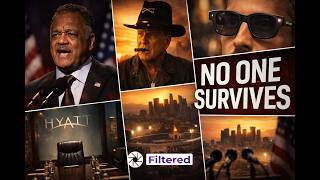
TJ Walker covers Jesse Jackson's death at 84 and Robert Duvall at 95, then examines the Epstein scandal's fallout: Hyatt chairman Tom Pritzker's resignation and LA 2028 Olympics chair Casey Wasserman's emails with Ghislaine Maxwell that prompted calls for his removal.
Chapters
Ultimize. Jesse Jackson, the man who told America to keep hope alive, is gone at age 84. And whether you loved him or rolled your eyes, he could move a room like almost no one else. Robert Duvall, never the tall, glossy movie idol, somehow out acted every movie star in the room and made the smell of napalm unforgettable. Dinner is now being secretly recorded and your server might already be viral without even knowing it. Was globalization really the villain of the last decade? Or did it quietly lift billions of people out of poverty while rich countries argued, another major executive steps down over Epstein ties, and this may be the one scandal no crisis team can fix. And now the Chairman of the 2028 Los Angeles Olympics is under fire over old Ghislaine Maxwell emails with the mayor saying he should resign. All that and more today on Filtered. Welcome to Filtered with TJ Walker. Hi and welcome. Thanks for joining me today. A little bit of a different opening. You may have noticed. I am sort of reviving the brand of Ultimize. This was a personal development app and venture that I worked on extensively three, four years ago. Never quite got the app to really take off being brutally honest now, but I'm now expanding not only this podcast, but going to be soon launching dozens and ultimately hundreds of podcasts, all in the niche of personal development. And Ultimize is frankly an easier name to remember to type in than mediatrainingworldwide.com, which is my main corporate website and my main corporate brand. So bringing back the Ultimize brand, you'll be hearing that little stinger at the beginning of not only this podcast, but all the other podcasts that I work on as well. So a lot of exciting things coming up and we're going to dive right into it. Okay, first story, Jesse Jackson dies at 84. According to the New York Times, the Reverend Jesse Jackson is no more. The civil rights leader and two time presidential candidate became the most influential black political figure in the decades between Martin Luther King Jr. And Barack Obama. He built what he called a rainbow coalition of poor and working class Americans and reshaped Democratic Party rhetoric in the 1980s. Jackson's 1988 convention speech, where he repeatedly urged Americans to keep hope alive, remains one of the most electrifying moments in modern political history. He never reached the presidency, but historians credit him with translating the civil rights movement into a durable political power. John Jackson once said his mission was not politics small p, but politics big P as in transforming our minds. Agree or disagree, he understood something essential if you can move language, you can move history. Okay? Jesse Jackson is not someone who's been very active in the last decade. So if some of you are thinking, I've heard that name before, but not quite sure, well, he was a big deal. I was at the 1988 convention where he gave that memorable speech, and I could tell you he was electrifying. Now, I never met him. I wasn't close to him in any way, but I've been in a room, I've been in a hotel lobby when he walks in. And I gotta tell you, every head turns and you quite often can't tell if you've only seen someone on tv. He was big, six, two, six, three. He was the star quarterback in college. This was a charismatic guy in his younger days, very, very handsome, dynamic. He could have been a Hollywood star easily. Certainly you could see him as an action hero. And he devoted his life to political change. Now, I understand he. He is a controversial figure. Not everybody loves him. But to me it's important to note his significance in history and because of his ability to communicate. Now, not many people realize this or knew this. He had a stutter as a childhood, and he went on to become known as one of the greatest orators of the 20th century. So he aver. He. He overcame his stutter, overcame poverty, overcame hardship, and really became a central figure in American politics. Barack Obama is the first one to say this. You could not have had a President Barack Obama, without a candidate, Jesse Jackson, to many people, when he ran in 84 and even in 88, it seems strange to a lot of Americans. I'm not saying this is a good thing, but for those of you who weren't around when I was in the 80s, for many people, they had a hard time getting their hands around the concept of a black guy running for president. It seems strange, weird, alien to many people. Much more racist society back then, arguably. So he ran in 84, and a lot of people sort of gave him a. A good look for the first time. He had even more support in 1988. So by the time Barack Obama ran for president in 2008, it was no longer the first, it was no longer unique, it was no longer weird. And Barack Obama credits Jesse Jackson for opening the door or even the possibility of there being a black presidency in the United States. I also want to put a spotlight on Jackson's ability to. To communicate. He was a superb, superb orator. He really understood rhetoric. He could use rhyme in a way that was extraordinarily catchy and for those hearing him, if they already liked him or were predisposed to his message, he was absolutely the most exciting speaker they ever saw. He really, really was. I want to share with you some of his nuggets that he said throughout his career. Keep hope alive was one of his memorable statements. Short, pithy, embodied his optimism. And he was this guy, you know, giant smile, big face. He really sort of embodied the essence of optimism and hope. Other things he said throughout his career that really resonated with audience. I was born in the slum, but the slum was not born in me. Our flag is red, white and blue, but our nation is a rainbow. He famously created the Rainbow Coalition, trying to unite people of all colors and accomplished a lot. Now, he was never known as a great manager. You know, yes, there was mismanagement with a number of the organizations he headed, but, you know, he didn't run half a dozen or more companies bankrupt the way a certain political leader in America whose name I won't mention in this story. So by that standard, he was much better manager than certain presidents. He's also really, really had a gift for understanding public relations and media. Again, some people criticized him for this, but he was there. He was a top lieutenant to Martin Luther King Jr. In the 60s. And when Martin Luther King Jr. Was assassinated, it was obviously blood everywhere. He was shot. Well, he bent down and hugged him. He was there on the. On the railing of the. Out the outdoor balcony at the hotel in Tennessee, and he was covered with blood. He didn't change his shirt. He went on the Today show the very next day, covered in blood, he says, to remind people of the horrors of this. Some people thought it was gimmicky showmanship. Others thought it was brilliant, brilliant symbolism and letting Americans know what actually happened. This was a bloody, bloody death. Now, he never achieved quite the same level of respect that Martin Luther King Jr. Did, but, you know, time will tell. So many Americans don't realize when Martin Luther King Jr. Was alive, he was widely hated and detested by conservatives of both parties. It's only after the fact, that of his death, the passing of many years, that Martin Luther King Jr. Is seen as a uniter and is routinely praised by people across the political spectrum. Will that happen with Jesse Jackson? I don't know. But I do think history is going to be kind to him for routinely speaking up for people he thought were disadvantaged. Not just black people, not just minorities, but people across, in his words, a rainbow spectrum, a rainbow coalition. I would urge you, go back and look at the 1988 convention speech. It's on YouTube. Look at other speeches of Jesse Jackson. He had a powerful voice, a theatricality to him, and it really made him a truly, truly international figure. He also. Many people forget this. I almost did till a moment ago. He had his own talk show on cnn. Now, there was a time. This may surprise some of you, there was a time when every politician and political activist in America didn't have their own show. There was no podcasting in the 70s or 80s or 90s. And Jesse Jackson, after his presidential ambitions ended, had his own weekly talk show on cnn. It wasn't the best show. He was a little awkward reading a teleprompter because reading a teleprompter in a new studio is very different than an executive teleprompter when you're giving a speech in front of thousands of cheering people. But you know what? He tried and he was a multimedia force. Columns, books, articles, speeches. Always showing up to support organized labor and helping those who he favored politically. Now, we live in an era when so many people who are political can become incredibly rich. I mean, look at someone like Tucker Carlson has a platform and making tens of millions of dollars. If he's not worth $100 million yet, he probably will be soon. Jesse Jackson never became wildly wealthy. I'm sure he had respectable net worth by the time of his passing. But he was not someone out constantly chasing a buck. He had to, of course, fund his organizations. But he spent his life doing community work, doing activist work, fighting for issues he was passionate about and speaking about it, and speaking forcefully. Now, his health was very much in decline in recent years, so we haven't seen him much lately. But something tells me we're going to see a lot of him in the history books. Most of it, not all of it, but the vast majority of it will be extremely positive coverage. Jesse Jackson, rest in peace.
Imagine having a communication coach who never sleeps. Meet your new secret weapon, the TJ Walker AI clone. Go to TJWalker AI and start getting custom coaching 24 7. No scheduling, no hourly fees. I train presidents, prime ministers and Fortune 500 CEOs.
Planning.
But the same exact communication I've delivered to world leaders is now available to you online anytime@mediatrainingworldwide.com. whether you're speaking on camera, pitching a client, or handling a crisis, you need these tools. These aren't fluffy motivational videos. They're practical, battle tested techniques to help you speak clearly, confidently and persuasively. Go to mediatrainingworldwide.com and take your communication to the next level.
Actor Robert Duvall dies at age 95. Oscar winning actor Robert Duvall has passed away. He's known for disappearing into roles from the Godfather to Apocalypse now to Lonesome Dove. Duvall built a legendary career without looking like the classic leading man. He stood about 5 foot 9, had a rough voice, sharp features, none of the glossy polish of traditional Hollywood idols. He lived on a Virginia ranch, kept Hollywood at an arm's length, and openly embraced conservative politics in the liberal industry. But none of that mattered when the camera rolled. Whether as Tom Hagen or Lt. Col. Kilgore, he became the character. As one director said, he is the character. Duvall proved that craft beats glamour, and sometimes the second leading man gives the best performance. Okay, I've long been an admirer of Robert Duvall's acting. You know, Apocalypse now, the Godfathers, those are only two of dozens and dozens and dozens of fantastic roles he had throughout his career. Rich, long life, lived to the age of 95 and apparently passed away peacefully on his horse farm. Why do I want to put a spotlight on him? I think that it's relevant to you and to me because quite often it's too easy to sort of toss our dreams away and say, well, you know, life is unfair and industry I want to excel in, it doesn't like people like me. Now that makes sense. If you're trying to be a star center in the National Basketball association and you're not 7ft tall, or certainly if you're not 6ft tall, you have a point. The industry doesn't want you. But for so many other industries, you can make your own rules sometimes. Just because you don't fit in with the norm doesn't mean you can't be wildly successful. And Robert Duvall certainly was not the image of a Hollywood superstar. Again, completely average height, 5 9, which isn't short technically, or tall balding at an early age. He had kind of, and I say this with no disrespect, he had kind of small, beady eyes like I do. And those of you listening on the podcast, I just took off my glasses to show people my beady little eyes. So he wasn't slick looking, glamorous looking. He wasn't the number one romantic lead that young women or women of all ages swoon over. But wow, could he bring a character to life to make you think that they didn't hire an actor that's a real person. He was really that good. He was sensational. Again, it wasn't the power of his voice the way some actors. I mean, you hear Alec Baldwin, his voice, you think, wow, I could listen to that guy all day long. That was not what happened with Robert Duvall. It's not that he was so easy on the eyes, but he was absolutely world class at inhabiting a character and bringing it to life. The other thing I find interesting about him is he felt like he could have a really successful career. He didn't have to live in Hollywood. He lived far away. He kept at arm's length from Hollywood. He didn't feel like he had to mouth the same politics as everyone else did in Hollywood. He was a lifelong conservative, lifelong Republican, although he was never a particularly outspoken fan of Donald Trump, apparently. But he didn't change his beliefs. He didn't get tons and tons and tons of plastic surgery to make himself look like a leading man. He just went about living his life, choosing parts and doing the best he can. Now, he gives credit to the fact that he moved around a lot. His father was a high ranking military official. He moved around a lot. He was always listening, listening for people's accents, listening to how people spoke. And he credits that. Now he was known for meticulous, and I mean meticulous research on the characters he played. If he was going to play a character who was a down and out degenerate drinker, gambler, he would spend time with down and out degenerate drinkers and gamblers, really listening to exactly how they spoke. What tone of voice did they use, what wording did he use. Now, he was not known as particularly easy to deal with and to get along with on movie sets. He sometimes clashed with directors, but it sure seemed to work out for him. He studied at the Sanford Meisner or with Sanford Meisner at the Neighborhood Playhouse and a couple of his best friends, Dustin Hoffman and Jane Hackman. Their careers turned out pretty nicely as well. Gene Hackman, having fairly recently passed, passed away, as you may recall. But again, again and again and again, people commented on he is the character. He's not acting. He's really inhabited that person's life. So, Robert Duvall, you will be missed. You are respected. And this is a good reminder to me, I may go back and watch a few old Robert Duvall movies, maybe with the one I have on the screen right here, Apocalypse now, which is truly a classic.
We'll be right back after this break.
Want more?
Grab my 5 book success library for $9.95 at tjwalker.com.
It'S the fastest way.
To level up your Communication. Imagine being the most confident person in the room, whether you're on zoom or on stage. That's what thousands of professionals are learning to do right now. Through my online communication courses at Media Training Worldwide, you can access my complete.
Training library on demand.
Affordable and and actually effective. Whether you're preparing for media interviews, client presentations, or TED style talks, I've got you covered. Check it out. Mediatrainingworldwide.com you'll never wing it again.
Dinner is being recorded. Oh, this sounds a little creepy. According to the Times, sleek meta ray Ban smart glasses are quietly recording inside restaurants all across America. What used to require a visible phone now happens through discreet eyewear with a tiny blinking light. Now, these are not smart glasses that I'm wearing. And those of you listening on the podcast, I am wearing glasses. But the meta glasses, they're like the typical Ray Ban ones. You just push a button and I believe you can actually speak to it and say record. A light comes on and it's recording. Servers and diners are ending up in viral tiktoks without knowing they were filmed. Sales of smart glasses nearly tripled last year with more than 7 million units sold. And I can tell you every time I go to the mall and stop in a lenscrafters and ask the salespeople, are you moving this stuff? Do people like it? They say, oh yes, we're sold out. The legal situation is murky. Restaurants are private property, but they're open to the public. And two party consent laws vary by state. What that means is in some states, if you're going to record someone, you have to get their permission. But it's not that way. In most states, the result is a new reality. If you're in public, you may already be content. And in the attention economy, authenticity sells even when consent doesn't. Okay, I've talked about these metaglasses. I think they're a big, big deal. I have mixed feelings about them. And if you want to just hate them, I get it. Mark Zuckerberg is not the most lovable guy in the world. We can agree on that. Facebook is causing a lot of damage in our society. The way it drives people apart moments. Anger creates dissension. I'm not quite certain what the ultimate legacy is going to be of smart glasses like this. So together, let's work it out. If you're looking for a punditry show where someone, the host always says this is 100% wrong and I'm 100%, this isn't one of them. So I'm trying to delve into this in a thoughtful way, and I appreciate you being here with me again, here are the facts. Seven million smart glasses were sold last year. Sales nearly tripled in 2025. 2 million sold in their 2023 launch. So it's. It can be voice controlled and live streaming can be built in. Now, I was told that if you're recording it, it only does it in 15 second burst. But if you're doing it live somewhere, in theory, anything live can be captured permanently if you're using another system for doing that. Here's what I'm grappling with. In America, we do have the First Amendment, and the government is not supposed to impose any limitations on communication and communication through the press and the media. And this is a form of media. If you're live streaming on Facebook, that is a form of media. Now, if you're barging into someone's room or you're peering through someone's window and they're in their own home, that's pretty clear cut. Violation of privacy, peeping Tom laws, and just despicable behavior. There's no doubt about that. So that's clear cut. If you are attending the super bowl and you're a part of a crowd watching a game and TV cameras capture you, I think that's pretty clear cut in that most people would say you have to give TV cameras and TV networks the ability to capture the crowd. No one seriously thinks that a major broadcaster should have to pixelate the face of every single person in the crowd. When you go to a football game, you kind of know you could be on tv. These days, when people go to a concert, they kind of know they could be on a big Jumbotron. That's not quite as common, but with the most recent Coldplay incident and people losing their jobs over it because they were together with people, not their spouses, there's a lot more awareness that, that, hey, you're in public and you have to be ready for exposure to the media. And as far as I know, neither member of the Coldplay couple has sought to sue the operators of the cameras that captured them for the Jumbotron. Because it's kind of understood that can happen. But this is taking us into a whole new world. You're in a restaurant, it's perhaps dimly lit, it's 10 o' clock at night, your server has been on their feet all day long, they're tired, they want to go home. Maybe they were a little grumpy and they say something. Should they have to expect that that Clip of them perhaps being surly or rude is seen by a billion people or millions of people, and apparently that is in fact happening. That to me just seems a bit much for one person. Because if you have a video that has gone viral on YouTube and you've got millions and millions of views, the person who created that can make tens of thousands of dollars. Should someone be able to make that much money off of a tight shot of one person doing something? Again, in my own mind, there's some differentiation between a crowd shot and you see a whole ton of people out there. You know, if you decide to do a protest because you don't like tax policy or some other policy and you show up with 400 other people and you decide you're going to go naked to put a spotlight on this issue, you shouldn't be surprised if someone captures video of that and wants to show it. Not something I'll be doing on either end of that equation, but you shouldn't be surprised. But if you're just doing your job in a private business that does cater to the public, should you have to subject yourself every waking second to being content for someone else? These are tough questions. I. I don't have every answer. If you have an answer, by all means post your comments on the discussion page on YouTube or any platform where you're watching this or viewing it. I would love to hear from you because, you know, with the current administration and the stranglehold big tech leaders like Mark Zuckerberg and the Google boys and Jeff Bezos have over Washington and policy, I don't see this being made illegal anytime soon. What I do predict, and I'm not advocating this, I in no way condone violence. What I am predicting is we are increasingly going to see physical altercations. You're going to see a waiter or waitress or someone being recorded and it's going to be a long, long tiring day. They've got a headache and perhaps people were harassing them, sexually harassing them, pinching them, other things. And now on top of all this, they see some smart alecky customer recording them. You know, perhaps when they're bending over doing something and that waiter or waitress is going to snug the person wearing these. MetaGlass Again, I'm not advocating that. I'm not condoning it. I'm not urging anyone to commit any act of violence. The Filtered with TJ Walker show is officially pro conversation to resolve disputes. We are officially against using violence. I think it's going to happen. We are going to see fist Fights over this we are going to see. And we just saw it the other day in Great Britain where someone was apparently recording in a subway, a metro there, and someone came up, took the glasses off, stepped on him and walked away. I think we're going to see a lot more of that. I would like for us as a society to figure out some way of dealing with this so that it's not going to be left to individuals where somebody gets hurt. I don't want people to get hurt. Now, if you're on Instagram, that's a part of the meta family. You can do direct Instagram posting while you're shooting this. So if someone is, is shooting you and it's already on Instagram, then the whole world could see it. Now, not everyone has an Instagram following of millions. Many of us would like to have an Instagram following of millions, but that's another issue. It could be made public. Now, it's said that these days young people don't care about privacy, that that's an old person's concern. Maybe, but we've never had a situation like this where absolutely anything and everything you do, where you possibly look foolish, dumb, mean, stupid, unflattering, can be captured without you knowing it. Someone pulls out a cell phone, says, hey, you know, I like your clothes. Let me take a picture of that. You kind of know, maybe they could still do it, but you're at least aware this is different. And I think it's going to increasingly break people out. It's going to increasingly going to seem like a violation. And this is where the attention economy blurs. Journalism, voyeurism, promotion, and frankly, just being icky. Is there a, a legal solution for this? As I mentioned, some states already have a law where both sides of a conversation, if they're being recorded, you have to have permission from both. That's for the audio portion of someone speaking. Now, what I don't know is if any state actually requires permission. If you simply video record, obviously if you're walking down Main street and there's a parade and you're showing it, you're capturing video of all sorts of people who didn't consent to you. So no one is seriously suggesting you can't be at the Macy's Day Parade and do some video with your cell phone where hundreds, even thousands of people are somehow in your video, no one's suggesting getting rid of that. But if it's taking video of one person, especially if they're doing something rude, obnoxious, weird, is that something you should be able to not only capture but monetize indefinitely. Maybe we do like what YouTube already does. If you take someone else's content and take it without their permission, YouTube will flag it and then give any ad revenue to that company. I don't know if this is workable, but perhaps if you're taking footage of just one person without their consent and they can make a claim on it, maybe if you do monetize it at all, they should get the revenue, or at least half of it. These are questions where I don't have every answer. But the issue's not going away. It's only going to get worse. As I mentioned to you, some of you six months ago, I was thinking of getting glasses. I'm now leaning sort of in the opposite way. It just seems a little too weird and creepy and I don't want people seeing me coming in a restaurant thinking let's avoid this creepy guy. So for that reason alone, I'm going to hold off on purchasing any glasses like this. I'm TJ Walker. This is filtered. Thanks so much for watching. We have lots more to come. Don't go away.
Want a shortcut to powerful communication skills? Download the TJ Walker Success Library, five of my best selling books for only 9.95. Go to tjwalker.com books instant access big.
Impact.
I've had entire YouTube channels wiped out overnight, so if you enjoy this.
Show, don't lose track of me.
The safest way is my newsletter. Substack.com/@tj walkersuccess Sign up for free and you'll get exclusive commentary, live session alerts, and first access to new tools. Again, that's substack.com just search for TJ Walker or go to substack.com jwalkersuccess your.
Direct line to everything I do Globalization and the Backlash When Donald Trump first won in 2016, conventional wisdom blamed globalization. But research tells a more complicated story. Global extreme poverty has fallen from roughly 38% in 1990 to around 8 to 9% today. Global life expectancy has risen from about 46 years in 1950 to roughly 73 today. Literacy rates have climbed dramatically over the past seven decades. Hunger remains serious. Over 700 million people around the globe still face it, but long term trends show massive, massive gains in human well being. Trade did contribute to painful dislocation in parts of the US And Europe, but globally it raised living standards for billions. The backlash may be politically powerful in rich countries, but yet for poorer nations, global trade remains one of the best paths to Development. Okay, this is a complicated issue, folks, and people get very heated by it. But here in America, and I am an American, we're based in America, even though we have viewers all over the world, especially in India and many parts of Asia, but here in the United States, it's almost an article of faith of those who consider themselves a part of the left, part of the liberal side of things, to sort of reflexively say globalization is bad, it's harmful, it's harming working people, it's harming poor people, it's harming lower class people in America. And a part of that is in fact true. In 1950, in 1960, there were a lot of guys, and I'm speaking mostly of guys, a lot of white guys without much education, high school degrees, maybe 10th grade education. They could get a job in manufacturing or a union job, oil company, a car manufacturing company, and they would have a middle class lifestyle. They could afford a 2,000 square foot home, four bedroom home, a spouse who didn't have to work outside the home, and they could have a middle class American lifestyle. It is true that there were a lot of people who lived like that in the late 50s, 60s, 70s, that because of globalization saw their standard of living go down. There's absolutely no doubt about it. But, and this is a big but, the standard of living has skyrocketed for billions of people around the world because of that. So what I've grappled with for most of my adult life certainly in the last 30 years is how can you say you're in favor of helping lower income people, lower middle class people, poor people here, and say I don't care if the other 95% of the world is, is worse off. I don't know how you can say that. There's nothing wrong with saying you are a citizen of your own country and let's take care of your own first. I get that there's a certain chauvinism that most people have, but that's not what has happened in the conversation among so many people, especially the so called left in America that supposedly cares about unpopular people and oppressed people in the Middle east and everyplace else suddenly act like they shouldn't care about the economic status of the now billions of people that have risen from extreme poverty around the world over the last 30 years. Because in the last 35 years because of globalization, they kind of act like, well, that didn't really happen. No, globalization's always bad. It's always only bad. That is what we hear consistently from Some in the center of the political spectrum, but especially those liberal, a little bit left of center to far left center. In the United States, it's globalism bad. Globalism bad. The numbers just don't bear it out. Let me share with you some more stats. In 1950, global extreme poverty was 53%. That means you barely have enough grains of rice to keep yourself alive. I've seen estimates as much as 90% of the world was considered below what we would consider our poverty line in 1950. Today it's less than 10%. The World bank says there are currently 700 million people, which is a lot of people, but that's 8.5% of the world population. So you've gone from more than half of the people in the world living in extreme poverty to less than 10%. I don't know how, if you have a conscience, if you consider yourself a compassionate person, I don't know how you say that's a bad thing. If it is a good thing that we've gone from half of the world virtually starving to death to less than 10%. If you do think that's a good thing, I don't know how you can a good conscience not try to figure out what's changed. Before 1950, most people were subsistence farmers. And if they had a bad crop that year, the weather was bad, they starved to death. That's kind of the history of human beings, not just before 1950, but for the 200,000 years before the the late 1800s. So something changed. What was it? You do not have to be a right wing extremist, a laissez faire capitalist to say it was in fact globalization. It was in fact capitalism. Now here's the awkward political equation. The very same forces that help the absolute poorest people in the world, billions of them, also happen to be the thing that helped the richest people in the wealthiest countries. So you have this unholy alliance, some would say, between the richest capitalist inadvertently. It wasn't necessarily their goal helping lift billions of people out of poverty. Was it worth it? Now, if you or someone who had a lower middle class existence, but a perfectly fine existence in America, it's certainly your right to say, well, I don't care about billions of Chinese and billions of Indians and others being lifted up out of poverty and being a part of our globalized system. I just want to go back to the way things were. Well, they're not going back. I would argue that the problem is not globalization. The problem, frankly is if you are in a wealthy country you can soften the blow for your citizens. They do it in Germany, they do it in France. They have a stronger social safety net. If you are 62 years old and you worked for 40 years in France, you're going to now have a nice retirement. You're not going to worry about your health, your health expenses. You're not going to worry about money for rent and food. It is going to be taken care of. You could say, well, T.J. that's the French. They're a bunch of socialists. That's an awful society. It's really not an awful place. I've lived there for one month and I can tell a lot of happy people there, a lot of healthy people, a lot of 85, 95 year olds walking to market every day with smiles on their face, seeming pretty happy. So I would say to those of you on the left, progressive side of things, left of center, if you want to help people in your country, it's simply not going to be enough to bash globalism. A, it's not the problem. B, it's not going away. C, the answer is you're going to have to mobilize coalitions of voters to support politicians to help the people in your own country through things like having education paid for, not just through high school, but through college or as much of training, whatever you need to have the skills you need to make a living. That's part of it. Part of it is you're going to have to figure out a way of paying for people's health care. So many bankruptcies in America are simply the result of someone had an injury or illness they weren't counting on and they can't pay their medical expenses and now they have to go bankrupt. There is a political solution to that. And adult, listen to me, look at every other major capitalistic country in the world. They figured out a solution for it. So that's really my message to those of you on the left side of the spectrum because it's very popular to bash globalism these days on the left and the right. So many of the Trump supporters were people who were down and out, less educated, not doing well in the economy. And that's why they like all these messages about tariffs. And we're going to stick it to the other people and build walls. We'll see how it's helped. So far we haven't seen inflation go down as far as I can tell. We haven't seen a single manufacturing job that pays a nice middle class income move back from India or China to the United states. So good luck with that. If you think that's going to help, I would suggest we all take a big bite of realism and figure out what can we control. It is true you can simply shut yourself off. We could be all become North Korea and say close society. But look how that worked. Yeah, they've got more equality there. Everybody's poor, everybody's hungry. I don't think that is what we want at all. I'm T.J. walker. This is filtered. What do you think? Please post your comments right here. The comment section wherever you are watching this show or listening to it. In just a moment.
We'll be right back after this break.
Want to advertise here? You better be legit. No crypto, no junk food, no supplements.
Go to tjwalker.com advertise.
Most people can't.
Afford a full time coach and even.
If you could, good luck finding one.
Who'S available when you need them. That's why I created the TJ Walker AI clone. It's built on my 40 plus years of real world coaching and training. You get my exact advice, style and frameworks instantly.
Ask it how to handle it. Tough question.
Get feedback on your elevator pitch. Rehearse your next big talk. This is the next generation of communication coaching. It's smarter than an app, more personal.
Than a course, and always ready.
Start using it today at tjwalker AI.
You'll wonder how you ever did without it. Chairman Steps Down Over Epstein Ties Hyatt Hotels Executive Chairman Tom Pritzker announced he will step down from the company's board, citing his association with Jeffrey Epstein and Ghislaine Maxwell. He admitted he exercised terrible judgment in maintaining contact and said protecting the company required his departure. This crisis is unusual. Time doesn't seem too diluted. Apologies don't neutralize it. Legal innocence doesn't erase reputational damage. The word Epstein functions like a moral black hole. Once proximity is established, survival becomes unlikely. In most corporate scandals, messaging plus time equals recovery. Here, exposure often equals exit. Now this is truly fascinating to me. Let me step back for a minute and I'm going to put on a different hat here. A part of what I do in my normal job as a media trainer is I do a subspecialty of crisis communications training and crisis communications work. I will say right up front, I'm not working with anyone associated with Epstein, so I'm not talking up my own book. I'm not trying to spin you, but this is a fascinating, fascinating case study. I've never seen anything like it. When it comes to crisis communications. I haven't seen anyone sort of slither their way out of this. And we're talking about billionaire after a billionaire. We're talking about Hollywood moguls, we're talking about the richest, most powerful people in the world. And believe me, they have access to people like me and top communications consultants, top lawyers, and I haven't seen anyone really get out of it. The one exception would be Steve Bannon, the former top strategist to Donald Trump, who was caught red handed doing PR for Jeffrey Epstein, giving him strategic advice how to improve his image. And it hasn't seemed to hurt Steve Bannon, but his whole brand is, hey, I'm the prince of darkness. Even Saturday Night Live says that he sort of rebels, revels in the bad boy image. And he has his own independent basis of operations, own podcast companies, own businesses. So he does not. And he's not a part of any major corporate boards that I'm aware of. He's not the president of Harvard or he doesn't have his own talent agency with top movie stars. So he's in a little bit of a different camp. But for everyone else, I've never seen anything like this in certainly my active adult, professional life for the last 40 years, where person after person after person gets spotlight. Their name is mentioned. They kind of put up a good fight. They try to say, well, I didn't really know him that well. More emails come out and before initially, their organizations, their companies, their boards, their universities put out some message supporting them. And then like a week later, they're gone. They simply cannot withstand the pounding. There's so much pressure from the media. But let's not forget, it's not the media changing this, it's the media. The message is coming out. And more of their own supporters, their own stakeholders saying, I can't be associated with this guy. Either he leaves or I leave. And there's a lot more of these other people, stakeholders, customers, clients, prospects, funders, customers. And the person who is associated with Epstein is forced out. Now, I do believe that in America, just as everyone has the right to an attorney when charged of a crime, everyone does have the right to, to a crisis communications counselor. Now, they don't have the right to have taxpayers pay for it necessarily, but you do have a right to try to communicate your side of the story. It is utterly fascinating to me to see that no one's come up with a good message for this. And I, full transparency, have to tell you, I don't think I have a good message yet. It's it's so odious. As mentioned in the news. Read this. This guy Epstein is sort of a reputational black hole. You get anywhere near it, you're sucked in. No one ever sees you again. And it's not just really, really famous people. Now. I was I've heard of the Pritzkers and they've owned hotel chains, but this is not a household name. He's 75 years old and he's decided, I think now will be a good time to retire. So he's got an out. What do you do if you're 45, though? We'll be talking about a relatively young man caught up in this controversy in our next story. But for right now, Tom Pritzker looks like he's going away. He's acknowledged terrible judgment. He says he wants to take care of his company, doesn't want to taint the company. He's apologized. So in the past, if you apologize for something, admitted you did something wrong, then did something to make amends, like I'm going to donate time to a charity, I'm going to donate money for people who could have been harmed, usually the controversy just washed away. It was forgotten. It's not happening with Epstein. It's considered so odious. I misspoke a moment ago. I said there's only one person who seems like he's gotten away with this. Steve Bannon. He's not had to resign. There is one other person who is mentioned millions of times apparently. I've seen counts of hundreds of thousands, I've seen counts of millions of this person's name in the Epstein files and he doesn't appear to have paid a price for. I'm talking about the current occupants occupant of the White House who is alleged to have been the best friend of Jeffrey Epstein, where they are seen partying together, where this person is on record as saying he shares Mr. Epstein's appreciation for young beautiful women. Unlike this guy Pritzker and so many of the people, the former general counsel of Goldman Sachs, none of them were caught red handed having a party for just themselves and Epstein and modeling agencies the way the current occupant of the White House has. So is he going to get away with it when every single day we see more people's careers ruined and the occupant in the White House is still standing? You can make the case he is going to get away with it. But you can also make the case that anger is only building. And at some point the low hanging fruit of people mentioned in the emails are all going to have resigned, been run out of town, have been written out of public life. There will only be one left at that point. Do things coalesce around this occupant in the White House? I don't know. Again, let's recap. Those of you interested in this purely from a communication standpoint. What typically happens in a lot of crises, someone denies it, there's an investigation, they. Then they apologize. Okay, you got me. I'm going to restructure, I'm going to change, and then there's recovery. No one seems to be able to do this right now. It's following a pattern. Just you're exposed, you apologize. No one's satisfied with that, and you have to exit. The only way to stop the drumbeat of negative publicity is you have to slither away, back under a rock. You have to resign your position, allow yourself to be fired. You had to remove yourself from public life. That seems to have been the pattern that has been repeated here again and again and again. Now, I'm going to ask a question. Do not interpret this as me saying, well, all fair is love and war, and it's not that bad. But Jeffrey Epstein. No, what Jeffrey Epstein did was horrific. I am not in any way saying he or anyone who was associated with him deserves some special break. But I am curious, for those of you who are in the communications fields watching this show, listening to this show, what would you do if you had a client who got caught up in some emails? How would you advise them? And now the easiest advice may be to say, well, simply resign from public life. Devote the rest of your life to doing good for others quietly behind the scenes and give away all or most of your net worth to worthy causes. That's one tack. And that. That certainly may be the best for the world. But I'm interested if any of you have some kind of messaging that you think could help someone who is caught up in this. And let's be fair, there are some people who email back and forth talking about intellectual issues and were perhaps friendly to him, but were never caught on his island, were not ever seen in any parties with young girls. They were not saying obscene things the way Dr. Peter Attia was quoted recently as saying. There are some people where they were just at a party somewhere and met him, and maybe an email or two. I want to know, how would you advise someone like that who hasn't, by most people's estimation, really committed some horrific lapse of judgment? But it's just all swept into this and Their name is everywhere and there's names and emails. How would you handle that? I would like to know more in a moment on this very issue, but this time out in Hollywood.
Hey, if you're enjoying this kind of.
Take and want to hear more stories filtered through the lens of communication, make.
Sure you're following the show whether you're watching or listening. New episodes drop every single day and.
If there's a little notification option where you are now, go ahead and turn it on. It helps you stay in the loop. LA Mayor Calls on Olympics Chairman to Resign the Los Angeles Mayor, Karen Bass says that Casey Wasserman should step down as chairman of the 2028 Olympics after his name appeared in Epstein related files. The files date to 2003. At the time, Wasserman was 29 years old and married with a young family. Messages between him and Ghislaine Maxwell discussed meeting up and including flirtatious language. In 2002, he also participated in a humanitarian trip to Africa that included Maxwell and Epstein. There are no allegations of illegal contact in the released exchanges, but the mayor says leadership of a global event like the Olympics demands public confidence. The LA28 board has voted to keep him in place for now. Question is no longer legal, it's reputational, and in the current climate, they may be the harder standard to meet. So this is again a fascinating case study of crisis communication. By my understanding. I have not read every single email and every reference in the Epstein files regarding Casey Wasserman, but apparently he did go with Epstein and Maxwell along with Bill Clinton on a humanitarian effort to Africa. So this is the hard part in talking about this issue. It's we want to be able to say, okay, someone's a bad guy. Everything they did all day long was evil, bad corruption. Look, I'm not apologizing for Jeffrey Epstein. I never met him. I'm not in his files. He deserves the opprobrium he has received, as far as I can tell. But he was a multifaceted character. He was a complex character. Apparently there were times when he did genuinely help a lot of nonprofits and humanitarian issues and he took President Clinton, Kevin Spacey, other celebrities to Africa on a purely humanitarian issue. And by all accounts there wasn't any kind of weird hanky panky going on in the plane. Again, I don't mean to soft sell his crimes. When you are raping and physically abusing underage girls, that's not hanky panky. So let me be clear on that, but apparently Wasserman was on this way back in, in 2003 and this was before Epstein was convicted of anything. Now according to Donald Trump, everyone knew about it in Palm beach, but not everyone around the world apparently or in Washington knew about this character's predilections. So he did that. Which I think most fair minded people would say, that's not enough to ruin your whole career. But then there's all these emails, naughty and flirtatious emails with Ghislaine Maxwell. And that's the part that sort of makes people creeped out about Casey Wasserman here. He was a guy who was a family man, married, small children and all these emails come out about all, you know, these sleazy things. Here's an example. From April 1, 2003, Wasserman to Maxwell, quote, where are you? I miss you. Can we book that massage? Now Maxwell describes a massage that would drive a man wild. And you know, this goes back and forth about how much they, they like each other apparently. I mean it certainly seems like a romantic flirtation when you look at the emails. Again, not a crime to have flirtatious emails but when it turns out it's with one of the most, really the second most notorious pedophile in the history of the United States, Ghislaine Maxwell, the convicted pedophile, well then it just looks weird, it looks nasty. He would have been 26, 27 years old, but he'd already been married apparently when this was going on because he got married in 2001. Now basically his career is destroyed. So many top name actors and celebrities represented by his agency announced they were leaving. So he announced earlier this week or just a few days ago that he was selling his agents. I have to guess it's because if you have an agency and all your stars leave, your agency is worth absolutely nothing. If you sell it, you at least get something. And then none of the stars have a reason to leave the agency because it's not owned by someone associated with Jeffrey Epstein. So let's not shed too many tears for this guy. He's rich, he's good looking, he's famous, he grew up that way. His, I can't remember, his father, his grandfather, I believe Lou Wasserman, one of the most powerful moguls in the history of Hollywood, Ronald Reagan's former age. So this guy grew up, believe me, with every single possible advantage. There are some who say this has sort of come up. It's well deserved because of his certain reputation. I'm not going to traffic in rumors, but his reputation apparently in dealing with staff, young starlets in his orbit. Not exactly pristine. I'm not going to traffic in those rumors though, but there is a sense that, okay, this guy has had a history of bad judgment. This is just part of it. He's getting his comeuppance. But again, he should be able to sell the agency. He'll still be rich, but he's not going to be the powerful titan that he was used to being in Hollywood. And whether he can keep this, I'm assuming, volunteer post as head of the 2020 Olympics and all of that, I'm predicting right now he's going to have to step down. The clamor is going to be to harsh because that's a prestige position. Peter Uberoff was the head of the olympics in the 1984 Olympics. Many people wanted him to run for President. Mitt Romney was head of an Olympics in Utah that was became a springboard to running for President, becoming a Senator. So this is a big, big deal and it's a great way to burnish your reputation. But if so many people think you don't deserve it, going to be hard to stay there. I'm TJ Walker. What do you think? Post your comments right here. If you got any value out of our show today, please leave comments like subscribe to the show whether you're on any social media platform or any podcast and please leave a review. Thanks so much. I will see you tomorrow.
More from TJ





The Breakout Cases - What Actually Caused Famous Speaking Career Breakthroughs | Ultamize

The Red Circle Sessions Finale - Build the Speaking Career You Came Here For | Ultamize

Two Stages, One Logo, Two Completely Different Realities - Main Stage vs Independent Events | Ult...

Pre-Reset - Why Repetition Builds Better Speaking Decisions | The Red Circle Sessions | Ultamize

Your Decision, Your Framework, and What Happens After - Build Your Speaking Career First | Ultamize

The Red Circle Sessions Trailer - The Speaking Career Truth Nobody on That Stage Will Tell You | ...

The Two-Minute Ultamize Reset - Your Platform, Your Audience, Your Voice | The Red Circle Sessions