LeBron’s Streak, Gehry’s Genius, and the iPad Generation
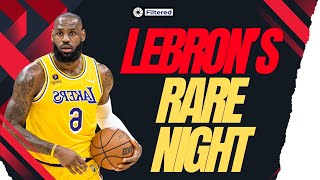
TJ Walker covers LeBron's 1,297-game scoring streak ending, Frank Gehry's late-career architecture, a 38% disability registration rate at Stanford, school-issued iPads harming student attention, and the Olivia Nuzzi ethics scandal.
Chapters
Foreign. LeBron James finally scores under 10 points for the first time in nearly 19 years and somehow still proves why his discipline and team first mindset may be more historic than the streak itself. Frank Gehry dies at 96 and we'll look at how a weird, often mocked lady late bloomer ended up reshaping cities, concert halls and even the sound of classical music well into his 80s and 90s. Then nearly 38%, 38% of Stanford students now qualify as disabled. How much of this is real need and how much of it is upper middle class gaming of the system complete with ADH labels and study drugs? We'll go to the classroom too. School issued iPads and educational technology that one neuroscientist says are quietly making kids less smart, even as districts call it equity. And finally, Vanity Fair walks away from Olivia Newsey as sex, politics and journalistic ethics collide again. All that and more today on Filtered. Welcome to Filtered with CJ Walker. Foreign hi and welcome. Thanks so much for joining me. Today we're going to hop right in as we always do. Quick market recap from yesterday. The S&P 500 closed at 6,870, that's up 0.19%. The NASDAQ Composite closed at 23,578, that's up 0.31%. Always keep in mind the long term. Over the last 25 years, the S&P 500 is averaged going up 8.32% a year. That's average. Doesn't mean it'll go up that much this year or next year. The NASDAQ 100 goes up on average the last 25 years, 9.09%. So always please keep in mind the long term. Let's dive right in to this top story of the day right now. LeBron's streak. That's right, LeBron's streak ends, but his habits still rewrite history. LeBron James finally did it. He scored less than 10 points. According to the Washington Post, his record streak of 1,297 straight games in double figures dating back to January 2007 and in Thursday in Toronto. At 40 years old and coming off both sides, sciatica and a Minor foot injury, LeBron shot just 4 for 17, missed all five of his three point attempts and finished with eight points. But he also had 11 assists, including the drive and kick to a colleague for a game winning buzzer beater. Asked why he passed instead of taking the final shot, LeBron said, just playing the game the right way. That's Always been my mouth. This 19 year streak shattered Michael Jordan's previous record and highlights LeBron's conditioning, discipline and durability, all backed by years of meticulous sleep recovery and training habits. It's a stark contrast to one of my favorite former stars in the NBA, David Thompson, whose Hall of Fame talent was cut short by injuries and drug addiction. So what's the real message here? Yes, LeBron James is freakishly talented, may go on to be the greatest of all time, but it's not just talent. It is work, habit, it's ethic, it's discipline. He gets nine hours of sleep a night and takes naps. That's something any of us could do if we really made our health, our conditioning, the number one priority. Let's dig a little deeper here. So often we see stars on the field and they're doing amazing physical feats, and then we see them in commercials where they're often promoting some kind of junk food that really isn't healthy for us. And we don't really make the connection of what made them great. So often it's not just being a lot taller or a lot stronger, having innate physical talents. And certainly LeBron James has certain genetic gifts that make him a better basketball player, namely, being about a foot taller than the average person. But that alone is not why he is great. He's also great because of his habits, his daily habits. Now, maybe he could have been lazy and been like Babe Ruth and out drinking and partying and smoking for most of his career, but his career might have only been seven, eight years long. This guy's had an amazing, amazing career. I want to call out a few stats again. 12,000. Excuse me, 1297 straight games of scoring more than 10 points. That streak started when the Bush administration was still in power. It was that long. It started before there was an iPhone. It's that long. So that's an amazing thing. Now, it started when he was 22. He didn't start off that in his very first year. I mean, this guy was a teenager when he went into the pros. Let's not forget that. So he's now had 42,000 career points. It's the most in NBA history. So those who feel like he's the greatest of all time, he definitely has the greatest number of points. There have been those who scored more. I mean, I remember back as a kid, Wilt Chamberlain got 100 points sometimes. But Wilt Chamberlain did not have the lengthy career that LeBron James did. Now, Kareem Abdul Jabbar did have a long career, no doubt about it. He also has 15,000 field goals joining Kareem Abdul Jabbar. So Kareem certainly still deserves to be in the record books there. The active double digit streak leader now is Kevin Durant at 267 games, a long time before he catches up. LeBron is in his 23rd NBA season. Now. That's phenomenal at every level. To even have a job in one industry for 23 years is an accomplishment. I'm not sure I can say that. But to operate at a peak, peak level where every single year there's tons and tons of new wildly aggressive, strong, youthful, energetic people trying to take your job and to be able to stay at the top for 23 years is absolutely amazing. What I don't think gets enough attention is he is so devoted to, to his health, to maintaining his body. He was smart enough to realize that all the people who love him and tell him he's great and want his endorsements and want him to do TV commercials, none of them would care about him if he didn't keep his body intact so that he could operate at such a supreme level physically on the court. And that's why he gets between eight and nine hours of sleep every night and takes naps. Maybe playing in the NBA isn't the same as the NFL as far as the sheer pounding to your body, but it's still extraordinarily tough on the body. It's brutal for the body, and sleep is even more important for an elite athlete like that. But if you think that it's only for athletes, you're wrong. One of the things I noticed in working with top level CEOs, billionaires, fund managers, is they also take their sleep very seriously. They take exercise, staying in shape very seriously. Maybe not to the extent of LeBron James, but it's an active, active priority. They make time for it. Other things of interest to him, he maintains a very strict diet. Now, I don't follow his career closely enough to know if he's ever endorsed potato chips or Doritos, but I can tell you he doesn't eat that stuff. He's eating extraordinarily high quality food. He doesn't show up at the beginning of the season out of shape. Well, I really took the whole off season off and showed up 20, 30, 40 pounds overweight, the way a lot of athletes do in professional sports. No, he maintains his weight. That's good if you want to be an NBA star. It's also good if you're just average human being and you want to live to be 80, 90, 100 rather than dying at 65. Other things he does, he uses a lot of hydration, anti inflammatory foods. He's known for experimenting, a lot of biohacking. I'm not sure that any one of those things is what keeps him alive. Cold plunges, things like that. But the fact that he's actively spending time, actively every day, doing anything and everything he can to be healthier, to rejuvenate his body after a tough game or a tough series is one reason why he is still around at age 43 when most people injuries get them being just beat up, tired. When you rest this much, you stretch this much, you exercise this much, your body recovers much faster. And that's crucial whether you want to be a professional athlete or be an entrepreneur or CEO who has to be able to bounce back at a moment's notice if you have to fly 12 time zones away. Now I don't bounce back quite as easily as I used to from extended travel. All the more reason I have to spend more time really investing in techniques to recover. Tonight I'm about to get on a plane from Florida to go to Doha, Qatar and then to Ho Chi Minh City in Vietnam. So I'm going to be a little disoriented by the time I get off the ground, but I'm going to try to follow as many good practices as LeBron would. He's probably flying private, but I'm going to try to follow as many good practices as I can so that I will really be rested and rejuvenated by the time I hit the ground. And one of my practices will be as soon as I get there, do as much exercise by walking, getting as much sunlight as possible, and then if there aren't hot tubs around, at least a hot bath and drinking tons and tons of water. Now I can't help but contrast LeBron James career with someone I grew up really admiring, David Thompson. Now that's a name probably most of you don't remember, but this was a guy who listed at 6:4. He was probably like 6:3 and a half. And he could jump up and touch, not the rim, the top of the backboard. I mean this guy was like Superman. He was the star of the famed NC State team that won a national championship. And he was the most dynamic player I had ever seen or most people had ever seen. We're talking about the early 70s. He did have an NBA career and he lasted nine seasons, but he became a cocaine addict. It really brought down his level of skill. And you have to think if he had had the same just personal development habits that LeBron James, we might be having a big debate of whether David Thompson was the goat, the greatest of all time vs. Michael Jordan vs. LeBron James, because in terms of sheer athleticism, talent, David Thompson was really way up. And there may be others, too, who never even got out of high school because of some bad habit or some scuffle with the law. Sadly, David Thompson's career ended after a knee injury in Studio 54 of all places. Some altercation there. But I do think that it's important to look at some of the things these high performers do. You don't have to copy all of them, but maybe you experiment with that rather than experimenting with another sugary treat for fudge. So LeBron James is reported to use hyperbaric chambers, compression boots, personal trainers, chefs. Now, we can't all afford that. I understand it. But you can afford going to bed earlier at night and getting a good night sleep. So, LeBron James, maybe you didn't score 10 points earlier this week, but you're still a huge, huge success. And every single day you seem to be making a stronger case for the idea that you are, in fact, the greatest of all time. I'll let other people more knowledgeable about sports weigh into that whole debate. I don't want to get sidetracked here, but he's making the longer you stay around, the longer you cement your legacy, because it's in any field, as we'll talk about in a moment on the next story, not have to be great for a day, a week, a month, sometimes for even a decade. It's about the staying power of decades. Okay, let's move on to our next story right here. Frank Gehry made buildings that sounded as wild as they look. Frank Gehry, who died Friday at the age of 96, may have been the single most important architect in the modern history of Portugal. Classical music According to the Times, he designed halls and amphitheaters with a maverick's eye and a music lover's ear, insisting his buildings sound as marvelous as they look. His masterpiece, Walt Disney Concert hall in Los Angeles, featuring sweeping stainless steel sails on the outside. I'll show it to you in just a moment. And on the inside, a warm, almost wraparound intimacy where audiences feel close to the musicians and the towering French fry shaped organ he designed. Gary worked directly with acoustician Toyota and conductor Solonen, who still uses Disney hall as his acoustic reference point one of Gary's early triumphs, the Meriwether Post Pavilion was praised as better than most regulation concert halls. And remarkably, his most famous work, from the Pritzker Pavilion to the New World center, came after age 65, well into his 80s and even 90s. What's the real message here? Frank Gehry, well, may go down in history as the greatest architect of our time. In part because he wasn't afraid to do outlandish things. He wasn't afraid to be different. He. He wasn't afraid to be called weird. And because he kept at it day after day, decade after decade, well into his 90s, he created true art, combined it with physical structures and made it something magical. Let's dig a little deeper here and look at his career. I've not been to all of his greatest creations, but there are a few that I have been to that I want to share with you that if you ever get a chance, I'd highly recommend them. This is the. The Walt Disney Concert center in downtown Los Angeles. Had the privilege of going through it, too. I didn't get to hear a concert in it, but I did go through it. And it's just awe inspiring. It's. It's really amazing in the true sense of the word. You don't feel like you're in a normal office building, that's for sure. You don't feel like you're in a regular public arena coliseum. You're in something special. It's different, it's unique, it's weird. Some people didn't like it initially. A lot of people never like this guy's work initially. But then it grows on. He wasn't afraid to be different. And to me, we can't all be Frank Gehry. Okay, I'm no Frank Gehry, but we can all venture to be different, to do things in a unique way. And maybe we have to do some things in a conventional way just because the client asked for that. But when we get a chance, we can say, I'm going to create something that's not a cookie cutter like everyone else. And he certainly did that. So I would highly recommend, if nothing else, taking a walking tour through this Frank Gehry Disney Concert hall in Los Angeles. If you're ever there. The other one I really enjoyed was the Louis Vuitton foundation on the outskirts of Paris. While living in Paris for a month a couple of years ago with my family, we did spend a day out here. And again, it's different, it's unique. It's these giant sail features you don't know what you're in, but you know you're not in a normal place. You know, you're in a place that is devoted to art, artistry, beauty, creating, a special feeling. So it was a perfect combination of his artistry and Louis Vuitton. So let's look at some more facts about his life that I think are interesting. He made most of his best work after the age of 65. And I want to stress this. I live here in South Florida where, let's face it, there are a lot of old people. And while I don't consider myself old, I'm constantly answering the question, hey, are you retired? Horrors. Tycho. I just posted the pictures. I hope you saw those. So I did post them. If you're listening on the. On the podcast, apologies, you'll have to Google those. But I did post those when we talked about them. So I find Frank Gehry inspirational because he did most of his best work after the age of 65. I'm hoping to do most of my best work in life after the age of 65, and I'm not there yet. That's several years from now. So I hope that you get to the point where you're doing something in your life, it doesn't even have to be for money, but something where you are creating and you don't want to stop. You're doing it until you're 95. Because Frank Lloyd Wright, I believe, lived in his 90s. A lot of the best artists in the world live a long, long time. There's something about the act of creation, the act of positive affirmation from an audience, from customers, clients, the world. Critics somehow breathes life into people, but realize it wasn't always this unanimous praise. Forbes once listed his Seattle museum as one of the world's 10 ugliest buildings. So there are a lot of his things that initially did not get a lot of praise. One of the memorials he did in D.C. was dismissed as a huge anticlimax by some critics. His style is tagged as deconstructionist. A lot of sharp angles, fragmented forms. And I will be transparent with you. I'm not an expert on architecture. I have an appreciation for it, and I try to go to interesting buildings that capture my eye, but also realize it's not because he necessarily spent the most money on his buildings. For many years early in his career, he was known for having a cheapskate aesthetic. He used chain link, plywood, corrugated metal sometimes. So let's not get into the habit of telling ourselves. Well, I'd love to be creative, but no one's given me the huge budget. He didn't let that stop him at all. The New World center in Miami, that's another place I have been to. It pairs a refined hall with outdoor wall cast park events. He also has a fantastic 70 some tower building floor tower in Manhattan that has these bizarre wavy twists. If you ever get a chance when you're in New York, please, please check that out. So he also received the Presidential Medal of Freedom at the age of 87. So Frank Gehry, he's going to live on in the hearts and minds of a lot of people who really respect and admire his work. And I think he's an inspiration to all of us. If you're watching this show, I know you're probably already fairly successful, but you're ambitious, you want more. And if you're successful in your 20s, great, 30 is great. But also realize you might not really hit your stride till your 60s, 70s or 80s or even 90s and that's okay. I don't know Frank Gehry personally, but something tells me he was enjoying life right till the end by being a creative force. And I think that's that is fundamental to really living life at the highest level. Back in a moment. We'll be right back after this break. Want more? Grab my Five Book Success Library for $9.95 at tjwalker.com books. It's the fastest way to level up your communication. Imagine being the most confident person in the room whether you're on zoom or on stage. That's what thousands of professional are learning to do right now. Through my online communication courses at Media Training Worldwide, you can access my complete training library on demand. Affordable and actually effective. Whether you're preparing for media interviews, client presentations or TED style talks, I've got you covered. Check it out. Mediatrainingworldwide.com you'll never wing it again. Want to advertise here? You better be legit. No crypto, no junk food, no supplements. Go to tjwalker.com advertise are elite colleges full of disabled students or just privilege? According to reporting in Reason magazine, which is a libertarian publication, something that you know, I look at all ranges of information and sources and news sources, but also the Atlantic monthly, nearly 38% of Stanford undergraduates are now registered as officially disabled. 38% with similar spikes at Harvard, Brown and Amherst. Most of these diagnoses aren't physical disabilities, so it's not 38% are in wheelchairs or anything like that, they include anxiety, depression and adhd, which unlock extended test time, deadline flexibility, private rooms, and even emotional support animals. Many students truly need accommodations, and stripping protections would be wrong and unfair. But when nearly two out of five students at one of the most selective schools on earth, Stanford, qualify as disabled, something does seem off. Between looser diagnostic standards, TikTok self diagnosis, culture, fear of failure, and doctor's notes functioning like golden tickets, the line between genuine need and academic advantage has blurred. Add in the misuse of ADHD medications and performance enhancers and the strategic pursuit of diagnoses to gain extra time on exams, and the system now rewards students who game the rules rather than those who follow them. Okay, what's the real Message here? When 38% of all students at Stanford, one of the hardest schools in the entire universe to get into, claim they're disabled, something's off, something's wrong. Someone is gaming the system and something needs to be changed. Now, I don't want to be cavalier here. Certainly there are people who have legitimate problems, and it's not up to me to diagnose. Your problem is legitimate, yours isn't. But the schools do have to do that, and right now it seems to be a bias in favor. Anybody who says they have any problem, we don't want to seem insensitive, so we'll just assume you're correct. The problem with that is it incentivizes gaming the system. Because if you say, well, you know little Timmy over here, he's sometimes nervous. So he got labeled as having a disadvantage. And he and I were in the same courses, and he was getting 89s in all of his tests. I was getting 93. But now, because he's labeled disadvantaged or handicapped in some way, he can take unlimited time for a test. I've got to take the test in an hour. He could stay there for four hours if he wants, ask for a private room. All of a sudden his average has gone up to 95. I'm competing with little Timmy to get into medical school or law school or business school, and now his average is 3 points higher, and he doesn't seem any more anxious than I do. That's the thought process that is happening, and that's why there's an escalation. People figure, hey, everybody else is doing it. Why not me? So a part of the answer is, I think parents need to teach ethics more to their kids rather than do whatever it takes to get ahead. Because if you're willing to cheat, say you have a disability just to get an Advantage. What's the difference of that? And just cheating on the test, getting the answers in advance, or paying someone to take your SAT for you? I mean, at some level, what is the difference? Now, I'm perfectly fine with the idea that for too long in America and elsewhere, people didn't give enough attention to mental illness. I'm all on board with that. There was a sense of, okay, you're in a wheelchair, you're clearly disabled, you suffer crippling depression, just man up and tough it out. That clearly doesn't work. I get it. I'm not one of these who says, just have a stiff upper lip and push through it. I understand there are problems, but at some point, if almost 4 out of every 10 students says they are officially disabled and therefore need special requirements, it just breeds a lot of resentment. There are awful lot of other people who say, well, you know, I have a disadvantage. I don't test that well. I always get good grades, but I just don't test that well. But I didn't have the money or resources to get officially diagnosed with ADHD or anything else. And now I'm at a disadvantage even getting into Stanford. So the other thing here is you look at Stanford or any elite school, and a gigantic proportion, a majority of the students come from families in the top 1% of income. So we're talking about people who already have every possible advantage in life. And now if you test enough, if you essentially shop, you've heard of Dr. Shopping for people who want more and more pain pills, even if they don't need them for medical reasons. You can essentially shop for psychiatrists and psychologists to label your child having some sort of handicap so that you get unlimited test time, private room for testing, extensions on projects. And it does seem to be a bit of coddling. Now, people say, well, T.J. you should be sympathetic to needy, less fortunate. I get it. But this is by and large helping people who were already really wealthy. They can afford to have their parents continue taking them around to psychologists and psychiatrists to get them diagnosed as having a handicap, even if they don't. The other issue is some of these kids have so much anxiety because their parents have been beating them their whole life. If you don't get into an Ivy League school, your life is ruined. We'll hate you, and we'll disown you. Well, yeah, that creates anxiety. The solution isn't to pop pills and ruin your life and study every second to get into a school that maybe you don't have the natural gifts for. The solution is a lot of parents need to chill out and realize your little Timmy, your little Johnny, your little Susie maybe isn't a genius. Maybe they should be happy and satisfied and content to go to a perfectly good state school. Not everybody gets into Stanford, obviously. That's why people want to go there. So it is depressing. When you look at the depression rates of freshmen at places like Yale and other Ivy League institutions and highly selective schools like Stanford, I've seen statistics as high as 30% are officially suffering some form of depression. Well, maybe if you're already rich and you're feeling down, why don't you go spend a year doing community service and let some kid, a middle class, a lower middle class kid, a poor kid who's just focused on working hard, learning. Maybe they didn't get a 1600 on the SAT because they didn't have SAT tutors. Why don't we let that poor kid or that lower middle class kid who got an A in high school while working a part time job at McDonald's, didn't have any SAT tutoring but still got a 1200? Why don't we let that person have the slot at Stanford or Harvard or Yale and the person with the 4.2 high school average and the 1540 who never had to work a job in high school or any summer, who had a year long SAT private tutor who had the psychologist diagnosis say, oh, you officially have this so you need a limited test. Why don't we let that person maybe take a year break or go to a school that isn't going to increase their odds of getting rich because they're already rich. That would be one solution. What do you think? Let's hear your comments and I'll take your comments now. Welcome. By the way, this is filtered with TJ Walker. We are live each day typically and most people watch or listen to this on demand. Ted writes, I want the gold jacket. I guess you're talking about the jacket I'm wearing now and podcasters listening to the or people listening on the pod and you can't see it. This is sort of my Saturday jacket. It's a little more casual. It's a sports coat. It's actually made from bamboo grass. I don't know what color I'd call it. You say it's gold. I guess it could look like that. It's kind of a green as well. So there's a lot of different ways of looking at it. But I appreciate you noticing it. Sadly, my tailor has informed me they do not make this form of exact bamboo grass fabric anymore. I'm sure there's some bamboo materials, but I actually was in a fire with this, so I have patches on this to cover up where it was burned. We could not get the original material. Hazel, New York City says or type A Hard working students meeting higher criteria creates high anxiety. Okay, it might, but don't all students face that? Now? You could make the case that, okay, there's some students who are so brilliant. You know, the top, not 10%, but the top 10 students at Stanford or Harvard or Yale are so brilliant, they're in such another world that they can glance at a textbook once and make an A100 on any test. And everyone else has to really work hard and study hard. Okay, but if 95% of people are like that, then why should Some, whether it's 38% a day or not that long ago, 5% get extra test time and get extra accommodations? It seems very arbitrary and unfair. Joe writes. Do you have a way of talking about this without the condescending tone? Okay. And Joe, I appreciate all feedback, even if it's not praise. So I appreciate the fact that you're being honest with me and you are detecting a condescending tone. So I don't mean to be off putting to you. I want to be as inviting to you and everyone else so that together we can have a conversation and you can feel free of posting comments, posting disagreements. That is what I want here. I apologize, but I will tell you, I'm just having a conversation here with you other than the first 30 seconds where I give you the facts of a story. I'm thinking out loud here. And if you define condescending as looking down upon, then I apologize, but I'm not really a good actor. I do in fact look down upon people who are gaming the system, especially if they and their kids are, are already very privileged and have had every advantage in life and they want yet more and more advantage. So I'm looking down upon people who are already top 1% winners and who are already going to do really, really well. I would submit to you, anyone who got into. Not anyone. The vast majority of these 38% of students who claim to have a disability, who got into Stanford and are allowed extra test time and things like that. If they didn't have the extra test time, they would have still likely gotten into a highly elite school. Perhaps ucla, which was a great school, perhaps Bard College, perhaps Williams. I mean, there's 100 great, great universities in America and most of them are not as hard to get into as Stanford. So maybe it made the difference of them getting in, but they would have still gotten into Williams or Bard or someplace like that. They still would have gotten into a top graduate school, and they'd still most likely be multimillionaires by the time they're 40. So if you're going to look down upon someone, looking down on people who are already the big winners, who don't really need extra advantages thrown away, to me, that's fair. I'm more interested in helping a lot of people who watch this show. For example, we have a lot of people who watch and listen to the show from all over the world who are personally not wealthy yet, but they're aspirational, they work hard, they learn, they study. Some of them take my online courses on personal development and public speaking in addition to regular rigorous academic studies. They're doing everything they can to play by the rules and succeed. Now, part of it is, in America, we have a culture now and we're seeing this at the top that any rule you can get away with breaking, go for it. Call me a conservative. I'm not a fan of that philosophy. We see it everywhere. I mean, I can't get on a plane these days without seeming like every other person has their dog. Well, you're not allowed to have dogs on planes. But if you get a doctor's note saying it's medically necessary for emotional support, that you have to have that dog, then you can break the rules and do whatever you want. And yeah, are there some people in the world where they literally would not be able to get on a plane without a support animal? I guess. But let's not kid ourselves. Most of the people doing that simply like their dog. And they think I shouldn't have to abide by the rules. Every other person in our society does. So I'm going to. I'm going to play them. I'm going to get a doctor to write me a note. And if my first doctor won't, I'll write a bad Yelp review for them and I'll go to another doctor who does it. Because that's the sort of thing. And it's not coming from poor people, it's not coming from lower middle class people, and it's typically not coming from middle class people. It's coming from people who, because we live in a capitalistic society, which I approve of, I'm a capitalist, but because they have money and more time, they figure I'm just going to do whatever I want. And I'M going to pay enough people to rewrite the rules to let me do whatever I want. And that is ultimately it's not really American culture, at least how it is traditionally been defined. But I do appreciate your feedback and I apologize if I came across as condescending. But I will concede I do look down upon people who are already advantaged. Gaming the system more in a moment Want a shortcut to powerful communication skills? Download the TJ Walker Success Library, five of my best selling books for only 9.95. Go to tjwalker.combooks Instant Access Success. Big impact. I've had entire YouTube channels wiped out overnight, so if you enjoy this show, don't lose track of me. The safest way is my newsletter substack.com J. WalkerSuccess Sign up for free and you'll get exclusive commentary, live session alerts and first access to new tools. Again, that's substack.com just search for TJ Walker or go to substack.com J. WalkerSuccess your direct line to everything I do. Welcome back. I'm TJ Walker. This is filtered if you're new to the show, thanks for joining me. This is the show where every day, and I mean every day, seven days a week, I look at the top typically five business stories, technology, economic stories and culture stories of the day, and then filter them through the lens of communication and personal development skills. So it's a little bit of a different show. It's partly news, news, analysis and a personal development show all wrapped into one. My pledge to you is spend a little time with me each day or whenever you can. Once a week, you'll learn more about important stories going on in the world, but you'll also learn more about yourself, how you can be more successful. Issue 4 Today Story 4 Are school iPads teaching kids or quietly making them less smart? Parents in Los Angeles are in a full blown revolt, a full blown revolt over school issued iPads. According to NBC News, some kids who once excelled are now failing because they spend class time on YouTube, Fortnight or Minecraft, even during band and gym. One child began wetting himself during required iready sessions. Another ran away from home with his iPad. Yet district leaders insist screens are an equity tool and say average daily use is under two hours. But neuroscientist Jared Couney Horvath, writing in the Free Press, says the problem runs deeper than classroom management. Our children are less cognitively capable than we were at their age, he warns, arguing that the rise of classroom Technology Now, a $400 billion industry has coincided with generational declines in reading, attention, memory and even iq. His research shows that the more time students spend on screens at school, the further their scores fell, with heavy device users dropping the equivalent of two letter grades on global exams. Now the debate isn't anti tech. It's whether convenience, dashboards and algorithms are quietly dismantling kids ability to think. Okay, what's the real message here? I love technology. I love my iPad and my Kindle and my laptop. But make no mistake about it, there's no proof whatsoever that there's a correlation between increased screen time for kids means they learn more, become smarter. There just isn't. Let's dig a little bit deeper here. It is interesting. He's been dead for a while now, but the late Steve Jobs famously didn't want his own kids using an iPad or a cell phone. Even today, a lot of top high tech billionaires founders out in Silicon Valley. They send their kids to private schools where there's no technology they want them thinking. They want them listening to a great teacher holding a discussion. They do not want their kids addicted. The problem with staring at a screen, and I stare at a screen a lot, I stare at a screen preparing this show, I'm looking at a screen right now, is there's just too much temptation. Here's an interesting thing. Here's an email, here's a text, here's an ad down here on this important story you're reading. But here's something about some silly celebrity that you used to watch in a TV show five years ago. And it's constant, constant distraction. I realize some schools may have the ability to lock out a lot of the junkier content, but still, when you're staring at a screen, it's a different experience than looking at a book that's on a paper format or listening to a teacher talk about one idea at a time, or listening to a teacher write notes or I guess these days projecting it on a screen, the notes and facts of a particular lesson. It's different now. Let me share with you some more facts. As I mentioned, this whole edtech industry has gone, has grown to a $400 billion industry. So there are a lot of people making money saying, wow, you got to give every kid in your town a laptop or they're going to fall behind and be unemployable and become drug addicts. There are people using scare tactics like that to make money. And it simply does not add up to them learning new skills, necessarily learning critical thinking skills. Learning how to focus. I know even with myself, the way I read when it's a paper book is different from how I read on an iPad or a Kindle. And I use all of those for reading. But deeper reading, deeper thinking, I find is possible only when I get away from screens. I'm reading a new. It's about a 900 page book on the history of capitalism, which I'll give you a review once I finish it. But I specifically bought the paper version because I want time, certainly every evening before I go to bed, in the morning when I wake up, where I'm actually reading paper, where I can be 100% focused. If you're looking at a screen, it's too easy to click to this link, click to that link. Even when it's a great research paper and they're linking to the sources, it's too easy to click, click and you get lost. You go down this maze. Now, there are some correlations that do not prove causation, but that people are focusing on to make the case that maybe we shouldn't spend so much money on digital technology. In schools, such as SAT scores, there's no correlation or there's no. There's no big increase in SATs. US SAT shifted from long passages to short snippets after the world moved to the digital world. So the SAT people don't want to say, hey, everyone's getting dumber. They actually changed the test. They're not asking kids to read long paragraphs anymore. Here's the problem. You get out in the real world and you want to be a highly, highly paid lawyer or general counsel or top policy aide to somebody running your government. Or if you want to be a venture capitalist and you have to go through the due diligence of business plans and you have to read large paragraphs, you have to read long paragraphs. You can't just say, oh, there's two sentences. That's it. Let me go to the next one. And unfortunately, that is what the SAT creators have done. They've essentially dumbed down the test because of how kids looking at screens all day long are used to shorter, shorter things. So there's an organization called Schools Beyond Screens, something parents formed. There are chapters in 20 schools. You may want to take a look at that. There's an international PISA data that shows heavy school screen users scored 65 to 67 points lower on certain standardized test. Again, you can say, well, tj, there's no causation proved true, but you have no causation saying you can't prove causation that giving kids laptops and giving every kid in a community or in a school an iPad is going to make them smarter. So you can throw that back both ways. I think if you're asking taxpayers and parents to bankroll hundreds of millions of dollars for technology, there should be proof that it does some positive benefit for the students. It shouldn't be. The onus shouldn't be on those who say too many screens. I don't think you have to get rid of every iPad or computer in school. I do think think that schools have to put a priority on teachers who actually teach. They can stand, talk to students, engage them in conversation, have debates and discussions, apply lessons and make students want to read, whether it's on a computer or a paper book. I also think if you're a parent and you really want to do the best you can to make your own child successful for the future, you don't know what field it's going to be. As recently as just a few years ago, people said the surefire thing is tell your kid to study computer science. Well, a lot of those computer science grads aren't finding jobs these days because ChatGPT is making them irrelevant for introductory jobs. So I don't think there's any one simple major. The one thing I do think is helpful, Teach your kid how to think. Easiest way to teach your kid how to think is to read real books, substantive books, in some cases long books without interruption. Take their cell phones, their iPads, their computers away. Have a family reading hour in your household. That's what I try to do. And let me tell you, if you want to become really popular with your kids and make them love you and appreciate you, this won't do it. They'll hate you for it. Sorry. But in the long run, they'll learn how to think. And no matter where this wild, crazy AI world takes us, I have to think. Those who can actually think, think clearly, think critically, think creatively, are always going to have an advantage in the job market and in life. More in a moment. Hey, if you're enjoying this kind of take and want to hear more stories filtered through the lens of communication, make sure you're following the show, whether you're watching or listening. New episodes drop every single day. And if there's a little notification option where you are now, go ahead and turn it on. It helps you stay in the loop. Okay. Welcome back. I'm TJ Walker. This is Filtered, our last issue of the day. Olivia Nuzzy Newsy I kind of don't even want to know how to pronounce her name correctly because I'm. I'm tired of hearing about this woman in the news. She was Vanity Fair's west coast correspondent, whatever that really means. And now they've cut ties with her. Her as well. They've cut ties after fresh revelations about her affair, in her words, with Robert F. Kennedy, Jr. Which supposedly was never physically consummated, but was somehow a texting affair or a phone call affair, and how she behaved during the political campaign last year. According to the Wall Street Journal, the magazine and Vanity Fair and Newsy say they mutually agreed in the best interest of the magazine to let her contract expire at the end of the year. That's code for we canned her. You know what? She had just joined as the west coast editor after leaving New York magazine in 2024 when news of her relationship with Kennedy prompted an outside investigation. That review by the law firm Davis Wright Tremaine found no inaccuracies or evidence of bias in her work. But she has a new book out and it's been talked about everywhere. It's called American Canto, detailing an affair with an unnamed politician. And a series of scorching substack posts by her ex fiance, journalist Ryan Lizza, including alleged explicit messages from Kennedy and claims she acted as a political operative, have drawn overwhelmingly negative reviews and renewed ethics question. Okay, let me try to really spell out what's going on here. And I'm going to say some things that are. Some of you may say, well, that's. You're not supposed to say that, T.J. that's not polite or that's not politically correct or it's not. I'm just going to tell you what everybody's thinking who follows this issue. So there is this woman, Olivia Nuzzy, and forgive me, I don't think we have the right picture of her up. That is the picture of Robert F. Kennedy, who apparently is a pretty good writer. The people who have followed her work over the years, and I'm not one of them, have said she really writes well. She's able to really breathe interest into political profiles and political reporting. So she is a good writer. Why is she generating so many headlines? Why does she seem to fall upward from going from New York magazine to Vanity Fair? It's because she is incredibly good looking. Okay, I said it. If you doubt me, Google her name and put in photo and you will see it. So she got a tremendous amount of attention where she claimed last year that she had an affair with Robert F. Kennedy Jr. Who is married but is known for, shall we say, a wild and full dating life throughout his many marriages, but says he was never consummated. Well, he denies it ever existed. I don't know what really happened, but I can tell you if an average or below average looking man or woman claimed to have an affair with Kamala Harris, but it was never consummated. Well, that guy's delusional. This person's delusional. What are they talking about? But it gains credibility because she is. Again, I don't mean to offend anyone or play into stereotypes. She is incredibly desirable looking and attractive and she has a long, she's only 32 years old, but she has a long history of being extraordinarily attractive to wealthy powerful men. At age 18 she started dating Chris Olbermann, the famed ESPN MSNBC commentator who was rich and famous at the time. He was in his early 50s. She was 18. Later on, according to her own ex fiance, she was the other woman who had affair with Mark Sanford, the former South Carolina governor who had to resign because of his so called walks on the Appalachian and there are credible reports that she was the woman now. Now let me step back even further. Having worked in politics for a good chunk of my life at the state legislative level in little old Tallahassee, Florida, in Washington D.C. i can tell you there is a particular type of person. Forgive me if this sounds sexist in any way, but I only see it in one way. I've yet to see a really, really good looking, studly, tall, handsome man, 19, 20 years old, who just has a fang for 45 year old middle aged, unattractive women in political office. I've never seen it. Could it have happened? Sure. But there is a particular phenomenon where incredibly attractive young women, smart, educated, charming, articulate, seemingly fall in love with men 30 years senior, typically not very good looking. I saw it around the state legislature in Tallahassee 40 years ago. I saw it in Washington D.C. we're seeing it here. They're not thinking oh I'll sleep with this person to get a job. They're generally genuinely attracted to these men of power. And maybe it's the power, maybe it's the fame. I can tell you in any universe, someone who looks like this Olivia at age 18 who met someone who looked like Keith Olbermann, who was a car salesman, would probably call the police if he came up and asked her out on a date. Not that he was hideously looking at age 52, but gray hair overweight sort of big and sloppy. But he was famous on TV every night. Rich, high income and according to reports, yeah, he paid for her apartment and her college tuition and took care of things, shall we say. Now her latest book is getting trashed even by people who think she's a good writer and have admired her political journalism. They say the book is filth. The book is garbage. Kara Swisher of Pivot said. It's the kind of book you write it, you put it in a drawer in a desk and you never look at it again. That's what should have happened. I have not read the book. I'm not interested in it, frankly. So what's going to happen to here? Look, folks, I'm here to tell you as the world is. I'm here to point out what should be. But I'm also not ever trying to confuse the two. What should be and what is are different things. I predict. We've not seen the end of her. Because why? Because human beings are fascinated by beauty in general. They're particularly fascinated by female beauty. And I'm not saying people don't love really handsome men too. Sure, George Clooney is better looking than the average 64 year old guy and he gets attention for that. But there is something almost uniquely powerful about female beauty. This woman's 32 and she has a look that just apparently turns rich, powerful men into jelly, whether they're politicians, whether they're owners and publishers of magazines or editors. And she captivates a lot of other people. We also live in an era where anything you do to get attention can be monetized. So I can certainly imagine her going on and she may already have a substack, but her sort of big claim to fame until recently was the book. And being the Vanity Fair west coast editor, she doesn't need those anymore. She can just do videos, do interviews herself, be a YouTube star, be a substack star and make seven figures. Maybe she won't do it in the first month, maybe not in the first year year. But she is someone who seems ambitious, attractive, willing to put herself out there. So I think she's going to be around for a long, long time. Once we typically associate this with men. Once men get a taste of power, they don't slink off just because of a scandal. Bill O'Reilly may have been kicked off of Fox News, but he's still broadcasting every day on every social media platform, including this one and this one. He's still writing columns, newsletters. He's still making a seven Figure income. Maybe not the eight figure income he wants to, but he's still making a seven figure income. I predict we're going to see her around for a long time. Because when you combine her looks with her writing ability, even though this last book isn't considered good, and her ability to glom on to some of the most famous powerful people in the world, it is catnip for viewers, listeners, readers. She's going to be around a long time and she's going to make a lot of money from it. I personally don't plan on buying any of her books, but. But if you're surprised about how someone could be caught doing something blatantly unethical. To recap, if you're a journalist writing for a major national magazine purporting to bring news to people, you're not supposed to sleep with your sources you're interviewing and then act as their political consultant, helping them but appearing to be objective in what you're writing. That's considered a violation of journalistic ethics. But isn't that quaint? There was also a time when you were a journalist where you weren't supposed to fawn all over Nazi lovers like Nick Fuentes. But Tucker Carlson does that. Is he punished by readers, viewers, listeners, the journalistic establishment? Well, he is the journalistic establishment. His podcast is often number one and he's making millions of dollars just with his own media outlet. So that is the world we live in. It's up to you to use your own judgment. Who do you want to support? Who do you want to give the endorsement of, of your time? Because your time is valuable, your attention is valuable. I respect it, I appreciate it, and I hope never to to abuse it. We're going to close the show today as we always do, and that is taking questions from you every day. I end the show by asking a question or answering a question that you've asked if you're one of my students. This doesn't have anything to do with the news. Speaking of the news, this has been the first show in a while where I haven't had to name a certain orange faced individual who lives in Washington D.C. which I'm so happy about, because this is not a political talk show. This is not Fox News or msnbc. But unfortunately, the last few months it's been very hard to talk about business, news, technology, news, culture, news without talking about that certain orange faced individual who lives in Washington D.C. but not today. So it's been a great fun day. I've enjoyed it. I hope you have as well. Our question of the day comes from Kapoor. He's a student and you can develop charisma. The question is what strategies can help a speaker appear more confident and engaging when using a teleprompter? Okay, Kapoor, I'm glad you asked this because I use a teleprompter every day right here. Here's what you need to know about a teleprompter. Most people, when they use a teleprompter, even if they're really good charismatic speakers, normally they use the teleprompter. Their head freezes, their body freezes, their face freezes, and all of a sudden it's add in the misuse of ADHD medications as performance enhancers and the strategic pursuit of diagnosis to gain. They become monotone. Everything's frozen. Nothing's moving but the lips. The key to coming across well with the teleprompter is you have to keep moving. You have to move your face, you have to move your hands, you have to move your body. You need variation in your voice, sometimes a little louder, sometimes a little softer and sometimes faster, sometimes slower. And occasionally you have to pause. For example, add in the misuse of ADHD medications as performance enhancers and the strategic pursuit of diagnoses to gain extra time on exams and well, that's the same thing I read before when I was stiff and nervous, but because I added movement, because my voice volume went up and down and fast and slow, it makes it sound conversational. And that's the key to how you can use a teleprompter and not seem like a stiff. I'm TJ Walker. Thanks so much for joining me today. Tomorrow's show, I should note the next three shows were taped in advance, recorded in advance. Tonight I leave for Vietnam on assignment and I am going to be on the road in Asia for the next couple of weeks. Most days I will still be coming to you live. It'll be kind of a different time. I'll be 12, 13 hours, different time zone. But we will be back to regular analysis of the top days stories probably on Tuesday or Wednesday and I've already recorded Sunday, Monday, Tuesday shows. But always looking for your comments. Always, always answering your comments. Have a great weekend. Take care.
More from TJ





The Breakout Cases - What Actually Caused Famous Speaking Career Breakthroughs | Ultamize

The Red Circle Sessions Finale - Build the Speaking Career You Came Here For | Ultamize

Two Stages, One Logo, Two Completely Different Realities - Main Stage vs Independent Events | Ult...

Pre-Reset - Why Repetition Builds Better Speaking Decisions | The Red Circle Sessions | Ultamize

Your Decision, Your Framework, and What Happens After - Build Your Speaking Career First | Ultamize

The Red Circle Sessions Trailer - The Speaking Career Truth Nobody on That Stage Will Tell You | ...

The Two-Minute Ultamize Reset - Your Platform, Your Audience, Your Voice | The Red Circle Sessions