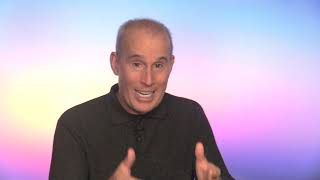
TJ Walker explains how to pick an online media training course. Look for sample videos so you can see the trainer, make sure it answers your questions, and most importantly, find one where you record yourself and get professional feedback on the recordings. His library has over 100 self-paced courses.
Chapters
Are you looking for media training courses in London or Sydney or Melbourne or Sri Lanka or Dubai or Lagos? Well, you've come to the right place. Hi, I'm TJ Walker and I conduct media training workshops all over the world. And I'm more than happy to come to you in your city. But realize these days you can do this virtually through the power of zoom and Skype and Microsoft Teams and Google hangouts. Media training can be conducted in a virtual environment. So your main criteria, I believe in selecting a media trainer shouldn't be, are they already in the city where I am? But are they the best firm to help me or my executives learn the media skills they really need? That should be the primary objective. Are you looking for media training online courses? If so, you've come to the right place. I have more than 100 online media training and presentation skills training courses, all of them online. You can take them anytime you want, anywhere you want. It's self paced. You can practice, you can do the exercises, you can record yourself, watch videos late in the evening, early morning, weekends, holiday, whenever you want to. This is a skill you can learn on your own. Now, there are a lot of different online media training courses available from different providers these days. How do you really judge them? I think for starters, you have to simply watch the videos. If you see an online media training course and all of a sudden you see a bunch of text on screen and you don't see the trainer, that should be a warning sign. You need to see the trainer. Because part of what makes speaking to the media scary is we feel exposed, everybody can see us. We can't hide behind a PowerPoint slide the way you might be able to in a presentation. You feel vulnerable and because of that, if you are nervous and uncomfortable, people can see it. So you've got to come across completely comfortable, confident and relaxed. That's what you want. That's what you want your training to give you. So you need your trainer to display that. So I think the main thing you should do is watch sample videos of the trainer speaking to you. The other thing you need to figure out is will this trainer answer your questions? There are some platforms where, yeah, you get the course for almost nothing, but if you have a question, it's like posting a question on YouTube. You don't even expect the trainer to answer your question. So you need, if it's an online course, some system for having your questions answered. But what I think the most important thing is when it comes to an online media training course is you have to Have a way of recording yourself, your homework lessons and home posting them either to that online forum or if the course has a Facebook page created for students. You have to be able to do your homework, post a video there, and get a professional critique from the trainer and ideally other students too. Now I do that in all of my online media training courses. There may be other people who do this too, but you need to check on that because here's one thing I can guarantee you. If all you do is sort of sit back and watch an online media training course and say, aha, that's interesting, useful, I'll use that. And you don't practice on video and you don't post your videos for a critique, you will get nothing from the course. You will not actually have an increase in skill. You won't see a change in the final outcome of your interviews. This is more of a skill like learning to ride a bike or swimming than it is a skill like accounting or chemistry, which those are a little more cerebral and a more more just intellectual content. You want to learn how to swim, you're going to have to get into the pool. If you want to learn how to ride a bike, you're going to have to get on that bike and be prepared to fall. If you want to learn a media skill and you can't go to a live in person workshop or have a trainer come to you in person, online can be a viable alternative. But you absolutely, positively must do exercises where you record yourself, answering questions, delivering messages, speaking in sound bites. Watch yourself, grade yourself, critique yourself, and get a critique from a professional trainer. That's what you need to look for. Are you looking for free online media training courses? Well, I'm not aware of any that do much for you that are always free. I do from time to time give people free free coupons and free introductory passes to my online media training courses. If you want an update on that, I'd urge you to frequently go back to mediatrainingworldwide.com or my Facebook page, my TJ Walker Business Facebook page where I do periodically post freebie coupons that are good for two or three days to give people sort of an extra surprise sampling. But if how you come across in the media is important to you, your business and your career, invest some money. You're investing money in a Starbucks coffee today. You're probably spending nine or ten bucks on Netflix every month. You're spending money on Internet connection right now. I do think you should invest some money in an online media training course. If you're trying to boost your media skills. Don't just wait for a free coupon to show up. Go ahead and start right now. Are you looking for media and communications training? Let's define our terms. I define media training as specifically, you're looking for help in training so that when you speak to a reporter, a news anchor, a talk show host, you come across your best. You, you look comfortable, confident, you have a message, you're able to answer questions in an interview, and you're able to speak in sound bites. There are many, many aspects of communication training when you're dealing with the media that are unique to the media. So, for example, when you're answering questions in an edited media interview, it's extraordinarily important that you don't repeat the negative premises in a reporter's question. It's very important that you don't rebut negative premises. You have to go right to what you want to say. Because if you say something like, no, I'm not a crook, I'm actually very honest, the only quote in the story might be, no, I'm not a crook. Entirely negative. There are other aspects of dealing with the media that are just different from any other communication skill environment. So, for example, when you're in a media interview, what I teach people is come back to all three message points in every single answer. Different wording, different order, different level of abstraction, different examples. But you're still trying to hit thematically your three messages in every single answer. If you do this in a speech, a briefing, a meeting, a conversation with friends, family, colleagues, they'll think you're crazy. So that's what's hard about dealing with the media and speaking to the media effectively. It's simply different from all other communication environments. So that's why I do think of media training as a subsection of communication skills training. But it's different. You can be the world's best public speaker and a great communicator at every aspect of your career and life, and be horrible with the media because you accidentally have negative sound bites come out or you repeat negatives. And frankly, you could be great at dealing with the media and be an awful public speaker. It's a different skill set. Communications training includes everything from how to give a good speech, a good presentation, a briefing, a PowerPoint presentation, how to create PowerPoint slides, even how to communicate one on one with people, how to communicate in a job interview. So I view communications training as this big broad umbrella of topics about anytime you are basically talking or someone can see your body language or someone can see something you've typed. Now, I've created more than 100 online communication skills courses, so take a look at the courses. You'll see them listed below and on the site and see if any of those meet your need. And don't forget, media training is one of many communication skills where people get trained. You can be trained on everything from how to be a better listener, how to have more effective body language, how to give a briefing more effectively. Media training is its own unique specialty.