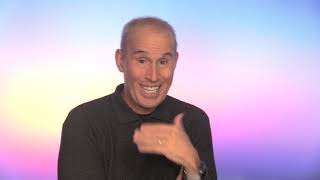
TJ Walker explains why executives need outside media coaches who deliver hard truths and cut corporate jargon. He walks through interview objectives, the need for rigorous video rehearsal to nail sound bites, and why CEOs now have to speak directly on social media.
Chapters
Media training for executives. What should you look for? If you are an executive and you need media training, or if you are in charge of finding a trainer for the executive in your company or your organization, the main thing you need is someone with the stature and the ability to speak up to a CEO or a big shot and tell them what they're doing wrong. Unfortunately, it gets too easy to tell someone who's already successful, rich, powerful, hey, everything's great, everything's wonderful, you're doing fine. That's one of the reasons why corporations typically bring in an outside media trainer. It's too uncomfortable to tell the boss that his interview was boring, or that his messages weren't interesting, or that his sound bites were going to get the company into trouble. It's too awkward saying that. That's the beauty of finding a media coach who doesn't work full time with the company. You need someone, they could be of any age, but it's typically people a little older who are more seasoned and used to dealing with people 50, 60 years old, maybe billionaires, and being able to look that person in the eye and essentially tell the emperor, he's wearing no clothes, or that she's wearing no clothes. You have to be able to give candid, candid feedback. I remember once I was working with a prime minister and his assistants said to me beforehand, whatever you do, don't tell him there's anything wrong with the speech. We've been working on the speech for three months. We've worked on it, worked on it, worked on it. Just work on the style, not the substance. So he stood up, delivered his speech, I made him watch it, asked him what he thought. He asked me what I thought. I finally said, I think it's really boring. He looked at me, looked at it again, and he agreed. He said, you're right, it is boring. And you know what we did? We took that speech, tore it up, threw it away, and we started from scratch. He then did the fundamentals, which is to focus on the ideas and then focus on a story for each one. And then just to speak from a simple sheet of notes, he delivered this speech. And it was extraordinarily well received. His staff thanked me, said, oh, best speech he's ever given. So sometimes if you want a media coach to help executives, especially senior level executives, whether it's government or the private sector, you need someone to sort of say, time out. What everyone's doing here isn't really working because the person is not coming across with an interesting message. It may be institutionally the boilerplate that everyone wants, but when it's coming out for the TV cameras, for a live audience, it's boring. You've got to start from scratch. So that's part of what you really need when you're finding a media coach for senior executives. Someone to come in with an independent viewpoint and fresh set of eyes to really look at everything this person is doing. Because the problem in any institution, any corporation, is the insiders are too inside. And they're used to using the same language around each other. The same jargon, the same initials, the same acronyms. And before you know it, they can't communicate with people outside of their own company or outside of their industry. So if you're speaking to the media all of a sudden, to a mass audience, larger business audience, for example, you can lose them if you're using too much jargon or insider knowledge or too many assumptions that you have that other people don't know anything about. So that's why it's important to find a media coach from the outside to give honest feedback and just to say, hey, I have no idea what that word is you're using. If I don't know what it means, I seriously doubt the average reader of the Wall Street Journal is going to know what it is you're talking about. So that level of ignorance in a media trainer is actually a huge asset. People who work inside the company, even the outside PR team that works for that client for years, your knowledge base gets too extensive. You lose the perspective of what the audience you care about most might really know. Someone might be an investor in your sector, in your industry, but have no idea about certain initials, acronyms, and products you're talking about. And you're talking about it as if it were common knowledge. It might not be. So try to find someone who can give you that outsider perspective. One of the questions I get all the time from corporations and their PR people and their training departments. When they're calling me looking for a trainer for their executive, they put a lot of importance on, well, tell me about all the experience you have in our industry. And at this point, since I've been training for many, many decades, I have experience in virtually every single major industry. But I have to tell you, that's not what makes me an effective trainer. My effectiveness comes from my outsider status and not being too close to it. Because here's the reality. Whether you are in the energy industry, the tech industry, the government industry, the finance industry, the process of how you turn an executive into someone who looks comfortable and Confident who has a message, can deliver a message, answer questions effectively, speak in sound bites, and get their message across is exactly the same. And people often falsely assume or incorrectly assume that if a trainer specializes in just one industry, they're going to be so much better at helping that executive get the messages they want in the final story. There's no correlation to that. I'm sorry. In fact, sometimes knowing all the players, oh, I know this reporter, and this a friendly media outlet, can lead to a sense of false confidence because you think, oh, we've never looked bad there, they've never made us look bad. So this is going to be easy. Not the assumption you want. Every executive I know who's successful has a bottom line mentality with so many aspects of their business. They want revenues to be here, they want profits to be here. Sometimes they can tell you how much money is spent on toilet paper in a quarter. They're very fact and figure and bottom line oriented. Except for some bizarre reason when it comes to media interviews. The problem a lot of executives have when it comes to their media interviews is they take the attitude of, as long as I don't look bad, I'm okay. As long as I get through the interview, I'm okay. As long as I don't say something stupid, I'm okay. That's a very defensive, negative attitude. That's like going to your financial manager, your fund manager, and saying, as long as you don't lose a lot of my net worth this year, I'll be happy with you. Who would ever say that? Beginning of the year especially, you want your financial manager to do things positioning you to make money over the course of the year. You want returns on your investment. I think any executive should want a return on their investment in not only media training, but in their time spent doing actual interviews. And I want them, and I want you to have a specific, concrete objective for every single interview. Remember, with every interview you do, there's five possible outcomes. Number one, you get quoted saying something racist, sexist, foolish, offensive, and you lose your job. You destroy your reputation. You destroy the reputation of your organization. I hope that never happens to you, but it does happen to people. The next possible outcome, you do the interview, you get no quote at all. Didn't help yourself, didn't hurt yourself, but you could have helped promote your business, your organization, yourself. You didn't get any quote because you didn't say anything interesting enough to the reporter. That's the second option. The third option in every single interview is you get quoted, you're quoted accurately, you've got a couple of facts in, nothing particularly important or that you planned or strategic for you. But hey, you got quoted, Nobody's offended. The fourth option with every interview you do is you got quoted and you got the message you wanted pretty good. The actual quote, the actual sound bite wasn't anything you prepared or played, but you had a message, you stuck to the message. You kind of got lucky, it got in pretty good. But there's a fifth option with every single interview you ever do for the rest of your life as an executive. And the fifth option is you got the exact message in the final story that you planned in advance, and you got the exact word for word, quote or sound bite that you planned in advance, that you'd actually written down in advance. That is the objective you should be aiming towards in every single interview you do. When you go through a training process with me and my colleagues at Media Training Worldwide, you don't graduate, you don't get to leave the room till you've mastered the skills you need to get that fifth one to get the exact message you want, the exact word for word, quote you want in the final story. And that way, when you go into an interview and then you conduct yourself the way you want, you should get to the point where you're emailing your board of directors or your other bosses or other directors before the interview even starts and saying, I'm doing an interview with the Washington Post or the London Times. Here are the quotes of mine you're going to see in tomorrow's paper or Here are the quotes of mine you're going to see on the vvc. And the interview hasn't even happened yet. And you're accurate, maybe not 100% of the time, but 95% of the time. When you do that and do that consistently, you will be an executive who has truly mastered the media. The number one media training tip I have for executives is that you have got to rehearse before every single media interview on video in a specific way. Now, it could be you in the back of a cab or a limo on your way to an interview. It could be you at home before a zoom interview, but you're rehearsing with a cell phone, with a webcam. You're not just thinking about the interview. You're not just thinking about tough questions. You're not just looking at a big briefing book that your staff has provided you with possible questions and three paragraph answers. Complete waste of time, by the way. That's not what you're doing, you're actually rehearsing on video. The messages, sound bites you want to hear. And if it's any kind of a tricky interview or a more important interview than usual, you need to do a full scale rehearsal where someone is asking you questions. You're answering it just as you think they real reporter would do. Do an interview doesn't have to be long. It can be three and a half minutes long. But do the interview, watch it, and now analyze every single answer you give. Think about it. How could any part of that be sliced, diced, chopped to make you look bad or to make you look good? And keep watching the video. Keep practicing until you love every answer, how you come out and no matter how it's edited, you're happy with it. When you rehearse that way, then you'll go into the interview with tremendous confidence, legitimate confidence. And you won't make the classic mistake so many CEOs and other business executives make when they're in interviews, which is to treat it like any other conversation. The average high level executive or CEO is already a much better communicator than virtually everyone they know. That's why they have the top position or one of the top positions in the organization. Unfortunately, that breeds cockiness. That can breed arrogance. That can give people the sense of I've gotten this far in life, I must be pretty good, I'll just wing the interview. Well, you might be able to do that and you might not end up with a horrible quote that ruins your career. But it's very unlikely that you will get the absolute best quotes on the most important messages if you haven't planned them in advance. Here's the thing. If you get quoted in a story, even if it doesn't make you look bad, but it's not what you planned in advance, it's not strategically. The most helpful quotes that advance your cause advance the cause of your organization. You personally need to view it as a failure. I want you on the floor crying. I want you in the fetal position. You can close the door to your executive suites. No one else has to see it now. I'm kidding, but only a little. I want you to hold yourself to high standards. People who have high standards in many other aspects of their business, earnings, sales per store, revenue per region, unfortunately go into low standards with media interviews. As long as I don't screw up. No, you need to have high standards. So when you're training and preparing for the media interview, the biggest tip of all, practice on video until you like what you see. And if you want to strengthen the odds of that happening? Hire a media coach who isn't intimidated by your wealth or your position or your stature in the community or within your company or within your industry. Someone who will ask you the tough questions and who will give you the tough feedback to tell you what's working and what isn't. There are a few other aspects when it comes to media training for executives that need a little attention. One of it is social media. There is tremendous importance now on chief executive officers and other top executives to be able to communicate effectively in social media. Doing things like I'm doing now, just talking to a camera. There's no nice friendly reporter around, there's no cheering audience, just me talking to a camera. Camera. And these days, if you're going to be a senior executive who's really on top of things, you need to be able to communicate to the media, to your stakeholders, to your clients, your customers, your employees, your vendors on important matters by just speaking to them. You don't have to wait for a reporter to call up. You can simply talk to a camera and then post that video, whether it's on YouTube, Instagram, Vimeo, for your own corporate website, TikTok even. But these days, part of being the well rounded CEO means you have the skills to communicate on social media by speaking to video. And you're not going to get scared. You're not going to demand 20,000 edits, you're not going to need a teleprompter. You could just look at the camera and talk to the camera as if you're speaking. Speaking to one customer, one client, one investor. That is a critical skill for any executive in the 2000 and 20s and beyond.
More from TJ





The Breakout Cases - What Actually Caused Famous Speaking Career Breakthroughs | Ultamize

The Red Circle Sessions Finale - Build the Speaking Career You Came Here For | Ultamize

Two Stages, One Logo, Two Completely Different Realities - Main Stage vs Independent Events | Ult...

Pre-Reset - Why Repetition Builds Better Speaking Decisions | The Red Circle Sessions | Ultamize

Your Decision, Your Framework, and What Happens After - Build Your Speaking Career First | Ultamize

The Red Circle Sessions Trailer - The Speaking Career Truth Nobody on That Stage Will Tell You | ...

The Two-Minute Ultamize Reset - Your Platform, Your Audience, Your Voice | The Red Circle Sessions