Naomi Osaka Plans to Avoid Press Conferences at the French Open
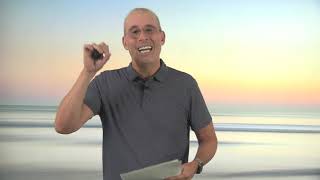
TJ Walker (YouTube) critiques Naomi Osaka’s announcement that she will skip press conferences at the French Open, arguing that avoiding reporters is inappropriate for a high-profile athlete and harms the sport’s promotion. He acknowledges mental-health concerns but insists that athletes should use media-training techniques (reframing, controlling language) rather than refusing interviews, notes the financial/contractual implications, and urges professional media training.
Chapters
In the news, tennis sensation Naomi Osaka claiming she's no longer going to do press conferences, at least at the upcoming French Open. Why would that be? Well, it's human nature not to want to face tough questions. Nobody enjoys being criticized, especially after a public failure. If you've lost a public tennis match seen on TV around the world by millions. So I certainly understand not enjoying that. But to simply state that you're not going to attend press conferences and you don't care if you are fined thousands of dollars. Let's unpack this a moment. First of all, what's the solution if someone asks you a tough question? Let's say I'm a great tennis player and I'm not. I'm 3, 0 on a good day. If someone says, TJ, why did you choke in the fifth set? I can listen to that question, not dodge the question. But I don't have to say, you're right, I choked. I don't have to use the word choke and I don't have to defend. The real art of dealing with questions in media interviews, especially tough questions, is to reframe the question, to rewrite the question, to make it an easy question for you. So if somebody asked me that question, why did you choke in the fifth set? I wouldn't use the word choke. I would reframe it to tell me what happened in the fifth set. Now it's a neutral question and I can talk about something. In the fifth set, my opponent's serve became even harder and I congratulate them for their superior play. Something like that. Anytime you're in a news media interview, you do not have to use the words of the reporter. You don't have to use negative words. You don't have to defend yourself. Anytime you're defending, you are losing. You can define how you want to define yourself. You can use words to describe yourself. That is basic media training 101. And I should know. I'm a full time media trainer. So let's step back a little bit further. Again, I don't know what all is going on with this particular tennis player. I'm not going to fault her, but I will fault her management team because it's frankly not that hard to get professional media training, especially for someone who made $55 million last year, which is what her earnings were from prize money and endorsements estimated to be. So if you actually train someone how to deal with the media, it is a thousand times easier than playing a tennis match. Believe me, I've played a thousand tennis matches poorly. Again, I'm a 3.0 player and I've answered questions in a thousand media interviews. It is so much harder psychologically, physically, in every other way to play tennis at a high level arena against top flight professionals. That is to answer questions from a bunch of out of shape, possibly pasty faced journalists. If you can do one, the other should be a piece of cake. So again, the basic premise for Naomi or anyone else, if you're asked a question, don't go boo hoo and cry. If someone says you didn't play well, listen to the question, reframe it and answer in your own positive terms. Look like you're having a good time and perhaps a little gratitude. I mean, you're getting to play for a living. You're getting to do something most people pay good money to do. And in this case she's making $55 million a year getting to play a game. That's not to suggest she doesn't deserve every penny of it. It's not to suggest that it was easy for her to get there. She worked hard to get where she is. But why not go the next step and fulfill basic contractual obligations? Players are obligated to answer questions from reporters and it's frankly just not that hard. Let's look at her reasoning. This is according to a message she posted on Instagram. Hey everyone, hope you're doing well. I'm writing this to say I'm not going to do press during Roland Garros the French Open. I've often felt that people have no regard for athletes mental health and this rings very true whenever I see a press conference or partake in one. Okay, that may be true. Believe me, I've never been even close to being a professional athlete. So she may have certain insights there. I don't negate that. But this is what troubles me in the next sentence. We're often sat there and asked questions that we've been asked multiple times before. Well, guess what? Everyone faces that. Every schoolteacher is asked by a child the same question over and over again. When Tom Hanks or any other movie star, Angelina Jolie, they go on a movie junket to promote a movie. Reporters ask them the same questions over and over again. They don't cry and whine and say you ask that same. They answer it as if they're asking, answering it for the first time. Because that's part of the job, that's part of the promotion. That's how you generate prize money. That's how you generate attention so that someone will want you for an endorsement. So the idea that it's so horrible to be asked a question multiple times, I'm not buying that now. She then adds, or ask questions that bring doubt into our minds. And I'm just not going to subject myself to people that doubt me. To me, that just seems, it seems bizarre. Who is above being questioned? I realize certain dictators don't like to be questioned. Certain political leaders say, how dare you question me? But everyone else in society is questioned. People are going to question me. People are going to look at this video and say, who are you to judge someone's media strategy? Everyone else in our culture is questioned. And the idea that an athlete who is fabulously wealthy, fabulously rich is beyond being questioned just strikes me as the height of arrogance. Now, I'm not calling Naomi arrogant, but I think at some point members of her team are giving her poor, poor advice. I also think that there's a real problem with professional athletes in general and that so few of them ever get serious in depth. Day long, two day long professional media training. Now, I know this. As a professional media trainer, I work with corporate executives all over the world. I often get called by athletic organizations. They don't want to pay. They expect media trainers to basically pay them for the privilege of being in front of the athlete because, oh, it's a celebrity. Everyone wants to work with them for free. I've had NFL teams call me, practically want me to pay them for the right to train their professional football players. I said, no, I'm a professional. So someone who makes $55 million a year can spend 10, $20,000 on professional media training. And believe me, whether they use me or someone else, answering questions in media interviews are going to be easiest part of their day. It's going to be extremely easy. Now let's look at more of what she actually did post on Instagram. I've watched many clips of athletes breaking down after a loss in the press room, and I know you have as well. I believe the whole situation is kicking a person while they're down. And I don't understand the reasoning behind it. Asking someone why they had a bad day or why they had a particular strategy is not kicking someone. If a reporter is literally kicking you, yeah, I think that's reason for complaint. I once had a talk show host pull a gun on me. That's not something anyone should be subjected to. But being asked a question about, why did you play poorly today is not kicking someone. It's simply asking a question. Now, she said she's watched athletes Breaking down during a press conference. Okay, I have too. But you know where else I've seen athletes break down on the tennis court? I've seen John McEnroe, Jimmy Connors break down on the tennis court. By her logic, she shouldn't ever play tennis again. Because if we're only worried about an athlete's mental health and an athlete can break down on a tennis court, then you shouldn't ask athletes to play tennis on the tennis court. Obviously that's an absurdity. The challenge for someone who breaks down on the tennis court is get a grip and stop falling apart on the tennis court. Learn some mental self discipline. Don't scream at the linesman or the lines persons if you don't like the call, if you don't like the question a reporter asks, reframe the question, Ask, answer on your own terms. Say what you think is positive about what you tried to do out on the court that day. It's really not that difficult. I don't understand the reason behind it. Meaning asking a reporter to, or a tennis player, an athlete to face questions from the reporter. Well, here is the reason behind it. And Billie Jean King has been one of the great tennis wonders. And really someone who created the whole sporting industry of women's professional tennis gave the reason. So the reason is we were begging to get attention for the sport so we could get the attention of TV networks, so we could get the attention of sponsors, so we could get the attention for prize money to create an actual professional sport. So Billie Jean King understands, yes, you need to do interviews. Even if you're at the point where you're already making $55 million a year and you don't need the money. You do it to give back to the sport. You do it in this case for the other women who are not yet making $55 million a year and are trying to be a part of a sport that people are willing to pay for. Because. Because let's face it, most professional sports or most sports in general, no one's willing to pay. And women in particular have a problem of getting compensated for their athletic skills. There's simply a lot more men in the world who get the high paid salaries and endorsement deals from professional athletes than women do. Tennis is one of the exceptions. And by saying, I'm not going to do interviews anymore, at some level you are tarnishing the sport. You're making the sport less attractive. You're making the sport less attractive to the TV networks, the advertisers, the sponsors, and that's the problem. Now, Osaka goes on to say that, I have been interviewed. I have friendly relationships with some reporters. I'll continue to talk to them. That's not the deal. That's not the deal with reporters. The whole concept of a fair press, an unbiased press, a free press in the world is. It's not just about getting friendly reporters to say nice things about you and never challenge you. This is one reason why democracies in a lot of part of the world are falling apart, because people are buying into this idea that they should never have to face a tough question. She continues to say, if the organizations think they can just keep saying, do press or you're going to be fired, and continue to ignore the mental health of the athletes that are the centerpiece of their cooperation, then I just got to laugh. Anyway, I hope the considerable amount that I get fined for this will go towards a mental health charity. Now, I'm not judging anyone's mental health. I'm not a mental health expert. She's mentioned mental health several times. If she thinks the professional tennis organization needs to spend more money helping athletes with mental health issues, that's a legitimate issue. That's fine. Let's do that. Let's start a lobbying campaign for that. She might want to write a check herself since she makes $55 million in the last year. That is completely unrelated to someone being asked a question from a reporter on how they played today. Now, of course, a reporter could always ask a wildly inappropriate question about, you know, your child or a family member doing something at a party three weeks ago that of unrelated to you, in which case you can ignore that question, put a smile on your face and say, I'm happy to talk more about the match today. But this idea that someone who is so mentally tough that they can compete at the highest levels of athletic competition and not crumble in front of millions of people watching all of a sudden are going to fall apart because someone asked them a question that isn't just puffing them up. I'm not buying that. There's something else going on here. The other thing is the whole reason that players like Osaka and Tiger woods and others are making these days hundreds of millions over a course of a lifetime. In some cases billions of dollars is because of media attention. What's driving it is the core athletic skill. But for every dollar they make in prize money, most of them at the highest levels are making $10 or even $100 through endorsement deals for them speaking in front of the media. So to then say no I'm not going to talk to the media is very short sighted and it's essentially biting the hand that feeds you. So I hope that Naomi reconsiders this. I hope that others don't see her as a role model. And I do think that professional athletes as well as politicians, leaders in every industry realize that, yes, you worked hard to get there, but it's also a privilege to be at the top of any industry, industry. And you owe it to the public, you owe it to the people who are making you rich to hold yourself accountable. And that means answering questions from people who aren't your best friend. Aren't your posse and your entourage just there to build you up. Answering questions doesn't harm your mental health. It can actually enhance your mental health because it gives you a chance to display confidence and talk about the good work you've accomplished in your life. So that is my wish for all athletes and leaders in every industry. And for goodness sake, apologies for sounding self serving. Get some professional media training done. It doesn't have to be for me, but find a professional media trainer. Spend two days on it. You spend thousands and thousands and thousands of hours on your backhand. You can spend eight hours on how to answer questions from a reporter.
More from TJ





The Breakout Cases - What Actually Caused Famous Speaking Career Breakthroughs | Ultamize

The Red Circle Sessions Finale - Build the Speaking Career You Came Here For | Ultamize

Two Stages, One Logo, Two Completely Different Realities - Main Stage vs Independent Events | Ult...

Pre-Reset - Why Repetition Builds Better Speaking Decisions | The Red Circle Sessions | Ultamize

Your Decision, Your Framework, and What Happens After - Build Your Speaking Career First | Ultamize

The Red Circle Sessions Trailer - The Speaking Career Truth Nobody on That Stage Will Tell You | ...

The Two-Minute Ultamize Reset - Your Platform, Your Audience, Your Voice | The Red Circle Sessions