Our digital clones about to take over the world?
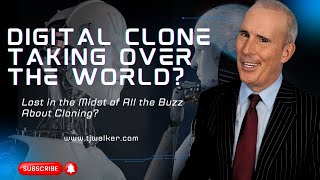
TJ Walker and Barb Tomlin discuss AI digital clones built from your audio, video, and text. Walker says they'll transform professional communication and scale one-on-one interactions. Tomlin warns about accuracy, authenticity, and misuse risks.
Chapters
Digital clones are attacking. They are attacking the world. They are attacking your country. They are attacking your city. Does this mean we should panic? Well, actually, no, Unless you're not creating your own digital clone. This is not a Star wars movie. I'm talking about the real world today as technology exists. Not something in the 23rd century, but something right now. Digital clones have become a reality. It's now possible, not just for giant corporations, not just for politicians with billion dollar budgets, but for you, for me, to have a digital clone. And what does that mean? A clone can ingest every single idea we've ever said in a video format, in an audio format, in a media interview, in a podcast, everything we've written in a book, or for that matter, put on Twitter or Facebook, it can all go in to this digital stew. And then when someone asks a question, swirl it around, spin it up, and deliver it in a format that's interesting to people, understandable, and sounds just like you. Why? Because it's pulling from you. It's not pulling from ChatGPT in general of the entire Internet. It's not putting out conspiracy theories and nonsense and old tales of home remedies. It's actually giving your thoughts your advice. And that's why I think it is so exciting. So what does this really mean to you? You already use artificial intelligence all the time. If you've ever been to a Netflix and seen Netflix recommend a movie to you, think, oh, you know what? I was thinking of watching an Adam Sandler movie tonight. This is perfect. Click. Well, artificial intelligence has been looking through all the data about everything you've ever watched and everything you've looked at to give you that recommendation. If you've ever gone to TikTok, guess what? You didn't pick out what video to watch. Artificial intelligence did. We live in a world where all of us are subjected to artificial intelligence in so many decisions, most of which we're not even aware of. Isn't it time you use the full power of artificial intelligence to help yourself? Now, if you are an author, an expert, a coach, a consultant, for that matter, if you're anyone who uses your brain in your profession and you had to communicate your ideas with other people by speaking, it could be on the phone, could be Zoom meetings, could be online meetings, it could be giving keynote speeches. It could be just in meeting where you're talking to people, going through questions they have that your other clients have. If you're anyone like that, then the clones are coming for you. And by coming, I don't mean they're coming in some nefarious way to harm you directly. I mean the opportunity for you to use a clone to help yourself, your business, your clients, your customers that is coming now. You don't have to take them up on the opportunity. But I can tell you what your competitors are, your industry leaders are doing. They are already making their clones. The leaders of your industry right now either already have a clone or they're actively scurrying around trying to make them. How do I know that? Because I'm doing it myself. I have my own digital clone, TJ Walker's AI that can answer any question. You can see in the description below. I've given a link. You can ask any question. In some ways, TJ AI is a lot better than I am. TJ AI never asks for a weekend off, never says, oh my gosh, don't ask me a question on Friday at 5:30. I gotta tune out. Relax with it. Come back to me Monday morning. My artificial intelligence clone never does that. If you ask me for the 10th time a question I've heard a thousand times today, like, how do I get over my nerves starting a presentation every once in a while, I might lose a little bit of patience. Guess what? My artificial intelligence clone never loses patience. It in some ways is better than I am. It also has perfect recall and perfect memory. So what does this really mean for you? You may be thinking, well, but I'm not an artificial intelligence programmer. I don't know Python. I'm not a high tech person. It's too expensive. I can't worry about that. Guess what? I'm not high tech either. I don't know a bit from a byte, from a gigahertz, I don't know any of that stuff. And yet I've figured out how to create a digital clone of myself. And there are platforms for doing that. Look around. But clones are coming. They're going to take over every single industry, every single niche. I predict this is going to be another situation where it's a winner take all mentality. And I don't mean only one person is going to win and control every clone. But I think in so many niches it could be knitting, it could be stamp collecting, it could be. If your niche is just knowing the absolute best about Pinot Noir wine, if you're a real thought leader and you have the best content about it right now, you can make your content available throughout the world to everyone in every single language on their timeframe. That's what's so interesting and fascinating about the power of clones. Now, we saw this in some respects with the Internet itself. It made certain people exponentially more in demand and able to charge more and make more money. I certainly saw that with the rise of online video based courses, people who got in early were able to sell their products around the world, make millions, and people who just stuck with their traditional way of I'm going to do in person training, none of this high tech stuff. High tech stuff for me. A lot of them became unemployed or saw their business revenues go down 70%. I predict that clones, and specifically AI cloning technology is going to have a similar impact. Now, it's not good for a lot of people, but I don't want you to get scared yet because it's not too late for you to hop in and learn this and create your own clone and compete. But I do think we're in a situation where in the not too dear, just near distant future, not having a digital clone of yourself is going to be the equivalent of not having a LinkedIn page. You're simply not going to be taken seriously as a professional. Those who do have clones short term are going to have a big leg up. Those of you old enough to remember back in the mid-1990s, a business could get full page stories, sometimes front page stories on the business section just for having a website. And then five, six years later you got a story if you didn't have a website. Now nobody can even imagine a business not having a website. It's going to be very similar with respect to digital clones. Those who get in early are going to get a lot of attention. They're going to get publicity, they're going to get this. That's amazing. Reactions from clients, customers, prospects, people in their industry. Those who wait can wait and join when most other people do. Those who wait too long are going to find nobody cares about them. They become forgotten at that point. I don't want you to be forgotten. I want you to be one of the winners. That's why I urge you, start thinking of your digital clone now. What goes into a clone? Is it just your face going blah, blah, blah, and it's pulling generic information from Wikipedia and the Internet? No, that's not what a clone should do. A clone should reflect your ideas. The TJ Walker clone reflects only my ideas. I've input every YouTube video I've ever done into my clone so I can reference that, including this one. I've input every podcast I've ever made. I've input every book I've ever written. I've input documents, proposals, so my clone actually knows me better than I do. It has instant recall. If I gave a detailed analysis of somebody's acceptance speech from the 2013 Academy Awards, my clone can reference it and tell you who won and what they did. Well, I have no idea. I don't remember. That's not how my memory works. The memory of an AI digital clone is for the most part perfect. So what does this really mean for you? It means you need to be prepared for changes in technology. People who said, well, this telephone thing will never catch on. I'm just going to continue writing letters to my clients and prospects didn't do too well. People who had restaurants as a part of inns who said, well, this whole electricity thing, that's just a fad. I'm going to continue making a campfire and cooking all the meals on wooden fire, they didn't do too well. You ignore technology at your own peril. And just this week at the time I'm recording this, the folks at OpenAI have shown their latest ChatGPT Dash4O and are showing how clones can now capture the essence and analyze someone's voice, talk about whether they're happy, sad, what they're feeling. It can analyze visuals, it can instantly translate anything you say into 50 languages. So what's the significance of this really? It means now you have the power to have one on one style conversations with 8 billion people around the world, or at least any one of the many billions of people on earth who have some access to a cell phone or a tablet or a computer and some access to the Internet, whether they own it or not. You can now have a one on one conversation with them and in their language. And you don't have to be there. You can be having a real conversation with a family member or friend. Your clone can be having these conversations with a hundred people at the same time. A thousand. A million, theoretically, with everyone in the whole world at the same time. Could be possible through the power of digital cloning. Now, I'm not suggesting a billion people are going to want to talk to you at once, but this is transformational in a profound way. Sure, for the last 20 years we've all been able to push a button, record a video, put it online. People can see it on social media platforms, a website, but that is you one time saying something and someone else having to passively sit there and watch it consume it. Got a question? Keep it to yourself. People couldn't ask you a question if you already made the video. And you posted it and you don't even know they're watching. What's different about digital cloning is it really can be very similar to a one on one conversation. And that's the most powerful form of conversations. Ask yourself, when you think of presentations you've heard, what's had the biggest impact on your life? Is it you sitting in a room listening with a thousand other people to some famous speaker? Or is it more like a conversation you have with a parent, one on one where they told you something of a profound nature, or someone proposed marriage to you? That was a one on one conversation. The first really important job interview you ever had was probably one person interviewing you and then one person offering you that job. The most powerful interactions between human beings are typically one on one. And that is the promise of digital cloning. Is it exactly 100% the same as a real person? No, but it's a million times cheaper than you having to fly to the other side of the world to have a five minute conversation with someone, because chances are you're not going to do that. It's a million times easier than you talking to someone who speaks in another language and you're having to translate one word at a time with that person and being in the same room. Because the power of digital cloning makes it happen seamlessly at a near instantaneous pace. That is what is so powerful. So the clones are coming, my friends, and the world, I think, is going to be divided quickly into more winners and more losers. Now, you're not a loser as a human being, or in terms of your moral worth, if you don't have a clone. I don't want to suggest that. What I am suggesting is, professionally it is going to be a big impediment. And maybe you don't see your income go down, but your possibilities, your future is not going to be as bright. Because the people who have digitized all of their insights, all of their thoughts, all of their expertise, who can now share it with people around the globe, anytime in this personalized one on one exchange, are going to have a huge advantage. They're going to make more money, they're going to help more people, they're going to build their reputation, they're going to establish stronger connections with people on every continent, in every country, in every city, in every language. That's what is so powerful about it. Now, we gotta get careful here. I try to be careful. I don't like hyperbole. So many people were hyping the metaverse a few years ago. I was skeptical of that. I asked myself, do I really want to spend more time looking at screens or my kid looking at screens? The answer was no. We've heard a lot of hype about cryptocurrency and yes, some people like it, but has it completely changed the whole world for most people? I'm putting down a bet that digital clones, that's a different thing. That it really is potentially as transformational as Gutenberg's printing press. It really is transformational as the Internet itself. Potentially much more transformational than social media and the way it has changed society and business. So that's why I want you to spend some time thinking about this on a daily basis. Spark my words. The clones are coming. Hi, I'm TJ Walker. Thanks for joining me. Just a quick sort of warm up here. Talking about what I see as the future of cloning and how every, every, you know, there was. There was such a time the last 70 years where people would get excited about something with artificial intelligence and it would get sort of a big buzz and then all of a sudden, Nothing. For about 12 years. These so called AI winters would come. And then ChatGPT hits. Now, two and a half years ago, I built. Or was it one and a half years ago? Yeah, I guess it was just one and a half years ago. And now things that used to take like a year and a half to develop, it seems like it's coming out every single day. New developments. Most recent development being the product demo of chat GPT4.0 earlier this week. Wow. My image just froze. I don't know if we're having Internet connectivity problems. And Barb, I don't know if you wanted to be on camera today, but are you seeing more Internet problems? Because I just saw myself freeze there.
I saw you freeze as well. But it was, there was nothing indicating behind the scenes that it was the technology or access to the Internet. I have a hunch something there in the signal from your computer to your cameras, something. There was a glitch and that could be a power surge or something.
Was that happening in the first 10 minutes of our segment today?
No, I. You were coming through fine. Okay, so that's interesting. Yeah, you report that, but I have a hunch it's just in your setup there and.
Okay, Barb, do you want to, and I don't want you to violate any confidentiality issues, but can you tell me in general terms any areas where you think I'm wrong with anything I've said in this first opening statement segment? Because I do want to caution myself. It can be easy to get swept up in exuberance, become over exuberant, swept up in hype. But you. I've been in communications my whole life and the more I think about the potential of this, this AI digital cloning of individuals, the more I think about just opens the door for this possibility and for this possibility and it gets bigger and bigger and bigger. And I, I don't want to be guilty of just drinking the Kool Aid and buying the hype, but the more I think about just seems so completely different than just, okay, folks, now we're going to use PowerPoint slides. We never, we didn't have them until 1983. Now we do. Well, PowerPoint has changed a lot. To me, this is infinitely more powerful than just the technology of PowerPoint or for that matter, the technology of Zoom. So I guess I'm inviting you throw cold water on me somehow because I don't want to get swept up too much or poke some holes in any of the logic you're seeing me put out here.
Well, AI has actually been around a lot longer than just these last few years.
Well, 70 years. I did mention it's been around.
It's, it's very interesting how the marketeers have jumped on out there, jumped on board with, you know, all their expertise and just over this last couple of years, and I have to laugh, some of us have been testing this behind the scenes for, you know, over five years now. But the thing is, is that like you, I believe it's revolutionary. I also, because I have worked both on the government side as well, on the corporate side and on the personal side, and seeing all of this take place, there's a lot of safety precautions that we need to take that are really being ignored at this point in time. And it's not so much that, that it's in our control, at least without further education. Because, and I'm knowing this, you know, because the computer doesn't know unless I tell it. I'm a certain age. It doesn't know that, you know, and we are the various age groups that we have. I can tell that the.
Can I, can I just ask a question on that? Because you saw the same product ML I did on Monday with OpenAI's new version of Chat GPT4.0. That's how it's set. And it had the capacity to look at the photo of one of the demonstrators and make judgments about the person. So it isn't it possible now that the new version of Chat GPT could take a Look at video of me and discern just from, you know, my wrinkles and hairline. Oh, TJ looks to, without knowing anything else to say. Oh, TJ looks to be about 60 years old. I mean, isn't it possible it does have the power to know how old we are if it can see an actual video, a live video or a recent photo.
Will you take my clone for my photograph for example? That's actually my face in that photograph and the background and the clothing is all generated by AI. Now the thing is when I put the command in to put my face in the image, I gave it my actual age. And I have found in all my testing, girls will love this. But I did find in all my testing, I mean that is a 60 year old woman. Hello, that's a pretty hot looking 60 year old woman. Yes, but that's, that is not my current age. And but the more I thought about it, I said enrolling with it. I said, you know, the Persona that we create as long as we're honest about what we're doing as the real person, number one is the voice. And I said it all, you know, throughout all of these different products that we've had available to us for 30 years. Because we started back with a telephone, remember? I mean when we were online, back in the early days, the biggest thing was to make that connection with text online, with these people around the world, but to hear their voice, the only way we could do that was with a phone. And so when we'd get a phone call, I mean, hallelujah. I mean we didn't talk to our families or so forth because we needed that phone time to get the voice of that person we'd never met before. So the upside potential is absolutely phenomenal in being able. But people and this, this is us as people, we're human beings. Not all of us are honest and we have, you know, particularly with technology, have bad players. So we have to be super careful and playing it safe. And we say, oh well, let's trust OpenAI to do this for us. Let's trust Google to do this for us. Let's trust Microsoft to do this for us. I say wake up and pay attention to what they're doing because they are only working with talent that have been educated in general to get into that job and then specifically fine tuned to that particular corporation's or country's ideals. So as human beings around the world we need and we have just, it's built within us is we want to connect with others, we want to be Able to communicate before when language was a barrier. And I say before because with AI, as you noticed in the announcement yesterday it was introduced, we could go up to 70 different language right there, real time with people we may have known from countries around the world for decades and English was their second language and oh well, you know, excuse me for.
Interrupting Barb, but it occurred to me, I keep meaning to find this out and I know, you know, is the chat GPT4O available if I just go to AI right now and do that or is that what's coming or is that for the paid version or how does someone access that?
I actually, I did a write up and I think I put that in our Facebook group in our community there for everyone. But it is available but in the free version there's not as much memory speed etc, but you do have access to it, you can try it right now.
Do I just type in chat?
Well, chat GPT, you know, has changed to chat GPT.com. yeah, they actually are using the.com address. So that's, that's another sign to me that they're ready to take it, you know, out in the commercial marketplace and they know that they as a developer are going to be held accountable by the court because they're in order to survive and keep doing more research and providing great tools. They have to be funded and they have to turn to commercial enterprises and governments to help them do that. So it's definitely, I'm so glad I got to live at least through this stage and I'm hoping that I, I get to make it, you know, at least another 10 years. Just because I'd like to see what happens from the positive approach and working with the tools that help have been introduced in the last 10 years.
Sure. I mean one communication challenge I'm going to face next month. I'm going to have a sort of a family week in the Catskills with my wife's family and my mother in law only speaks Cantonese. So this would be really nice.
Absolutely.
If I could do it.
You can download the app for your phone as well.
So there I've gone right to the app. It asked me do I want to try ChatGPT4O.
Look up there, it's on it. Look up at the very top. Do you see it? It d. It's defaulting right there to four.
Oh no, no, it asked me. Right. I went to the screen before and it let me pick this, but yeah.
Right, you have to the first time. I'm sorry, I didn't see so I'm in it.
But how would I do the audio translation? Because I'm seeing something where I can put in a type of message, but that doesn't interest me if I'm trying to have a conversation with my mother in law.
Maybe you can get another. I see we have another guest by the name of Eric.
Yes, Eric is with us.
A little bit knowledgeable of this.
Eric, how are you? Thanks for stopping in today. I'm okay. Great. Well, we appreciate you. I know you stopped by yesterday. Right. As we were finishing our, our marathon three hour session. I'm here with my colleague Barb and we're trying to figure out how to use some of these new ChatGPT4O tools specifically for audio translation, language translation. But we're always happy when people come by and they want to add to the conversation or ask questions or ask for help or just put a spotlight on anything they're working on. What's new in your world right now? Not much. Okay. And I know that you. We connected a long time ago. Were you one of my students in Udemy from the early days or how did we initially connect? YouTube channel. The YouTube channel. Okay, great. Well, I appreciate you being, being a long time viewer and, and participant here. Tell you're in Connecticut if I'm not mistaken. Yes. Okay. And what are you working on right now? What is your biggest sort of communications challenge on a regular basis? I'm just a college student. Oh, you're in college. Great. So you've been, you're learning. This is the perfect time to learn an experiment. And presumably you have time to experiment with things like chat, GPT, what's, what are you majoring in and what are you hoping to do after your graduation? Business administration. Okay, great. Well, are you at the point now where you're doing job interviews for either for summer jobs or for full time jobs? Oh, not the moment. Okay, good. Well, I hope we can help you when that time comes. And I'm really hoping to at some point have a version of my digital clone that doesn't just answer questions people might have about job interviews, but something where they can come on and say something like, hi, I'm Eric, I'm applying for a job. I've got an interview with Goldman Sachs about their entry level position and I'm nervous about the interview. Can you just do a simulated interview with me now? TJ AI and then the, the clone could do a sample interview with you for 10, 15 minutes or so, then give you a detailed analysis, plus play the video back of Your exchange, we're not there yet. I don't have the capability of doing that yet. But that's. That's where I see this headed. And I hope that that can be done in the calendar year of 2024. Do you think something like that might be helpful, Eric? I mean, to others, maybe? Sure. What's that? It might be helpful to other people, yes. Okay. But you're feeling good about your own skills for interviewing right now? I mean, sure, yeah. Okay, great. Well, I appreciate you stopping by. Anything else you want to address or any questions you want to pose to me. I mean, for this topic. I'm fine. I'm just hanging out here. Okay, great. Thanks. Well, always happy to have you just listening in the green room. Sometimes people do that. I'm going to just take you off the screen. But if you have a question, you can. You can just type in a question in the chat, in the comments section or the private chat. But so thanks so much for stopping by, Barb. Back to the chat. GTP GPT4O. I do think this would A, be helpful to me and a lot of our. And B, to a lot of our community members. Do you know what I'm missing as far as being able to talk to. To it?
You caught me. Remember, I'm having technology issues on my own today, and I am scared to death to try and move around in here because I don't want to be knocked offline. But Chat GPT, they actually offer videos on. On that training right on there on the service. And so I, in fact, think I need to leave also. Tj okay. I'm afraid of getting knocked off here.
Right.
It's a great topic. And I don't. I mean, the whole title of your video today is are they about to take over the World? I don't believe that's gonna happen.
Well, when I take. When I say take over again, I'm not saying in a nefarious way. I mean just to become a part of our world in the way, you know, electricity took over the world and, you know, the steam engine took over the world. I think that it's. It's a transformational force that is going to permeate every part of society. I don't mean it in some way that makes everyone unemployable. I'm not suggesting that.
Well, I looked in particular in the medical field because, you know, the early diagnosis earlier, the cure, potentially. But if the chat, you know, if the tool draws from the right materials and that's an issue, you know, will it get the true information in a timely manner to help, help save the day for someone. But in particular because we look at our health stories and you know, without our health, we have major, major challenges, both mentally and physical. In fact, this is, you know, mental health month in the world. And so much of that is just interviews, answering, asking the right questions and answering them. It be a healing experience. So I definitely believe it's another revolutionary time in our lives. I think more positive than bad. If we're allowed to prevail with the positive, it will, you know, it will happen, I hope, because we are moving so much faster thanks to the technology and the talents and of the people that we have to work with today. I hope it will be sooner than later, but. And I do think that you asked if it was a good time for you to get in and to do that. Absolutely. And I think for all trainers around the world, it's something to think about. Because if you've used other platforms to publish your expert expertise on in a training format, be very careful to read those terms of service and paying attention to what they're doing because you could have very likely given them permission to use your material for themselves. And so you want to be really cautious about that. And also in working with, how are they going to let you deploy your own clones and providing support and instruction. But in, you know, in particular, I met you on the Udemy platform, which of course gained its reputation because so quickly, because, you know, they put the, put action behind the findability issue on Google right away. So. So all of their instructors, courses could be found. And we also know that, what is it, less than 10% actually finish a course and less than 10% actually open the course, I think when they're sold. So the thing is though, just like Eric showing up here, like our students showing up on Facebook and other social platforms, that people, real, living, breathing people want to connect. And so we have to pay attention not to just the visual and the visual being not just video, but images. Just like the icon that I use, icons I'm using for myself and the particular product I'm working on, I can turn that into video where my mouth is moving as me with you right now. And it's scary. I gotta tell you, when I'm in control, the human being in control, and I'm watching that image of me, which is years younger than I am today, talking to me, it's definitely a shocking experience.
A scary good or scary bad.
Well, for me, because I love technology and I love the tools and I love to see people around the world connecting for good. I think it's a great thing, but it is. It's like when you get to the other end of life, what would it be like if you could talk to your younger self? So that's where psychology comes in. All of those people are clamoring, oh, yeah, I can see this potential.
And I said that to my daughter this morning. I said, good news, when you're 100 years old and I'm 150 and I've maybe slowed down a little, you can ask me any question and I'll be able to talk to you through my clone. Isn't that exciting? SHE LAUGHS I don't want to talk to you. You know, I've been experimenting it really, in just the last couple of days with. It's one thing to talk about early life, but it also deals with just more recent thing. I mean, yesterday on this show, I asked my clone, who did I interview two days ago and what were we talking about? Because I really, once I've done, is gone from my memory. And it told me exactly who I interviewed, summarize all the key points beautifully. And I was kind of blown away with how well it was able to pull things together and synthesize things and help it remember my life better than I do at that, at some levels. So that's another fascinating tool.
Exactly. And this is the season for storytelling. If you, no matter how long you've been online, always in the month of mid April, going in to the end of May, it's a real big push on storytelling, being able to tell your stories. And now that we have so many generations alive at the same time, in particular, like someone like myself, it's important to get those stories out and how it's most comfortable for you. I also, because I have worked, you know, internationally and connected internationally, it's how to reach them with the bandwidth they have available and make it comfortable for them to actually watch what I'm saying as well, or listen to what I, most importantly, listen to what I'm saying and if possible, to watch what I'm saying and then to interact with it. So it does require us, the users of these tools, to be educated, to keep our education current, to keep on learning, to stay up with it, to ensure that the positive prevails over the negative in this revolutionary time.
And there are a lot of negatives. I don't mean to sweep it under the rug, but. But as I'm following the trends, the negatives are getting a lot of media Attention. The potential positives are not getting mainstream media attention. I think that's going to change. Barb, you brought up the point of, of how accurate these things are. There are certain professions, like the medical field, the legal field, where accuracy is extraordinarily important. People's lives are at stake. Lawsuits are at stake in the platform I'm using deli AI they let you adjust. They don't call it accuracy, but they, they let you adjust. Is it going to pull, Is it only going to pull words and thoughts that are 100% verbatim from stuff you've put in, or you're giving it leeway to synthesize common knowledge? So if, for example, you're a medical doctor and you don't want it synthesizing, you know, putting bleach in your veins or something, you know, things that are circulating in pop culture, you could control it so that it can't actually say or provide text from anything that isn't a direct citation from what you put in. And to me, that's fast. So I have mine relatively strict because I don't want my clone if someone says, how can I get over being nervous? I don't want it pulling information from the Internet, saying things like visualize people in their underwear or practice in front of a mirror. Those are not tips I give. And I've already put in 6 million words of my thoughts into my clone. So it is an interesting feature where the way some of these are designed, you can control how loose you want it, how narrow, how tight you want it. Someone early in their career who, let's say, wants to teach first graders how to read, who doesn't have a huge body of knowledge, might not mind a more expansive one that's pulling from generally accepted sources. Barb, I want to pick your brain on one thing because I know you follow these trends where you see it's going with the, the, the images and the avatars. And I'm using avatar I think of as just a picture or a representation that isn't 100% looking like the person. Where do you see things going? Because in theory, I'm hoping to add more and more content, more insight every day to my clone, build audience at some point, build paying customers for the next 20 years, more and more content. It's presumably will be more valuable to people, more useful. But in 20 years, I'll be over 80. And in theory, the technology will be such that we can, we could pick what age we want me to look like, and it would look like a real person. Do you predict people will just say oh make me 35? I mean I don't, I don't want to look like I'm 20. And then people see me in real life and oh my God, this what a horror show. But at some point if I'm retired or you know, worst case scenario gone there, there's no real reason for me to use the image of how I look the last five years of my life if I'm 95, if people would rather look at a 35 year old person, but if they could still have guess my voice at its best and mannerisms that it would be nice to retain that. What are you predicting people will do there?
That's a very interesting question. And I have been testing that very thing because again I approach from the psychological aspect as well as the physical. And I have lived that life. I have all those decades to account for. I haven't, I haven't hit 80 yet, but I am married to someone who has and he looks like he's 60 maybe most of the time in real life because of the way that he's taken care of himself. And he's chosen, I know, for, I mean as you as a man, you know, back in the day, back in the 80s, it was not, it was very uncommon for men to dye their hair. And yet in if you were, if you were 80 now and you're back in the 80s going into the 90s, your hair is already starting to show little signs of aging. And so this is the thing is that be the best. Your voice is everything. And I was taught that back in the early days from E.F. hutton and when, I mean and they're no longer around. But one of the things in the brokerage business as well as in real estate is that telephone pickup. That voice was everything. The voice, you know, is what that connecting point to make people trust you to the know like and trust factor to build that very quickly. So I looked at it because it did frustrate me. I said, well you know what am I authentic to me? Absolutely. And you know what? I can go mirror, mirror on the wall when I go into the restroom. And standing back three feet, maybe six feet back, you don't see the impact of aging on the human body. And you see those kids characteristics. And that is what the technology is picking up my bone structure, my, you know, I gave it more than one photograph to draw from clear over a 30 year time frame. So it's very fascinating on how it picks that up from the human being behind that. So I I just. Overall, I just think it's going to have more positive than negative impact. It's up to us to make that happen as human beings to make that happen. And will. I feel comfortable having this Persona at the visual Persona. At 80, I pray that I have all of my wits about me. At 80, I pray that my voice has always been on the younger side. I've been told since, you know, I was a teenager is my voice sounded so much younger than I was when people would connect with me. But this is a perfect time. So thank heavens I have my wits about me. I'm still here, and I'm actually working in the technology that's making that happen. And I will tell you, the psychological impact is amazing as far as positivity goes, and I think you will agree with me on this, is the more we're positive, the more we have an optimistic outlet, the more things we can accomplish that are for the betterment of others and ourselves.
Definitely. You've got to feel good about what you're doing. Otherwise, it's hard to get out of bed in the morning, and it's very hard to convince. It's very hard to convince anyone else to do anything or even pay attention to you, so.
Exactly.
You do have to feel good about it. I have to share one thing with you I don't think I've ever shared. You're mentioning hair and hair color. I was doing a training one day in New York City. It was probably 20 years ago, and I'd hired a friend of mine from the National Speakers association to do a training with because he had done training as well. And I'm looking at him thinking, you know, Mike, I just. I know I know you from somewhere, but I just can't place it. He was the Original Grecian Formula 44. Guy Haircut. He had done ads in the 70s, and he had this perfect head of hair in, you know, 2005, he had a perfect head of hair, gray. And he did the ad for Grecian formula in the 70s. I'm like, how can that be? He's like, I great. My hair went gray prematurely. So he was like, 28 and had a perfect head of hair, but it was gray. And he used the Original Grecian Formula 44. So I think of that when I think of hair care and hair color.
Well, because of where we've come. Because you've mentioned about the hair and not having it and so forth. That side. I have a. He's.
I have short hair. Shall we? Okay.
But, you know, What I'm saying it's thinning and so forth and but with technology we've come so far that I have a friend named Owen Hemsath that is he's a real big YouTuber, he teaches folks, you know, getting on you having their successful YouTube channels and so forth. He's also a cancer survivor. He shared his cancer story all on social media when he was going through it. He is around the age of my son actually I think and he found his wife online and just amazing story that Owen has, but most recently, and he has since I've known him, fought two additional cancel but cancer battles that, and won them that he had to face after I met him after the very first one. And so what this says, why I bring this up is Owen had lost his hair as a very young man because of the cancer treatments and so forth. And so because of the connections online around the world, the connections that he had made through his YouTube story and through LinkedIn, through all the social media, he was able to connect with the right resources to help him in figuring out what to do about his loss of hair due to that, you know, the damage that had been caused. And he's got a beautiful head of hair now and he went through that whole thing on YouTube. So he wouldn't have even had that at the technology if the communication tools had not been there and people using them properly for good, for him to find that out. So I think some of the most profound things that we're going to see are in the medical arena and in the psychology arena because we can take people who are incarcerated around the world, some of them are not guilty, but because of the way that the law worked and so forth, they're the ones that ended inside and they've lost all their privileges and so forth. But through this use of, the positive use of these technology tools, they can have a whole new life.
Well, certainly DNA testing, it's changed a lot of people's lives, gotten people, innocent people out and guilty people in. So I think on net that's a problem. Hey Barb, I want to explore one thing, one area where I think we, we have at least some difference in opinion. We like to have differences of opinions, although you and I agree on so many things. What do you see as the trend as, as clones become more and more digital clones of individuals because become more and more popular? What do you see as the split between people who want clones, create clones where it's a hundred percent them, no distortion, not even the, you know, the screen that makes you look 10% better versus people who have images or enhancements or things that make them look younger or better. Where do you see that dividend? And just as a little bit of context, I mean, I want people to be happy and feel good and feel positive. But I also think if you're someone who is at giving speeches, talking, going on a TV show, appearing on podcast, if you are already meeting people where they can see you face to face, my view is the closer your clone is how people would see you in real life and on, you know, a live YouTube video or in a meeting or in a speech, the more those two are exactly the same, the better off. Because in the political world, for example, there's something known as the Ottinger effect. He was a congressman in New York suburbs in the 70s, ran for the Senate and his media consultants created this whole image of him as charismatic and right forceful and standing ovations and created this great image. But he was actually very sort of mild mannered and meek and soft spoken. So every time he went and campaigned somewhere, it was so deflating to people. They had one perception of him, they met him in person. It was sort of like he kind of lost votes every time people saw him in real life and he lost the election. So that, that's guided my own thinking. And a lot of people who spend a lot of time in the political world, that on a 1 to 10 scale, and I'm not suggesting people, especially women, should be rated on a 1 to 10 scale of attractiveness, but just bear with me for a moment. On a one to ten scale level, it's okay to go from a six to a seven. In terms of like, right now I have a little bit of makeup on, I'm enhancing things a little, but I'm not using AI to make it look like I have the head of hair I'd had in 1979, which was a very nice head of hair, it's okay to notch it up one bit. But if you're bumping yourself up five on a scale of one to 10, the impact when people see you in real life, or a less mediated thing, is so deflating that it causes a net effect. So that's what guides my thinking. So my advice to anyone creating a digital clone would be, if you're ever going to be meeting people in real life, or speaking or presenting or being a guest on someone's video, podcast or YouTube, your clone should look exactly like you do in real life because it should be actual, essentially live video of you. I think you Have a different school of thought. And I want to be respectful to your school of thought and let you address that.
I think you need to be authentic. And I know that that word, I mean, we pick favorite words each year and then we wear them out and so forth. But this really does get down to authenticity. Not just your voice, your physical appearance, but everything you stand for. And I believe that media has already been put on notice. I don't believe that the media that you and I grew up with, that we, I mean, you know, the traditional media that we took, that we grew up with and so forth and became a part of is that. I don't know about you, but at the core, at my core in the media profession is you have to be real. Tell the real story. Don't make it, paint it like the marketers say, oh, well, we could make you look better, Jo, whatever, you know, color your hair, grow more hair, so forth and so on. Just be you. And I think if you're just like I said to you when you introduce your clone to me, I said, don't say it's, you know, I said, say it's your clone.
And you notice I changed that same day.
Yeah, absolutely, but. And I'm fine with that. And I believe that the true followers of, of and people who will actually know, like, and trust you throughout life will be into that. Because I looked at my own, My own history, online, things I have been. And I was criticized because there was this Face Rig app and I became animal characters and so forth. In fact, I had a reminder on Facebook today, I became Yoda. And it was my voice, my actions. It was actually picking up my actions, my movements of my hands, my, you know, I would blink my eye and it would blink its eye, and it was my voice they were hearing and they were rolling in laughter. Because my audience that were in the studio with me, as well as those who are watching it externally is the thing is that they knew it was me by my voice and my story. They trusted my story. And part of that, yeah, it can be verified. Yes, you can Google me and, oh, and, and even, I mean, Google's become the nasty fellow, if you will, in the whole story element anymore because they've allowed certain things to happen. So the truth doesn't even get out through that platform. And what I mean is when they're pulling the search results, that's why when people said, well, we can't trust Chat GPT to get us the results, first off, we're working with a much older database of information of course they fix that. No. And I mean, they saw that right away, but where did they pull that information from? They didn't just pull it from Google and what Google had pulled out. So now Google is being challenged as a corporation. Are you going to be truthful? How are we going to guard that truth, that authenticity?
But it raises. What is the truth about anyone if we all have different versions of ourselves? How we act at a football game is different than how we communicate at a funeral. We dress differently at a funeral versus a day at the beach. So my question to you still is like, what would be your advice to someone who is either an author, an expert, a podcaster? They. There's. People are seeing them in real life. They're creating their clone. Should it be completely the same look? No different than they do if they're just hitting a button recorder on Zoom? Or do you think more people are going to want to have an avatar blend or something that changes their looks, enhances their looks for their digital clone?
Well, you mentioned early on in this session about how the metaverse was some big deal before, and you just, you know, it's like a passing fad kind of thing. Well, I was there. I did that. I tested that, too, because I saw that it was attracting countries worldwide and it was attracting our governments. It was attracting, you know, the major communicators in life. Because, you know, I was a front person for Tom Hopkins a couple times, and Tom Hopkins had a toupee, in case you don't remember.
Oh, I noticed it was a bad one, too.
And it was a bad. And that's what we would say. That was a bad one. Oh, but that's Tom. So Barb is not, you know, she's not here in person to say. It's just like you sometimes say, bob, turn the camera on. I just want to talk to you. And I said, I don't feel like it. That's me. That's the real me saying, hey, if I wanted to turn that face on for you, I would. And so that gets us back to, I have friends who are actually starring in movies on Amazon right now, today on Netflix and so forth, because there's a Netflix studio here in New Mexico. And they're real life friends of mine. They're real life people just like you and me. And some of them have been in groups that I've had you in with me. And, you know, they're real, but on the screen, they are that character. And they are. They are being paid to be in character to make you believe that, that they are authentically that person at that time. And we as human beings. That's where this conversation comes in. That's why the live streaming is an issue and where these platforms allow it and make it simple to use. And that is the biggest fail that Facebook has done this year in messing up with their communities and the ease of use of live streaming tools within them. And where YouTube picked up and said, hey, wait a minute, come on back to YouTube. This is our expertise. Everybody come here to do video.
But, and I should point out, we're on both today, I think, at least. Hey, sorry. Barb1 just second. Mansoor has joined us in the green room. Mansoor, if you have a question or you want to come on and speak, just turn your camera on or post a question and we're happy to have you on in our remaining minutes. Sorry to interrupt. Barb, continue.
So I don't think it's a big of as big of issue as maybe. I know it's been a, you know, it has been something between us all, all through the time that we've known each other and I. But it's getting the people to talk, getting them to ask the questions, getting them to participate and whatever. And sometimes. And we will, you know, we'll kind of chastise, get that camera closer and all and, oh, look at that background and so forth. It's like we don't appreciate even how they're getting to us because, I mean, we have had. I. I have friends in countries where there's been war in the last five years. And I'm literally, they're going live, they're talking with me, and there you can see their cities being destroyed behind them.
Mm.
We wouldn't have had that opportunity, if you will, to see that live without using this technology. And did I ask, is it important for that person to be on screen with me while they're giving me that information? Heck, no. I want to see what's happening.
Mm.
And so what I do, and even, I mean to this day, is I do strive to meet people behind the scenes in person, real at least once, to know, hey, there's a full, living, breathing body. I'm looking at it, you know, and all of the animations, because if I were on camera right now, you'd see my hands moving as I'm telling the story and I'm coming. You can feel it in my voice, can you not?
Yes.
And that's because I've been doing this I very long time. And that's where all of Us can excel is, you know, you, this gets back to marketing communications is you got to define what your target market is and meet that market. And if it is international in scope, certain age groups and so forth is what are the tools that they're using. It's just like the whole tick tock thing and know and the popularity and it's oh, the psychological factor of man. I get 10,000 views here and I only get four on Facebook for the very same thing. And I know as the person doing those things it's well, how depressing is that? I bust my butt and then nobody watches. But on TikTok I can go there for the same amount of time and I have tens of thousands of viewers. But did they buy my product? Did you know, did I really touch their lives and make a positive difference in their world? No percentages on that are much lower. So we get called in. That comes the psychological side and these guys know it, the producers know it. Microsoft pays for them, Google pays for them. I mean, do your research. You'll find out that psychology is a big factor in the tools that they develop and how they use them and different tactics that they deploy.
What tool are you most excited about that you hear people talking about but isn't around yet? I mean for me it's the ability for the AI to analyze the voice of whether someone sounds nervous, rushed, speaking too quickly, too softly, and the ability for it to analyze the video which could then presumably analyze the eyes darting, hands moving because then we really are getting very close to duplicating what I do professionally for a CEO or a president of a country when I'm there face to face. And to me that's what's just so exciting about this. Because the problem for me, the frustration I have in my career is if I can spend a full day with one person, I can take them from an awful speaker or okay, and make them great. And they see it, they know it, they have a skill, they love me and they were happy to pay almost any fee and they can pay a very large fee. But even if I wanted to, I couldn't really do more than 200 people a year if it's 1, 1 per working day. When you factor in weekends, holidays, that's not even factoring in travel. So there's only 200 people you can do that with. And 99.9% of the world could never afford something like that. The other extreme is the Udemy model of online video based course. And the frustration with that is, as you pointed out, people Buy it and then don't even look at the first video or they buy it, they'll sit back, listen, you know, they'll watch a video of me, you know, chew gum and text. And 99.9% of those people never do the work of recording themselves on video, sending it to you and me for critique. So I'm helping almost none of those people. So there's these two extremes. Yeah. I can reach millions in a way that doesn't help them. I can reach 200 in a way that profoundly helps people because it is interactive and one on one and personalized feedback. So to me that's what's so exciting about the possibility of these digital clones is it's a lot in theory, it's a lot closer to this truly one on one interactive experience where someone can ask a question. It's real time, personalized feedback. Because if that happens now, I can train more than 200 people a year. I could train 2 million people a year, train everyone that way. And even if they paid less than 1% of what someone currently pays for an in person training, be what it would be, it save them a fortune and be wildly profitable for me. So that's, that's personally what I'm excited about actually being able to help people at scale because that's really my number one frustration with, with something like Udemy is the way and it's nothing against Udemy, it's just the nature of a low cost video on demand. I apologize, I've been rude. We only have a couple of minutes left and Mansoor has stopped by. How are you today sir? If you want to put your mic on and.
Morning tg, how are you? Good morning tg. Good morning Bob. Yeah, I'm fine, thank you. What about you?
Everything's great here. Where are you calling from today?
I'm calling from Afghanistan. Before we meet, you know I have joined several times in your sessions.
Yes, I do remember. Yes.
So today, today I decided to show my face. The weather is very good so we are feeling well.
Good, good. So tell us what you're working on now and what your biggest communications challenge is and if, if ChatGPT or digital clones is a part of that mix.
Exactly the challenges what we have recently. Because before I have mentioned that I am working in a telecommunication company, we are receiving almost 200, 300 customers on daily basis. The challenges are actually different but we have different teams. We have full scales to how to manage, you know, how to face, how to resolve our challenges because we almost use the SWOT Analysis in any, you know, situation, in any conditions, we use that. And most of the times we are using your videos, your information, your skills, you know, the skills which we are learning, you know, from videos. It was definitely improved. We know everything.
Well, that's good to know. Now you work for telecommunication companies. They have traditionally been early adopters of using digital voices where you hear someone telling you how may I help you? You go to customer service, you hear a voice quite often. Do you anticipate the use of a video customer rep person, a video clone helping your customers? Especially if you have customers who speak in different languages.
Exactly. Mostly in communications we are using English, but face to face with customers, we have two languages, which is Pashto and Darius. Normally people's using in our country the way that we have using VDOs. Yes. We have different channels, we have Facebooks, we have Twitters, you know, we have different kind of video communications. Right? Yeah.
Great. And what's the biggest innovation that you anticipate the companies you work with rolling out to the public in the next six months?
Well, the improvements and innovations, what I recommend for the companies to increase the number of service points for the customers to easily reach on the points and resolve their issue.
Okay, great. Well, Mansoor, I really appreciate you stopping by and letting us see you and almost in person, it feels like in person. Appreciate your, your regular participation here and your kind words. Thanks to Eric stopping by. Thanks as always to Barb Tomlin for all of her insights. I'm TJ Walker. I'll be live again with you right so much. Thank you so much.
Yeah.
I'll be live with you Monday, but remember, we're here every single day. Three new videos every day. Please watch them, leave comments, subscribe and share. Thanks a lot. Take care. Bye.
More from TJ





The Breakout Cases - What Actually Caused Famous Speaking Career Breakthroughs | Ultamize

The Red Circle Sessions Finale - Build the Speaking Career You Came Here For | Ultamize

Two Stages, One Logo, Two Completely Different Realities - Main Stage vs Independent Events | Ult...

Pre-Reset - Why Repetition Builds Better Speaking Decisions | The Red Circle Sessions | Ultamize

Your Decision, Your Framework, and What Happens After - Build Your Speaking Career First | Ultamize

The Red Circle Sessions Trailer - The Speaking Career Truth Nobody on That Stage Will Tell You | ...

The Two-Minute Ultamize Reset - Your Platform, Your Audience, Your Voice | The Red Circle Sessions