Ozempic for Everyone? Why Universal Access May Soon Pay for Itself
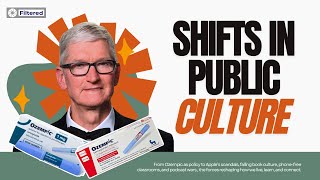
TJ Walker surveys stories on GLP-1 drug access, declining reading rates, classroom smartphone bans, and Sirius XM's podcast spending. Universal Ozempic access could save money long-term, but long-term side effects remain unknown. Denmark is scrapping a 25% book tax to fight falling reading rates.
Chapters
Ozipic may not just be for the wealthy anymore. New research suggests universal access to the blockbuster drug could actually save the US money. In America, reading for fun has plummeted by 40% in the last two decades. Denmark, meanwhile, is slashing taxes on books to spark a reading revival. One professor banned smartphones in his college classroom recently, and the results stuck stunned even him. Sirius xm, best known for car radios and Howard Stern, is now spending hundreds of millions of dollars to dominate podcasting. And Apple's fitness chief, the architect of the Apple watch's close your rings feature is facing serious allegations of harassment and a toxic workplace charges the company strongly denies. Welcome to Filtered with TJ Walker. Okay, folks, we have a lot of fun in store for you today. Welcome. I'm TJ Walker. We're gonna look at the top stories of the day Filtered through the lens of communication skills. So let's take a quick look at what is going on in the news today. Diving in with story one Ozipic for everyone. The economics are changing. According to the Washington Post, what once seemed like a luxury treatment may soon become a mainstream health policy. GLP1 drugs such as Ozempic and Mounjarno, best known for weight loss, are showing wider health benefits, from lowering heart attack risk to slowing kidney disease and even reducing addiction. The economics are shifting, too. Obesity alone costs the US $173 billion annually. Researchers estimate that for every 100,000 people on GLP1s, there could be up to 45,000 fewer obesity cases and 10,000 fewer heart disease cases. That translates into tens of thousands of dollars saved per patient. Right now, the annual price tag is about $6,000. But if government bulk buying pushed that closer to $1,000 a year, as Denmark has achieved, the drugs would likely pay for themselves. As Middlebury College professor Gary Winslet writes, Universal Access to GLP1s isn't radical. It's smart economics. Okay, let's dive into this. So what's the real message here? GLP1s may be a miracle drug. It may be a way to save billions, hundreds of billions, trillions of dollars from healthcare expenses on a yearly basis. But. And it's a big but we don't know yet. More testing needs to be done to see what kind of side effects are there. There's one thing we know does not have side effects, and that's called eating real, unprocessed food, reducing sugar intake, walking more, drinking more water, and getting a good night's sleep. Why don't we at least start with that? Okay, let's dig a little deeper. I'm not a medical doctor. I don't play one on tv. I don't pretend to be one. I'm not here giving you medical advice. This is a major research that's come out suggesting from a lot of credible sources that these GLP1s do a lot of good for you. Prevents strokes, heart attacks, kidney disease, some cancers. A lot of people who did it for a weight are finding themselves no longer addicted to alcohol. So let's make no mistake about it. There is a lot of good coming out of this, but there are a lot of side effects. I won't go into it today, but I just. I challenge you. Go to ChatGPT or any other AI of your preference and say, what are the side effects to Ozempic? And you're going to see this long, long, long list come out. Now, let's not forget there are horrific side effects from being obese, even from being overweight. Likely leads to prediabetes, then diabetes, then quite often early death by a decade. So you can't look at things in terms of, is it the silver bullet? Is it the perfect thing that solves all problems? You always have to look at it in relative terms, what is going on for your health. And certainly for some people, it does seem as though ozempic and the GLP1s are a miracle drug. Do we want to say, okay, everyone should take it, because as a society it's going to make everyone better? I want to study this a little more. I think here is a case for caution because we already know the cure to most of the diseases that ozempic and these GLPs solve. We do know the cure. I'm not saying it's easy, but we simply know that if you stop eating junk food, if you eat real food that isn't heavily processed, if you eliminate sugar, processed sugar, artificial sugars from your diet, if you get rid of the coke, the Sprite, the mellow yellow, the Gatorades, the lattes with lots of sugar, and drink what I'm drinking now and knowing that's not some blue magic drink with powder, it is actually something called water, just filtered water. If you do that, chances are you're going to solve most of the problems that these GLP1 solve because it's extraordinarily difficult. I won't say impossible, but it's extraordinarily difficult to be obese. And if you don't eat heavily processed foods and you don't eat sugars and processed sugars and artificial Sugars. And if you get exercise on a daily basis, doesn't mean going to a fancy gym walk, oh, but teacher, I don't have time. You have time to look at your phone all day long. If nothing else, while you're playing games, checking email, walk around your office, walk around your home. There's nothing saying that you had to make phone calls and text and check email while doing what I'm doing right now, sitting. And I'm not proud of the fact that I'm sitting right now. But a year and a half ago, I did a daily show for many of you. Some of you remember it for three hours a day standing. Because I did want to get more fitness in. What I found is my feet really hurt. I was doing damage to my feet even when standing on rubber pads. But rest assured, I do try to get at least 12, typically 15,000 steps a day in. I say that not to brag, but to say, if I can do it, you can do it too. Lately I've been doing a lot more biking on my quadricycle, which is kind of a fun change of pace and cooler here than I when I'm in a hot climate, as I am in South Florida. But let's look at more of the facts here. The US obesity cost $173 billion annually, including, according to reports in today's New York Times, a hundred thousand people, if treated, could reduce obesity cases by 45,000. That means 20,000 diabetes cases could be reduced or eliminated. Again, you could say, well, you know, what's the big deal? Diabetes. I have it. Everyone has everyone. My family has it. Well, on average, you die a decade earlier. So it's one thing to say somebody's guilty of fat shaming. It's another to say, you know what, it's a real shame if mom dad die at 60 rather than 70. It's a real shame when Aunt Susie or Uncle sanjay die at 45 rather than 65. I think we can all get behind the concept that that is real shame. Now, the current price in the United states is about $6,000 a year for these drugs. Denmark has negotiated deals with Ozempic where it only cost $1,560 annually. So the price has gone way, way down. And when you look at the savings, it's not that it pays for itself. It's essentially saving individuals and societies fortunes. We still don't know the long term impact though. These drugs are not that old. I, I remember taking a drug this would have been a mere nine years ago. I I was having a tiny, tiny, tiny issue with the mildest form of asthma. And a doctor gave me a particular drug and said, you know, this is the site. This is the same as water. This is so safe. They give it to pregnant women without hesitation. And then I was taking it every day, had no problems breathing, seemed to work right, what's the problem? And several years later I'm reading these stories about the very same drug saying it's leading people to commit suicide, it's causing depression, causing suicide. Thankfully, it did not cause any discernible mood change in me, but it was yet another reminder. We don't always know what we're putting in our body with these drugs. Sometimes things are great, short term, long term, they cause all sorts of unintended consequences. The side effects can be massive. I'm not saying this to say drug companies are bad, all pharmaceuticals are bad. No, I'm a big fan of pharmaceuticals and I'm a big fan of antibiotics and vaccines in particular because they have given humanity decades more of life on average. So this is not an anti pharmaceutical company ramp. What it is is the suggestion of let's proceed cautiously before we start willy nilly giving these drugs to everyone. I think a lot more can be done to promote the idea of actually healthy living. Now, I realize in a free society we can't make it illegal to drink a Coca Cola, but there is a certain number of carrots and sticks governments can use that are not too intrusive. For starters, how about just in our public schools, in any school that gets federal funding, why don't we just say we're not going to allow junk food in schools because it's still there. Why don't we tell schools if you're going to get federally funded assisted lunch programs and breakfast programs, you got to give kids real food. I don't mean gourmet meals, but let's not put artificial sugars, processed sugars, added sugars in food we give to kids. Oh, but tj, they won't like it. Guess what? If you gave kids only things they like, they would do nothing but watch TikTok all day day, YouTube all day and eat candy all day. So part of being an adult, whether it's a parent or a teacher or anyone else, is you don't give kids what they want, you give kids what they need. And it has been scientifically proven, if you simply give kids enough exposure to virtually any healthy food, broccoli for the spinach, they will develop the taste. But sure, if you just give a kid who's used to eating nothing but chicken nuggets and macaroni and cheese, a piece of broccoli, they're going to go, this is poison. What are you doing? Timmy? Well, they may say that once or twice, but at some point if they get hungry enough, they will eat real food. I don't know what we do about a 50 year old who is entrenched in a habit of eating nothing but fast food, garbage food, highly processed food, gallons of sugar and cheese on everything. I don't know what we can do to help that person, frankly. But we don't have to subsidize horrible, horrible treatment. Now this is where I differ with some of my friends in in the center of the political spectrum and the non right wing part of the political spectrum. I would certainly go so far as to say that anyone getting federal assistance through the SNAP program here in the United States or any part of any part of the world, if you're getting the government buying you food, there's no reason the government should be buying you food that's killing you. And highly processed food with a lot of processed sugar, highly processed carbohydrates is unhealthy. We need to be encouraging people in every society to eat real food, real produce, vegetables, fruit, drink water. No one needs to have a Coca Cola or a Pepsi or a Gatorade subsidized for them because then we end up needing to pay for the Ozempic for you. Why don't we solve the problem at its foundation? That's where I'd like to start. I'm all in favor of spending more time, energy, research on whether Ozempic does cure a whole host of maladies. But I'd also like us to spend more time, money and investment as a society doing things we know actually work. Encouraging people to exercise, to drink water, to eat real food more. In a moment. We'll be right back after this break. Want to advertise here? You better be legit. No crypto, no junk food, no supplements. Go to tjwalker.com advertise Most people can't afford a full time coach. And even if you could, good luck finding one who's available when you need them. That's why I created the TJ Walker AI clone. It's built on my 40 plus years of real world coaching and training. You get my exact advice, style and frameworks instantly. Ask it how to handle a tough client question. Get feedback on your elevator pitch. Rehearse your next big talk. This is the next generation of communication coaching. It's smarter than an app, more personal than a course, and always ready. Start using it today at tjwalker AI. You'll wonder how you ever did without it. Want to advertise to ambitious, upscale professionals who actually care about communication, success and Results? Go to tjwalker.com advertise and no, we don't take ads for crypto supplements or junk food. If you've ever struggled with nerves, unclear messaging, or just not being taken seriously, this is for you. I created the T.J. walker Success Library as a crash course in professional level communication. You get five downloadable books for just $9.95 that walk you through public speaking, media training, persuasive communication, confidence building, and daily practice routines. This is the same training I've delivered to presidents, CEOs and leaders in 45 nations, boiled down and instantly accessible. Go to tjwalker.combooks and download them now. Okay, we are back with more fun to come. Today you are watching Filtered with TJ Walker. This is the show where we look at the top news stories of the day, filtered through the lens of communication skills and personal development skills, all with the goal of making you a more successful person in every aspect of life. Issue 2 the reading crisis US decline Denmark's bold fix According to the Guardian and the New York Times, fewer people are reading for fun and governments are taking notice. In the United States, a new study shows reading for pleasure has dropped by 40% over the last two decades. Back in 2004, a while back there, 28 specifically 28% of Americans read daily for fun. Doesn't seem like a lot, but a lot more than now. By 2023, that number had fallen to just 16%. Researchers warned the decline is steepest among disadvantaged groups, and co author Jill Sunkey called it, quote, deeply concerning, noting that reading has long been a low barrier, high impact way to engage creatively and improve quality of life. Meanwhile, in Denmark, officials are trying to turn the tide by making books cheaper. The government plans to remove its 25% tax on books, a move Culture Minister Jacob Engel Schmidt says will fight a growing reading crisis and give the gift of reading to younger generations. Book prices could fall by 20% under the plan. Okay, so what's the real message here? We are in a reading crisis in the world. Yeah, I understand people are reading text all day long for two seconds and sending something back. But reading a real book, especially for pleasure? It's in crisis mode. And you might not care about the rest of the world, but if it's you, your own kids, your own Family, realize you're making your world smaller. If you don't immerse the world of text creativity, you're building your brain in a different way. And it's not as good as somebody who reads and reads regularly. Okay, so let's dig a little bit deeper here. What's going on? Some of you maybe say, well, tj, you're just an old fuddy daddy. You're a boomer. I listen to audiobooks, I watch videos, I do online courses. It's just as good. Well, those things can be good in some ways. They're better at certain times. If you have a long commute on a bus. If you have a long commute on a train, yeah, an audiobook can be great. And I'm certainly not against learning through video. That's how I make my living with my 300 online courses. But there's something unique about reading a book, especially if it is for pleasure. Now, let me not be a hypocrite here. I do have to confess, I don't read fiction. I mean, that's what I think of as reading for pleasure. Although you could be reading a nonfiction book for. For pleasure as well. There's something about reading a fictional book that forces your brain to get creative. It's forcing your brain to put images up. It's forcing your brain to work, to think, to manipulate, to go into its own director mode. And when you don't read for pleasure, especially for fiction, that becomes stagnant. And the sad part is we live in a world now where creativity flourishes. If you're a creative and you're willing to share your creativity, you can create podcasts, you can create YouTube shows. You can create all kinds of things and make a fortune from it. Make a very nice living. Why do you not want your kids to do that? Why do you not want family members to do that? So I'm all in favor of anything that can get people to do more actual reading of books. I will confess I was a little discouraged this summer. My own daughter's school required everyone in the school to read as part of the summer homework, a novel. And one or two of the parents told me, oh, yeah, my. My son decided to just listen to the audiobook. It was easier. Okay, it's easier, but it's just not the same thing. And I realize an audiobook can be on a bridge. It's not like, you know, watching a two hour movie versus War and Peace that could take you 30 hours to read. It's not truncating it, but it's a different process. It's a passive process when you are reading. It's active. You're actively having to fire the synapses in your brain to detect what that letter is, what that word is, what that letter means, what that word means, what that sentence means, what that paragraph means, how it fits into the context of the entire chapter and what the meaning is there and how do you visualize it. You simply don't do all those things listening to an audio or watching a video and it's not quite the same as watch as reading a non fiction book. Now I read daily books but I have switched from reading paper books to reading books on my Kindle because I do find it's it's less light in my eyes. So when I'm reading late at night or early in the morning which I and I say late at night, I might mean 8:30, 30 at night before I go to bed at 9:30, it's less disruptive to the brain and it's easier to fall asleep. But I use a Kindle and I'm not giving any promotions here and I'm not an affiliate for this today I use a Kindle because unlike reading on a phone, I'm not tempted to do a quick email check, a quick text, a quick looking up, something in chat GPT it's right there. I don't even know how to access those other things on my Kindle. So that's to me is the beauty of reading a Kindle. I do have one of my own goals is to read more pleasure books. I typically read one to two non fiction books per week and I wish I could say I read at least one to two novels per week. I don't. That's something I'm working on to improve myself. Let's talk about what's going on in Denmark here. So they have a 25% tax on books. Those of you here in the United States and other parts of the country may or other parts of the world may think oh that seems like a high tax. Keep in mind for a lot of Europe it's this value added tax is how they raise most of their money. So I don't know that it's especially high on books. There's just a lot of tax there instead of necessarily income tax, although they have income taxes as well. So I am skeptical that the reason people don't buy books and read books in Denmark is because of the tax. But if this nudges the needle a little bit, if this makes it more likely for a parent to Buy a book for a child, for a birthday present or a holiday presentation. I'm all favor because certainly you're building the intellectual infrastructure of a country. When people read more, I don't think I'm saying anything earth shatteringly brilliant when I point out countries that don't have literacy don't do very well with their economies. You know, the per capita income is really, really low in pre literate or illiterate societies. As literacy rises, economics go up, standard of living goes up. But now we do have a point here in the United States and a lot of developed nations where, let's face it, literacy is high. But all the literacy is people looking at their cell phone and looking at a title. You know, they can read the title of a TikTok video in three words or less. And it's just not the same thing in terms of building the intellectual infrastructure in your own brain. I could tell you one of the most powerful things that I ever did in my own life for personal development, and I would recommend it to you, is it's really two things. I gave myself a very, this is about 10 years ago. I gave myself a very, very strict time limit of no more than one hour per day of video entertainment and a minimum of one hour per day reading a book. I don't mean reading because you can read the news. You can doom scroll 8 hours a day and not really learn anything and not feel better intellectually, emotionally, creatively. But when you're reading a book that someone didn't throw together in the last four hours about what happened five hours ago, it's a different experience. And that supercharged my own career, frankly, by reading so much every day. It gave me the intellectual infrastructure to create hundreds of online courses, which in turn created wealth for me and my family and has allowed us to do a lot of, a lot of good things. I want the same thing for you. Now you may be someone who went to the top of your class at Oxford or IIT or some major university in the world, but now you're in the work world and you're just so busy working you say, I don't have time to read. Don't kid yourself. I want you to go to your phone and go into your settings and look at your screen time. And if you're like most people, you're going to see one hour, two hours, maybe four hours a day that you spend scrolling on various news websites you are reading. But a lot of time it's the same old stuff. It's confirmation bias. You read news About a politician you already don't like, and here's someone telling you how bad they are. What's the worst that could happen if you didn't spend time reading that story, but you instead read about a new hobby, or you read a new novel, or you read some aspect of personal development or something you have a passion for? Maybe you read more about the leading thinkers in your industry. I'm all in favor of new media and new ways of learning. Believe me, here I am talking to you. I'm not writing you a new book today. I'm talking to you through new media, through audio podcasting, through video podcasting. I'm all in favor of that. But let's realize that every medium has a particular role. Video is great for displaying emotion, visual storytelling, action. Audio is great for creating intimacy. And it's so easy to consume because you can be driving, writing, walking, anything else. But reading an actual book, whether it's paper or something in a digital format, is a different format of learning. It's different and it has aspects that are better, too. So I'm urging you, please give it some thought. The Danish, Danish officials who are doing this experiment with the tax cut say reading is losing to streaming services. Well, I see that in my own household when I try to get my own daughter to read more quite often is it, oh, there's Wednesday streaming on Netflix. That's more fun. Okay, There has to be time for both. And you know, I constantly meet parents, oh, I want my kid to go to an Ivy League school. I want my kid to go an Ivy League school, a prestigious school, an elite school. And when I actually look at kids who end up doing that, quite often the biggest predictor is, do they do pleasure reading? Especially when they're young kids who have the attitude of, I'm going to spend every spare time playing a video game or just scrolling. YouTube or TikTok may have high IQs, may be smart, may be good with their homework, but in the long run, they don't quite compete with those kids who also do their homework, are also smart and actively read for pleasure. So if you are a parent and you are ambitious for your child, I urge you, A, encourage them to read, buy them books, buy them real books, sometimes buy them digital books, too, regardless of the tax structure. But B, lead by example, there's the old New Yorker cartoon that has two parents sitting on a park bench, each scrolling at their phones, saying, yeah, it's terrible. My daughter spends all of her time scrolling on the phone and they're both scrolling on their phones, talking to each other. Lead by example. Children are much more likely to learn by what you do rather than what you say. So read. Nothing wrong with having a family reading hour. We try to do that from time to time in my household as well. It will ultimately give you a richer life. It might not necessarily make you richer in the pocketbook or the wallet, but it will give you a richer life. And I think that that really is its own reward. So please give that some thought and see what you can do to do more reading in your own household. Hey, if you're enjoying this kind of take and want to hear more stories filtered through the lens of communication, make sure you're following the show whether you're watching or listening. New episodes drop every single day, and if there's a little notification option where you are now, go ahead and turn it on. It helps you stay in the loop. Ben saying hello says waiting for the show. And this is where I pick up my news consumption. Well, Ben, I'm glad you're here. Glad you're picking it up. We do have all the top stories for you here. Every single. It's a mix of stories. It's certainly things that are often the number one headline story. We try to cover top business stories, technology stories, as well as culture stories, all filtered through the lens of communication and personal development skills. So that is what leads us to our very next story right here. We're going to talk about it right now. According to the New York Times, banning smartphones in class may be one of the simplest ways to ban boost learning. Dr. Ezekiel Emanuel, a professor at the University of Pennsylvania, tried an experiment last year. He writes about it the New York Times. No phones, no laptops, no visible devices allowed in his classroom. Students had to use notes by hand unless they used a stylus. The result? His course evaluation soared, with students calling it, quote, the best course I've ever taken. Emanuel believes the difference was clear. Without devices, students were more attentive, retained more, and actually enjoyed the class more. Research backs him up. Studies show that even a phone face down on a desk reduces cognitive capacity. That reminds me, I typically try to literally turn my phone off when I'm with you. Shame on me for not doing I'm turning it off right now, see, powering it off and I'm tossing it over here so I can give you 100% of my attention. As Emmanuel put it, smartphones don't make us smarter. Indeed, Quite the opposite. 11 US states now restrict phone use in K through 12 schools, but most colleges have yet to follow. Emanuel argues it's time for higher education to catch up. Now this, this Professor Emanuel is an interesting character from an interesting family. One of his brothers is is the Emanuel who was the chief of staff to to Obama, top leader in the U S House, ambassador to Japan and is now a presidential a candidate or potential Democratic presidential candidate. His other brother Ari Emanuel is the role model of Ari Gold, the Entourage character. So he's one of the leading power brokers in all of Hollywood. So fascinating family that is widely, widely accomplished. Let's look at more at some of the data on what's going on here. So 11 states are banning K12 school school phones, which I think is a great thing. I'm a big fan of, of the of the book the Anxious Generation by Professor Jonathan Haidt which talks about you're essentially committing child abuse if you let a kid under the age of 16 have cell phone or unlimited access to a cell phone. What Instagram is doing to kids, especially young girls, self esteem, it's just, it's really messing with them and it's not helpful. It's just not helpful at all. And we're seeing especially in young women, rates of depression skyrocket, rates of self harm, rates of suicide skyrocketing the more closely and as closely correlated with use of cell phones. Now this is a little bit different what Ezekiel Emanuel is talking about in college because you can think of college people as adults and his point is, yeah, legally they may be adults, but their prefrontal cortex is not fully developed and they're really not making wise conscious decisions. Here's the thing that has been backed up by other research for quite a while. In numerous places, the act of listening to someone and writing a note increases your ability to remember it. And if you say, well, you know, I'm just putting my cell phone down and I'm recording, the whole thing doesn't work the same way if you listen to an hour lecture passively with your cell phone there recording it all. Part of it is you're telling yourself I don't really have to listen carefully, don't really have to do that. After all, I can just listen to the audio. But how often do you go back and listen to your audio? I. I really seriously doubt you're going to do that very often. So let's let me try to dig a little deeper here. What's the real message here? People have got to get used to the idea of you don't have to have your cell phone. Every second the world will not end. If you're not talking to friends in a classroom and your cell phone's not right there. I applaud Professor Emanuel for his policy at the University of Pennsylvania of saying, no cell phones allowed or visible in my classroom. Keep it up, Professor. Let's dig even deeper into this situation. When you have everything available to you, nothing is available to you. If everything is underlined, then nothing is underlined. There are people when they're reading a textbook and they're underlying every single thing, it doesn't help them go back and study it. The underlying only works if you're using the key concepts. That's the part of the problem with the cell phone, because it's so powerful, because it can do an audio record or a video record of everything the professor says, then nothing is highlighted as important. So what Professor Emanuel is finding, and other research backs it up, is it's the sheer act of listening, thinking what's important? What's important? Oh, that's important. Let me write it down. It forces you to listen much more proactively and aggressively. It forces you to think. It forces you to put concepts in hierarchy because you can't write down everything. Nobody is that fast a writer. You're just not. So by selectively listening and writing, it's really putting your brain on all its cylinders and making it work harder, which means the educational process is working much more effectively. So that's why I'm hoping this trend continues now in a lot of elementary schools and middle schools and high schools, a lot of teachers are saying, hey, put your cell phones away. And that's better than nothing. Some schools actually make you put your phone in a basket before you walk in and get it when you leave. I would love to see that, because here's the problem with having cell phones in schools and they're not in the classroom. It's kids need to build social skills. They need to build actual friendships. And if you're the most gregarious person and the most popular person in school, it's not going to matter. Everything's still going to be fine. But if you're even a little bit shy, even a little bit introverted, the easiest thing to do is when you're walking through the halls, don't look at other people, stare at your phone. Lunchtime, you don't want to worry about whether the cool kids like you or not are paying attention. You get your food, sit down and stare at your phone. You don't have to talk to anyone. Guess what? You may be learning stuff in chemistry and math and science. But you're not learning how to talk to human beings. How do you think that's going to work out when you go to your first job interview, when you're 22 or 23 and you've never actually looked someone in the eye? It's going to be a huge, huge, unmitigated disaster. And that's why I'm urging you, even if there's no professor telling you, put your phone away. Just put it away. My family and I were invited to another home last night. New neighbors in our new neighborhood. And I didn't bring my phone. Now I will confess, I forgot it, but I didn't bring it. No one was bothered. Nothing bad happened. It was only three blocks away. I was able to get home without a gps. I do strongly recommend that you spend some time on a daily basis away from your phone. Turn it off, hide it, put it in another room, go for a walk without it and you will find parts of your brain become reactivated and energized in a way that perhaps they had become dormant more in a moment. Filtered is brought to you by the following you don't need a new degree. You don't need another expensive coach. You need the right communication habits. And I'll teach them to you in just a few minutes a day. @mediatrainingworldwide.com I've created the most comprehensive library of online communication and personal development courses anywhere. You'll learn public speaking, media training, persuasion, executive presence, and more. These are the same methods taught to world leaders, but now they're affordable and accessible to everyone. You can start for free and upgrade anytime. Go now to mediatrainingworldwide.com confidence isn't a personality trait, it's a skill. And it's trainable. Most people can't afford a full time coach, and even if you could, good luck finding one who's available when you need them. That's why I created created the TJ Walker AI clone. It's built on my 40 plus years of real world coaching and training. You get my exact advice, style and frameworks instantly. Ask it how to handle a tough question. Get feedback on your elevator pitch. Rehearse your next big talk. This is the next generation of communication coaching. It's smarter than an app, more personal than a course, and always ready. Start using it today at tjwalker AI. You'll wonder how you ever did without it. Want to become a better speaker, leader or communicator? Start with the TJ Walker Success Library. It's five of my most Practical books covering everything from public speaking to media interviews and persuasive messaging, all for only $9.95 sense. I've trained presidents and Fortune 500 CEOs, and now you can get the same wisdom in a fast, affordable format. Go to tjwalker.com books and download your copies instantly. Sirius XM bets big on podcast Stars According to the time, Sirius xm, long known for car radios and Howard Stern, has quietly become one of the biggest players in podcasting. The company now represents half of the top 20 podcasts in the United States, rivaling Spotify and Amazon's Wondery. The strategy is simple. Invest heavily in talent. Alex Cooper of Call Her Daddy reportedly signed a deal up to $125 million. The comedy hit Smartless fetched around 100 million. And life coach Mel Robbins chose to stay with Sirius XM after multiple networks courted her. For Sirius xm, podcasts are a lifeline as its satellite radio business shrinks. While subscribers have fallen to $33 million. Excuse me, 33 million people. Podcast advertising revenue has surged, topping $600 million in 2024. Chief executive Jennifer Wits called podcasting a bright spot in an otherwise difficult year. President Scott Greenstein summed up the approach. When talent hits the zeitgeist, are you doing all the right things? For Sirius xm, that means making sure the stars stay happy and exclusive. Okay, so what's the real message here? Sirius XM is scared. CBS is scared. Netflix is scared. They're all scared because they realize they don't control the gates anymore. It's you and me and anyone who has the audacity to start a show from scratch, a podcast, a YouTube show, if you can create content, that's essentially a podcast, the definition has become amorphous. But it's really anyone who creates a show. If you can build an audience, if that happens, then Sirius will want you, Netflix will want you. Amazon will. Everyone will want you. But there's no longer magic of some network executive anointing you. Now it's your own community. It's your own viewers and listeners who do all the anointing. Okay, so let's. Let's dig a little deeper here. What does this really mean? It's yet another sign that our media world is fracturing. It's falling apart. And Sirius XM is hemorrhaging people who are willing to pay that monthly subscription. Their old economics of give Howard Stern a half a billion dollar. I mean, they've probably given him a billion dollars. Now. They can't keep doing that they've got to go where not only the new talent is. And this is meant. There's no disrespect to Howard Stern. He may be on there for the next 50 years, but they got to go where the new talent is, because that's where the audience is. And that's ultimately how you get money. You get money through either advertising, or you get money by people willing to pay a monthly fee at some level. There's nothing new. Sirius XM was the new kid on the block, the new type of media. Back when the only kind of radio you could listen to was traditional AM&FM radio, heavily regulated, you had to own a license. Howard Stern dominated there. They brought him over because. Not that they cared about Howard Stern, they wanted his audience. They wanted his fans. Now, exactly the same thing is going on where every media company is scouring the media landscape, looking for the next Alex Cooper, the next Joe Rogan. So what does this really mean for you and me? Well, for one, things stop sending demo tapes to executives hoping they'll spot your talent, and there's nobody doing that anymore. The only thing they're looking at are your numbers. How many people are part of your community? How many people are watching you, listening you, reading you? If you want to succeed in the media, you have to build it one reader, one subscriber at a time. That's what I'm doing here on this show. I'm not starting off this show with billions of views, but just the fact that you're watching makes me happy or that you're listening is exactly what I want. I want to build one listener, one viewer at a time. And ultimately, there are no shortcuts. Yeah, it's easier if you're Travis Kelce and you're already a famous football player and you've already won Super Bowls and your girlfriend is the most famous person in the world. Yeah, it's going to be easier to build a podcast and get a lot of money for it. But was that easy? Well, he had to work pretty hard to get into the NFL and to stay there as long as he has. So he did his hard work earlier in another field. My big advice to really anyone these days, regardless of what industry they're in, whether you want to be a great astrophysicist, a software engineer, a paleontologist, whatever your field, learn how to communicate what's interesting in your field to the outside world, to people in your industry, but also a broader public. And to do it by speaking. And that means doing an audio or a video Preferably both podcasts, because the gates have come down. You do not have to wait. In fact, you'd be foolish to wait for some network executive to anoint you. Yes, PBS 50 years ago, 60 years ago, could anoint Julia Childs as the person to teach America how to cook. And if you didn't get that anointment and you didn't get your own show, you were just an obscure cook. Not like that anymore. If you're a cook, you could start sharing your recipes right now, today, on video, on TikTok, on social media, on podcast, and build a community. And maybe you never get to the point where Sirius XM dangles a $40 million contract in front of you. That's okay. But maybe you do get to the point where you are routinely in front of the people you care about the most. Let's say you are a restauranteer and you have great recipes and you put out a Weekly, say a 10 minute cooking tips podcast. And that allows you to stay connected with all the people who are real foodies in your community within a 15 mile range. And that alone keeps your restaurant thriving for two decades. What was that podcast worth to you? Yeah, maybe you didn't get a 10, $20 million deal, but maybe that was the engine that drove your 3 million dollar a year restaurant for the next 20 years versus what happens to the vast majority of restaurants, which is you're out of business after one year. So I do want you to think about. It's not that everyone has to be me and everyone has to be a professional communicator and everyone has to have a big ego. No, but everyone is essentially running a business. You are the CEO of you. You're the CEO of you, Inc. And I realize that sounds cliche, but the CEO of every company has to think about marketing. And marketing used to be really, really expensive. You took out $75,000 and you paid for a full page ad in the New York Times in your local newspaper. You bought a network TV ad for $2 million. You bought a Super bowl ad for $12 million. That's what CEOs have had to do and still do. And yet that's not the way the world works anymore. You're now the CEO of you, which means you got to think about marketing. But you can market yourself through a podcast. And these signs here of traditional media companies and companies like MSNBC and CNN and Fox spending more and more and more of their time cultivating their talent doing podcasts. They're doing it because they realize nobody feels obligated to take the TV remote control and turn to channel 12. And these days, not that many people feel obligated to pay a monthly subscription fee, 9.99, whatever it is, to Sirius XM when they get all the money or all the music they want for free, if they belong to Amazon prime or if they don't mind listening to ads on a lot of services. So you've got to figure out that value proposition and realize the gates are down. You can now come in. So I do recommend to you, if you're not doing it, even if you're busy, I don't care if you're a junior lawyer at a big law firm, you got to be thinking about your future. That big law firm could go poof. You might not get partner track. You might not be made partner. What then? If you're already well known and respected in your industry, maybe you get 10 other job offers. Or maybe you have so many clients coming to you wanting you to represent them in court or in the legal sphere, you don't want a job. A podcast, video or audio or both could be the ticket for that to happen. And that's why I want you giving it serious thought. Is it really true that everybody in the world needs a podcast? You could make the case. Too many people have podcasts. More people should shut up and listen. Okay, I get it. There are a lot of bloviators out there and there are a lot of people putting out misinformation, not talking about more and more people just doing annoying rants. I'm talking about you giving useful information, news, insight, analysis in one of two areas. Something that will actually help other people, help them learn something. Or if you are entertaining, do something that will entertain people. Do one or the other and you will be seen as giving real value. And I hope you consider doing that. Let's move on to our final story of the day. And hey, it is Friday. I hope you're having a great weekend. I know I'm looking forward to the evening. There's a new clubhouse we belong to in our own community. They've got movie night for families. S', mores, you know, can watch the movie in the pool. It's going to be one of these Pirates of the Caribbean movies. I don't know if I've ever actually seen the entire movie, so I'm looking forward to seeing it. Taking my wife, daughter. A lot of our new neighbors here where we live in Palm beach county will be going. So I hope you have a nice Friday night in store for you and I hope you find some time to have fun and relax over the weekend. I'm going to be right back here tomorrow morning in part because I find this relaxing. I enjoy looking at the news, consuming news, analyzing the news and figuring out how can it benefit you, me and other people. How can we not just doom scroll but actually learn from other people's successes and yes, also from other people's failures? Which leads us to issue five today. And that is what's going on at Apple. So let's take a look at them right now. Okay, Apple Fitness Team. He's the Apple executive behind the Apple Watch's famous Closure Rings fitness feature. He's accused of creating a toxic workplace. Nine current and former employees describe him as verbally abusive, manipulative and retaliatory. More than 10 workers reportedly took extended medical or mental health leaves because of his behavior. Apple settled one harassment complaint against him and is fighting a lawsuit from employee Mandana Mofiti, who says she was bullied and retaliated against. Despite these claims, Blahnik remains in his position as vice president of fitness Technologies. Apple denies wrongdoing. Spokesman Lance Lin said the company took all concerns seriously and was deeply committed to creating and maintaining a positive and inclusive workplace. He said that Apple thoroughly investigated workplace issues, but that it did not discuss matters involving individual employ in the interest of respecting their privacy. Quote we strongly disagree with the premise of this story and there are many inaccurate claims and mischaracterizations, said Mr. Lynn, who declined to provide any specific examples of the inaccuracies. When asked to discuss reporting from the New York Times, he added, we will continue to share the facts through the legal process. And in a legal filing, Apple denied that there had been harassment, discrimination, retaliation or any other harm. It said that Ms. Mofiti had received constructive feedback and coaching from her supervisors in response to a well documented history of unresolved performance issues. Mr. Blahnik did not respond to request for comments. Okay, so what's the real message here? We live in a world, yes, where anyone can make allegations against anyone. You don't get a promotion, you can complain you were discriminated against, you got fired, you can complain it was discrimination. You didn't get the new office you wanted. You can claim it's discrimination. That is true. But we also live in a world where a lot of people look to the White House and other people who have been accused of horrible, horrendous types of harassment, physical assaults, rape allegations, and they get away with it. So a lot of executives these days say they can do it. I can too. Nothing you can do to me. You can't touch me. So we don't really know what happened here, but it's a classic example of crisis communications. Some of it done well, but some of it done poorly. This executive, if he really cares about his own long term reputation, needs to state things in a positive context, even if the lawyers say don't do it. Okay, let's dig a little deeper here. When you're a big company, when you're a big company like Apple and you're a publicly traded company, you don't have the luxury of just litigating things through the press. And Apple has been famously tight lipped and it's worked well for them. They've maintained this realm of secrecy around their products and what they do. And when something does come out, the whole world flocks and they get massive, massive attention. It has worked well for them. And it is a company that for the most part has dodged true crisis situations that have destroyed their reputation. Obviously it's not destroyed. It's one of the most valuable companies in the world and has given tremendous shareholder wealth, by some measures is given more return on equity to shareholders than any company in the history of the world. So they've done a lot of things right. This does seem a little bit suspect. It's one thing when you've got she said, he said, he said, she said a few disgruntled employees, but this is something like 10% of all the people who've ever worked for this guy are saying he's awful, essentially. I mean, that's just an incredibly high percentage. I urge you to take a look at the story in the New York Times and elsewhere about this because look, sometimes when there's smoke, there's a smoke machine. Sometimes when there's smoke there's fire. And when you've got this many people accusing a worker of an employee, a highly paid executive saying and doing wildly inappropriate things, comments about people's body parts, commenting about speculation of who's sleeping with whom, derogatory comments. You do expect more than that in one of the most respected companies in the world. Maybe not in the highest levels of government. Somehow that's acceptable to a lot of people. But I think most investors do expect more from senior executives at big companies. Now, what Apple has going for it obviously is such a powerful brand. And other than Tim Cook who has about, you know, 1/100th the public profile of Steve Jobs, most people don't know anyone who works for Apple. There's no publicly identified face. So if one person gets tarnished, it's not like the CEO getting tarnished or it's not like, you know, back in the day, if Johnny I've, who was seen as the big innovative designing creator helping Steve Jobs bring an iPhone to the world. If something like this had hit him, I think it would be a much tougher, tougher issue for the company. But this is someone most people are not familiar with, even though he is high profile in the industry. So I want to give you a little bit of advice for what you should do in a crisis situation. Some of it Apple did well, they did at least respond. They did give the reasons of why they can't respond. It's a big company, they're not supposed to talk about personal employment issues. It is working its way through the legal system. They did say they would be revealing more through the legal system. And when you are a big company, you can't just shoot from the hip because one little blip the wrong way and boom, $10 billion of market cap can be eviscerated. So you've got to be careful. But if you have your own company or you're an individual, you're a consultant, you have small legal practice and you are accused of something that is a crisis, meaning it potentially could damage your reputation in the marketplace to the point where it might destroy your business or significantly harm your business, you do need to respond. My advice is you got to respond quickly. Reporter calls you at 9:00am you need to call back at 9:05, if nothing else, to find out what they want to talk about and what the issues are. You then need to have a clear, focused, positive message. If you are clearly in the wrong, you need to express that you were wrong, what you were wrong for, and express some amount of contrition or sorrow. You do not want people thinking, wow, you did these horrible things. No regret, no shame whatsoever. I do think, even though some people believe never ever apologize, I'm not of that school of thought. When you need to apologize, apologize quickly takes the sting out of things. It diffuses the tension, it diffuses the crisis. If all you ever do is defend, then you enable, you empower people to continue attacking. That's great if you're trying to get attention, but if you're trying to protect and preserve your reputation, it isn't what you want. So I would strongly recommend you figure out how to proactively, positively get a positive message out there. If something has been done wrong on your part, apologize and use the right emotional level. Don't say, well if anyone is offended, that's sort of a non apology apology. If you truly did something that you think a reasonable person would be offended by and everybody has at some point, I know I have. If you've done something, said something where a reasonable person could be offended, then apologize, let people know you're trying to make amends. It doesn't mean necessarily writing someone a seven figure check, but you can talk specifically about amends and try to figure out how to go beyond that. Talk about what you're doing to make the situation even better, whether it's a workplace environment, whether it's harm you've done to a local environment, local river, whatever it is. If there is some harm, let people know because the final comment there I read to you in the, in the news brief that the individual in charge did not respond to request for comments. He may have been told that by his attorney, by the attorney for Apple. But the way most people read that is oh, I'm guilty, I'm so ashamed of what I've done. I'm so guilty I'm going to hide from you. That's how it is interpreted in the public. So if it's your company and you have the discretion, you don't have lawyers telling you clam up. I always recommend get something out there, get some positive message out putting the issue in your terms so that there's at least two sides to the story. Because right now we pretty much only heard about all these horrible things this executive was alleged to have done. It's one sided and it's human nature to remember the negatives because right now I'm remembering the negatives of the story of this guy talking about oh, I wonder if this person's sleeping with this person or this person is ugly or has a fat but weird things in this article that this Apple executive is alleged to have said. And that's what sticks. You want to get at least half of the messages people receiving about you during a time of crisis to be from your perspective. And you can't simply say I'll talk to you after the trial. You've got to get it out right away. Otherwise there's a vacuum and it's going to be filled by your detractors. So please keep that in mind if you do face a crisis. I'm hoping you don't have a crisis. I'm hoping that you have smooth sailing and success in your professional life and in your personal life. I see Mary has stopped by to say says are you me? As your show is talking all major news every day. Yes, Mary, I'm trying to do this every single day. I'm having so much fun. I appreciate the positive feedback from you. I would like you to subscribe, starting not this coming Monday, but the Tuesday after that. September 2, 2025. We're really launching this show officially, big time, on every platform, major and minor platform, every podcasting platform, most social media platforms, Spotify, you name it. Right now, we're in sort of the test phase with this show filtered. We are on YouTube, LinkedIn, Facebook and Twitch. We're still testing things. I'm still sort of testing different camera angles, testing graphics, things like that. We appreciate you being here for the test phase, but very soon we're going to be coming to you every day, audio, video, even text on substack. So I'll be coming to you every platform. It's going to be a lot of fun. I'm looking forward to the journey and for now, at least, I'm going to do it seven days a week. I have so much fun with this. At some point, we may cut back to the normal Monday through Friday, but we'll see. I'm TJ Walker. I'm wishing you a great weekend. But if you're looking for some news tomorrow morning, feel free to join me live. Also, you can always look at this. Look for this on my YouTube channel. You'll see it as the most recent live video. Thanks so much. See you tomorrow. Vice is you got to respond quickly. Reporter calls you at 9am you.
More from TJ





The Breakout Cases - What Actually Caused Famous Speaking Career Breakthroughs | Ultamize

The Red Circle Sessions Finale - Build the Speaking Career You Came Here For | Ultamize

Two Stages, One Logo, Two Completely Different Realities - Main Stage vs Independent Events | Ult...

Pre-Reset - Why Repetition Builds Better Speaking Decisions | The Red Circle Sessions | Ultamize

Your Decision, Your Framework, and What Happens After - Build Your Speaking Career First | Ultamize

The Red Circle Sessions Trailer - The Speaking Career Truth Nobody on That Stage Will Tell You | ...

The Two-Minute Ultamize Reset - Your Platform, Your Audience, Your Voice | The Red Circle Sessions