Pentagon vs Anthropic, Survivor’s $160M Empire & The Smart Glasses Surveillance App
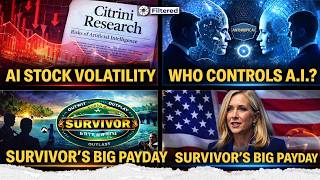
In this episode of the Filtered podcast, host TJ Walker dissects five distinct news items through a personal‑development and communication‑skills lens. He begins with a viral Citrini Research memo that warned of AI‑driven job loss, wage compression and a potential "ghost GDP" scenario, noting how the dramatic narrative moved equity markets and sparked debate over AI’s macro‑economic impact. Walker then examines the Pentagon’s ultimatum to Anthropic, detailing the Defense Production Act threat, supply‑chain risk labeling, and the broader precedent of government control over AI used in classified systems. The third segment explores the economics behind the TV show Survivor’s 50‑season run, highlighting its advertising revenue, low‑cost high‑margin franchise model, and the career trajectory of host‑producer Jeff Probst as a case study in focused expertise. Next, Walker reviews the Android app Nearby Glasses, which scans for Bluetooth signals from smart‑glasses to alert users of potential covert recording, framing it as the first front in a privacy‑technology arms race. Finally, he provides a detailed presentation‑skill analysis of Virginia Governor Abigail Spanberger’s State‑of‑the‑Union rebuttal, breaking down her framing of three rhetorical questions, body‑language, teleprompter use, and political positioning. Throughout, Walker intersperses personal‑development advice, promotes his communication‑training services, and reflects on how listeners can apply the insights to their own careers.
Chapters
Ultimize A viral AI memo didn't just scare people, it helped move markets this week and explains why investors are suddenly jumpy. Next, the Pentagon delivers an ultimatum to an AI company. Accept the rules or face serious consequences. Then Survivor, the TV show is hitting season 50 and the real story is the money machine behind it. After that, an app can warn you if smart glasses may be nearby, turning privacy into a tech arms race. And finally, a governor's nationally watched rebuttal speech boils everything down to one Is the president working for you? All that and more today on Filtered. Welcome to Filtered with TJ Walker. Hi and welcome. Thanks so much for joining me today. This is Filtered, where we look at the top business technology culture stories of the day and filter it through the lens of personal development skills. So An AI Report Sparks Market Sell off A viral research memo from Citrini Research helped spook markets this week by sketching a dark AI future. It imagines rapid, abundant intelligence cutting deep into white collar jobs, shrinking wage growth and weakening the consumer engine that drives corporate profits. The report argues that margins rise first as payrolls fall, but demand then cracks as displaced professionals downshift into lower paid work, compressing wages across the economy. Investors reacted to the storyline with sharp stock level moves. Companies seen as vulnerable to AI sold off while defensive sectors caught bids. Critics say the memo leans heavily on narrative and emotion, not hard evidence. But markets trade on expectations, and the memo's core questions landed what if AI boosts productivity while quietly undermining the spending power that makes growth sustainable? Even a pullback can reveal how crowded the AI trade has become. Okay, this Citrini research really struck a chord with a lot of people because various Wall street companies, research companies, put out research reports every day. Most of them are just marketing ploys. Most of them don't get a lot of attention. They don't certainly move markets. This one seemed to move markets at least for a day earlier this week. Let me look at and share with you some of the predictions it makes June 2028 that sort of framed everything in terms of what what would a typical day be like in June 2028? It's predicted predicting unemployment hitting 10.2%. And the memo is suggesting that the S&P 500 drawdown could reach 38% from projected highs in 2026. So it's predicting things continue going up till October of this year and the market sells off 2% on the unemployment print. In this scenario, the core concept is abundant intelligence can reduce labor's economic value. I don't think anyone seriously dismisses that. It's just that no one knows what happened in 2028, what happened in two months, what happened in 35 years. No one really knows exactly how this takes off. Early 2026 layoffs initially boost margins, earnings and stock price. We've definitely seen that, whether it's Microsoft, whether it's Facebook. When companies announce, hey, we, we're firing a bunch of folks, the market gets excited, the stock price goes up. Everyone's saying, wow, this is great, the company will be more profitable, make more money for investors. So temporarily, everybody's happy. The problem is this report points to is you do this long enough A, you're going to have massive unemployment, B, if people don't have jobs, they can't buy stuff, they can't buy services. So all those companies that went way up short term are going to go back down. You know, Amazon, if they fire a bunch of people, will see its stock price go up. But if people aren't clicking buy on Amazon as often, guess what? Its stock price has to go down. Let's look at some more findings here. It's predicting that there's going to be productivity surges, which is in general is a good thing thing. Real output per hour, similar to what happened in the 1950s. Now, the 1950s is when the United States saw really the greatest increase in productivity per worker. But wage growth collapses even while headline GDP looks fine. That's the real problem. It's suggesting something called ghost gdp. Output grows, but money doesn't circulate to households. So yeah, maybe Elon Musk, maybe Jeff Bezos become trillionaires two or three times over, but they can't spend all their money. And if we see all of a sudden tens of millions or 100 million Americans with dramatically less spending power, that's going to have a huge, huge impact on every company, every stock price. And the economy, the consumer economy is 70% of gross domestic product in the eyes of this report. And they are predicting a negativity loop. Better AI means fewer jobs, means less spending, adds to more AI investment and it just continues. Fewer jobs, less spending, where does it stop? They're containing. There's going to be a human intelligence displacement spiral that has no natural breaking point. That's the real problem. Part of the issue is mortgage risk. White collar incomes really are the backbone of a $13 billion residential mortgage market. So what happens if all of a sudden 20% of white collar workers who are used to paying 1, 2, 3, 4, $5,000 a month in mortgage suddenly have no money. That alone is going to be enough to essentially destroy the residential housing market, the mortgage market, and that could very well snowball into destroying the rest of the economy. So that's, that's one of the problems they're talking about. They cite elevated early delinquencies in tech finance, heavy zip code. So that's part of their analysis. They're looking at who's already affected by AI and certainly in zip codes where there are jobs, whether it's low level or intro, computer programmers or others heavily affected by AI. They're already seeing delinquencies in payments. Now Moody's downgrade example, $18 billion in private equity backed software debt across 14 issuers. So that's one of the signs they are concerned about. So what are we to make of this? There's two reasons I wanted to spotlight this for you. One, I do want to show you the bias of the media. If you put out a report saying, okay, AI is going to have kind of a mixed bag approach to our economy and things are more or less going to be the same for the next 20 years and then AI will really kick in because adoption will be so heavy, that might be the more accurate story. It's not going to get media attention. It's not going to get on the front page of the New York Times and the Wall Street Journal. It's not going to move markets. So extremes are what move the markets. Now sometimes the extreme predictions are accurate. Henry Blodgett famously predicted that Amazon would go to $400 a share when it was priced at very little. And it went up there and he was seen as a genius. So sometimes extreme extreme predictions are borne out by the facts later on. And we all would have loved to have realized it, but most of the time they are. The vast majority of predictions regarding recessions are wrong. There's the old saying. Economists have successfully predicted nine of the last five recessions. Do the math. So people love making extremist predictions and they love predicting doom. It's the easiest way to get media attention. Having said all this, I don't really know. Maybe it's optimistic. Maybe this happens by 2027. Certainly the, the vast, vast majority of serious AI experts I'm talking about the Ray Kurzweils of the world do foresee a time when AI is going to make robots and software so insanely effective that there will not be a need for humans. So then the question is, what will drive our economy now if prices go to zero, maybe we all live in some utopia where corporate profits aren't even relevant. Everyone has so much. Everything is produced essentially for free. Everyone has autonomous vehicles that are free, and everyone has robots at home, washing, cleaning, cooking for them. And we live in some kind of state of nirvana utopia. I'm not predicting that, but that's one possibility that some are predicting is AI continues to advance. But there is another scenario that this particular report keyed on, which is that you could have higher and higher job loss. The economy starts to crumble. Certain sectors like the mortgage industry, the real estate industry falls apart, bringing down the rest of the economy. And at the same time, we have not advanced AI to the point where it can do all the farming and produce all the food and distribute all the food and come to your house, deliver it, and do it all for free. There could easily be a lag time there where, let's say the top 10%, let's say the top 1%, maybe it's the top 0.001% of humanity. They continue to get richer and richer and richer. They control things. But meanwhile you have mass, mass starvation because there simply aren't the tax dollars to support it, to support sustaining salaries, to support a social safety net. We could in fact have mass starvation, mass riots. Nobody really knows. All we can do is prepare. If you vote, if you live in a culture that still has a democracy, I think perhaps we do in the United States, at least a semblance of it for a little bit longer. You need to vote for politicians who take this seriously, who want to regulate, not ban, but regulate AI, and also have some sense that we could need a social safety net. We may need a universal basic income that has attracted people across the spectrum from Elon Musk to. In the past, Milton Friedman and others have suggested we're going to need this. That's part of it. At a personal level, the only thing I think it's rational to do is to figure out how do you use AI to help you be more effective in the workplace. So when there are cuts, you're not the one cut. Sorry if that sounds selfish or anti, antisocial, but I think that's all you can do is figure out how can you use AI to be more effective, to be more valuable to the world? One of the reasons I'm using AI to help create this show, to write some of the script, it's not writing what I'm saying right now, but processing things. I'm trying to use AI to create more and more podcasts that help educate people, lead people into my own sales funnel so that I can help them when they want to hire me for personal development training or speeches or workshops or communication skills training. That's what I'm trying to do. What are you going to do? What is your plan? Assuming that this new report is maybe not accurate to the day or the week or even the month, but if it's directionally accurate, whether it's two or five years from now, either way, that's a short period of time we gotta get ready. Filtered is brought to you by the following you don't need a new degree. You don't need another expensive coach. You need the right communication habits and I'll teach them to you in just a few minutes a day. @mediatrainingworldwide.com I've created the most comprehensive library of online communication and personal development courses anywhere. You'll learn public speaking, media training for sweet persuasion, executive presence, and more. These are the same methods I've taught to world leaders, but now they're affordable and accessible to everyone. You can start for free and upgrade anytime. Go now to mediatrainingworldwide.com confidence isn't a personality trait, it's a skill. And it's trainable. Most people can't afford a full time coach and even if you could, good luck finding one who's available when you need them. That's why I created the TJ Walker AI clone. It's built on my 40 plus years of real world coaching and training. You get my exact advice, style and frameworks instantly. Ask it how to handle a tough question. Get feedback on your elevator pitch. Rehearse your next big talk. This is the next generation of communication coaching. It's smarter than an app, more personal than a coarse, and always ready. Start using it today at TJ Walker AI. You'll wonder how you ever did without it. The Pentagon has delivered a hard deadline to Anthropic, the AI company whose model is used on classified military systems. Officials want contracts to state the military can use the model for any lawful purpose. Anthropic has pushed for assurances that its technology won't be used for mass surveillance of Americans or autonomous weapons without human oversight. The standoff escalated when defense leaders warned that if Anthropic doesn't agree by the deadline, the government could invoke the Defense Production act to compel access and also threaten to label the company a supply chain risk that could jeopardize contracts. Those two threats pull in opposite directions, but they share one message. The government wants maximum flexibility. The bigger story is precedent. If the Pentagon Wins. It tells every AI vendor, once you're inside classified systems, you don't get to set the rules. Okay? Now, I've been a critic of this Pentagon, this Department of Defense, which foolishly and wastefully wants to call itself the Department of War. I've criticized them for many, many issues over the last year. So I'm hardly a lap dog for Pete Hegseth's Department of War, also known, really known as the Department of Defense. However, I do think they have a point here.
If.
If you want money from the government, I think you have to say, all right, I'm delivering a product to you. I'm delivering a service. You're going to get to do whatever you want with it. If the people at Anthropic feel so strongly that they don't want anyone, any part of their product ever being used to spy on Americans, totally noble belief. Don't take the money from the Defense Department. That's pretty simple. If you feel so strongly that drones should never be used, using your product without a human actually deciding, again, perfectly justifiable moral principle. Don't sell your product, your service, your AI to the Defense Department, because Defense Departments are going to do what Defense Departments do. They're always going to look for an advantage using the latest technology to win wars or sometimes to start wars. So I kind of feel like Anthropic is trying to have it both ways. And this may be one case where the US Defense Department is acting somewhat reasonably. Now, it's a bit tricky for the Defense Department wants to have it two ways as well. They're saying, you have to let us use this any way we want for lawful purposes. That's a bit tricky given this administration saying, we don't believe in any law. You can do whatever you want. So that's a bit of a squiggly line there. Lawful purposes with the current administration. The other issue is saying we can compel you to let us use whatever we want in the name of national security. Now, this is trickier. Forcing AI experts to work. You can take what they've already done. But the idea that you're going to force extremely rich AI engineers to do work for you, that works in North Korea, works in Russia. I'm not so sure that's going to happen very successfully here in the United States. Let's look at some more facts here. Again, the threat is to invoke the Defense Production act to compel access to their best model. You would think that Anthropic could simply stop updating it or someone could put a monkey wrench into it. Not suggesting they've done that. And then the threat 2 is label anthropic a supply chain risk endangering contracts. That's certainly the Defense Department's right to do that if they want to say, okay, they're putting too many restrictions on us, we don't think we can use them. That seems fair to me. I got to be honest with you. Now, I have been hired, not by this administration, but I have been hired by various divisions of the U.S. military and other militaries around the world to conduct media training and presentation skills training. Whether it's the Navy, Air Force, Army. I've worked with a lot of them. I think if I told them, okay, you can use my skills that I'm teaching you, but you can't use them to defend going to an unjust war, you might say, well TJ that's noble of you. But I also think that no one would blame the Defense Department saying, well, we're not going to hire TJ Walker for media training if he's putting conditions on how we're going to use his services. Now that's not a 100% analogous situation to what's happening with Anthropic, but it's a little bit, it's a little bit. Now the Department of Defense apparently could force Anthropic to provide the product for free. Governments have that ability. Anthropic says it's negotiating in good faith. Anthropic built a special model, Claude Gov for classified use. And apparently it's better than what Google has done and it's better than what OpenAI has done. So the Defense Department said, we really need this. Apparently it's better than what GROK has done. So it's not as simple as simply saying, well, there's plenty of other people out there. In this case, Claude has done something special. GROK integration will take time on classified clouds and Palantir software. And apparently the Pentagon doesn't want to wait on this. Now the Maduro operation described as last month's mission to capture Venezuelan President is one of these things where AI apparently was used. Not everyone is happy with how it was used, even though that did not involve spying on Americans, apparently. So what are we going to do with this? The Pentagon can certainly have restrictions on people it gives billion dollar contracts to. I don't begrudge them that. And people who work for large billion dollar AI tech companies can have their morals and stance. But you can't say I'm moral, I'm just but give me the billion dollar contracts anytime I want it. But then I get to decide what I do that in this case I'm going to have to say the Pentagon is not on crazy ground the way they have been in so many other recent stories coming out of that department. I'm TJ Walker. This is filtered. We have lots more interesting stories to come. Want to communicate like a Pro? Go to mediatrainingworldwide.com Millions have already transformed their speaking skills. Why not you? This show doesn't run on a lot of corporate sponsorships or big media backing. It runs on caffeine and your support. If you like what you're hearing and want to say thanks, you can buy me a coffee. Really just go to buymeacoffee.com tjwalker it's quick, it's easy, and yet it helps cover editing, hosting and staying relatively ad free for as long as possible. Buymeacoffee.com tjwalker your 395 makes a real difference. Want live coaching from me? Bonus episodes, full course access. It's all waiting@tjwalker.com members join now. Survivor the TV show is 50. Let's take a look at the business behind it. Survivor is nearing season 50 and its longevity isn't just nostalgia, it's economics. The first finale in 2000, boy, that was a long time ago, drew roughly 51 million viewers, turning the show into a national event and a template for modern reality tv. Today, the live audience is smaller, but the franchise still delivers a reliable, advertising friendly crowd across broadcast and streaming. At peak reporting has pegged the show's advertising hall at well over $160 million in a season with premium pricing for 30 second spots. Jeff Probst is now more than the khaki clad host. He's an executive producer and showrunner, reportedly earning around $4 million a season. Add decades of international format licensing and deep streaming library and Survivor remains a low cost, high margin asset for networks. Exactly the kind of durable franchise that survives audience fragmentation in TV consistency is rare. Survivor sells it year after year. So congratulations to Survivor. So they if you're trying to do the math, wait a minute. Started in 2000. How could that be 50 seasons? They do two seasons a year? Because I first saw that, I thought, wow, it couldn't be 50 years old. No, but it's, it's in its 26th year. That makes it one of the most popular TV shows of all time. And it's one of the longest. I mean they're up there, not that far away from the Simpsons. So congratulations. Full disclosure, I did watch the show a couple of times back in 2000. That seems like a long time ago. I personally don't really watch reality TV show, but one of the things you need to realize when you are a creator, it's not about you. It's about what do other people want, what do they need, what other people value. And apparently a lot of people value reality tv. Now there have been dozens if not hundreds of reality shows that have popped up because of Survivor and been canceled. So just because you do a reality show doesn't make it successful. But somehow they came up with a formula that really, really worked. Let's look at some more facts. So it premiered May 31st in the year 2000. As I mentioned, the season finale, 51 million views. They and they peaked at 57 million at one point during the final minutes of the show. But the week before the finale, viewership jumped to 28 million people. And in its peak era, it was charging $412,000 for every single 30 second spot. So they made a lot of money. The peak season for advertising. According to Forbes, in 2004 they generated $166 million. The version Survivor Micronesia, which was in 2008, they made $96 million. But even today they are getting around $100,000 or at least as of 2023, $100,000 for a 30 second commercial. And let me tell you folks, we're not getting $100,000 for our commercials here on filtered. So they're doing something right. According to CBS, season 49 is generating about 4 million viewers. Live viewers, that's a lot. Season 49 grew to 6.83 million if you look at all the people who watch it on every flat platform in the first three days. So this is one of the rare cases where it's broadcast tv. It's not live sports, actually, it's not live anything. It's all edited and it still is generating a huge, huge audience. Survivor ranked top non football entertainment show in adults 18 to 49 in the 2023-2024 cycle. So that's the demographic that advertisers really want the most. That's what's most valuable. Now the franchise gives a million dollars to the winner each year. But again, if they're raking in $100 million, that's peanuts. Jeff Probst has been the host every single year. Now he's the executive producer and the showrunner and has done quite well. I mean, he's made a fantastic, fantastic career for himself. Mark Burnett was the initial producer. He turned Survivor into a cornerstone format for his entire company. And because of that, unfortunately, we got the Apprentice. We got all sorts of other reality shows, some of which can arguably be said to have completely changed human history and the politics of America. But we're not going to take the shine off of Survivor right now. So what's the real lesson here from a personal development standpoint? Jeff Probst could have taken that initial success, certainly after his first season or two, and said, okay, now I'm gonna go make movies. And apparently, he did have funding. He received his first million dollars in funding for a major movie with major movie stars right before he got this hosting gig for Survivor. And I don't know if that. I don't think that movie was ever made. So he was on track to be a director. This happened. And you know what? He stuck with it. I heard the actor Ben Affleck the other day talking on a show, quoting, I believe it was Amy Poehler or Tina Fey saying, you know, the mistake people make in Hollywood is when they finish a job and they hop right into something else. That's the complete opposite. You know, they. They just did a fantastic comedy. It was a huge success. Now they want to go into a drama, tearjerker. They do that movie, and it's a big failure. No one wanted to see them in that. His advice was take six months off, because quite often you just need time off. You don't need to do the opposite thing that you're sick of. You just take some time off and you stick with what really works well for you. Well, Jeff Probst has done that. He was, was and is great at hosting Survivor. He dug down. He didn't say, okay, I have to be the next Martin Scorsese, because the world already has one Martin Scorsese. And he really dug down, dug deeper into this one show, and he's made a fantastic, wildly lucrative career. I don't know what his net worth is, but if you're making 4 million plus a year, unless you have 29 spouses or 150 children or a real gambling addiction, you do the math. If he's been able to save much of anything and has a good investment advisor, he's probably worth More than $100 million at this point. So it's worked out really well for him. He didn't say, well, now I've got to direct comedies and now I've got to be the host of a news program. He. He stuck to what he was really, really good at where he made people the happiest. Now, am I saying you should never branch out or never try new things? No, but if you have something that works and you're really giving value to a lot of people, there's nothing wrong with going deeply into that. You know, Some people like to compare the career of Robert Plant, one of my favorite career musicians of all time and favorite singer of all time, versus Mick Jagger and the Rolling Stones. Robert Plant has tried a lot more things. He has tried many different genres. He never got Led Zeppelin back together again after the death of John Bonham, their drummer. And he's done independent acts, he's formed different bands, he's formed collaborations. And he doesn't necessarily fill out stadiums anymore. Seem to bother. He's rich, he's creative, he's making music, he's making people happy. Nothing wrong with that approach. Personally, I think I would prefer that one. But there's also nothing wrong with Mick Jagger's approach, which is occasionally he'll release an independent album, not a part of the Stones and nobody buys it. And then he says, okay, let me stick to my knitting. Let me go back and sing the same old songs I've been singing now for 60 years. And it makes people really happy. He fills out stadiums, makes hundreds of millions of dollars, makes a lot of people happier. And that's his main creative output. So there are both approaches that can work, I think. Jeff Probst, again, I'm not a fan of the show, I haven't watched it in decades. But he's doing something that really connects with people, really resonates with people. And it's not just sleazy stuff like Jerry Springer show putting a spotlight on the absolute worst elements of humanity. And it's not organized violence like football. But okay, I offended some of you football fans, so I'm going to just say congratulations, Jeff Probst to 50 seasons. Who knows, maybe you'll get 50 more. Good luck. We'll be right back after this break. Want more? Grab my Five Book Success Library for $9.95 at tjwalker.com books. It's the fastest way to level up your communication. Imagine being the most confident person in the room, whether you're on Zoom or on stage. That's what thousands of professionals are learning to do right now. Through my online communication courses at Media Training Worldwide. You can access my complete training library on demand. Affordable and actually effective. Whether you're preparing for media interviews, client presentations, or TED style talks, I've got you covered. Check it out mediatrainingworldwide.com you'll never wing it a again. An Android app called Nearby Glasses is designed to warn you when smart glasses may be close by. It scans for the Bluetooth advertising signals emitted by devices like Meta's Ray Ban smart glasses and sends a push alert when it detects a likely match. The app was created after growing coverage of people being recorded without clear consent, and the developer describes it as a small act of resistance against surveillance technology. Important caveat? It's not a courtroom grade detector. Bluetooth range varies. Interference matters and false positives can happen, including from some VR headsets. Still, the larger story is behavioral. As cameras become wearable and ordinary looking, the public starts building counter tools that restore awareness. This is the first chapter of an arms race. Smaller, quieter sensors on one side and consumer transparency tools on the other. Expect copycats as glasses spread okay, this is an issue that has been fascinating me and some of you as well. By the way, these are not smart glasses. Those of you listening on the podcast, I am wearing plastic rim glasses that look a little bit similar to the Facebook Meta glasses or Ray Ban glasses. But I'm not wearing smart glasses. I'm interested in them. I've thought about buying them, but I am concerned about A Privacy rights. But B and B is really bigger, just creeping people out. I don't want to walk into a room or be at a shopping mall and everyone around me is giving me dirty looks saying, who is this creepy guy who might be video recording everything we say? I don't want to be that guy. So for that reason, I've decided I'm going to hold off on getting any kind of glasses like this. Now there's a part of me that says I would love to have glasses that could take a picture with a nod or a tap or shoot little video. Certainly if I'm out on a hike somewhere, I don't want to have to pull my phone out of a camera if all of a sudden I see a beautiful animal, a bear that's 20ft away from me before I hightail it out of there or do the appropriate response. When you're around bears, it would be kind of nice to take 5, 10 seconds of video without having to do anything other than a quick tap on my glasses. It would be nice on vacations to take family pictures quickly and easily without alerting certain family members that, hey, we're going to take a picture now. But right now, for me, I believe the negatives outweigh this. Now, as we talked about before it's. At the moment, it's not a legal issue because if you are in public, you have no expectation for privacy. But. And it's a huge, huge. But it's one thing if you're at a World cup soccer game or the super bowl and you know, okay, I'm here in public, we're all watching this game. There could be a camera that has a crowd shot and someone can see a little speck of me. It might even do a big zoom in and I see myself on the jumbotron. That's one thing, but it's quite another if you're just at a small little coffee shop and you're having what you think is a completely private conversation with a family member and there's someone next to you who seems to be reading, ignoring you, and you have some set of tense words with a family member, and now this person has recorded it and putting it all over social media and you're getting hate and all sorts of nasty comments and people trying to ruin your life and your career. That's happening, unfortunately. And that I think is. Is going too far. Our society is going to have to come up with some kind of regulation to give the public some rights. Again. You can't have perfect free rights everywhere. Otherwise no one would ever be able to take a picture in public or to make a video of their own family saying something. Hey, we're here at Disney World. There's going to be people behind you that are going to be in the screen. That's inevitable. But there's some line, and I don't know yet what it is. I'd love to hear from you if you know what the line is, where someone's secretly recording you and what you're doing, what you're wearing. Especially if it's with the intent of embarrassing you, humiliating you. There's got to be some, some way of balancing rights there between those who like video recording and those who want privacy. Let's look at some more facts here. Nearby Glasses is an Android app. So if you're interested in getting this, it is available on Android. The name of the app is Nearby Glasses. Right now it's an Android app. You can use it for detecting nearby smart glasses. It looks for distinctive Bluetooth advertising signals. It can flag meta Ray Ban glasses. Specifically, the app was first reported by 404 Media and End Gadget. The developer is Yves Jean Renaud. So I think we're going to see more things like this because this is hitting a chord. There are a lot of people who feel that this is obnoxiously obtrusive and they want some way of countering it. I'll be following this debate. I hope you will as well. Next up, we're going to look at a new national political voice and analyzing her public speaking skills. In just a moment, we'll be looking at a rebuttal to the State of the Union address. All that and more in just a moment. Filtered is brought to you by the following Want to advertise here? You better be legit. No crypto, no junk food, no supplements. Go to tjwalker.com advertise want to become. Want to become a better speaker or communicator? Start. Start. It's five. It's five of my magical books. Covering everything. Covering everything. Speaking, speaking, interviews, interviews. Messaging, messaging. All for only $9.95. I've trained. I've trained. Fortune 5, Fortune 5 Heroes. Go to TJ Walter Books Books and download. Download instantly. Instantly. Thanks for listening. Thanks for listening. If you like today's, like today's episode, Check them out now. Level up. Level skills. Thanks so much for joining me. I'm TJ Walker. This is Filtered. In the official rebuttal speech after the State of the Union, Virginia Governor Abigail Spanberger framed her message around three blunt questions. Is life in America more affordable? Are Americans safer? And is the president working for you? Her conclusion? No. She argued that families feel squeezed by rising cost, criticized policy choices she said benefit insiders, and warned that politics as spectacle distracts from everyday problems. She also challenged enforcement tactics that, in her view, prioritize fear over focusing resources on serious crimes. Spanberger, a former intelligence officer and a newly elected governor, delivered a discipline, relatively short speech designed to project competence and normalcy. The communication strategies clear keep the debate on lived experience, prices, stability, trust, and make the contrast personal. Not my ideology versus yours, but are you better off and who is actually on your side? That's the frame. We're going to take an in depth look at her presentation right now and I'm going to do this primarily through the lens of presentation skills. Those of you new to the show, we do a couple of things here. I do analyze news from a political perspective, but also from a personal development and a communication skills perspective. My background is primarily as a communication skills coach as well as a personal development coach. Full disclosure, I have not worked with Governor Spanberger, so there's no conflict of interest there. If anything, the conflict is I have indirectly worked with Trump because I used to train the Miss Universes and Miss Teen USAs when he owned the pageant. So if you want to criticize me for being too nice to him for a potential financial conflict, feel free to do so. Let's take a look right now and analyze exactly how she's coming across, because this is the first time many Americans ever saw her. So those of you in other countries who don't follow this as closely as Americans do, every year, the President of the United States gives a big speech to a joint session of Congress and the American people on the State of the Union. The state of the country is sort of an annual report. And then right after that, the political party not in power as a spokesperson give a similar presentation, in some ways a rebuttal. So that's what we're looking at right here. So it's considered a plum position if you're a politician because you get a huge national spotlight. It's something you get when typically leaders of the party think, okay, this is someone who could become president one day. We want to help them, we want to start getting people used to them, or they think, okay, here's someone who makes us look good and is sort of countering the narrative our opponents are painting. So that's the case with Governor Spanberger. I don't know if anyone's pushing her yet to run for president. She just got elected governor a few minutes ago, practically. But she's a moderate. She has an intelligence background, US Military intelligence background, so no one can accuse her being anti defense, anti America. And she seriously outperformed in the most recent election where she won in a landslide in a state where it's not uncommon for Republicans to win the governorship. So that's why she was selected. So let's take a look now at her presentation and I'll be dissecting it from not just a policy or philosophical standpoint, but from a pure tactical presentation skills standpoint as well. Let's dive in
the people who served here,
and we're getting just a little bit of Internet connection problems there with those of you who are listening on our podcast, we appreciate you doing. So we're getting that sort of annoying kind of circling that you get sometimes when Internet doesn't work, which I don't know why we are. I'm not using wi Fi and I am using a wired connection, very high speed business account. So that's extraordinarily rare. I do apologize to you. That is one of the things about doing, doing a show live, which I'm doing now, is sometimes there are issues with connectivity in the way you don't have it if everything is recorded, edited, because you can edit out all of that. Let's see if we can get more of it.
Ultimately dreamed of what a new nation, unlike anything the world had ever seen could be. The United States was founded on the idea that ordinary people.
Okay, so this is just the very first couple of sentences into her speech. So she's in Williamsburg. There are people around. It's a little bit of an odd framing because typically the rebuttals to the State of the Union, it is just one person. There's no audience. In fact, last year's it was the Republican senator in her kitchen. Received a lot of mockery. Marco Rubio famously gave one where he was constantly lunging for a glass of water. He seemed so nervous. This is a little bit odd in that she's speaking to a room full of people, but we can't tell. All we really see are three or four people here. Three people and four sets of hands. And yet she appears to be using a teleprompter. Just one teleprompter through the lens teleprompter rather than the typical executive teleprompter you would be using if you were addressing the entire room. So that struck me as a little bit odd. But the other thing that struck me is she seems like a normal person we're so used to seeing here in the United States or the State of the Union and national addresses. Someone who looks like a cartoon character. Bizarre cotton candy, bleach blonde, something orange colored hair, 3 inches of orange pancake makeup. Governor Spanberger looks like a normal person. I think that is helpful. She's not obese. She's not. Doesn't appear to be sickly thin. She is someone who by all accounts was in good physical shape. She's not. She just looks normal. She looks like a normal person. So she has that going for her so far. Her voice does not sound scared or scary. She's clearly reading a teleprompter. But she seems pretty comfortable. We're not getting a frozen deer in the headlights look from her. Let's continue.
Could reject the unacceptable excesses of poor leadership, band together to demand better of their government and create a nation that would.
So there's some movement. That's good. Her head is moving. Her face is moving. Her right arm. What we see on the left side is moving. Her right hand is moving. All of those are good things. Great communicators communicate with their whole body. Nervous people, especially people who've never really been on the national scene, tend to freeze. So Glad that she's not freezing. From her standpoint. Now, I'm not seeing completely natural movement as far as the left hand moving at the same time, but we'll see. It's early in the presentation. We're only, we're less than a minute
in be an example for the world.
And we are experiencing again a slight glitch in the connectivity. Again, not quite sure why I'm not on wi fi.
And this year, as we celebrate 250 years since America declared our independence from tyranny, I can think of no better place to speak to you as we reflect on the current state of our union tonight as we watched our nation.
So it's not exactly conversational, but she's smiling. I mean this is sort of boilerplate. She has to say to kind of set things up. Now she's going to say where she is, but she's coming across as sort of again, a normal, real person. She doesn't have all the gigantic elaborate hair extensions and puffy lips and massive darky eye makeup that we're used to seeing, frankly from a lot of women in power in this administration that is increasingly off putting. This woman looks like someone who could be your neighbor. She looks like someone who could. If you heard she was a product manager at a major pharmaceutical company, you'd say, well, she looks the part. She looks like a professional, serious person's.
Lawmakers gather for a joint session of Congress. We did not hear the truth from our president, so let's speak plainly and honestly.
So this speech, like all speeches of this nature, had to have been written before the State of the Union was delivered. But if you were ever going to make a bet, I can't imagine a safer bet in the entire world than betting that Donald Trump giving a State of the Union address would not be telling the truth. So that's something you can, you can put in there. You can always make a last minute change and you can be making edits to a speech like this while the President is giving a speech. By the way, he spoke for almost two hours, so by the time she's giving this speech, most people are asleep. I thankfully went to bed at 9 o' clock last night before either one of these presentations was delivered. But she made a bet that the President was not going to be truthful. And she said, now she said this in a polite way. She didn't want to come across as harsh. She didn't just come out and say, my God, that guy lied every two seconds, every word out of his mouth, including a And B was a lie. She didn't say that. She just said it. But some of it wasn't truthful, which is a polite, understated way of saying, look, this guy's a liar. We all know it.
And let me ask you, the American people watching at home, three questions. Is the president.
So this is a nice frame. Let me ask you three questions. So that part I liked. It seems conversational. It's framing the presentation. It's also framing the news coverage, because these three questions did get into the news, and it is pinpointing what polling data shows is the weakness of the incumbent president. Let's watch.
Working to make life more affordable for you and your family. Is the President working to keep.
Okay, so is the president making life more affordable? So the president ran on the affordability issue in 2024. He won on that issue. People were upset about inflation making things less affordable. That happened during the. The Biden administration. So it's a perfectly fair question. And of course, inflation continues. He certainly did not bring back to what prices were in 2020 or even what prices were in 2024. So they continue to go up. Polling data shows that the vast majority of Americans do not think things are more affordable. So right out of the gate, she has a forceful question that is going to get the audience at home shaking their head and essentially agreeing with her. No, he has not made things more affordable. Let's look at the second question.
Americans safe both at home and abroad? Is the President.
So are people safer? That's a trickier question. We'll see how she answers it in a moment.
Working for you. As I.
Is the President working for you? I mean, here she's clearly evoking people's feelings that every other day we learn about this guy making a billion dollars in office from more crypto deals and scams and people essentially giving him money, payoff money. And it's starting to really hit his popularity ratings. And she's asking that question to. To get people to think about it.
I campaigned for governor last year. I traveled to every corner of Virginia, and I heard the same pressing concern everywhere. Costs are too high in housing, health care, energy, and child.
So now she's becoming more animated. She's actually moving her body and she's building the rhythm. The speed is up. So this was her big issue, affordability. She did not run on the issue of we need to protect illegal immigrants and protect refugees might have been a good moral issue. That's not the issue she ran on. She ran on the bread and butter issue. Of costs are too high. I want to make things more affordable. And so she's going back to her winning message, which is increasingly seen by the Democratic Party as a winning message for candidates in 2026 as well care.
And I know these same conversations are being had all across this country because since this president took office last year, his reckless trade policies have forced American families to pay more than $1700 each in tariff costs.
So that's nice and specific. It's one thing to be intellectually opposed to tariffs. She's making it simplified. She's letting people know, okay, there's still inflation. Things are less affordable. Here's why you personally, your family is paying an extra $1700 tax, because that's what a tariff is. A tariff is a tax. Now, where I would criticize her is, and I would criticize the whole Democratic Party for not trying to label this and brand this as the Trump tariff tax. You're paying seventeen hundred dollars because of the Trump tariff tax. I think they need to drive that point home and make it something that is tied specifically. No one should ever hear the word tariff without hearing the phrase tariff tax, and specifically the Trump tariff tax. If Democrats were smart, they would do that.
Small businesses have suffered, farmers have suffered some losing entire markets. Everyday Americans are paying the price. And even though the Supreme Court struck these tariffs down four days ago, the damage to us, the American.
So she's reminding people she's on the side of law and order. She's on the side of the Supreme Court. And this is a Supreme Court completely dominated by Republican appointees, many of whom were picked by Donald Trump. So she's. It's very hard to make the case this. This woman is a radical leftist, the way Republicans often do for any Democrat when she's saying she agrees with a conservative Supreme Court in positioning Trump not as just having a conservative opinion or a conservative philosophy, but as having an extremist outlier philosophy, which is what these tariffs are. That is really a tax of $1,700 on the average family in America, American
people has already been done. Meanwhile, the president is planning for new tariffs, another massive tax hike on you and your family.
Okay, so what else are we to learn from this? The good thing for her, Governor Spanberger, and the biggest test to pass. I mean, there's really two tests to pass when you are giving a rebuttal in the State of the Union. The first one is, did you at least not do anything to make yourself mocked? Did you at least avoid some faux pas, some mistake where people think you look and sound stupid or ridiculous. Now, I have no doubt that the conservatives and maybe the Greg Gutfelds of Fox News Channel will pick apart something about how she looked or how she sounded. They will just say she's a Karen, but they would do that regardless of what happened. But did she give anything to make the people with Saturday Night Live more mock her the way they have last year's rebuttal from the Republican senator from Louisiana? Now, did they do anything the way Marco did she do anything the way Marco Rubio did many years ago where he seemed so nervous, where he lunged for a glass of water and was sipping and incessantly through it? No. So that's the first big threshold. She didn't do anything to embarrass herself at all. The second big threshold is did she do something that made a lot of people think, wow, we really want her to run for president? I'm not sure she passed that bar. She certainly came across as credible. She's getting fairly good reviews. But she's only been in office for now, what, a month or so. So it's really too early, I think, for many people to say she should be running for president. But she helped herself, there's no doubt about it. Many, many Democratic insiders do believe that the strongest presidential candidate for 2028, assuming we have an election, would be a Southern governor who has had to win big among Republicans, who's had to outperform typical Democratic performance, which cannot be said of Governor Gavin Newsom of California, cannot be said of some other well known contenders, but it can be said of Governor Spanberger who won a, as I mentioned, a massive landslide in Virginia that is very much a swing state and a state that is at a Republican governor until she, she won the election. So she's helped her cause if in fact she ever does want to run for president. A couple other style things, I don't think it was weird enough that it's going to get a lot of commentary, but I do think it was an odd tactical decision to have her standing with an audience. But you never saw more than three faces and she completely ignored them. If you're going to have an audience, then you use the executive teleprompters where there's one piece of glass to your left, one to your right. You can look out at people, have eye contact with people. She's doing this as a pure television broadcast in which I don't know what the advantage was to have her stand and to have three people visible. That was a little bit odd, but not enough, I think, to merit much attention or much negative commentary. Overall. She's helped herself. She's burnished her reputation. And she has earned, I think, fairly credentials. She can be a national spokesperson for the Democratic Party, whether it is as a presidential or vice presidential candidate or just as a spokesperson on national tv on the meet the presses of the world. She has enhanced her reputation because of this presentation. I'm TJ Walker. I want to thank you for spending time with me today. Every day. We're right here for you analyzing the top news stories through the lens of personal development skills and communication skills. Thanks so much. See you tomorrow.
More from TJ





The Breakout Cases - What Actually Caused Famous Speaking Career Breakthroughs | Ultamize

The Red Circle Sessions Finale - Build the Speaking Career You Came Here For | Ultamize

Two Stages, One Logo, Two Completely Different Realities - Main Stage vs Independent Events | Ult...

Pre-Reset - Why Repetition Builds Better Speaking Decisions | The Red Circle Sessions | Ultamize

Your Decision, Your Framework, and What Happens After - Build Your Speaking Career First | Ultamize

The Red Circle Sessions Trailer - The Speaking Career Truth Nobody on That Stage Will Tell You | ...

The Two-Minute Ultamize Reset - Your Platform, Your Audience, Your Voice | The Red Circle Sessions