Plastic in Our Brains, Conspiracy America & Sean Duffy’s Reality TV Return
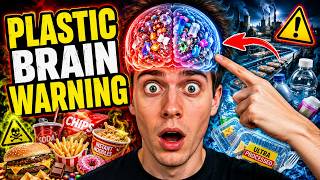
In this episode of the Filtered podcast, host TJ Walker walks listeners through three loosely‑connected but thematically linked issues. He begins by summarizing a May 7 Study Finds article that reports micro‑ and nanoplastics in human brain tissue, especially among donors with dementia, and suggests ultra‑processed foods may be a major exposure route. Walker stresses that the data are correlational, not causal, and urges low‑cost, common‑sense actions: eat real (unprocessed) food, filter tap water, avoid microwaving in plastic, and reduce overall plastic exposure. He then shifts to a political‑cultural analysis, citing a Washington Post/YouGov/NewsGuard survey showing that a sizable share of Americans—particularly Democrats and younger adults—believe recent high‑profile shootings (the White House Correspondents’ Dinner, the Butler, PA assassination attempt, and a Trump golf‑course incident) were staged. Walker uses this to discuss epistemology, the erosion of shared facts, and the danger of partisan conspiracy thinking for democracy, while also condemning Trump’s systematic lying. Finally, Walker critiques Transportation Secretary Sean Duffy’s new family reality‑show road‑trip, questioning its ethics, potential conflicts of interest with transportation‑industry sponsors, and the broader problem of government officials turning public office into personal branding. Throughout, Walker intersperses humor, calls to his Ultimize habit‑building platform, and listener shout‑outs, framing the episode as a call for practical, evidence‑based personal choices and a renewed commitment to facts in public discourse.
Chapters
Ultimize. Microplastics, junk food, and your brain. Don't panic, but maybe, just maybe, put down the Doritos. This is according to a May 7th article from Study Finds titled "Plastic is building up in human brains, and junk food may be making it worse." Researchers are raising a serious but still unsettled concern. Microplastics and nanoplastics have been found in human, tissues, including the brain and other body parts, and ultra-processed foods may be one of the major ways these particles get into our bodies. The article summarizes research and commentary led by Dr. Giulio Lucchino and colleagues published in the journal Brain Health. It says prior research found human brain tissue had much higher concentrations of microplastics than other organs, including the liver and kidneys. And at the highest levels were found in donors diagnosed with dementia. Now, before anyone panics and throws every plastic container in the house into a neighbor's pool, let's be clear: this does not prove microplastics cause dementia. It does not prove one bag of barbecue chips turns your brain into a sandwich bag. It does not prove every plastic water bottle is a tiny transparent assassin. But it is concerning. And this is where we have to think like grown-ups, which I realize is a bold request in America in 2026. We don't know whether these particles are causing disease, worsening disease, or simply accumulating more in people who are already sick. Maybe microplastics contribute to brain problems. Maybe diseased brains clear particles less effectively. Maybe both are connected to something else entirely. That's why actual scientists say we need more research, and cable news says your spatula is killing your grandmother. More after these messages from pharmaceutical companies. So no, this is not a moment for hysteria, but it is a moment for pattern recognition. Start here. This is the same way to think about the microplastics in the brain story. Don't panic. But don't pretend this is nothing. We do not yet know whether microplastics cause dementia, stroke, depression, or anxiety. We don't know how much comes from food packaging, bottled water, plastic containers, air pollution, clothing fibers, or the fact that modern civilization has basically shrink-wrapped the planet. But we do know this: ultra-processed junk food was already a bad idea before scientists started asking whether it was delivering tiny plastic particles into our bodies. Correlation does not prove causation. Fine, everyone online learned that phrase and now uses it like they passed the bar exam in epidemiology, but correlation's not meaningless. Correlation can be a smoke alarm, and when the smoke alarm is going off in a building that already smells like gasoline, maybe don't stand there eating Cool Ranch dust off your fingers saying, Technically, we need more research. The takeaway is simple: eat more real food, drink filtered tap water when you can, and stop treating things wrapped in plastic and engineered in a lab as normal daily meals. This is not panic, this is adulthood. And that's the real problem. This story doesn't have to carry the whole case against junk food. Junk food was already on trial. The prosecution already had obesity, diabetes, heart disease, excess sugar, excess salt, low fiber, food engineered by people in lab coats to make you eat until you start negotiating with the crumbs at the bottom of the bag. Nobody opens a family-sized bag of chips and says, "I'll just have the recommended serving." The recommended serving is apparently about 7 chips, which is not a serving, That's a hostage negotiation. You eat 7 chips just trying to figure out what flavor they are, then suddenly your hand at the bottom of the bag like you're searching for survivors after a cheddar avalanche. So if ultra-processed foods may expose us to more microplastics through packaging, processing, bottled drinks, and plastic contact, this is not the whole case against junk food. It is one more exhibit, Your Honor, Exhibit A, this food makes us sick. Exhibit B, we can't stop eating it. Exhibit C, it glows orange. Exhibit D, it has a mascot. And Exhibit E, it may be smuggling microscopic plastic particles into the body like a cartel with a cartoon tiger. The article also notes that ultra-processed foods make up more than half of calories consumed in the United States. And it cites large observational studies linking higher ultra-processed food consumption to increased risk for mental health symptoms, depression, anxiety, dementia, memory problems, stroke— a lot of fun stuff there. Again, observational studies don't prove cause and effect, but this is not one lonely study wandering through the woods with a flashlight. This is evidence stacking up in a direction. Now, I wanna be careful here. I don't wanna be a demagogue because health news instantly becomes either panic or marketing. One day coffee's killing you, the next day coffee makes you live forever. One day eggs are basically cigarettes with yolks, the next day eggs are nature's multivitamin. One day chocolate is good for your heart, which is always the study people choose to believe because it confirms the sacred medical principle of I was going to eat this anyway. Coffee is a good contrast. Coffee has been studied thousands of times. For many people, the evidence seems mixed to positive overall. So if one study says one cup of coffee may harm your toenail microbiome, you don't need to have to move to a cabin and drink boiled bark from now on. But ultra-processed junk food isn't coffee. The evidence against it was already ugly before microplastics walked into the police lineup. The reason this story matters is not that we now have perfect proof that plastic packaging is destroying everyone's brain. We don't have that. The reason it matters is that the practical evidence is good either way. Eat fewer things from plastic bags. Drink fewer things from plastic bottles. Don't microwave food in plastic containers. Eat more real food. If future research says microplastics are worse than feared, you acted accordingly. If future research says the risk is smaller than fear, you still ate more blueberries, broccoli, beans, and real meals. What a tragedy. Somebody alert the authorities. A citizen accidentally improved his diet. No one is on their deathbed saying, "My one regret is that I didn't drink more soda from plastic bottles." You don't need a 40-year study to know an apple is probably a better snack than something called Blazin' Ranch Thunder Tubes. The food industry is not your nutritionist. The plastic industry is not your neurologist. Their job is to make it cheaper, sweeter, more addictive, more shelf-stable, and legally still call it food. Your job is to protect your own brain and your own body. Less junk, less plastic, more real food. And maybe don't build your diet around products that are both a mascot and a melting point. That's the philosophical issue here. How do we live responsibly when science is still developing? For starters, you don't panic. You don't become the person at a restaurant asking whether the salad spinner has endocrine disrupting vibes. You don't stand yelling at your Tupperware like it betrayed the family, but you also don't say, well, because we don't know everything, I'll do nothing. That's not skepticism, that's laziness wearing a lab coat. The question is not, do we know everything? We never do. The question is, what are the low-cost, common-sense steps that are likely to help and unlikely to hurt? And in this case, the answer isn't that complicated. Eat less ultra-processed food, reduce unnecessary plastic content, with what you eat and drink. Drink tap water, filtered water if you can. Don't microwave food in plastic. Eat more real food. That's not hysteria. That's not anti-science. That's not wellness guru nonsense where a guy charges you $997 to tell you that your aura is gluten sensitive. It's simply the preponderance of evidence pointing in the same direction as common sense. So No, don't panic over microplastics, but don't be a sucker either. Less junk, less plastic, more real food, more tap water, more filtered tap water, and maybe the next time a shiny bag, a shiny plastic bag screams at you from a gas station shelf, remember, if the product needs a cartoon animal, fake cheese powder, a 19-syllable ingredient list, and a plastic bag to survive until the next presidential administration, it probably should not be the foundation of your brain strategy. I'm TJ Walker. This is Filtered. There's more to come. I'll be honest with you. Most people don't have a learning problem. They have a consistency problem. They'll watch something, listen to something, get fired up for a day, and then life takes over and everything resets. That's exactly the gap I'm trying to fix with Ultimai. So if you're getting something out of this show right now, Go to ultimize.com, U-L-T-A-M-I-Z-E, and get a free course. There's one on communication skills, one on building better habits, and the whole idea is to make this part of your daily routine, not a one-time thing. It's simple, it's free, and it actually works if you use it. ultimize.com. When Democrats start believing fake shooting conspiracies Democracy has a bigger problem. This is according to a new story from Washington, the Washington Post. It's an article by Liam Scott, and it's a part of a NewsGuard YouGov survey. It found something genuinely disturbing. About 1 in 4 Americans believe the April shooting at the White House Correspondents' Dinner was staged. That's right, fake. They think it didn't really happen. Only 45% of Americans said they believe it was legitimate, and 32% said, "We're not quite sure." Now, here's the part I want Democrats to sit with for a moment. The survey found roughly 1 in 3 Democrats believe the Correspondents' Dinner shooting was staged, compared with only about 1 in 8 Republicans. Younger Americans, especially those between 18 and 29, were also more likely than older Americans to believe it was staged. The poll also found that 24% believe the 2024 Butler, Pennsylvania assassination attempt was staged, including 42% of Democrats and only 7% of Republicans. And 16% believe that Trump golf— the Trump golf course incident was staged, including 26% of Democrats and 7% of Republicans. So yeah, in this case Democrats are behaving irrationally and as insane— time out here, I just want to stress, sometimes people who watch this regularly accuse me of being biased. Oh, TJ, you criticize somebody I don't like, so you're, you're in the tank for the other team. Okay, I'm here as a sane, sensible centrist, and I'm required by federal law and my own annoying personality to call out irrationality wherever I see it. If Republicans believe nonsense, I say Republicans are believing nonsense. If Democrats believe nonsense, I say Democrats are believing nonsense. If independents believe nonsense, I say congratulations, you've achieved bipartisan stupidity. And I'm sorry, but believing that these Trump assassination attempts were staged when there is no evidence they were staged is not healthy skepticism. It's not doing your own research. It's conspiracy thinking. It's taking your hatred of Donald Trump, feeding it Red Bull, giving it a podcast, and letting it run around the internet yelling, "Wake up, sheeple!" So here's the uncomfortable truth. In this case, Democrats are the ones more likely to believe a fake shooting conspiracy about Trump. That's irrational. That's dangerous. And no, it does not become smarter because the conspiracy is aimed at someone you dislike. If you believe every terrible thing about Donald Trump automatically without evidence, you're not doing democracy any favor. You are doing fan fiction with a voter registration card. Democracy requires something deeper than my side good, your side evil. It requires a shared respect for facts. You can despise Trump, believe me, I get it. You can despise him politically and still say No, I'm not going to claim an assassination attempt was staged unless there is evidence. That's not going soft on Trump. This is being hard on stupidity, and stupidity does not become noble because it's wearing your team's jersey. This is an extreme problem for democracy because democracy assumes something very basic, that enough people can still be reached by facts. Democracy does not require everyone to agree. The U.S. was founded in a time of brutally partisan newspapers. Founders attacked each other in print with language that makes today's cable news sound like a church bake sale, but there was still, at least as an ideal, respect for facts, reason, science, evidence, and knowledge. That brings us to a word people don't use much at dinner unless they want to stop being invited to dinner. Epistemology. Epistemology simply means how do we know what we know? That's it. It's the study of what counts as knowledge. How do we decide whether something is true? Do we look for evidence? Do we check independent sources? Do we admit when we just don't know? Or do we say, I saw a guy on TikTok with sunglasses in his truck and he sounded confident. The attack on epistemology is the attack on the very idea that facts exist outside your own feelings. And yeah, Democrats deserve some criticism here, but let's also be honest, the greatest single attack on truth in American public life over the last decade has come from Donald Trump. America has always had some politicians who lie. Let's not kid ourselves. Some lied about taxes, some lied about war, some lied about affairs, some lied so badly they looked like they were reading from a teleprompter written by their defense attorney. But Trump's different. He didn't just lie occasionally, he built an entire political identity around lying constantly, proudly, aggressively, and shamelessly. He created a universe where he always won, he was somehow always the victim cheated, he's always brilliant, and every fact that made him look bad was simply fake news. This is something new at this scale, and it appears to be shattering the fabric of society, ripping apart— I'm mixing my metaphors, sorry— because once one side spends years saying facts are fake when they hurt me, eventually the other start— the other side starts saying, fine, then facts are fake when they help you. And now everyone is sitting in the rubble saying, what is democracy? Or why does democracy smell like burning hair? When people say do your own research, most of the time they don't really mean research. They mean find somebody online who flatters your existing prejudice. Newsflash: this is not research. This is emotional DoorDash. Real research means looking for independent sources. It means asking who is verifying this, who has evidence, who corrects mistakes, who has a track record. If you go to a restaurant and the only 5-star reviews are from the chef's brother-in-law and a guy named Definitely Not the Owner, you understand those reviews are essentially worthless. News works the same way. You can't say this outlet criticized someone I like, so they are biased forever. Sometimes a fact makes your side look bad because your side did something bad. That's not bias. That's reality refusing to be your intern. So what do we do? We have to rebuild a culture where facts actually— or where people actually want facts. Not just facts that flatter them. Not just facts that hurt their enemies. Actual facts. That means reading outside your comfort zone. It means checking serious outlets, serious news outlets with real editorial standards. It means using independent media bias and reliability ratings as one input, not as a religious text, but as a guide. It means saying "I don't know" more often. It means saying, "That sounds too perfect for my side, so I should be extra skeptical." And it means refusing to call every inconvenient fact bias, because once a society loses the ability to tell the difference between evidence and vibes, democracy itself becomes impossible. We can't vote intelligently if we can't know anything. We can't hold leaders accountable if every scandal is fake when our side does it. We can't function as citizens if truth is just whatever makes us feel morally superior for the next 7 seconds. So yeah, call out Trump's war on truth, but also call out Democrats when they fall into sloppy conspiracy thinking. The standard has to be simple. I want the truth even when it annoys me, especially when it annoys me, especially when your side loses an election, because that's when it matters. I'm TJ Walker. This is Filtered. Stay tuned. You don't need a complete life overhaul. You You don't need a 10-step system or a 90-day transformation. Most of the time, you need a small shift repeated often enough that it sticks. That's it. If you're listening to this and thinking, yeah, I'd like to tighten up a few things, go to ultimize.com, U-L-T-A-M-I-Z-E dot com. There's a free course there for you, communication skills or habit building, and it's designed to give you something simple. Something you can use and repeat every day. Not overwhelm you, no complexity, just something you can use. Go to ultimize.com and start. Sean Duffy's reality show road trip is not public service, it's government as influencer content. According to CNN NewsSource reporting carried by Gray Media, Transportation Secretary Sean Duffy and his wife, Fox News host Rachel Compost Duffy, have been filming a new reality show called The Great American Road Trip. Trip over the last 7 months. The show features the couple and their 9— yeah, I had to fact-check that— their 9 children traveling around the country and is expected to stream on YouTube. Duffy, of course, is not new to reality TV. He was on The Real World: Boston in 1997, met his wife while filming Road Rules All Stars, and later won a Real World Road Rules Challenge season. Okay, critics say the project is tone deaf and raises ethical questions. Rachel Campos Duffy has said production costs were paid by a nonprofit and that the family was not paid. Duffy has said no taxpayer dollars were spent on his family, but the reported sponsors include companies with major transportation interests: Boeing, Shell, Toyota, United Airlines, and Royal Caribbean, companies that intersect with the Department of Transportation's world of regulation. Safety, infrastructure, and public policy. Now, in normal times— and folks, we're not in normal times— but in normal times, I am all in favor of public officials using media creatively. Use social media, make videos, explain what your department does, show people how government works, help Americans understand how to get better service, safer roads, cheaper transportation, cleaner air, fewer delays, and maybe even a train system that doesn't feel like it was designed during the Polk administration and maintained by raccoons. But what exactly is being accomplished here? Is this explaining aviation safety? Is this helping working families afford transportation, be able to pay for gas? Is this solving the problem of people who can't afford to fill their gas tank? Is this making air travel any safer? Is this reality show building public trust, or is this a cabinet secretary using the government spotlight to burnish his personal brand with a wholesome family road trip reality show while Americans are getting squeezed at the pump? Because if the answer is to love America is to see America, that sounds lovely unless you're one of the millions of Americans saying, I'd love to see America, Sean, but I'm currently trying to afford seeing my job across town because I can't pay for the gas. Yeah, I've got no problem with public officials using cameras. Use cameras to educate people, explain policy, use cameras to show how government can improve lives. But Sean Duffy is the Transportation Secretary. His job is not to become America's next lifestyle influencer with better hair and a cabinet title. At a time when families are struggling with gas prices, transportation costs, aviation safety concerns, and economic stress, he's promoting a reality road trip show. I gotta tell you, that's not public service, that's content. And yeah, Duffy looks good on camera. He's a handsome man. Donald Trump has noticed and praised his looks. Trump sees government staffing the way Bravo sees casting. Can he hit his mark, hold the light, and say something patriotic next to a truck with good hair? But the Transportation Department is not a pilot for a streaming series. At least it's not supposed to be. It's supposed to help people move through the country safely, affordably, and efficiently. This isn't leadership. This is government as a family blog. And the timing is what makes it so grotesque. We're in a period when transportation is not some side issue. Transportation is life. If you can't afford gas, you might not be able to get to work. If you can't get to work, you can lose your job. If you lose your job and the same administration is shredding the social safety net, then what exactly is the plan? Sorry, you lost your job because you couldn't afford the commute, but have you considered watching Sean Duffy's family visit a monument? This administration has done everything it can to make transportation harder for regular people. It's attacked electric vehicles. It's attacked clean energy. It's treated climate policy like a personal insult. And at the same time, its foreign policy chaos and needless wars help drive up fuel prices, which punish the very working-class people Trump claims he adores. That's the obscene part. A struggling worker is deciding whether to buy gas or groceries while the Transportation Secretary is essentially saying, America is beautiful from the window of my brand-enhancing road trip. Great, so is Versailles. That didn't make Marie Antoinette a populist. And then we get to the ethics of the issue. Maybe the family wasn't paid, maybe production costs went through a nonprofit. Fine, those facts matter, but ethics is not just about whether someone can find a technical defense after the fact. Ethics is also about judgment. If companies with transportation interest are sponsors of a project connected to the Transportation Secretary's public image. That should make everyone uncomfortable. Boeing, Shell, Toyota, United, Royal Caribbean— these are not random lemonade stands from a church picnic. These are powerful companies with interest in transportation policy and regulation, and they're getting shits with the boss man. That's not good. The defense seems to be no taxpayer dollars paid for the production and the family wasn't paid. Okay, fine, great, that's better than the alternative, but that doesn't end the ethical question. If you're the Transportation Secretary and companies with huge transportation interest are sponsoring your family media project, Americans are allowed to ask questions. Boeing, Shell, Toyota, United Airlines, Royal Caribbean, those are not neighborhood bake sale sponsors. Those are companies with business before the transportation world. Even if every form is technically filled out correctly, the whole thing smells like government power being turned into personal brand equity. This is the Trump era problem in miniature. Public office becomes a platform, the platform becomes content, the content becomes influence, the influence becomes future money, or sometimes it's today money, and somehow we're supposed to clap because there are kids and a flag in the shot. Look, Duffy may be genuinely in love with America, okay, his family may genuinely enjoy road trips, I hope they had a wonderful time, but the American people are not paying cabinet secretaries to audition for their post-government media career. They're paying them to solve problems. Transportation is not a decorative cabinet post. It is roads, bridges, airports, rail, shipping safety, fuel costs, commuting, supply chains, and whether millions of Americans can function economically. If Sean Duffy wants to be a reality TV star, good for him. America has room for many reality TV stars. Apparently, we even let one become president a couple of times. But if he wants to be Transportation Secretary, then be Transportation Secretary. Help people afford transportation. Make travel safer. Explain policy. Fix problems. Stop acting like the cabinet is just a holding room between Fox News contracts. Because this is the core sickness of the Trump era. Everything becomes performance. Everything becomes branding. Governing becomes secondary to getting the shot right. And for struggling Americans, that's not patriotic, it is insulting. I'm TJ Walker, this is Filtered. I wanna say hello to a couple of friends who stopped by today. @ath says, "Cheers from Seoul." Well, good to hear from you. We do have a number of regular viewers, listeners from Korea. Just talking to friends yesterday at home, about Korea, hoping to get there sometime soon. I used to have a Media Training Worldwide division in Korea associated with a major Korean university, and my love for Korea, especially Korean food and culture, is very strong, so hoping to get there one day. @lumbago_snake_oil_sale67 says cheers from China. So good to hear from you, good to hear from our friends in China. And I'm glad to see we're getting through the firewalls there. I'm TJ Walker. Thanks. See you tomorrow. Okay, my takeaways.
More from TJ





The Breakout Cases - What Actually Caused Famous Speaking Career Breakthroughs | Ultamize

The Red Circle Sessions Finale - Build the Speaking Career You Came Here For | Ultamize

Two Stages, One Logo, Two Completely Different Realities - Main Stage vs Independent Events | Ult...

Pre-Reset - Why Repetition Builds Better Speaking Decisions | The Red Circle Sessions | Ultamize

Your Decision, Your Framework, and What Happens After - Build Your Speaking Career First | Ultamize

The Red Circle Sessions Trailer - The Speaking Career Truth Nobody on That Stage Will Tell You | ...

The Two-Minute Ultamize Reset - Your Platform, Your Audience, Your Voice | The Red Circle Sessions