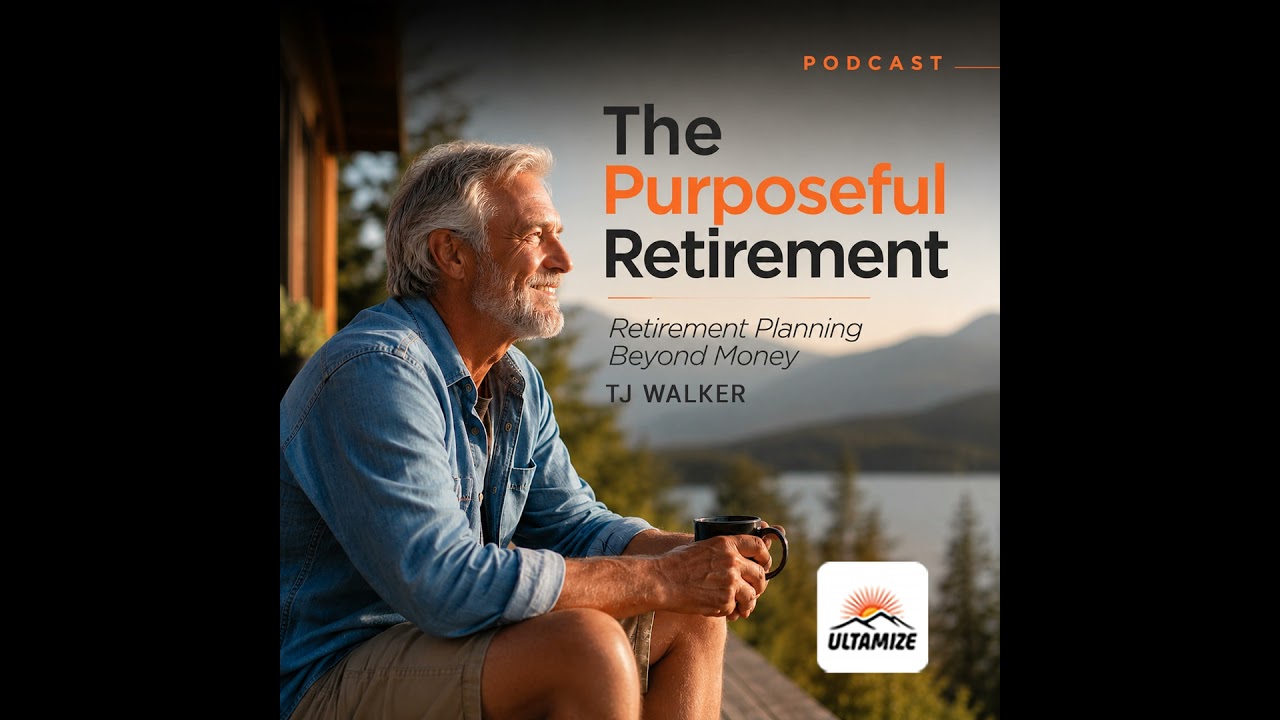
In this talk, TJ Walker challenges the common belief that retirement is the ultimate reward and instead frames it as a transition into a new life phase. He explains how, after decades of structured work, many retirees experience a gradual loss of purpose and structure, leading to feelings of emptiness despite financial security. Acknowledging that not everyone can retire comfortably, Walker shifts focus from financial planning to the psychological and practical aspects of building a meaningful post‑work life. He argues that humans need a mix of purpose, connection, movement, curiosity, structure, and usefulness, and that retirement offers the freedom to intentionally design these elements. He offers concrete pathways—part‑time work, mentoring, volunteering, creative pursuits, travel, community leadership, teaching, writing, and family involvement—emphasizing that the specific activity matters less than sustained engagement. Finally, he notes that aging often brings a shift from status‑driven goals to valuing time and personal fulfillment, positioning retirement as an opportunity to design a life worth waking up to.
Chapters
Ultimize. One of the biggest mistakes people make about retirement is imagining that retirement itself is the reward, as though the whole point of life is simply to eventually stop working. And listen, I understand why people think that way. A lot of people spend 40 years exhausted— commutes, stress, office politics, financial pressures, endless meetings, people emailing, just circling back as though they're fighter pilots returning from combat. Instead of middle managers discussing spreadsheet formatting. So, of course, retirement starts sounding magical. No alarm clocks, no deadlines, no difficult clients, no Monday morning meetings where everybody says, let's unpack this synergy opportunity. Okay, wonderful. But here's the problem. Relief and fulfillment are not always the same thing. I've seen people retire successfully financially and then slowly, slowly become unhappy personally. Not overnight, gradually. At first, retirement feels relaxing, then it feels unstructured, then repetitive, then weirdly empty. And people often don't recognize what's happening because technically nothing is wrong. They have freedom, they have comfort, they have safety, but their days slowly lose shape. That's why I think retirement needs to be viewed differently. Retirement isn't the destination. It's a transition into an entirely new phase of life with different opportunities and different psychological challenges. Before I go further, I want to acknowledge something important. I realize many people can't afford to retire comfortably. I realize millions of people are worried about healthcare costs, inflation, housing, and basic financial security. Those concerns are real. This series isn't minimizing those issues, but there are already thousands, tens of thousands of books, advisors, podcasts, accountants, and investment professionals focused on financial retirement planning. This series is about a different question. Once you've achieved at least some level of financial stability, how do you actually build a meaningful life? Because modern retirement creates a strange situation human beings historically pretty much never experienced— 20 or 30 or more years of relatively unstructured freedom. And some people thrive in that environment. Others drift. I've personally become fascinated by this subject partly because I'm thinking about my own future constantly now. I don't want to work the same way at 75 that I worked at 35. Honestly, I don't even want to work the same way 5 years from now that I worked 5 years ago. But I also know something about myself. I'd be miserable doing nothing, completely miserable. If I stopped creating things, if I stopped teaching, stopped building projects, stopped learning, stopped interacting with interesting people, my world would start shrinking psychologically. And I've seen that happen to people. A person who used to be dynamic, engaged, curious, social, and ambitious slowly becomes passive. Their world narrows. Their conversations narrow. Their routines narrow. Eventually, their entire day revolves around television, doctor appointments, weather, complaining about politicians, and deciding whether it's too early to have another drink because technically they don't have anywhere important to be tomorrow morning. That's not retirement at its best. That's drift. Now, let me be clear. I'm not arguing that retirees should work themselves into exhaustion forever. I'm not saying everybody needs a side hustle, a podcast, a nonprofit, a consulting firm, and a YouTube channel explaining productivity habits, all while standing in front of a whiteboard wearing suspiciously expensive sneakers. I'm saying most, most human beings need some combination of purpose, connection, movement, curiosity, some structure, and usefulness, not because society demands it, but because humans tend to function better that way. And one advantage of retirement is that for the first time in your life, you may finally, finally have enough freedom to intentionally design those things. Instead of simply reacting to survival pressure. That's the opportunity. Maybe your next chapter involves part-time work. Maybe it's mentoring. Maybe it's volunteering. Not everything has to be about money. Maybe it's about art. Maybe travel. Maybe community leadership. Maybe teaching. Maybe writing. Maybe helping your grandchildren. Maybe finally learning things you were too busy to explore for 40 years. These specifics don't matter nearly as much as the engagement because retirement isn't really about stopping life. It's about gaining more control over how you want to live your life. And honestly, I think that's one of the great opportunities of aging. By this stage, most people finally understand something younger people don't. Time matters more than status. You stop caring as much about impressing strangers. You start caring more about how your days actually feel. That's what this series is about— not escaping life, but designing a life you still want to wake up to.