Switzerland’s Super-Rich Beat Back a Tax Revolt
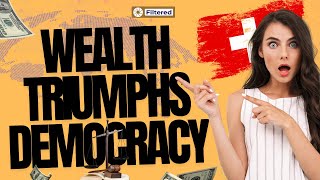
Swiss voters rejected a 50% inheritance tax on fortunes above 50 million francs by 78% to 22%, despite the proposal funding climate projects. Opponents warned of capital flight and forced business sales. TJ Walker compares the vote to U.S. estate taxes and Thomas Piketty's wealth-tax ideas, then argues Social Security reform might work better than large inheritance taxes.
Questions this video answers
78% no to 22% yes
50% levy on fortunes above 50 million Swiss francs
December 3, 2025
About $26 million (couple)
Chapters
Switzerland inheritance tax According to reporting from the Economist, Swiss voters have overwhelmingly rejected a dramatic new tax on inherited wealth. The proposal, pushed by the young socialist, would have created Switzerland's first federal inheritance tax, a 50% levy on fortunes above 50 million francs, which is a lot of money. With the money earmarked for climate projects, voters said no by a lopsided 78 to 22%. Switzerland is already one of the richest countries on earth and a magnet for billionaires, thanks to low predictable taxes and political stability. The vote signals that most Swiss still see that model is untouchable. The country's ultra rich did not quietly sit this one out. Wim Obiter, founder of Micromobility Systems, said he would say, fu, I'm cleaning it up, Switzerland, and leave. If the message passed, other tycoons warned they would be forced to sell family businesses. The initiative failed, but exposed a fault line. How much democracy is willing to ask of inherited wealth before that wealth threatens to walk? Okay, what's the real message here? We live in times of extreme income inequality. Should democracies and have an inheritance tax to kind of level the playing field a little? Absolutely. But politically, is it an easy sell even to people who don't have any inheritance coming? No, it doesn't poll well and voters typically vote it down. Let's dig a little bit deeper here. Okay. I have told you before, and I'll tell you again, I see myself as a sane, sensible centrist. Do I have political views or values? Sure. Anyone who tells you otherwise is a liar. But I don't necessarily align 100% with any one ideological position. I certainly think a case could be made, as it was in the early part of the 20th century in the United States, that there needs to be some leveling that democracy doesn't really work if you have so much concentration of wealth in the hands of a few. So the United States passed one laws with very high income tax and high estate taxes. Those have pretty much all been washed away. Yes, we still have an estate tax in the United States, but anyone rich enough to actually pay, which between a couple, you'd have to have about $26 million right now. Very few people have that much net worth. Anyone with that much money, unless they're just complete ignoramus, is going to have plenty of money for estate attorneys to rewrite wills and trusts and things. So they essentially never pay any tax. Sorry, but that's really the way it is. So this proposal came up in Switzerland. Switzerland is not the United States, but it is a highly capitalistic country. Very successful country, wealthy country, and it was voted down. Now, the billionaires threatened to bolt. Okay, here's the, here's the BS part. People love to say they're going to leave and that they typically don't. But it does happen. It certainly happened to the United Kingdom over the years. And a lot of people who were French originally have left the country because of taxes. So it can happen. Here's my feeling about estate tax. In a perfect world, in an ideal world, yes, we should. Because when someone works really hard and makes a huge amount of wealth good for them, let them keep most of it. I say the problem is when they give it to their children, their children didn't work hard for it, and their children quite often become derelicts. Drug addicts have all sorts of problems and are not adding anything to society. So simply giving them money gives them power to oftentimes do a lot of damage. Frankly, there's no real good to society for, for second, third, fourth generations having tons and tons of money. Now, again, you can make the argument, well, TJ in a free society, I should be able to do whatever I want with my money. Okay, a lot of people do find that effective. Here's my sort of different rationale for opposing most levels of estate tax. For starters, we live in a world that is simply more mobile than ever before. In the early 1900s, the beginning of the 20th century, it was really, really difficult to get to other countries, even other cities. You know, 1913, 1917, round about the times of the income tax in the United States. You couldn't just fly to Europe or have a weekend getaway to Tahiti the way you can now. So wealthy people really were very rooted in one place. It's not true today. Today, the super wealthy often have fun. 5, 10, sometimes 20 homes. They're constantly traveling around the world, and they see themselves, rightly or wrongly, as citizens of the world. They're going to Davos. They are opening up media companies in England or Australia. They're doing deals in South America. They're constantly traveling to vacation homes in different cities and in different countries. They're constantly attending fancy conferences. And not just Davos, but other fancy conferences around the world. They're going to birthday parties at palaces in Dubai. This is the world of the modern rich. I'm not saying it has to be that way or it's a good thing, but it is the modern world. So when you tell them we're going to tax you really heavily here, it's just too easy for them to say, okay, I'M going to move over here. I'll declare my citizenship here, or I'll say all my revenues are from over here or I'll just spend enough money on lawyers to make it look like on paper I'm poor. And that's what I kind of feel about taxing the rich. The way a lot of conservative, let's say Christian ministers or fundamentalists of any religion feel about premarital sex. Yes, they're against premarital sex. Society should not condone premarital sex. But you don't really hear that many of them talking about it anymore, Right? It's because the genie is out of the bag. That issue has been lost. We live in a culture now where mainstream so called normal people of traditional values typically live together before they get married. And it's not a scandal anymore. Even though it might not be what a conservative religious preacher finds to be truly sound in their Bible or whatever document they think is religious truth. They kind of lost that issue. The times have simply changed to make it too easy for kids, teenagers, college kids, people in their 20s who aren't yet married to have sex outside of marriage. So they don't talk about it that much because they realize it's a lost issue. I kind of feel the same way about inheritance taxes and for that matter wealth taxes and taxes on really super high incomes. I frankly would be happy if we could just get wealthy people to pay the same percentage of taxes that their secretaries do. Warren Buffet famously says his own secretary pays a much higher percentage of her income in federal income taxes than he does. I think we'd all be, A, we'd raise more money, B, we wouldn't have the constant fight pushback from the wealthy. C, you wouldn't have the wealthy constantly making alliances with political extremists saying, okay, just give us our tax cut. You can do anything else you want. Because that is what happens certainly in America. I'm not an expert on all the political machinations of Switzerland. I don't purport to be. But they historically they had relatively low taxes. That was one of their big benefits. And this kind of goes against their message. It is interesting that the provision got a no vote by 78%. Now my understanding is they would have to have something like in excess of $50 million in an estate before this tax would hit. And even though Switzerland is a wealthy country, certainly 99% of the population is never going to have $50 million, even a country like that. So people were not voting necessarily their own self interest. Presumably they were Persuaded by either arguments that it wasn't a good thing to do or they would lose too many wealthy people. I wasn't there to see the whole campaign, but I'm pretty sure that the billionaires got together and said, we got to stop this. Let's put all the money we can, let's do anything we can. Let's hire lobbyists, political activists. I don't even know if they can do advertising there. But it did lose. Now, Thomas Piketty, well known economist, is very much in favor of a worldwide wealth tax, which is a great idea. Again, if we had worldwide government. How you actually impose that without worldwide government, that's one of those things in the footnotes that isn't ever really fully explained. Now, his point is based on a rational reason, is if one country raises a wealth tax or an inheritance tax on extreme wealth, it's just too easy for a wealthy person to move to another country. If it's a worldwide wealth tax, then there would be no incentive for the person to move. They would have to pay up. So we'll see. I am skeptical. I also think for those of you who are centrist and center and center left parties, it's kind of a fool's errand because every time you go for some huge tax, a wealth tax, large inheritance tax, quite often you lose number one. At least since about 1950 in the United States, you lose number one. Number two, you fund far right wing extremist organizations because billionaires say, oh, I don't care if you, you want to ban abortion, all other stuff that doesn't affect me, I'm rich. My family and I, we can always fly to another country for anything like that. You can't really affect us. Your laws, your draconian laws, cultural laws won't affect us. We're rich. If you just lower our taxes, we'll give you all the money you want for your campaign. So that's the big political problem I see for centrist political parties around the globe, and certainly center left parties or even left parties, is you basically give tremendous funding to your opponents, making it virtually impossible to win the next election. And then everything you wanted or even got is repealed and then you have more extremism. Here's how I would end this argument. Why here in the United States, why not simply have a flat, flat tax on Social Security? Right now it's a two tiered tax. You only pay taxes on about the first $160,000 of income. So somebody makes $160,000 a year versus someone who makes $20 million a year pays the same amount of Social Security tax, You could. I think it would be much better political messaging, say, hey, let's have a flat rate fair tax for Social Security, maybe even lower at 1% on everyone below 160,000. But if everyone who makes above 160,000 has to pay that on every penny, you would raise a lot more money, create a lot more fairness, and you would kind of remove the argument from the wealthy that they're somehow being penalized for being wealthy. They would be paying the exact same amount on a percentage basis as everyone else. So that's my own modest proposal.
More from TJ





The Breakout Cases - What Actually Caused Famous Speaking Career Breakthroughs | Ultamize

The Red Circle Sessions Finale - Build the Speaking Career You Came Here For | Ultamize

Two Stages, One Logo, Two Completely Different Realities - Main Stage vs Independent Events | Ult...

Pre-Reset - Why Repetition Builds Better Speaking Decisions | The Red Circle Sessions | Ultamize

Your Decision, Your Framework, and What Happens After - Build Your Speaking Career First | Ultamize

The Red Circle Sessions Trailer - The Speaking Career Truth Nobody on That Stage Will Tell You | ...

The Two-Minute Ultamize Reset - Your Platform, Your Audience, Your Voice | The Red Circle Sessions