The Complete Guide to Media Training Books and Manuals
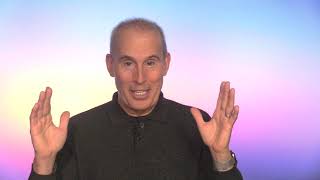
T.J. Walker breaks down what media training books should teach: how to look confident on camera, craft three core messages of about ten words each, answer tough questions without getting trapped, and deliver quotable sound bites using ten common speech patterns.
Chapters
What should you expect to find in a good media training manual? You should find in depth coverage of four specific subject matter areas. The first is how to look comfortable, confident, relaxed in front of a video camera. For many people, that's the scariest skill to master. The second skill any media training manual should cover is how to shape a message. How do you figure out what in the world you can say to this reporter or at this press conference? The third skill is how to answer questions in an interview. It's not like a normal conversation. And finally, the fourth skill, how to package your messages with interesting quotable sound bites. Those are the four traditional elements of media training. Now, there are a million different variations. There's crisis communications, you may find chapters on that. There are elements of how to create the best YouTube social media video. There can be specific tips to being on with a confrontational talk radio host. But at some level, everything is filtered under these four big umbrellas of appearance. How to look your best messaging, answering questions and making sure your answers are clear, quoted because you package them in the right way. Now, media training worldwide, we go by this manual right here, Media training A to Z. I wrote this book. It's available on Amazon and other places you can find it there. There's a lot of different stuff in here, but I want to cover briefly with you what is in the four most important chapters. And the first important chapter is how to look your best on camera. Most people all make the same mistake. They get on camera, they get nervous, so they tighten up, their body stops moving, their volume goes much lower, they become monotone, they look scared and nervous and uncomfortable because they are scared, nervous and uncomfortable. So so much about looking your best on camera involves forcing yourself to move your hands because your hands are going to want to freeze. You're going to think that's more professional. No, comfortable, confident people, relaxed people move their hands when they speak. You're going to want to pause, you're going to want to change the speed, the tone, the volume of how you speak, because that's what people do in real conversation. There's this myth out there that you have to be trained on how to act in front of the TV camera. And that's why you need a media trainer and that's why you need a media training manual. No, what you need, what most people need is to be trained on how to not act, how to not act scared in front of the camera. What most people do is they start acting scared in front of the camera so they change themselves completely. The real solution is to stop acting scared and simply act the way you do when you are comfortable and relaxed and having a normal conversation with one colleague or friend or family member. Because the things you do in that normal conversation are exactly the things you need to do to look and sound your best on camera. Now, there are some things that are unique to looking your best on camera. Things like leaning forward 15 degrees rather than sitting back. Relaxed. Everyone looks heavier this way. You got a double chin. You don't want perfect posture straight up like this. You want to lean forward a little. You want to look at the camera rather than down at the screen, at the person you're talking to or eyes darting around. And you want a little bit of a smile on your face because if you don't, you'll look bored and boring. A blank look on your face is fine for an in person meeting, but on video you'll look uncomfortable, bored, and like you'd rather be someplace else. So those are the fundamentals of how to look your best on camera. The most important points. The next thing you got to think about is how do you create a media message? You should never go into an interview unless you have really figured out everything that you have to say to the media on this topic. And you can do it in about 30 seconds. A good media message is something you should be able to say in 10 words or less and you get three of them. So you get three 10 word messages. That much clarity if you hear the word and, or therefore, or however, or but come out of your mouth. Now you're trying to combine two media messages. Don't be greedy. Try to focus on one clear message and then another one and another one, for a total of three. When you're coming up with your media messages, you first have to ask yourself, is this a message that's truly important to me? Is this something I want the world to know? Next you got to ask yourself, am I answering a basic question that I know the reporter is going to want to ask on this? Next you have to ask yourself, will the reporter actually find my message interesting? Too often people want to go back to some boilerplate or. Well, we always say our corporate message is all, no. A media message cannot be some generic corporate messaging. It has to be specific to the media scenario today where you're being interviewed. You also have to think about, does the audience of that media outlet actually care about this message? Is it interesting to the audience? And then next you got to think about, have I truly put all the messages in priority and eliminated anything other than the top three points. That's what you need to do when you come up with your message. The Next Pillar Answering Questions when you're in interview now it's time to answer questions from reporters. There is a particular process you need to master. That's the next big pillar in any media training manual. Sometimes a reporter will ask you two or three, even four questions at once. Don't try to be the smart professor and say, let me take your fourth question first and your third question second. No, don't pick the one question that this most interesting and most intellectually challenging to you. Nobody cares about you. Instead, pick the one question that's easiest for you to get back to your prepared message points. You have to think strategically. That's what you want to do when you're answering questions. Next tip Keep your eyes on your message points during the interview. If it's a phone interview, by all means you should be staring at a sheet of paper. Don't rely on your memory. Don't be looking at 20 different websites during a phone interview. Stare at your three message points. Makes it a lot easier. Next tip Never repeat the negative words, the negative messages of the reporter. So you're saying you are a crook? No, I'm not a crook. I'm honest. Don't say that because now the only quote will be I am not a crooked. Do not repeat the negatives of the reporter. Use your words. Use your positive words about what you want to talk about. Let the reporter and everyone else deduce that you don't necessarily agree with the negative assumptions and negative words. It's a less linear thought process. It's not as logical. Typically, someone says, what about premise A? You say, no, premise A isn't true. Actually, premise B is true. Can't do that in a media interview. You need to go right to Premise B is true and let people deduce that you don't agree with Premise A. Next tip. Don't be afraid to say, I don't know. Just don't act embarrassed about it. Don't look or sound flustered. If it's something easily knowable, you can say, I don't know. My colleague in accounting does know. I can find that out and email you within the hour or call you back. It's very rare that you're going to get in trouble for not knowing. Unless it's something obvious that you should know. Like if you're running for the president of a country and a reporter asks you, why are you running for president? That you better know an answer to but don't guess. Where people get into trouble is they're asked a question, they don't know the answer, and they think, oh my gosh, what am I going to do? Let me make up something. Let me go through this. Let me just come up with something. They get in trouble. No, don't be afraid to say, I don't know. Next huge skill that's extraordinarily important, the ability to hear the question and then rewrite the question to make it easier for you. This is not the same thing as dodging questions. When I say rewrite a question, I mean hold that question up to the light. Look for an easier way of the question being asked so you can answer it. This is a critically important skill, and it's not to be confused with dodging the question. A lot of people think media training is about ignore the reporter's question and say whatever you want. No, that simply doesn't work most of the time for most people, and most of the time, reporter will hate you and make you look bad. And you're not going to get your message across. So you cannot simply dodge or avoid the question, but you can rewrite the question in your own mind. For example, quite often when I'm in a foreign country training a president or a prime minister, I might have local political reporters come to me and say, take T.J. don't you feel guilty and ashamed about teaching people how to lie and spin and obfuscate? Sounds like a tough question right now. I don't teach people to lie, but I don't want to say I don't teach people to lie because that sounds like a quote from someone who's a lying teacher. I don't feel guilty about my profession, but I don't want to say I don't feel guilty about my profession because that kind of sounds like what people would say if it's a profile of a hitman or a mobster or something very negative, defensive. I can't answer this question until I've found some part of the premise I agree with or I've been able to rewrite it to make it easier. I don't agree with the final premise of teaching people to lie. I don't agree with the premise of feeling guilty. What is the reporter really asking me here? T.J. how do you feel about being in your profession now? It's the easiest question in the world. I feel great to be in a profession where I teach other leaders how to communicate effectively. Reporter cannot honestly claim that I dodged the question and the reporter cannot Quote any part of that out of context to make me look bad, negative or defensive. So that's a critically important skill. The final skill in answering your questions, you've got to bridge back to all three message points in every single answer and do it in a way where you don't sound like a robot. Different wording, different order, different examples, different levels of abstraction to make it sound conversational. And those are the keys to answering questions effectively. The final pillar in any good media training manual is how do you package your messages with sound bites so that you know in advance what will get quoted. Reporters, when they quote you, whether it's tv, radio, text, audio, video, they're looking for certain things to make the story more interesting. They're looking to quote you saying things that they can't just write. It's got to be something that is more interesting for their audience, their readers, their viewers, their listeners. Something that brings clarity to the topic and a little more memorable, a little more interesting. And what I have found is virtually all quotes come from one of ten speech patterns. First one. Bold action words. Anytime you can use really specific, bold, action oriented words. Destroyed, Overwhelmed. Bold. Bold language will get you quoted because reporters can't typically use bold language. Number two, emotion. Reporters love quoting you using emotion. Reporters are not allowed to talk about their own emotions. But what does every great drama have? It's got a lot of emotion. So if you say you're disappointed by something, or angry, you're upset or outraged, it makes it more quotable. Anytime you use a emotion, you increase your odds of being quoted. Number three, the easiest way to ever get quoted. Attack someone. Say they're awful, horrible, they're destroying the world, their product is killing people. You'll be quoted. Now, am I telling you to go around and attack people just to get quoted? No. You might not ever want to attack anyone. But you need to realize if you do attack, you will be quoted. Reporters love controversy. What's the best story to be on if you're a journalist? War. What's the second best story? Political campaigns. Because people are attacking each other all day long. If you attack, you will be quoted. This is a good time to remind you there's no such thing as a good sound bite in the abstract. A sound bite is good if and only if it's on the message you decided in advance you wanted. Doesn't offend anyone that you don't want to offend and you're personally comfortable with it. Number four, cliches. Reporters are taught not to write cliches. You Were taught in writing class in high school not to write cliches. But reporters love quoting you and me and other people they interview using cliches because cliches become cliches because they're more memorable ways of saying something. So if you have a cliche and it's on your message, if it comes out of your mouth during the interview, chances are you will be quoted. Number five, humor. Reporters, like anybody else, like a good laugh. They like to put a smile on other people's faces. So if you use humor in an interview, there's a good chance it'll be quoted. But be very careful. So much of humor is really an underhanded attack or criticism of someone or something. So you have to be very careful. It can be risky using humor. You could be a great spokesperson and never use humor during an interview. But if you do use humor, make sure it's what you planned in advance and that it's on your message. Number six, rhetorical questions. What else makes something easy to quote by a reporter a rhetorical question? It just makes the idea more interesting than stating it in a straightforward way. It's more this instead of this every time. So are you better off now than you were four years ago? Some political candidates use different variations. Around the world is much better than saying things aren't any better now than they were four years ago. Rhetorical questions can be a very effective tool in getting your message quoted in the final story. Number seven, analogies. Reporters are trying to make some new idea more understandable, more relatable to their audience. So when you come up with a specific analogy, it makes it easier to visualize. It takes an abstract concept and makes it so that it's visual. I hope I made that point clear. I hope I'm not beating a dead horse to use an analogy. Number eight, pop culture references. If you can reference something to a well known singer, musician, comedian, sports athlete, well known to your audience, it dramatically increases your chances of being quoted. This person is the Einstein of such and such, or the Henry Ford of this industry. Anytime you can make a reference to someone well known in pop culture, it's going to be more effective. Number nine, specific examples. If you can give a concrete, specific example, fleshing out your message, then people can visualize it. That's part of the beauty of an analogy. But if you can talk about a real person or a real problem in a real place that people can see it makes it easier for them to process it, taste it, touch it. So examples will increase your odds of being quotable. And number 10. Absolutely, positively. One of the easiest ways of being quoted use an absolute. Just put a must, never, always have to in the sentence, and it has a quality of absoluteness to it that makes it more interesting to the reporter, more quotable. Reporters are supposed to be neutral and objective. They can't state something with absolute clarity most of the time, but they love quoting you doing so. So These are the 10 soundbite elements taught in my media training manual, which is media training A to Z. And it's something you'll find in different versions and other places do. It's a critical part of the entire media training process. So good luck finding a media training manual that works for you, and good luck with all of your media interviews in the future.
More from TJ





The Breakout Cases - What Actually Caused Famous Speaking Career Breakthroughs | Ultamize

The Red Circle Sessions Finale - Build the Speaking Career You Came Here For | Ultamize

Two Stages, One Logo, Two Completely Different Realities - Main Stage vs Independent Events | Ult...

Pre-Reset - Why Repetition Builds Better Speaking Decisions | The Red Circle Sessions | Ultamize

Your Decision, Your Framework, and What Happens After - Build Your Speaking Career First | Ultamize

The Red Circle Sessions Trailer - The Speaking Career Truth Nobody on That Stage Will Tell You | ...

The Two-Minute Ultamize Reset - Your Platform, Your Audience, Your Voice | The Red Circle Sessions