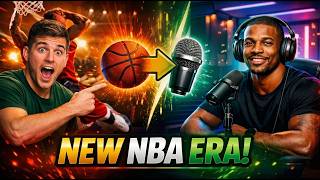
TJ Walker argues NBA players now need podcasts as a second income stream. With careers lasting only 4.5 years, athletes like Draymond Green and LeBron James are building media empires that outlast their playing days. Podcasting has shifted from optional to essential for athletes who want wealth beyond their contracts.
Chapters
Ultimize. There's a new question in the NBA, and it's not about defense, load management, or whether anyone actually understands the in-season tournament. It's this: can you even have an NBA career anymore if you don't also have a podcast? Because right now everybody seems to have one— stars, bench players, rookies, retired guys, guys who played 12 years, guys who played 12 minutes. There are podcasts where players break down games, tell locker room stories, interview friends, complain about the media, and occasionally— this is my favorite— record episodes immediately after getting ejected from a game. This is not a side hustle anymore. This is a parallel industry. You've got shows like The Draymond Green Show, Mind the Game with LeBron James and Steve Nash, and The Roommates Show with Jalen Brunson and Josh Hart just roasting each other like it's a group chat that accidentally got monetized. And here's the key point. Most of these podcasts are not making NBA-style money, but they are making money. The average NBA salary is more than $10 million a year. Podcasting for most players is not replacing that, but that's not the point. The point is what comes next. Players are looking at this and saying, hmm, basketball ends, the microphone doesn't, because the average NBA career is about 4.5 years. In the NFL, it's even more brutal, around 3.3 years. Think about that. You spend your entire childhood, teenage years, and early adulthood becoming elite at something, and the career lasts about as long as a decent car lease. And then what? That's where podcasting and media more broadly comes in. Look at Travis Kelce and Jason Kelce. Their podcast, New Heights, is reportedly generating millions and millions of dollars per year, not total, per year. They're very credible reports that they're making more annually from talking into microphones than they did getting hit by 300-pound linebackers. That's the new math. Your body has an expiration date. Your voice doesn't until you literally die. And here's the deeper shift that's happening. And it's actually huge. Athletes used to need the media. Now the media needs the athletes. For decades, if you wanted exposure, you had to go through ESPN, ABC, NBC, someone else who controlled the platform, someone who's a gatekeeper, someone else decided your airtime, someone else who could fire you at any point. Now you can own the channel, you own the audience, you own the relationship. If ABC doesn't like you, they can cut you. If your podcast audience likes you, nobody can touch you. That's power. That's leverage. That's why guys like Draymond Green are talking about being part of the new media. Because they don't need a middleman anymore. And let's be honest, this is also why some reporters are quietly losing their minds, because the players are now the storytellers. The locker room is no longer filtered. The narrative is no longer controlled. Yeah, sometimes that's messy. Sometimes it's biased. Sometimes it's self-serving, but it's direct. And audiences love direct. Now, here's where I'm going to put on my personal development guru hat because there's a huge lesson here. Not just for athletes, but especially for athletes. If you have any level of athletic success, your long-term wealth is probably not going to come from your sport. It's going to come from your ability to communicate, not just as a podcaster, but your ability to tell stories, your ability to connect with an audience. Because the difference between a guy who made $20 million in his career and a guy who builds a media platform is the second guy can keep earning for the next 50 years. Even if you got scandals swirling around you like Tiger Woods, the first guy is hoping he invested well and didn't buy too many houses. And I'm not saying athletes should spend all their time podcasting. You should still have to perform. You still have to do the job. But if you're smart, you're investing some time right now in learning how to speak, how to communicate, how to be interesting, how to hold an audience because Here's the brutal truth. There are thousands of former professional athletes. There are only a handful who are still relevant 10 years later. And almost all of them have one thing in common. They figured out how to talk. They figured out how to communicate. They figured out how to turn their experience into something people actually want to listen to. And that's not luck. That's a skill, a learnable skill, which ironically, might end up being more valuable than the jump shot that got them there in the first place. Now, you do see more and more athletes taking this seriously, as they should, because, you know, smart athletes look at the statistics and say, oh my God, it seems like half of NFL players are bankrupt within 5 years of retirement. They don't want to do that. Having a podcast, being an influencer, having a media presence can be a way of expanding your financial domain forever. And the thing about athletes is if they're good, they already have thousands of hours of experience in front of a microphone, starting in middle school for a lot of them, they got interviewed after games. So ideally, they've learned how to sum up an idea, speak in soundbites, be interesting, do pregame shows, postgame shows. So I frankly think it's crazy any professional athlete doesn't have a podcast and doesn't have a large social media presence because that ultimately will lead to financial security much more than most people's earnings in any one sport. Now, this isn't just for athletes. If you have any kind of prominence in any industry, A podcast is a natural way of connecting with that audience and communicating with it on a regular basis in multiple ways you monetize. Doesn't have to be through big ad deals, getting tens of millions of dollars a year. You could be someone who's just the greatest person in the world at telling people how to design their PowerPoint slides. And now you have a newsletter list of 80,000, If you're not doing a podcast, there's something wrong. I'm TJ Walker, it's been a fun week here. This is Filtered every day, Monday through Friday, with the top news stories of the day and then filter them through the lens of communication skills, personal development issues. Ultimize.