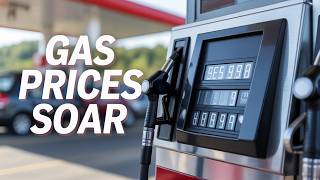
In this monologue, TJ Walker argues that the most politically untouchable metric is the price displayed at the gas pump. He notes that U.S. gasoline prices have just passed $4 per gallon—a 35% rise in a month linked to a war‑induced oil supply shock—and explains why this figure is a lethal political weapon, especially for former President Donald Trump, whose brand promises cheaper living. Walker contends the spike is not the result of a gradual market trend or coordinated OPEC action but stems from a single, unilateral policy decision that most of the world opposed, leaving the U.S. isolated. He then maps the cascade of cost increases that follow the gasoline hike: higher diesel raises freight costs, which lifts grocery, restaurant, e‑commerce, furniture, airline, and plastic‑based product prices, creating a broad‑based inflationary pressure. He quantifies the direct household burden—an extra $700‑$750 per year on fuel alone for a typical family—before adding the secondary costs. Finally, Walker stresses that such a visible, experiential price rise cannot be countered by rhetoric; the numbers on pumps speak louder than any political messaging, making gas prices a uniquely dangerous indicator for any leader, particularly Trump, whose narrative of making things cheaper is directly contradicted by the pump display.
Chapters
Ultimize. There's one thing in politics that's almost impossible to spin, and that is the number staring you in the face at the gas pump. You can argue about statistics, you can argue about forecasts, you can argue about what might happen next year. But when someone is holding a gas nozzle and watching the price climb past $4 a gallon, there is no argument left. According to The Times, gas prices just crossed $4 a gallon nationally, up roughly 35% in a single month since the war began disrupting oil supply. And here's the real problem for any politician, but especially for Trump. You can persuade people with words, you cannot persuade them that what they see with their own eyes is wrong. This is the political equivalent of trying to sell someone stepping on a scale. No, no, no, that number isn't real, trust me instead. The scale always wins. And right now, the gas pump is the most trusted source of information in America. Now, politicians have been taken down by energy prices before. Jimmy Carter didn't lose power because of a speech mistake. He lost power because people were sitting in gas lines and other problems. In France, fuel prices sparked protests that nearly broke Macron's presidency because energy prices aren't theoretical. They're emotional. They are daily. They're unavoidable. But here's what makes this situation completely different and far more dangerous. This wasn't some slow-moving global trend. This wasn't a surprise hurricane. This wasn't a coordinated move by oil-producing countries. This traces back to a single decision, not a bipartisan decision, not a consensus decision, not something demanded by the public. A single decision by one person that almost no one else in the world wanted. And that matters because when you look at the global picture, this wasn't something where allies were all aligned and moving together. This was the opposite. You had countries around the world, allies included, either reluctantly going along or openly breaking away. You had governments essentially saying, we I don't agree with this, but we're dealing with this because we don't want to alienate the US. This is not leadership momentum. This is isolation. And that's what makes this feel so unusual. Most major decisions come after debate, pressure, buildup. This felt more like something that appeared suddenly on a whim with massive consequences attached, like waking up one morning and finding out, oh, by the way, everything just got more expensive. Now let's talk about what this actually means for real people, because it's not just gas. Gas is just the beginning. Diesel prices are up sharply, which means every truck delivering food costs more. That means groceries go up, restaurant prices go up, Amazon deliveries get more expensive, furniture costs more to ship, airline tickets— don't even get me started about airlines. Airline tickets increase because jet fuel is higher. Even plastics, which are tied to oil, become more expensive. That means packaging costs rise, consumer goods rise, medical supplies rise. This spreads through the entire economy like a slow leak that turns into a flood. You don't just pay for this at the pump. You pay for it at the grocery store, at the airport, on your Amazon cart, and eventually on everything. It's like inflation with a gasoline engine. Now, let's quantify this because this is where it really hits. A typical US household was already spending thousands per year on gas. If prices stay around $4 instead of $3, that's roughly $700 to $750 extra per family per year just on gasoline alone. Not the groceries, not the flights, not the deliveries, just gas. When you layer everything else on top, this becomes one of the fastest ways to squeeze the middle class. And here's where the political communication problem becomes almost impossible to solve. Trump built a brand on one core idea: I make things better, I make things cheaper, I make life easier. Now, every gas station in America is broadcasting a competing message. In giant glowing numbers. Those numbers don't care about speeches, they don't care about messaging, they don't care about press conferences. They just sit there quietly and say, "Everything just got more expensive." This is why gas prices have always been one of the most dangerous political indicators in the world because they don't require explanation, they don't require education. They don't require trust. They are experienced. And when people experience pain directly over and over again, no communication strategy can fully override that. Ultimize.