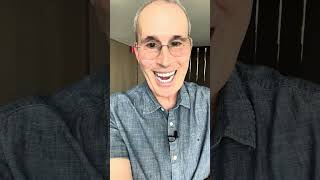
TJ Walker says weak communication skills cap your career when you move to bigger stages. He points to Steve Jobs and Ronald Reagan as examples of people who rehearsed relentlessly. Becoming a top communicator is mostly mindset and deliberate practice on video, not talent.
Chapters
Are you putting an artificial ceiling above your career and you're putting it there yourself. No one else is holding you back. Well, it happens more often than you think. Now there's a phenomenon many people have seen just in the last few weeks here in the United States, but it happens in every country. And that's a situation where a political leader who is seen as a superstar in their state, in their province, they have high polling numbers, they've won election re election by high numbers, then they decide to run for president or prime minister and then a big nothing, they fall flat. When they get on the national stage, they just don't do well. Flaws that nobody noticed before all of a sudden become apparent. Now it's not just in the world of politics. Can happen with newscasters. Sometimes newscasters, TV reporters, anchors are superstars in their own metropolitan area, their own media market, even a large market, sometimes as large as New York City or London. But then when they try to go national, it just falls flat. There's something about their communication skills that are just not up to snuff. Where they're competing right now, it's a different arena. So I'm going to try to give you some tips on how to make sure that doesn't happen to you in this video. Hi, I'm TJ Walker and this channel is devoted to helping successful professionals become even more successful by making sure they have the communication skills they need to communicate effectively at every presentation opportunity they have these days. Whether it's one on one speeches, talking to large groups, Zoom, making YouTube videos, any type of presentation opportunity you have, this channel is devoted to helping you get better and better at that. If this seems like something that would help you, go ahead and like the video, subscribe and click to be notified for future videos. Okay, so let's dive right in. What's really going on here. Everything is relative and if you are competing on a stage where everyone else is flat, average, uninteresting, timid or scared, it doesn't take much to stand out as a great communicator. You might even be seen as charismatic if you're competing against people who are not very good. Same thing for athletes. There are many athletes who are great in the minor leagues, but perhaps lead their team in home runs, get called up to the major leagues and never get a hit. Their skill levels just aren't quite there. When I was 12 years old, I was a star basketball player in my little league team. But when I got to junior high school, didn't even make the team because I stopped growing when I was 12 years old. I was a tall 12 year old. So everything is relative and you can peak, but when it comes to your own career, you don't want to peek on the thing that can really catapult you to the very top. And that is communication skills. Now, I've worked with tens of thousands of executives all over the globe. Some of them have reached the very top of their career, their field. They become presidents, prime ministers, Nobel Peace Prize winners, and there is something different about them. And people who end up at middle management or vice president or senior vice president. There's nothing wrong with ending your career as a senior vice president if that's what you enjoy. But here's the good news. The people who go all the way to the top are really not any more talented than people whose career peak in the middle or plateau early. It's not about genetic talent. It's not about some crazy talent that's really rare and hard to develop. It's certainly not about any genetic luck like being 7ft tall, which is nice to do if you want to be an NBA center. It really comes down to building a different mindset and a set of habits of practicing. The biggest one of all is figuring out how do you make every single presentation you give a tiny little bit better than the next one. It's about constant improvement and taking time to get better. Now the good news, more good news here. You don't have to spend 10,000 hours to become a good communicator. The Malcolm Gladwell book and topic on that same theme stresses to really become world class is something you have to spend 10,000 hours. I do not believe you have to spend 10,000 hours in practice to become a good presenter. Although you certainly could spend that much time presenting over the length of your career. What you do need to do is to figure out how to make constant improvement. And that means just making time to rehearse and specifically to rehearse on video. Ronald Reagan went down regardless of politics. And by the way, if you're new to this channel, I'm not advocating any particular politician because I like their policies. I'm really referencing politicians just because of their particular noted speaking skills or lack of skills. Ronald Reagan was known as the great communicator and he was great in part because he was a Hollywood actor. But that's not the real reason he was a great communicator as president. It's because he brought the Hollywood actors mentality of rehearsal to the presidency. He rehearsed major speeches, he rehearsed debates. He rehearsed major TV addresses because he knew that's how you get good. That was a part of his acting background. There was always time for rehearsal. He made time for rehearsal. Whereas other politicians, even some presidents of. Again, I won't get into politics and offending people. But one particular president at the beginning of this century did not take public speaking seriously, never seemed to rehearse. Kind of looked upon it with disdain. And he did not go down in history as a great communicator. So it's important to put the time in. Steve Jobs, busy guy, took the time to rehearse his major product announcement speeches. He would rehearse as much as an entire week, all day long. Lesser CEOs of tech companies and other companies don't do that. They say, oh, there's no time to rehearse. I got to answer email, I got to return phone calls, I got to do 10 other things. And so what do they do? They end up spending a few minutes just skimming through bullet points and then they stand up and wing it. That's not the way to be a great communicator. You've got to put the time in. Now, some of you have heard me say this before, but speeches and speakers are generally put into two categories. It's a binary thing. You're either interesting to the audience or awful and boring. It really is that kind of clear cut. But at the highest levels of any profession, there are gradations, just as there are in the world of music, the world of acting. The greatest musicians in the world play every day, they practice every day, and they give greater joy to people listening to them than just someone who plays in a weekend band. Meryl Streep puts in a tremendous amount of time rehearsing training for every role she takes. Plus, she went to the Yale School of Drama for a couple of years. So she really takes the craft seriously. And that's why the results are so much better than someone who just does occasional community theater on the weekends twice a year. It's qualitatively very different. If you want to be qualitatively different when it comes to your speaking skills, your presentation skills, your communication skills, you have to have the same mentality, and that is take it seriously. Practice on video, rehearse. Keep doing it until you love what you see. Now, there are some people, I've seen this, just incredibly lucky people. They started off bad speakers. They had no natural gifts, but they did it all on their own. They gave thousands and thousands of speeches, presentations, talks and they just gradually got better to the point where they were great. The lucky few. Most people aren't like that. Most people either plateau and that keeps their career from really reaching the furthest levels or they seek help. So that is something a lot of executives all over the world do, is they reach out to me and my colleagues and we work with them to make this whole process go a lot faster. So if you would like to become really a world class communicator, a great presenter, then click the link below and go ahead and set up a time to talk with me and my colleagues and we'll figure out what the best strategy is for you. Again, I don't want to sound like I'm overhyping this. It is possible to become hugely influential in your career, in your field, in your industry, and never be more than an average presenter. It is true. But. And this is a big but, you dramatically increase your chances of, of becoming wildly successful in your field if you learn the skill of being a great communicator. And that's why you may want to give us a call. Thanks. See you next time.