The Screen Cutoff Rule and the Morning Habit Most People Miss | Ultamize Discover
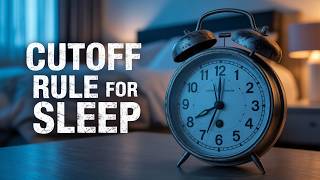
TJ Walker explains why screens within an hour of bedtime wreck sleep and introduces a firm 60-minute cutoff rule, with a four-step routine: set a specific time, swap screens for reading or stretching, move away from bed, and dim lights. He addresses common objections like boredom and social events, framing the cutoff as an identity anchor like a business closing time.
Chapters
Ultimize. If you look at a screen within an hour of going to bed, you are quietly training your brain to stay awake. That one habit alone disrupts more sleep than most people realize, and it's completely within your control. This podcast is about habits like that— the small, repeatable behaviors that determine whether you fall asleep consistently, stay asleep, and wake up rested. Not sleep stories, not background noise, not complicated theories. Habits. Build Better Sleep Habits is designed to be bingeable. You can move through the entire series in a weekend and walk away with a clear, structured system for improving your sleep through your daily routines. You'll learn how your morning behaviors affect your night, how caffeine timing matters more than quantity, how to build a wind-down routine your brain begins to recognize automatically, and how to shape an environment that supports consistent rest. Each episode builds on the last, but the final episode is different. The last episode is your nightly reset, a short, structured routine designed to be replayed every evening. It reinforces the habits that create consistent sleep and gives your day a clear shutdown ritual. If you want one habit that will immediately improve your sleep consistency, it's this: Set a hard cutoff time for screens. Not less scrolling, not try to wind down. A cutoff. Because screens don't just entertain you, they stimulate you. Every notification, every headline, every short video clip trains your brain to stay engaged. And engagement is the opposite of shutdown. The modern evening is built around stimulation: messages, streaming, news, outrage, endless scrolling. The problem isn't any single piece of content. It's the timing. When you expose your brain to high-engagement input close to bedtime, you extend your alertness window. Even if you feel tired, your brain remains in processing mode, and then you lie down expecting quiet. That transition is abrupt. Sleep improves when stimulation decreases gradually. Right now, most evenings don't taper. They spike and then they stop. This episode is about replacing that spike-and-stop pattern with a taper, a predictable decline in stimulus. When you create a consistent cutoff, the same time each night— and I know that's hard on weekends— your brain begins anticipating it. It shows the day is closing. It stops expecting new input. That anticipation is powerful. But it only happens when the cutoff is firm. Not flexible, not negotiable, but firm. In this episode, we're going to define what a true cutoff looks like, why partial cutoffs don't work, and how to implement one without feeling like you've lost your entire evening. Because this isn't about restriction, it's about clarity, and clarity reduces friction. Let's build the rule. Most people believe they've reduced stimulation at night, but they haven't eliminated it. They've diluted it. They put the phone on silent but still glance at it. They switch from email to streaming. They move from work content to relaxing content. They lie in bed and scroll slowly instead of quickly. It feels like winding down, But the brain doesn't measure intent. It measures input, and input is input. A screen, even if it's calming content, is still delivering movement, light, novelty, and decision points. Your brain stays slightly engaged, slightly alert, slightly ready. That slight alertness is enough to delay shutdown. Another common pattern is the "just one more" habit. One more video, one more article, one more message, one more scroll. That one more habit is unpredictable. Some nights it lasts 2 minutes, some nights it lasts 30, and unpredictability disrupts rhythm. You don't need to eliminate all screens forever. You need to stop them at a predictable time. There is also a location problem. When you use your bed as a viewing station, you blur the signal. Your brain no longer associates the bed with sleep. It associates it with stimulation, entertainment, and decision-making. Over time, that association weakens the clarity of your environment. And remember, sleep improves when cues are consistent. Many people tell themselves they're tired while scrolling, but tired and ready for sleep are not the same state. You can feel physically fatigued while your brain is still engaged, and engagement delays surrender. If you don't establish a cutoff, you are relying on exhaustion to overpower stimulation. Sometimes that works, sometimes it really doesn't. That's inconsistency. In the next part, we'll define the structure of a real cutoff, not a suggestion Not a preference, but a rule. A real cutoff is simple. It has a time, it has a boundary, and it has no negotiation. Let's define it clearly. Your cutoff time is the moment screens stop completely for the night. Not muted, not dimmed, not, hmm, mostly done, but stopped. The reason this works is not dramatic, it's behavioral Clarity. When you continue to use devices casually, your brain never receives a clean signal that the day's ending. When you stop fully at the same time each night, that stop becomes a cue, and cues build rhythm. Most people try to taper their usage organically. They think, "I'll just use it less," but less varies. Some nights, less means 5 minutes. Some nights less, means 40 minutes. Habits cannot be built on vague limits. They require structure. Here is the rule: choose a fixed time that is at least 60 minutes before your intended sleep time. Personally, I use 2 hours, but a minimum, a minimum of 60 minutes. At that moment, devices off. Not face down, not across the room, off. If you need an alarm, use a separate clock. They're very inexpensive. If you're concerned about emergency calls, define a narrow exception, not open-ended access. The power of the cutoff comes from predictability. The same time every night. Your brain begins to anticipate it. When that time approaches, attention subtly shifts. Energy begins declining. Closure starts forming. Without a cutoff, your brain assumes input is still possible, and when input is possible, alertness remains slightly elevated. This isn't about demonizing technology. I have a cell phone. I love my cell phone. You can enjoy them earlier in the evening, But once the cutoff time hits, the day transitions. That transition matters. And here's something important: the first few nights will feel strange. You may feel bored. You may feel restless. You may feel like the evening suddenly became longer. That discomfort is temporary. What you're actually experiencing is the absence of stimulation. Over time, that quiet becomes familiar. And familiarity becomes calming. In the next part, we'll transform this rule into practical routine. In the next part, we'll translate this rule into a practical routine you can follow tonight without feeling like you've lost your entire evening. Let's make this operational. Step 1: Choose your cutoff time right now. Pick a number. If your target sleep time is 10:30 PM, Your cutoff is 9:30 PM. If your target sleep time is 11:00, your cutoff is 10:00 PM or earlier. Write it down. Step 2: Decide what replaces screens. This is where most people fail. They remove stimulation but don't replace it with structure. The brain doesn't like a vacuum. Your replacement should be low stimulus, and predictable. Reading a physical book could be light stretching, preparing for the next morning, a quiet conversation, dimming lights and organizing your space. Notice the theme: slow, deliberate, repeatable. Step 3: Change location. If possible, do not sit in bed during your wind-down hour. Keep your bed reserved for sleep. Let your living space taper down first, then enter your bedroom when you're ready to transition fully. That separation strengthens the association. Step 4: Dim your environment immediately at cutoff. Light influences alertness. Bright light signals daytime activity. Dim lighting signals shutdown. The physical shift in lighting should happen at the exact same time the devices stop. Now you've created a ritual: devices off, lights dim, low stimulus activity begins. Same order, same time every night. If you miss it one evening, reset the next. Consistency beats intensity. You don't need to eliminate all stimulation in your life. You need to end it predictably. Once this becomes automatic, you'll notice something subtle. When your cutoff time approaches, your mind begins preparing before you even act. The brain anticipates closure. That anticipation is the beginning of sleep consistency. In the next part, we'll address the most common objections because the cutoff rule sounds simple, but implementation always brings Friction. The first objection is always the same, but that's when I finally relax. Evenings feel like earned time after a full day of work, responsibilities, and decisions. Screens feel easy, effortless, rewarding, and they are. The problem isn't enjoyment. The problem is timing. Relaxation that keeps your brain stimulated is not true wind down. It's entertainment. Entertainment extends alertness. Wind down reduces it. You could still enjoy your evening. You just move that enjoyment earlier. Another objection: "What if I need my phone?" Define what "need" really means. If it's rare emergencies, create a narrow rule. Allow calls only. Keep the device in another room. Don't hold it. Don't scroll, don't browse. If you leave the door open even slightly, you'll negotiate with yourself. The rule works because it's firm. Another common friction point is boredom. When screens disappear, the room feels quiet, time feels slower, your mind may race at first. Doesn't that mean the rule isn't working? It means you're removing constant stimulation. Your brain will recalibrate. If you stay consistent for a week, the quiet begins to feel normal. The craving to check fades. One more friction point: inconsistency due to social events or travel. Occasional variation won't undo your progress. What matters is what happens most nights. Return to your cutoff the very next evening. Habits aren't broken by exceptions. They are weakened by drift. In the final part of this episode, we will anchor the rule into your identity because once the cutoff becomes a part of who you are, enforcement becomes automatic. From now on, your evening has a closing time. Not when you feel tired, not when you are done scrolling. A closing time. That shift is powerful because once something has a closing time, it becomes deliberate. You don't argue with it. You respect it. Think about how businesses operate. Doors close at a set hour, not when customers feel ready to leave, not when activity slows down. They close. Your cutoff rule is the same. When the time hits, devices off, lights dim, shutdown sequence begins. No drama, no frustration, no overthinking. Just a transition. When you follow this rule consistently, something important happens. The last hour of your evening stops being reactive. It becomes intentional. And intentional evenings lead to consistent nights. This rule alone can shift your sleep pattern dramatically, not because it forces sleep, but because it removes stimulation at the most sensitive time of day. Over the next episodes, we'll refine other pieces of your system: caffeine timing, morning behaviors, environment design. But none of them matter if your brain is still being stimulated at the moment it's supposed to wind down. By the way, quick question for you. Have you ever noticed how easy it is to consume content and how hard it is to actually do anything with it? I mean, you can listen to 100 episodes, read 10 books, and your habits are exactly the same. That's the gap most people never close. So if you're listening to this and thinking, yeah, I want to actually improve, go to ultimize.com. We've got free courses there for you, either on communication skills or building better habits, and it's designed to get you to actually use what you're learning, not just hear it once. No cost, no catch. Just go to ultimize.com and start. Ultimize.
More from TJ





The Breakout Cases - What Actually Caused Famous Speaking Career Breakthroughs | Ultamize

The Red Circle Sessions Finale - Build the Speaking Career You Came Here For | Ultamize

Two Stages, One Logo, Two Completely Different Realities - Main Stage vs Independent Events | Ult...

Pre-Reset - Why Repetition Builds Better Speaking Decisions | The Red Circle Sessions | Ultamize

Your Decision, Your Framework, and What Happens After - Build Your Speaking Career First | Ultamize

The Red Circle Sessions Trailer - The Speaking Career Truth Nobody on That Stage Will Tell You | ...

The Two-Minute Ultamize Reset - Your Platform, Your Audience, Your Voice | The Red Circle Sessions