Tim Hughes Interview: The Ultimate Guide to Social Selling
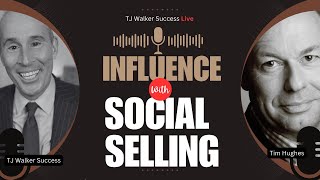
A live YouTube interview (simulcast) hosted by TJ Walker with Tim Hughes, a leading social-selling expert and author. The conversation covers social selling principles, platform strategy (LinkedIn, TikTok, Facebook), content tactics (human-first content, conversation harvesting), case examples, LinkedIn profile best practices, measurement (meetings/pipeline), and emerging AI/digital-clone applications for personalized training and outreach.
Chapters
Welcome. You are in for a treat. Today we have one of the top social selling experts in the world joining us. We're going to be simulcasting across all platforms. Ben, let us know when we're on.
Okay, we are ready now.
Don't forget to record. Oh, yeah. Okay.
3, 2, 1.
It's the holy grail of selling. Everyone wants it, everyone dreams of it. Posting ideas, pictures, information about your products, your services on Facebook, Twitter, X LinkedIn and having sales come to you. We've all dreamed about it, we've heard about it, we've watched the Gary Vaynerchuk youtubes and yet for most of us, it slips through our fingers. Well, I'm very happy today to have one of the most world renowned experts on social selling. This is what he's done. He's written not one, not two, but three best selling books on how to sell through social media. LinkedIn has said he's one of the top 10 sales experts in the world. In online selling, he's been ranked number one by Analytica as one of the most influential social selling experts. He is all over the place, he walks the talk. And we're going to learn fantastic lessons today on what we can do to do a better job of selling in our own business. I'm very excited to introduce our guest today, Tim Hughes. Tim, thanks for joining us.
Hi tj. It's really exciting to be here.
Our audience is excited about having you as well. So let's dive right in. I'm sure I'm not alone where every every couple of years since about 2006, I get all excited, I watch a Gary Vaynerchuk video and I think I'm gonna be great at this social media selling and I do a bunch of tweets or I start a podcast or I start a new series where I go live on Facebook every day. And a month or two later I'm like, eh, nothing much is happening. Guess it doesn't work and forget about it. I've been guilty of that. I know a lot of your clients have done that. What's the real difference between people who think about it, which is everyone, people who start, which is, I don't know, 90% of the world and people who all go all the way through the funnel and make something meaningful happen to their business, their bottom line and their customers.
I think that, well, I love Gary. I think he's brilliant and the advice that he gives is excellent. I think that the mistake that most people make is that they think that social media is the same as the world has always been. So, for example, what's happened is that we've always had what has been called interrupt marketing, which is there's an advert, it interrupts you and there's a pitch. Cold calling is, there's an interruption and I pitch. And email marketing is I interrupt you and I pitch. And people seem to think that what we do with social media is that they come to social media, you're going to interrupt me and I pitch. And it doesn't work like that. And what Gary says, and he's very true about that, is if social media. So we have to understand that being on social media, here we are talking, I mean, you, you're just, you and your team are just amazing experts at the way that you're able to broadcast using this, this technology. And it's amazing how we can have that at our fingertips. But what we're not doing is we're not going on and saying, you know, here's my product, buy it. What we're doing is we're having a conversation, we're sharing insights and that's the thing that people are wanting. Put yourself in the buyer's shoes. The buyer is going onto social media because they may have a problem, they may not know what the problem is and they're looking for a solution. They're not, you know, if, if you want to, if they want to read a brochure, they'll go to your website. What they're looking for is someone that's going to help them. So they're looking for an expert. So basically, as I say, the mistake that everybody makes is that they think I need to go onto social media and sell stuff. The more you try and sell on social media, the worse the outcome will be.
And we should know. Tim's been talking to me for a while now. He didn't say, and everyone's got to go buy my book, buy my book. He's had a conversation to be helpful to you and to me and that being sociable brings out reciprocity. And, and I now I want to reciprocate. So I naturally want to talk about and bring people's attention to his latest book, which is Social Selling Techniques to Influence Buyers and Change Makers. The second edition, which you could buy right now. Thank you very much for holding it up. See, that's, that's social, inorganic. Someone asked you about it. You didn't just, you know, I didn't invite you on to talk about some, you know, Facebook trend and then you just pulled this up when I wanted Your thoughts on a scandal of Mark Zuckerberg. You brought it up organically and the book is available right now. We're live on Amazon, on my Amazon storefront. And if you want to buy the book with one click, you can see it in the carousel. Depending on what format you're in right now, whether you'll either see the book either on your left side, your right side of your screen, or below. Any of you joining us from other social media platforms, you can go to my store on Amazon and that's just Amazon.comshop/tj walkersuccess and Ben, if you could post a link to that in our comments section so people who want to see us on Amazon can see that. So there's, there's so much change going on in social media. When Gary Vaynerchuk started, he famously just did a 15 minute wine show for the most part, unedited, live. And then he says the point everyone always forgets is, yeah, he spent 15 minutes talking about wine, but then he would spend from 8pm until 4am answering people's questions in chat rooms about what kind of wine should I have with Fish, it was the long, long, hard work that he put in. A lot has changed since then, which is presumably why you have second editions of your book and multiple books. What is the single biggest thing going on right now in social media that you think is important for a lot of our audience members who are entrepreneurs, authors, experts, online coaches, online trainers?
I think that the big change took place during COVID which is where we, before COVID we knew that there were platforms like this, but we didn't necessarily use them. We knew that there was social media, but we kind of went there. Now what happens is that, you know, 62% of the world's population is on social media. So pretty much the whole of the, of, you know, the, if you're, if you're in the States or in the UK, you know, every quarter, but there'll be like 700 million people in India will be joining. It is just so massive. And the average person now spends 2 hours, 20 minutes a day on social media. So the fact of the matter is this isn't just about your buyers. Your, your buyers are now, are on social media. You, there's, there's, there's no argument about it, but your employees are on social media, your future employees are on social media, your investors are on social media and your future investors on social media. So if you're looking to recruit, you're looking for investment, or you're Looking to sell stuff, you have to be on social media. It's not a nice to have anymore. It has to be your most important priority and that's the massive change that's taken place.
We're speaking to Tim Hughes who is a universally recognized expert, not just on the Internet, not just on marketing, not just on social media, but specifically how to sell on social media. He is the author of several books including his latest Social Selling Techniques to Influence Buyers and Change Makers, the second edition. He's also the author of Smarketing how to Achieve Competitive Advantage through Blended Sales and Marketing. And if you have that Tim, show it to people and they can see it in the carousel. Those of you watching on Amazon, on Amazon Live. And he's also the author of Social Selling Techniques to Influence Buyers and Change Makers. All have been fully updated and he's doing this in his current position because he is the CEO of DLI DLA Ignite. We're very happy to have Tim. Now Tim, the reception I get from so many friends, clients, customers is, is that social media is just so hard. If you're not already famous like Kim Kardashian or a 19 year old computer whiz kid, it's not going to work and you're just going to start and you're going to spend 40 hours a week for three months and then write it off. And you would have been better off just taking that money and putting it in an index fund. I know you've had a lot of success story. Walk us through some of your success stories that you're proudest of, people who've taken your advice, maybe were not successful before but used your strategies and went on to actually sell a lot through social media.
Yeah, we've got clients that do multi million dollar deals on social media and the reason for that first and foremost is that they position themselves differently. So a lot of people, as I said earlier on, they think this is all about interruption and it's not, it's about know on social, on. If we take any, any social media platform your, your profile is available to everybody that can see it and in fact everybody in that social media platform will be walking across or walking in front of that every single day. So for if we take LinkedIn for example, there's a billion people on LinkedIn so a billion people can walk in front of your shop profile every single day and what you want is for people to go, that's interesting. What's that? I need to look about, look at that further. And the problem is, is that most people set themselves up to look exactly the same as everybody else. So, so, so everyone just walks past or what they do is that they immediately start selling saying, you know, his, his, you know, and everybody goes to the market and says exactly the same thing, buy my product. Because we're great. And so we're in this situation where buyers just walk on by because they've got the opportunity of an infinite amount of data or an infinite amount of profiles. And if we don't find what we searching for, we either carry on searching or we'll look somewhere else. So that's the big issue that people have, is that they take old thinking and position themselves on a new platform using that old thinking and it just doesn't work.
In a moment, I'm going to ask you if you could give a case study of perhaps a small business, an individual or a very small company of how they've done this, where they were and how they ended up successful. What messaging do they do? What tactics did they do? Elizabeth Walker says hello. And a reminder to everyone watching this, if you're on Amazon Live, you can just tap in a question in the chat and Tim will be happy to answer if you're happy to take questions.
More than happy to take questions.
Yeah. If you're watching us from any of the other social media platforms, you can connect with us on Streamyard and you can even join us on camera and ask a question. Tim, you don't need me butting in. I'll actually exit the stage a bit and let, and let you talk to Tim directly. And hello, Tim is, by the way. What's that?
So I'm just saying hello to, hello to Elizabeth Walker. Right.
He's being sociable. Okay. Is, is that really the biggest problem most people have is they're just too quick to say, well, buy my product. Buy my product.
Yes. So the thing that you need to understand with social media is its ability to have conversations. And what we need to be thinking about is how, what am I going to do? Is going to create a conversation. So if you take the classic way that people use content. Content, what people do is that they use content as a way to broadcast. So it's just, this is the introduction, which is where you say you, you, but you go to social media and you put up a piece of content and say, this is my company, these are my products and we're great, come and buy from us. And of course, nobody buys people buys like that anymore. We haven't done that for, for 10 years. Whereas if you put up an article that says, here is some research that we've done. And in the research that we've done. So for example, Six Sense is a company that does a lot of research and they've done some research and found that 70 that when people are looking at B2B Enterprise, what they're looking at is that they will actually go 70% of the way through the buying process before they contact a salesperson. Now what they've done is that they just went and said, this is the research and this is the finding that we've had that caused the conversation. Because you, some people will say, well, I don't believe that. Other people will say, like me will say, I actually think it's 80%. But the fact, the fact is, is that they're having a conversation. And then what you're able to do is, is, is, is you need to have the skill to be able to harvest that conversation. So whenever anybody comes to your content.
And I'm hearing you say, harvest the conversation. Yes, walk us through all that. That means.
Okay, so, so, so, so, so Elizabeth Walker used that as an example. Elizabeth has said, hello all. She's on LinkedIn. What, what, what we, then there have is that we're having. We, we. She's actually said, I have a digital resonance with this piece of content. So I have an opportunity now to go back to Elizabeth and say thank you for, for watching the T.J. walker program. And if I'm not connected to her, can we connect? And we can do this on any.
And I should point out I, I don't believe she's any relation of mine. Even though we have the same last name. I'm not recognizing the, the name or the face.
But, but the thing is, it doesn't matter what, what social media platform. It's on the fact that they've actually, if someone's liked or commented, what we're able to do is actually go through a process of saying, thanks Elizabeth for, for coming on the TJ Walker show and for mentioning and saying, hello all, may we connect. Now that's a far better proposition for me to, for, for me to go to Elizabeth. She's more likely to connect than for me to go to Elizabeth and say, you came on the TJ Walker show. We've got this list of products and services. Which one do you want to buy? She'll just block me. So what we're doing is that we're using socialism as this mechanism to have and should be seen as a mechanism to have a conversation. And if we approach things in a non salesy way. Now I'm not telling people that we shouldn't be selling, but we all know that when salespeople come to us, we get a flight or fight reaction. Usually we run in the opposite direction. And so what we're doing is that we're using social as a way of getting that conversation. We're not being salesy. And maybe what I'll do is I'll go through a process of actually getting that person to have a conversation. And it may be we have a zoom or a teams call. And so at that point what you've done is you've taken something that's social all the way to three through to actually maybe having a call with somebody and having a meeting with somebody.
Our guest is Tim Hughes. He's one of the most internationally recognized experts on social selling. Plus he has a great cool name of Tim, which is also what my T stands for. I'm Timothy John. So we're happy to have you. If you have a question for Tim, all you have to do is push the button, join us in Streamyard, you can talk to him. You can also post your questions as Elizabeth has just done. She says if my bill, if my profile is a billboard and I want to grab people to my link, what are the best hook lines to get people to click? And yes, harvest is a great term, bring the conversation to the surface.
So it's a great question, Elizabeth. So the thing that, the thing that we're looking for on, on social media is humans. It's all about human to human. We're not about, we're not chat bots or anything like this. It's a human, it's a human to human connection. And for example, one of the things that we do is that we try and find commonality. So for example, TJ just is a great example of his forming commonality with me, which is the fact that he said that his name was Tim. Because immediately what I do is if I know there's other Tim's, immediately I feel drawn to other Tim's. It's something that we have as Tim's and, and we start going through that process of knowing, liking and trusting somebody. So I know and like and trust TJ more because I now know his name is Tim. So, so one of the things that we can do, Elizabeth, is that your summary title on your LinkedIn profile is the most visible thing about you. And this is the same on any, whether it's on X or whether it's on Instagram or whatever. You, you're, you've got a, a piece which, which talks about yourself. This isn't, shouldn't be about your products and services, it's about you because you are ultimately the person that owns that social media account. We're not interested in your company, we're not interested in your products. We're interested in you as a human being. And what you need to do is get your, we're trying to get you over as, as a person of interest. So for example, you might say that you're a marathon runner or you're, you're a hockey player or you're, you know, an ice hockey fan or whatever it is because what we're doing is that we're trying to build that, that, that human connection. My partner, for example, she used to be a rower, so she talks about the fact that she used to row. If you come to my LinkedIn profile and please people, please, you can come along and look at my LinkedIn profile, you'll see that I have a summary title is very different from anybody else. And the whole point of that is to start a conversation. You need to be making sure that your social media platforms and tam, I.
Will point out, we're going to show everyone your LinkedIn profile in just a little while. I know one of your main tenants is. Every social media platform is a little different. You have to know why people there and respect that. At the moment, Amazon is nice enough to let us go live right on Amazon and we're happy to be a part of the Amazon community. People come to Amazon for different reasons than going to Facebook. Typically if they're on Amazon, they're ready to buy. Not only do they have their credit card out, it's already programmed into Amazon and, and they can click. With one click they can buy it. So I want to do a segment now where we often invite our guest to do the free pitch. And what I mean by that is you don't have to wait for me to ask a smart question. I might just ask dumb questions. We want you to pitch, give your best pitch because you're a communication expert and you're good at writing nice headlines and post and pictures and images for social media. But good old fashioned speaking to people is often the most effective way to really connect and be social because when you think of socializing in the real world, you think of talking to people one on one. So I want to, what I want to do right now is just give you three minutes, a minute for you to tell people how they're going to Benefit from each one of your books and hold it up. We're here on Amazon. The people who are on Amazon are ready to buy. They're looking to buy. No fumbling around for the credit card or cash or pennies or change. One click and they can get it. So I'm going to exit right now for about three minutes and ask you to pitch your product. When we come back, I'm going to ask you to tell us what you were doing and why you were hitting certain things. We're actually going to dissect your pitch so people can learn how to improve their own pitch. Okay, you've got three minutes, starting now.
Thanks, tj. So this is my second edition of my social selling book. The first edition came out in 2016, and what I wanted to do at that time was pour everything in my head that I knew about social selling into it. I've been involved in a number of rollouts of social selling, and it was. And it was all of the information I had. So I updated it and it came out in 2022. And so what I've done is I've taken all the learnings that we've done within my company over the last eight years and actually put that in here. I've also got 15 people that I know that are doing social well to actually write a small piece to talk about that. So, you know, for example, there's a headhunter that explains how you can use LinkedIn to get a job. We talk about how you can get employees to actually use it to increase the visibility of your company. So that's what the book's about. What is social selling well? We have a definition of it, which is it's about using your presence and behavior on social media to build influence, make connections, grow relationships and trust, which lead to conversation and commercial interaction. Most people that we talk to are looking for pipeline, and especially at this time, pipeline is really difficult to get hold of. We've been running a benchmark. Everything that we do is based on data. It's not my opinion. We've been running a benchmark now for over a year. And we've got sales development reps, so SDRs who are going out and getting meetings, and the average one of them is getting 10 meetings a week. The really good ones are getting 25. That's exponential compared to something like cold calling or using email or going to events. So, you know, we're looking for organizations, and, you know, we've now got customers like Oracle and Salesforce, and we're looking for organizations from small to big where we can implement our methodology, where we know that we will get results. As I said to you said earlier on, people are getting multimillion dollar deals by using our methodology. My other book is about smarketing is about bringing together sales and marketing teams. How can we get sales and marketing teams to work closer together? Now if, if I written that probably last week I probably would have called it Rev Ops or something like that, which is the, the, the term that's generally used. But yeah, the, the, this marketing book is, is there about bringing sales and marketing teams and, and what we do is we actually use a particular case study of a large organization and we go through the, the politics and, and some of the things that, the learnings and the, some of the things that you need to look out for, the measures, the governance and that sort of stuff as well as looking at a very basic area around account based marketing and things like that. So, so the two books, one is the Social Selling Techniques to Influence Buyers and Change Makers and the other one is Marketing how to Achieve Competitive Advantage through Blended Sales and Marketing. Do you want to bring me back? Tj? Is that.
Wow, that was a, that was a masterclass in say first of all, congratulations because what I just did to you, most people would be too scared to do like, you know, I didn't prepare to give a speech today. It's just talking. It's really just being social and sharing and so many people tell themselves that it's different. Oh, I don't want to be, you know, giving a speech on social media, broadcast on eight platforms and live. That's hard. It's just talking, it's just sharing. Now let's step back behind the scenes in just a moment. And again, special thanks to Amazon letting us go live and making Tim's great books available to everyone. If you heard anything there that was interesting or intriguing, you can go ahead and buy the book live. Right now you can look at the carousel. Depending on whether you're on a big computer or a laptop or a cell phone or a tablet, you'll see a carousel either to your left, to your right or below on Amazon Live the book and you just click on it and you can buy it in one click. You can also look at the page to learn more about it and review, see what other people say as well. But it is nice to actually be able to talk to the author and ask questions as Elizabeth has done and others who'd like to ask questions. You can, you can post your questions right on Amazon Live, they have chat section. And you can also join us on really any of the social media platforms you are watching this on right now. So, Tim, take us behind the scenes. So you just gave what seemed spontaneous, fresh, conversational, off the top of your head. Didn't sound memorized or canned, but you put real thought into how you talked about your book because you presumably spent years with some of them writing it, right? Rewriting it, packaging it, promoting it. And you had to take hundreds of thousands of words of ideas and condense it to 150 words. Tell us what you were consciously doing when giving those presentations a moment ago, putting a spotlight on your book.
I, I, I, I, what I wanted to do is, is make sure that the books feel as accessible to people. And, and you know, it's about trying to boil down to, to use your phrase, about what, what is it actually about? Because yes, I've, I spent a lot of time writing them. And, and really, what is it that, what, what is it that people want today? And most cases, in all the organizations that we talk to, the number one thing they need is pipeline. Two years ago, that wasn't the case. It was mainly closing the amount of deals that they needed to close. Now they're actually looking for pipelines. So it's, it's important to understand that I pick those words and I use that as a way of saying, you know, if you want pipeline, this book will help you actually do that.
Great. And how about the other books? Because I know with myself sometimes talking about older books I've written, you kind of forget about, you can lose perspective. But you just went seamlessly right in to the others as well.
Yes. I mean, the, this marketing book, I think that, I mean, even though that came out in 2018, even though it's seen as being old, it's still relevant because what I, you know, I see on, on social media every day, the fact that, you know, you know, sales and marketing can be warring parties. And the best way for the organizations to, is, well, the teams to work together. And for me, the book is still relevant. It's still, you know, we use a particular case study of a US software company and we walk through what they did in a way of probably about two years, starting off with where they used to throw stones at each other over email to actually going to each of the meetings and then understanding and talking in a common language and going through that process of saying, and how are we going to measure this? And we go into a lot of detail and there's, we've Actually got three authors on there, so Adam Gray and Hugo Witcher both have got great marketing experience which they brought to the book, which something that, the, that, that I did, I wasn't able to, to bring. But it's still a relevant book today, even though it's a, a couple of years old.
Tim, two part question. What social media platform are you most excited about now? Where you feel like it's, it's the untapped opportunity, it's virgin territory, so to speak. And what would be your advice to. So let's say someone 20 years old, they're in school, they already know they want to be an entrepreneur. They just have dabbled a few things with friends on Facebook. Where would you urge that they just dive in? Because there are certain platforms, and I know this from personal experience, I'm sure your clients do too, like Facebook. I've spent a ton of time, energy and effort cultivating audiences on a few Facebook pages. One of them for my online students where they have to apply, they have to be accepted, they want to be there, they have to prove they're in a course. And, and we've got 25,000 people. They're very active in the courses. But when we post things and talk about even live sessions like this, you know, it's five people sometimes seem like they get the message because Facebook wants us to spend money on advertising to them. So I agree with a lot of people who say that that's a platform that is now sort of peaked and they're in the extreme distraction phase of getting as much money out of people. Are there other platforms that you're really excited about now? And again, to summarize, where would you advise someone who really is kind of starting from scratch to hop in if they were going to focus on one place?
If, if you were, if you want to focus on business, then, then LinkedIn would be the platform to, to, to go to. They're not. I agree with you that there's a, there's a, a term called pay to play that Facebook is, you know, that they want you to pay money. And it's interesting what you're saying because you know, there are people that are using Facebook from an organic perspective. So, so not paying. But, but LinkedIn haven't reached that point where they're, where you have to, you know, they're, they're not expecting people necessarily to pay advertising money, but they probably are expecting you to pay. You know, you need to, to, to use. With all social media platforms nowadays, you're generally having to pay the day of, of, of free access in social media I think is over. And you'd probably need to get the professional edition on LinkedIn anyway.
Walk us through that. What does that really mean? Because people obviously know everyone's got their hand out, but how much of a difference does it make? Because I have paid for stuff for LinkedIn before but I find for my own business I don't want the privilege of reaching out to thought leaders. I want them to come to me because I'm posting a lot of content and that's worked for me. But am I, for example, losing a tremendous reach when with my live streams which I post almost every day on LinkedIn, go live and I post typically three videos a day? Would I be getting 10 or 100 times the reach if I paid them $20 a day? What, what are the thresholds that are meaningful?
I, I think with LinkedIn you're not, with, with LinkedIn you're not paying for, you don't pay for reach. What you're doing is that you're paying for the, the ability to connect to people.
People.
And if you're a 20 year old entrepreneur, which is the question, then what you want to do is actually connect to people because what you're trying to do is actually broaden out your network and you want, because the more people that you connect to, the more people are going to see your content. But I think what happened was that when Elon Musk changed Twitter or X, the fact that you needed to pay for it, everybody across the board said okay, we're going to charge. And what's, what LinkedIn have done now is that they've, that you can use a free edition of LinkedIn but they've reduced the functionality so much that when we're training people, we now, five years ago we would have told them to use the free edition of LinkedIn. We, we can't do that now. Now we have to tell them to, to use them by the professional.
And which platform is most meaningful for you for getting business? Is it LinkedIn?
LinkedIn from a business perspective we use, I mean I'm on, I'm on all platforms. I think that, you know, you need to have a, you need to have a presence on LinkedIn for business and then you need to have a think about one other and that could be Instagram, it could be X, it could be TikTok. And then you need to, once you actually get used to those and you start mastering those, it's, it's then about making sure that you're building more into your portfolio. But you know, when you first start, as you say, if people are putting a lot of time and effort in and they're not getting a, a return, it, it seems a bit pointless saying that you need to go and put more and more effort in. You need to be getting the return on the first sort of platform that you're focusing on.
First of all, our special guest today here on Amazon Live is Tim Hughes. He's a renowned social media selling expert. He is the author of not one, not two, but three books on social media. They're all available right now on Amazon. You can see them in the carousel, depending on what platform you're looking at and social selling techniques to influence buyers and change makers. The second edition is out smarketing how to achieve competitive advantage through blended sales and marketing, which you can see right there on screen as well as in the carousel. And finally, social selling techniques to influence buyers and change makers. Tim, we're not a political show, but how do you give guidance to clients for things like a lot of people have gotten tremendous traction on TikTok in the last three, four years and right now the United States government is concerned considering banning it. And TikTok has said, okay, we're not going to sell, we're just shutting it down. And I'm not going to get into the political rationale of whether that's good policy or not. I just want to know from a business strategy standpoint, how do you advise people to limit their risk, their platform risk? I mean, I won't bore you with the details, But I had YouTube remove one of my channels 10 years ago and it was wildly painful. We. Which is one reason why I'm streaming on 10 platforms today is I don't want to be dependent on one platform. But how do you give people guidance for dealing with sort of geopolitical issues that TikTok is facing?
TikTok is a great platform because people come to it very diff. They consume content in it very differently than from other platforms. And the, the, what they're doing is that they're looking for, you know, if, if I want to, if I want to fix a, a pipe in my house, say there's a pipe is leaking, I'll do, I'll do two things. I'll either go to YouTube and search or I'll go to TikTok and search. My partner's youngest son is a, a bike mechanic. He learned everything that he knows on how to fix a bike from YouTube. He's learned everything that he Needs to know about fixing his flat from YouTube and, and that's the way that you know, he's, he's what now 29. That's what a 20 year old person will, will, will do. They'll search on social media to find the, the, the answer. And Tik Tok, is that, that place in terms of, is there, is there.
Some upand cominging place that you're more excited about that maybe our audience, maybe I haven't heard of before. I mean a couple of years ago it seemed like Clubhouse was going to be the big thing. I never hear anyone talking about it anymore.
Yeah, we use Clubhouse for three months and then left it. It wasn't what we want. We found that our audience was, was on LinkedIn. There's lots of Twitter lookalike products like Threads, excuse me and, but you know, there's only so much time that you've got in the day and you need to decide where you're going to focus your time. And, and you need to be making sure that you're getting return from the, the platforms that you're on. What I would say is that this isn't about learning lots of different platforms. This is about being social. If you understand what it means to be social, which we talked about so far in the show, you can take that to any platform regardless of, you know, what the algorithm is doing or how the platform is built. As you said, all platforms are very slightly different but the critical skill is, the skill is to be social.
You just mentioned two critical things. You mentioned time, return on investment. How when you're working with a client, an entrepreneur who is, let's say they're, you know, know it's a small shop, they have a little less than a million in revenue. They're already doing a million things. How do you actually sit them down and, and help them structure? You're going to spend the first 20 minutes a day on social media and you're going to expect zero return on investment for five months. And in month six you're going to expect to put. How do you get them to set realistic expectations for return on investment? How are they actually defining it and how are they working it into their daily workflow?
So there's two things that you should really be measuring on social media. One is the number of, from a sales perspective, one is the number of meetings that you're generating and the revenue that you create. With our social selling methodology, we will know that people can generate meetings within three weeks. So this is not like you've got to Spend six months doing stuff. It's about just understanding what it. What you need to be social. And as long as you're doing the right things and you're not coming across, you know, the worst thing that you can do is just go onto social media and say, here's my product, buy it. Here's my product, buy it. Because people will just tune out. You know, you need to. You need to go onto social media and you need to share insight. You know, share the top. You know, write something like, what's the top three issues that your clients have right now? Because if someone reads that and they go, do you know, I have those three issues right now? And you have a good profile, they'll say, tj, can you help me? You've just written the blog about it. Clearly you know about this stuff. Clearly you're an expert. So this isn't about selling, it's about. It's about helping people and giving them advice. And if they see you as an expert, they'll. They'll come back and ask you for more information.
Okay, can you give us a case study of one of your most successful pieces of content you ever put out socially? I mean, I know for me personally, it's. Sometimes you're in a hurry, you didn't think, and it's almost just top ahead. Something comes out, and that's what really resonates. As opposed to something you plotted and researched and thought about carefully and organized perfectly for two months. What piece of content, what message have you put out that generated results and maybe continues to generate results for you?
It's a great question, tj, because we've done some research on what content works, and the best content that you can get that gets the most engagement is human content.
I'm sorry, did you say humor?
Human content.
Human content. Okay. What does that mean exactly, though?
Okay, so. So for. So for example, I've just won a guitar. So I was in a competition and I've won a guitar. It's sitting in a case at the. The back there. And so I basically put out a piece of content. Nothing to do with my company, nothing to do saying, I just want a guitar, and saying, has anybody else entered any competitions? And. And people. Wow, that's amazing, Tim. That's fantastic. Fancy winning guitar, that's just. Isn't that awesome? Well, and you know, isn't that cool, etc. Etc. That's the thing that will get you. That will get you engagement. Whereas if you go to there and say, I've got this great product, no One's interested. And so the content that always gets engagement is content about yourself. Because if you think about what social is about, social is about being human. It's about the connection that I have with TJ, it's the connection I have with Elizabeth, etc. Etc. And, and, and so what you're doing is that you, what you want is, what you want is people to say, oh, Tim Hughes, he's that guy that won that guitar. And he does, I think he does social selling as well. So there's nothing wrong in putting out pieces about how you can help people, how you solve their business issues. And so what you do is you go through this cadence of putting out different content on different days, different types of content, but ultimately the ones that will get you the most engagement will be the human stuff. What you did at the weekend, this is me winning the marathon. I did my best time. This is me at the hockey game, this is me with the kids. My.
And how do you, how do you balance being human and being real and being non salesy with just being too self indulgent? Here's what I had for lunch. Here's the cool vacation I'm on. Because a lot of people I think, struggle with that and they're turned off by the person, you know, here I am in front of my Lambo and things like that. So how do you juggle that?
Well, what you need to be is you need to be the person that you, that you, that you are. You need to be the authentic self. If you don't have a Lamborghini, then you can't take a picture of yourself in front of one. And if you don't like that, then that's great because you, what you need to do is you need to be putting out the content that you think is right. And that may be the fact that you're a mom, or it may be the fact that you're a dad, it may be the fact that you, you're an ultra athlete, but at the end of the day you are what you are. And the, the, your unique selling point is that, you know, the fact that you like traveling or the fact that you like cooking or, or making bread, because what will happen is that you'll find other people that say I'm a mum as well and I've got all of these issues or I'm a dad and I'm a single dad, or you know, and, and, and, and, and what will happen is that you, that, that you'll then generate conversations or you'll get People saying, you know, I, I'd love to be an auto runner, but, you know, I'm only doing 5k at the moment. But this is the, this is how you build that connection and that digital bridge on social media from buyer and seller through being you and yourself. Yes, you can put out content about how you're solving business issues, but you need to put out content which is human as well, and that will be the one that will get you the most engagement.
So how do you then apply a measurement looking for return on investment? Let's look at the example of you winning the guitar. And congratulations on winning the guitar. Do you track. Okay, six months later, I see that post generated, you know, a thousand new people in, and 500 still stop by from time to time. And 3 of them booked meetings and 2 of them became clients at 10k a month. Are you tracking it that way or is it more just, hey, I put something out. It kind of expanded the whole pie. And in general, my audience is bigger. In general, I have more people asking for calls, sales calls and presentations. And in general, business is up. How do you try to quantify it?
Well, I would, I would still go back to the fact that for me, first and foremost, it's, you know, know, getting some visibility out on social media is important because if you're not visible, you're. Sorry. If you're, if you're not visible, you are invisible. And so the last thing you want is to be invisible in front to your, to your prospects or clients. The, the second thing is really about how do we convert that engagement that we've got into meetings. And, and, and it will be those meetings that I would then track. And then you're going through the normal sales process of how many of those turn into proposals and how many of that turn into business. But, but what you'll find is that the fact that you're constantly visible, you know, you know, if you think about in the past, if we were cold calling, how often could you actually call a customer? You couldn't call them every day, could you? Because they'd soon tell you to go away. Probably, probably in, in harsher terms. Whereas on social media, every day he's like, here's a, here's a, here's a, here's a business issue that we can solve. This is something that, you know, I was on a call today, and this is, this is what one of my customers said. You know, I was on a call yesterday and, and the person said to me, we've got no pipeline, nothing we can't generate it. There's nothing that we can do. We've tried everything and we've come to you and we found your book and we think that maybe you can help us. And so I didn't actually mention the person or the company, but that turned into a blog because if, if, if they're suffering it, there must be lots of other people that suffering it as well. And then, and then I'll put that out and I'll see what will happen. But. So I post on LinkedIn daily because, because I, I want to be visible to my clients and I want to be top, top of mind for my clients as well.
I am going to ask you in a few minutes after we conclude our Amazon Live section, to walk us through your posting schedule because a lot of people want to know, and I think a lot of people are intimidated, and I don't mean to keep bringing him up, but people are intimidated by Gary Vaynerchuk who says, well, you've got to do 289 pieces of content per day. Like, people hear that and it's like, what window can I jump out of? Is the response I think most people face. So I want to hear your, your content strategy. And we're going to go to your LinkedIn page and you can walk us through some of that. But I can tell you, I think you're absolutely right in that I know from my own experience the best prospect for me is someone who calls. And I said, what? How did you find out about me? And they may say, well, you know, social media, the Internet. I'm like, well, which one? What Post? Where? And they're like, you know, I don't know. I just see you all the time, everywhere. Yeah, that's when I know, okay, I've penetrated some mental consciousness there, and I know that there's credibility. I don't have to waste time on the call telling them I know stuff.
Because it's, it's already. One of the, one of the best things that I like is when someone comes back and they said, and they quote a blog or they quote my book or something like that, because you know that they are. You, you haven't got to say, I'm an expert. And this is, I've been doing this for so many years. And that. Because they're already bought into your expertise.
So we're going to hear more about that in just a moment. In part two of our interview, we're gonna, we're gonna look at Tim's LinkedIn page and also get his predictions on what he's most excited about, I want, I'm gonna be asking him to give his assessment on the use of D digital clones, which is something I become very excited about in just the last, really the last few weeks. So we'll be talking about that. But first we do have to say goodbye to our friends on Amazon Live. And Tim, let's give people one last opportunity if they're interested in finding out more from you and getting years and years worth of your consultation for really only a small, tiny amount of money, which is what a book costs. I still think books are the best value ever. They can check out your book. So one is social selling techniques to influence buyers and Change makers, which is available in the carousel right now. With one click you can also get smarketing how to achieve competitive advantage through blended sales and marketing. Additionally, you can get social selling techniques to influence buyers and change makers. The second edition is out. So again, special hello to all of our friends on Amazon Live. We'll see you again next time. Okay, so Tim, we are off of Amazon. Thanks so much. Now we can be a little broader. What I'd like to do is just pull up your LinkedIn page, if you don't mind, and tell us what you're doing. If you don't mind. Unless there's. Yeah, I'm gonna put. I'm gonna. Actually, it'll be easier for you to manipulate it and point to things. So if you could just hit the share button, the present button on the screen.
Yeah.
And the permission setting should be such that you can do that. And then we will just go ahead and put that full screen. Okay, so we're going to add that to the stage. We're going to make that full screen. And let me just do a quick check in with our producer, Ben. Everything else. Okay. I assume I got off of Amazon Live correctly, is that correct? Yes, that's correct. Everything is. Okay. Fantastic. Thanks for checking in. Okay, so Tim is going to sort of give a dissection of best practices regarding a LinkedIn page because for most businesses, you know, maybe Instagram works for you, maybe Twitch does, maybe not. But if for so many businesses, LinkedIn is, you know, a first among equals, I would assume you. You share that thought. So walk us through your page, what you're doing, why it's effective and different things that sort of stand out that you think you're doing that most people are not.
Okay, you can see the. My LinkedIn page.
Yes.
Okay, so let me walk through what a good looked in LinkedIn page. Should look like and why. So first and foremost, you need to have some sort of image at the top here. Now, the important thing is to remember this is your LinkedIn page. It's not your company's. As soon as you put a corporate banner up the top there, you immediately start looking like some sort of corporate robot. You know what you need is to have. You need you jet skiing or you. Something about you. Because this is your page. This is about how you're going to form a connection with me when, when I come and land on it. You need to have a, an image where. If we were at a networking event or something, where you could look at my LinkedIn page and you can get an idea about what I look like. It shouldn't be you holding a glass of wine. I know that you feel that that's social, but it shouldn't be you sitting on a horse 100 yards away. This is about having an image that I can, that I can see. The reason why I have these Chinese characters on my name, is it because people come to me and say, why have you got Chinese characters after your name? And at that point, I'm in a conversation. So this is what I'm said, I've said earlier on about how can we use social media in a way that's actually going to start be working for us 24 hours a day, 366 days a year. That's actually going to form conversations.
And for some people looking on smaller screens, they can't necessarily see all the details, but you have 34,000 followers, which is very, very impressive.
Thank you.
You could talk about that as you walk your way through this.
Yeah. So the next, the next important thing is about your summary title. So if, if you Google me, say so you say, it doesn't matter who it is. If someone Googles you, there'll be three things that they'll see. They'll see your photo from LinkedIn, they'll see your name from LinkedIn, and they see this summary title. Google loves LinkedIn because of the fact it's full of content. So if you go to Google, what, what Google's trying to do is pull back the piece of content that's most likely to match the search criteria. What your title should do is get someone to say, that's interesting. The big mistake that people make, and this is something that a lot of LinkedIn trainers teach, is that they say it should be what you do. That is not correct. What you're trying to do is actually get people to actually come to your Profile and read more. The reason why it shouldn't be what you do. I get a lot of people coming to me and their summary title will say I teach CEOs I help CEOs with their accounting. Now I already have an accountant, so I know that person is going to come to me and they're going to try and pitch me accountancy services. I just press ignore. I get people coming to me saying I help CEOs with their fitness. And I get again, I, I ignore. So if you put what you do in there, it's a, a massive error. One of the things that you need to do and going to your point, tj, is that this is a social network. It's about connecting to people. The bigger, the, the wider and the, the broader the network that you have, the better results that you're going to get. The important thing is, especially when you're using whatever platform is, is not to go to people and immediately spam them and say this is my product or service. You need to understand that this is about them. For them to invest in a connection with you, you need to be interested in them. So let's just, just down here, there's one of my team here, Alex Albert. If I wanted to connect with Alex, the thing is, I need to do is, is go to him and say I've read, maybe go. I've read your profile and I think it's really interesting. Or I've read this blog and I, and, and I found this thing particularly interesting. The, the important thing is, is that you're, you're talking about them, not yourself. Salespeople usually talk about themselves. It's not about them, it's about the clients. So that, that's really important to actually increase your, your network. The more, the bigger the network you have, the more reach you have. The other thing here is about, is your about section. This is not about your company or your products. This is about you. This is the first thing. If I looking down your profile, this is the thing that will stand out. You know, what is it that's good? What is it that you're going to say that's going to connect me? That's going to say I understand that you're an expert, but, but I also understand that you are a human being yourself. So what you're doing is that you're writing in this about section. It's not about your company or products. It's about who you are, what you are, what your interests are. And then what you'll find is that there are you will have certain company posts. So if you want to talk about your who you are, who your company is and the products are products are you do that within your experience section and then also what you have is your activity. So here are some of the blogs. So for example, this blog, this piece of content here is the interview with TJ Walker that I we've been live streaming from TJ's Streamyard to my LinkedIn. Does that, does that give you a very quick overview? TJ.
Yes, fantastic tips because I, I'm almost ashamed of my LinkedIn page, which we're not going to go there right now. But I do want to pick your brain and your expertise and to end unfairly take advantage of you because I know you normally would charge tens of thousands of dollars for this. I, I want a critique of a new I think social media tool I'm using. Ben, I need you to pull up my or find a link for me of our new, our, our new training webinar free communication skills training webinar. Little background Tim I went into one of these, I've been following all these gurus on how you use law basically long YouTube ads to lead people to a long form free webinar on something which really is just disguised to get people to a funnel into taking a call with you where you talk to them for an hour and then sell them on a hybrid coaching plan. A lot of people do this very well and very successfully and I spent a lot of time and money and effort and I got to, I felt a little cheesy and sleazy about it because it you lead people in sort of the, the standard advice is promise them the solution to all these problems. Then when you get them there, you talk about all their pain points and you agitate, you agitate, talk about pain, you talk broadly about the solution and then you say but your particular situation is so unique and different and special. I can't give you generic information for you call me and I'll talk to you about and then that gets people in. So I'm not condemning people who do it. I tried it and for us it generated a lot of calls and I would say 90% of the people who booked calls, confirmed call, just never showed up. Those who did it just wasn't in alignment. They were looking for something that was, I don't know, $99. And our price was $5,000 for this blended coaching program. Yep. So and we sold a few but and the people we sold it to love the program. But I couldn't figure out how to scale it therefore just didn't seem to to work. So I came up with something completely. And Ben, I see you posted this, but now I forgot how I can click on it or capture it to then pull it up on another screen. Ben, if you actually, if you can just email it to me, that's going to be the easiest way for it. So I did a completely different webinar. I did an anti sales webinar. Sales webinar. So I created recently a video where I say, look, I know I'm supposed to hit all your pain points and do all these things to get you on a sales call and seem like I'm actually going to teach you communication skills, but I'm actually going to just give you all my expertise here and teach you and you don't have to buy anything. You're going to learn a lot. And the reason I'm going to do it is there's a certain percentage of you, maybe it's 1% are going to say, okay, that's helpful, but I want something more in depth, in person training, speech, a seminar, a webinar, a live session on zoom for training. And if you want it, it's all right here in the bottom, but you can just keep on listening. And so I didn't do all the fear to. I really just gave them a training as if they had paid for a full day with me. Now it's 75 minutes long. So we, we did it maybe six weeks ago. We are connecting it to pages that give content about basically all my services because like a lot of people, I package my expertise and sell it in different ways. And you know, sometimes people want a day of me and that's one price. Sometimes they may want a week, sometimes they may want zoom session with one of my other trainers or they don't have a certain budget and they want to come to a public workshop, which my company does. I don't personally do those. We have webinars, we have books. So we're violating some of the standard marketing rules, which is, you know, a confused customer never buys, give them one option or at most three. I was doing that and just didn't enjoy it. And what I found is even the people we did sell using the what most of the gurus say you should do. Now, it took two separate zoom calls, which to me meant if it's taking me, and I'm the Expert on this, two separate Zoom sales calls to close something for $5,000. There's no way I'm going to be able to scale that, hire other closers to do it because they're not gonna, if it's gonna take them two different calls, it's too unwieldy. It's got to be something they can actually sell. So just giving you a little bit of the history there of the mindset of why I came up with this particular strategy. So I want to just show you briefly the beginning of this video. And Ben, did you, were you able to email that to him? There we go. I see it now. So I'm going to pull this up a minute and I put. Okay, so there's a couple of different entry points and I'm going to want your opinion on this. So let me go ahead and, and share the screen again for those of you just joining us. Hi, I'm T.J. walker. This is the T.J. walker Success Show. This is where we teach you how to be more successful in life by improving your communication skills and by boosting your confidence in your communication skills. So that's, that's what we're about here. And we're very happy to have a special guest, Tim Hughes. Oh, I've just gone fuzzy. Sometimes I have to go to a different camera and we do go to, you know, sometimes if I'm demonstrating things, Tim, we go to a, a wider shot, different camera angles here. But for whatever reason, occasionally the camera blurs out. So I have to go to a different camera angle. Sorry about that. So because we help people with all aspects of communication, we bring in specialized guests like Tim Hughes, who is an internationally renowned expert on helping people sell socially through social media and is the author of Social Selling Techniques to Influence Buyers and Change Makers Smarketing how to Achieve Competitive Advantage Through Blended Sales and Marketing. Also, he's just recently launched the second edition of Social Selling Techniques to Influence Buyers and Change Makers. So I'm going to share with you what I'm doing and I want honest feedback. I want you to tell me what I'm doing wrong or how I can do it better. So I'm going to share my screen. So I'm basically promoting this thing two ways. At the end of our social media posts are videos, short form videos and long form videos. Starting probably today, we are going to say, hey, if you want to learn more about how to be a better communicator, come to my free webinar, my free communication skills webinar. That's what we're gonna, that's what we're gonna be doing. So it would take people to this page?
Yep.
Now what I'm doing here is I am trying to get them excited about what they learn. They'll see it's a video. If they post that it's not. So how can you become a better communicator? Because I've already plugged in what we really wanted was it takes them to this page, they hit play and that's where it asks them for their email. Excuse me, just their. Yeah, just their email and I believe their first name. So what I try to do in here is to really be sort of an anti sales webinar where I'm really just educating people. Did you hear the first word on that when I played it? Let me hit play again. I just want to make sure I hit the button correctly. You said that you were T.J. wilson Quinn sheet. That's right. If you're nervous about. Are you hearing the audio?
Yes.
Okay, so I want to just play like a minute of this. What I'm trying to do is really hook people in with value, give them a sense of okay, I'm really learning something here. And part of the reason I'm doing that is I did a video 10 years ago where it was basically just a data dump. It's everything I ever say about media training. And I just talked for an hour and I'm ashamed to say I didn't have the mic on the right way. The audio has a crackle in it. Zero special effects, zero editing, zero graphics, zero music, zero. It's just me talking about media training. And it gets views every day to this day. It gets me leads every day because people come in, they feel like they learned so much about media training because I basically gave away the store shared every secret and that has gotten me more than a hundred thousand views. But more important, it brings in prospects in a way a lot of my much better produced videos really don't. So that's a part of my thinking here. And again, all I'm trying to do is to get, get people to watch this and feel like, okay, I'm not watching a sales pitch. I'm actually learning. Let me listen more. And then I think halfway through and then towards the end I say, look, if you want more, I got more here below. Check it out. So I have it on a sales page on tjwalker.com but as of today, we've just released the video. We've taken it From Unlisted on YouTube to public. So we're going to be pushing, trying to get organic reach on it. And then people will be able to see in the description, the links to our various programs. So let me just play a minute of it and get a little bit of your feedback on this tactic. Whether you think I'm barking up the raw, the wrong tree or the right tree. So let me expand again and going into a presentation, a talk, a breathing, a speech, you're not quite sure what you're going to say. Do what I do. And you know what, I wanted to play it just from the beginning, so I'm trying to make it more like one of my courses where I just hop right in and it's none of this, hello, how are you? Here's my name and here's my title. I just try to give people value. So I'm structuring it as a communication skills masterclass. And there are obviously other people doing this, but they're really just very, very thinly disguised sales pitches. And this is, I think 97% pure focus on helping you build skills. So how can you become a better communicator right away? Here's a quick win. Cheat. That's right. If you're nervous about going into a presentation, a talk, a breathing, a speech, you're not quite sure what you're going to say. Don't. What I do, I have a cheat sheet. Everything I'm going to say for the next hour is all right here. Now the beauty of this is it's a single sheet of paper. If I'm speaking on camera, I can just put it in front of my laptop, in front of my computer. No one sees it. If I'm speaking to a larger audience and perhaps walking around or even if I'm in a big room in front of a large audience, I can have that one, one sheet of paper on a table, I can have it on top of a laptop, I can have it scattered out several. So that's all we'll watch at that. But I, I wanted to get a sense from you of whether you think this will be effective or not. Because again, I, I want to. I'm trying to back away from this strategy that a lot of people are giving coaches like me, which is don't try to sell different things, just focus on one really high end scalable coaching program. And I just found for what I do, it just doesn't work for most of my prospects and the sales process was too complicated. So I am essentially casting a wider net here. And as you can see right at the beginning, what I try to do there that people tend to like in my online course courses is I try to give them something of value right away or they're thinking, oh, I didn't know that people really like the idea of a simple cheat sheet and not a full script and not memorizing it. So I wanted to hook them thinking it's interesting and then just give them real value. What I found from personal experience is sometimes people will come to my content, learn a lot, but they're 20 years old and have zero income. Three years later they're working in a company now they have an opportunity to access my courses through what their company is paying for some corporate program and they talk about me, recommend me to others. They use a whole lot of minutes and I get revenue so it pays off long run that way. So I'm just wondering if you have any other thoughts on this format of using long form video training webinars to bring you. My other question for you is my dress. The reason I'm wearing a suit and tie, I didn't for years is that when we started creating, pushing out a lot of content in the last year it was my content where I was wearing a suit and tie that would get thousands of views. And when I'm dressed casually, as I typically would do here in Florida where it's really hot, didn't get views. Some have said, oh, you look too stuffy and too corporate seems to be what people like. So if I could get your opinion on those two things.
So just following up, Elizabeth likes the cheat sheet hook.
Yeah. Thank you Elizabeth.
So what I would say is that you're the brand. So people are interested in TJ Walker because we're interested in TJ Walker. I happen to like the suit, but I'm a, I'm a bit of a, I, I like suits and this is.
A, this is a Savile Row Taylor.
Who I, I, I, I, I, I think that you, you, I think you look good in a suit. Tj. And so, so one of the things I would say is that people don't like funnels. We've all been in that situation where we've gone to a website and they, and, and we've given our email and immediately we, our phones run with somebody basically trying to sell us something or we're on this email and we can't get rid of it and it just keeps appearing and so none of us like that. But of course what we do is when we, we think that whenever we need to move to something, something to market, we need to be doing that. Certainly in, in Europe, nobody, nobody. The only place that does funnels is North America, nobody does it in Europe. So if you're trying to sell into Europe, it's a real, it's a, it's a, it's a massive. We. People. People just don't do that in Europe. I think it's just a. What happens.
If I could get one point of clarification.
Yeah.
I, I don't disagree with anything you've said.
Yeah.
Is it instantly too funnelly if you say I want your email before I give you this thing of value, can you ask it one time to give something of perceived value or is even that too much of an ask?
What if you think I can go to LinkedIn and I can look at. So, so for example, the people that are watching this on my LinkedIn profile, I'm not asking for any emails. What, what, what will happen is that Elizabeth is going to basically like and has commented on this and I know who Elizabeth is because she's liked or commented on, on my, on my LinkedIn post. So if I want to, I now can go and look at link Elizabeth's LinkedIn profile. If she's a ideal customer profile for me, I probably will try and build a connect to her so she, she's in my network and then maybe I may be trying to get a conversation with her. One of the things about websites you need to be aware about is that what you're doing is that most people now are in Linked, are in. Are on social media. As soon as you say go to my website, what you're doing is that you're sending them to something else. So, so if, if, if you think about Facebook, LinkedIn, they're all walled gardens.
And they don't like you sending anyone.
They don't like you sending, sending you to other. But, but that's, but, but in a way, from a psychology perspective, neither does the buyer. The buyer actually likes stuff within, within, within the walled gardens. So you just need to be. There's a lot of people that will say I have an external blog or I have an external website or something. And the issue is that as soon as you, as soon as you say you need to go somewhere else, you'll get people saying, I'm not going to do that. I want to consume, I want to cons. You know, the great thing about streamyard is that you're getting people to consume this content in the platform that they, that, that they want to basically consume it in. I'm not saying what you're doing is it. I actually, I like the video. I like, you know, you have a Very energetic, affable style which actually brings people together. It's a very warm start. We know that you're selling, but the, the, you know, we had.
The cheat.
The cheat sheet is, is, you know, oh, people go, oh yeah, I never thought about that. That's a really, you know, and so what you've immediately done is given them an idea. And, and we know that because we've had at least one person, Elizabeth, say I like the cheat sheet hook. And, and she's also said, yes, give me one thing to look at, one thing to click. Exactly.
Yeah. So I'm all in favor of, I buy into your concept of keep people on a site, give them value there. I, I currently post about a hundred different pieces of video content on every a month on every social media platform. The video you just saw is available for free. You don't have to give a email if you find it on my YouTube channel, if you find it on YouTube. But what I am trying to figure out is with putting out all this content, maybe I don't do it on every video, maybe every tenth video. I say, hey, join me for my free master class. Go to tjwalker.com where it's taking them to one place where they can learn about these other things. Because I, I kind of, oh, to my knowledge, I'm giving away more free, high quality content about communication skills than anyone in the world, or at least in the English speaking world. So someone wants free stuff. I kind of feel like I'm doing that. So kind of back to the Gary Vaynerchuk, you know, jab, jab, jab, jab. What is it? Eight jabs and one right hook. I'm given an awful lot out there for free. Here's one time when I'm sort of asking you give me a name and email so we can maybe take this and I can make you aware of these other things I'm doing that might not have occurred to you is do you still think I'm on the wrong track? Or what would you do if you were me?
No, I don't think that you're on the wrong track. I think that, that, that there's nothing wrong. You know, people know that you're trying to sell something and there's nothing wrong in doing what you're saying, which is that you're, what I'm going to do is I'm going to give you a piece of value. So, so what I'm going to do is I'm going to show you about the cheat sheet hook and then at the end of the, the video, say, if you want to know more, give me your email. And people will decide at that point whether they want to do that or not. They know what's, what's coming. I think probably you need to say, if you, if you give me your email, I'm not going to sell it.
Or.
Throw lots of emails at you. But there's nothing wrong with having a video and then having some call to action at the end and saying, you know, fill in the email. But, you know, if you've got a number of videos where you say, here's my cheat sheet, here's something else, it's, it's good stuff.
Well, thanks. Our guest today, Tim Hughes, is based in the United Kingdom and is an expert on social selling. Tim, what is your advice to Americans who would like to sell to Europe? Because different culture, different market. Full disclosure. I've done an awful lot of work in Europe over the last 20 years, but it's mostly come through the United nations. Not always, but mostly in governments. People who found me through a representative in New York or somewhere that's, I haven't been that successful selling directly to that many companies or individuals in the United States. What do you think people should, who are Americans think about if they're trying to expand into Europe?
I think they need to leave their funnels at home. And, you know, I don't know about, I'm not American. I've been, I've spent time in America. But no one in Europe is fooled by this, this thing that's a funnel. And people seem to be obsessed with it. And, and, and certainly it, you know, in Europe we just, we know what's coming and, and we're not gonna, and we're not fooled by it, it.
So how so Americans hearing that say, okay, so how do I get people to call me?
Well, I think that you, you, you know, you're going down a useful road. Which is what I want to do is I want to understand first and for, you know, if I'm going to trust you, first and foremost, I want to understand that you're an expert. So I want you to share with me your expertise. I, I, I try and avoid using the word value because value, value means it's, it's, it's a, it means different things to different people. And I've had people say to me, yeah, but I'm sharing value. It's a brochure. You're sharing. Yeah, but it's, what we're selling is really important and someone will want to read a brochure. No, they don't. So there's this, you know, people quite often think that value is somehow, is, is, is intrinsic because it's part of the sales process. You know, we don't need brochures. We don't have brochures as a company. If someone says to me, I need a brochure, either I'm not going to sell to you or you're, I'm going to say, well, let's have a call. So we don't have any brochures because we don't need them. And so what we're trying to do is that we, you know, we're, we're, we, we have a website, but we don't use it a lot. We just have it there. It's been there for four years. We don't see website as being something that we particularly want to drive people through as a social organization. What we do is, everything that we do is on social media. So what I'm trying to do is, I'm trying to, I will. The reason why I say to everybody, come to my LinkedIn profile is because I want people to come to my LinkedIn profile. Because if I have, because I've got professional edition, LinkedIn shows me all the people that have come to my LinkedIn profile. I can then basically pick and choose and say which one of these people are my ideal client, customer profile, my icp, therefore, which are the people I need to be connected to? And then which of those people I'm going to try.
Walk us through that. You'll see if someone comes to your LinkedIn profile but didn't necessarily want to connect to you.
Yes.
You then go to them. And if it seems like a good prospect, do you actually say, hey, I see you stopped by, thanks for stopping by, nice to meet you, or how do you do it in a way that doesn't seem like you're stalking them?
So if you have a professional edition of, of LinkedIn, it shows you who's come to your profile. Probably 25% of my speaker stuff comes, comes through that. So you'll get. So if you think about what happens when people are running a conference that they'll say to somebody, go and find us 10 speakers. So they'll go out onto, onto LinkedIn and they'll look at 20 people for 10 speakers. I don't know, just, it's more than 10 speakers and they've looked at all of those people's LinkedIn profiles. And I just go back to the person I, I know the type of person that generally is looking for speakers and you just go back to them and say, I'm trying to find my notes to actually get you the exact words. And what I'll do is I'll send them a connection request that says, thanks for looking at my LinkedIn profile. Hope you found what you were looking for. Not sure how you found me, but maybe we can connect.
Okay.
Nothing about the company, nothing about the, the, the products, nothing about, can I sell you anything? It's about you, you, you, you obviously looked at my LinkedIn profile. Can I help you?
Yeah.
And some of the, some people, most people, when you do it in that way, they will connect once they.
Hard to imagine anyone being offended by that.
Yes. It's not like I'm coming to you and saying, here's a list of my products and services. Which one do you want to pick? Because you don't know at that point. You know, I, I've. There's some people that, you know where, where you say, you know, why did you, why did you look at my profile? And I said, well, I was looking for someone called Tim Hughes. And it's not you. You don't, you don't know the reason why the, the person is, is looking at you. But what you're doing in terms of asking that question is that you're soliciting an answer where someone says, well, I actually was searching for you, or I was searching for someone that does this. You're actually, by asking them a question, what will happen is that generally they, they will actually give you the information. So, and then what you're doing is that you're trying to take that initial contact through to, to some level of conversation which, when, I mean a conversation, you're going to take that, you're going to take a direct message or DM conversation through to the point where you say, well, let's get on a call and have a chat.
And how much time does that take? I mean, a typical day would you get maybe 50 people who've looked and you're saying 25%. So 18 of them, you would give them this one response back. And now you. And because you're in the professional version, you can send them a message without like requesting to connect.
Yeah, yeah, yeah. The free version now isn't, I mean, I think you can only send like five connection requests or something with the free version. It's just not worth having. You got to pay for the. So, so I can tell you. Exactly. So we now get. So LinkedIn allows you with a professional, professional edition to send 200 connection requests a week. So that's 200 opportunities for you to have a conversation. We now get.
And I apologize. Just so I'm understanding, you see that someone who looks like a good someone who's head of a speaker's bureau, you think this is a good prospect. You see they stopped by. Do you then send them a connection request as well as your message saying, hey, I see you stopped by. I don't know what you're looking for.
Okay, so we, we don't use inmails at all. We don't use inmails at all because most people use inmails. It. Most inmails that come my way are basically people trying to sell me stuff. So, so to, to, to look different. Sorry, sorry. LinkedIn if you're. Because LinkedIn make, I don't know, I can't remember how many billion they make from inmails. We don't use them at all. And we will teach people how to use generate business and I'm sure how.
Are you communicating with them?
So what we're doing, we always send a connection request. So when I said I send a message, it's a connection request to the person saying thanks for looking at my.
Profile and action request gives you a chance to put in a message. But that's not considered InMail. And forgive me, my lack of knowledge about LinkedIn. InMail is something else.
Yeah, so InMail is a, something that, that, that allow. On the LinkedIn Prof. Platform that allows you to send basically unsolicited. It's, it's basically cold calling on a, on a social network. I can, I can send anybody a message saying buy my product or whatever it is. So what we recommend is what we, what as an individual you want to do is you need to be bringing more and more people into your circle of network because the more that people that can see, the more that you have in your network, the more basically that can see your content. Now the other thing about LinkedIn is that when you scroll through your timeline, what you, what it presents to you is, is content from your network, but it also presents content from your network's network. It does that because what it's trying to do is for you to go, oh look, that's TJ Walker. That's really interesting. I'm not connected to him. Let me connect. So what they're doing is that they're using that as a way of basically getting people to connect. You are you, what you're able to do is the more people you connect to, the more network that you grow. But that means that your content is going to be seen not only by your growing network, but by your network's network as well. So the average, the average person on LinkedIn has about 930 connections. Your network's net network is. Someone can do the math, but I think it's something like 800,000. So it's 9. 930 times 930. So think about that as in effect an email list of something like 800,000. So your ability to actually influence and move that out. So what we're doing is if someone comes to my LinkedIn profile, they're probably there for a particular reason. So what I do is I send them a connection request, which is the thanks for looking at my LinkedIn profile. Hope we found what you were looking for. Not sure how you found me, but maybe we can connect. At that point, a person will probably.99% sure that they'll probably connect with me. And then we're into a conversation, a direct message or a DM conversation. My, my job as a salesperson is to move that into a teams or a zoom situation. So, so you asked me for figures, so we now get 40 when we're. So from the 200 connections that you can send a week, we're transforming 40% of those into a conversation. So that's a zoom or a teams conversation. So, so as I said earlier on the, the SDRs, our team, on average, the average SDR will get 10 meetings a week. The really good ones again get 25. They complain they've got too many meetings that they don't actually have enough time to do the prospecting.
How much of your time is spent doing these initial connections? And then they write back and, oh, Tim, Yeah, I'm looking for a speaker for our conference in Berlin. How much of your time is spent every day on LinkedIn?
So I run a small business. I'm a CEO of a small business. It's my job to prospect just as much as it is for, for my sales people as well. I, I have to do that. And, and, and partly because I run a social, you know, everything that we do is on social. So, so how. So I spend the whole of my day on social. Now, as a salesperson, quite often we get asked that, and, and the answer will be, well, you need to be spending 30 minutes at least. Then, then it's, you know, you know, we'll be saying you need to be spending an hour. Once people actually go through our social selling training and coaching, and they come out the other end, they understand the reason why they need to be spending all of their time on social. You know, if your buyers, your customers, your employees, your investors are on social, that's where you need to be.
You know, one quick best practice with someone reaches out to you and friends you, and they're obviously, they're trying to sell a database. Nothing wrong with that. They're trying to sell you. And right away it's, hey, I see you do this. I'd like to talk to you about, blah, blah, blah. I can generate more leads for you. Can we have a meeting? What is your standard operating procedure of accepting. Does it help to just have a wider network, or should you just say no to most people unless you think it's really a good strategic fit for you?
If the person. If the person is trying to pitch to me and, and I don't see any value in what they're trying to pitch, I just ignore it and I just press the ignore button and. And. And they go away. And so, so that's, that's my. You know what I'm. You know what I'm looking for in terms of my network are people first and foremost that I can sell to, because I'm a salesperson. So I'm looking for ICP people to connect to, but I'm also looking for people, you know, you're an example, T.J. walker. You know, you're an influencer. And therefore what I want to do is, is, is make sure that I'm standing next to you, because what you'll find is that people are connection snobs. I'm not sure if the word snob means anything in the States. So what happened is that people will.
They judge you by the company you keep in real life and online.
So what happens is that a connection request or come across and you'll immediately go, so who are my mutual connections? Oh, this person's connected to TJ Walker. They've obviously. Wow, That's. If. If that.
I. I must be a classy guy.
Yeah, yeah, yeah. I already trust them. They probably wear a suit and, you know, and, and. But if they're. If they're connected to people that you don't necessarily know or you have no mutual connections, you'd immediately say, so who is this person?
You.
Because ultimately what you're doing is that by connecting to them, you're allowing them into your. Into your world. It's. It's a bit like opening the front door and saying, do you want to come in and and, and, and, and if you go, so who do you know? Well, I know Brian Solace. I know I'm connected to Mark Schaefer, you know, you know, I know Brian Fanzone.
You basically I've spoken at conferences with Brian Solace.
Yeah, yeah, yeah. And he's a brilliant, he's brilliant. So, so if, you know, if, if immediately your connected to all of these people, you know, you go, well, I'll open the door because, and let, let them in.
So here's, here's my dilemma. I would like your advice on it. One of the problems with my business, you know, there's good news and bad news. The good news is everyone in the world has to communicate through speaking at some level on a daily basis. Retired billionaires have to order their staff and servants around. Homeless have to make speeches begging for money. Everyone needs to know how to communicate better. Has some insecurity about some situation. So if someone reaches out to me and they are a salesperson. Well, quite often organizations hire me to train their salespeople on how to get better sales presentations. So I, and perhaps it's the wrong thing to do. I've, I've just erred on the side of okay, since everyone is a potential prospect of mine, every human being has to speak. I just accept because you never know. Planting seeds, a bigger audience, more social proof. But that may be a horrible strategy. So I would love to know your thoughts on that.
So one of the things that we teach people, it's in the third session, which is we sit down with them and say, and we do a brainstorm and we say, okay, what is it that you're the people that you want to buy, what are their problems? And we sit down and we basically write those, those things down and then we say, okay, so what your buyers, if they went to Google, what would they search on? And it may be words, it may be frame phrases. And usually we get people saying, you know, for example, Salesforce is a client of ours. And quite often you'll get a salesperson saying, oh, digital transformation. You say, yeah, okay, go to Google, put in digital transformation. You'll see that there's 3.5 billion pages. So, so you're not going to stand out. And you also need to put yourself in the, the buyer's shoes. So for example, we had someone come to us saying we're looking for programmatic social selling. And we said, yeah, yeah, we do that. It's programmatic. You, you follow a number of steps. They said, well, we searched for you on Google for programmatic social selling and, and didn't find you. And I said to my business partner, Adam Gray, yeah, but we're not, we never thought of that as a search term. So you need to really, really think about this hard. Now. You can use Chat GPT to do this. There are certain websites that will, will do this, but you still need to, there still needs to be a human element. Chat GPT doesn't give you all of the answers. It will give you some of the answers and some of that you can check. Now what you're doing at that point is, is, is as soon as you sit down and you work that out, there's a number of benefits that you get from that. First and foremost, you've got, you've got a content plan. So every single line where you said this is a problem, this is a problem, this is a problem, this is a problem, this is a problem, this is a problem. You basically need to create a piece of content and if you are using YouTube, you need to make sure that you. So, so to make sure to, to get subscribers and get people to your videos, you need to have all of those videos. Even if that's not what you're, even if that's not what you're trying to sell, you're using those videos in effect to provide the keywords that people will search on to come to your YouTube channel. The other thing is that what I've just said is the keywords. It's important that on every single platform that you're on, social media platform, that those keywords are in your platform. So for example, when you write, if you've got on your LinkedIn profile, all of those things that you've written down are basically sprinkled through the platform. You don't need to put them in the summary or the title, which is what some LinkedIn trainers to do tell you to do. It's rubbish. The way that Google sees LinkedIn is basically a string of text and so you need to have those, those there. So from, from a way how can I track people? To me, those, some of, some of the things that you need to think about. So it's about having, doing the brainstorm, having the, the, the, the videos and the content, both written and video and the keywords. Clearly if you do videos, you can get the, you can, you can get AI to basically take the, the, the, the written word and turn that into a written piece. But, but those are the things you need to do if you want to basically get people to come to you.
And let's let's talk about AI. That really leads me to the final section I want to cover with you. I want to be respectful of your time. We really appreciate the insights you've been so kind to share with us. I want to know what you're most excited about, what I have become. And you can tell me to my face I'm completely wrong or off based or I'm a stupid American or something. But I've spent a tremendous amount of time certainly in the last month and really in the last week diving into the use of artificial intelligence to create digital clones as a form of communication and as a, as a communication tool. And I now have a clone where it's cloned my voice. And I would say it's about 95% there. It does not sound like a robot like you. You can tell it's not me, but it sounds 95% like me. And the current status of cloning with the services I've provided is you type in a question and it will give an answer just like I would give if I were there. Although probably better and certainly much faster. You can push a button. You push a button and I will talk to you. You'll hear my voice talk, talking to you. And it sounds like me. Yeah. And then the third option which is coming on one consumer platform I'm using called Deli AI is it's going to be a video and it, it inputs right now I have about 5,000, excuse me, 5 million words of my content from books, blog posts, it's transcribed YouTube videos, it's ingested 6,000 of my videos and I can ask it a question and it's, it's giving really detailed responses. Now I don't think anyone, anything is going to replace an actual human being. But the idea of this be perhaps being a thousand times better than an online course. I mean I see behind you you have a sort of a, the film reel. And I'm sure you know it's a.
Real to real tape recorder.
Yeah. Oh for. Okay. But certainly, you know, people who follow the history of film. When film came out, people's whole mindset was oh, we can now film a play. So it would be a movie, but it would look just like a play. People couldn't quite conceptualize, oh, a movie can be this whole different art form. It's completely different than what plays are like today. And I just, I've spent a lot of time grappling with this recently is if a clone can do this, it could mean if you want to improve your speaking skills you don't have to buy one of my online courses and see 600 lectures and sort of weed through the outline and go in a linear way, the way I've planned it. You could just talk to my clone and say, hey tj, I've got to give a sales presentation to five clients in the IT industry next week by Zoom. And they do this. What's your recommendation? And you could pull out all of my years of expertise in a text form or me speaking to you, telling you, here's exactly what I would do if I were you. Put together a summary, an outline, hit record, practice it and I'll give you a feedback. Now, the feedback part isn't there yet as far as the AI clone being able to discern the vocal intonations and all that, but my understanding is it will be by the end of the year. So I'm just wondering what your thoughts are about. The other beauty of the clones is now anyone in the world could write with me a question or ask a question in their language. I could respond in their language. So it completely eliminates language barriers. And really for the first time ever, it could turn communication into a one on one conversation. The problem with videos is it's a linear thing. It doesn't stop and answer a question right away. So I'm wondering if you and your clients are spending much time thinking about the use of AI clones, especially the audio and the video versions.
So most of my clients are still wrapped up in using ChatGPT and I think they've got to the point where they think that Chat GPT is a magic answer and it's not. So, for example, we work with an organization to I will come to your clones question where they wanted to do all their account planning in Chat GPT and they found that it took longer than doing it manually because they were basically having to feed it in and then changing the prompt and feeding it and, and, and then taking that answer and feeding it back and, and, and, and I think that they got through that process and they actually thought this is a heap of. In terms of your clones question, I actually have one on my team that's actually built this, his name is Alex. So he's actually building what he calls Alex AI, which is. You just basically described what it, what, what that is, what it's, it's in, in effect at the moment. It's a large language model. So like Chat GPT, he's training it on the blogs and the videos. And so ultimately it would be a social selling and a sales Expert and you would be able to ask it questions like chat GPT, but because it's trained on those things, it will be. Give a far more focused a response. And yeah, I, I think it's, it's, it's, it's, it's, it's an interesting future.
Is it something you anticipate using yourself for your own business?
Yeah, well, Alex, Alex, you know, we will, we, we will use that for what Alex is, is generating. So Alex is, he's got that within the, there's a, there's some Microsoft AI program that he's basically. Program, as in startup program that he's basically got himself into. So. Yes, certainly, absolutely. And I think that I've written, made a note of Delphi because I want to go again. I'm gonna go and have a look at that.
And I don't know if they're the best one. I did a lot of research. They're, they're the ones I found. I've built a clone on it now and.
Well, I mean, if you, if you've done that, I mean, that's interesting and I think it's something so, so, you know, Digital twins is, you know, ultimately your profile on social media is your digital twin. Twin. You know, this is about you, who you are, what you stand for, your interests, etc. This is kind of an extension of that. And you know, AI is moving at a, at a pace where, you know, we're not getting like an update on AI every year. It's not every month, it's every week. And you know, it's like, it's, it's like nearly every day or every hour. So I can see this is the way that this is going to go forward. And, and to everybody out there, my, my advice is to experiment. And I think it's great, tj, that you've, that you've taken the leap and are actually experimenting in it. Even if it doesn't work, you can say that you, you, that you've experimented. I think the worst thing that you can do is not experiment with it.
Here, here to that. I mean, I, I started experimenting with online training in 1998.
Wow.
Guess what? Big mistake. Way too early.
I was going to say that was probably a bit early.
Yeah, it was too early. But I think, again, I don't mean to sound like I'm this big accolade and worshiping at the altar of Gary Vaynerchuk, but he does talk about this a lot, which is you got to experiment with everything. And people say, well, how do you know if it, if it's like the next vine or Viddler and goes out of business? You don't. But also if you're not in it, experimenting, when it takes off, you'll never, ever, ever hit one. When it does take.
He tells a story about, he did a lot of work, work with Snapchat and he, he, he, he, you know, he came, he said, I'm going all in on Snapchat. And and then 18 months later he dropped Snatch Snapchat. And, and he said, well, yeah, okay, so I did Snapchat for 18 months. But in those 18 months I learned a lot about video, how to create short form video videos that people will watch. So he said that it's not that I, I wasted my time by doing stuff on Snapchat. I still came away with learnings that I've then taken on to, to new things.
Yeah, well said. Tim Hughes, thank you for being our guest today. If you want more Tim Hughes, check him out on LinkedIn. Now what do you do? It does raise a. What do you do when you have a relatively common name? No, no offense against us, Tim's. Is it harder for people to find you on LinkedIn? If you meet someone at a marketing event, a convention or a conference, I assume you're not giving out business cards. What do you do with people who have common names? Because I've had people say, oh, I can't Even find a TJ Walker on LinkedIn sometimes there's so many.
God, I've never been asked that before. Well, I, I'm, I've tried to set myself apart by having My name is Timothy Tim Hughes. So I'm picking up people that are searching on Timothy, which is my, which is what my mum, only my mum calls me and, and you know, and.
I apologize sometime I will let you go today. But I was gonna do the whole verification thing on LinkedIn and I started it and it says you, you have to have a government ID verifying the name you have on your account. Well, my name, I go professionally by TJ Walker. Well, my full name is Timothy John Walker. I couldn't figure out what to do at that point, so I gave up. What did I do wrong?
So to have a, they keep nagging me about verifying my name. It's that what they want is you have to have the name that's on your passport. And so my name on my passport is Timothy Hughes, but I don't want to use that on LinkedIn.
Yeah, that's what, that's what I faced. So did you get around that or what happened? So you're not verified and that's not a problem?
No, you know, it's, it's. No, one of the things is that they don't. LinkedIn don't like people changing. So, so there's one in. There's one person that basically had a rainbow between their name. So LinkedIn basically said, you gotta, you've got to take the rainbow away. So they changed their name by deep pole. So their name is first name Rainbow, second name. So they then went back to LinkedIn and said, no, my name has is Rainbow. So they actually changed their name to the. And. And it's, it's LinkedIn's trying to. You know, they don't like the fact that I've got chat. Well, they don't like the fact that I've got Chinese characters after the, after the name. Yeah, what they want is the name. It's only possible.
Yeah. They also seem really weird about middle names. If I plug in someone's middle name, it seems like, it seems like I broke the whole system and I don't know if I'm doing something wrong. But what happens when you plug in someone's middle name? I just find it goes completely on LinkedIn when I'm doing a search.
Yeah. Because I think what it's, it's trying to do is it, it, it's. If you take Elizabeth, it will be trying to, you know, it could be Betty Walker or, or Liz Walker or Beth Walker or. And so, you know, there's Robert and Bob and stuff like that. So I think what it's trying to do is it's, it's kind of from a computer perspective, it's kind of going into that loop and immediately it takes a, you know, a couple of seconds.
To actually, it is a little tricky. Tim Hughes, thank you so much.
You're welcome.
The insights. We very much appreciate your time. Thanks so much. Take care. Okay, and so, Tim, I apologize. I promise I'm going to let you go when we edit this together as the podcast. That'll be kind of the ending of.
The official edit and it'd be like five minutes.
What's that?
And you're going to edit it down to like five minutes?
No, no, no, no. We're going to keep in all the good stuff, which is 98% of it. But the other thing I like to do occasionally is make it kind of like the movies where you see the out clips at the end and other things. So I'm just going to ask you now and what could we have done to make this interview any better and more useful to you? So this is now what we call the Post interview, essentially. And I promise I'm going to let you go here.
You know, I, I've really enjoyed the conversation, tj, and, and it's, it's happened organically and you know, I read all of your, the details that your producer sent over. So I, I knew that this was going to be a long interview. I knew it wasn't just like a 10 minute and stuff, so I booked out the time so I'm not having to rush off. I've enjoyed the conversation. You've read up the stuff. You asked me some intelligent questions. You've asked me one question that I've never been asked before, which is a very rare thing. So I've really enjoyed it. What could you do better? I, I don't know. You know, the way that you, I, I run a podcast. I do something very similar to this. I live stream. It is difficult doing all of the stuff and the comments and, and, and that I know how difficult it is. So I, I, I, I respect, I'm just going to say, tj, I, I respect you and I respect what, what Ben, isn't it your producers doing and stuff like that. This is difficult stuff. It's a, it's a simple stuff. It's simple stuff, but it's difficult as well. And I, I've got nothing to say what you could do better. I think it's great.
Well, well, thanks so much, Tim. This time I really do mean we're going to let you go. Appreciate your time. I'm going to take a quick commercial break. I'm going to come back and talk about some other things today. Appreciate all of you staying with me. I'm going to show ads that I make for the Amazon Influencer program.
Wow.
These are not designed to sell you stuff, but I'm showing them just so you get a sense of, you know, how one influencer makes really simple talking head video ads for the Amazon Influencer program, which is the real, which is the reason we were able to go live with Tim Hughes talking about his books on Amazon is getting into that program. So we're going to say goodbye to Tim. Thanks so much. Appreciate it. And I'm going to run these ads for two minutes, then I'll be back more with live stuff. Thanks so much. All right, thanks, Tim. Okay, I'm going to share with you these, these ads and all of you, if we are Tim's fans or other fans or friends. Please stay with us. We have more fun stuff to come. Let me just go ahead and pull up these ads. One second. I'm on the wrong. I have to share a video file. I'm going to do that and I'm going to pull from the proper place. This will take just a moment as it's pulling up my folder with all the ads that I've done for the Amazon Influencer program. So we're going to take a look at Hydro Peak Thermos seems like a part of the do speeches and workshops. So I get dried out a lot and quickly. So I'm drinking water. Are you hearing this? Did I play the right thing? I use these water filters cartridges. Yes, I'm hearing and I continue to do a good job. I've been for many years now. Never had a problem. They always fit perfectly. They always work fine. They keep my water tasting fresh and chemical free. So I like these cartridges. If you're looking for cartridges and they fit your water filter, give these a try. This emart Chroma Key green screen is fantastic. I've used it for literally thousands. You're gonna think I'm making this up. Thousands of videos over the last few years. I'll do production here and sometimes make a hundred in a day and it can look like I'm anywhere. Now what I like about this green screen is it's got stability to it. There's never any wrinkles. It's huge. It goes down easily. It goes back up and if you're using a different set, you push it all the way down and you can just put it in a corner so it really is flexible. It looks great and it will help make your next production really look first class. I like books, but I don't like them falling down and cluttering out the house and the office. That's why I love these bookends. They don't call attention attention to themselves. They do one thing. They keep my books nice, neat together and not falling down. I use them on my shelves. They work well at home and the office. You want to have a neater book collection. You can't go wrong with these bookends. I love seltzer water and sparkling water, but I hate having to go to the store to get it. I don't like more and more bottles for landfill. That's why I love my SodaStream. I can take regular water and I can make it sparkling. It tastes great. I love it because it fills me up during the day. I'm less likely to snack, but it just tastes good. It's more interesting than plain tap water and you can make it anytime you want. I get bored drinking plain water, tap water. I love sparkling water water and yet I don't like having to drive to the store, constantly, stock up on all those bottles and then having empties around the house. That's why I love using this soda sense CO2 cylinder. It works perfectly with my machine that creates tap water and turns it into sparkling water. If you like sparkling water. This CO2 cylinder has done a great job for me. The Stanley stapler is powerful. I mean, don't point it at anyone when you use this. Whatever your stapling is going to stick. Just make sure you don't get it to stick to the table by accident. It's a powerful, powerful stapler. My family, we use it around our home. I use it in my office. It is effective. This Canon camcorder is still useful. I love being able to use this in a triple training. I can flip the viewfinder around. I love being able to attach it so easily. Light battery. It really is a very flexible camera that still has a lot of utility in the modern world. This Amazonbasics tripod is a very effective little tool. Now it comes up to about this high when it's fully extended. But it's light, it's simple, it's flexible. What I like about it is when it's fully compressed, it fits right into my computer bag so I don't have to have some big equipment, fancy equipment bag. We are back live. Hi, I'm T.J. walker. This is the T.J. walker Success Channel. This is the place where we try to help you become more successful in your personal life and your professional life by communicating more effectively and by having more confidence in your communication. That's what we're all about right here. Thanks so much for joining us. We've got a lot of new friends joining us today. We just had a fantastic interview with Tim Hughes, who's one of the most respected and renowned experts in the world on social media and specifically selling through social media. That's going to be one I'm going to have to rewatch that. I learned so many things and so many insights switching gears. Some of you who've been here before know I have become fascinated with the use of artificial intelligence cloning to communicate. I've been working on my clone, trying to improve its voice, trying to improve its answers. I would ask. I'm going to go ahead and pull up a link here and share it with you if you want to take a look at it, there's absolutely no charge at this point and there's probably always going to be some version of it that will be free. So let me get this here, one second. Okay, so let me share with you the link for this so you can see it. I do want feedback from you on what you think of it, what you like, what you don't like. And I do understand it's the voice is not 100% like mine. It is pulled on mine. It is modeled on mine. It's using all sorts of sophisticated artificial intelligence and computing power to create this. But this is not a recording of my voice. It's based on recordings of my voice. So I'm going to share this with you and Excuse me one second, I just went out of focus on camera three. Okay, back to camera, back to camera three. So I want to share this with you for a moment. And if you want to ask Digital TJ Walker aitj, you're more than welcome to post a comment. You can even come in Streamyard and ask the question yourself. It will be able to hear you. So I'm going to share my screen. I'm going to hit the screen, I'm going to share the audio with it. Sharing again, some of you who were with us last week heard bits of this and it is still a work in progress. It's not finished. We don't have the video yet. Now my understand I've signed up for the sort of the experimental trial with the program. I'm using the platform. I'm using Delphi AI. I hope I'll be doing this in a video format for you in the next week. But if you want to check it out yourself, I've posted it in the comments section. But let's go ahead and call again. This is not me. I don't want to seem like I'm being deceitful. I'm not stealing anyone else's intellectual property. This is just pulled from things I've said in videos and things I've written online in books. Hi, I'm TJ Walker, AI. How may I help you? Hi tj, you sound like you're speaking a little faster today than normal. Are you feeling okay? I appreciate your observation. Sometimes the pace can pick up a bit depending on the topic or the excitement about sharing new insights. It's always good to check in on these nuances as they can affect how the message is received. Speaking of pace, how do you feel about the speed of your own communication in presentations or talks. Have you found a rhythm that feels natural and effective for you? Okay, I want to know your opinions, those of you watching on YouTube and other platforms. What did you think of that quality of that voice? It's. It certainly didn't sound 100% like me, but there was a lot of nuance and range. It wasn't flat, it wasn't monotone. I would put that 90, 95%, but I want to know what you think now. I'm going to switch and ask another question. TJ Next question. What is the best way to create a sound bite? Or can you give me sound bites for the message of I have the greatest communication skills clone on the market today. Creating compelling sound bites is all about making your message memorable and easily digestible. For the message I have the greatest communication skills clone on the market today. Here are 10 sound bites you can use. 1. Revolutionizing communication one clone at a time. 2. Experience the future of communication today. 3. Where cutting edge technology meets masterful communication. 4. Leading the charge in communication excellence.
5.
Not just any clone. The pinnacle of communication prowess. 6. Setting new standards for communication skills. 7. Transform your interactions with the best best in the business. 8. The gold standard in communication training now in clone form. 9. Empowering speakers with unparalleled technology. 10. Master the art of speaking with the market's top communication clone. Each of these sound bites is designed to be catchy and to emphasize the uniqueness and superiority of your communication skills clone. Try using these if you're just joining us. If you're just joining us. Hi, I'm T.J. walker. This is the T.J. walker Success Channel. We try to help you become more successful by communicating more effectively. Right now I'm interviewing our special guest, which is T.J. walker A.I. that's right. I'm interviewing myself. That does sound narcissistic or weird or something. But this is an artificial intelligent clone based on my ideas, my writings, my videos. We're testing it out. We're trying to figure out how can we make this more useful. It's. It's very modern and cutting edge and to some people, scary and weird could be used for wrong purposes. And people can be sometimes tricked into giving their money. They think it's a loved one calling them. So I'm trying to use this entirely for ethical purposes. I. I'm labeling it as TJ Walker AI not just TJ Walker. And I'm also only pulling content from my own idea, so I'm not stealing the best ideas from every great writer thinker. For example, Tim Hughes was just on. He has three books on how to communicate through social media. I haven't ingested his insights into my clone so that it gives his ideas out. So I want to make sure that's very clear. Let's go to the next question. I was pretty happy with that sound bite answer. Hey, T.J. next question. What are some of the common misconceptions executives have about why they got misquoted or why they got a quote in a newspaper or a television program they didn't like? That's a great question, tj. One common misconception executives often have is that they believe they were misquoted due to malicious intent from journalists. While it's true that misunderstandings can occur, more often than not, misquotes or unfavorable quotes arise from a lack of clarity in the the executive's original message. Executives might not be precise in their language or may use jargon that's open to interpretation, leading to quotes that don't accurately reflect their intended message. Another misconception is that executives sometimes think they can control the narrative completely. In reality, once the words leave their mouths, how those words are interpreted and presented can vary depending on the journalist's perspective, the medium, and the audience. This is why it's crucial for executives to be clear, concise, and consistent in every public communication. To help mitigate these issues, I recommend practicing key messages with a focus on clarity and brevity. Try recording yourself delivering these messages. Okay, well, then we'll cut in, right? Thank you, tj, for that answer. And to my audience and to the people watching, here's where I fault that answer. It said great question. To begin, I've actually put in special instructions to my clone. Never start off an answer with great question because it's condescending, it's not interesting. I'd rather I've tried to program it to just hop in with an answer. So I don't like that part. It also used the word mitigate. Now, I jokingly have videos say, you should always mitigate the use of the word mitigate. Just say lesson, because mitigate to me sounds bureaucratic. It's too fancy a word. It doesn't sound conversational. Typically, you wouldn't say to your own child, please mitigate the use of drawing crayons on the walls in your bedroom that you say, stop doing it. So that's that part I didn't like about the answer. But still, it did pull what I thought was a lot of good information that is based on what I've talked about in Online courses, in videos, in books. So overall I was pleased. Some of the audio, I would say instead of 95% like me, maybe dipped to 85%. But over overall I was pretty happy with that. Again, if you have a question you would like to ask me or TJ Walker AI, you can post it in the comments section or you can just use the link I gave you right there and call it. Now, I've, I've set mine up in a certain way where the default is calling so you can speak to me and you can hear me speak back. The way it is for most people is the default is 10text. You type in a question, you hit a button and you can dictate a question and the text comes back. Or you can hit a button for a phone call. And it does it because I teach people to speak. I wanted to make the default speaking, but you don't have to do it that way if you use this particular program. Let's try one last question because I do have other topics I want to cover today. Tj, I understand you've trained people around the world. How many countries have you been to where you've conducted media training and presentation training courses? And where are some of the more interesting places you've been and some of the more interesting places or people you've trained? I've had the privilege of conducting media training and presentation training courses in over 30 countries worldwide. Each location has offered unique experiences and insights into the diverse ways people communicate and absorb information. One of the more memorable places I've trained is in India. Tj, do you have more or did you mean to end right there? Yes, I did mean to end there. But let's continue reflecting on the diverse communication strategies I've used. That was, that was the first time I heard a really weird ending that was totally unnatural and unhuman. It sounded like we just lost the connection. And I would say to the makers of this at Delphi, that's a pretty good track record because I've used this a lot. That's the first time I've heard it just sort of stop. And it seemed like we lost a connection, but it, it meant to stop it there. Now it said that was obviously pulling from an older video where I said I've, I've trained in 30 countries. I know I've had videos where I say I've trained in 30 countries, but I've actually trained in 45 countries and I think I've mentioned that in videos. So part of the ways when you're programming a Clone. You can edit certain. Like I could go back and edit this response. So if anyone ever asked this question again, I could have it say 45. I could type that in and it would convert it into audio. So that's interesting. I don't yet know why it's still starting off saying great question, because to me that's just a waste of time and is directly against what I encourage people to do as a best practice when they are in interviews. So that one is a little disappointing. So I would love your feedback on this. Whether you're watching this live or on demand. Tell me what you like. Tell me what you don't like. I'm not looking for unmitigated praise to use that. That word mitigate in a way I actually do like, oh, that's not what I wanted to show there. And let me hit stop. Not that there's anything confidential in my email, but in general it's not a good practice to do that. Okay, so what I want to show now is I want to get your feedback on my webinar because this is something you actually, those of you who are regular viewers of this, saw me make the whole webinar right here. Part of the premise of this show is. Excuse me, we've lost focus again. I've got to switch to camera, too. Part of the premise of this show is I take you behind the scenes and you see how content creators create content warts and all mistakes and all for some reason it's gone blurry again. So I'm going to switch to camera one where you should see good clarity here. Because I had a guest for so long today, I was mostly in front of camera three. That's the one where I'm right in front of a computer and it's easy to see. So we'll go back to camera three. What I'm going to do now is play this free communication skills training webinar Masterclass webinar, we're calling it, and I'm interested a. I think you'll find it useful if you haven't seen it before because I do try to be genuinely different than most sales webinars. I try to real. 97% of it is basically pure value. So if you never want to spend a penny on me, it's okay. You're going to get a lot out of this. It's not going to be, oh, he's talking about what I need. I need this. I need this. I got a call. Even though I to don't want want to. You don't have to. You can simply learn from this. What I'm hoping is that a certain percentage of you, whether it's one out of a hundred or one out of a thousand who watches it says, you know what, this guy's making a lot of sense. This guy's really useful. So maybe I will call him or his office or book him to give keynote speech or hire him to do a training for our executives or go to one of his online webinars. Could be one out of 100. One out of a thousand. When you're scaling it, as I'm trying to do, it doesn't really matter. So I'm going to play this now. I want you to watch it, tell me what you like, tell me what you don't like, and then we can learn together. I can try to improve it and figure out is this the sort of thing that is really going to help people, help you help my business too. So let's take a look. We're going to share the audio. Let me make sure I shared it both ways. So I'm going to I hit present, I hit share screen. This is in the stream yard. I already have the tab for the audio to be shared. I have to share it a second time, which I wished. Streamyard didn't do that. And I hit share. Okay, so now I am going to click the button and again give me feedback. What you like, what you don't like. Going to make this full screen. This is the page you would go to if you just typed in if you went to tjwalker.com now we're going to play. So how can you become a better communicator right away? Here's a quick win sheet. That's right. If you're nervous about going into a presentation, a talk, a briefing, a speech, you're not quite sure what you're going to say, do what I do. I have it. She cheat sheet. Everything I'm going to say for the next hour is all right here. Now, the beauty of this is it's a single sheet of paper. If I'm speaking on camera, I can just put it in front of my laptop, in front of my computer. No one sees it. If I'm speaking to a larger audience and perhaps walking around or even if I'm in a big room in front of a large audience, I can have that one sheet of paper on a table. I can have it on top of a laptop. I can have it scattered out, several copies around the room. No one will see me picking it up. The beauty of it is it's only on one sheet of paper. So that's a quick one you can do right away. That will make you so much less nervous because you're not going to have to remember what to say. Chances are your memory isn't any better than mine and mine's no good. That's why I use a very, very simple cheat sheet. Now let's go right into a second quick win. The number one way to be confident when you're starting any presentation is to do what I just did. Start with a quick win. Give something of value to your audience, something where they can say, hmm, that was useful. That was interesting. I didn't know that I can use that. Maybe I should listen to this person a little more. That's so much better than the traditional way of starting a speech where someone kind of walks out, you know. Good morning. I'm happy to be here today. Let me tell you about how important I am. Let me tell you about all the wonderful things I can tell you about what I've. Boring. Rule number one, when it comes to communication, nobody really cares about you. People care about themselves. So the faster you can hop right in to telling people something interesting for them, the better. Hi, I'm TJ Walker, and what we're going to do in the next hour or so is go through an actual training to make you a better communicator. We'll work on communication skills together. Together. So that you can do better one on one. Speaking to small groups, business groups, business meetings, sitting down on a conference table, but also standing, giving a briefing, a speech and a talk. And we'll even talk about how you can speak more effectively to the media or in front of a camera. These are skills you're going to learn. I'm TJ Walker. I've been training people just like you all over the globe for about 30 years. I've trained presidents of countries, prime ministers, Nobel Peace Prize winners, professional athletes, and a lot of folks just like you. So here's what we're going to do today, and it's a little bit different now. This is a training seminar. It's a live training seminar for me when I'm doing it. But I'm not going to lie to you. One of my concerns in the whole marketing world is there's so much nonsense these days about come to my free training webinar, Come to my free live training session, and it's just marketing spin. I'm going to be honest with you. My marketing team's not that happy with Me, they said, TJ, if you're going to generate leads and get more people into your sales funnel, you can't actually teach them anything. You have to whet their appetite. You have to sort of poke their pain. You have to do this value stacking where you say, and you get $10 billion worth of stuff today if you act right now, the next five minutes for 9.95. Frankly, it's a lot of cheesy stuff I'm not that comfortable with. So I'm going to make a deal with you. I'm going to be transparent on what I'm doing here, and I hope that we really have a fair exchange of value. I'm going to actually give you the same training that I give to paying clients. Really walk you through step, step by step. Not just tease you, tantalize you, throw a shroud over things and then at the last minute say, oh, but what you really need is behind this curtain, and you can't get it unless you spend $10,000. I'm not going to do that. I'm going to earnestly give you what I feel is great information to help you become a better communication communicator. And then every 10, 15 minutes or so, I'm going to give you some options for finding out more if you want to go to the advanced level. But my goal here is that you actually improve. You go from wherever you are, several steps up in terms of your skill as a communicator. And then if you want to get to an advanced level or if you want to advance even faster, then you can check out up opportunities to work with me and my team. So what are we really going to focus on today? I'm going to help you with the things that you've already told me. You're concerned about your body language when you're speaking. That's why you can see me from here up. And it's not just the tight little shot. I want to actually show you the things that you can do to look more comfortable and confident and the things that you shouldn't do so that you don't look nervous and uncomfortable. I'm going to give you tips on how to use your voice in a more powerful way. So many students I work with and clients around the world are insecure and feel like their voice is no good and it's hurting them. We'll focus on that. I'm going to really go through the most common mistakes most people make as speakers. And together we'll come up with specific tips, tricks and tactics so that you can avoid those mistakes. That's really the goal now. The ultimate goal is to help you become a better communicator. What is communication? It's when you have an idea in your head. It comes out of you in some way so that another person or group of people can hear you, understand you, find it interesting and relevant to them, and remember your message so that they can take an action. Whether it is buy a product from you, sign a contract, hire you, if you're on a job interview, endorse you, vote for you. Anytime we speak, it's typically because we want people to take a specific action. So that is the only underlying assumption of everything we're doing here today, is to really help you accomplish something before you worry about the perfect message and the perfect outline and these brilliant ideas. For a lot of folks, it's, oh, my gosh, what do I do when I have to stand up in front of people or even sit in a room with my boss and five other people? What do I do with my hands? How do we keep from looking stupid? What if I rock awkwardly or fidget? All of these are completely legitimate concerns because ultimately we want to communicate a message, but it's never about style versus substance. You always have to have both. I can have the best message in the world, the best tips in the world on public speaking, speech, writing, communication. But if I stand here like this for the next hour giving you fantastic ideas, brilliant ideas, wonderful tactics, the only thing you're going to take away is, boy, oh boy, TJ sure seems nervous and like he has to go to the bathroom. Why? Because you associate someone rocking back and forth with nervous. You associate someone looking down nervous and someone holding their hands down here as either nervous or uncomfortable or having to go to the bathroom. So that is the message I would be sending. It's not that your visual message is always more important than what you're saying. It's that you need both. Think of it this way. If you had to hire someone to be your assistant and they had the best resume in the world, but they send you a cover letter filled with typos, spelling errors, mistakes, smudged paper, you probably wouldn't hire them, right? On the other hand, if someone had a beautiful cover letter, beautiful punctuation, beautiful spelling, but you looked at their resume, they never worked a day in their life, and there's nothing on their resume that suggests they have the skills you need, the qualifications, and absolutely zero computer skills. You're not going to hire them just because the letter looks pretty, right? So it's always a fake debate between the style of how you move, your body language versus the substance of what you say. If you're going to communicate, you have to have both in sync. Now you've heard people say, well, just act natural. And act natural. Here's why that's horrible advice. When you are speaking, giving a presentation, whether it's a job interview, whether it's a talk to 10 clients, maybe it's a thousand people in your industry, maybe it's just two people, your boss and your boss's boss. If you're a little bit uncomfortable, you're going to in all likelihood act natural. The natural thing to do is to act strong, scared. When we're scared, we as human beings stiffen up. We stop moving because we're biologically programmed to want to avoid being seen. Because hundreds of thousands of years ago, if you're out in the savannah and lions and saber toothed tigers could see you, you're at greater risk. So the logical thing to do is kind of freeze. No one will see you. But if you're doing that in a presentation speech, it's going to make you look nervous, it's going to make you look scared. It is not going to help you. So that's why the advice of just act naturally doesn't really help. What you need to do is act the way you do when you're in another environment, when you're comfortable, confident and relaxed. What I have found in working with 10,000 plus people face to face around the world in 45 countries, and in working with 2 million online students from virtually every country, is that everyone, everywhere, when they're comfortable, they move, their body moves a little, their hands move, their face move, their eyebrows move. So what you really want when it comes to your body language is movement. Now the way to figure this out is to practice with your cell phone. And what I would highly recommend, you'll hear me say this a lot, is you want to be a better speaker, communicator, presenter, you need to practice what you want to say just on your cell phone, record it on video and look at it. Chances are the first, first few times you do that, you're going to think, wow, that person looks a little scared, a little stiff. Now, one area where people get themselves into trouble is they see themselves move a little or they see their hands move and they think, oh my gosh, that looks horrible. I shouldn't move my hands, that's distracting. So what a lot of people then do to correct it in their mind is they do this or they grab a lectern or they hold a pencil. Makes it worse. So be very careful when you are looking at yourself on video, when you're practicing and rehearsing that you don't over correct and make things worse. You actually want your hands to move. That's what will make you come across more comfortable. Now, let's talk about voice. There's something that very strange that goes on with most people everywhere in the world. When they hear their own voice coming back to them through the speaker, they instantly think, oh, wow, that's awful. That sounds horrible. That doesn't sound like me. I wouldn't want to listen to me. Wow, my voice is uniquely awful. Now I know that I need to really change my voice command completely or never ever speak. That's not the lesson you should take away. Here's what's really going on. We all hear our own voice distorted through the bones in our skull all day long. So when we hear our voice through a speaker coming back to us, it's much less distorted. So it sounds weird to us. It's not our self image of our own voice. And because of that, it's disoriented. It feels weird. Chances are your voice is perfectly fine. Maybe it's not good enough for Hollywood movie producers to pay you a million dollars to make a voiceover ad for their movie. Okay, mine's not that good either. But it's extremely rare. In fact, I've never even had a client with this problem where someone's voice is so off, so bad, so distracting, it actually impaired their ability to communicate. People were running out of the room to avoid them. That just doesn't happen. So chances are your voice is not so beautiful and memorable and resonant that people pay you millions of dollars. But it's not going to drive people away. That's okay. You've got a voice that is perfectly fine for what you need to do. Here's the number one thing that will help you get comfortable with your voice. It is back to what I mentioned earlier. It is practicing on video, hearing yourself. The more you get used to hearing your voice, the better off it will sound to you. The more comfortable you'll be with your own voice. Now let's talk about common mistakes people make. The number one mistake people make with their voice is they speak too softly. They get a little nervous. And when they speak too softly, it brings the volume down. It flattens them out, it makes them sound monotone and it makes you sound scared. Nobody wants to buy from someone who's scared. Nobody wants to hire someone who's scared. Nobody wants to vote for someone who's scared. So that's the problem with reducing your volume. Now, it's natural. Again, people say, just act natural. That's not good advice most of the time. It's not that I want you to be fake and phony, but the natural thing to do when you're out of your comfort zone is to tighten your body, tighten your vocal cords, and your volume goes down. Huge problem. It's harder for people to hear, flattens you out, makes you seem uncomfortable, nervous, and less communication takes place. And the wrong communication takes place. So the number one thing you can do with your voice is to not yell and scream. But you do want more energy than normal, a little more volume than normal. Think of it this way. If you're at a crowded, popular restaurant, you're at a big table, say, with 10 or 12 family members and friends. You maybe have an aunt, an uncle on the other side of the table whose hearing isn't quite as good as it once was. And you want to say something, you're just a little more animated. You have a little more energy in your voice, a little more range. You're not acting, but the volume is a little more, the range is a little more. There's a little more expression on your face, your body, your hands are moving a little more. This is what you want to bring out the best in your voice. So what have we accomplished so far? I hope I've given you a sense that I am operating here in good faith. I tried to give you some good, quick tips on how to start right away by doing things like using a simple outline on a sheet of paper. We've gone over tips of how to improve your voice, how to improve body language. And what I'm not going to do is just tweak you and try to make you feel bad and insecure. I'm not going to do all these typical gimmicks in marketing where, wow, imagine how much money you've lost. Millions of dollars because you're not in my $10,000 public speaking program. I'm not going to do that. I'm going to continue just trying to help you, give you positive tips on how you can be a better communicator with the. And being transparent with the hope that some of you could be 3% say, okay, this guy really giving me some value. So. So now I want to hire him to go to the advanced level, or I got value from him. I'm going to bring him to my company and train all of our top executives or I want him to come to our organization, give a keynote speech. So let me just take a minute here very briefly and go through the different ways people like you use someone like me. We also have monthly media training work workshops for people who really want to advance their skills speaking to the media, whether they are creating their own online shows or being interviewed by the BBC, Al Jazeera and cnn. These are intensive in person workshops. We also have virtual day long public speaking and media training workshops. So for people who do not want to travel or fly, this can be done virtually. We also have a monthly master communicator work workshop. It's a two day workshop. That's where you come for the public speaking training on one day and the media training on a second day. It's back to back days. It's very intensive and you really leave with a master class set of communication skills. Another option we have for people is in depth live webinars, typically once a month. These are in in depth for a particular subject, whether it is speaking up in the workplace, whether it is how to be a podcast guest. It's going to be a very intensive small group live webinar where you get personalized instruction and feedback from an instructor. So these are monthly live webinars, typically about two hours long, much less expensive than the imperial trainings, the live trainings or the private trainings. We also have private media trainings. Either I come to you or someone on my team comes to you. We work with you either one on one or small group sessions, recording you role playing, simulated media interviews, playing it back again and again and again until you get to the point where I'm not your media role playing model. You become your own role model. It's very intensive, but it's the best way to learn very quickly. Okay, so again, let me be transparent with you. I just took a minute or so of your time to talk about different ways people interact with me when they either want to learn a lot faster than just self learning or they want to get to an advanced level much faster. But I want to stress you don't have to do any of those things. You can simply continue with me right now, today, and I'm going to walk you through the very same things I do go through when I'm in a live training with someone. And you can practice these on your own, you can improve. I don't want to scare you and say wow, if you don't call me right now. Your career is going to be destroyed. You'll never get an advantage. I'm not going to to do that, even though that's what all the marketing gurus tell me I need to be doing to agitate you to pull out your credit card. Why am I doing this? I really believe more in the long term. I'd rather build a long term relationship with you. I hope that you're getting value out of this and that you can be a part of what I do right here on the TJ Walker Success Channel on virtually any major social media platform. Because here's what happens. I found over time that if you give value long enough, whether it's six months, two years, sometimes 10 years, people then come back to me. Maybe they start watching something I talk about when they're in college, but then they hire me to train them when they are a CEO ten years later, maybe someone's in middle management that gets some tips that help them through a tough job interview. Today, five years later, they hire me to be the keynote speaker at their trade association. So I try to do this in a way that's win, win for everyone. But I'm more interested in the long term, creating long term relationships, long term value. So that's why I'm not going to tell you. You have to act now. And this offer is going to end if you don't buy in the next 20 minutes. And you're not going to get all these bonuses. There's all these gimmicks people do and hey, I've tried them too. I just don't feel good about it and to me it just doesn't feel authentic. There's a lot of talk these days about being a good communicator, being successful. You need to be authentic. Well, I want to be authentic. I, I don't want to trick you, manipulate you, create false scarcity with all the gimmicks most people do in training videos and webinar and funnel videos. Instead. I simply want to give you value, help you, teach you things that are going to benefit your career and then at some point you want more, you'll know where to find me. So what are the most common mistakes people make when they're trying to, to present? It's not saying, it's not having hands float around awkwardly, it's not even looking down or rocking and having bad body language. The number one mistake most people make is they just convey way too many data points. They go on and on and on. They don't use enough judgment. This is why I want you to first of all, ask yourself, what do you really want people to do? Narrow it down to one task. Hire you, vote for you, invest money in you, approve a budget, really have that clarity. Can't just be, well, I want people to have an overview on everything I do. Nobody needs to know everything you do. If they did, they would have your job. Your job as a communicator is to think about, here's everything I know about what I do, here's this other person or this group of people, and here's a tiny subset of what I do that they really need to know. That requires disc, discernment, that requires judgment. And so much of what makes most people bad speakers, boring speakers, average speakers, is they don't use judgment. They simply throw everything out there. So you should brainstorm on every possible message you could say to an audience. 5, 10, 15, 102,000 message points if you want to. Now you need to apply scrutiny. Now you need to put your messages in priority and eliminate anything that isn't in the top five. That's right. You should have no more than five messages for any speech, presentation, talk, briefing you're doing, unless you're a college professor and everyone is writing down everything you say for an exam. But in the business world, the adult world, the civic world, the professional world, people are not writing down everything you say. That's why it's essential for. For you to figure out what's most important. Narrow it down to just a handful of ideas. Now, why do I say this? It's because for decades I've traveled the globe, whether I'm speaking to one person in Serbia or whether I'm speaking to 500 people at a major conference in Los Angeles. I always ask the same question. Think of the best speaker you've seen in the last year in your field, in your career and your profession. Now, tell me every message you remember from that speaker, the best speaker. What can you think of? We'll go around the room sometimes. And so often the response is, I don't know, tj, Everyone in our industry is boring. I don't remember anything. They say, okay, sometimes people say, oh, yeah, I remember this one speaker. And they. And they'll give me one idea. Now, sometimes people say, oh, I remember this guy's really funny. And he walked around, no, that's not what I want. I don't care about their humor or their movement. I want to know, what ideas did you actually remember? Sometimes it's one, occasionally two. Sometimes someone will remember three ideas every three months. And I often Ask this question several times a week. Once every three months, someone will remember four ideas from the best speaker they've ever seen, maybe in their life. And then once every six months, someone will say, oh yeah, I remember this speaker. And they'll list hive ideas. And it was often the best speaker they've ever seen in their life. In all the years I've asked that question, nobody has ever come up with more than five ideas they remember from their best speaker. I want you to think about that right now. Really think about the best speaker you've seen in your own. I don't mean a professional comedian or professional politician, but someone in your field, in your industry where you heard them once and you remember it. Not your CEO or colleague who speaks to you every day. And over time time you remember a bunch. But I mean, from one presentation, pretty hard. Even come up with more than two or three, isn't it? Well, ask yourself this. Do you really think that the average person you speak to is so much smarter than you are? Do you really think they have a memory so much better than yours? No, they don't. So don't try to force them to do something that you're not good at, because you probably don't remember more than a handful. So that is one of the most important things you can ever do to be a better SPE speaker. It really is a situation where less is more. Focus on just a handful of points or cure and you will instantly be a better communicator. It takes off all the pressure because you're not all of a sudden trying to remember all this stuff and rat a tat tat and speak quickly and oh my gosh, there's another bullet point and another slide I got to go through. You're no longer playing that game. You're playing a different game of making your ideas really come alive to your audience. Okay, so you've figured out what you want to accomplish in this speech, what you want the audience to do. You brainstorm on ideas. Now you've narrowed it down to the top five. What do you do? Put it on a three by five card and throw it at them and walk away? Well, no, that's not going to do anything. Now you've got to breathe life into these messages. The number one way to do it is by illustrating every key point with a story. You can give examples, you can give case studies. If you're going to use PowerPoint, you can have images. But the number one way to really make any point come alive is to tell a story that involves a real person, a real problem, a real place, a conflict, real dialogue. What was said and how it was resolved, that's the number one way to get people to remember. I wish we could just take the facts, put it on a stick, go and put it in people's heads, and they've got all the data, and we can go home. I wish we could do that. That's not how people actually absorb information. One of the advantages of stories is they can help you in time when you're nervous. Because. Because if you speak long enough, you're going to occasionally have something that takes you out of your comfort zone. I remember the most uncomfortable presentation I ever had. It was more than 30 years ago. I was on a talk show in South Florida. It was a talk radio show, and I never forget. I walked into the studio and the seat is really low. I'm sitting down this little chair like a little boy. The host is looking over me sort of in a very imposing way. He asked me a question. I start to answer, and he interrupts me. He says, TJ I have more respect for a Klansman than I do for you.
More from TJ





The Breakout Cases - What Actually Caused Famous Speaking Career Breakthroughs | Ultamize

The Red Circle Sessions Finale - Build the Speaking Career You Came Here For | Ultamize

Two Stages, One Logo, Two Completely Different Realities - Main Stage vs Independent Events | Ult...

Pre-Reset - Why Repetition Builds Better Speaking Decisions | The Red Circle Sessions | Ultamize

Your Decision, Your Framework, and What Happens After - Build Your Speaking Career First | Ultamize

The Red Circle Sessions Trailer - The Speaking Career Truth Nobody on That Stage Will Tell You | ...

The Two-Minute Ultamize Reset - Your Platform, Your Audience, Your Voice | The Red Circle Sessions