TJ WALKER - THE HABIT INFLUENCER - Personal Development | LIVE STREAM
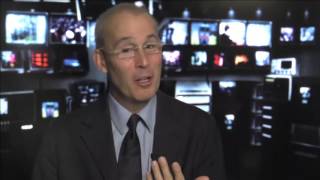
TJ Walker covers public speaking fundamentals: ditch memorized speeches for bullet notes to keep your body language alive. He breaks down why Diane Rehm's voice mattered at NPR, tears into Chipotle's response to a 52-person E. coli outbreak across nine states, and explains when sound effects actually help instead of distract.
Questions this video answers
She announced retirement at the end of the 2016 presidential campaign (announcement reported in this episode).
On 200 radio stations with an audience of 2.4 million listeners (as cited in the transcript).
About 35–36 years on the radio (host notes she will be 36 years on the radio).
52 people struck with E. coli in nine states (as cited in the episode).
Top honors went to Coniston Cold and Rathmell; Burton-on-Lonsdale came in second; Lachlan placed third.
Chapters
Great Broadway actors memorize their scripts. Is that what you should do for your own speech? Well, no, because memorization is really hard, and chances are you're not a professional actor. I know I'm not. But here's the real reason today I'm talking about this. It is our body language segment. Now, typically, each day in the second segment of the program, we have a body language segment. Today I'm doing it for the first. And here's the don't memorize. Now, you may think there's a whole host of reasons for not memorizing. It's hard. It'll get you sounding canned. All that is true. And those are additional reasons for why memorization is a bad practice for most public speakers. But there is a very, very specific body language reason for not memorizing, and that is when your memory gets it off, what happens is your body freezes up. Typically, there's something on your face that's going, oh, crap, I didn't remember it. And that body language sends a powerful message to your audience. Hey, everybody, I'm making a huge blunder of I'm dying out here. That's not what you want. So my recommendation, don't try to memorize. Now, of course, you've heard me and others say, don't sit there reading your speech the whole time, because that destroys your body. I mean, that's basic stuff. If you're reading, you don't have eye contact, your hands aren't moving, your face isn't moving. That's obvious. But the less obvious point, though, is when you're memorizing, quite often your whole body tenses up without realizing it. You're sort of trying to go through the teleprompter in your brain so your body moves less, your hands move less, your shoulders move less, your face, your head, your eyebrows. And it puts you into more of like, almost like a zombie mode. Not attractive in a public speaker. It doesn't make you look comfortable or confident or relaxed. So what's the solution? Some of you are saying, tj, you're telling me I can't read, I can't memorize. What am I supposed to do? My recommendation, anytime you're speaking, whether it's a keynote in front of a thousand people for an hour or a simple briefing in front of five colleagues, work from a simple sheet of notes. Have a piece of paper about this wide, have a few bullet points, 2, 3 words to remind you of what you're going to say. In fact, that is exactly what I do in my script for these 1520 minute shows each day, a simple script, that's really all I need. And that way, if I occasionally glance down and see what the next segment is, it's not particularly distracting because most of the time I'm looking at you. I certainly wouldn't have time to memorize a 20 minute script every day. But even if I had the time, I wouldn't do it because I don't have any evidence that it actually works. And it does tend to really mess up your body language. So certainly if you aspire to Broadway and you are studying professional acting for years and years and years, are you going to Juilliard or the Yale School of Drama? Well, yeah, you're going to have to memorize the script because the playwright, the film writer is going to be very upset if you don't get the words just right. But for those of us in the corporate arena, civic affairs, public policy, like government, when you're speaking, focus on the messages, bringing the messages to life rather than memorization, you'll be much, much better off. And that's our body language segment for the day. Now, in our behind the News segment, I was struck by a major announcement from NPR recently that Diane Rehm, longtime talk show host, is going to be stepping down. She's announced her retirement at the end of the 2016 presidential campaign. So more than a year left. Now. To me, this is fascinating for many, many reasons. For one, Diane Rehm, some of you may be offended by me saying this. I like her. I'm not a regular listener of her show. By the way, she's on 200 stations, 200 radio stations, has an audience of 2.4 million listeners and has interviewed every famous presidential candidate, president, public policy figure, author, expert in the world. That's a slight exaggeration, many of them, and has a huge, huge following. Here's the thing about Diana Reid. When you hear her voice the first time, if you're like me, your reaction is, how did this person get on the radio? She has a horrible voice and she also has health problems that have made it worse over there. I don't mean to sound like I'm picking on her. I congratulate her and her career. And I think she's a role model for a lot of us. But here's the biggest lesson. If you think you don't have a voice for radio, I urge you, listen to Diane Rehm, Google her on the Internet and you can find it. If you don't know where her station is in your own local market, and I think you'll agree with me. It's not just that. It's not your typical FM or NPR voice. It sounds a little pained. I'm not saying that's a reason not to listen to her or to not like her. I'm saying that actually is a reason for you to use your own voice. Maybe you don't have an NPR show on 200 stations, but there's nothing preventing you from having your own podcast. You could do a daily 2 minute audio segment on your area of expertise or your hobby or a parenting tip. Whatever it is, don't keep yourself from doing it because you think you don't have a voice for radio. Diane Rehm proves that is absolutely not the case. The other reason that I find interesting is she's doing she'll be 80 next year and she'll still be broadcasting. So we live in an era where everyone says, oh, millennials, this, Millennials, Millennials are hot. And Instagram and Pinterest. And that's where these young people, that's what it's all about. If you have a passion, you have an interest, you're willing to dive deep, you can be active, an active player in the media. At age 80, Diane That's a role model for me because I'm not 80, but I'm closer to 80 than I am 20. So that to me is inspirational to see that if you have a passion, you're willing to speak out. Even if not everyone thinks your voice is great, you can do so in the modern media world. So let that be an inspiration. Also, I knew about Diane Ream, but I never really followed her career. Apparently she was a volunteer at the local public radio station in the early 70s in Washington and just somehow paid enough dues, worked her way into things and got to host her own show starting in 1980. And here she is all these years later, continuing to go strong. So Congratulations, Diane Rehm, 35. She'll be 36 years on the radio. Quite an accomplishment in our crisis communication segment of the day, Chipotle. Full disclosure, I love Chipotle. The food is fantastic. If you're going to have fast food, to me, it's so much tastier, fresher than a lot of fast food, and it's high quality. Now you have to watch the calorie count, but it is great. They've been in a bit of a tight spot lately with revelations of E. Coli bacteria coming out. And 52 people have been struck with E. Coli bacteria in 19, excuse me, in nine states across the country. So how has Chipotle handled this. On the one hand, they did put out a press release. They did say what they were doing. But there are more revelations. You look at Reuters, look at what's coming out on NBC out of Boston in the last day, and I see nothing from Chipotle in the last five days. By the way, if you're watching this five years from now, this is still relevant. If there's still bad news coming out about your company where people go to your business, eat things and get wildly sick and you're not responding to it, that's always a problem. Here's my problem, specifically with Chipotle. I just went to their Twitter feed and everything is like pretty pictures of food. They're ignoring it. And I'm sure they had one tweet maybe five days ago, but if you look through their tweets, I'm not seeing much of anything and certainly nothing in the last few days. Meanwhile, the news by other people is bad news about Chipotle. They put up a press release that Chipotle remembers this company that gets all this attention for their creative, clever social media ads and their nice cartoons and the cartoons against factory farming and all that. If you're going to do video talking about how great you are, I would highly recommend you use video to address your customers concerns when they think you might be poisoning them. This is a perfect occasion for the CEO to do it. Could be a short video really saying, here's exactly what happened as we know it. Here's exactly what we are trying to do to clean up the problem. Here are new measures we're putting in to make our process even safer for you. That is just Basic Crisis Communications 101 that any CEO should be putting out. I believe in a video format if you're a restaurant and E. Coli bacteria has gotten into the situation, I don't see that from Chipotle. It's certainly not easily accessible on their website, whereas a press release from five days ago is, that is pretty lame. You know, in defense of Chipotle, huge company, huge country, you're going to eat beef and I eat beef. If you're going to eat food, these sorts of contaminations are going to occur. But Chipotle needs to do a much better job of really figuring out how to talk to their customers in this time. So the customers aren't just hearing the news from Reuters and NBC. They should be hearing it directly from the company and in this case the CEO. Chipotle not doing a very good job. In our technology news segment, the question of sound effects. And I do want to direct you to an interesting blog post at Joyful Public Speaking and I've linked to that in my blog@mediatrainingworldwide.com they have some tools on how to create something that creates some kind of a thunderclap. I'm not opposed to that, but I do want to point out something I am seeing more of my clients use sound effects. One recently who had a sound effect from the Family Feud connoting a false idea. And it was. It was kind of fun and interesting and clever, but after a while I found it a little cloying and annoying. The bigger problem I had though was that that was the most interesting part of the presentation. If you're going to spend time on sound effects, and I'm not opposed to that, make sure that you are interesting and you have interesting ideas and you're interested in communicating in a compelling way. Because if you've got a great sound effect but you're sitting here reading and you're not very interesting and you don't have good stories, it's wasted time focusing on the sound effect. You've heard me say this before. I'll continue saying it before. You worry about sound effects, special effects, zooms, twirls, animation on slides, phenomenal. That matter slides at all. Make sure you have a good presentation that stands on its own, where you are just speaking to people and you're interesting, understandable and memorable. Focus on that before you spend even one second. I mean one second on things like clapping sound effects, animation, slides and the rest. Focus on first things first. So that's the technology update of the day. Now I also want to put a spotlight on a great site. Ethos 3 they are another firm in the communications space. They do specialize in creating PowerPoint slides. They have an intriguing post today on the most important words and I've linked to the post on my site Important words that speakers should use. The number one word, and I agree with this wholeheartedly, is you. When you are a speaker, you need to be talking about you in the audience. People want to hear about themselves. It's not about me. Let me tell you about how great I am. Let me tell you about all my accomplishments. Let me tell you about how great my company. Is. That unfortunately is the approach that many speakers take and it's off putting. It's distancing from the audience and it's often essentially an encouragement for them to pull their cell phones out and start talking so they can start looking for stuff that talks to them directly. Because if you open your email, some of those messages are going to be talking about you and how people want something from you or will give you something. So it's inherently more interesting than a lot of speakers. So please, when you're constructing your speech, always think about how you can talk about how you help that person in the audience. So when I'm starting a speech on public speaking training for the day, for example, I'll often start with so why are we here? Bill, you mentioned that you want to get more comfortable in front of large audiences. You're comfortable with small audiences. Well, we're going to help you with that today. That's how I and it's just because I've gone around and talked to people in advance, which is a great way of freshening up your speech, having a fresh opening and making people feel like you are directly talking to them. So I would highly advise that Check out the post from Ethos. They always put out a lot of great content. By the way, this program is brought to you by mediatrainingworldwide.com for all of your media training and presentation training needs go to mediatrainingworldwide.com and also, if you haven't done so yet, please sign up for our free no obligation online public speaking and media training course. We send it to you. It's the very same content that I use when I'm teaching CEOs, presidents of countries, prime ministers. You can get it the same lessons at absolutely no charge in a digital environment. So go to the website, you can click below and get those free online courses today. Now, in speaking contest news, those of you who are regulars of the show know that we like to put a spotlight on people, especially young people who are trying to better their speaking skills. And while it doesn't get as much attention as Little League baseball and soccer and football and basketball, I do believe that it does deserve some attention. I want to applaud young students who spend their time building their public speaking skills. This is coming from Settle. It's a province of England. It's the Settle district young farmers. They held a public speaking competition at the Rathmell Primary School and the top honors went to Coniston Cold and Rathmell. Burton on Lonsdale came in second place, Lachlan third. So congratulations to those schools. These are in Great Britain. Keep up the good work. There are by the way, this sounds may sound odd to some of you young farmers, whether it's the future farmers of America, young farmers in Great Britain, there are a lot of organizations devoted to farmers that have public speaking contest. At first blush this may seem odd. You think of a farmer out in the fields in sort of a lonely environment. Who are they speaking to? The cows? Well these days farmers have if it's a large farm they have to speak to all the employees. They have to speak to lawmakers because there's so much legislation involving the environmental impact and all the other impacts of farm water issues. So whether it's county commissions, state lawmakers, federal lawmakers, the public, farmers have a vested interest in public policy therefore they have an interest in the public. Therefore they have an interest in speaking to the public. So I congratulate and applaud all of the youth oriented farmers organizations that try to build the public speaking skills and kids. So keep up the good work. Thanks for joining me today. As always I wish you success with all of your speaking opportunities in life. I'm TJ Walker. See you tomorrow.
More from TJ





The Breakout Cases - What Actually Caused Famous Speaking Career Breakthroughs | Ultamize

The Red Circle Sessions Finale - Build the Speaking Career You Came Here For | Ultamize

Two Stages, One Logo, Two Completely Different Realities - Main Stage vs Independent Events | Ult...

Pre-Reset - Why Repetition Builds Better Speaking Decisions | The Red Circle Sessions | Ultamize

Your Decision, Your Framework, and What Happens After - Build Your Speaking Career First | Ultamize

The Red Circle Sessions Trailer - The Speaking Career Truth Nobody on That Stage Will Tell You | ...

The Two-Minute Ultamize Reset - Your Platform, Your Audience, Your Voice | The Red Circle Sessions