TJ WALKER - THE HABIT INFLUENCER - Personal Development | LIVE STREAM
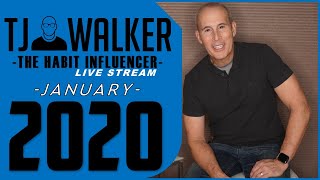
TJ Walker covers habit-building across money, speaking, and relationships. Skip expensive discretionary spending like Super Bowl tickets. Reduce decision fatigue by wearing the same clothes and fixing your breakfast. For public speaking, record yourself on video, narrow to five key ideas, and rehearse until you like it.
Chapters
LIVE Forum. Your questions are welcome. Your comments, your criticisms, plus news of the day that I bring to you. Plus some philosophical meditations on habits and reflections on other techniques, tips, tactics to help you become a better person and to become more fulfilled. That's what we're all about. First story of the day that caught my news, this According to wcbi, a local TV station here in the United States, there's this for our friends outside of the United States, there's this thing called the super bowl for the American version of football. That's not where people run around and kick in shorts. This is where they have the big pads. A very famous American political columnist once said this about football. It embodies the absolute worst qualities of American culture. It's lots of committee meetings punctuated by short bursts of violence that according to George Will. I have to say I'm not a big George Will fan, but I do agree with his definition of football. I'm not a huge fan, although I probably will watch the super bowl, but I'm not going to pay 5 to $16,000 per ticket. That's what the going rate is for tickets for the Super bowl in 2020, which happens in just a week or so. Marceau, I'm so ignorant. Is it February 1st, the Super bowl this year, a week from Sunday? My colleague Marceau is, is a big football fan. What's that? Is it February 1st, the Super Bowl? Oh, yeah, it's the second February, February 2nd is the super bowl this year. And again, some of my best friends love football. If you love watching football, I'm not going to try to talk you out of it. But here's what I would try to talk you out of. If you cannot afford to buy a $4,900 ticket to a Super bowl game or a $16,000 ticket, the only way you're going to do it is to get a loan with a 30% interest rate. To me, that is the that's demonstrating the absolute worst financial habits you could possibly have. Now, every financial expert, guru, someone who tries to help people with personal finance would, in general say, stay away from buying anything other than personal perhaps a home or a college education on credit, but certainly something that is purely discretionary. And this isn't even really a vacation, although I guess you could call it a vacation. To put something like that on credit is one thing, but to then actually pay these usurious rates, 30% interest compounded on a yearly basis, that's really bizarre. If nothing else, take out, and I'm not advocating this if nothing else, take out a credit card that gives you interest free for the first year rather than paying StubHub 30%. We talked earlier in the week about some of the unfortunate financial habits of people around the world, specifically the United States. A new survey came out stating that 40% of Americans would have to go into debt just to pay off an emergency $1,000 loan. It's one thing if a tooth falls out, you have a minor medical emergency unforeseen, but buying a ticket to the super bowl is not an emergency. I realize if your favorite team is in the game and you've been hoping for this moment for 30 years, it might seem seem like an emergency. But the beauty of the Super Bowl. I'll give them credit for this. It's available for free on television everywhere. So to me, this is the absolute most absurd use of money to I'm not saying if you want to go to the game, but if you're paying a 30% interest rate on a loan to buy a ticket to the game, that virtually guarantees that you're setting yourself for financial disaster. To me, that shows a habit of clearly not thinking ahead, not thinking for the future, not thinking for your own financial well being. Itj Walker I'd like to say a special hello to our friends joining us on TikTok today. Now, TikTok is one of my favorite platforms and it has been important part of our show here ever since we started three weeks ago, but unfortunately you've had to watch us through my cell phone the last three weeks. Today you should be able to see me through the regular feed. So if you are on TikTok and you can see this, if you could please let us know, put a comment and I will, as I try to always do, be quick to come to you with your questions, your comments, your thoughts and everything else. It is Friday and one of the habits that I try to do more specifically in a focused way, even on a daily basis, is not just how to be more productive and how to eat healthier, write my 500 words every day, but it's about how to actually enjoy free time more. We are human beings and I believe that just as important as good health, good sleep, good finances, good creation capacity is good social relationships and good fun. And that's why it's critically important to plan fun. Many people plan every second of their day. They have a habit of planning out their day for maximum productivity in the office. And yet the weekend comes, it's ah, I can relax and do nothing. Well, you can't literally do nothing. When people say they do nothing, quite often they mean sit around on the couch and look at Facebook. No offense to our friends on Facebook, but that's not a way of really having true enjoyment out of a weekend. It can't be enough to just watch Netflix and I watch Netflix. There has to be some proactive planning. I believe you need to spend as much time planning your social life, your family time, your fun in life as you do everything else. You need a full, rich life. After today, I'll be heading with my family into another part of New York and having a big family dinner with extended family. It is Chinese New Year. My wife is from China, family members from China. So we'll be having a big celebration tonight. So I'm really looking forward to that. I hope you have a good Friday night, or depending on where you're watching this, our friends in India, a good Saturday morning and a good weekend. But I would urge you to make it a habit of spending at least two minutes a day, if nothing else, specifically thinking of what are fun things you can do, what are enriching things you can do in your off time. And you may have three jobs and times may be tough now, but you've still got to give some thought to your enjoyment, your relaxation, your downside, because it will make you more productive for the times you are working. I'm TJ Walker. Thanks for joining me today. This is the end of our first three full weeks of broadcasting to you, live streaming to you daily all over the world. I really appreciate you spending time with me. We have a lot of good regulars and then new people joining us every day. Marceau, can we, can we see, do we have our friends on TikTok? And can we check with our friends on Instagram as well? I think I saw Sai there and a few others. Azina has joined us. Asma has joined us. Asma, great to hear from you today. Daniel has written in and Daniel says I do finance. If you can't buy something smaller like that twice, you shouldn't afford. You shouldn't be able to afford it. I'm not quite sure what you mean by if you can't buy. I guess. Are you saying if you can't afford two super bowl tickets, you shouldn't even buy one? It's a common thing. If you can't buy it twice, you can't afford it. Okay. If you can't buy the thing twice, you can't afford it. Now, I happen to be on the side of things where I'm a little more cautious and conservative on purchases than I used to be. So I like to pay cash. And by cash I mean if it's on my credit card, I can pay it off. So I don't believe in having any debt for any consumer products or things like cars. Pay cash. If you can't afford it, don't buy it. Sometimes does it mean you get a slightly less new car or not quite as fancy a car? It could, but it's so nice knowing it's completely paid for. Now there are exceptions. Some companies are so eager to get your business. If they give you literally an interest free loan for 12 months or 18 months, okay then it might make sense to finance since you're getting zero interest rates. But that's completely different from people buying a Super bowl ticket for 30% interest rates. That strikes me as absurd. So Daniel writes in and says yes, that I did get the gist of that. Sai says hello Sai, good to see you today. Anuta has joined us and Azina, thanks again for saying hello. And if you have any questions, comments and Marcel, can you scroll down? I'm not sure I can. I've seen everyone on there and I see some comments on the other side too. Okay. And can we just look at the icon and make sure it's either Instagram or TikTok? Okay, great. So we have some friends. Oh, so our TikTok friends are integrated into the live chat now. So that's what's great. Daniella, Danielle on TikTok. Thanks for joining us. Very happy to have our friends on TikTok. It's amazing how TikTok has just absolutely grabbed the attention of the mainstream media. I'm here in New York and it seems like a rare day goes by without the New York Times, the sort of the flagship newspaper here in the United States, most respected, does a story on TikTok. And just today there was a story about how the most popular TikTok videos are done in people's bathrooms. Believe it or not, I hadn't really thought about that but I decided to do a test today and I, I was fully clothed by the way, and I did a TikTok video in the bathroom just talking about people's self image, looking at the mirror and I'll just do a quick check in. I don't actually see that that generated more views than normal for me, but that may be just because people don't want to see me in the bathroom. And it's not as much about my appearance as ideas. Some people, if they're on TikTok other social media platforms. A lot of it is about their appearance. There are a lot of beautiful, young, attractive people in the world and that sometimes can be just a crucial element to their overall media messaging, their appeal, and what they're all about. So that does lead me to our first big topic of the day. It's a perfect segue. Topic A Are there certain habits that you should turn into something that is completely thoughtless, where you really are not giving it any thought whatsoever so you no longer have to use your executive functions? For example, dress clothing. Most people, when they're getting up to go to work, think about what kind of meetings am I going to be in today? Are we seeing outsiders? Should I wear this suit, this dress? If you're going to school, you may be thinking about, is it a dress up day? Most people do give some executive thought. It's not a pure habit. It's a habit to get dressed. It's not a habit to wear any particular piece of clothing. But are there times when it makes sense to completely turn that into an unthinking habit? The reason I thought of this topic is just a couple of days ago, one of our friends on TikTok wrote to me and said, TJ jumper. I said, what are you talking about? And the person wrote back to me and said, you've been wearing the same shirt four days or another five days in a row, whatever it was, and what is he talking about? And I looked and sure enough, it was true. I am someone who at this stage of my life don't give a lot of thought to clothing. If I've got a new sweater, new shirt, I may wear it regularly out of unthinking habit. Is this good or this bad? So I wanted to reflect on it and not simply discount the person for their mild form of criticism. Certainly it does make sense if you're in the fashion business, certain image businesses, to really give thought to your clothing. And if you are an anchor on one of the most prominent morning talk shows in your country, having different interesting clothes can be a part of the draw, especially when people are watching you on big screens. And in certain industries, the advertising industry, other industries, people really take note on what you're wearing. They may judge you on the quality and expense of your shoes, your handbag, your suit. And I, you know, and I do have a lot of suits that I could be wearing that are handmade and have the sorts of things that people who care about that notice. But here's my reflection that I started thinking about other people who decided they kind of want to opt out of that game. Well known in pop culture, Mark Zuckerberg wears the same thing every day. Supposedly has a hundred T shirts and hoodies that are exactly the same, and his stated reason is he wears the same thing every day. That way it's one fewer decision that he has to make. He can use his executive thinking skills to focus on what's really important. In his case, growing Facebook and creating a bigger, better community, making more billions of dollars. He's certainly not the first person to do this. The late founder of Apple, Steve Jobs, famously wore the same jeans and mock black T shirt. He didn't want to give thought to what to wear each day. He'd rather think about new innovations for iPhones and things like that. President Barack Obama wore basically the same thing every day in his presidency. White shirt and either a dark gray or a dark navy suit every day. Boring. Monotonous. He didn't have to give it any thought and he didn't get criticism for it. One day he wore some khakis at some event and everyone was up in arms. But other than that, he basically wore the same thing and it was a specific decision he made. He figured if I make this decision once, then I can spend the rest of my thinking time throughout the day thinking about crises, terrorism, the economy, war, elections, politics. Makes perfect sense. Now, I'm not trying to be arrogant and tell you I'm as important as Steve Jobs or the president of the United States. But some of you may have noticed I quite often wear exactly the same shirt when it's cold out. I wear this because it doesn't distract. It's not too formal, it's not a suit and tie, and it's not just an old T shirt. I'm trying to do something here that has kind of a consistent look and where I frankly don't have to think about it. I don't have to worry about does this clash or do these patterns jump around? Is it too dark? Too light? So I typically wear this shirt. If you really hate it or you think it's boring, let me know. Type it in. In response to my friend on TikTok from the video a few days ago, I did change what I was wearing. I was wearing, I think, a blue turtleneck or a navy turtleneck every day. When I made those videos and I switched to this shirt, I couldn't resist being a little sarcastic to the person. I don't really recommend sarcasm when you're responding to people on social media, but I said thank you Very much for your comments. I'll bring this up with the wardrobe department and the person just gave a nice smiley face response. I don't think the person was trying to be mean or nasty. It just, it bothered that person that I was wearing the same thing each day. But here's what I've noticed. I've had at this point probably 600,000 views on TikTok in the last three and a half months. That's the first person who ever noticed what I was wearing. Four or five years ago, I did daily public speaking tips on my YouTube channel. And at the time I was wearing a suit and tie. That was a little more professional corporate image then. And sometimes I might do 50 videos in one day wearing the same thing. But here's what I noticed. After a year of these videos going out, not a single person noticed what I was wearing. It was the same red tie, same sort of light blue business shirt, same dark. I think it was a gray pinstripe jacket. And it allowed me to focus on the content decisions I had to make on what would be interesting and useful to my viewers. Not constantly stopping and trying to figure out what's going to be the best possible thing I can wear today and mix and match wardrobe. Now is my way, right? I don't know. But here's the principle I do want you to think about. Are there certain things in your life where you could free up time mental time mental energy so that you don't have to think about that anymore. You can instead focus on decisions that are of greater importance to your life, to your career, to your business, to your family's happiness. You may be someone who has real passion for fashion. You may be someone where it gives you great joy to really dress well and to be stylistic and have people comment and compliment you on your dress. I'm not asking you to give that up. What I am asking you to do is to reflect on all the things you do spend time on during the day thinking about. For you, maybe it's not what you wear when you get up, but for you it might be your breakfast. If you know that there's one breakfast that is really healthy and you like it and it doesn't bother you and you don't get sick of it, then you don't have to get 10 other types of breakfast available for options. You just eat that one thing that might work for you. Personally, I need a little variety. I think that food is important to me. I like different food. I don't like eating the exact same thing each day. Although I do often eat omelets, vegetable omelets. The point is, think of something that you can basically put to bed. You're not going to think about it anymore. You're just going to do the same thing each day. Let that save not just time because it doesn't take a lot of time to figure out what to wear, but it saves mental energy so that you can focus on more important tasks. Now the task is to check in with you and find out what you think. Let's head over to the live chat this psychecks in from India. How are you? I am fantastic. I am feeling especially good. I tried a new habit about a week and a half ago and so far it has been remarkably successful for me. I find If I spend 15 minutes late afternoon, early evening in a very hot, bubbly, almost boiling hot tub, I get almost a perfect eight hours sleep. So I'm feeling completely well rested and energetic. Even more so. Not more so than the last week, but more so than the last few months where I unfortunately have been waking up early. I'm not doing that now because of a slightly new routine. Sy, thanks so much for writing. Danielle writes in we have some other friends on YouTube, on Facebook, and a few other forums. Marceau Is our live chat pulling from every feed or do we need to perhaps check in directly on Facebook or directly on TikTok as well? I'll let you decide. As always, my friend and colleague Marceau is joining us. He's in another city. He's in Brooklyn or in Philadelphia today and joining us from afar but close Instagram and TikTok together. You just have to look at the icon next to people's name to see what app it is that they're coming. Got it. So I see that Fortune, our good friend Fortune Tribes is joining us from Instagram today as well as Danielle is on TikTok and Azina is on TikTok as well. Great. And how do we not ignore our friends from Facebook who are joining us today is my question. Okay, great. So if you are watching on Facebook or any platform, it's perfectly fine to sit back and watch. I realize for some of you this may be your lunch hour. You may be getting ready for bed depending on what time zone you live in around the world. So participation is not mandatory, but we're very happy to hear from you at any time. It may be that you're busy cleaning up your house from all the holidays, which does lead me to topic B and I'm going to be referencing a story in the New York Times in just a moment. But topic B Is it time to declutter your house after the holiday hangover? Interesting story about this in the New York Times. I provided a link to this in the show notes. You may want to check this out, but we no longer have the excuse of oh, it's busy, it's Thanksgiving, relatives are coming, oh, it's Christmas, it's Hanukkah, it's New Year's, New Year's Eve party, it's present time, all that is gone. And yet with a lot of people, our homes are cluttered. We still have boxes around, new toys. The New York Times article gives an example of the person who thought it'd be a great idea to buy a nice big karaoke box for the family speakers and all that. But now, where do you put it? Many people have hopped on board the whole Marie Kondo decluttering ideas, tidying up. It's very popular and organizations that receive donations in terms of toys, clothes, shoes are just overflowing. That part is good. Here's the problem. People aren't buying less stuff. They may be giving away more stuff, but they're replacing it right now away. And you can give away stuff from your house. Old clothes, old shoes, old toys all the time. Your house will never become any less cluttered if you continue to buy stuff if you're replacing at the same rate. This New York Times story chronicles several individuals who downsize gone from two or three bedroom apartments to studio apartments and all the energy and effort and angst involved with figuring out what to throw away, what to give away, what to sell, that paring down process. Now is the perfect time to do it because you don't have the excuse of oh, I'll need this for Aunt Mame for Thanksgiving dinner and I'll need this for the New Year's Eve party. Now's the time to look at your house, your apartment, your dwelling and really figure out am I completely comfortable and relaxed with what I see or is the clutter overwhelming? Am I embarrassed to have friends, family, my next door neighbor pop in? If the answer is yes, you're embarrassed, we have a problem. It is time to declutter your home. Now. I think Marie Kondo is great and I've read her books, I've watched her online courses. I do recommend her. Yours truly also has a course on decluttering and it is, believe it or not, the second most popular best selling course on decluttering on the number one online teaching platform in the world, Udemy. I placed a Link to that course in the show Notes today. But I want to share. I'm not here to sell the course. I want to share with you what I have found personally. The number one way that helps me declutter my home and my TV studio and my office and my bedroom. And my approach is different from Marie Kondo. Her approach is you basically do it all at once. You go to your bedroom, you pull out every single item of clothing from your closet, throw it on the bed, you hold up each one and say, does this give me joy? Have I used it in the last year? If you can't say yes to both, quickly put it in a pile where you give it away, throw it away, sell it. And it is a great idea. And I do that from time to time. But here's what I found. It's just too hard for most people to start with that if your whole den is filled with stuff. If your office has stuff stacked to the ceiling, it's too intimidating to try to put everything in a pile, hold up each item, and throw away stuff you don't need. So I use a slightly different technique. I've used both. I used Marie Kondo's technique to get started because my house was cluttered a year ago. Not as bad as most people, but there was still more clutter than I was comfortable with. So in the process of creating my own course, helping you and others on decluttering, I came up with a system that I use and it's the 60 second solution. Every single day, in 60 seconds or less, I quickly scour whatever room I'm in and I look for just one thing to throw away. It could be a paper clip in the wrong place. Now, it doesn't count if it's just a tissue or a piece of mail that came today. It has to be something that's been in the house. And it's not just a piece of mail. And it's not just a napkin that was used from the meal. But I constantly looking around every single day. Like right now, I can see that I have a clip that is bent. This was to hold another old microphone on. I thought I'd gotten this, but I see it right now. I see it's bent. And I can just tell this is just not something I'm going to use in the future. So I'm going to reach under my desk right now and throw it away. And you may be thinking, well, T.J. that's just one tiny thing. And my whole house, my whole office is a mess. But if you do it every day you will be amazed at how clean your house you, office will get. Maybe it takes a month, maybe it takes six months, but a year from now people are going to be coming over and say, wow, what a nice, clean, decluttered house you have here. It's very relaxing. You will find it more relaxing. Now, I'm not a psychology researcher. I'm not always going to give you the latest data. But I've read enough surveys from enough reputable places to convince me that your brain simply functions more effectively when you're not surrounded by clutter. When I walk into my office in the morning and my desk is completely clean, it is simply more inviting. It's easier to sit down. I do believe that. Are there exceptions? There's the wild mad scientist who's got clutter everywhere and knows where everything is. Sure, every once in a while that perhaps works for a few people. Same kind of thing. Like some people work really well at 3, 4 in the morning and are true late night animals. Almost everyone else, 99% of the world, is much more effective in the morning. Even though we like to tell ourselves we're late night people. Same thing with clutter. You're fooling yourself most of the time. If you tell yourself you're more creative, more productive, surrounded by clutter, reduce the clutter in your home, reduce the clutter in your office, you'll feel better, your brain will be more relaxed, you'll be able to be more creative and more productive. Now, how else do I motivate myself to do this? Those of you who are regulars know I never just leave it up to myself to do a good habit. I don't trust myself. I'm lazy. It's probably not going to happen. So I do something else. I do two things. I record right on my cell phone. And today I don't have to use my cell phone for my audience with TikTok. Since you're seeing us through there. By the way, those of you watching on TikTok, do you prefer this way? I'm assuming you prefer where I'm looking right at you rather than you seeing a side shot and seeing things looking a little more professional. But I don't want to assume you may say, tj, I much prefer the side view and sort of the behind the scenes look. So this is how I was broadcasting to you before, a little tripod holding my cell phone. But I don't need that today. In fact, part of my decluttering now will be not to throw away this tripod, but to put it in storage so that it's not in fact cluttering up my studio. So the way I build the habit of becoming more organized in my home, in my office, of consistently decluttering, is I have created a simple audio recording and now I can show it to you. Since I'm not doing. I'm not broadcasting to TikTok through my cell phone. So this is just a regular iPhone. You go to the utilities voice memo, and I have a voice memo here that says TJ selfie speak programming. I hit that, and in just about 20 seconds of audio where I tell myself, TJ, you are organized. You keep a neat, organization, organized office, TV studio at home. Once per day, you spend 60 seconds or less throwing or getting rid of one thing in your house. So it only takes about 25 seconds, 20 seconds to save. I hear that every single day. And I may be doing other things. I may be reading the newspaper, I could be eating breakfast. But I'm hearing this repetition every single day. But you know what? I don't trust myself. That alone isn't enough. So I want to hold myself accountable. So every single day, I go to my notes section, and I have two different sections for my own notes of what I want to do. So I have an evening personal development, and in the evening personal development, I have a specific item. And this is just in note. There's no fancy. It's not a fancy app I'm selling. It's nothing you need to buy. It's something that is in basically every single smartphone, whether you use iPhone or anything else. It's just a simple notes function. And in the notes function, I have a simple entry. And in the entry, which I will share with you in a moment, I'm just going to pull up the item right here. It's always harder to find something when you're talking to people and looking at your phone, which is why most of the time it's a rude habit to be trying to have a conversation with someone and looking at your cell phone. So I don't normally recommend that, but I did want to share with you. I try to be as transparent as possible. So I have a simple item here, 60 seconds. Throwing away or deleting junk. It's a simple item on my cell phone. Sounds silly, sounds trite, but it's effective. It allows me to hold myself accountable. And I have the month January 2020. And then I just have the date. And since I just threw away one item, I now can put 24 for today's date. And then when I Complete it. I don't put a yes anymore. I put a W for when and I give myself just a little hand pump of yes, I did it. That's courtesy of B.J. fogg, the great and brilliant researcher out of Stanford, who's an expert on memory and, excuse me, on habits and whose book we talked about last week. So that's what I do every single day. I listen to the audio, 20 seconds, telling myself I'm going to keep a decluttered house. And then I hold myself accountable and I put a checklist to make sure I actually did it. And when you combine those two things, the house, the office, the studio, is amazingly decluttered. Is it perfect, though? I don't aspire to make it perfect. But, Marceau, you've been to my house, in my office and studio. Would you say it's fairly decluttered? Don't tell me what I think I want to hear, what you think I want to hear. But is that a fair assessment, Better than his friend's house? I'll take that as a compliment. So please realize, okay, we're going in at the end of January, but do things on your own timing. For example, in my family, my wife didn't grow up in a culture that had Christmas trees. She grew up in China, and so she likes Christmas trees. So we keep our Christmas tree up the whole month of January. It's still up. It's. It's festive looking, it's pretty looking, and so it doesn't bother us. But if you're someone who grew up like I did when I grew up, we took our Christmas tree down on New Year's Day. So if it's the week after New Year's, it would create anxiety in the household. Don't do that. You've got to do what works for you. But if you're having trouble at all getting started working, if you find you're procrastinating anything else, sometimes it's just this clutter around us. I know that I'm so much more effective if I can just sit down at my desk, clean desk, nothing to focus on but the task at hand. And that's why I think it's time to get on with your decluttering, clean up your house, office, and have just the stuff you need and that you want to look at every day. I'm T.J. walker, and that was segment A. And quick note to my producer, Marceau, remember to give me time codes, because we also, in addition to creating this live for all of our friends here today, are doing some of what we do in this show as nine minute segments for LinkedIn videos, YouTube videos, Facebook videos. And if you go above 10 minutes, then it won't go on LinkedIn. So that's why you'll sometimes hear me sharing some of my notes and thoughts. So I hope that's not too distracting. Okay, there you go, the wrap up. All right, so let's check in with our folks, our friends on Facebook today. Mohammad writes and that he has a plan to launch a YouTube channel. March 1, 2020. I have plans to get published my book about consumer behavior by the end of the year. I'll be trying hard to get planned results on time. However, the contingency period will be a maximum of two weeks. So Muhammad, good luck. Thanks for sharing your goals. Very happy to have that and hear that. We wish you luck. And my question for you and really my also advice to you is whatever goals you have, figure out what daily habits you need to get you there. I don't know what sort of a YouTube channel you have, but every single day you should either be recording new video for your channel or at least writing concepts or scripts for your videos. And depending on again, the types of videos, you could be editing them. Lots of people have goals, big goals. If I'm going to have a YouTube channel, it's going to be huge. I'm going to publish a book as we talked about yesterday. That's fine as far as it goes, but it's completely meaningless if you don't break it down specifically on a day to day basis. What you're going to do. I have a goal to have a really big YouTube channel with a huge audience this year and to publish a book next year. But I don't leave it there. I want to publish a book next year, but that's not what's important. What's important is I have a daily habit of writing at least 500 words seven days a week as soon as I get up. So I'm going to have more than enough content for several books next year. More important than that, I am communicating with a community every single day on TikTok, Instagram, Facebook, YouTube, this live forum right here. I'm building a community so that when I do publish a book, I actually have a chance of selling a few copies. It's never been easier to publish a book anywhere in the world than it is today in 2020. But it's never been harder to actually sell a book if you don't already have relationships with customers, clients, prospects, colleagues, members of Your tribe, people who already know you already trust you. So, Mohammad, my challenge to you, if we could go back to that Facebook page a moment. Marcel, my challenge to you is what are you doing to really do the most important aspect of publishing, which is figuring out the exact needs of a specific community. There was a time, 1970s, even the 1980s, early 1990s, where you could just write a great book, get it out there, there'd be some good reviews, it would take off, and all kinds of people who've never heard of you would buy your book and find it useful and helpful, make the book a best seller. In my humble opinion, those days are gone. You want to sell a book, you've got to build a relationship with an audience first. If you doubt me, look at the best seller lists. It's typically either TV talk show hosts who are on every day, seen by millions, or it's bloggers who have millions of people coming to their website. Earlier this week, I gave you the example of James Clear's book, Atomic Habits. Great book. I recommend it. I bought it. I've read it. Great book on habits. He was smart enough not to publish the book until he already had about a million people coming to his website every single month, so had a built in audience. So that is my big challenge to you and any of you who are authors is don't put the cart before the horse. If you want to publish a book, great, write every day. But you need to build an audience of people who love your ideas first. If someone's used to listening to you every day on a podcast or coming to your blog and reading your content or watching videos of you on a YouTube channel, yeah. Then you have a great chance of selling your book. But if you don't already have an audience, the chances of selling a book are extremely slim. Extremely slim. So let's go back to Mohammad a minute. I wanted to just see if I missed anything and add a comment to tell us a little about your YouTube channel. Mohammed. What specifically will your topics be? What need are you meeting that currently isn't being met by anyone else? The more you can be unique in what you offer, I think the better you are. Certainly there's other people talking about habits on the Internet. I'm not the first person to write or think or talk about habits, but what I try to do with this show is to be the one place that's live where people can have conversations about habits and really engage and talk to someone who's in the business full time of helping people with habits. But talk to others. So that's the one thing I do that I know is different. What is different about your message? Mohammed says, thanks. My target audience is MBA students, and I'm writing in my national language. That's Urdu. Well, that is fantastic because the world is a big place and unfortunately, there are a lot of ignorant people like me where I only speak one language. And the more you can personalize your expertise in the preferred language of your audience, they're going to like that. Now, Mohammed, are you telling people how to get into a top business school, how to succeed in business school, how to get your first job after business school, how to have a long career after having an mba. What is the exact niche of your channel? And because I'm interested in. I'm always interested in seeing how people really pinpoint their starting point. Everyone wants to be big and be everything to everyone. And I'm guilty of that sometimes. But when you look at the most successful businesses, quite often they start very narrow. Everyone wants to be as big as Facebook, but everyone forgets, when Facebook started, the target was just the undergraduate student, maybe even just been the 2000 freshmen in Mark Zuckerberg's class. And then it was just the undergraduates at Harvard, and then it was all the students at Harvard, and then it was a few more schools, and then it was all the Ivy schools, and then it was a few more prestigious schools, and then it was just college students. It grew in different ways. It didn't just say, hey, everybody, we're a social media group. We're just like MySpace and Friendster and we're here for the whole world. That's not what they did. So my message to you, Muhammad, and anyone just starting a new venture is always think about what is the smart, smallest niche you can really reach and help. That's a great habit for starting a new business. Figuring out who. Who is the most immediate group that I can help. It's either just like me or someone who is most interested in what I have to offer. Really nail that down. Get a core group of followers. They can become your evangelist for everything else. And if we could switch back to the Facebook page, Marceau, I want to just see if Muhammad had a comment on that. Okay, so we'll wait to see if Muhammad would like to add. And you might not want to share all the details and spill the beans. Sometimes people like to keep strategy under wraps. That is totally up to you. Hi, I'm TJ Walker. This is the Habit Influencer. I'm very happy you've joined me today. This is the one program on the Internet. It's live on virtually every single platform that allows for live streaming. So we're on more than a dozen platforms today. Let us know which platform you're on. So even if you don't want to ask a question or a comment, just say hello or a thumbs up or whatever the platform you're on does. Just say hi. If you're on Facebook, do a thumbs up. We would absolutely love to hear from you. If you have questions, comments, thoughts on anything to do with habits, personal development, and building new habits to enhance your own personal development, I'd love to hear it. That's what this show is about. If you have questions about habits related to communication skills, speaking to the public, to live audiences, to the media, those happen to be particularly strong skills that I've been immersed in for the last 35 years. So I can really give you some specific tips and tactics for habits that will help you succeed in that realm. And let's. Do we have another comment I'm seeing? Okay. Just wanted to make sure we haven't chopped off anyone. We are using a new, we are using a new system here and we don't always have all of the emails or the comments integrated in a way that we can read. So there's some complexity. When you're broadcasting on dozens of platforms, some things can fall through the cracks. So if we missed your comment or question, it was not a slight. I do apologize if we missed you. But you can always just write to me directly. You can send me an email, tjwalker.com and chances are unless you say it's private, I'll read it on the show right here the next day or even if I get it during the break, I'll share it after the break. You can also guarantee you I'll see it if you go to my Facebook page. Just go to Facebook and type in TJ Walker personal development. You'll find my page. If you post a comment there, then I guarantee you I'll see it and respond to it and you can be a part of the conversation and the discussion. Patrick, thanks for joining us today. Peggy is with us today. Peggy, always good to hear from you. Hope your ventures in creating your own channel, your TikTok channel, everything else are going well and appreciate you out of your busy time, your busy schedule. Making time for us today. A lot of other interesting topics in the news I want to go over. One of them jumped out at me. This is from a website called insider.com it's a particular psychologist is giving recommendations on how to deal with habits related to diet. Some of them I agreed with. Some of them I was skeptical of. So I want to share with you some of the habits that were shared by this psychologist. A lot of it was fairly mainstream advice, but some of it was. Let me share with you again. This is from Inside.com. here's some of the and I've linked to the story in the show notes so you can check it out for yourself. This is a quote from the psychologist. Binge eating ice cream every night would easily be defined as a bad habit, but people do that to soothe or comfort themselves. So it's actually self care. Self care that doesn't get you anywhere good. But still self care. I'm a little, I understand what the psychologists say, but I'm a little bit uncomfortable with that because that's kind of like saying, well, I want to do a bunch of cocaine today, I'll feel better. That's self care. Once you start giving positive labels to destructive behavior can be a slippery slope. And hey, I, I love ice cream. Have I ever eaten an entire pint of ice? Yes, it's been a long time because I realized that's not a habit that's going to help me. This particular psychologist, Dr. Daniels, recommends trying to uncover why you are performing this self care habit by asking yourself some questions. Here are the questions. If you're eating ice cream every night, why? I think I know why. It tastes really good and it feels good. Short term, what are you avoiding? Well, if you're sitting at home watching TV every night, eating ice cream, you're avoiding working out, dancing, being out with friends, exercising at home, eating raspberries or an apple. That's what you're avoiding. What are you distracting yourself from? We've all had points in our life where we wanted to distract ourselves. Our job isn't going well. We just got fired. We just got dumped by someone. We all have things that we want to be distracted from from time to time. Why do you feel the need to comfort yourself in that way? When it comes to ice cream, it is a lot cheaper than heroin or cocaine and it's not as bad for you as those things. It's easily accessible. It's at the corner convenience store or grocery store and it does taste really good. Here's my bigger concern. Oops, I've lost my feed with Marceau. Marceau. We'll talk at the top of the hour. We'll connect. Here's my bigger concern with the psychologist, and this is A theme I'm going to talk about in the second half of our show today from in hour two, which is we spend so much time talking about habits. Is what you do unconsciously what you don't think about. All of her recommendations here are about asking someone to think more, to think about what you're doing, to think why. And as much as I like that, to me that's the exact opposite of what a habit is. When you ask people to think about stability that they don't think about, there's an inherent contradiction and people just don't do that or they don't do it more than once. It's not systematized. Marceau. I'm hearing the feedback from the phone. Excuse our technical difficulties. One second. Maybe I just didn't turn ah. I had not turned the phone off on my end. I turned the speakerphone off. That was the issue. So the big problem is how do you help someone change a bad habit that they do without thinking? By getting them to think about it more. Because a habit by definition is something you don't think about. So simply asking someone to think about why they do that bad habit, it's an interesting thing to do when once but it's not repeatable. It's not something someone is going to do on a regular basis. Therefore, how does it have an impact on changing the bad habit? It's a great way of analyzing why you're doing something wrong. And psychologist, psychiatrist. I'm not anti psychology and psychiatry, but so much of the emphasis is on analyzing why someone does the wrong thing. Some of that is necessary. But to me the shortfall is what is the solution? Simply analyzing why you do something in and of itself doesn't help. Sometimes it can just make you depressed and more aware of what you're doing wrong. And if the advice stops with well, now you've analyzed it, so what? How do you help change the habit? That's where I try to be different in the advice I give in my online course or anything else is I try to spend most of my time giving people highly practical tips, tactics and advice on how to change their habits. That's where we're different here. Rather than spending all the time in the cerebral realm of questioning and analyzing how do we get to results faster? That's really the approach. I'm TJ Walker. I want to really thank you for spending time with us on the first hour of our show today. We have an entire hour left. Opportunities for you to post your questions, your comments, your thoughts. You can set the Agenda. I have more top stories I want to share with you, plus some opinion pieces I want to share as well. Before we do, I think there was one other comment I missed, Marceau, on Facebook. If you could pull that back and yeah, I see what you're doing there. So do you. Oh, I guess we are going to take a quick break here for technical reasons. So I'm TJ Walker. Thanks so much. We'll be back at three minutes after the hour. See you then. Okay, I'm back. Can you call me Marceau because my battery is not dead. Hello? Okay, so now could you still hear me? Were we broadcasting till the end? Whoops. You know what? Why don't you just call me through FaceTime? For some reason, this phone is cutting off. Okay, so did we lose the feed or. We just lost the phone connection. So did you go live until I said we're over or when did we stop? This is a Chicky Bee production. Ram. Sam. Sa. Sa. Welcome back to hour two of the Habit Influencer. I'm your host, TJ Walker. Thanks for joining. Joining me. We have an entire hour left this week. It's been a fabulous week. This is the end of week three of our journey here of creating a daily live community for people looking to improve their habits on a daily basis to lead more fulfilling lives. This is the show where you have equal stature. We come to you with your comments, your questions, your thoughts. We are interactive. We're on virtually every single platform that allows live streaming. And you can also send a tweet too. We'll monitor Twitter as well throughout the broadcast as well. Let's hop right in with the top story for this segment. This is from a website called idva.com these three relationship habits may seem normal, but are actually toxic. Now on this program, the first few weeks, you've heard me talk a lot about health, business habits, habits for your career, habits for health. Well, relationships, I think are also one of the seven most important pillars you have to think about when it comes to your daily habits to lead a fulfilled life. We haven't given relationships quite as much time as I'd like to, so I want to make up for that. So here, according to ideva, are three habits that a lot of people think are normal but are actually toxic. According to this author. Number one, intense fights mean you are a passionate couple. Well, you might be a passionate couple, but if you fight a lot, you're likely to end up getting divorced or breaking up. Just because you fight a lot and you have passions doesn't necessarily mean it's a healthy relationship. Of course, it's true. There are some people who never, ever fight, but they don't talk to each other at all. And that's not a good sign of a relationship either. But the principle here is just because you have a habit of fighting, and it's an intense fight as a habit, certainly as a daily habit, that is a danger sign for relationship. Now, this next one may surprise you a little. Believing your partner is your soulmate. How many times do you see in the romantic comedy movie about two people coming together and initially they're not seeing each other, one is not attracted to the other, but by the end they're soulmates? That's great for movies, but according to the psychologists and experts, this story, and I've linked to the story, you can check it out for yourself. No, that's not a good attitude to have. You have to treat the person respectfully, like they can't read your mind. You have to treat them like they do have different interests. You have to treat them like, okay, they're not going to meet every one of your needs. You're still going to need other friends, maybe not other romantic interests, but you're going to need other friends, other family, other colleagues, other stimulation in your life that you can't, you can't have. Everything from this one perfect soulmate. The very idea of thinking there's this one perfect soulmate creates expectations because it's very hard to live up to perfect. And if you tell yourself you fall in love, the great romantic rush of love, that this is the one perfect soulmate, whether it's six months or six years from now, you're going to realize this person isn't so perfect. And that sows the seeds of destruction in a relationship. So it's a bad habit to think about your one partner as your soulmate. It's not a good sign for a relationship. The other one of the top three, expecting your partner to fix your problems. Extraordinarily bad hair habit in a relationship. And this is what I think ties into everything else we talk about on this program. If you have a new partner, a spouse, boyfriend, girlfriend, significant other, and you expect them to solve your problem, if you have no career and no creative outlet and they have a great career, it might work, but it also might just make you more frustrated and make that person frustrated. Your partner can't just give you a career. Your partner can't give you the habit of being creative on a daily basis. If you're not willing to do it Your partner can't give you self esteem if you don't already do the things you need to do on a daily basis for you to feel that you're worthy of self esteem. And this is why so many relationship books talk about you've got to fix yourself first. No one else can fix you. No one else is going to solve your problems. And hey, if you're here in this show today, it's not because I think you have problems. We all are simply trying to improve. We're all trying to get that. I'm trying to get better. We're all on a journey. I'm on a journey. I'm sharing with you specific techniques I use for myself and my students around the world on how to get better habits. These habits, I do believe will help you build better relationships. Not just romantic relationships, relationships with other family members, friends, colleagues, clients, customers, every aspect of your life. They are all interconnected. The habits of one often have a positive impact on the other. Negative habits one place have negative impacts other places. If you are an unhealthy person and your partner is extraordinarily healthy, well, maybe some of that healthiness rubs off. But if you fundamentally hate to get up and go running and you like to sit around and eat three bowls of ice cream in the morning, that's your daily habit. And your partner likes to go running in the morning, your partner can't force you to go running. And your partner is not going to be able to force you to be thin and in perfect shape like your partner might be. If you still want to have the daily habits of eating three bowls of ice cream, check out the article. It does have some interesting techniques. We're going to go over other news stories as well. But first I wanted to switch to, for this hour, topic A of this hour. We'll do that in just a moment, but let's first check in with social media and see if any of our friends have reached out with any other questions or comments. And let's see, Roger has written, I listen to many professional speakers and I hear most of the time lots of extra information. They don't get to the point with clarity and simplicity in their message. Do you have suggestions on how to speak in that way so people can really get your message? Roger, I agree with you completely that people just feel the need to overwhelm people with so much information. The number one problem most people have when they're giving a speech, it's one bad habit. The habit is stemming from insecurity. They think, oh, people are Going to think I'm not worthy. I don't know enough. I'm not smart enough. So the habit is, they do a massive data dump, and the attitude is, gosh, if I tell Roger and Marceau and everyone else everything I know, everyone will think I'm smart, and no one will think I'm a fraud. That's the number one bad habit that all bad speakers have that I see, and I've worked with more than 10,000 all over the globe. The number one good habit which solves this problem is before you think of the first word out of your mouth for your speech, you ask yourself one simple question, Roger, and that is, what is it I want my audience to do after my speech? It could be approve a budget. It could be vote to change a policy at your school board. It could be to hire you. It could be to sign a contract. But ask yourself, if you could get the audience to do just one thing, what would it be? What is the one action? Now, once you've identified that in one sentence, then you need to back up and ask yourself, what are literally the handful of ideas that will motivate my audience to do this one thing? I say five because I test audiences all over the world, and I always ask people whether it's in person, whether I'm talking to one person or five or 50 or 5,000. Think of the best speaker you've seen in the last year, last five years in your industry, somebody you've seen once in person. Not a professional comedian or motivational speaker, but somebody in your industry. Think of the best speech you've ever seen. Now, tell me every message you remember from that speaker. That's a habit I have of asking people that. And typically, people say, nothing teaching everybody's boring in my industry. Or they'll say, there was this one person, and she really spoke passionately about. And they have one message. People remember stories, messages related to the stories, and it's often one or two or three messages from the whole speech. Every three months, three, four months, someone will remember four messages from the best speaker they've ever seen in their life. Every six months, there'll be that one person. Doesn't matter if I'm in Bangkok or Paris or in New York City, there'll be one person who says, oh, yeah, T.J. i remember this fantastic speaker, and I remember this point. And then they rattle off five specific points. In all the years I've asked that question, and we're going back three decades now, have never had anyone remember more than five key messages. Five ideas from the best speaker they've ever seen in their life. So my advice to anyone I work with when I'm trying to help them build their habits of becoming a great speaker is start with the discipline of isolating, narrowing down, and actually writing down on a piece of paper or computer screen your top five ideas. Each idea is not a theme. It's an actual idea. One subject, one verb, one object. You should be able to write it down in about 10 words. And that is the structure. That is the skeleton of your entire speech. Your speech might be five minutes long. It might be two hours long. I don't care how long it is. Don't try to convey More than five ideas. So you may be well, T.J. you know, I got a half an hour. I can't just say five sentences. I'd sit down after 20 seconds. That would be an embarrassment. Okay, you've got to fill up your time. Use stories and examples, fleshing out your five ideas. And give example after example after example, fleshing out your five ideas. That is the single most effective habit if you want to be a great speaker, an effective speaker. And then the next best habit is practice on video until you like your own speech. First thing I do with all of my clients when they're coming to me for learning new habits on public speaking skills is I have them stand up, give the speech they prepared. I video record it, we watch it. I ask them what they think, and they just finished watching themselves giving a boring data dump. They turn to me and say, my God, T.J. that's boring as all heck. I wouldn't want to watch me. What do you think? And then I have to turn to them and say, well, Jim, you seem like a pretty smart fellow. If you think it's incredibly boring, guess what? It is. Get rid of it. Take that speech, tear it up, throw it in the trash can so that one habit alone solves most problems. Simply watch your own speech. If you think it's boring, if you think it's uninteresting, if you think it's unmemorable, you're right. Throw it away. So, Roger, that's my advice. I think Roger had another comment there. If we could flip back to the Facebook page, Marcel, I wanted to make sure I got all the nuance there, so I think I answered that. Do you have suggestions on how to speak that way so people can really get your message? The easiest way for someone to get your message is to tell a story involving a real conversation with a real person about a real problem. And that's how you get people to remember your messages. Stating a message once is worthless. Stating a fact once is worthless. Putting words and bullet points on a screen by itself is worthless. And I'm not anti PowerPoint. I just published the longest, most in depth course on PowerPoint in the world, which I provided a link to. And we'll provide that link to that new course for those of you looking for a discount. But if you want to put it all together, Roger, in a way to really make it meaningful, you've got to tell a story to make it come alive. Good luck. Let's go to another question. We had our comment. Muhammad says. Oh, now Muhammad has joined us. Thanks for joining us. Amal has joined us, says, finally I have a chance to watch the training live. Thank you for the effort and time. Really useful, Amal. Thanks so much. Now you said that. It makes me feel like maybe you've seen some of my courses on Demand Video, perhaps skillshare or Skill Feed or udemy, one of the other platforms. If so, Amal, let me know what platform you've seen me instruct on before. And now that you got me live, you might as well use it. So ask me a question. You may have been in a course and you thought, you know, I kind of see what he's saying, but I'm a little confused. That's one of the problems, frankly, with online training is you can't instantly just raise your hand the way you can if you're in a real classroom and ask for clarification from a professor. Well, you can do that here. So some of you already know this, but what we're doing here in this live stream, it's kind of a two for one special. It is its own TV show, video show, social media show about habits and how to influence your own habits. It's also the live office hours for all my online students. I have at this point, if you really add up all the platforms, probably about a million online students all over the Internet around the world, from every country in the world. This time is also time for them to ask me questions about anything to do with subject matter in one of my personal development courses that they're in, public speaking courses, media training courses or anything else. So I'm here to answer your questions on that. Amal writes, I'm having the chance to. Oh, so I just, I just did that. So, Amal, if you do have a particular question, please let me know. Very happy to have our friends here on TikTok. Quick question. If you are watching this on TikTok. First of all, thank you for joining me. Second of all, if you have watched this program in the last three weeks, you may have noticed it looks different because in the first two and a half weeks you were looking at me through my cell phone through sort of a side view. The lighting was awful. You saw room and a TV set. Now you're kind of seeing it the way everyone else does. So I'm just curious, do you prefer it this way? Would you rather watch it a side angle and get kind of behind the scenes? So let me know. There's no right or wrong answer, but I would just love to know if you can tell a difference. If it makes any difference, I would love to know. Checking in with some of our friends on Instagram as well as TikTok. Fightlover20 has joined us. Thanks. Fortune Tribes is it. Fortune Tribes has a comment my doubt on public speaking. And Marceau, I'm going to need you to expand the window the way it's framed. I can't see the final part of the words in the comments left by Fortune Tribes. Fortune Tribes, who has a great page on Instagram. I would urge you to check out Fortune Tribe's page on Instagram. He's very active there. Happy to have Fortune as a part of our community. So his question is my doubt on public speaking, sir. How to simulate our audience as if they are in front of us while practicing alone. Well, the traditional advice is just practical in front of a mirror. Absolutely horrible advice. That's a horrible habit. Because if you're practicing giving a speech in front of a mirror, it's human nature to start looking at it and think, uh, oh, is my hairline receding more? Is my nose a little crooked? You can't really give a speech and watch yourself. You're going to be preoccupied with yourself. So I do not recommend that you practice a speech in front of a mirror. What I do recommend is to simply hold your cell phone up and watch yourself. Right now I'm doing a live feed with Marceau, my producer, so we can be in constant communication. So I can see myself a little bit right here. But the easiest way to rehearse is to record yourself on video and then just imagine you're speaking to one person in the audience. Then you have to watch the video and be honest with yourself. Be fair. I don't mean just fixate on what you don't like. I don't mean just criticize. That's what people think they need to do. You need to be fair. If you say something really interesting, pat yourself on the back, tell yourself, okay, I'm going to do that in real life in front of the audience. But if you find yourself being boring, if you find yourself doing a data dub, if you find yourself going on and on and on and you're thinking, wow, if I had to watch that guy, I'd be sitting down and playing with my cell phone and checking out Instagram, then you know you've got a problem. The best habit you could ever get into, if you want to be a compelling speaker and a great communicator, is to practice your speech on video. Not simply once or twice or three times, not one hour for every one minute. People have all these different axioms. It's over complicating things. You need to practice your speech on video until you can watch it on a screen. And you love it because you have a lifetime of experience of watching other speakers who are awful, who are boring, who indulge in the habits of doing data dumps and ignoring their audience. So you already know what doesn't work. If you practice your speech on video and you like it, you like the style, you like the substance, you think it's interesting, and you think you're coming across the best you can, you can't help but go in to that presentation full of confidence. What makes us nervous about a presentation is fear of the unknown. We don't really know how we're coming across. We don't really know if we're interesting. We don't really know if we're being boring or flat or monotone. Well, guess what? You should be nervous about speaking if you don't know how you're coming across. It's completely rational to be nervous if you don't know how you're coming across. If you had to get dressed in pitch black darkness for a very important meeting or social event, wouldn't you be a little bit nervous about how people see you? If you then were just instantly transported into the middle of the room of that meeting, you might be thinking, you know, do things match? Did I get a dirty shirt? Is the tie straight? Is the dress on backwards? All of these things you'd be thinking about if you had to get dressed in pitch black. Guess what? If you ever give a speech and you haven't watched it on video, you essentially are going about it in pitch black. You're dealing with the unknown. You're delivering something where you don't know what the quality is. And that is what is making you nervous and uncomfortable. So Please try that solution. And it doesn't really matter if you're giving a speech to 5, 10, 20 people or 40 people. If you practice on video and you really see what you like, do it exactly the same whether you're talking to five or 10 or 50 or 100 people. You don't have to change just because the audience is larger. You might need a microphone and speakers, but you don't literally need to change the way you speak. And those are the habits of successful speakers. Thanks for the question. Let's check in with. Let me see if Fortune had any other comment there. Not expecting my partner to go to work or even to educate. Just needs True Virgin one that I'm not sure I caught that you lost me. A true oh, true vision, perhaps, or version. You need a similar version of the message from your company coming out from your partner as well. If that's the gist, let me know. And if you could scroll up Marceau, I think I see something was cut off there from the other version and now our framing is lost and I can't see it. So we're still working out some of the kinks here because we're working from different screens. I'm trying to be as responsive to you regardless of what social platform you're on. And my colleague Marceau is in another city today as well. Now I think we need to scroll for the other end. I think we missed and Cy says great show. Well, thank you, Cy. I appreciate that. I'm not expecting my partner to go to work or even to educate. So that's the comment. Fortune, I'm not sure I quite understood the gist of that. So if you could help me and restate that and just Marceau, let me know as soon as that is up. Here is a comment. Common problem in organizations that are larger than one person. If you have different people speaking on behalf of the organization, you want to have a similar message. Some message consistency. The most common technique is someone writes up a PowerPoint, lots and lots of bullet points, and then you've got 20 sales reps or 20 account executives in different cities. They're all on the same message, but. But they're all sort of standing around reading bullet points off a screen and anyone they're speaking to is bored out of their mind. Yes, it's consistent, but it's consistently bad. So it does no good to have a habit and have the habit of consistency for communication in your organization if it doesn't result in actual communication. The habit I recommend to all of my clients and 99% of the world doesn't do this. But it will be dramatically effective if you have different people in your organization who all have to share the same message. Let's say you're all sharing the same product, you're all promoting the same service. The key is give them a few talking points, but then ask them to practice on video until they love it, until they think they are representing the organization at its peak. Everything the organization is about and they're happy with it. Ask them to email you if you are their boss or it's your company or you're their manager. Get into the habit of asking them to email you a video of their presentation or to just send it to you as a text. If they're practicing on their cell phone, it's often easier just to text the video of their speech to you. And quite often that solves all the problems. Because remember, our goal is not just to all be on the same message, but to be interesting and engaging and memorable. Those are the goals. Don't lose sight of what the bigger goals are. It can be a habit to stick to a message, but you need to look at the real goal. The goal is to communicate messages to motivate the actions you want from the audience. So you need multiple habits to do that. One habit is having a consistent message. One habit is being interesting. One habit is practicing to the point where you come across comfortable, confident and relaxed. So you can't put one habit above all others. Too often in many organizations, there's almost a fetish for everyone working off of the same boring PowerPoint with a lot of text and words that doesn't mean anything to your clients. But thanks for the question. Let's check in on Facebook. Mohammed says thanks for the inspiration and also says, for my first video I tried a hotel 105 times. I agree with you that you should love the video by yourself first. So, Muhammad, I have to ask you, did you get to the point where you love the video? I don't mean perfect. Nobody's perfect. I'm not perfect. I could go through this entire two hour show and say, well, I could have done that a little differently or this wasn't perfect perfect. But when I do the whole show again, no. I'm comfortable and confident that I'm coming across the best I can in a live environment and that I'm communicating and I'm coming across in the style I want. I don't worry about the fact that just then I had an itch, I scratched my ear, I didn't take a TV timeout, say, let's go to commercial and then, you know, come over here, scratch my ear. Because I know it doesn't really matter to you. If I did this the whole time for two hours, that would be annoying. That would be distracting. But that's not what we're doing here. It's the bottom of the hour. I'm TJ Walker. We're going to be here with you for almost another 30 minutes. We're coming into the home stretch of week three of the Habit Influencer. This is the show for you where we talk about good habits, how to build good habits, how to strengthen habits, how to create the habits in your life to create the best possible life for you, how to create a meaningful, fulfilling, healthy, happy life. That's what it's about. This is not, and I don't mean this in any criticism, it's just not what I'm about. This is not a show where I help you conquer serious addictions. There are some habits people have alcohol addiction, cocaine, heroin. I'm not equipped to battle that. I am primarily an expert on helping people who don't have severe problems build stronger habits to make their lives even happier, more productive and healthier. Do I have some suggestions from time to time on how to reduce bad habits? Sure. But if you do have a really serious addiction problem, I want to advise you and recommend don't rely on this show. You need to seek professional medical advice. But absent that, we all want to improve better. This is a show for people who are happy with their lives and want great lives. This is a show for people who have great lives and want even better lives. And this is a show for people where, you know, maybe there are some things out of whack and if we could get things in alignment, life would be really good. That's what this show is all about. Plus you, your comments, your thoughts and your suggestions. Let's hop over and see if we have any other friends joining us from Instagram as well as TikTok. Again, I see our friend Fortune has a number of comments. Fortune writes any idea on one spot speech without I think you're talking about an impromptu speech. What's the best way for if I'm getting the gist of that, let us know yes or no, A thumbs up. Are you asking about how can you give a speech on the spot? Let's say so an impromptu speech which happens, you could be in a meeting and your boss could say, hey, Fortune, stand up and give everyone a quick two minute update on that project you're working for, for the Smithers account, you got to stand up and speak for two minutes. You didn't know you were going to be asked. Now, Winston Churchill once famously said, yes, I can give a great impromptu speech. It only takes me two weeks of preparation. He would give a lot of thought. If he knew he were going to a cocktail party or something where there was even a slight chance that he could speak, he would give it thought, give it reflection. Well, that's Winston Churchill. We can't all be Winston Churchill. The main thing to do is look for every single opportunity you can to speak in an impromptu way. Because what makes impromptu speaking? The fear. Because when you stop and think about it, all of us give impromptu speeches all day long. Someone calls you on the phone and asks you a question, you're now giving an impromptu speech. It doesn't feel like a speech because you're only talking to one person, you might not see them. What happens though, is if you don't speak regularly and you're called upon to speak in business situation, a political rally, an event, a civic meeting, and you feel all of a sudden, 20 eyes, 40 eyes staring at you, you feel uncomfortable. When you feel uncomfortable, there's anxiety percolating up. When your body's feeling anxiety, it's pushing adrenaline throughout your body and it's telling your brain, shut down, stop working, look for an exit door and run. That's why your hands can get sweaty. If you didn't have shoes on, you would notice the bottom of your feet are perspiring because your body is preparing to deal with risk by running. So that's why it seems harder. So one solution is to just use every single opportunity you can to speak. One opportunity for all of you, and it only takes 15 seconds a day. Speak every day, pull up your cell phone, do a 15 second video on TikTok. That's an impromptu speech. I speak seven days a week on TikTok, but I only do it for 15 seconds a day and probably another 15 seconds to write a title. That's it. But because I do a simple 15 seconds a day, it also makes it really easy for me to give an impromptu speech every day right here for two hours. The more you do it, the easier it gets. When you get used to speaking in an impromptu way, the more you do it, the easier it gets. The first time you ride a bicycle, you're wobbling and falling over and worrying about dying. You ride a bicycle for every day. You don't even have to think about it. If you look for opportunities to speak in an impromptu way every day. Then, whether you're talking to one colleague at the water cooler who asks you a question, or you have to stand up at a trade industry conference in front of 2,000 people and talk for five minutes, it won't feel any different. It's just talking. That's all it is. One thing I would recommend, if you're still not speaking that often, and let's say it is an important meeting and you think there's a chance you might have to speak, prepare. I don't mean write out a full speech and memorize it, but if you're in a meeting, sometimes it's possible your boss will say, I'm going to ask all of our department heads to stand up and just give a one minute overdue of the most important project they're working on. If that's said at the beginning of the meeting and you know you're going to be speaking in five minutes, start preparing. Stay in the meeting. Keep listening to the boss, but just be thinking in your own mind and maybe coming up with a little scratch sheet of paper where you just make a note or two, one or two points. Don't start writing out a full speech, just one or two words. Not that you'll even look at your notes necessarily, but the sheer act of making a note or two might make it easier for you to focus when you are speaking, and that will help. The other thing is try to focus on just one interesting idea. If you are giving an impromptu speech and you can just connect with people and give them one interesting idea, you are probably going to be the best speaker anyone has seen that day. You will be in great shape. Focus on the most important thing you know that you think is going to be interesting and useful to your audience, and just say it. What you don't want to do is stand up and say, oh, gosh. Well, I didn't know I was going to speak today, so I didn't really prepare anything and I don't have a lot of time, so let me speak quickly. That's what a lot of people do. What did I just do there? I wasted your time and I talked about me, me, me. I didn't know I wasn't prepare. Poor little me. Let's have a pity party. Guess what? Nobody cares about you, so don't talk about it. Don't talk about yourself. Never talk about the fact that you don't have a lot of time because that wastes time that you could be using. Saying something interesting for Your audience a horrible habit to ever mention time when you're giving a speech. Simply use the time you have to speak in a way where you're giving ideas and information that's interesting and memorable and useful and relevant to your audience. Do that and you will be in great shape. Good luck. Let's check in with a couple of other of our friends on Facebook. Roger says you have a fantastic background behind you. I assume that is your natural environment in your house. I haven't found found a great place to broadcast from. My computer and office faces a window with light behind me and it just doesn't work well. I was going to try a green screen, but not sure you can do that live. Any suggestions? Well, a couple of things, Roger. So I am in front of a TV screen here. This is video from my actual living room upstairs. And we did broadcast some of our earlier shows from that, but it was a lot of extra stuff set up. And one day I set the fire the wrong way. I set off the fire alarm in the middle of the show. Marceau well remembers that. And it just seemed more trouble than it was worth. So this is a video loop from my living room. I am in a TV studio with carpeted walls, no windows, controlled sound, controlled lighting. That's where I do this. And some of you may have seen my training videos. I just use the same TV screen, but I have a white backdrop. It's a white PowerPoint slide. There's no one perfect backdrop. The worst thing you could do, Roger, though, frankly, is have your window behind you because it totally messes up your lighting. If you have a window behind you, there's going to be a lot more light behind you than in front of you. You want light? Light in front of you. I have right now five lights in front of me, a couple of professional TV lights and the ceiling and one pointed the other way. Another light on a wall, two from the floor and there's more light in front of me. That's why you can see my face clearly. So that's my. My biggest suggestion to you is just make sure you have more light in front of you. Beyond that, listen to your audience. I appreciate your comments. One of the things I wanted to do today, frankly, is ask people. We're trying to decide what backdrop we go to. A couple of people have suggested they like a simpler white backdrop. White, clean backdrop. Some of you in warmer climates have said, TJ it's a little weird seeing fire. It's too hot where I am. I can't relate to that. So Let me know. You can do it here on the show today. You can post a message on any of the social media platforms. Let me know what you would like for your backdrop. Now, regarding green screen Chroma key, I personally don't like that because it's much more complicated to light yourself when you're using green screen and chroma key. It also requires extra production and you've got to edit it. It requires extra software if you're going to try to do it live. I'm a big believer until you're with the BBC or CNN or you're really doing Beyonce video, keep your production simple. Just keep things as simple as possible. To me, green screen is not the most complicated thing in the world. And some of you may say, well, tj, you're making too much of it. It's still extra complication. The beauty of this is boom. It's just right there. It looks the same. It doesn't require. It actually requires a lot less futzing with the lighting than a white screen is actually more difficult to light. So if I were you, and I'm assuming you don't have a big production team behind you, go for something simple. And maybe it's as simple as just moving your desk or moving a chair so that you have your bookshelf or something else behind you and it's not the window. And that way, as long as there's nothing too distracting. Occasionally I see people talking about serious issues and they're in their home and you see all kinds of clothes and robes hanging around and empty liquor bottles. It's very distracting and it cuts across their message. As long as you don't have something like that, I think you'll be in good shape. And Roger, do we have another comment from Roger or we wanted to go to Peggy. Peggy says, I used to redo my videos over and over myself. Then I heard that if you seem real, people will relate to you better. Instead of seeming artificial, it's lowered my stress level. Well, that's fantastic. One of the worst things you could do, one of the worst habits is telling yourself, I have to get this video perfect, perfect. And then you start memorizing. This happens to a lot of my clients all the time. They in the urge and the desire to make a video perfect, they memorize. And the second you try to memorize what you're going to say on video, it's going to be a disaster. Unless you are Meryl Streep. Unless you are Robert De Niro, a professionally trained actor who went to Juilliard or the Yale School of Drama. If you try to memorize a script, what happens is your speed levels out, your volume levels out, your pitch levels out, and before you know it, you sound like a canned phony robot or someone appearing in a hostage video. Just talk. Just talk to someone. Share the ideas you have, share the passion, and that will be great. Don't worry about perfect. Just worry about is it interesting, believable, likable. Of course, if you start a video and within 10 seconds, 23 UMS and UHS come out, just stop recording, hit delete and start over. But don't worry if you have an occasional uh and um. That's not a problem. Was it Roger or it was Muhammad who said he practiced 105 times? That's great. If this is a big caveat, if every time you watched yourself, you tried to focus on what's one thing I liked a little bit better, what's one thing I didn't like that I want to improve. Sometimes people will do a video 100, 200 times, but they're just looking at it to form general impressions. I don't like it. Let me do another one. I don't like it. Let me do another one. That's possible. Marceau, are we back? Are people seeing us now? I think we're good on Facebook still, but the other places where it has the setup, we just got to set it back up again. Okay, great. Well, I want to thank everyone for joining us this whole week and today. And I want to thank Marceau. I think considering we're doing something brand new, from my perspective, we've had remarkably few technical glitches and problems. I look back in my early days of dealing with the media and what I had to go through to communicate with people. I literally had to shoot a TV pilot, make dubs on three quarter inch and half inch vhs, put him in my car, go beg for money from people, raise money, then drive all over the state of Florida, knock on doors on TV stations, beg program managers to look at my show in order to syndicate a political TV talk show I was doing more than 30 years ago. And now, with the push of a button, the whole world can watch without having to drive anywhere, without having to appeal to big station managers, network officials. All the gatekeepers are gone. Other than one. You, you are your own gatekeeper now. You are the person. Your persistence, your patience, your willingness to learn, that's the biggest gatekeeper left in the world today. And that's what we're trying to overcome right Here. So you could still see a few glitches. I'm seeing an intel sign or something that has popped up there. I don't even know what that is. But you know what? It's a lot better than nothing. It's a lot better than just a text blog. And I'm not against blogging. I've blogged for years, hope to get back posting regularly next month. But video is the hardest medium. That's why video scares so many people away. But if you can get in the habit of communicating on a video level, it's going to help you so much because it is so much more powerful than text. Because everyone can communicate by text these days. Most people have gotten to the habit of telling themselves, oh, I don't have the right face, the right look, the right voice to communicate on video. So most people self select out of communicating on video, you go to TikTok. The vast majority of people who I see click on one of my videos. If I click on their profile, they don't have a single video. The vast majority of people who leave comments on YouTube, they don't have their own channel. So if you want to distinguish yourself and really stand out as a better communicator, as a more confident communicator, as someone more powerful and confident in your ideas, speak and speak on video. I do think it's a great habit to get into. You cannot start too early. I've started my daughter at age 3 doing online videos where she just taught other little kids how to pronounce English words in Chinese. And we don't force her to make a living or pay the rent with her video skills. But at least once a year we do some little project, some little TV series with her. So she's getting more and more comfortable communicating on video. Because I do think it is a critical skill. It's only going to grow in importance. You look at all the trend lines, all social media, everyone is trying to have more and more video. Every corporation big and small has more video from a CEO, a chief marketing officer, a product officer explaining new products, explaining new services. All the research shows millennials and those younger prefer receiving their information in a video format rather than text. That's one reason why I'm here to you today. Rather than just doing long text posts, I'm trying to make myself a the ideas here available in video format so we can reach the widest range of people. And Marceau, have we lost all of our connections? Am I just talking to myself? Which is okay since I like the sound of my own voice. No, no, we're. We're on. We're back on YouTube. We're back on TikTok. We're back on Instagram. Oh, fantastic. And apologies to those of you who we lost. We still have some technical glitches. As I mentioned, we've been remarkably free of technical glitches these first three weeks, but we're still working out the kinks. One habit, I believe, of a winner of someone who's destined for success in the modern world is they're always trying something a little bit out of their comfort zone. They're always trying something that other people think is hard. And a lot of people are comfortable. Writing on a blog, writing an email, a post on Facebook. That's easy now. People thought that was hard 25 years ago, but that's easy now. And then some people have thought, well, okay, I'll make a video, but it'll be scripted, edited, we'll polish it up. There's no risk, we'll redo it. So there are a lot of people in the world who communicate on video, but it's a subsection of people who post text online. But then there's a smaller group of people who say, yeah, I'll do video and I'll do video. Even a Facebook Live once a month, that's a much smaller niche, and that's perceived as harder. It's more stressful because if you mess up, everyone can see it. There's another threshold of people who said, yeah, I'm going to go live and I make some mistakes. I may have the cameras go, I may have things crash, I may say something stupid. I'm still going to give it my best and I'll do it every single day. So that's an even smaller group of people. And I've done that for a number of years, frankly. But there's another step up. And the step that I decided to step up on just a month ago is I want to go live on video for a long period every day, on every single platform that allows for that. There's no one simple manual. You can't just look at what someone else does and repeat it. Anthony Robbins, Jim Rohn, other personal development gurus always like to use this phrase. Success leaves clues. You want to do something, copy what someone else has already done and try to do the same thing. Well, that does work. That is good advice in most things. But I do believe if you want to be a real trailblazer, you have to go beyond what other people have done. That's what we're trying to do here with this show. Now, I'm not risking myself. It's not like I'm climbing Mount Everest and, or running a triathlon in record time. It's not physically that much harder than anything else. Although it can be a little tiring talking for two hours, which is why I like to drink a little water every now and then. But it's still, it's a hard thing to organize, to put it all together, to try to make it coherent, doing a live broadcast every day on every platform. So that's how I'm trying to grow. You might not ever want to do a live stream Daily show on 20 some networks and social media platforms. I'm not saying everyone should do that, but what I am suggesting is that you need to do something that takes you out of your comfort zone. You need to do something where you fail some of the time. If you're always succeeding, you're not aiming high enough. If you're always succeeding, you're not growing. I failed today. There's certain things that just didn't work perfectly in this show. But when this show ends, the top of the air, I'm going to feel good about it. I'm going to feel good about the good ideas that came out, the good exchange, the good community feelings that were generated here. Some people who got some ideas that might change their business, how they speak, change their daily habit. I'm going to feel really good about that. And, and I'm not going to worry about the fact that we had a few technical glitches or we lost a couple of networks at certain times and came back and maybe some of the people got frustrated. I'm not going to worry about that. I'll try to use the information to figure out how do we make the show just a little bit better on Monday. But to me, that is so key to success in the modern world is you've got to grow. You've got to try things that are hard for you, maybe easy for others, but you've got to try things that are hard for you to extend yourself. That's the only way growth happens. If you're just doing what you're great at and everyone tells you you're great, you're not growing, you're not building, your skills are not getting better, they're not getting deeper. You've got to decide what's a stretch for you. This is a stretch for me. But I have to tell you, I'm having a lot of fun and I hope you are too. There's nothing better in the world than helping other people improve, helping other people learn new skills, helping them in their careers and their personal life, their professional life, and making a nice living in the process. And thanks to you, so many of you as my students, my courses, my online courses are never doing better. And I'm very happy that, I mean, just this month, more than 10,000 new students on the UDEMY platform alone. So a special hello to all of my new students on that platform. If you are looking for help in any aspect of personal development, especially habits, but also if you're looking to find more purpose in life, how to have more focus, obtain more mindfulness in your day, I have very comprehensive, detailed courses on those subjects. So I would urge you, you can just type my name in online, online courses and you'll see it all over the Internet. You can go to the UDEMY platform, you can go to my own website, mediatrainingworldwide.com and you can see all the courses listed there. I am, I'm agnostic on what platform you use. Same way I'm trying to live broadcast everywhere on the Internet. I try to be on every platform when it comes to helping people in an online environment. I'm a big fan of online learning, especially through the power of video, because it's just more powerful than reading text. It's more powerful than reading a book. And I love books. Try to read a book every single day. But hearing a real expert speak with passion on a subject, putting a spotlight on an idea can be the best way to make it real for you and for me. So that's why I'm a fan of online training. If you haven't done an online course yet, I don't mean taking one of mine. If you haven't created your own online course, what are you waiting for? That's the thing I want you to contemplate over the weekend. If you watch this show and you have any expertise where anyone's ever asked you for advice, I want you this weekend to think about creating your own online course. To me, that's a great habit. Thinking about your ideas, organizing your ideas, communicating your ideas, making yourself vulnerable to the world people could criticize you, putting your ideas out there to help your own finances, your own personal finance. Hey, no matter how much money you have, it's always nice to make more money. So that's my closing thought to you. Think of how you could make your own online course. I'm TJ Walker. Thanks so much for spending today, this hour with me and this whole week. And this whole month in this new venture where we're here together. How? Hi, I'm T.J. walker, the Habit influencer. Have a great weekend. See you Monday. This is a Chicky Bee production. Sam. Sa. Sam.
More from TJ





The Breakout Cases - What Actually Caused Famous Speaking Career Breakthroughs | Ultamize

The Red Circle Sessions Finale - Build the Speaking Career You Came Here For | Ultamize

Two Stages, One Logo, Two Completely Different Realities - Main Stage vs Independent Events | Ult...

Pre-Reset - Why Repetition Builds Better Speaking Decisions | The Red Circle Sessions | Ultamize

Your Decision, Your Framework, and What Happens After - Build Your Speaking Career First | Ultamize

The Red Circle Sessions Trailer - The Speaking Career Truth Nobody on That Stage Will Tell You | ...

The Two-Minute Ultamize Reset - Your Platform, Your Audience, Your Voice | The Red Circle Sessions