TJ WALKER - THE HABIT INFLUENCER - Personal Development | LIVE STREAM
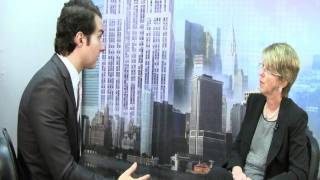
Amy Binder, CEO of RF Binder, ran a live webcast from a nuclear fuel recycling facility in Normandy to a D.C. event, coordinating with a March 28 conference. She walks through the technical challenges of streaming from an industrial site, mixing live feeds with pre-produced segments, and reaching reporters, NGOs, and government officials both in-person and online.
Questions this video answers
March 28 (timed to Secretary Chu convening a major conference on nuclear recycling).
About 60 reporters.
About 100 people joined via the Internet (total attendance ~160–200).
$80,000.
Chapters
From the studios of Media Training Worldwide in New York, this is Inside Communications, and I'm your host, Mike Baco. Today we go inside with RF Binder CEO Amy Bender.
When you're going into a nuclear facility and you really want to show the detail and you want people to really see with that blurriness, you have to have high production values.
All that and more coming up on Inside Communications. Amy, you were engaged by Areva, a company that wanted to get the idea out about nuclear fuel recycling. Not really a sexy topic, even though it is something that so many people care so passionately about. How did you go about the campaign for them?
Well, I'll tell you, it's interesting. We started talking to them about the challenge that they had of getting reporters to go over to Normandy to see what recycling was all about and the way they were handling it. And, you know, it's a challenge. One, it's a remote area or two, so many of the media outlets don't want to spend the money today. And as we were having a conversation with them, I said to them, you know, we did something interesting. For Wines of Chile, our business is about 60% B2B and about 40% consumer. I said, for Wines of Chile, we had wanted to do a wine tasting, but we had the winemaker sitting down in Santiago, and we had some sommelier up here in New York City, and we had people all over the country. And so what we did was we put together a webcast and we had, we sent out wine to people all over the country, and we had someone in New York and we had these 12 winemakers in Santiago. So we said, you know, why couldn't we do the same thing for Riva? We could bring people inside a facility so that they could see the whole recycling process without ever having to go there. But they would have. It would be partially live and so that they wouldn't be edited. And they could really see what's going.
On right from the get go that the standard press release wasn't going to work for a situation like this.
No, I mean, they knew, we knew that what they needed to do was to get people there. And they had been working on trying to get people there, and people were very interested in going, but because of the financial cutbacks that so many media outlets today, they couldn't. They didn't want to spend the money. So the whole beginning premise was, how do we get people there? Understanding the challenges of getting people there. So the idea we came up with is that we should do an event down in D.C. as it happens, on March 28, Secretary Chu is going to be convening a major conference on nuclear recycling. So we said earlier in the morning, let's do an educational event. We'll bring the CEO of areweva down to the press club. We'll have some scientists there. We'll have scientists sitting in the facility in Normandy. And we'd have a uplink, so it would be live, and. And we'd have people in the audience at the National Parks Club, but we'd also have people around the country so that they could ask questions. And so that was the premise of being able to create an environment where people could see something that we wish they could see in person, but they couldn't, and having people also in front of them where they could ask questions.
What were some of the challenges when putting this together? Was it more from a technical standpoint? Were the reporters receptive to this? Was this something that it's not normally done, which is why the campaign got so much attention, or were reporters receptive to this? And what were some of the challenges?
You know, the reporters were very receptive. The biggest challenge was we were in a very remote place, and so we had gone there first to figure out how we could do the uplink. And it was very complicated. So the biggest challenge was a technological challenge. But we have producers on our team that come out of television, and so they were used to this kind of thing. But that was the biggest challenge was to get it. So it was streaming live video, and it was on a very large screen right behind the panel that was sitting in Washington. And the two scientists in Normandy could see what was going on in the press club, and they could all ask and answer questions live time. So it was a technology issue versus anything else. And in the audience, we had 60 reporters, but we had NGOs, we had people out of government, we had thought leaders from think tanks. And then we had 100 people that were joining via the Internet around the country. So we had about 160 to 200 people.
And the people that were joining you on the Internet, they weren't watching a webinar, they were watching a webcast. Interesting choice of words. Did that make much of a difference?
It did, because a webinar could happen at any time. And it's sort of people think of it as PowerPoint presentation. We called it a webcast because we thought that it showed that it was going to be live and that it was happening as people, you know, were in real time. You know, the other interesting thing that we did was safety and security is a huge issue. This was way before it was gone on in Japan, and it was still a huge issue. And so what we did, and we wanted to address all the issues directly on, and we even wanted to address all the issues directly on. We had a crew go earlier, a couple months earlier, and actually produce four 90 to three minute news segments that would address all the very tough issues that were involved with safety and security, with recycling. And the way we handled it was we would play a video, the scientists and the panelists, which included the CEO and two other scientists in Washington. After each video would have a discussion and then we opened it up for Q and A for anyone anywhere over the country. So the webcast concept was. Was really real to them because it was an ongoing dialogue between France, Washington and wherever you were sitting all over the country.
And you mentioned that Areva was very much wanting to get out all of the information. Is it difficult dealing with a client and a topic that's very controversial, where a lot of people, when they do put out these sorts of stories, don't give all the information? And some of the information that they do put out might not always be accurate. How did you deal with them in terms of getting out all the information? Dangers, different ways that they are doing this Recycling, Was that a challenge? No.
They're really an incredible company. They felt that transparency was critical to this. That's why they basically wanted to open up their facility. They would have taken media there to the facility if they could have gone. And we felt it was critical. Not what we could have done. Is four videos pre done with the CEO and two scientists sitting in Washington. But they didn't want to do that. What they were really looking for was a way to get reporters into their facility. And that's why having the live uplink with the two scientists sitting in the facility in Normandy was so critical to them because they wanted to have reporters see things as they were happening. Anything can be edited and it can be edited to your point. You can cut anything out you want to, but this was both edited pieces, but it was live. And there was ongoing dialogue between all the participants. And, you know, the questions weren't monitored. People could ask and people could respond. So I think the nature of the way we put this together, the format, reinforced the company's openness to openness, if you will.
How do you feel moving forward with this concept? Do you see this translatable to other clients that you may have, or other people that are watching us right now? What's the feasibility for someone else doing something like this?
Absolutely. You know, I think we're living in a time where the media has changed. There's still certainly some media outlets like 60 Minutes that can invest the money to go on location and spend months doing it, but so many can't. They just can't afford it. It's not that the reporter doesn't want to, the reporter does, but they just can't get the funds to do it. So there's got to be another way. And prepackaged spots just don't do it. So you've got to be able to take reporters to a place so that they know that what they're seeing is real. And if you've got a live feed coming in, just as you would on the news, if you see someone in Iraq or Afghanistan or somewhere else, I think that you can at least get closer to having a reporter feel that they're making their own judgments about what they're seeing. You know, the days of the 92nd prepackaged VNRs really don't exist anymore because there's just not. It's believable. People need to see it themselves and make decisions themselves. And this is a way to help reporters get to a place that their media outlet may not be willing or able to pay for.
And it's certainly an award winning campaign. So there was great feedback to it. But did you hear any negative feedback from a reporter or from maybe some of the more old school people that weren't quite used to this sort of situation and not as receptive to it?
No, not really. You know, it's interesting because following the webcast, we had a senior guy, Scientific American, sit down with Areva for like two hours. So they were able to use the knowledge that they got and then have a follow on interview. So is this enough in itself to create a story? Maybe not, but it's a way to at least open a dialogue and begin a conversation. So we have not heard any negative feedback from traditional media. There was a lot of traditional media there and we've only got wherever we've done this kind of thing and we've done it, as I said, on the consumer side of the business. We've gotten very, very positive feedback from it.
And moving forward. Now you mentioned that the Internet is certainly leveling the playing field. Is this something that individuals that on a smaller scale can do themselves? You mentioned that you had TV producers and it was a pretty substantial production that you put together. But do you think on a smaller scale that this could be Accomplished in the same way.
Well, the issue is always quality. So sure. I mean, it's like we'll have clients come to us and say, can't we just use a webcam and don't make a video? Sure you can.
Everyone thinks that Skype is the be all and end all to everything. We could just do it over Skype.
Yeah, you know, it depends on the quality that you need when you're going into a nuclear facility and you really want to show the details, detail and you want people to really see with that blurriness, you have to have high production values. You know, it depends on what you're doing. There may be cases we all see, you know, newscasts coming in, reports off of phones and stuff like that today. So yeah, it's possible to do it, but it depends on what you're talking about, the seriousness of what you're talking about and how important the quality is of the video production. Because if you want to see details, it's hard to use Skype.
It's blurry, right? It's blurry. And as you mentioned, this really got a lot of great publicity. Is that another feather in the cap of your agency to then be able to go to other companies that come to you with this proven track record that you have already now?
Absolutely, we've done it a number of times. Video is becoming increasingly important on the web and we're using video more and more with many of our clients. And I'll tell you the interesting thing when you talk about cost, this entire thing from beginning to end cost $80,000, which if you think about putting together an event and it was live streaming video with pre produced pieces, that's not a lot of money. So yes, there are people who come to me and say, can I do a video for $3,000? Yeah, you can. It's just not the quality. So when you have a complex issue, even if you were to take, if you were to take reports is over there, it costs a lot of money by the time you finish it up. So it's not that much more expensive from doing it. But we are seeing that more and more clients are looking to video to engage their consumers, their advocates, the key stakeholders, their influencers in what they're doing, both on the corporate side as well as on the consumer side of business.
Amy Binder, thanks for going Inside Communications with us.
Media Training Worldwide has specific systems to teach proper body language, messaging, answer techniques and sound bite creation. Join a media training workshop to help you prepare for all your media appearances. Learn the basics every good speaker should know and communicate the exact message you want. Media Training Worldwide's Presentation Training Workshop will teach you how to save time by focusing on that which you have total control your words, messages and speech. For more information, call 212-764-494. Media training worldwide also offers online interactive media and presentation training courses to help you with all your media and presentation training needs. These courses offer a one of a kind training simulation experience that allows users to record themselves practicing media interviews and speeches. Visit mediatrainingworldwide.com for more information. Inside Communications with Mike Baco is brought to you by Pitching well. Pitching well is a community for small cap companies and investors. For more information, visit pitchingwell. Com.
More from TJ





The Breakout Cases - What Actually Caused Famous Speaking Career Breakthroughs | Ultamize

The Red Circle Sessions Finale - Build the Speaking Career You Came Here For | Ultamize

Two Stages, One Logo, Two Completely Different Realities - Main Stage vs Independent Events | Ult...

Pre-Reset - Why Repetition Builds Better Speaking Decisions | The Red Circle Sessions | Ultamize

Your Decision, Your Framework, and What Happens After - Build Your Speaking Career First | Ultamize

The Red Circle Sessions Trailer - The Speaking Career Truth Nobody on That Stage Will Tell You | ...

The Two-Minute Ultamize Reset - Your Platform, Your Audience, Your Voice | The Red Circle Sessions