TJ WALKER - THE HABIT INFLUENCER - Personal Development | LIVE STREAM
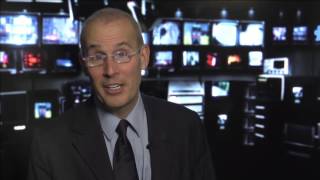
TJ Walker breaks down why communication skills matter more than you think. A Burns Glass analysis of 25 million job postings shows communication ranks among the top things employers want. He covers concrete tactics: lean forward in interviews, move around when you speak to hold attention, practice out loud. Ben Carson gets called low-energy; most CEOs are surprisingly bad speakers.
Chapters
Are you job hunting? Are you looking a way of standing out from the competition? Should you learn how to build apps? Should you become a Pinterest expert? Those things wouldn't hurt. But there's something else even more important. So, folks, this is what I've been preaching for a long time, but here's some specific quantifiable evidence. New research from Burning Glass technologies. They analyzed 25 million online job postings from 40,000 sources over the past year. And here's what they found. It wasn't that everybody wanted a social media expert, an app developer, although there are demands for those things. The first desired, the most desired, and second most desired skill on all of these sites was, believe it or not, communication skills. That's right, folks. The world can become more technologically sophisticated. Complex, blab, Merkit, periscope, all these things can pop up. But at some point, you have to know how to communicate. Now, a part of this does include writing abilities, but let's face it, most people have had more than a dozen years of formal instruction on how to communicate by writing, yet most people have received zero instruction on how to speak. That's why, if you're really going to invest some time in polishing up your skills to make you stand out in the job market, I'd recommend that you learn how to be a better speaker. Because you have very little competition, since most people have never gotten any instruction and spend so little time trying to get better at it. Now, one way you can do so is by going to mediatrainingworldwide.com and you can get free. There's no obligation. Our online public speaking course sent to you. No obligation. You can learn at home, office, school, anywhere. Just go to mediatrainingworldwide.com and sign up for the free public speaking course. Now, today's body language tip. As you know, every day on the show here, we have a simple, quick body language tip. And it applies to those of you who actually are going on job interviews. Here's the body language tip. If you're sitting down in someone's office and they're interviewing you, just lean forward a little. Don't sort of sit back. Certainly don't sit back and put your feet on the table. Not that you would really do that, but slouching, sitting back, scrunched up. My recommendation, hold yourself up high, lean forward like you are, in fact, truly interested in what the person has to say. And if your whole career is at stake, you should be interested in what that person has to say. So at the moment, don't Worry about crossing your arms and legs and all that. Just lean forward and really look at person, listen to them carefully and that will send a strong message that you're attentive and you're interested in the job and them. So that's the body language tip of the day. Now in our behind the News segment, there are some interesting developments in the political scene. Ben Carson has been very high in the polls for the last six months. The retired pediatric surgeon in the Republican primary and he's been number one or two in the polls and just recently he was number one in the polls. Now Donald Trump has gone ahead again. What's driving this now? There are some macro political factors, such as increasing concern with terrorism that some feel has contributed to that. I do think part of the factor is when people see Ben Carson speak, he comes across kind of sleepy. He has this tendency to close his eyes a lot, very low energy. And it simply is not resonating as well with the audience. The universe of Republican primary voters. There is a theory and I cannot prove this one way or the other, but there is a theory with increase, increasing concern with terrorism. The activities, recent activities in Paris, for example, is cultivating in people a desire for a stronger, more forceful leader. And Ben Carson's style to being so low energy, so low key, almost so nice guy isn't resonating. I don't know if I buy all of that, but I do think that his style simply doesn't work for most voters most of the time, regardless of the party. It just seems a little too low energy and not forceful or dynamic enough. Not that every single speaker has to be Ronald Reagan or Bill Clinton. Although if you're a politician, those are two pretty good examples. Those are two pretty good role models to follow. All right. In our segment today on what not to do, it's a basic communications. This is something that drives me crazy. I see speakers occasionally do it in presentations. I get emails on it every single day. Fortunately, they're all in my spam folder. But it's asking someone this question, are you accepting new clients today in your business? Why would someone ask that? If you're a business, by definition, you're looking for new clients unless you're shutting your business down. So when I hear someone say that, my first reaction is A, that's a stupid question, B, the person who's asking the question isn't really interested in learning about my business. They're simply trying to get me to say yes, to manipulate me into the habit of saying yes to everything they say so they can convince me to have a meeting with them or receive more information or buy a product directly. So folks, whether you are sending someone an email or giving a speech, a presentation, it's fine to ask questions of your audience. In fact, it's great to engage your audience in questions. But here's the thing. You need to make sure it's obvious to your audience that it's a real question, that it's a legitimate question, and it's not just a gimmick. It's not just a trick to manipulate you into yes, yes, yes. There's this old juvenile theory about sales. If you get someone to say yes 10 times in a row to anything, they'll say yes to the 11 no matter what you ask them. It's, I believe, an outdated so please ask people questions, but don't ask them silly, cheesy questions where not even you care what the answer is. Please don't do that. Okay, now for other misinformation out on the web related to speaking. This caught my eye. This was an article from Fortune. And by the way, all the articles I mentioned in the program, I link to them on my website@mediatrainingworldwide.com you can always get the original sources. So if you go to mediatrainingworldwide.com, click News, you'll see the show for the day and you can see the sources for the stories I do reference. This one comes from Fortune. It is a profile of a female CEO, Jess Lee. She is CEO of Polyvore. She said something I thought was quite intriguing. I think a lot of people believe what she says, but I don't happen to think it's true. She claims to be an introvert. Fine. Nothing wrong with that. She says it was actually kind of difficult for me to find the right leadership style. The whole profile is about how she naturally gravitated to things that had a more solitary focus on them. Initially, painting and artistry, things like that. So it says she wanted to find the right leadership style. And then it summarizes her thoughts, saying, the archetypal CEO is a great orator. She said, but I'm more of an introvert. Maybe a little awkward. Well, time out, Jess. You're an accomplished person. More accomplished than I am. But let's get something straight. Most CEOs are not great orators. I work with them all the time, all over the world. From multi billion dollar cap large cap companies to mid cap small cap private companies, small companies. Most CEOs are awful public speakers and they certainly don't think of themselves as speakers now. Some grow into the role, some get better over time. Mark Zuckerberg has improved, but if you remember him, when he started out, he was a little church mouse. Bill Gates was a horrible public speaker through most of his tenure as CEO of Microsoft, but he grew into becoming a very good speaker. Steve Jobs is certainly, if you read all the biographies or any of the biographies or watch any of the movies, was not an extrovert. He was very, very introverted. But he realized you can design a speech and your presentation the same way you design, well, one of these. You can design it to make it beautiful and memorable. Has nothing to do with whether you are introverted or extroverted. So I just want to clear the air. Most CEOs are not great speakers. Most are awful. Therefore, it's relatively easy to stand out as a good CEO speaker, number one. Number two, doesn't really matter if you're an introvert or an extrovert. Anyone can learn to be a great speaker if you do the things that we talk about daily right here on this program. So please keep that in mind, Jess, and continued, good luck to your amazing career. By the way, the Fortune article is linked on the site at Media Training Worldwide. Now for good advice, I do want to put a spotlight on one of my colleagues, Nick Morgan, fantastic presentation expert. I've linked to his page. He has new evidence to show what really triggers memory in people. And this is what I have been preaching for years and years. And this is even more evidence to suggest that it works. If you want someone to remember it, move. The speaker needs to move, but also the actual audience member needs to move. You want someone to remember it even more, having them practice it out loud, say it out loud. Sometimes with as little as 40 seconds. It helps. Now in what I do in media training and presentation training, it's typically a day long workshop with executives all over the world. And what we do in these workshops is they are standing and doing and speaking, not listening to me lecture. Now I love to lecture. You see lectures of me here daily. 20 minutes or more and I could lecture for 10 hours. Unfortunately, that isn't how people really master the skills. Being a great speaker or a great media communicator, you learn it by doing it. But if you're giving a keynote speech, whatever it is you do, the more movement you have as the speaker, the more movement you can get your audience to do that will trigger the memory process. And in my experience, the number one problem most speakers have with their presentation is not That a slide was in the wrong order, or they forgot what to say, or they couldn't answer a tough question. The number one problem most speakers have is they're so boring and unmemorable, nobody in the audience remembers anything they said. So please, folks, try to keep your eye on the main challenge as a speaker, making your ideas truly, truly memorable. Now, question of the day to all of you is what's the best way to introduce yourself? The folks over at Ethos 3 have a whole different scenario and list all the different ways. I'd urge you to take a look at that. When you're being introduced as a speaker, the best way is to get someone else to introduce you. But don't just print off your bio from your website. You need to come up with an introduction that lets the audience know why you're there today, why they should care about you. A good introduction whets the appetite of the audience. It shouldn't go into all your academic credentials and everything you've ever done. And in your spare time, you like to do little league with your kid. Leave that for your website. And if you are introducing yourself, be brief. Get right to the point that is going to whet the appetite of the audience. Those are the biggest themes that I stress to my clients. But you'll find even more details@ethos3.com and I've linked to that in the show notes@mediatrainingworldwide.com now my question of the day to you. Who is the worst speaker you can think of? Someone who's relatively famous, someone on a national or international scale. Who's the worst person? Not the worst person, the worst speaker. And why? My answer to that question for many years was Peter Lowe of the Success Seminars. This is the guy who had put together a day long forum and he would pay a bunch of money to Colin Powell and George Bush and Zig Ziglar. And I've been to these events. It's a great event to really see some of the best speakers in the world. But then he would come out and I gotta tell you, he just looked like an absolute idiot. His hand gestures were wildly extravagant. He was the only one to have sort of the Madonna microphone. He would sort of ram his particularized version of a very specific religion down everyone's throat. When it was a business event, he was cloying, annoying, tedious and awful. Now, I haven't seen him around. From what I understand, he's run several businesses into the ground. I don't know if it's in existence anymore, but I would love to hear from you. Who do you think is the worst public speaker around? So if you have questions that you would like to submit or answer of this question, send it to me on Twitter. JWalker is the Twitter handle. You can also post it right here, whether you're watching this on Facebook, YouTube, or my own page at Mediatraining Worldwide. Or send an email to infomediatrainingworldwide.com I would love to hear from you on that. Thanks again for joining me. As always. I'm TJ Walker. May all of your speaking opportunities in life be a successful.
More from TJ





The Breakout Cases - What Actually Caused Famous Speaking Career Breakthroughs | Ultamize

The Red Circle Sessions Finale - Build the Speaking Career You Came Here For | Ultamize

Two Stages, One Logo, Two Completely Different Realities - Main Stage vs Independent Events | Ult...

Pre-Reset - Why Repetition Builds Better Speaking Decisions | The Red Circle Sessions | Ultamize

Your Decision, Your Framework, and What Happens After - Build Your Speaking Career First | Ultamize

The Red Circle Sessions Trailer - The Speaking Career Truth Nobody on That Stage Will Tell You | ...

The Two-Minute Ultamize Reset - Your Platform, Your Audience, Your Voice | The Red Circle Sessions