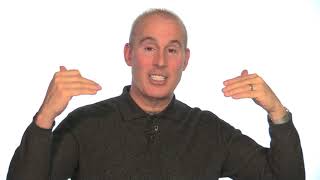
Short live-stream segment by TJ Walker answering a public-speaking question: how to avoid speaking too quickly. Walker diagnoses rapid speech as a nervous escape response and prescribes a single, concrete remedy—rehearse the presentation repeatedly on video until the desired speed and pauses become a habit. He explains this reduces nervousness, creates a reliable template or "groove," and prevents audience disengagement (audiences will check email if they can't follow). Ends with a brief plug for mediatrainingworldwide.com and free books.
Chapters
Public speaking Question of the day, T.J. how do I keep from speaking too quickly? It's a common, common problem. When you're nervous, you're often racing to get out of there so you don't get embarrassed. You're not even aware of how quickly you're speaking. You lose sense of your normal timing and perspective on time itself. And I do have an answer for this. I do have a solution. It's frankly not a solution a lot of you are going to like, but it does solve the problem 100%. And the solution is you have to practice giving your presentation on video again and again and again. You have to get to the point where you know how you're coming across. You're not memorizing it, but you know how you're coming across. You have a comfort level that you know you're going to be great. When you practice your speech on video numerous times and get to the point where you can see on video the speech you're giving and like it, and you're convinced if you can do it that well in real life, you're going to be great, several things happen. Number one, your nervousness goes way down because you're no longer nervous, you're less likely to start racing next. You now have a template. You have sort of grooves for how you're going to do this. And if you're doing it at one speed in your practice and you've watched it so many times and it's become a habit, then you can do it in real life. But you need to get to the point where it becomes a habit, it becomes second nature. Now, this may happen to you after rehearsing twice, may happen after 22 times. You may have to do it 100 times. Frankly, your audience doesn't care. All they know is if you speak so quickly, they can't understand you. They've got a great plan B. And these days, every audience has a plan B. Let me check my email while this boring hack drones on and on. So we know what their plan B is. We don't want to give that to them. That's why it's critical you get the speed down. And it's just a function of rehearsing enough time so that your natural speed when you're speaking is conversational and has pauses and isn't rushed. I'm TJ Walker. I help people speak more effectively. If you'd like to improve your own speaking skills, go to mediatrainingworldwide. Com. You can download a couple of my books at absolutely no charge.