TJ WALKER - THE HABIT INFLUENCER - Personal Development | LIVE STREAM
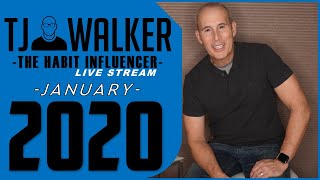
TJ Walker shares how most people lack emergency savings, then walks through two concrete moves: monetize your top hobby with 10 minutes of daily content, and practice public speaking with a 15-second video each day. He argues that goals mean nothing without daily habits to back them.
Chapters
Have a lot of respect for and Gary Vaynerchuk. Those guys were both really successful and making a ton of money by the time they were 19 years old. When I was still in my 30s, I had massive financial problems because I had talk shows go bust, websites go bust. My personal finances were in disarray. So I can relate to this. Fortunately, for the last nearly 20 years, things have been much smoother. I've been lucky. But I want to share with you some techniques that may help your finances as well. But anyone can have an emergency. I almost didn't make it back to the show today because I had to be at the dentist today in emergency and it cost $1,000 out of my pocket. I had a toothbreak, had to get a new tooth. And so if I sound a little funny, there's still some novocaine in here. Excuse me for that. But $1,000 in the United States can go like that. One part in a car, one toothache, one minor medical emergency for your child. And here we are, one of the wealthiest countries in the world and nearly 40% would have to borrow money for that. This is according to Bankrate. They just did a new survey and some interesting statistics. What they found is that the percentage of US adults who use their savings to cover a $1,000 emergency room visit or car repair has remained within the range of 37 to 41%. This is since 2004. But nearly 4 in 10Americans, 37% to be precise, would borrow money in some capacity if they had a bill of $1,000. Among respondents who reported that they are a close relative paid for a major unanticipated expense in the past year, 28%, the average cost was $3,518. Life is unpredictable. You never know when a car could go out, a motorcycle could go out, whatever. Your mode of transportation is a minor or major medical emergency and it's obviously extraordinarily stressful. Again, it wasn't that long ago when I felt the stress. At the beginning of this century I had about $400 to my name. So I can well relate to any of you. If the idea of a ,thousand dollar hit $1,000 medical bill creates terror in you. And obviously some places in the world are better at savings but might not have as many job opportunities to make money. Regardless your particular financial situation in your country, most people at some time in their life do feel financially strapped. That creates more tension in your life, it creates more anxiety. And unfortunately, that's when other bad habits can spiral in a negative downward, way out of control. And that's what I'm concerned with right here. I want to say a special hello to our friends on TikTok joining us, writing Shark has joined us. 1, 2, 3. Logan Smart is here with us today. Synerik3 has joined us. Thanks so much and you and all the community on TikTok. Appreciate you being here. Any questions you have related to habits, personal development, communication, more than happy to share the floor with you and start a conversation. Also want to say hello to our friends on Instagram. Sai, chatting in from Hyderabad is with us today. Unorthodox and several others. Hello to our friends on YouTube, on Periscope, on Twitch Mixer and of course Facebook, one of our favorite platforms and where we have, I guess about 15,000 followers on my main business page on Facebook. So thanks for all of you to tune in and whether you can tune in for all 2 hours every day, 5 days a week, or just an occasional 10 minutes. Really happy you are here. I'm going to start with my monologue in just a minute. Then we will take questions and comments. So forgive me if it seems like I'm ignoring you. I'm not ignoring you, but I want to get through today's opening monologue and then we'll toss open the floor for questions. Topic Are you prepared for minor emergencies in your life that could cost $1,000? Or would you have to go into debt? Would you have to borrow? Would you have to scrape if you don't have $1,000 sitting around to cover major or minor expenses that could happen in your life in an unexpected manner? You are not alone, depending on what country you're in, either more than a third half, maybe even most of the people in your country are exactly the same as you. Now I am not going to sit here and hector you and lecture you and say shame on you for buying an expensive coffee. How dare you buy your child an ice cream cone. That's not where I'm going. Part of the equation of helping with your finances is of course reducing spending. That's kind of negative. It's not unimportant, but it is about don't, don't, don't deny, deny, deny Reduced pleasure. I want to focus on something a little more positive now. I addressed this in my TikTok video today in the 15 second videos I had on Instagram, Facebook and Snapchat and several other platforms. But I want to expand here because we're not limited to 15 seconds on this show. It's a two hour show. The biggest thing I think most people could do to help their financial position in 2020. And it's different advice from what it was 30 years ago, 40 years ago. The biggest piece of advice I have for people when it comes to improving their finances is to look at what their number one hobby is. How do they like to spend time and then spend just 10 minutes a day trying to make money from that hobby? How do you do that? If you love playing chess and you think about chess and you read about chess, write a book on chess and sell it on Amazon. There are no gatekeepers. When I was young, starting out early twenties, I spent probably five years chasing publishers to publish my first book on politics. You don't have to chase publishers for five years to get a publisher. You hit publish on Amazon, you upload it and you publish it. Are you going to make a million dollars with your book on chess? Probably not. But what if you made $5 a month from it? In a lot of countries that pays for several meals. If you don't want to write a book, do what I think is even easier. Make an online video based course. There are hundreds of platforms these days that will host your course for free. All you have to do is record yourself talking. If you have a cell phone, you can do that. So to me, the number one habit to help yourself financially is to create something on a daily basis. Now you don't have to go crazy and do it 14 hours a day and quit your day job. I've created 143 online courses. In fact, Marceau, my colleague, is going to post a link to one of them where we have a special today. You don't have to make 143 courses. But if you spent just 10 minutes a day making videos about your passion, whether it is chess, whether it is a new computer program, whether it is the art of storytelling for children, it could be anything. But if you write about it every day and create enough content for a book, if you make videos on it and post those courses on udemy skillshare Go skills, there's hundreds of platforms, then at some point you will start making money. I guarantee it. I don't guarantee you're going to get rich. I don't guarantee you're going to make a ton of money and can live a life of leisure and work two hours a day with a laptop yourself on your chest in a hammock on the beach. I'm not saying that it's not get rich quick, but if you don't even have $1,000 to cover expenses, I do think it is very realistic for any one of you, I don't care what country you're in, to make an extra thousand dollars in the next year through your own creations. If you just wrote 100 words a day, I mean that's only a paragraph or two, you would have enough content, probably about eight months to publish a book. You could do it in three months. Books don't have to be long now that they're self published and they could be short books on Amazon, Kindle and you charge $2.99, $1.99 and you can make money, create an online course, sell it for nine, ten bucks, quite often get a couple of bucks each one. It will add up. Here's the other thing about finances, and I found this personally. If you spend your time following a particular passion and reading about that passion and studying that passion and watching videos about that subject matter, that actually reduces your spending on other. You don't have as much time for soccer games and cricket games and baseball games. And you don't have quite as much time to go to the movies. Although I still like to go to the movies. If you're focusing and diving deeper into your passion, you're spending less quite often. Now you may spend some on books. I spend a lot of money every single week on more books on habits and personal development. But that's in part because I like to read paper books. If you're willing to read online on an iPad, on a cell phone, there are more than a million books available for free on Google Books and other platforms online. So you don't have to spend a thing. Focus your energies creating something again. That's what's completely different about being a human being on planet Earth in 2020, that could not be said even 10 years ago, 50 years ago, 100 years ago, for the last 200,000 years of human type animals on this planet, it couldn't be said for most of human existence, you had to rely on the beneficiats of a king or a dictator. You had to be a sharecropper. You had to hope for the whims of good weather to sell enough crops to keep from starving to death. You couldn't simply start a business. You couldn't create a product and sell it to the whole world. Today is different. Again, I'm not saying it's easy, I'm not saying it's get rich quick. But if your immediate task is how do you get a thousand dollar nest egg so that if you or your kid has to get a New tooth or minor medical emergency or you need a new muffler on your car, it doesn't throw you into a crisis. It doesn't depress you. Because if you're worried about how you can pay to get your car out of the shop, guess what else happens? Your sleep habits disintegrate. Your eating habits disintegrate. First of all, you're not going to be able to buy healthy food. You're probably going to buy or just eat old stuff in packages and things already in your house in the back of the cupboard that are not particularly healthy. And unfortunately these days, the least expensive food, the McDonald's dollar hamburger stuff, also the least healthy for you. So that's the real problem. And that's why I'm begging you, if you don't have a rainy day fund, don't simply wait for a miracle. Don't wait for a rich person to drive by and toss a bag of gold out the window and land on the corner at your feet. Don't play the lottery. I apologize if this sounds condescending, but I do agree with Oscar Wilde, I believe, who once said, the lottery is a tax on the ignorant. Yes, people win, but 99.999% of people lose all their money in the lottery. That's not the strategy for you building the thousand dollar nest egg. And again, what's so different about today, what's exciting about today is you don't have to appeal to a gatekeeper, that lucky break, that foreman at the plant, to just give you that promotion. You don't have to cross your fingers and hope that publisher or that broadcaster in a big city on the other end of the country you live in gives you that stamp of approval to distribute your book, to sell your videos. You can do it yourself. You can create a video and sell it on Amazon. Now, I have not made a lot of money selling videos on Amazon, but you can do it. I have some for sale there. There are so many ways of making money just from what's in here. Your own ideas, your own creativity, combined with perhaps a little typing or a little speaking on camera or audio, you can make an audiobook and sell again. I've made audiobooks before. I didn't make much money. You might be more successful. So if you are not happy with your current financial state, I'm not asking you to spend every single evening, weekend, never have fun, never watch another soccer game or football game or baseball. I'm not asking you to give up everything, but I am asking you carve out at least 10 minutes a day where you're creating something, you're working on a creation that you want to sell to the world. Now, you may say, well, T.J. you know, I want to keep my hobbies, my hobbies. Okay, I can respect that. But guess what? If you can't afford your car to go to the baseball because your car is in the shop, because you can't afford it, you're not going to be able to go to that next baseball game, whether to watch or to play. So you got to pick your poison. And if it's just 10 minutes a day and your hobby is spending two hours a day playing chess, for example, spend 10 minutes a day writing a book about chess masters or creating a video on beginners for chess. You may be intermediate. You may be so far away from a grandmaster, it's not even funny. But if you've been playing chess for a couple of years, there's no reason why you couldn't create a course just for beginners. So that's my big suggestion for you. And I realize that it doesn't sound comforting if you don't have money. Sometimes it can be hopeless. And I've been there, and I've been there as an adult. But I'm telling you, no one is just going to come magically and wipe away your debt. Nobody's going to come give you all the money you need. You're probably not going to win the lottery. It's got to be up to you. And it's never been easier. Not saying it's easy, but it's never been easier to make money from your own creation. So I'm asking you, if you don't have a thousand dollars, are you willing to spend 10 minutes a day? Because I'm willing to bet a year from now you will have made at least $1,000 from your own creations. Give it a try. I'm TJ Walker. That is topic A on the program today. Are you willing. And again, I understand if you don't want to admit that you don't have $1,000. I didn't like telling people when I was really poor times when I had a lot less than that. So I understand it. But if you don't mind sharing, let me know. Are you willing to try to make some creation so that a year from now, maybe six months from now, you do have an extra thousand dollars in your pocket? Let me know, post a comment, whether you're on Facebook, Instagram, TikTok, I'd love to hear from you. So let's Say hello to our friends in social media. We have. Looks like Kit Novak has joined us. Penguin in Box is with us. User 718. Shiloh is with us. And it looks like brunelarval, all on TikTok, one of my favorite platforms in the whole world. And a number of our friends are joining us on Instagram as well. And I want to say hello to Bob Carlage, Smotigba, and Sai is with us. Alexander Jose is with us. So a lot of good friends joining us on Instagram today. And I think we had a comment. Did we have a. Did we have a comment we wanted to share Marceau on Instagram or should I just hop in on Facebook? Okay, so Si is asking how I am. I'm great. Everything is good. Family is good. And Sy's giving his special greetings. So thanks so much for being friendly and happy and we're always happy to have first time viewers and listeners here, but we're also really happy to have some of our extended family members who come virtually every day, Cy being one of those. So thanks a lot. Speaking of family, I believe Peggy has joined us today. So thanks so much for joining us. And Joanne is with us. That's great. And let's see who else is here. AK Ashik has joined us as well on Facebook. You know, for those of you on Facebook, let me ask a little favor from you. And I hope this doesn't seem too insiderish, but yesterday my colleague Marceau posted one of the best videos I think I've ever seen. And it was all on our Facebook page. And you might have seen it on some of the other platforms as well. It was on YouTube and it was on Facebook, LinkedIn, YouTube. It was one of the best videos I think we've ever done about habits and personal development. And it was all about the subject of when should you allow your children to go on YouTube and social media. A subject that I see debated on the front pages of major newspapers around the world. A subject I've had debated at dinner parties I've attended. There's some controversy, I thought I brought out some intriguing points and tried to represent both sides fairly, pro and con, about children being allowed to create and share their creations on social media, places like TikTok and YouTube and Facebook. And I have to say for some reason we had fewer views on that video than I think any video I posted on Facebook in 12 years. I've been on Facebook for 12 years, so I don't really know why. It's a bit of a mystery. And Six hours later, I posted a live video, just me holding a cell phone giving a demonstration during a live training yesterday. And that had 150 or so views. So huge disparity. We're still trying to figure all this out. Now. I've been making videos since 1975, believe it or not. I probably shouldn't say that because that makes you think, wow, this guy is a lot older than my grandfather. I did that in junior high school when I was 12 years old. But I've been making videos for the Internet since the 90s and was on YouTube within the first six months of launching. So you would think I really know a lot about Internet video and have it all figured out. I'm still learning. We're learning together. So this experiment, which we started just the beginning of January, really just less than three weeks ago, is an experiment in online live streaming video across a dozen platforms. So we're trying to reach people on basically every. Every major platform in the world that allows live streaming as an experiment to see if we can build a large community here. But we still never really know what works and what doesn't work. Sometimes you think something's going to be great and you're disappointed. Other times, for example, three months ago, I said, well, let me put a video or two on TikTok. It's for kids, teenagers. I'll probably get two views a day. And I started posting videos on TikTok, and all of a sudden I'm getting 150,000 views a month, sometimes 80,000 on one video. So you never know. You can be surprised in a positive way and in a negative way. That's part of what makes it exciting. This show is about you, your concerns as it relates to habits, how to build stronger habits, how to minimize, reduce, get rid of bad habits. And I come prepared every single day with specific content for you, plan material. But I also like to give time for your questions. You can post your questions on any format or you can simply email me questions too. Tjwalker.com I want to go and answer a question from Roger, who wrote in Overnight. Roger writes. Hi, T.J. i've enjoyed some of your courses on Udemy and YouTube. I've been in Toastmasters for six months, excuse me, for six years, and have forced myself to speak monthly, giving speeches. Well, congratulations, Roger. I do hope that the people who heard you speak didn't feel like you were forcing yourself. I hope they felt like you were happy to be there. But I'll come back to that in a moment. I've come A long way since starting between the Toastmasters and the online courses. That's great. I'm thinking about leaving Toastmasters now and I'm afraid I'll lose my skills. So, Roger, it's a very fair concern. Use it or lose it. It's like that with many things in life. If you become fluent in a foreign language and you don't speak it for five years, there's a good chance you will forget half of it. Maybe not all of it, but you. You do forget. Forget it. Skills atrophy. Public speaking is a skill and it can atrophy. So it's a legitimate concern. Any recommendations on how to keep practicing and refining skills while speaking less? Question from Roger, one of my students on Udemy and one of my regulars on YouTube. So that is the question. How can you keep your public speaking skills up even if you have less time to practice speaking? So, Roger, one thing I would ask you to think about. Is it that you want to literally speak less or is it you don't have time to drive across town, sit in a meeting to spend. Spend all evening in a Toastmasters meeting, listening to other people and then speaking for three minutes and then driving home and spending three hours. I like Toastmasters. I recommend people go to Toastmasters. I'm frequently a guest speaker at Toastmasters organizations around the world when I travel. So I don't mean to sound like I'm criticizing Toastmasters. It's a great way of building the habits of public speaking and being comfortable speaking. But if you want to be good at it, I don't think it takes a lot of time to become a better speaker and to make sure your skills don't decrease, but instead to make sure your skills get better and better and better. I want to answer you in detail. Let's just make this a full fledged topic. We'll do that right now. And Marceau, if you can give me a timer on this topic. Topic B. What is the best way to hone and refine your public speaking skills? If you have less time before and you can't be in Toastmasters anymore? The easiest way, the least amount of time to refine your public speaking skills is to give one speech every day. Wait a minute, T.J. i just said I want to spend less time speaking. Whoop. Hear me out. Give one speech a day and make it a 15 second speech. That's right. Make it a 15 second speech. I do it every now. I also talk for two hours every day and sometimes give keynotes and other things too. But I. I give one 15 second speech every day to my friends on TikTok and my friends on Instagram and Snapchat and LinkedIn and several other platforms. One speech, it only takes 15 seconds. Because Roger, if you do that, and any of you, if you do that, it's very hard to have your skills decline. If you do something every single day, even if it's for as little as 15 seconds now, you would be speaking just to your own cell phone. You can do it anywhere. You can be dashing off to work, you can be walking down the street. This morning I was running late, I had to dash to the dentist office. I was running back from coffee and breakfast in midtown Manhattan. I was on the street, I pulled my cell phone out and I spoke for 15 seconds. Now here's an advanced tip that will save you time and make yourself a better speaker. Tell yourself in advance this is lie. You don't have to do it live, but tell yourself it is live. No, do oversight. You're going to speak for 15 seconds. Because in real life, at Toastmasters, at a business, at a convention, at a trade association, if you're giving a speech and you're there in front of people, there's no do overs. You're there. You have to speak. If you make a mistake, you have to keep going. I would recommend you build on that habit of just continuing. You make a little mistake, a blunder, just keep going. I have mistakes frequently in my 15 second speeches. Nobody notices, nobody cares, alright? If I stumble horribly, I say the wrong thing in the first five seconds, I hit delete and I'll do it over. But 95% of the time, when I make a daily video for Instagram, for Twitter, for TikTok, I do it in one take. Here's what this is doing. It's forcing me to get comfortable speaking. To get comfortable speaking knowing other people could see me. And indeed, typically several thousand people around the world on half a dozen platforms see each 15 second video. So I know every single day I'm going to speak to at least several thousand people. That doesn't include the people this broadcast today. When you do something every day, you don't get as nervous. People who play tennis every single day, all things being equal, are better than people who play tennis once every six months. It's hard to be great at anything if you only do it once a year, once every six months. And unfortunately for many business executives, political leaders, because they don't like speaking, they don't actively seek out speaking opportunities. So they're only doing it once every six months, once a year. And their skills atrophy. And that's what you don't want. I understand you're busy, you will have responsibilities, family commute, meetings you have to attend. But you have 15 seconds a day. I guarantee you, if it's important to you to keep your skills honed to improve your public speaking skills, make sure they grow rather than shrink. Do the 15 second solution. The other great challenge this is, it forces you to think it's actually easier to do a one minute video than it is a 15 second speech. 15 seconds. There's no room for fluff. Now, I don't mean to suggest you should edit it and write out a script and use a teleprompter. I want you to get into the habit of just speaking one idea. 15 seconds. Am I saying everything has to be superficial and everything sat by? No. I obviously believe in going in depth. I'm here with you every single day for two hours. So I love the ability to go into detail, to go into depth. But if you're looking for the quickest, easiest, fastest way to keep your speaking skills improving constantly, do the 15 second solution. A simple 15 second video that you post on TikTok and all other social. You can even post it on YouTube as well and you'll get more feedback from people responding to your speaking. You want to be a better cook? Cook. The best cooks in the world don't cook once or twice a year. They cook every day. Many of them cook every meal. If you want to be great at writing, you don't write once a year. Great writers, whether you love Stephen King, whether you loved Shakespeare, they wrote every single day and Stephen King still does. Anything you do daily, you're likely to get better at. And it simply doesn't take that long. Now, if you want to take it up a notch, one suggestion I do have is go live. You see me? You hear me? Now it may be on a video on demand, but this is live. When I'm doing it. There are no do overs. I'm not hitting delete and editing out things. This is live. I'm thinking and speaking to you at the same time. That is a great practice when people are nervous. If six months go by and you haven't given a speech, if you stand up and you try to think, what happens is you're thinking, oh no, everybody's looking at me. What was I going to say? I forgot what I'm going to say. I should have memorized it. Where's my script? That's the normal human inclination. If you speak infrequently, if you speak often enough, you can think and talk at the very same time and feel in control and feel relaxed and feel as comfortable as when you're having a conversation with your best friend. So option two for how you can quickly easily practice public speaking the least amount of time, preferably once a day, but if nothing else, once a week, hold your cell phone up and go live on some platform. Could be TikTok, could be Facebook, could be YouTube, but you can speak live on so many platforms and you may only have one person watching. Okay, but save the video and people can watch it on demand. That is speaking and it's a type of public speaking because people could be watching you all over the world and doing that some ways could be easier than the 15 second video. If you're worried about the time constraint. If you're going live, could be 15 seconds, although that's a bit short. Could be two minutes, could be five minutes. You could go for two hours the way I do and every day. The point is, put something on your calendar. Could be noon on Wednesday. Every week you're going to do a Facebook live where you speak about either a hobby of yours or your area of expertise in your profession. Do one or the other. If you do that, you will improve your public speaking skills. Even if you don't get booked to speak at the Kiwanis Club or anyplace else, keep your skills improving. I'm TJ Walker. That was segment B for today. Thanks so much, Roger, for your questions. And please remember I'm here for you to answer any questions about your habits as they relate to public speaking or other aspects of personal development. Development, whether it's your health, finance. It's not that I'm the expert on everything, but I have given a lot of thought to how you can influence your own habits to help support your own aspirations and goals in life. I can't tell you your financial goals should be. I can't tell you that you should be a public speaker. Plenty of people really successful going through life don't want to be a public speaker at all. Fine. But if you do have a goal of being a thought leader and speaker, I can give you a lot of specific tips on the habits you need to get there. Let's check in with some of our friends. I see that AK says, thanks, nice to hear from you. Muhammad is saying hello to me and Marceau. Peggy writes I do TikTok every day. And Peggy, I saw you on TikTok and did a few, a few of the hearts on there just today. I hope you saw that. And this is Peggy Malincon Bell. Peggy, go ahead and let people know what your TikTok handle is. We don't mind being self promotional for our, our viewers and our community here. Go ahead and post your, your TikTok handle so that our friends on TikTok can see you as well and those on Facebook can find you on TikTok. So. So Peggy writes, the only thing I don't like is having to do hair and makeup for 15 seconds. Laugh out loud. All of my other videos are done on Tuesday. So Peggy, let me address this. You may find this amusing, you may find it a little bit sad. I think my most popular video. And Marceau, I'm getting feedback from the, from our live connection. If you can tap down on that a moment. I'm getting loud static coming from the landline. Now it's gone. Now it's gone. So, Peggy, here's one thing I've noticed about 15 second videos on. Whether it's TikTok, people viewing it on Instagram, Snapchat, Facebook or Twitter, nobody cares. Now if you care, that's enough. Everybody likes to look their best. But here's what I noticed on my own TikTok videos. The one video I think it is either the most or second most views I ever have. 40,000 or so. I had just gotten up. I was having a cup of coffee. I think I was playing with my daughter. An idea popped in my head. It was early on. I'd only been doing TikTok for a couple of weeks. Not that I have a lot of hair to stick out, but I had one piece of hair kind of like sticking out like a horn. I hadn't shaved, the lighting wasn't that great. And I got so many positive comments all about the substance of what I was saying. I had hundreds and hundreds and hundreds of new followers from that one video. Nobody even noticed or cared that I didn't shave, didn't have makeup on, didn't have good lighting, and that my hair was just really, you know, part of it was smashed down and part of it was sticking out. Nobody cared. I don't want you to do something that takes you out of your comfort zone, but realize that if you have a good idea to share with people, if you wait even a day, you've lost a whole day of reaching people. There may be hundreds, thousands who could have benefited from your insight and you're holding it back. Just this morning I was in a Big, big hurry because I was staying in Manhattan. I live and this studio is in Long Island, 35 miles away. But I had to get up, write a thousand words, which I like, five hundred to a thousand words every day on habits, which I like to do, do. I had a lot of other work, sending out newsletters. I had to go get breakfast. I was staying in midtown Manhattan in New York City and I had to get to a dentist appointment and have needles put in me at 9am So I had a lot going on. And I knew that I wanted to take a shower before I saw you today. So I waited until afternoon when I got home to do that. Why am I boring you with all these tedious details? Because I also knew that if I didn't do my 15 second mini speech on TikTok and LinkedIn and Twitter and Facebook this morning, if I didn't do it early in the morning, the day would be gone and it would be a lost opportunity. So you know what I did? I put a hat on. I was outside, it was cold anyway, I put a hat on and nobody can see that, you know, my hair was sticking out. And even worse looking than that, didn't have any makeup on. I do put a little makeup on for when I'm doing this show. It's just a little powder. Takes off some of the shine. So, Peggy, you've got to decide what you're comfortable with. But I can tell you this. So many of my clients around the world tell me, they say, tj, I don't have a face for video. I'd rather be behind the scenes. You know, people who are stars on TV and online, they're young, good looking. And I always remind people of several things. Number one, the highest paid woman in Hollywood is judge. A woman named Judge Judy. She's really short, she's about 80 years old. Not anyone's idea of Scarlett Johansson. She makes $50 million a year on TV every day. Long as a judge. Doesn't matter that she's not young and pretty. The highest paid woman in probably the whole entertainment world is Oprah Winfrey. I love Oprah. This is not a criticism, but she's not anyone's idea of supermodel thin. I think we can agree. Highest paid man in Hollywood is not George Clooney, not Brad Pitt. It's not Tom Cruise is Dr. Phil. A guy who has a lot less hair than I do, beady little eyes and he's making 50 million a year or so. So my big challenge to you, Peggy, and everyone is don't hold back on your great ideas because you think you don't look young enough or pretty enough or have the perfect hairstyle or the perfect makeup, just do it. Just get your ideas out. And if you really, really don't want to do video, you can blog, you can do text, you could do audio files, but there's nothing as powerful as video. And also, there's a lot less competition because for every person doing video about some important idea, there's probably a thousand blog posts on the subject. So that's one reason why I do like video and prefer video, even though I love to write and I love to read 10 text. That's the power of video. So Peggy, I'm begging you, if you don't want to do a video every day, that's okay. But don't tell yourself that you can't do a video without proper hair and makeup because audiences just don't care. They just don't. I'll tell you where they do care. And I will tell you my theory of where looks really matter. If if you want to be an actor or actress and be a Hollywood movie star and star in romantic comedies that are in 2000 theaters on Friday nights visited by teenagers. Well, yes, then being really, really beautiful is essential. Or it's really hard to be a successful movie star if you want to star in romantic comedies and be in the multiplex on Friday night. For teenagers. But for anyone else who's talking about serious subjects, soft skills, hard skills, science, math, technology, anything about helping people, life, personal development, nobody cares. You don't care about your accent. Deepak Chopra is a thousand times more successful than I am. He sold 10 katrillion books. He has a strong Indian accent, he's not tall and movie star looks doesn't matter. His fans love him. The Dalai Lama doesn't exactly have the best head of hair, but people love reading his books. They love hearing him speak. So don't worry about the appearance. Peggy, always great to hear from you. Thanks for sharing. Let's check in with some of our other friends and family and online I see that. So. Oh Peggy, let's do a shout out to Peggy's TikTok name. So for our friends on other platforms, they can see that Peggy's TikTok name is the same as here, Peggy Melancon Bell. And it's spelled out. You can see it on Facebook. And Peggy, if you haven't done so already, why don't you just check in on TikTok? Because we do have a number of our friends with us on TikTok today. Helen there and. Hi Helen. Mark Stacy is with us. Gavin is back with us. Gavin, always great to see you as well as Santiago is with us too. So thanks to all of our TikTok friends for joining us today. Alexander has joined us. Good to hear from you, Alexander, a great trainer and expert in his own right, one of our friends from Udemy and other platforms. And Alexander, let us know your latest of what you're working on right now. Let's give you a quick plug. Part of being a successful creator in every era throughout history, but especially right now, is not just the habit of creating, but it's the habit of telling people about your creations. And I apologize if this seems overly promotional or self promotional. You could do it in your own style. But the most successful artist in almost any era, there are exceptions. Van Gogh was not a great self promoter and he only sold one painting. But so many great artists who really left an imprint on society and culture were great promoters. Gore Vidal, great writer, also great going on talk shows promoting his writing. Norman Mailer, great writer, also great going on talk shows promoting his writing. So let's all not be bashful about being in the habit of promoting our creations. And this is a, this is an environment where we want to facilitate that. Okay, I think we, I was, I was on Facebook a moment ago. Marceau, if you could pull that page back. I think I just wanted to make sure I didn't miss anyone's comment. Muhammad says why you selected TikTok for live sessions. Usually it's about entertainment. So you're right, Muhammad. Certain platforms have certain things they're known for. TikTok is known for entertaining videos for 12 year olds. And I could have said, well, that's the stereotype. It's not for me. Let me shut myself down. Let me just not waste time there. You have to make judgments. You have to have a strategy. A strategy in anything is figuring out what not to do. But the reason I decided to go live on TikTok is I'm already going live. If you're already going to go live and it's just one more button to push and you could reach an audience, why not? Why not do it? Don't let other people's stereotypes scare you away again. TikTok in theory should be the absolute worst platform for me. It's for young, good looking, talented, creative, funny people. I'm old, maybe not that good looking as some would say, and not doing any entertainment. I'm not singing, I'm not dancing, I'm not doing funny bits. And yet we have a huge audience. Maybe not in every two minute increment, but we have hundreds and hundreds and hundreds of people watching on TikTok every week on this show on the live stream. Not to mention about 50,000 views of my videos on TikTok every single week. So I'm really happy to be on TikTok. I'm a big fan of put your ideas out to the world. Not everybody has to love you. I don't have to be number one on YouTube or Facebook to make that a worthwhile platform. I'm just happy to speak where I can. You look at any great TV talk show host who's syndicated on stations, they might not be number one in every market. Sometimes they might. Even Oprah in her heyday was sometimes on lesser stations, not the best time zones, but she wanted to be everywhere in broadcast tv. I want to be everywhere on the Internet. I think I have a good message, helpful messages. I'm trying to help as many people as possible reach as many people as possible. So if I can easily and inexpensively or no, expensively share my message on other platforms, I do so. So that's why this program, the Habit Influencer, is on about 12 different live streaming platforms every single day. If you know of any we've missed, please let me know. I'd love to hear from you. I'm TJ Walker. This is hour one of the Habit Influencer. We are live on Thursday, January 23rd, 2020. It is a relatively cold winter's day here in New York City, but bright, sunny and beautiful. There's still a nice snow on the ground on the grounds outside of my house here in Long Island. I hope it's nice and warm inside, wherever you are. It's warm inside my heart knowing that you're here. And we have so many great people, audience members, community members right here. And I think I just lost my folks on. On TikTok. Excuse me, I have to do one technical thing. We are still learning the technology of all the live streams. So even though most of you see me looking at you right now through one feed of a main broadcast camera, our TikTok friends are consuming this through my cell phone and I forgot to plug it in. So right now I need to plug in my cell phone so that we don't just unceremoniously cut off from all of our friends on TikTok. So that's what we're doing. Yes. And I see that it sent everyone a message saying, the host is away. I didn't go anywhere. But I did forget my due diligence of plugging in my cell phone. Part of the issue of just running in at the last minute. As I mentioned, I just came from the dentist, so didn't get to set up everything perfectly technically. Today we're open for your calls, your comments, your suggestions, your thoughts. And I say call. You can record a video of yourself speaking or an audio. You can post your iPhone, have your iPhone staring at the floor and just say something. If you post that video, our Facebook page, we can play that video and share it with the audience right here. Now you can also just post your comments. I'm happy to read and share the comments right here with the whole community anytime too. So we are open. There's an exchange of all ideas right here on the program. So I do want to thank you and let you know that this is a program that is specifically about habits. How to build good habits in your life, how to reduce, minimize, ideally eliminate bad habits in your life, and how to ultimately shape your life the way you want it to be, how to take control over your life. The traditional definition of habit is something you do unconsciously. You're not thinking about it. So part of the problem with any discussion about habits is once you start talking about habits, you've turned it into an intellectual exercise and you're actively thinking about it, to actively think about stuff that you don't actively think about when you're doing so. That's part of why it's so difficult to improve habits, to change bad habits. It's because we do these things unthinkingly and out of just rote process of doing the same thing again and again and again. I want to give a quick preview to some of our hot topics coming up in hour two today. I've got some plan segments plus some concepts in some top news stories coming up as well. But one thing I want to go into much deeper insight on is how you can in fact control your habits. That's a broader theme for the whole show that we talk about every day. But I want to go even deeper into the concepts of motivation and willpower. Those are subjects that are talked about. There's sort of a pendulum that goes back and forth among habit experts as to how important willpower and motivation are. I do agree with a lot of people who feel that motivation and willpower are overrated, that you have to spend a lot more time really creating systems so that you don't have to rely on your willpower. So that is something we will be talking about in detail in one of our central topics for hour two, I'll also be doing an extended monologue on goals you've heard all your life. You must have goals. The importance of goals. You'll never be successful without goals. I'm not saying goals aren't important, but I want to take a slightly different approach in the analysis of goals. We'll be doing that in hour two because I do feel that goals are a big problem for a lot of people. The fixation on goals leads people astray. It leads them away from where their real focus should be, which is on their daily habits that would help them reach their goals. So often people talk of goals and it's really just, oh, I have a goal of being worth $100 million. Oh, really? Really, TJ, you want to be worth $100 million? What are you doing today to make any extra money? Nothing. That's not a goal. When people tell me they have a goal of making $100 million, but they're not telling me about specific actions they take today to make more money, that tells me it's not really a goal. It's just a kind of a flimsy, fuzzy, ethereal wish. Now, we all have wishes, but I do think it's critically important to understand the difference between a wish, a hope, an aspiration, and a true goal that you're working on daily in a systematic way. All that and more in hour two. Plus your comments, your questions, your thoughts, your disagreements. I see Peggy or no Penguin has joined us. Thanks for joining and Peggy. We hope Peggy did join us as well. And your name is slightly different on TikTok there, it's Peggy Mbell. That's our same Peggy as on Facebook. So happy to cross pollinate. By the way, if you ever wanted to do me a little bitty favorite, go ahead and follow me on every single social media platform. It helps us reach even more people who might not ever be on the first platform you're on. So the main platforms we're on Facebook, YouTube, TikTok, Instagram, Snapchat, LinkedIn, Marceau can post more. I'll ask him to do that at the top of the hour. But even if you don't like to use Facebook, if you simply like our Facebook page, it makes it easier for us to be seen by other people on Facebook who maybe never heard of the Habit Influencer or heard of this show, but might be looking for good information on personal development. So if you could take just a moment for that during the break at the top of the hour and what we do every single day is we take just a three minute break. It allows us to check on a few technical things. We won't bombard you with tons of ads, although we do have to pay a few bills from time to time. If you feel like you're getting any value of this and you want to go a little deeper, I would urge you check out my latest course on habits. You can find it on Udemy just by typing in TJ Walker Habits or Complete Habits Course course. And Marceau will also post a link will give you a discount to our Habits course on our Facebook page. And that's another excuse to try check out the Facebook page as well. If you haven't been to our main Facebook page just go to facebook.com and then type in TJ Walker, personal development trainer or just personal development and TJ Walker. That will take you there. Thanks so much for joining me in hour one of the program. We'll be back at three minutes past the hour. This is a Chicken Eat production. Foreign. Welcome back to hour two of the Habit Influencer. I'm your host TJ Walker. This is the forum where we discuss habits, how to build good habits, strengthen habits, improve your habits for daily living and and how to get rid of or minimize or reduce the negative habits that are keeping you back from achieving your goals. We're open to you, your comments, your suggestions, your thoughts. I weigh in on some top stories of the day. Plus I bring you the latest news and commentary that relate to habits. This one jumped out at me entitled 15 Habits of a Champion. This is written by Dana Cavallet, that's the former strength and conditioning director for the New York Yankees. That's it for those of you in other countries. That's a baseball team here in the United States, very well known, famous, based here in New York and widely loved and hated by people throughout the United States. But these this is an article in website called real leaders.com I am not as into sports as a lot of people are men and women around the world. So if you may, you may detect on sometimes light on giving great habits of athletic success. You might be correct because it's not a subject I cover and think about and consume as much as a lot of as much as Marceau who's big into performance, football and watching other sports. So I wanted to share from other experts who are in the world of sports full time. So these are 15 habits of a champion according to this strength and conditioning director for a major athletic team here in the United States number one, you've got to hate losing more than you love winning. To me this sounds very much like the habits of financially successful. This is almost exactly what Warren Buffet says about his secret to investing. Rule number one, don't lose money, don't lose money, don't lose money. Those are his top three rules. And this loss aversion. Many psychologists believe that human beings are hardwired to fear loss more than they are gains and wins. This particular athletic expert thinks it's great, crucial for champions to just hate losing with a passion. Doesn't mean you have to be a bad sport and break your bat over someone's head. But you have to just genuinely hate losing more than you love winning. Number two, never get too high and never get too low, meaning you're leading, things are going well, you just won a game, don't be so excited that you think you're invulnerable. On the other hand, you could lose three games in a row. You can't talk yourself out and say, well, the season's gone, I can never win again. Confession. When I'm on the tennis court, I'm guilty of this. Sometimes I get so excited when I hit an overhead slam in and it's doing it exactly the way I want and I won the point. But then when I hit a really easy one into the net, I get so upset with myself. So this is something I can learn from because my habits on the tennis court, believe me, are not the habits of a champion. If I had to support myself and my family from my tennis abilities, my championship like abilities on the tennis court, there would be a lot of hungry people in this household, let me tell you. Rule number three, habit number three, consider consistency over time yields results. Can you do something every single day? The same routine, the same schedule, the same meal plan? This is what the best of the best do. The best players that this coach saw in the professional baseball league was doing the exact same thing every day. And he points out, most people would just find it boring. You could say the same thing about basketball. Many of the best basketball players are going to after practice is over. For everyone else, another hour shooting another 500 free throws. For most people it's simply too boring. But for the Steph Currys and the other top, really top players in the world, they're always doing that extra boring stuff and that is what gives them the edge. Habit number four of champions, athletic champions, if they don't respect your time, they don't respect you. He quotes a well known baseball player, Derek Jeter, who just went into the hall of Fame, who was adamant about this and says that you have to respect people's time. If someone blows you off for a meeting or is late and they don't call you, it means they do not respect you as a human being. You've got to take that seriously. If you want to be treated like a professional. You show up, you show up on time and no excuses. I'm a big believer in that. I'm a stickler for showing up on time. I might not tell you to your face, but if you're late for a meeting with me, I find it extraordinarily annoying. I realize there are some cultural differences there around the world, but to me it is very much a sign of huge disrespect. Habit number five, off days are off days. The greatest champions in the world realize there are days when you need to just rest, relax. If you play baseball for a living, a true day off means you're not going to play baseball. You're not going to think baseball, you're not going to watch baseball, you're not going to hang out with your baseball friend. You're going to get away from it all, relax. Go for a hike, do something else. Truly relax. Habit number six for successful champions, three things. Quiet the noise. Slow everything down. One pitch at a time. These are words of wisdom from the great Mariano Rivera, a well known relief pitcher for the New York Yankees. This is what he said he had to think about in the big moments. This is really a restatement of mindfulness. Great athletes can tune out the noise, the hubbub, the excitement, the drama, the yelling, and realize, I'm going to focus on just this pitch or just this serve, or just this shot right now. They can truly be in the moment and mindful of what's on, going, going on. True champions are like that. Of course, champions in any field can be like that. If you want to be a great surgeon, you can't be thinking about your golf game. When you're operating on someone's heart, you have to be completely in the moment. How about number seven? Fit to win. You have to be physically fit. Seems obvious in professional sports, but many athletes after their third, fourth, fifth year, can let themselves go. Mickey Mantle, famous New York Yankee from many decades ago, was renowned for his partying and playing drunk. Even great champions, especially these days, cannot get away with that. Habit number eight, find the bully and knock him off. That bully is fear. You gotta face it. You'll be afraid to make calls, open emails or have difficult conversations with yourself. It's exactly the same way in sports. If someone's a bully out on the court or the field, you have to deal with them. Habit number nine, for champions, you're never overdressed in a suit. He quotes the manager of the New York Yankees saying, perception is reality. Wear a suit, dress up slightly for meetings and will let people know you are there for business. Now this can change based on the industry. If you're in the high tech world, you're meeting a software executive. Wearing a suit can make you look like a naive rube. But for most people in most situations, a lot of business situations, wear the suit that shows you're serious. If you're a baseball player, you got to wear your baseball uniform. Shows you are serious. Habit number 10, failing to plan equals plan. Planning to fail. And that's a well known ancient Greek rhetorical device where you use one set of words and then bring them around to the other order. And it has a nice rhetorical ring to it, but it of course makes a lot of sense. You have to have a plan. All great athletes don't just say, oh, I'm going to win the World Series this year. They have a plan for every day of practice. They have a plan for every game. Everything is planning, planning, planning. Habit number 11, you've got to have moxie. Life is tough, business is tough. You could easily get knocked around. Certainly in professional athletic world you can be knocked around, beat up, concussions, you have to be able to come back. Habit number 12, people first. This particular athletic coach worked with a very famous, well known coach, Joe Torrey, who put people first. And he was known for always talking to every player about their, their concerns, their needs, talking to them as human beings, not just yelling at players to work hard. Habit number 13, pace yourself. If you're going to eat, you must digest. You've got to give the proper amount of time for everything. If you got a big game, you can't be skipping meals. You have to prepare yourself. There's a number of great tips here. I'll provide a link to this if you want it and just post in the comment section if you want to see this article. But a lot of great tips there on what it takes to be a champion in sports. And obviously the lesson is applicable to other aspects of life too. Habits of champions. Let's check in with some of our friends. I see that Danielle Bell Photography has joined us and photography is something that people are fascinated with on TikTok. I was just speaking to a friend of mine last night at dinner saying, why don't you post videos or pictures of your great photograph, photography and videos explaining it. If you're looking for topics for a good niche on TikTok, YouTube elsewhere, people love photography. So, Daniel Bell, we'll try to send some folks over to your TikTok page after the show so they can check that out. America's joined us as well. Plus Amare533 on TikTok. And let's check in a moment with who we have on Facebook. And I see Roger has joined. Fantastic ideas on how to speak and list. And Roger, that was I meant to send you an email today telling you I would answer this. And I was going to forward the show to you later today because I believe that was your question. Let me know with a thumbs up or thumbs down if that was in fact your question. I'll check my email here. So. And I didn't mention the last name in case you did, in case you wanted to be anonymous. But we do try to protect people's anonymity. But if you write, if you write me a question. Yeah, it is Roger Matthews. Same one. So, Roger, I hope you see we're full service around here. Roger is one of my students. And one of the problems that I have heard from people for many years about online training is it just feels so impersonal. You're watching a video or you're reading some text from someone, you're not connected to other students, you're not connected to the teacher. And maybe you can write an email. Who knows if they even look at it, maybe it's some assistant in another country. Looking at can be distancing. So a part of what this show is about is I have hundreds and hundreds of thousands of students from about 197 countries all over the world in my online courses. So this is a show for anyone who wants to learn more about personal development and habits. But this show has sort of two hats on one head and the second hat is these are the live office hours for the teacher. If you are one of my students in any of my 143 online courses, on any of the 50 platforms where my courses appear, you can use this online show as a way of asking the teacher a question about your homework, about the assignments, about the subject matter, which is exactly what Roger did. Because here's the thing, people think video is a lot harder. Roger, I answered your question, I hope in details you found helpful and useful. And I think I talked for about nine minutes. And there's simply no. And that would be about a thousand words or so. There's no way I can write a thousand word response to every one of my students who writes a question. Just wouldn't have time. But I can speak. I personally can speak faster than I write, so there's an efficiency there. I hope that it also comes across as a little more personal, a little more authentic. And since we're talking about habits related to speaking, I could demonstrate that. So, Roger, I hope you were able to see that. And again, I apologize for not notifying you, but I had to dash right in from the car basically with food hanging out of my mouth to start the beginning of the show. So I didn't have time to alert you or send any emails. So I'm glad that you watched it and caught it. So, Roger, if you're still with us, did that answer your question? Do you feel like you have more tools now to practice your speaking skills even though you're not a part of Toastmasters anymore? Did I say anything that was confusing or didn't make sense? And my big question is, are you willing to do either a 15 second or a 1 minute or a 2 minute video daily or weekly now to keep your speaking skills honed and improved? We would love to hear from you. So Roger writes, Roger, if you are still with us, and I see a thumbs up, and I don't know if that's what Marceau did or that's you, but Roger, okay, that was from us. So, Roger, if you're still with us, I would love to hear your response to that and let me know if that was helpful or not. I'm TJ Walker. This is hour two of the Habit Influencer. This is the program, the only program to my knowledge, in the entire Internet and the entire world that is daily that allows people, you and me, to talk about habits. There's certainly thousands of great books on habits. There are some podcasts about habits. There are great speakers who give speeches about habits. If you go to YouTube, you will find some excellent, pre produced, lengthy videos on habits. All wonderful. I urge you to try all of those. I try all of those. But what I couldn't find, and I personally wanted, was a place where people could gather on a daily basis to share ideas, to ask questions, to talk, to learn from each other about how to build better habits. So that is the purpose of this show. That's why we're here. That's what we talked about. And I come every single day prepared with top news items, stories, other issues to discuss, plus my Own thoughts and analyses prepared for you. So let's hop right in to our next topic. This will be topic C for the show today. The problem with goals. Everybody has goals. You're told to have goals in school. Your parents, your teachers tell you that. The motivational speakers tell you you must have goals. You must have goals. But let's be honest, there's a real problem with most people's goals. They're kind of written in fairy dust. They're ephemeral. They're disconnected from any kind of reality. Oh, I want to lose 40 pounds in the next month before pool season opens. I want to be a professional basketball player. I want to be a star rapper, even though I've never written a piece of music or learned an instrument. Many things that people call goals are just general, vague, fuzzy wishes, and they're little more than people saying, I want something for nothing. I want to be rich and famous. And yet I don't really want to have to work hard or do any anything to warrant or justify being rich and famous. So that's the big problem with goals. So I want us to dig a little deeper and figure out what's really going on here. How can we, in fact, make our goals meaningful? There has to be a stronger linkage between the goals we have and the actual activity activities, the things we have to do to support the goal. I well remember at age 18, being a freshman in college, and it seemed like every other student I met said, I have a goal of becoming a doctor. I want to be a surgeon. I want to be a doctor. I want to be a heart surgeon. I heard that from half the students I went to school with at Duke University. Here's the problem. An awful lot of them did not have the goal of studying organic chemistry every day and mastering the concepts of organic chemistry and learning chemistry and actually learning how chemicals in the body interact. That wasn't really their goal. Their goal was, I want to say I'm a doctor because then my parents will be pleased and proud of me. Other people will think I'm cool. People will think I'm rich or I will be rich. I'll have respect in the community. That was the goal. Guess what? Those are all absolutely horrific reasons for wanting to be a doctor. If you don't genuinely love science, if you don't really want to know how the body is put together, you have no business being a doctor. So that's the real problem, is the goal of being a doctor was completely untethered to the habit of wanting to study chemistry. Really hard and having a passion for chemistry and biology as opposed to liking prestige and a title and money. And that's what I see as a problem for so many people, similar to so many people's weight loss goals. You know people, I know people, whether it's January 1st, I'm going to lose £35 by pool season or beach season, and they'll have the goal. They may tell people they have the goal. They may post on Facebook, they're all right, everybody hold me accountable, I'm going to lose 35 pounds. There's nothing wrong inherently with having that as a goal, but it is 100%, completely, absolutely meaningless if you don't tie it down to highly specific habits that you start today, not a month from now or a month before beach season starts. But right now, it's meaningless to say you have the goal of losing 35 pounds unless you time it to a habit. Now, the number one way to lose 35 pounds or any amount of excess weight is to completely change what and how you eat your diet, starting today. And when I say the word diet, I don't mean you have to go Atkins or Paleo or Milkshake or Weight Watchers. In fact, I beg you not to do any of those things, but we'll leave that for another day. The easiest way to lose 35 pounds and it's not easy, is to start eating all of your meals and snacks as very healthy food. Real vegetables, unprocessed food, things that don't come in packages, bags and boxes, but actually going to the produce section of your grocery store, those are real habits. Avoiding all processed sugars and processed foods in general. That is a specific habit that you can do today if your goal is to lose 35 pounds. If you do those things, you will lose weight. Now, you might not lose 35 pounds in four months, but if you lost eight pounds and four, four months, that would be a lot better than staying the same or gaining weight. So I believe in a case such as weight loss, your goal should be to change your habits. Not a set £35. You may need to lose £35, but the focus should be on changing the daily habits. If you change your habits and you go from eating hamburgers, french fries, ice cream, desserts, fruit juice, colas all day long, and all of a sudden you're eating salad with just oil and vinegar dressing, not the gloppy sugar filled dressings, and you're drinking water instead of coke and you're eating apples instead of chocolate chip cookies, you're going to lose weight. You don't have to be a PhD in biochemistry to figure that out or have a PhD in nutrition. You will lose weight. That should be your focus, not just this arbitrary. My goal is losing 35 pounds. Another big problem with goals is it's often set. If you tell yourself my goal is 35 pounds and you lose 29, well then you're a failure. You fail to reach your goal, that can be psychologically devastating, destroying you feel like you're a failure. Whereas if you focus on your habits every single day you ate healthy, you're a winner. You deserve a pat on the back, you deserve to high five yourself a fist pump. So psychologically it's much more upbeat to focus on daily habits because then you can have a win every day. You can have a win throughout the day. Day. Every healthy meal you eat is a win. If it's simply a goal of losing 35 pounds, any one meal you eat isn't going to have an impact typically. So there's no way to stay psychologically up and feeling good about the process. And if you don't feel good, it is easy to just slide back and say, ah, this isn't working. Why am I bothering? It's too much trouble. Let's look at another example. I encounter people like this all the time in the speaking world. I used to be president of the National Speakers association, the New York chapter. And people would come all the time. Oh, I'm a teacher, I'm an aspiring speaker, and I'm going to be a New York Times bestseller. And I'm going to do this and I'm going to be on a stage with Anthony Robbins and they would come for a meeting or two and I'd never hear from them again. The goal of being a New York Times best selling author is a goal a lot of people. And sure, I would love to do that, but I would argue that that's kind of a worthless goal because then you could write a great book, sell a million copies over 10 years, help a lot of people really be the most important book in your subject matter. And you're a failure if it didn't get to be a New York Times best seller. Therefore it's a goal you failed at. I don't think that should be your goal or it shouldn't be. The main thing you focus on. What I think your real goal should be is if you have great important ideas you want to share with the world, then you should have a goal of, I am going to write 500 words a day. Or a thousand words a day on my area expertise. And I'm going to share these words with as many people as possible, maybe in a blog, maybe using it as a script for an online live show, maybe as content for online course. And then at some point I will put it together as a book. And in the process, I'm going to try to create a tribe of people who care about my ideas, who care about my insights, who benefit from. And I'm going to try to be as responsive to them as possible. And I'm going to listen to their suggestions and their ideas. What do they like, what do they not like about my ideas? And I'm going to shape it and form it and refine it and make it better and better and better. And then I will publish a book, either myself or with a traditional publisher. And I'm going to tell the whole world about it. And I'm going to keep telling the world about all the ideas in here. And you know what? The book might become a New York Times bestseller. It might not. At that point, it won't matter because you are a winner at your daily habits. You're a winner because you wrote every day. You're a winner because you expanded your audience every day. You're a winner because you helped people. You're a winner because you put your ideas out there. And you're a winner because a lot of people, if you do it this way, actually read your book and you had an impact. So that's what I think is so much more helpful to people than just saying, I have a goal of being a New York Times bestseller. And yes, I realized that Mark Victor Hansen and Jack Tanfield did say they had a goal of being a New York Times bestseller when they did their first Chicken Store Soup of the Soul book. I understand that. And I understand that Jack Canfield talks about this in the Secret. But what he didn't have time to say or what was left on the cutting room floor of the Secret is that he was writing every day for decades before that book came out. He was giving speeches all over the country, doing workshops all over the country for decades before his book became a success. It was the daily habits. He'd had other books. There were so many things they did. It was the tremendous work. Talk radio shows, 5:00am, 10:00 clock at night. They worked and worked and worked and worked. It wasn't simply, oh, I'm going to sit back and create a vision board. Oh, I see my name on the vision board of being a number one New York Times bestseller. I've seen it now it will happen. That's kind of the cliffnotes version of the Secret. And let me tell you, just doesn't work or doesn't work unless you work an additional 16 hours a day for two decades like a Jack Canfield does who's an extraordinarily hard worker. So that's what I want you to think of when it comes to this whole issue of goals. Have a goal of being a writer, you can do it. You cannot control whether you succeed. The goal of being a New York Times bestseller. There's so many things in play. What other books came out that week, the season, the news cycle. There's a lot of things you cannot control. You can control whether you are going to write every single day. You are completely in control over that. And I don't care if you have 12 kids and a full time job, you can write. Tolstoy famously had about 12 children. He wrote War and Peace. So you can't use other excuses. You can use an excuse for not finding a publisher in the old days. Nowadays you can publish yourself. You can use an excuse of, oh, Harry Potter came out, I didn't get to be a best seller. No, nothing sold that week my book was launched. But you have no excuses when it comes to you simply deciding, I am going to write today and every day because that is the habit that I care about. Here's the big problem I see for so many of us, myself included, when it comes to goals, as human beings, we lie to ourselves. We just don't really tell the truth. We say our goal is one thing, but we really have no interest in doing the actions on a daily basis, forming the habits it would take to reach that goal. And this is where I think successful people are a little different. They it's not that they don't have big goals, but their goals are realistic enough that they figure out what habits do I have to do in order to reach this goal? And once they've analyzed what the habits are, if they realize they're not willing to pay the price, then it's no longer a goal. It needs to be somewhat realistic. So for example, a lot of people tell themselves, oh, I want to run a marathon. Because you know what, it sounds really cool at a party to say, yes, I'm running in the marathon, the New York City Marathon, next week or next month. There was a time when I started telling people I was going to run a marathon when I was about to turn 40. Then I realized I don't really want A marathon. I want to be able to tell people I ran a marathon, but I have no interest in running a marathon. We lie to ourselves. I did lie to myself for a little while. I did fess up and realized this is not something that's for me, it's for bragging rights to others. If you want to run a marathon, but you're not willing to run more than a mile a day, you're never going to be in shape to run a marathon. If you are willing to run several miles a day and then build up and do the certain sequence that they recommend, then it's possible. But if you hate running and you've never run more than a mile in a day, and you're not willing to run more than a mile a day, you're wasting everybody's time talking about running the marathon. Now maybe you run a mile and then you walk the next 23 and it takes you 14 hours. I guess it's better than sitting around and watching tv. But you didn't really establish the habits you need to be a marathoner in. It's kind of a joke. I believe that every big goal you have needs some stress testing. You need to really hold that goal up to the light, analyze it, test it, poke it, fraud it, and then analyze it in terms of what are the daily habits I would need to acquire in order to make this goal come alive. And if you're truly honest with yourself, you realize it's not what you want. I realized I did not want to have to do practice runs of 13 miles to really get ready for that marathon. I don't like running. I run every day now, but I only run for 60 seconds and I'm perfectly okay. Going to my grave, I hope in a hundred years not having ever run a marathon. You've got to be honest with yourself, really figure out what's important. Because there's lots of things we'd like to have. We'd all like to have all kinds of things. We might like to be a billionaire. I might like to have six pack abs. Even though I'm at basically my proper weight now, I don't have a six pack abs. Believe me, I'm not going to take my shirt off for you. But all things being equal, I would love to have six pack abs. But when I really analyze the daily habits that would be required for me to get six pack abs, I realized I would have to basically eat nothing but lettuce and carrots. I would have to probably reduce my calorie intake by 50% and I would probably have to spend two hours a day in the gym. For me, it's not worth it. I don't really care If I have 6 pack abs. If you could snap fingers or wave a magic wand, sure, I take it. But the habits required to create six pack abs are not something I'm interested in. So I'm not going to waste your time and I'm not going to post on Facebook, hey, everybody, in 90 days I'm going to have six pack abs. It's simply not a realistic goal. Many people when they start their careers tell themselves, oh, I'm ambitious. I'm going to be the CEO. I'm going to be the CEO of this company. And they wash out because they think of themselves as too good to do low level work. What do I want to take that assignment in a year for Costa Rica? I want to be here in the action, where the action is in London or New York. And they're constantly telling themselves they shouldn't do this job, they want the next job. They want the next job. If you look at how many CEOs became CEOs, quite often they didn't aspire to be CEOs, they got a job and they focused on it. They did the absolute best they could at that job. They tried to learn everything they could. If their company said, you've got to go to Ecuador for six months, they just went. They dove in. They learned as much as they could. They helped as many people as they could. They did whatever they could for their organization, whether it was a private sector business, whether it's a government, a United nations entity, they just focused on that job. People saw that, they got promoted, they went to the next job, they did the same thing, and they worked their way up. It's often those people who end up the CEOs, they didn't necessarily have it as a goal, but their daily habits were so strong, their work ethic was so strong. The habits of always learning more. The habits of helping every customer, client, colleague, boss and junior level person. The habits were so strong, it just propelled the voice further and further and further along in their career until eventually they became the CEO. This is why I think it's. I'm not saying you can't have habits or goals, but sometimes they can be counterproductive. If they take you away from habits, then they're not helping you. I've heard no lesser a success story than Oprah Winfrey say famously that she doesn't have goals. I think what she really means by that is What I'm talking about. She focuses on doing a great show today. She focuses on great habits, doing one thing today to make people feel a little better, to make this show better, to make this network better. Rather than saying I'm gonna win 12 Emmys this year, I think she focused on the day to day, how do I make this the best possible show? And that is what made her really successful. So sure, have goals in life, but realize that's not what's really important. What is important are the habits that you want to fulfill on a daily basis that you are willing to fulfill and focus on those habits. Your success will come. If you're not willing to do the work, if you're not willing to do the habits you need, you're not going to be able to reach that goal. I never had a goal of being a paper boy, growing or a paper person they call it. This is back before the Internet and newspapers had to be delivered, hand delivered. I never had that goal. But those who did realized it comes at a price. It comes with the habit of having to get up at 3:30 in the morning because you got to go get the papers, wrap them up and deliver them. So do not waste time with goals unless you're going to focus time figuring out exactly the habits you need to make that goal. Come, come alive. And that's topic C. I'm TJ Walker. Thanks for joining me today. We're coming into the final stretch of hour two for our live program today on the Habit Masters and our influence Masters. And I want to thank you for joining me. We do have time for questions, comments. Happy to see that Blankie has joined us on TikTok as well as Adam and Mark. We have some more of our friends joining us on Instagram. Fortune Tribe has joined us. And Marcus, I can't quite see the text because it seems to be obscured by the page. You could scroll down. It's not cut off, but it's like formatted for that. We're just having a slight format issue. Can you drag it over a little? We can read it. Can it be okay? We're having just a slight format issue. So apologies whether you're on Instagram or any other form. If you've posted a comment and I haven't acknowledged you, first of all, I apologize. And second of all, we try to acknowledge all of our viewers, listeners and members of the community here. If there's something you really want me to address and I didn't get to it, send me an email. I'm not rush Limbaugh with 20 million viewers every single day. So I can actually read your emails and your messages. So you can send me an email tjwalker.com Just as Roger did last night and chances are I will address you tomorrow. We do have a live program tomorrow. We try to come to you every single day, Monday through Friday, 1 o' clock to 3pm here Eastern Time in New York. There are occasional exceptions, national holidays or if I'm off doing a training or a speech. Now I believe we have our formatting straight. Fortune writes, I've noticed you're a great comedian too. Well, thank you Fortune. I appreciate that. I've never really been accused of being a comedian, although I hope Marcus doesn't. Marceau doesn't mind me saying this. When Marceau and I first met several months ago, he said, oh dj, you look just like Larry David. You remind me of Larry David, a well known famous comedian, co creator of Seinfeld. And my first thought was, oh, he's really an ugly old man. I like him. Surely Marceau meant he thinks I'm funny. So I said to Marceau, you mean I'm funny like Larry David? He said, no, you look like Larry David. Very humbling. But at least I know that he's not. He's not kissing up to me. He gives me advice. He calls it like he sees it. So Marcel, thank you for that and Fortune, thank you for your comments. I see Sabir has joined us as well. And nice joke on vision board. I don't even know what I said about vision board, but fortunately I'm glad you like that. Can we scroll? Did I see all the comments? Do we scroll up or do we scroll down on this? Scroll down. Did I miss anything? I notice most people fail due to lack of correct information on exercise. So let me, let me share this. So Fortune, one of our regulars on Instagram says one thing I've noticed most people fail due to lack of correct information or exercise. I'm not sure I really believe that and fortunately I'll explain in just a moment, respectfully. And Fortune says make a video on the goal of being a Doctor as a YouTube or Instagram video. So I will make a video on that just since you asked. Fortune, thanks. Because certainly the world needs doctors. But so many people who go into medicine I believe are going for completely the wrong reasons. I mean, I have a lot of friends who told me they frankly have no interest in medicine. It's just a way to make a lot of money. Now that's the way it used to be. It's a lot harder to make a lot of money as a doctor in the United States and in a lot of parts of the world. It's never been an easy way to get rich. But in the United States, it's even more competitive. But I want to address your concern earlier. You're saying that most people lack information or exercise when it comes to where they're failing in health. I'm not sure I believe that, because I think most people have heard. And if you want to be healthy, eat fresh vegetables and fruit, drink water. And yet, what do most people consume? They like to eat processed hamburgers on white processed bread that's got sugar in the bread. French fries that are fried with tons and tons of salt and tons and tons of fat. You put ketchup on it. And ketchup is not really a vegetable, and it's not tomatoes. It's a lot of sugar. Sugar and salt is what's in ketchup. I think people do get the information. It's just not connecting. And that's part of the big challenge of anyone in the whole habit space is more information simply doesn't create changed behavior. People have been hearing their whole life, don't drink excessively. Don't do drugs. And yet a lot of people drink excessively and do drugs. People have been told exercise every day. And yet what do people like to do? They like to sit on a couch, play video games, play on a computer, watch YouTube or watch Netflix. It's not because we don't have the information that exercise is good for us. There's something else going on there. We are being influenced by others because we're getting information from teachers, public information campaigns to exercise. But we're also getting bombarded all day long with nice, attractive emails and messages from Netflix saying, wow, your favorite movie star, your favorite comedian ever. Yeah, you know, I got one the other day. Larry David's coming back with season 14 of Curb youb Enthusiasm. I was so excited. So we're being bombarded all day long with messages about why we should sit on our couch watching new shows we like on Netflix or hbo. We get bombarded all day long with coupons and discounts and slogans about why we should drink Coke and why we should buy Coke when we're at the movies and the grocery store. We're not getting bombarded all day long with why we should drink perfectly fine tap water. So it's about these influences, and that's so much of what I'm about here. And those of you familiar with my Online courses on how to build stronger habits and other aspects of personal development. Know that I spent a lot of my time trying to help you and myself essentially brainwash ourselves by listening to audios in our own voice. I listen in my voice, you listen in your voice. Trying to convince ourselves to eat healthy and exercise. Because it's not enough to get the information once if you're being bombarded daily with messages about having bad habits. Because let's face it, the CEOs of all the social media companies want to bombard us with messages and notifications to keep us hooked on. And I'm glad you're hooked on here with me for a few hours. But many people are spending eight hours a day on social media. That's too much. Big corporations are bombarding us with information of why we need to eat more contaminated Kentucky fried chicken and McDonald's and Coke and it's killing us. But they are bombarding us repetitively every day. We only occasionally get the message of what's healthy to eat. So to me, fortunately, the bigger issue is the repetition. We hear good information in isolation once, one at a time. But all of the forces trying to manipulate us change our behaviors and influence our behaviors, our habits in a negative way. They're not communicating with us once. They are bombarding us all day long. Every day. Advertisements, billboards, newspaper ads, pop up ads, ads in Gmail, ads on every Google search. We are bombarded all day long with ads and marketing messages. All of them want either our attention to do something that isn't really going to uplift us. They want our money for something that's going to put us into debt and it won't really keep us happy. They want us to eat stuff that is processed and has so much sugar, fat and salt added that it's killing us. And that's the fundamental challenge we face as human beings. If we want to take control of our own destiny, we have to to figure out how to take back some of that power. That's what this show is all about. But fortunately, I do appreciate your coming and it's okay. I think we can occasionally disagree in an amicable way. It's not a contentious political talk show or anyone is yelling or screaming at each other. We're very friendly and upbeat here. Let's check in with some of our friends. Facebook. Mohammed says you're inspirational today. Well, thanks. I do appreciate that. And you know, any speaker loves to be called inspirational, motivational. I do appreciate that. What I'm hoping though, is that I inspire you to take Specific, really specific action to do something better. So let me, let me expose myself to perhaps creating criticism here and challenge it. You say I'm inspirational and again, I love that. But what did I inspire you to do? I love you listening here and watching, but I want to know, are you now more inspired to do your own daily video series on Instagram or TikTok or Facebook? Are you inspired to write a book, to make an online course, post something? I'd like to know what you're inspired to do. Otherwise, it doesn't sound like I really was inspirational. You know, inspire means, you know, you're breathing life into someone to do something. What is it you're going to do? There's no right or wrong answer. But I'd love to know, absolutely love to know. Let's check in with Peggy. Peggy says I make vision boards each January, but they're very realistic goals. Mostly reminders of change, changing and improving habits to keep me going. Well, that's great. And if you've ever seen the Secret or other motivational films like that, people will talk about, you know, I'm going to look at all the magazines, put a picture of my dream house. Put it there. A picture of what my ideal spouse looks like. And I do think that helps some people. I'm not knocking that. I just want people to take it to the next level. It does no good to have a dream house if you don't have a specific plan to make a lot of money. Unless it's a modest, small dream house and there's nothing wrong, you can have a one room dream house. Everyone's dream is different. But the idea that just visualizing the house will come. No, sir, no ma'. Am. It's going to take a lot of work through strong daily habits. Often different habits than what got you to your current home. If you want things dramatically different, then your habits have to change too. Mohammed writes. Let me share a funny story from Pakistan. A few months back, the tomato prices hiked abnormally because of a shortage due to seasonality. Do you know the ketchup prices didn't increase? And then a lot of people came to know that ketchups actually not made of organic tomato doughs. Well, I don't know why anyone would think they're made of organic tomatoes. I mean, there are some tomatoes in ketchup. I don't think it's all just red food coloring, but you have to look at the label. You know what I think is the is a thousand times better than ketchup salsa. It's so much healthier. Salsa is one of the healthiest food products you could ever consume. It's tasty, it's got variety. And on a hamburger, hot dog, if you're gonna eat that, it's I find quite satisfying. Sai writes, I am lucky to be in this great show. Psy. Thank you. You are an important part of this show and I'm glad you think it's great. Mohammed says yep, for online videos, daily shows and writing books. Okay, so I did inspire you. When are you going to do your next book? And what's the topic? And do you have a timeline? It doesn't have to be tomorrow, but what is the timeline for when you're hoping to publish a book or publish a course? My goal for there, I'm using the word goals so it's not a, it's not a curse word, but it's a goal backed up with daily habits. My goal for 2020 is that I have one new course come out. New online course come out, at least one new course every single month. Now to back that up, I have carved out roughly 9am to 11:30am every single day to build the course, to create the course, to shoot videos for the course, and to promote promote the course. So January I had the new course out on PowerPoint, the complete PowerPoint course, which Marceau posted on the various sites for you, the discount link and it's a great course. I'd urge you to get that right away. I've got a whole series of courses, online courses coming out this year. So there should be 11 more courses coming out this year. So those are my plans for 2020. As far as creation 2021. If all goes well with this show and all the other online outreach I have, I hope to publish my first book in about 10 years. I've published half a dozen or more books over the years, but what I'm focusing on now is frankly building a community of people who really want my insights on habits and personal development so that by 2021, early 2021, I can publish a book on that which will sort of incorporate the best principles of the stuff we're talking about on this show every single day. And do we have another comment from Sy that I missed? Marceau, were there any other comments on Instagram? Okay. And Muhammad says we'll share my timeline tomorrow. Okay. And Muhammad, as I mentioned to others, this is a show where it's perfectly fine to self promote. Now we're not going to be putting up, I don't want people putting ads up every two seconds and spam on my social media pages. But what I happen to believe is a keystone habit for all human beings in 2020 is the habit of creating something to help other people. It could be a piece of artwork, it could be a software, it could be a book, it could be an online course and then sharing it with them. You can't share it with people unless you tell them about it. So to me it's completely consistent with all the principles of this show, with the core of what this show is about, to put a spotlight on any of our members creations. So keep that in mind. You got a new book coming out, you got a radio show, a podcast, let me know about it. And if you want me to review it or talk about it on the show, if you think it's related to habits and personal development, we can do a segment on it. You could be a guest on the show. So please keep that in mind. I do spend a tremendous amount of time every single day reading new books on habits and personal development, surveying the top podcast on this issue, going through dozens of new stories every single day that come out so you don't have to. So I'm trying to look at everything really coming out in the entire world that relates to information, insight, tools, tips, tricks, tactics and strategies related to helping people build stronger habits and then sharing with you, distilling this for you so you don't have to spend 20 hours a day doing it. This is my job. You have other jobs to do. So this is my job as a part of creating personal development online courses, conducting impermanent person personal development workshops, and hosting this show for you. So that's what I'm all about. I'm TJ Walker. I really appreciate you spending time with me today and I hope you can come back. We're here every single day, Monday through Friday, 1 to 3pm Eastern Time. This is the Habit Influencer. If you could do me one friend, one, one favor, tell one friend about this show and invite them to watch with you tomorrow. We'd love to build the audience, build the community here. So please invite just one friend to the Habit Influencer program tomorrow. Thanks a lot. See you tomorrow. This is a Chicky Bee production.
More from TJ





The Breakout Cases - What Actually Caused Famous Speaking Career Breakthroughs | Ultamize

The Red Circle Sessions Finale - Build the Speaking Career You Came Here For | Ultamize

Two Stages, One Logo, Two Completely Different Realities - Main Stage vs Independent Events | Ult...

Pre-Reset - Why Repetition Builds Better Speaking Decisions | The Red Circle Sessions | Ultamize

Your Decision, Your Framework, and What Happens After - Build Your Speaking Career First | Ultamize

The Red Circle Sessions Trailer - The Speaking Career Truth Nobody on That Stage Will Tell You | ...

The Two-Minute Ultamize Reset - Your Platform, Your Audience, Your Voice | The Red Circle Sessions