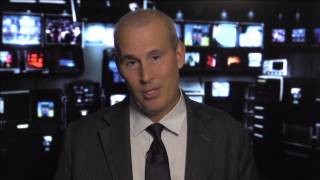
TJ Walker responds to a one-star review of his online public speaking course. He reads the reviewer’s complaints (teacher sits at a fake news-desk backdrop, recites negatives rather than showing positives, painful to watch), evaluates each point, describes how he tests and decides which critiques to act on, and advises waiting 24 hours, looking for trends, thanking critics, and making objective improvements when helpful.
Chapters
Nobody likes criticism when it comes to their public speaking, their presentations. But if you speak enough, you will receive criticism. Let me share with you how I deal with criticism. So here's a review I received on my online public speaking training course just today. This particular platform allows people to rate speakers, trainers, lecturers on a one to five scale of stars. I received one star and the title of the review is Poor. This is a poorly done course. I don't recommend it. If you are really looking to learn skills of public speaking, the teacher sits the whole time at a fake news anchor desk and recites things not to do rather than showing useful skills to incorporate. It was painful to watch. Again, he's talking about me. As far as I did, I couldn't finish signed sm. Now, hey, I'm a human being. Nobody likes criticism. I don't like criticism, but I always try to learn because there may be something there. So first thing I do is I take a breath, I try to put it aside, not do any response for 24 hours, then look at it again. Now, the first part of this criticism is the teacher sits the whole time. Well, right now I'm standing. I am standing in some of the videos, I'm either sitting or standing. I think what the critic is getting at is I'm not walking around giving a speech in front of a thousand people. Well, maybe it would be better doing it that way, but the economics of online teaching simply do not allow for the production values of something like that. And furthermore, a lot of my students are looking for tips on how to give presentations when they are in fact sitting down giving a presentation to three colleagues. So I'm not particularly troubled by that. The next element of the criticism, he's sitting the whole time at a fake news anchor desk. Well, this is fake. This is just a TV with a video loop. I have mentioned that and gone into detail in other courses I have on that. So I'm not trying to hide anything there. Now, this is an issue I've given thought to. It is an issue I've tested because I've tested numerous backdrops and what I have found is it doesn't matter what backdrop you have, you're going to get a lot of criticism. Or if you have a completely neutral or blank backdrop or white backdrop, it can be difficult to light and simply not look as good. Not keep a focus on the face. The reason I use this background, there are two reasons. Number one, it has generated less criticism than any other backdrop I've used, number one. Number two, half of what I do is media training. So having a media focus fits with what I'm all about and gives a little more polish. So again, I'm listening to the critic's concerns, but I'm not buying into that. The next thing the critic suggests is that all I'm doing is reciting things. I'm not quite sure what he means by that. Now I haven't memorized what I'm saying in the courses or here. I'm just talking to you. I'm sharing the same things I would share to my one on one clients, whether they're CEOs or presidents of countries. I'm talking. I'm not reading a teleprompter. So it's a course about speaking. So to me it doesn't seem appropriate to put up lots of text and have special effects and bubbles coming in. It's about speaking. So I need to be speaking and you need to be speaking if you want to learn how to be a better speaker. So the next thing the critic is suggesting is that all I'm doing is saying what not to do as opposed to showing what you should do as a speaker. And I thought, well, maybe the critic has a point. Let me go back and look at the curriculum. Because I put the course together a little more than a year ago, perhaps I did weight things in an odd way. So I went and looked at the first two sections of the course, the first 10 lectures, and every single one of them, except for one, talks about what to do, the positive things to do. I have one lecture entitled don't do a data dump. Now why do I focus on the negative? Because I've been doing training for more than 30 years and I found the number one problem when I speakers have in the business world and the political world is they just dump way too much data in their presentation. So I felt it important to devote an entire presentation on why you shouldn't dump too much data. But 1 out of 10, 10% on focusing on the biggest flaw, I don't feel that that is out of proportion. Now the next thing the critic says is it was painful to watch. As far as I did, I couldn't finish. Now, on that aspect of criticism, the critic is absolutely right. If it's painful for him, and I'm assuming it's him, it could be a her. The initials are simply sm. It's anonymous. The profile of the student. If it's painful for him to watch me, well then that's true. It is painful for him to watch me. What does that really mean? It Just means he doesn't like something about how I sound or look. I can't do anything about that. Here's what I do know. Doesn't matter how good a speaker you are, you could be Ronald Reagan in his prime. You could be Bill Clinton. There are people who couldn't stand Ronald Reagan as a speaker and people who don't like Bill Clinton as a speaker. Now, I'm not saying I'm as good as those two. My point is nobody has universal appeal. I can't beat myself up and say, oh gosh, I wonder if I should grow more hair or dye my hair or make my eyes less beady. I can't worry about that. You can't appeal to everyone. You can't please everyone, so don't try. Now, I am thanking that this individual for giving feedback because most people aren't willing to do that. But it doesn't mean you have to instantly panic. Part of what I look for is, is there a trend? So I looked back at the other ratings for the course and in fact all the other ratings for the course were five star, the highest absolute star rating. So my tendency is to say, I'm not really getting any value out of this particular criticism. Now, some of you may be thinking, well, tj, you sound awfully defensive. Why do you have to be so defensive? I take public speaking very seriously. I do think that you should be able to defend yourself from criticism. Either say why what you did is the right thing and why you did it, or say, ah, there's a fair point. I need to change, I need to improve, I need to get better. Certainly I have had a lot of good criticism over the years and I have in fact changed. And there's certainly room for criticizing me in this particular course. Those of you watching the online course, some of you are watching on YouTube. But if you wanted to criticize some of the production values, some of the over audio, perfectly fair. You have a fair point. If you want to say, tj, you don't always practice what you preach. You don't always give a great story with dialogue and setting to make every single point. Good point too. I've got to improve that too. So I'm certainly not beyond criticism or above criticism. I can improve too, but I'm not seeing the criticism in this particular critic's viewpoint as particularly helpful. I won't say it's not valid. I'm not trying to judge whether criticism is valid or not. I'm trying to figure out whether it's helpful so that I can act upon it. My advice to you when you do get criticism on your public speaking, take a breath, put it aside for a day, look at it again, and really try to be objective. I know it's hard to do when it's you, but try. Try to be objective and figure out, is this criticism valid, is it part of a trend, or is it one? Nitpicker. Thank the person regardless. Then make a judgment. If it's something you can act on to improve, do so. If it's just somebody who doesn't like the way you look or the sound of your voice, there's nothing you can do. I'm TJ Walker. Thanks for joining me.