TJ WALKER - THE HABIT INFLUENCER - Personal Development | LIVE STREAM
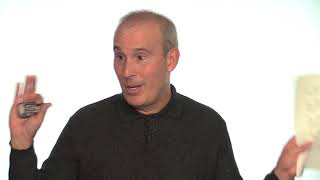
TJ Walker (video) provides media-training advice for authors, focused on how to conduct effective interviews to sell books and build audience. Key recommendations: avoid boring self-promotion, distill a book to 2–3 core ideas and 30-second summaries, practice on camera, be useful to the media’s audience, create sound bites, and cultivate recurring media appearances or daily video presence. Practical Skype/TV tips: raise the camera to eye level, light from front, and use a lavalier mic. He also advises dressing in non-distracting solids, giving audiences reasons to follow (free content), and hiring media training when possible.
Chapters
Hi, I'm TJ Walker, and this is a video that's exclusive to the Book Marketing Buzz blog. These are questions sent to me from Brian all about media training. TJ what are some of the mistakes you always see authors make when being interviewed by the media? Well, the number one problem is just being boring, talking about my book on my book. I blah, blah. Nobody cares about your book, okay? If you're J.K. rowling, maybe they do because they have so much invested in your characters. But for Most authors, certainly 99.9% of nonfiction writers, you need to get quickly to the ideas you have. They're going to help people's lives, their careers, their businesses, their personal lives. You've got to get quickly to the ideas that are going to be useful to them. You've got to give people a sense of what you're going to do to benefit them before they care about you. I've seen authors go right away and say, my book's on Amazon, it's $29.95. Here's the well, I have no idea what your book is about yet. I have no idea why I'd want to buy it. I don't even know why I'd want it for free at this stage. So you've got to give people a real sense of what's most important. The other problem so many authors have is they want to tell people everything they learned in the process of writing their book. It's your job to really narrow your book down to the top three ideas. If you can't do that, you're going to fail and your interviews are not really going to help you. If you want to educate people, the media, frankly, isn't the best way of doing that. The media is a way of bringing people in, whetting their appetite to make them want to buy your book and to learn more or to go to your blog or your Facebook page. Learn more about you and your ideas every day, maybe for six months or a year, before they buy your book. So you need greater focus on what you really have that's going to be valuable to your audience. How are some of these problems corrected? You need to test and train yourself. So, for example, if you have a brand new book and it's this thick, you need to be able to sum it up in about 30 seconds. Record yourself on video, and then send it to family members or friends who don't know that you wrote this book. Send them the video, ask them to watch it, and then ask them, what's your book about? If they can't tell you the three ideas that are most important to you. It means you're not communicating. So that's the easiest way to correct the problem. What do authors need to know about the news media in order to deliver a great interview? Well, first and foremost, the news media is a business. It's a business about getting more eyeballs for advertising, unless they're selling their content directly to those eyeballs. So you've got to be interesting and useful and realize the media doesn't care about you. They care about their audience. They care about their advertising. You are way, way, way, way down there. If you can help them be more interesting to their audience and deliver a bigger audience to advertisers, well, then they're going to love you. So that's what you've got to really learn is how to consistently be interesting. And the days are gone where you just say, hire me as a host or sending in demo reels. The way to be a host in the media, which is really the way to sell the most books, is you've got to be great every time you're a guest. Dr. Phil wasn't just giving his own show. He was a guest on Oprah once. Did a great job, got invited back, did a great job, got invited back again and again and again. And then it's, can you come every Tuesday? He became a regular, did that well for a number of years, then got his own show. And the reason I mention TV is if you look at the bestseller list almost anytime, certainly in the nonfiction realm, who's selling the most books? People who have their own TV shows. Recently, Bill O'Reilly, who still does have a platform even though not at Fox. Rachel Maddow, Stephen Colbert, what do they all have in common? Number one, best selling books, and they're on TV every night. Doesn't mean you can't sell books if you're not on tv. But the more you're on tv, the more you're in the media. For you, it might be at Facebook every day. The more you're in front of fans, that's really what's more important. The days are frankly gone where you're just going on the Today show, going on Oprah is going to generate tens of thousands of sales. You might not even get 10 sales going on the Today Show. It's about doing it regularly, building an audience of people who care about you. Specifically, how do you help authors get over their fears of speaking to the media? Well, if you're an author and you actually want to sell books, you should have a tremendous fear if a day goes by and you're not talking to the media. Because if you're not talking to the media, how are you talking to an audience of people who, who really care about you? The number one way to get over fear of speaking to the media is to know that you'll be great. Now, the way I do it is when I'm training authors either in my day long workshops or private workshops or public workshops. I get them on camera a dozen times in a day and I get them to the point where they love how they look, how they sound, doesn't matter if it's a tough interview far and away. That is the number one way to get over fear public speaking is to actually know that you're great, that you're coming across your best, and that you are in fact helping yourself every single time you speak to the media. That's the number one thing. It's not about meditating or, you know, tapping yourself or anything like that. It's not about drinking green tea. It's not about visualizing success in your mind. Actually watch a video of yourself being interviewed. Could be by a family member and thinking, that's great. If I can do it just like that, I'll be in great shape. What can authors do to make sure an interview via Skype goes extremely well? Increasingly, TV networks all over the world are happy to interview you through Skype video. I get requests sometimes several times in a week. And I have my own home office TV studio through Skype. So when I'm doing a Skype interview, it looks exactly like this, what you're seeing now. Now I've got a little fancier setup, but all you really need to know is that your video camera needs to be a couple of inches above your eyes. Most people when they're doing Skype, have a little webcam on top of their screen and it's 6 inches, 8 inches below their eyes. So the camera is shooting up their nose, which is a horribly unflattering angle. It's looking at the light on the ceiling or the light coming through the window. It looks horrible. Your face is all washed out because the camera is latching on to the light in the ceiling. So you need to have the camera elevated. You can just put it on a stack of books. You need to have more light in front of you than behind you. So if you have blinds, shut the blinds or move it around so there's not a window behind you. So that's the second issue. You need more light in Front of you, not behind you. The third issue. Spend $15 and get a lav microphone. You can get one on Amazon. I'm not selling any brand. But get a LAV microphone, plug it into your computer, and your audio will sound much, much better. Do those three things and your Skype interviews will go much better. And there's a chance the TV networks, TV programs will want to come back to you on a regular basis. That's the real power of the media, is when you have a regular recurring role and people get used to seeing. I mean, that's why the Rush Limbaughs of the world, the Rachel Maddows of the world, have so much influence and can sell books, is because they have a daily relationship with people. Now, you might not be a host of a show, be on daily, but you do need a way of figuring out how to get in front of people as often as possible. Why do great speakers and seminar leaders struggle when it comes to conducting media interviews? Well, it's a completely different skill set. I'm great at going to restaurants and eating food. Doesn't make me a good chef. Does it make me good at managing risk? It's a completely different skill. So if you want to make that transition to conducting media interviews, meaning you're interviewing someone else, you need to practice. You also have to learn how to listen. A lot of authors, experts, people who are great speakers, are just used to talking all the time. So if you want to actually conduct an interview and ask the questions, you need to get used to listening and reacting to people in real time and not just going into things with an agenda. How should you dress for a television appearance? You need to dress in a way that doesn't confuse people, that is consistent with who you are and what you're about. So for example, I do corporate media training and public speaking training, but I also work with people, varying ages, some non profits. So when I'm doing my daily video series, I wear this because it just doesn't distract that much. It's not too corporate, but it's not just a T shirt. It's solid and it's not quite black. It has a lot of white in there, so it doesn't come across as solid black. What I'd recommend, when you're going on tv, if you're any kind of a business person and you're not a fashion designer or an artist, you don't want the focus to be on what you're wearing. You want it to be on what you're saying. So I would recommend Wearing solids. Avoid all white, all black, avoid bright red, wear solids, avoid stripes, avoid paisleys, avoid checks because they just will dance around and check and get blurry and fuzzy. And that way you increase the odds that people focus on what you're saying. If you are an artist, if you are selling crafts, if you're a jewelry designer, well, then you want people noticing what you're wearing. So the rules are completely different. If you are a value fund investment manager, you probably want to have a conservative suit and tie on. If you're a dairy farmer, you probably want to have work clothes on. You don't want people scratching their head saying, well, why is that person dressed like that? Many authors want to sell a book, highlight their website, or get people to visit them on Facebook and Twitter. What do you advise them so they can market themselves but not sound overly commercial. You've got to do it in a way where it sounds like you're trying to help people. It can't just be first two, buy my book, go to my Facebook. You've got to give people a real reason. So for example, like a lot of people, I have a book. But I'm not just going to tell you, okay, buy my book now. Buy my book. Media training A to Z. No, what I'm going to say is, hey, if you've gotten any tips on what I've said so far, I'll give this book to you at absolutely no charge. All you have to do is email me tjwalker.com and I'll email you a PDF of this book. So why do I do that? Because like a lot of nonfiction writers, my primary revenue model, even though I do make money from this book and a half or a dozen years, my primary revenue model is selling a day of media training, not selling book for 20 bucks. It's selling a relatively high priced day of personalized media training. So I'm willing to give it away. That might not be your model, but you've got to give people a real reason. Some of you may have questions on how to use a teleprompter, for example. Well, I have videos on that on my Facebook page. They're free of charge. I post one new video every, every single day, seven days a week on how to communicate more effectively to the media when you're selling books or selling anything else. So you may want to check out my Facebook page at TJ Walker Interactive, which is on Facebook. See what I did right there? I tried to weave in a way that made sense to give people an incentive to go to my Facebook page. So go to Facebook and just type in TJ Walker. You'll find my public page and you'll see that. Give people a reason of how they can benefit from you and they'll want to do that. That's the big problem most authors have. They're trying to just go up and make the sale. They're trying to meet somebody and get married the same day. These days, everyone has a million choices of free books and websites to go to. We are bombarded. You've got to give people a real incentive to want to spend more time with you. Their time is valuable and you've got to give them a real reason. One way you can do it is, rather than waiting for NBC to call, is just start reaching out to people on a regular basis. I frankly am mystified that the vast majority of my competitors produce new videos on a regular basis. So they can share that with their customers, clients, and the community of people who care about their industry. So I do it seven days a week. By the way, if you want more tips on how to do that and how to do it quickly and efficiently, you may want to check out some of the videos on my YouTube channel. Just go to YouTube. It's TJ Walker. Or you can type in Media Training. You'll find my videos of the first ones that show up. And check out some of the playlists again. See what I did there? I tried in a natural way to talk about something of interest to the audience, and then I gave you the incentive to go there. I didn't ask you for any money yet. I didn't make you say, you've got to make this quick sale right now. How do you lead verbose authors to synthesize their message into sound bites? I teach people a very specific process for turning any message into a sound bite. A sound bite has one of 10 speech elements in it. It either has an analogy, bold action words, a cliche emotion, absolutes. It's very, very specific. I've got a whole chapter in Again, not selling. I'm going to give you this book, Media Training A to Z, that tells you exactly how to create sound bites. Part of what I do is I just go back to every interview they've ever done and I show them exactly what's getting quoted. Frankly, I tell them I couldn't care less what you say. I only care about what actually gets in the final story. Isn't that what you care about? So I show them based on actual result, not theory. I show them how they've been quoted. I'll show them how other people in their industry have been quoted. What works and what doesn't work. Once we know what works with the media, we've got a package our messages in a way that's useful to the media as well. How should authors prepare for media interviews? They should prepare by recording on video. I think they should. Sorry to sound self serving. They should hire me number one, or at least come to a public media training workshop. I host them every single month. There are other media trainers in the world too, but very few people write a book and it becomes an incredible best seller and they make tons of money and they never hired an editor or copy editor or a book marketer or someone who lays it out. People don't trust themselves to get it right the first draft. So they hire specialists. Well, if you're not a full time professional media spokesperson, there's no reason why you should expect to be good when it comes to speaking to the media. So you need to hire someone to help you. The good news is it typically only takes one day to do that, so that's not particularly hard. I hope I've answered your questions. Something else I do of value is I answer every single question that relates to media on my daily YouTube and Facebook page. So if you send me a question tj walker.com I'll answer you in a video and you'll be able to see it right here. Why do I do that? Why am I giving away this much free? So again, I have private trainings, I have online courses just for authors. So if you're really on a budget, you can do that as well. So I'm talking about this now. Now I'm in selling a little bit, but I've given enough value. Those of you who are still watching are thinking this guy seems to know a little. And by the way, I can train authors in part because I have a lot of books I've written. This one was a number one USA Today bestseller, Business Week, Wall Street Journal bestseller. And I've written half a dozen books. So I'm bringing to you highly specific experience of what works. In fact, I once set the Guinness Book of World Records for most talk show appearances ever in a 24 hour period when I was promoting this book. More than 100 talk shows in 24 hours. So I know a little about this as well. If you're interested in that story, you can check out my blog or my YouTube page as well. Thanks so much for time to spend together. Good luck. I hope to see you on the bestseller list.
More from TJ





The Breakout Cases - What Actually Caused Famous Speaking Career Breakthroughs | Ultamize

The Red Circle Sessions Finale - Build the Speaking Career You Came Here For | Ultamize

Two Stages, One Logo, Two Completely Different Realities - Main Stage vs Independent Events | Ult...

Pre-Reset - Why Repetition Builds Better Speaking Decisions | The Red Circle Sessions | Ultamize

Your Decision, Your Framework, and What Happens After - Build Your Speaking Career First | Ultamize

The Red Circle Sessions Trailer - The Speaking Career Truth Nobody on That Stage Will Tell You | ...

The Two-Minute Ultamize Reset - Your Platform, Your Audience, Your Voice | The Red Circle Sessions