TJ WALKER - THE HABIT INFLUENCER - Personal Development | LIVE STREAM
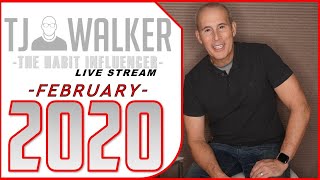
TJ Walker shares habit-building strategies focused on starting absurdly small: one pushup, a five-minute walk. He answers questions on motivation and storytelling, discusses 16/8 intermittent fasting, and takes live comments from viewers across multiple platforms.
Questions this video answers
February 17, 2020.
Start with one pushup (or a modified pushup on knees).
Lake Placid, New York.
Chapters
To on defensive. And by the way, there certainly is racism in the world, but not responding to a message you never even saw isn't one of them. But here's the bigger issue, and I think it affects all of us. It affects me too. So often we go through life, we get some kind of rejection or we don't get the instant positive response we want and we instantly assume it's because, well, this person has some big bias against me. It can't just be luck, it can't just be happenstance. It's because there's a huge, huge bias. I well remember almost 40 years ago, some young woman in college I had a crush on and I saw her with a really big 6 foot 4 athlete. And I think at that point I was intimidated because I'm not 6 foot 4, I'm about 6ft tall, but I'm not some 6 foot 4 big athlete. And I think at that point I just assumed, oh well, she only likes the big jock types. And I think I never really spent any time trying to build a stronger friendship or ask her out or anything like that because I just had this automatic assumption, this bias, almost putting myself in the victim's dent. We all do this as human from time to time. Even my friend on Facebook today calling me a racist for not getting him back. Here's what happened though. I remember going to a college reunion, I don't know, five years or so later, and this same woman who I thought was just unapproachable, out of my league because she only dated guys 6 foot 4, she had a husband who was about 5 foot 8, 4 inches shorter than I am. So obviously it was just all in my head. We all have these biases in our brain where we tell ourselves this person doesn't like me or I can't do this, or I'm not suited for this profession, or I'm not a public speaker or I don't have a face for TV or I can't be on video because, because, because. And it turns out it's all nonsense. Let this be a learning moment. I first saw that and was sort of insulted and then I stepped back and reflected and said, you know, I've been just as guilty from time to time. So we all have to step back and question our assumptions sometimes. Especially, especially if they are negative assumptions that have somehow convinced us that we can't do something or that no one will ever want to help us. It simply might not be true. Happy to see so many comments over the weekend and social media, so many different platforms. I wanted to share a few more with you. This one is from Sumit. He is one of my students in the Complete Personal Development course and writing, and I won't mention any last names. We try to protect anonymity here, but Summit writes I'm sort of stuck in mediocrity. I'm losing steam and zeal to do something new. Tj I'm in my middle ages and look as if I've lost all steam to do anything. Enthusiastic Enthusiastically there's some feeling that nothing is going to work. I start on something, do it for two or three days and then discontinue it. For example, I'm obese. I want to do daily walking and exercise. I start with enthusiasm, but after two or three days I sleep late in the night, wake up later, and just don't get to the walking. Thus it gets discontinued. Somehow the motivation from inside gets lost. How can I overcome this? Well, Sumit, you're not alone. Millions, if not billions of people around the globe feel exactly the way you do and so realize this is part of the human condition. I felt this before. Everyone has felt this way before. The key is don't be so high. Don't have such high standards at the beginning. If you're doing something for two or three days, then going to nothing, typically that means you started too high. If you are overweight and you're used to doing no exercise, if all of a sudden you try to go for a two hour jog or two hours of walking, it's going to seem like too much. Start really easy. I do 47 to 50 pushups a day, but when I started doing push ups, I started with one pushup. Now it was pretty easy to get motivated to do one pushup. It takes one second when it comes to moving and exercising. My recommendation Be easy on yourself. If you never ever walk and you're kind of a couch potato, then just make it a goal of walking five minutes a day. Just walk around the block once. If you live in a city, instead of walking to the grocery store or deli across the street, walk just one block away. It gets you moving and because it's such a small goal, doesn't require a lot of motivation. That third day you're only walking a few steps, so what's the big deal? What's the big deal? That's the phrase I want you to use when you're trying something new. Make it so smooth that you either overtly or inside, subconsciously think about what's the big deal? It's no big deal because you've heard me say this before. If you're a regular viewer. I'm lazy myself. I don't like to exercise. That's why I break up my day with all sorts of mini exercises. I don't get in the car and drive a half an hour to a gym and spend two hours with a personal trainer. Three, four, five, seven days a week. No, I do little bits of exercise throughout the day. I get up, I do 20 jumping jacks. It takes 20 seconds, doesn't require a lot of motivation. I'm waiting for my coffee to finish, going through the brewer and I'll do stretching exercises for 20 seconds. I need to just stretch up, stand up, stretch, take a break from reading in the morning or doing some writing. I'll just quickly do seven pull ups. I break things up during the day, I'm getting lazy in the afternoon and I want an excuse to get up out of my chair, out of my computer. I will go run on my treadmill, but only for 60 seconds. It works because it's so easy, it's so lazy. So that's really my advice to you, Summit. Have lower standards. Essentially, give yourself a smaller goal. Make it so easy that you just can't help but do it and keep doing it. And you do that for a week. Bump it up a notch. Do one pushup a day for a week. By the eighth day, it will probably be easy to do two push ups. Now, again, I realize some people have physical infirmities and this doesn't quite work for you and you may have other health problems. Consult your doctor. I'm not your doctor. Don't try something that's going to be dangerous for you. But for most people who don't have severe medical problems but are simply out of weight, out of shape or overweight, out of shape and haven't exercised in a while, it's certainly possible to do one push up and if nothing else, do a modified push up where you're on your knees rather than your toes. Steven Geise, the expert behind the book Mini Habits, really details this quite nicely of how you start with just doing one pushup or one sit up. Start with one and it makes it easy. Some of the other thing I would mention is you're telling me you're staying up too late. That is a huge problem because then you don't get enough sleep, then you don't eat right and it just snowballs. It basically destroys the whole day. So my recommendation, if you want to go to bed earlier, tear yourself away from a screen. I still have bad habits. But I'll tell you one habit I embraced a year or so ago, and I'm really happy I did, is that I stopped looking at any screen at 9pm I don't look at my cell phone again, I don't look at my iPad, I don't look at a tv and I start to read. And it's pretty rare that I haven't fallen asleep by 10pm if you get rid of all the blue rays and the electronic rays coming from computers and screens and you let your brain have just a soft light enough for reading and you're reading paper, then your brain is not all jumbled up. You'll go to bed faster, you'll go to sleep faster, you'll sleep better, and you'll get up early feeling rested, more energetic, and then you can hop right into the important habits of the day. So I hope you hope you find some of those helpful. And good luck. Continue Good luck in the course, the complete personal development course. By the way, quick program note. No live show tomorrow, Wednesday, Thursday, Friday. So this is the only show of the week. Why is that now? A few weeks ago I was out sick with laryngitis. No, I'm not sick. No surgery. I'm going on vacation, going to go skiing. I'm going to Lake Placid, New York, home of not one but two Winter Olympics. And I am a big ski fan. I've been skiing for more than 50 years, so I'm looking forward to it. And I apologize for being off those of you who want more updates on habits while I'm gone, though fear not, there'll still be a new video every single day long video on YouTube, Facebook, other major platforms and I'll still be even on vacation. I like to do my 15 second, 20 second videos on TikTok, Facebook and other social media platforms. So there's still going to be a lot of content and all the normal content other than this show will be on Twitter and Facebook and all the normal platforms. And I'm telling you this and I hope I don't sound apologetic, I don't apologize for taking vacations because I believe it's actually a good habit to take vacations and to take them regularly. One of the things that people around the world when I'm working in Europe, Asia, other places, they're always shocked by how little vacation Americans take. And on a lot of corporations, if you're a new employee, you might only get one week of vacation, paid vacation an entire year. Some people work decades and only have two weeks vacation. What I have found in my own life, my own career, the more vacation I take, the better my business goes, the more money I make and the more productive I am. I'm not saying it's easy, I'm not saying simply taking a vacation makes you wealthier, but it forces you, it disciplines you to organize yourself better, to organize your productivity, to organize your thinking. Here's the other thing. The whole point of this show is how to teach people habits on how to lead a fulfilled, productive and happy life. And yes, everyone in the world is a hypocrite, and I'm a hypocrite, but I'm trying not to be hypocritical in this regard. So sometimes there's some, there's some short term trade offs. If I never took a vacation in the first year of this show and I never spent time with my family and I worked till midnight, I could answer a lot more comments and questions on social media. I would never miss a day of this show. And the show in the first year would probably have a much bigger audience and a bigger social media reach. But what sort of an example would that set for you? To listen to some guy talk about having the habit of balance in your life, taking Tama off, recharging your batteries, and here's some guy who's frazzled. That's not very credible. It does happen a lot in the personal development world. And you know, famously, some of the relationship gurus who spend all their time talking about relationships have been divorced five times. So again, I realize everybody can be hypocritical. I can be hypocritical, but I want to at least try to not be hypocritical in some aspects of life. So that's why it's important for me to take vacations and to take frequent vacations and a lot of vacations. But I still want to spend enough time with you. But fear not, Marcel will be here. He'll be looking at your questions, comments, nothing will be lost. So if you have any questions between now and next Monday, when we will be resuming our regularly scheduled programming right here, they won't get lost and I will be checking in. You probably will see some videos of me on, on the ski slope as well. So I'm looking forward to that. If you are a skier, by the way, let me know. One of the things I do stress to people is if you want to grow as a person, it's a great habit to always try new things. And one area Where I've been slightly conflicted in my life is, on the one hand, I believe in trying as many new things as possible. I'm the first person to go sky flying with my daughter, try eating exotic meats when I'm in different countries, different parts of the world. But there's one thing where I'm a little bit of a contrarian. When I go to winter resorts, ski slopes, I don't snowboard. And when I grew up in the 1960s, I learned how to skate. And I had so many fond memories with my father, who's no longer with us, with other family members. Skiing, it was sort of a tradition. I grew up ski, nothing fancy. I grew up skiing on a public golf course within walking distance of my home in Pittsburgh, Pennsylvania. When I was 4 and 5 years old, and then moving down south, I went on ski slopes in North Carolina. I mean, this was not Aspen, but it was something I did almost every year and had so much fun. So when I got older, it was only when I was older that snowboarding became popular and I thought about doing it, but I only skied a handful of days a year. And it brought me back to so many fond memories that I said, what would be my real reason for snowboarding? Is it because I truly want to, or is it because I want to seem cool to other people? Do I want to seem cool and young and hip hop to everyone else? And I was honest with myself. I said, you know what? The only reason I would snowboard is because I want to seem cool and hip. And that's not a good reason. So I have stuck to skiing. The other reason, frankly, is I've had too many friends first time out snowboarding, they fall down, break their wrists, break their thumbs, and it just seems a lot harder to do than skiing, especially if you've been skiing your whole life. So maybe that's just an excuse. Maybe I'm fooling myself. Maybe there's some inner fear. So what do you think? Should I try snowboarding this time? The other thing is, it seems like snowboarders are on the ground, having to sit down a great deal, constantly buckling and unbuckling snowboards, which does not appeal to me. Skiing, you put your skis on in the morning and they stay on until you get out for a lunch break or some other break. So that's my take. If you are a skier. If you are a snowboarder, let me know post which one you prefer, and if you've done both, let me know if you think I should try snowboarding or if it's okay for me to just stick with what I like. Okay, let's hop right into topic A. Topic A today, the mindfulness approach to Habit Building. Eckhart Tolle made the whole concept of mindfulness extremely mainstream in America. Oprah Winfrey has endorsed him and gushed over him and had him on her show many, many times. His seminal work, the Power of Now, got so many people in America and around the world to really try to enjoy the present moment. Now. Tolle is a fascinating character. He had, by his own estimates, something like a breakdown where he just sat on a bench for a year and a half in his native country in Europe, reflecting, thinking. And he came up with his, in some ways, radical philosophy. In some ways, it's building on Eastern philosophies, which is that the only time we really have is now. The past is gone. You can never go back to it. The future is always going to be the future. You can't live in the future. The only time we can actually live is right now. And that's sort of the point behind mindfulness, which is this idea that you need to stop, enjoy what's happening right now, think about what's happening now, reflect on what's happening now, and it can be as simple as being aware of the breath going in through your nose and out of your mouth and trying not to think about 50,000 other things. Emails, texts, coming up, the to do list next week about simply enjoying the present moment. The reason this resonates with me so much when it comes to three thinking about habits is to me, that's what habits are. Habits are about the present. So many people, when it comes to improving themselves, they either want to talk about their past, they want to go to their psychotherapist and talk about how their mommy or daddy did this, or he was rude, and it's past, past, past, past, past. And some of that may be helpful. I'm not in any way knocking psychotherapy, but I do think if you spend the majority of your time fixating on the past, you're not actually living a life. The other extreme is so many really ambitious people who spend all of their time in the future. And this can start in high school. People say, well, I'm not going to enjoy high school now because I have to get good grades to get into that elite Ivy League university. And then they get into the Ivy League university and they think, well, I can't really enjoy time here. Make friends, friends, do fun things because I have to get straight A's in order to get into this elite law school or business school or medical school. And then they get into the elite professional school. So let's say they get into a top law school and now they tell themselves, well, I can't really enjoy life now or have real friendships or have romantic relationships or anything else because I have to kill myself to get the law review to get in the top 10% so I can work at the most prestigious, highest paying law firm. And then that works. And now they're 26 years old or so and they're in this law firm now they can start living right now, they can live in the present. No, because if you do all that work, all that does is set you up to work 15 hours a day at that law firm doing billable hours. So then you think, well, if I just pay my dues and just kill myself for the next seven, 10 years, then I'll make partner, then everything will be great. And then finally, age 35, sometimes 40, you become partner. Where did life go? Your entire life was spent in the future. Now you may have had to cultivate certain good habits to do that. The habits of hard work and the habits of focus. I'm not denigrating those at all. But if you spend your whole life working for the future, you have no present. You've destroyed so many aspects of what makes for fulfilling life. You haven't created joy, you haven't really experienced leisure. You don't have the maximum benefit of relationships with friends, family, romance. And that is the big problem if you don't take a more mindfulness based approach to life. Of course I want you to think about the future, but the majority of your time, I believe every day should be spent on your daily habits. So if you want to be a best selling New York Times author, don't spend all your time visualizing your name in lights and your name on that page that says you're the best seller of the week. Certainly do it once. But then on a daily basis, you've got to focus on writing. Or as I like to do, dictating, people use the term writing. What I mean is I dictate. So first thing every morning rather than tell myself, I'm going to be a New York Times best selling author, I'm going to be rich and famous. No, I focus on writing 500 to 1000 words first thing in the morning. Not just dictation, it's a habit. In the moment I'm thinking about what are the most important ideas I have. And I like doing it. Then because there's no email to mess with. I don't look at it. Then there's no calls. It's often this morning it was 5:30am and I can just think and I can be in the moment. That's why I like this idea of even if you're turned off by mindfulness, even if it sounds like a bunch of frou frou crazy touchy feely crystal gazing hippies sitting around humming and that's a turn off for you. Strip all that away and there's still something there about focusing on the here and now. As Tolle mentions, as Zen Buddhist mentions, we can't really change the past, we can't ever really change the future completely because the future hasn't happened. But we have 100% control over now. The actions you take now. What's another word for actions you take now? Habits. That's why I like mindfulness. That's why I believe it is so important for you to take a mindfulness based approach to your habits. Don't get so caught up in. Well, 16 months from now I'm going to have 300,000 views to every video I do focus on. Did I make the best video I could possibly make today? That's what you need to do. That's what I did this morning. 8:30 in the morning. I made a simple video to share with all of you and I forgot what it's about already because I make them every single day. But I made it and then I shared it with 10 different social media platforms. That's a habit. That's a habit you can do. That's a habit. Anyone can. We can't all be social media stars and have 10 billion viewers. I don't have that. But every one of US can share one idea seven days a week, 15, 20 seconds a day with thousands of people. If you just take 15 or 20 seconds to make one video and then post it on a dozen or so social media sites for free. The power of mindfulness will keep you focused. What matters most? Your daily habits. And that's topic A for today, by the way. Marceau, my colleague is with us today as always. He's coming to us today from makeshift studio in Pennsylvania. Marceau, what was our time on that? I'm asking Marceau occasional production questions because we do chop up pieces of this live show for other prepared package produced videos that are distributed on other platforms. Marceau, were you keeping the running time on that segment? Yeah, that was about a solid ten minutes. Okay, I need the nine minute. Marceau sends Me little notes that I have on one of my computer that tells me how long I'm going, if I'm going too long, if I need to wrap it up. Just be sure for the topics Marceau to let me know. And I'm about at the nine minute mark. Let's check in with some of our friends on social media. I see a lot of people here today on TikTok joining us as always. Always good to see my TikTok friends, friends on Instagram, Facebook. We've increasingly seen a lot of people from around the world joining us on the YouTube community as well. Let's check in on TikTok. Gavin Yee says hello. Yes, try it. That's great. Great. And I'm on vacation right now. Well, Gavin, good. And I appreciate you spending a little time with me today on your vacation. I hope you're finding some enjoyable things to do in addition to this, which I hope is enjoyable as well. HGI Michelle has joined us on Instagram and user 7A4 on TikTok as well. HMDF has joined us from Instagram. Massad is on Instagram. Petter. Oh, Petter is saying there's no audio coming out. Is anyone else? Yeah, that was in the very, very beginning, but I fixed it. Okay, great. And I see a couple, a couple of minutes without speaking. Okay. So apologies for our technical errors. We try to make things better and better every day. We are just now in about our sixth week of. This is the beginning of the seventh week of regular production of this show. So we didn't wait till we were perfect and had every kink worked out. That's not what successful people do. Successful people sometimes take a leap and you learn as you go and you try to get it better. If you wait until something's perfect, nothing would ever happen. So apologies for no audio, but let's use this as a learning moment. There is this well known myth out there that 93% of communication is non verbal. It's not the words, it's your body language. Well, obviously that is complete nonsense because if that were true, I would be just as good I would be 93% as good if there were no audio here and it would just be a waste of time to watch this show without any audio because it's not that interesting of what's going on. Let's check in with a few of our friends on Facebook today. We also have friends joining us on Periscope, on Mix, on Twitch. We are broadcasting to you today from about 20 different platforms and that's one thing that's unique about this show is because I know some of you don't like Facebook and some of you don't like Google and some of you don't like a Chinese owned TikTok. That's the beauty of what we're doing here. You don't have to be on any one platform. We're not forcing you to come to us where we tell you this is the platform you have to be on to accept we come to you whichever platform you prefer. I think that's the best policy. Let's check in with our friends on Facebook. Facebook, Roger writes Question I just purchased your storytelling course. Well, thanks for buying. I'm trying to develop the habit of telling stories in many of my speeches. In one of the lessons you talk about using dialogue. I've tried to use dialogue while turning my body to show one voice and turning the other way for the other voice. Are there other ways to show two voices in a dialogue? So quite often and Roger, when I get a question like this, I'll be in an in person workshop. And I remember just a month or so ago I was in Europe and one of my clients, Sean, says, tj, how do I really tell a story? I'm good at it if I'm sitting around with a friend over a beer, but if it's a big formal presentation, it feels awkward. And so I looked at him, I said, shawn, all you have to do is treat the spot like you are talking to one friend in a one on one conversation. That's what I see. What I did right there, I used dialogue. Part of it I changed my body. Part of it I paused. Part of it I changed the tone. Part of it I changed the speech. It's the contrast. That's what makes it interesting. You don't have to really mimic someone's voice. But just slightly changing your voice when you're telling a story makes it so much more powerful. Here's the thing about stories. As long as your story has some relevance to the audience and they don't think you're just going on and on being self indulgent, it's going to work. Even an average story beats a great speech. That's just a bunch of bullet points and text. The number one thing I hear from audiences around the world when I ask them, what do you remember from the best speech speaker you've seen today or this week or this month or this year? They remember the stories. They don't remember the fact that you were smooth. They don't remember the fact that you were professional. They don't remember the fact that your hands didn't fidget. That's not what audiences remember. They remember your stories if they're interesting and you give enough details for people to see it. So that's the real power of story, Roger, and I hope you're enjoying that course. Sy writes in how to develop content on interview skills, which is one niche Interview skills How to develop day to day content only on interview skills Should I search on Google or other platforms for gaining interview skills? Could you please answer my question? Well, Si, I'm always happy to answer your questions for one thing. And by the way, Sai is one of our great regulars and a friend of the show and collaborates with us from time to time. He's an excellent trainer in his own right, based in South India. Very young man. Always happy to see people excited about the field of personal development and training. I think you've got to do all those things, Sai, if you have an overwhelming passion for training people on how to improve their interview skills. Very different from when I was a kid or was even your age. I could go to the library and check out a handful of books. But now you could literally type in interview skills. You know, rather than being theoretical about it, let me just type it in. Right now I'm in front of a browser. So let's just look at if you were psy and you wanted to become an expert interview skills teaching people interview skills, what would you do? So I'm going to go to Google and type in interview skills. Maybe there'll be three or four resources. What do you know? According to this, there are 1,110,000,000 web pages related to interview skills. So Si, you could literally spend every second of the day, 24 hours a day, seven days a week for hundreds of years and not read everything that's too wide of a swath. I'll tell you what I do with habits is I look at everything that is new in the last 24 hours. So what I like to do is hit the news button and then I'll hit the tool that's that says past 24 hours. And for you, I would probably also do blogs. Read what every other top blogger says. If I could add just one pointer, I would say everything that's like content right now is not really like brand new or like some new radical idea. It's an improvement on what's already out there. Interview skill. Interviews and interview skills is already such a deep niche, like a specific narrow niche. You got to do as many things as you can that are outside of the norm with that. So maybe it would be like your posture when you're sitting in a chair, how you respond to questions. Maybe it could be questions that you ask the interviewer, like things that thinks that maybe nobody's ever thought of or just presenting in a certain type of way. To think that in a way that people have never seen before is the best way to go about it, in my opinion. That's just my two cents. Marceau, you are absolutely 100% correct. This is not a brand new field. People have been going on job interviews for a long time now. There's always some new little twist. There may be some new topic you don't want to talk about because of the political realities at the moment. There may be some way of using technology. Certainly in my own course, my own course on how to do job skill interviews, I recommend that people rehearse using their cell phone. Most people had never heard of that before. But say when you're researching it, you need to read every book. Certainly if I were you and you want to focus on the niche of helping people with their interview skills, then you need to get in the habit of getting the very best information out there. You don't need to know, you don't need to read every book ever written on that topic, but you certainly need to read all the best sellers. And again, rather than let this be abstract and theoretical, let me just show I'm glad Sy asked this because this is something that is a very easy thing to do. It's simple and yet most people never do it. So I'm going to simply type in interview skills on Amazon now and I'm just going to look for books. And what have I found? It certainly looks as though there are nearly a thousand books on Amazon just on interviewing skills. I'm not suggesting you read all thousand, but I would certainly buy the top 10. Now here's the other way. I think you can easily become an expert on almost any subject quickly. And I'm not shilling for Amazon. I get no money. I'm not an affiliate of Amazon. Maybe I will be at some point. But Amazon has this thing called Kindle Unlimited where for roughly $10 a month, you can get up to 10 books at a time on any subject. So if you read quickly, you could read 10 books on interview skills. Delete those, get another 10. You could read 100 books in a month for only $10. That's what, 10 cents a book? Because there are on Amazon, Kindle, by my quick count, it Looks like there are at least 200, 200 books, digital books, available on Amazon Unlimited. So again, if you read two of them and 200 of them a month, that's 10 cents a copy. I think that should fit almost any budget. Also, realize you don't want to plagiarize anyone, but realize there's so few new ideas out there. Look at other people's courses and then put your own examples, reflections, use your own words for it, and come up with your own spin. There's been a lot of research on this. The creative works, whether it's painting, art, novels, anything else, great works of nonfiction, 90% of what they do are ideas found elsewhere. The most influential works of scholarship in the world are using ideas that have appeared in other scholarly journals 90% of the time. So the original idea, everyone likes to think they're so completely original. The original ideas that have the biggest impact in life, whether it's scholarship papers or anything else, it's only 10% of the content. Everything else is building on existing knowledge. So, si, I know that you're in my online interview skills course, which I believe is about 25 hours. Redo it in your own terms. I'm not going to sue you for copyright violation because you're not violating my copyright, you're not stealing my video. You can't copyright an idea. You can copyright certain terminology used in certain business situations. But ideas, once they're out there, they're out there. As long as you're not taking verbatim quotes and calling them your own. So a really easy challenge I have for you is take my 25 hour course. Redo in your own words, your own examples, with your own face what you think is the most important hour. Then specialize. Do things like how to ace your next job interview for a software job, or for a high tech job, or for working for an international company. If you're here in India, the more you can specialize, the more you weed out competition. And when someone meets that specialty, they will be interested. It's a good fit. So good luck. Cy there. Marcel, do we have another? I felt like I missed one of the comments on Instagram or one of the other platforms. We have a lot that were written in, but I didn't want to shortchange our live audience. Our live audience here, those of you, our live community, you're most important. You made your time to spend time here today. I appreciate it and I do like to give anyone who shows up live top priority. We're on YouTube and let's see Siraj says, I like the idea of making goals small and insignificant. This surely helps in resistance. I have. Yeah. When it's so small, it seems like it's no big deal. It does make it so much easier. Easier to do. Never having sugar. After eating sugar in every coffee and every soft drink and every meal can be too big of a jump. But if you're used to having a Coke in the morning, a Coke at lunch, a Coke in the afternoon, and a Coke with dinner, maybe if you just did that morning Coke, had water instead of that, that's easy. You're still getting Coke the rest of the time. Now, I don't recommend you ever drink Coca or anything with sugar in it, but we all do occasionally. But you're right. Make it easy and simple, it's much less intimidating. But here's the thing. It's insignificant in the sense that it's not requiring a lot of motivation or there's no pain, but it's highly significant to your brain and your body when you set the precedent, taking a healthy action of starting a habit that's positive and sending you down the right path, whether it's for your health or any other goal. So I'm glad you like the whole idea of simple, simple, easy, easy tasks to build your habits. Let's hop in with some more questions written in from students. This one is from Cameron, who's in my complete personal development course. And it's a question regarding business dinners. Maybe this request looks strange. Cameron, don't worry, I don't judge you on any questions or comments that seem strange. Certain things I do that are strange to other people. Any question is fair game. It would be useful to have some videos to tell and teach students what is the correct way to go to business dinners or lunches? Where, which side of the table to sit on? Should they start eating after all their managers start? Or does it matter? In short, what is correct table manners in business? So I do address some of this in body language courses of mine. I don't do it in the personal development because you've got to draw boundaries somewhere. But in a nutshell, when it comes to a business dinner, the main thing for people to remember is to focus. It's business dinner. But what's more important of the two words is business, not dinner. So by that I mean just because you're going out and some big company's picking up the tab, perhaps it's not an excuse to say, oh, great, free dinner, and order every kind of appetizer and every drink and every Just in that case, I would follow the lead of the person who's invited you. If you're being. Now, if it's your dinner and you're inviting someone out, certainly you want to make them feel as comfortable as possible. The biggest rule of thumb is you need to be gracious, you need to be able to have a good conversation. You need to look at the person you're meeting with and you don't want to offend them, and you also don't want to make a mess. They're not necessarily judging you on your table manners. Unless you have bad table manners. The assumption is they're perfectly fine if you don't know whether it's appropriate to use what fork or spoon. It's a little bit different in different countries. In certain parts of India, it's normal and polite to eat with your fingers for rice and other things. Other parts of the world, it's not. In the United States, it's considered odd to use your fork to put food in your mouth from your left hand. Typically, you keep the fork in your left hand. Use a knife in your right hand, cut, and then you switch the fork from your left to your right hand. Don't ask me why, but that is the standard. Europe, it's different. So you need to know the specific culture in your country regarding the plates and the silverware and whether to use silverware. But the far bigger picture is you need to seem like you're enjoying having a conversation with someone. Often for a business dinner, they're trying to figure out, do you have social skills? Are you someone that clients will want to speak to, that other colleagues in our organization will want to speak to? So you need to come prepared, ready to speak, ready to listen, ready to be interesting and interested. And can you do two things at once? Can you have a conversation and eat without spilling on yourself? Or ordering the French onion soup and having gooey cheese come down? They're also quite often monitoring how you treat people. It's pretty easy to be extra polite and solicitous to the CEO of a company who's interviewing you, possibly going to give you a job. But if the busboy or the waitress comes by and you're rude or surly to them, it can send a horrible message to the person you're meeting with at the dinner. They're going to think, okay, that's how they treat people who are not beholden to them in some way, and that's how they're going to treat everyone in our office. And it's going to rub everyone the wrong way. That's how they'll treat all the administrative staff. And that's going to cause morale problems. So you have to be aware of that at all times. So, Cameron, I'll think about where to possibly add videos on that subject. But it is a big subject. And you know what, you know who I bet could help you cy? There's a perfect example of a niche for you that I had not met. Now, I do address this in job interviews over dinner, but this is a little bit different than just a business dinner in general. So si, always be on the lookout for when you hear someone ask a question in any form that may be context or content for a book, it may be content for a video, and it certainly could be content for a blog post. The main thing SI is you need to be reading every day, watching videos every day on your skills, your niche of job interviews. But you need to be creating every day. You need to be creating your own videos, your own quote cards, your own text, your own podcast. If not all of them, at least some of them every single day. Other questions coming in. This one warmed my heart. This one is from Larry Cosgrove just a few hours ago and he was commenting on one of my videos posted on YouTube. He says, thank you for your great ideas. I'm 94 years old and having trouble sleeping. I'll try some of your suggestion. I'll work on my habits a bit more. To me, this is truly inspirational. Common perception is that people 94 years old, or for that matter, 84 or 74, are so set in their ways, can't improve, aren't open to new things, aren't interested in listening to a young whippersnapper 40 years younger. And yet here is Larry, who's taking time to educate himself, watching personal development videos on YouTube, responding, experimenting, trying new techniques. Now, I don't know, Larry, but something tells me that this very attitude of him, trying to learn, trying to improve, trying to experiment, is one reason why he's 94 years old and still kicking and still learning and still writing with perfect grammar and perfect speaking. So, Larry, thanks so much and I hope you have a great night's sleep every single night starting tonight. I'm TJ Walker. I want to thank you for spending a little time with us today. On Monday, we are live. It is February 17, 2020, as I mentioned to you. Quick program note. We'll be here all the second hour today as usual, but starting tomorrow, I'm going to be on vacation. I will be shushing down the slopes in Lake Placid, former home of the Winter Olympics, for the rest of the week, having a good time. And we'll be taking time off, but the channel will still be here. There'll be new videos put up every day, whether you're watching on YouTube, Facebook, Instagram, or anyplace else. So we will in fact be here. Here's a question from Matt, the Food Insider, one of our regulars. We've heard from him before. He says, tj, I'm studying your course on public speaking and presentation skills on Udemy. I have a question. Could you please explain how we can make public speaking without a script? What are the methods to train our minds to speak smoothly like you, without time delay or the. Well, first of all, Matz, thank you very much. But here's the thing. You already know how to speak smoothly without uhs and ums. You already know how to speak exactly like I do. Now, you might not be doing it every day in front of thousands on live streaming video. You might not be doing it on YouTube videos. You might not be doing it in front of a speech in front of a thousand people. But if you've ever had a conversation with one friend, you already know everything you need to know. You're just talking. The hard part for most people is once they tell themselves, oh, I'm giving a big formal speech. That's when we change things. We try to show off a whole bunch of new skills. Memorization, reading a teleprompter. And it never ends well. It makes you stilted, phony. It makes things sound contrived. So, Matt, my biggest piece of advice is figure out, first of all, what do you want your audience to do after they've heard your speech? Then narrow it down to five big ideas, five messages for the audience to motivate them to do what you want. Then come up with a story. Each one of your messages to make it come alive. Then and only then, you need a piece of paper and have a simple outline. And then practice on video until you like, took me about 30 seconds to say that part. And that really encompasses everything I teach in my 30 hour online public speaking course. If you do that, follow that 30 second pattern, figure out what you want them to do, come up with the top five messages, a story for each. Simple notes on a single sheet of paper. Practice on video till you're done there. That's about an 11 second summary of the 30 hour course. It does solve all problems. You don't need to memorize your speech. You just need to be able to talk about it in a way that's interesting and conversational. Follow the outline. Now I don't bullet point out everything I'm going to say in our two hour get together every day right here on this show. And I do glance from notes from time to time, but I don't stay up. I wasn't up at midnight last night memorizing and reading and rereading and underlining. I went to bed at 9:15 last night, had a long, fun full day, a lot of exercise, great tennis, which by the way, I won all three sets of my tennis match yesterday. I was so happy about a lot of walking, some outdoor fresh air movies with my family and went to bed at 9 o' clock at night. I wasn't up memorizing because I knew you didn't care if I memorized it. What's important here is I can have a conversation with you about important ideas that are helpful to you if I want to glance down occasionally. Probably doesn't bother you too much. You might not be impressed by how thick or not thick the top of my head is, but you probably don't really care either, so I'm not going to worry about it. I doubt you will either. So that's it in a nutshell of what you're going to learn in that course. We are coming up on the top of the hour and looking forward to seeing all of you at three minutes past the hour, three minutes past 2:00 clock Eastern Time. We have a lot of big topics coming up. More mail, more questions, more comments from you, plus your live comments coming in from every single platform. I'm TJ Walker. This is the Habit Influencer being broadcast to you live across 20 platforms all across the globe. Thanks so much. See you back in a few minutes. Marceau, did we have any, any other questions that I missed or comments from people? Now that's still an old comment from Peter saying no audio. So how do we do, did we not do our check today or how does that happen? I mean again, I realize. So, I mean I forget stuff all the time too. I understand, understand, but is there some, is there some test we should look at every single time before we start a show? Like classes all week for ski vacation. Hang on one second. Okay, I appreciate that, period. I'm heading out tomorrow morning for a ski vacation at Lake Placid for the rest of the week, comma, but I will be checking my emails and messages if you or anyone can get back to me, period. Thanks, exclamation point. Sorry. Go ahead. Let me get my next segment. Yeah, this person called me basically a racist. A great way of getting response. From people. Sa. If on my iPad. But not. Foreign. To the habit influencer. I'm your host, TJ Walker. We are live, it is Monday, Monday afternoon here in the New York area, February 17, 2020. Taking your questions, your calls, your videos with comments, questions, thoughts about anything related to habits, how to build the best habits to lead a more fulfilling life. In the news this is courtesy of Steamboat Pilot. This is a media outlet out west and they covered information about the Outdoor Foundation's annual participation report. This was just published and some of the news here was frankly depressing and shocking. Here's what the outdoor foundation found is that half of Americans did not go outside to recreate, to play, to do something enjoyable in all of 2018. 2018 was the most available. That's when the data is most available. Nothing more recent. That just strikes me as bizarre. I understand not wanting to go run 10 miles a day outside or play tennis every single day, but not even once in a whole year. I have to say that that was shocking to me. Overall, it says people went on 1 billion fewer outdoor outings compared to 2008. Now this, this was being reported in Steamboat Springs, this publication. So it's a huge outdoor area, skiing and biking, hiking in Colorado. But the other truly amazing statistic to me was that only 18% of Americans go out even once a week outdoors to enjoy. Now, I did a commentary on this over the weekend on TikTok and other platforms in my short videos. And what struck me as interesting is sort of how three trends dovetail together to make something meaningful. On the one hand, in the United States and across a lot of democracies and capitalist societies around the world, you see income inequality, you see more and more income going to, whether you want to say, the top 1%, the top 10% more at the bottom, more of a carving out of the middle class. So you've got more and more wealth going to the elites. Next trend that's interesting is not just in the United States, but all over. Skyrocketing obesity rates. And then this final trend of fewer and fewer people going outside. I put those three together and say, this is crazy. Here's one solution that helps a little bit with all of those things. Go outside and play, go for a walk, go to a park, have a picnic. Because if you're not a part of the wealthy elite, guess what? It's free to go outside. And I understand if you're in certain Neighborhoods in Syria, or you're in the middle of Delhi and the air quality is too low. I understand it doesn't work for everyone, but for the vast majority of Marceau. I'm getting audio feedback. Yeah, if you can hit mute there. Sorry. Minor technical feedback. So if you are someone who is not rich and you can't go jetting across the world for fancy vacations, okay. But you could go outside and play. You could go to a park. You could go play checkers and park, go play bocce ball, do something outdoor, because then you're not receiving the negative impact of the income inequality. I don't mean to suggest that that's the only solution. I'm not here offering public policy. But that's just one little habit to make you feel a little better. If you're not someone getting richer. Next thing. If obesity is a problem, and let's face it, it is, if not for you personally, probably for someone in your family, probably someone you love. Love getting outside, walking, playing a sport. Doing more activity is going to help. And then third, it solves that other problem. Basically, no one's going outside anymore. I won't just say young people. I'll say people of every age. So often people's idea of free time is being inside hunched over, staring at cell phones and iPads. And it can be a beautiful sunny day. No one's going outside. It is a tremendous shame because it's making us obese. It's making us put more money in the wealthy hands of Mark Zuckerberg and Jeff Bezos and the CEOs and founders of Google, because we're giving them our eyeballs and our attention. Why do we want to do it? I know in my own home, when we have parties here for family and friends and there's teenagers and all sorts, it can be a beautiful sunny day. No one wants to go play tennis or swim. People are inside hunched over their cell phones. Beautiful sunny day at a party. So what I do is I come down to my studio and I pull the plug on the Internet. And then they can't access it, because where I live is not easily accessed for regular cell phone coverage, for Internet access. That's one solution. Another solution starts with you. You can decide that you want to spend some time outdoors, if not every day, at least every week. I realize sometimes in the winter it's just. Just too cold, or if it's too rainy. But you know what? There's this thing called a jacket. There's a thing called an umbrella. You can still go For a walk. Maybe you don't spend four hours frolicking in the park on a cold wintery rainy day, but you could still go for a 5 or 10 minute walk if it's not raining that hard. I try to spend at least an hour a day, every day, rain or shine, going out for a walk without a cell phone. So I am kind of an odd way they use the word recreate. I'm not used to that as a verb, but I'm trying to get some recreation outdoors seven days a week. Nothing bad has happened to me and I'm feeling pretty good. I would recommend you get some fresh air, do some walking, playing. Whether you want to do something vigorous like play soccer or lacrosse or tennis, or just go outside and sit and write in your journal and meditate. Do something to get outside. It is a powerful positive habit in your life to get outside. So many of the most famous writers, thinkers, creators came up with their best ideas walking outside. Whether it's Steve Jobs, whether it's Thoreau, whether it's you. Get outside and walk. You might not want to think of any brilliant idea. You may want to just go out with family, friends, play and just have fun. I guarantee you, you will not be on your deathbed saying, I sure do regret playing softball outdoors on a nice sunny day when I could have been watching TV or could have been watching YouTube and Facebook videos on my cell phone. That will not be what you are saying on your deathbed. I'm TJ Walker. Thanks for joining me today. We have so much coming up this hour. A lot of fun, a lot of emails from you, comments, questions from others, few more deep dive segments. We'll say hello to some of our friends checking in on Facebook. Dwayne writes in, says I was about getting out of the house to exercise. Well, good for you, Dwayne. Try to wait till the top of the hour because we don't want to miss you here. But yes, I'm glad you're getting out of the house. And you know what? Just because it's a rainy day or a cold day, I don't think should give you an excuse not to exercise. Exercise in the house. I do every day. Push ups, sit ups, weights. You don't have to have a home gym. You can exercise in a studio apartment. I've done that before. Just doing stretching exercises, just a few dumbbells is so much better than doing nothing. Dwayne, what kind of exercise? If you don't mind sharing, love to hear from you. What is your preferred exercise when you do go outside, I would love to know. Mine is just basically walking. Although I do enjoy playing tennis too, and going with my family to parks. That's what I want you to think about in a minute. We're going to be diving right into segment B today, our next big deep dive. Typically on these shows we do two, three, four deep dives where I give you some deeper reflections on some aspect of habits, habit formation. And then we open the emails, the chat rooms, the calls open for everyone. But there are occasionally times where about eight to nine minutes. I'm not responding to you. It's not because I don't see you or don't care for you, but we're just going a little bit deeper into a particular subject. Marceau, do we have anyone else? Oh, I see a topic here. Kicking says. What do you think about cryptocurrency? I'm a big believer in the concept that blockchain is a transformational technology, there's no doubt about that. But I am not a fan of cryptocurrency. Now, there's always been different currencies and yes, there are some people who have traditionally placed wagers on whether how the pound will do in relation to the dollar and how the yen will. So people have at some levels always invested in currency. What I am profoundly disturbed by is the bitcoins, the ethereums, all the others that has attracted this gold rush mentality of people, people who are coming into this not understanding blockchain, not understanding the real value and just telling themselves, here's my chance to get something for nothing. I'm not working any harder than anyone. I'm not inventing anything. It's just a way for me to cash in on some easy, basically a lottery ticket. I think that's a big, big problem. When I look at truly successful people, fulfilled people, happy people. It's not the lottery winners, at least the traditional scratch off sort of way. It is people who use their brains, use their minds, use their capabilities to create something of value that solves a real problem for people or that amuses or entertains or enlightens people in some profound way. Facebook, you may love it, you may hate it, but it does solve a problem for people. How can I communicate with friends in different cities? How can I share pictures of family with other family all over the country of the world without having to go to the drug store and print out 89 copies and get a bunch of postage and mailing it to you? So Facebook really does solve problems. It may create others, but it does solve a specific problem. Google really does solve a highly specific problem. How can I find what I really want if I type in a certain word or phrase on the Internet, and I don't want to have to look through 10 billion pages? Google really does solve a problem. Uber really does solve a problem. How do I get from point A to point B? I don't want to drive, and I don't want to stand in the rain for three hours waiting in line for a taxi. So Uber, all sorts of problems you could discuss about Uber and how they treat their employees and the future of workforces and subcontinentals. All legitimate issues, but at its core, Uber solves a real problem. I will ask you the question that I've asked every individual I've ever had a conversation with about Bitcoin and about cryptocurrency. What fundamental problem is cryptocurrency solving? I've never yet had a good answer. Now, I understand one of the answers is anonymity. But who wants anonymity? Criminals and drug dealers. I don't know many businesses that become huge, big, successful businesses where their primary marketplace is people who are criminals. There are some businesses that deal with that, but they tend to be small, narrow, niche businesses, and investors rarely make money off of them. So that is my question with cryptocurrency. And forgive me, I know people get very heated on this subject. And people who are for cryptocurrency and invest in cryptocurrency have a religious father fervor. And criticizing cryptocurrency to someone who has a lot of money invested is like criticizing someone else's God or religion or their children. They will hate you for it. And believe me, the last thing I want to do is turn this show into some platform about cryptocurrency. But I do think from a purely personal development standpoint, from a habit standpoint, the time you spend trying to invest and make money on cryptocurrency is so much better spent learning a real skill or helping build a real product that solves a real problem. And I understand you could have invested at $50, and a month later it's $1,000 and. And you could have made $10,000 or $100,000 like that overnight. I understand that. And at that point, everyone thinks they're a genius when they invest in something and it goes up. But the one thing we have seen for years now with all the cryptocurrencies is wildly fluctuating. As many problems as the US Dollar might have, it does not wildly fluctuate in value the way cryptocurrency does. And I always am intrigued by the circular logic people use. They say, well, why should you believe in the US Dollar? It's not backed by gold, it's not backed by anything. It's just your faith. Okay, but why are you going to believe in cryptocurrency? It's not backed in gold, it's not backed in anything. Essentially, it's your faith too. If you can have faith in one place, and then why are you discounting faith in the other? So that's my brief take on cryptocurrency. If it's a small part of your portfolio and you're not mortgaging your family's future, so be it. And you may make an extra few thousand dollars, you may lose a few. But the idea that that should be the bedrock of someone's financial foundation, I think is. Is troublesome. And I think it is troublesome for a society and a culture where so many people are spending their time not trying to learn new skills, not trying to better themselves, but essentially trying to win a lottery ticket. That is my take on cryptocurrency. I don't mind you asking, but I'm going to try not to talk about this subject for another couple of months because. Because I find it typically just angers people and upsets them, especially if they invested, made a little money and now think they are geniuses and that everyone should get involved. We've got more calls coming in and I say calls. Comments. We're happy to take your calls. You can in fact call and send a video message to Facebook and we're happy to play that as well. But if you prefer to just type a comment, you can do that as well. Here's an intriguing comment written by Thomas Howes on, I believe it was the YouTube page. Narcissists are always on the hunt for something they are never going to find. This is in comment, in reaction to my comment on my video over the weekend where I talk about how there's a new study out showing that people who take a lot of selfies are often narcissists and can be clinically diagnosed as narcissists. They pretend to be someone else to ensnare the victim with deception lies pretending to feel one way when they feel complete opposite. A narcissist should not be trusted and are often toxic, with the exception excessive need for admiration. All fair points, Thomas, and let's hope all of us can stay away from narcissists as much as possible. I Want to dive into sort of our second big deep dive of the. Or is this our third deep dive? I forgot Marcel. Did we do topic B? So topic B is what I want to talk about right now. Are you living under the illusion that you're a spontaneous person? So many people like to tell themselves, oh, I'm spontaneous. I don't want to make plans for this weekend. I don't know what I'm going to do this summer. You know, I'll plan my summer vacation later. It's Friday afternoon. I don't know what I'm going to do. I'm just going to be spontaneous. It sounds good, fun, exciting, interesting, artistic people are spontaneous, right? But what does that actually mean to you in your real life when it comes down to your specific actions, your habits? Because I think if you're honest with yourself, what you'll find is when you tell yourself you're not going to plan activities, lectures, going to museums, going to to sporting events, getting together with friends when you specifically don't plan something of interesting cultural, athletic, social event for your free time. Spontaneity means something very different for most of us. When we tell ourselves we're being spontaneous, it means we are being lazy. We are doing almost nothing. Unfortunately, it is literally impossible to do nothing. Everyone is doing something all the time, even if it's just sleeping. But for so many of us, being spontaneous and just doing whatever means we're sitting at home looking at our phone, looking at our iPad, our computer, and mindlessly going through Yahoo. News and Google News and the Drudge Report and CNN and the India Times and the London. We're just mindlessly going through news, clicking on some headline about a celebrity from a reality show we saw 10 years ago and we don't even care about anymore. That's what's called being spontaneous. And it's a problem because it's not spontaneous. What's really happening is there are overlords. They are our puppet masters. They are grabbing us by the strings and they're getting us to sort of jump around and do what we want. When you have a so called day to do nothing and just sit around and be spontaneous, that's when Mark Zuckerberg and Jeff Bezos and Reed Hastings of Netflix and Sergey Brin at Google, all of them get together and they are puppet masters and they get us to jump around and look from this page to this page to this page and this click to this click to this click and they are just sucking value out of us because they are selling our eyeballs they are selling our attention to major corporations. Now look, I like looking at Internet news, but I limit it to no more than 30 minutes per day. I like social media, but I try to limit it to less than 30 minutes a day. Unless you're counting things like this live broadcast. But you've got to monitor it because the easy default way of relaxing is to tell yourself you're just going to be spontaneous. And I can tell you it's very hard unless you're incredibly young and incredibly good looking to just spontaneously have a great social life. It takes planning, it takes thinking, what am I going to do in two days? It takes texting, emailing, even calling friends saying let's get together and do this, let's have a meal together, let's go to a lecture, let's go to a museum together, let's go to a movie together if we have to. And that can't be done spontaneously most of the time. It needs to be planned on your terms. And that's why I think it's critical to get rid of this whole self identity. Oh, I'm so spontaneous. If you really scratch away at what your day looks like, I think what you'll find is most days are very similar to others. What you do, what you eat, where you go, the types of conversations you have. That's true for me, that's true of anyone. So the question is not whether I'm going to be spontaneous today or not. The question is, am I going to do the things, am I going to take the actions, am I going to have the habits that help give me a better life, that help make me more fulfilled? Spontaneous unfortunately means to a lot of people. I'm going to plan on going to bed at 11, but oh, let me just check out this one show. It'll finish at 11:05, but oh, it's Netflix and I'm kind of half asleep. And you know what? That show ended, but then the next one went and they automatically go, and the default is for the next one, the next one. And before you know it, it's 1am and I got to get up at 6:30 to go to a job. You might be thinking, was that spontaneous or is that just allowing yourself to be pulled around the nose or manipulated like some mouse in a laboratory? It's not spontaneous. It's getting power to other people, other institutions and other entities and giving up yourself of identity, your sense of self identity. It's a big problem because now that you stayed up till one, you're going to be so tired the next day. You can't think clearly when you're tired. You're also less likely to plan your social life for two days or next weekend. You're less likely to plan to go exercise or go for a bike ride or go to the gym. And when you're tired, you know, else it's really easy to do, sit at home and veg out in front of the TV or a computer screen and the whole cycle repeats itself. The whole spontaneous cycle repeats itself. So I'm challenging you. Can you truly, truly be spontaneous? One of the best ways of doing that is carving up specific time in advance and saying, this is going to be fun time where I'm not going to be looking at a screen and I'm not going to be doing work and I'm not going to be doing the dishes and drudgery and I'm going to have time to do whatever I think is fun. If your idea of fun is painting, then get the paintbrushes ready, eliminate all the distractions, get the canvas ready and start painting. Start creating an interesting life for yourself. When you decide that is real spontaneity. I'm TJ Walker. That was segment B. What do you think of that? Do you find yourself guilty of telling yourself you're being spontaneous? Oh, I don't want to make plans. I'm just going to be spontaneous. Go ahead and share with me. I'd love to hear from you. We're coming up on the final half hour of the show today. And unfortunately, it's not just the final half hour of today's show, it's the final half hour of the week. So if you have any questions, questions for me, comments, thoughts, criticisms, quickly type them in and send them right now. Because as I mentioned earlier, I try to practice what I preach. I preach that if you want to be successful, you need to start treating yourself like a success. You need to rest, you need to energize, you need to reward yourself. I'm rewarding myself with a nice ski vacation. Starting tomorrow morning, I'll be in Lake Placid, New York, skiing, home of the 1932 and I think 1980 Winter Olympics. So I'm looking forward to that. But I won't be with you for the rest of the week. So we are going to take more comments. We're going to do that in just one minute. We're going to take a brief one minute. Breaker, 30 second break and we'll be right back. Sa. Hang on one second. 1, 2, 3. And you're live. Welcome Back to the habit influencer. I'm TJ Walker. Let's check in with some of our friends on Facebook and other social media platforms. Peggy is joining us. Peggy says hi. Happy Monday. Just catching the second half of the show. Very glad you're here and very glad. You know, Peggy was nice enough to give us some detailed feedback. We try to improve this show all the time, make it even more interactive and that's why we're increasing the interaction with live calls, comments, posters and those who wrote in. So thanks again for all of your thoughts, Peggy, on how to make the show better and even more engaging. Dwayne likes golf. Golf three days a week. That is fantastic. And Duane, a lot of people like to make fun of golf. Say, well, that's not really a sport. You're in a cart, you have a servant carrying your clubs. It seems very elitist. I gotta tell you, one of the best times I've had in the last two months was playing golf on New Year's Day and I beat my brother in law in a sudden death playoff by one stroke in Charlotte, North Carolina. Now I hadn't played golf in about four or five years and it was only a par three course, but it was a lot of fun. Here's the thing about golf. You're outside number one, you're getting some fresh air, you are getting a little sunshine. It's also for most people, unless you're a real bore, a chance to get away from these. I think still in most situations it's considered boorish activity to be ignoring your partner's, ignoring your own strokes and be, you know, checking your email every two seconds on the golf course. Also, if you're carrying your own clubs, whether a cart, it's kind of awkward and looking for your ball, it's kind of awkward to be pulling out a cell phone. So for many people, golf is a great digital team detox. It's certainly something where you don't need to have technology on you to have a good time. It's absolutely unessential. Is it the best aerobic workout in the world? No. But is it a thousand times better than sitting home and watching TV or video? It absolutely is much better than that. When you factor in the social component. There is something about being on a golf course that fosters good communication. You're out there, you're out in the wilderness, you're with typically one person or three other people and it's just easier to have deeper conversations sometimes. So Dwayne, if you enjoy it, that's fantastic. And of course the old adage is true. The best exercise in the world is one that you enjoy so that you'll actually do it. If you enjoy it, by all means, do it. So thanks for sharing that. Let's check in with some of our other friends on Instagram and TikTok shot has joined us. 21 movie has joined us. Kicking says thank you in response to some of our earlier comments. Pretty Girl Courtney. This is her actual name. I'm not commenting on anyone's looks, but the person's name on TikTok is Pretty Girl Courtney is saying hello and saying wow. I'm not sure if that's in relation to earlier discussion. Marceau, can you scroll up? It looks like we're not seeing all the comments on that. Unless I've missed something. Sam has joined us. Mdcon okay, great. And I do appreciate that. Let me take a moment to talk about what I believe are best habits when it comes to communicating with people online. If you're sending an email, state everything they need to know in the subject. That way they don't have to spend a lot of time waiting through a long email. Get to the point, but say something interesting. I get emails every day from people on Facebook where it just says hi, how are you? I don't know them. Hi, how are you? It's not enough. You've got to engage people. If you're giving a speech speech, you have to engage people. If you're communicating with people at all, you've got to engage. You can't just call somebody you don't know and say, hi, how are you? It would seem odd. Well, email, Facebook messages, texts seem the same way. If you want someone to respond to you, you've got to give them something to respond. You got to give them something interesting. Otherwise, in this day and age with so much communication coming from every direction, most people I believe will do what I do. I just delete, not going to bother with it. Quick note. We don't spend a lot of time on this show hawking products, giving you advertising, saying buy this, get one now. Act fast. We don't give you a lot of Coca Cola commercials, used car commercials, but every once in a while we have to pay a couple of bills. So I want to put a spotlight on my latest online personal development course. This is the Complete Creativity course, Unleash youh Innovation. Now. This is about how to build creative habits. It's normally 200 bucks. It's yours for about 10 bucks. If you click the link in the show description that you see so if you're on Facebook, YouTube or most other platforms, you can see in the show Notes today a link to this course. This is on the platform of Udemy and you can get access to that course right away. Let's check in with some of our other friends who have added comments over the weekend on the various social media posts. This is from Sahar. Sahar is commenting on my post. It was a simple question of the day. What is your worst habit? Sahar writes, it's difficult for me to give a call back and answer questions on my social media quickly. I usually postpone them to another day. I'm trying to overcome this. Well, Sahar, you're on the right step, simply acknowledging your habit that you think it's bad. And part of what I do for those of you who follow me on Twitter, Facebook, any of the social media platforms that around text is I post one question a day to get you to think and to get myself to think. These are questions designed to cultivate the habit. Being introspective, I do believe it's a very important habit to build, and you can build it by asking yourself a question or answering someone else's question. So that's what I do. So those of you on Instagram, Pinterest, LinkedIn, you may have seen these pictures if you're interested. If you're only following us from YouTube or Twitter or Twitch or Mixer, you haven't seen these, please go to my Facebook page. Just type in facebook.com, my name TJ Walker/habit influencer and hit like and that way it'll be easy for you to find that page or like me on Twitter. It's just tjwalker. So Sahar, thanks for sharing that. We had a number of other people sharing this week too. Sunshine was commenting, I just went hiking today for a few hours. It was awesome and I got some exercise and feel great. This was Sunshine. She was responding to my video over the weekend on the very same topic we discussed earlier today, this new study from the Outdoor association showing that half of all Americans don't go out and play outdoors even once a year. So Sunshine, I'm so happy to see that you're hiking and you got good exercise. I think the most important thing in suncheist's comment is she feels great. As we discussed last week, a joint study from Oxford and Yale University shows that more than money, more than additional money, more than a pay raise, what makes people feel good is actual physical exercise. Doing something where there's exercise and your blood is pumping and you're getting that adrenaline going. That's what feels so good. Moving on to other comments. This is one from Bhutan and I don't know if that's the name or the location, but that is the individual's handle on, I believe, YouTube. I'm a professional service engineer of diesel generators and I'm now running a dealership of power generators in Bhutan. Oh, the person is from Bhutan. Yes. We have a very eclectic audience, people all over the world here. What is your advice on how to be more effective in business? So, and I realize your name isn't Bhutan, but you're from there. It's hard for me to give generic advice. It's hard for any so called expert or guru to give people advice on how to run their life and be more successful. Certainly there are core principles. There are certain consistent things a lot of people do to get stuck in life and there are other consistent habits other people do to make specific advances. For starters, you got to figure out what is your vision of an ideal life. I could give you all sorts of tips, tricks, strategies on how to become CEO of your power company. But you might tell me that really your whole life you've loved music, you love creating music, you love producing music. All of your spare time you spent making music, your own creations. My advice might be spend as little time as possible at your day job just to continue getting a paycheck and spend every waking second making more music, putting it on Pandora, Spotify, creating your own channel on YouTube promoting it, building a following, starting to perform in live appearances in bars and clubs in your own town. That might be one piece of advice. I can't tell you you in the abstract, all I can tell you is figure out where you really want to go. Then figure out what are the daily habits that people used who are already where you want to be. Then start following the very same daily habits they did. And that will probably get you further along better than where you are right now. So thank you so much for sharing with that and thanks thanks to all of you for so many great comments and questions today. We do have time for a few more, but we are heading into the final quarter hour of the show and there's still so many news stories and new insights I want to share with you as they relate to habits. One of them has to do with personal health. Now as you know, we talk about health a lot on this program because if you don't have good health habits, it's pretty hard to do anything else well in life. I look at Life through the lens of seven different spheres of habits. And to me, number one is your health. If you're not well rested, if you didn't sleep well, if you're not eating properly, if you don't physically feel good, it's pretty hard to be productive, creative, have good relationships, make money, have your finances straight. So that's why health does take up a fair amount of time. Traditionally, I have been very skeptical of anything that seems extreme because yes, you can tell somebody, go on the M and M diet, eat one bag of M and Ms. A day and you'll lose £30 in a month. That's true. The problem is you can't sustain that because you will go crazy if you eat one bag of M&Ms. A day and that's all you eat. True, you would lose a massive amount of weight because one bag of M and Ms. Is going to be so few calories than what you're used to eating. But that's why I'm traditionally not in favor of extremes, because they're not sustainable. The big test for me with any diet, with any health plan, is it sustainable. That's why I'm not a big fan of fasting. That's why I'm not a big fan of Paleo and Atkins, because no one, two years into a diet is going to go to a nice fancy pizza restaurant with family and friends for a big celebration and not be able to eat one slice of pizza. And it's not your cheat day. So that's my whole problem with so many acute extremes. Traditionally I've been against fasting because I know I've never fasted a day of my life. Until just the other day, I'd never skipped a meal in my life. But here's what I have noticed from so many different reputable sources. From James Clear, the author of Atomic Habits, to as recently as a Jane Brody column in today's New York Times, more and more people are talking about intermittent fasting. Now that sounds like a mouthful. It sounds highly complicated. It really just means you are eating all of the food you need in a smaller amount of time each day. So for most people, what it means is they're skipping one meal of the day, their breakfast or dinner, and they're eating two meals within about an eight hour period of time so that for 16 hours of the day their body isn't eating anything. And the theory is after about 12 hours your body will start consuming your fat and you will in fact lose weight and get closer to your body, your ideal body weight. I want to share with you some comments. This is from Jane Brody, who is a well known respected personal health reporter, columnist and editor for the New York Times. And she feels about this, I think in ways that I that kind of share my sentiments too. She stresses that she has long been skeptical of fasting because it just seems too unworkable. People start it and stop it. Here's what she says I thought I've long thought the human body was not meant to run on empty, that fasting was done primarily for religious reasons or political protest. I agree with her on that. That's what I thought. Otherwise, we needed a reliable, renewed source of fuel to function optimally, mentally and emotionally as well as physically. Personal experience reinforced that concept. I'm not pleasant to be around when I'm hungry. There's even an official name for the state of mind confirmed by research hangry, a combination of hungry and angry. I feel exactly the same way, Jane. But prompted by recent enthusiasm she writes for fasting among people concerned about their health, weight or longevity. I looked into the evidence for possible benefits and risks. There's always risk of what researchers call intermittent fasting. Popular regimens range from ingesting few if any calories all day every day or several times a week to fasting for 16 hours or more per day. And she goes to give a case study of a man she knows in his early 50s. He lost 12 pounds in about two months using a so called 7:11 diet. He eats nothing from 7pm until 11am now that may sound extreme, but really what it just means is you're not eating breakfast. Here's where it gets confusing, because we've been told for so long by so many experts breakfast is the most important meal of the day. And people who skip breakfast gain more weight. And people who eat breakfast have better metabolism. So it is very confusing. If you find this confusing, you're not alone. Here's what she found, she says. I was skeptical, but it turns out there is something to be said for practicing a rather prolonged diurnal fast, preferably one lasting at least 716 hours. She quotes Mark Madison, a neuroscientist at the National Institute on Aging and Johns Hopkins University School of Medicine. He explained that the liver stores glucose, which the body uses preferentially for energy, before it turns into burning body fat. It takes 10 to 12 hours to use up the calories in the liver before metabolic shift occurs to using stored fat. After meals, glucose is used for energy and fat is stored in fat tissue. But during fasts, once glucose is depleted Fat is broken down and used for energy. Most people trying to lose weight should strive for 16 calorie free hours, he said. During that, the easiest way to do this is to stop eating by 8pm, skip breakfast the next morning and then eat again that noon. Now it's important to note you can still drink coffee as long as you don't have cream and sugar in it. You can drink tea, you can drink water. So it's not that you can have nothing past you your lips and do the intermittent fasting, but this is the part I like because it makes it seem real and believable. The author and the doctor state this don't expect to see results immediately. It can take up to four weeks to notice the effect of intermittent fasting. Have you tried intermittent fasting? They've looked at that. There have been studies done on other animals showing that it does seem to help a lot. There's a theory that animals in order to survive and prehistoric human beings needed the mechanism of surviving for a long time without food because you might be a hunter, gatherer, have some big kill, have a big feast and then might not have any food for two days. So the body originally was programmed to go long periods of time and to be able to survive. The author gives us an example. Human studies at Internet fasting have found that it improved such diseases, disease indicators as insulin reduction, blood fat abnormalities, high blood pressure and and inflammation. Even independently of weight loss in patients with multiple sclerosis, intermittent fasting reduced symptoms in just two months. And again to go back in history, our human ancestors did not consume three regular space large meals plus snacks every day. Nor did they live a sedentary life. Most, if not all organ systems responded to intermittent fasting in ways that enable the organism to tolerate or even overcome the challenge. Now here's where I'm going to confess to you again. I have been a long term, long term skeptic of any kind of fasting because I just know myself. I think of myself as I'm somebody with a body clock, somebody stomach clock. And my mother always told me about this herself. Noon she wants to eat lunch. 6pm she wants to have dinner. And I'm pretty much the same way. I have told myself that I can't possibly miss a meal without going into convulsions of pain and being miserable and all productivity stopping. But here's the thing. I have recently encountered so many other experts I respect who have advocated intermittent fasting. I decided I'm going to take the plunge. So two days ago I started this so far I went without breakfast yesterday, I went without breakfast today. I don't know if it's just the enthusiasm of starting something new, you can never discount that possibility. But it hasn't been bad. It hasn't seemed to cause any pain. It hasn't seemed to affect my mood. If I start yelling or screaming at you, you can say T.J. you better go back to three meals a day. I am not advocating intermittent fasting at this point. I don't like to advocate anything that doesn't have both scientific studies backing it. And I personally have tried it at it works. Now from what I'm sharing with you and what I'm reading, there is a lot of science to suggest that intermittent fasting is helpful. I mean the science says that extreme caloric restriction helps. People who eat 30, 40% fewer calories than what most people do, may look horrible, may appear to our eyes to be too skinny, but they do live longer. I'm not advocating that. I don't think I'm ever going to advocate that. But this intermittent fasting of simply not having breakfast and limiting your food consumption to an eight hour block of time, at least for me so far, two days into it, is working. Now I want you to call me on this if I don't mention this three weeks, four weeks from now, I want you to mention and say, hey tj did you stick to that intermittent fast fasting or is that just a fad and you couldn't turn it into a habit and you gave up? Now there's no shame in experimenting and trying and if something doesn't work saying okay, this is not going to be a habit for me but I'm trying it and I'm going to report back to you what I have found. It certainly at first blush it seems a lot harder than something like a Tim Ferriss don't eat anything white. Basically be low carb six days a week and then pig out whatever you want on one day of the week. It seems like it would be harder than that, but I don't know if I can get used to the idea of not eating breakfast. It might actually be easier. So we'll see. I'll give you feedback on that. All that and more coming up in the months to come. I want to thank you and apologize for us being a little bit disrupted. Normally I try to keep a regular schedule here. I don't apologize for taking vacations, but I was out sick last week. That's the first time to my knowledge I've actually had a sick a so called sick day, where I was prevented from doing something I was planning on doing in maybe 10 or 15 years. So I've been extremely lucky to have great health. But one of the reasons I have good health is I give myself regular vacations, have good sleep, try to do vigorous physical activity. I'm not running marathons, but I am going to be on Black Diamond Hills and run skiing this week. So I hope to report back to you on how that goes. So we are now in our seventh week of this program, regular program beginning the first week of January. It's been a lot of fun. We're continuing to evolve, continuing to grow, continuing to get better by getting feedback from you. So I especially wanted to thank Peggy and Sai and Muhammad and Duane and so many of the others of you who have given your time to make this more of a community and a better community, have given your thoughts and your expertise on everything from what segments you like, how long you want me to talk, what you think of the graphics. One of you wrote in over the weekend about the graphic here that you don't like it because it looks like I have a double chin. I had not even thought of that. Now that you look at it, I guess you could say that I was more upset that it showed me wearing glasses when I spent a lot of money for glasses that are supposed to look like invisible glasses. But we want your feedback on all of that. That is how we get better. That's the whole concept of iteration. One of the most important habits of anyone successful is that they always try to go through iteration after iteration of any new product, any new service they have, getting it out in the marketplace, listening to customers and community members and tribe members and followers to what works so you can do more of it, what doesn't work so you can do less of it. How can you improve things? That is the iterative process, and that is a profoundly important habit to have for anyone who wants to be successful in the modern economy. It's never been easier to start a business. It's never been easier to write a book, publish a book, write a song, sell a song. But it's never been harder to make money from a product than today because there's so much more competition, so many more people going after every single eyeball. Those who ultimately are successful, it's typically not just because they're lucky. It's because they've tried more things, they've adapted more, they've made more tweaks. Some of you have heard me say this. I have more than a dozen best selling online courses. I have the number one communication skills course in the world. On the number one platform in the world. Most popular course. Sounds impressive until you hear me start state the reason, which is I have more than 120 courses that are not best sellers, that are poor sellers. It's all the experimentation I did with other courses that allowed me to create best selling courses. So my goal for you, my aspiration for you is create more, try more, improve more. Increase your odds of getting up at the batter's box, to use an American batter analogy, Increase your number of swings. Increase your opportunities for having a real success. Do that. That is the habit for success. I'm TJ Walker. I hope you have a great week. I'll see you back here at the normal time. Next. This is a production.
More from TJ





The Breakout Cases - What Actually Caused Famous Speaking Career Breakthroughs | Ultamize

The Red Circle Sessions Finale - Build the Speaking Career You Came Here For | Ultamize

Two Stages, One Logo, Two Completely Different Realities - Main Stage vs Independent Events | Ult...

Pre-Reset - Why Repetition Builds Better Speaking Decisions | The Red Circle Sessions | Ultamize

Your Decision, Your Framework, and What Happens After - Build Your Speaking Career First | Ultamize

The Red Circle Sessions Trailer - The Speaking Career Truth Nobody on That Stage Will Tell You | ...

The Two-Minute Ultamize Reset - Your Platform, Your Audience, Your Voice | The Red Circle Sessions