TJ WALKER - THE HABIT INFLUENCER - Personal Development | LIVE STREAM
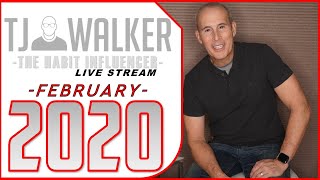
TJ Walker discusses building productive habits through practical strategies: recording 15-second daily videos, creating personal ads to reinforce healthy behaviors, and examining punctuality as a foundational habit that affects every area of life.
Chapters
Stop social media habits. All right, let's go to. Do you see yourself in the, in the camera? Yep. Is that about where I want to be? Everything look, look good. Well, let me, let me sign on to Tik Tockville. You're like Dr. Brown. You're frozen in time. What's that? I said you're like Dr. Brown. You're frozen in time. What do you mean there's fire behind you? Oh, no, the fire is not. Well, now it froze. Can you just email me a 15 second clip? That's, I mean, that's what I used for years with the, with the TV backdrop. Okay. We have no friends on Tick Tock yet, but sometimes take a few minutes. 12:51. Oh, you know, I should have brought a tissue box. Hey, Joanne. Joanne. Joanne. Yeah, well, I'm on my own. Yep. Okay, let's do it. Welcome to the Habit Influencer. I'm your host, TJ Walker. Thanks for joining me today. We are live. It is Monday, February 10, 2020. So many good news stories out there relating to habits, how to build positive habits. We'll be talking about those today. Give you a brief preview of what's going on. We're going to start off with your questions, comments, as always in our big topic A segment, the Academy Awards of habit influence. I watched the Academy Awards last night, many of you did. And I want to talk specifically about habits that relate to that whole award show in a way that you might not typically think. Also coming up today in topic B, a superhero habit. The habit of being on time. It seems like a small, almost petty thing and yet it has a tremendous impact on virtually every major sphere of life. We'll be talking about that also in topic C. This is where you're going to have control, not me. In topic C, we're going to hand over essentially controls of the show to you. We'll be showing you a couple of recent videos, produced videos, and then letting you vote on which one you prefer that will decide which ones we promote throughout YouTube, Facebook with advertising budgets. And so I want to defer to you. I don't know everything. Marceau, my colleague is very smart, but he doesn't know everything. So we're going to rely on you essentially crowdsource. Which of our videos are better, stronger that you think deserve an advertising push. All that and more. Plus top stories of the day. But first, thanks to so many of you who sent me well wishes if this is your first time here. I'm TJ and I'm at full strength today. But last Week I got ill on Wednesday. I kind of barely choked out the show in the last hour, had a cold, nothing serious, but lost my voice by Thursday. I could not speak at all Thursday or Friday. So completely out of commission. Well, thanks so many of you for sending your well wishes, your. Your kind regards for my health, your wishes for a speedy recovery. I think I'm not 100%, but I'm 95%. You may see me drink a little more warm tea today than usual and also sipping water a little. You know, it's. When you're in my line of work, it's always a little scary to lose your voice because I do in fact make my living from my voice speaking. Speaking for online shows like this, making online courses, and also delivering speeches around the world and creating online video based courses. So it is scary. But I have to tell you, I feel so much better this time than the last time I lost my voice. I lost my voice about 15 years ago. It was a very busy week. I was doing six different day long trainings in about five different cities, in different locations, on airplanes where the air is dry. Had a cold, took antihistamines to dry out your head when you have a cold. And the problem is when you're speaking, especially if you're speaking all day long, you're pushing a tremendous amount of air over your vocal cords, more so than just normal conversation. What happens is you dry out your vocal cords. And when you combine that plus the dry air of being on airplanes, plus the drying effect of the antihistamines, it turned my vocal cords basically into sawdust. And at that point I, because I'd never lost my voice in my entire life. And at that point I was over 40 years of age. So it caused me to do some real research and thought and analysis. Because at that point there was no online revenue, there was no way of making money, at least for me, through online video. So I was completely dependent on my ability to speak. So it was a scary thing thinking, what if my voice doesn't come back and I am bereft of a livelihood. It was not a pleasant thing. So at that point I, I started using a wireless microphone and speakers for every training. Probably for the next 10 years, I would use a wireless microphone and speaker even when I'm training two people. That way I never had to strain my voice because I never had to speak louder than to hit a microphone that was this close to me. Yes, it's right there. So that helped a lot. I started using throat sprays, even developed, I no longer market it or sell it, but I actually created in working with a pharmacist and doctor for a throat spray specifically for speakers, because they didn't want a throat spray with alcohol, because alcohol, if you have a sore throat, makes your throat feel better, but it also dehydrates. So I had a throat spray. I had a whole routine of drinking various liquids and teas and room temperatures and a lot of things to really protect and preserve my voice. And you know what? I have to say, I did a pretty good job because I did not lose my voice for another 15 years. Now, last week when I lost my voice again, it's never a pleasant thing, although my wife and daughter might tell you there is a silver lining to that. But it was a little less painful this time because we live in a digital world. And even if I can't make a show or a course in any one day or give off a speech one day, I now have something I didn't have 15 years ago. I have a huge, huge library of thousands of videos in more than 100 online courses that make me money 24 hours a day. Now, this is not one of these pitches for, you know, send me all your money and I'll teach you how to make easy, passive income. It's not passive. Nothing about it is easy or passive. But it is different than the world as it existed 15 years ago or 20 years ago or 30 years ago. And I do believe that one habit of successful people is they try to plan for being sick. They try to plan for a disability. They try to plan for when things are not perfect. Right now, I feel pretty much perfect as far as my health. But I do have a backup plan. In theory, I could be in a hospital bed without the ability to speak and still respond to questions from students from around the world who are in my online courses on 50 platforms. I can still write books, I can still create intellectual property and have some evidence from advertising in different places. So I feel better about even though I don't like being sick, I at least am planning. I'm planning for that rainy day. I'm planning for that sick day. And I think you, as someone who obviously aspires or you are successful when you aspire to be more successful, have to plan for that rainy day. And what's so beautiful about living in the world in 2020 is all of us can create intellectual property relatively easily. Record a video, type up a book, create an audio for a download that generates advertising revenue. I'm not in any way suggesting it's easy. Get rich quick, simple. But if you plan now, especially if you don't plan on retiring in the next five years and you create content, you create and package your expertise, then if something does happen to your health, you can't travel, you lose a limb. I hope that doesn't happen to you or happen to me. You lose ability to see or to speak, then in theory you are still going to be okay. You've prepared for that rainy day. You've prepared for the worst case scenario. So I'm very happy to be here. Thank you for indulging me. If I'm giving a speech, I always stress people don't talk about your health. No one cares about it. But since many of you are here on a daily basis and I did have an unexcused absence last week, I just wanted to share that with you. Let's say hello to our friends across various platforms. We come to you live every day on between a dozen and 20 different live platforms. So special hello to our friends. Joining us on TikTok today, I see Andyota is with us. User 7619 is with us. Andy says hi. Andy, hello. Back to you. Thanks for joining us. We have several friends joining us on Instagram and Uplive. I see James has joined us, Harry, some other people in. It looks like an Arabic language that I unfortunately can't read. But we're happy to have we have so many great friends from Egypt joining us on a daily basis as well as Dubai and the other places in the Emirates too. And we have a number of friends joining us on Facebook today. And I know that I wasn't ignoring you, but just couldn't get to all your questions and comments Thursday and Friday because of my tardiness or not tardiness because of my illness. Peggy says happy Monday. Glad you're back, Peggy. Good to be back with you as well. And Marceau is checking in. You'll see more comments from Team tj. That could be me, it could be Marceau, it could be any one of a number of other colleagues who help us out from time to time. So happy to see the Team TJ efforts going on as well. So before we hop right into what I see as the topic or topic A for today regarding the Academy Awards, I did want to spend a few minutes just talking about and answering some of your questions that have come in. This one from Cheryl. Cheryl says good morning. Tj. This is Cheryl from Charlotte. I'd like to get that course make a habit of giving effective presentations. You talk about in YouTube, but I don't know where to find it. Can you help out a fellow Charlottean? And for those of you who don't know, I do consider myself a Charlottean. That is a city in the southern part of the United States in the state of North Carolina. I moved there when I was 5 years old and many members of my family still live there and I graduated from high school there. So my formative years were spent in Charlotte. Cheryl says, by the way, I do enjoy your class as I watch them as often as I can. You seem to be the best so far and I have quite a few. Well Cheryl, thanks a lot. Regarding that specific course, I've linked to it in the Show Notes. Today I'm giving you a discount. Normally 200 bucks. These will be only $10. One is for my complete presentation skills course. Marceau has linked to it in the Show Notes. If you don't see it on the platform you're on. The easiest bet is to go to Facebook. The Facebook page. Just type in TJ Walker Personal development and you will see that on the Facebook page. Now the second course I link to is how to give effective PowerPoint presentations. Very important skill. That course goes into tremendous, tremendous depth and detail on how to deliver and create PowerPoint presentations. So I'm giving you the pass to both of those. Again, they're normally 200 bucks. Yours for about $10 today. These coupons are only good for a couple days, so I would highly recommend you check those out. By the way, this is a pretty risk free proposition. You can go to the course through the link. You can watch typically half a dozen videos, the whole video, no charge, no obligation. If you buy the course for any reason, you're not completely happy, one click and you get a full refund. You don't have to call me and track me down and ask for a refund. It's one click. It's completely automatic on this particular platform so it's a pretty risk free one. You can do the whole course. Love the course. Let 29 days go by and still get a full refund. I would hope that you not do that, but you could. It is up to you. We've got some other questions that have come in from students. This one says I finished your I believe this person's in my training course as they as a beginner in my training career, I think I need more specific techniques that could help me. So what do you recommend? Personally I believe you should think more about beginning trainers. So let me address that in more Detail. The main thing I want you to think about as a beginning trainer is to no longer think of yourself as a beginner. Think of yourself as a true expert in a particular niche. When I decided to start training people on public speaking, I went to a regular library and checked out every single book on public speaking and I organized every single principle. These days you can, regardless of the topic, let's say it's negotiation. You can probably download 500 books either free or near free on Google Books, on Amazon, and over the course of a few months, quickly read, do some speed reading, summarize, look at table of contents. You can be familiar with 500 books on negotiation. Well, at that point, you start to develop some real expertise. So that's my number one tip to you, is think narrow. Become good at one thing, then try to go to the next thing. Don't try to say, oh, I'm a trainer. I can train on anything. If you train on everything, then you train on nothing. If you are good at a little bit of everything, you'll never become specialized enough to be truly valuable in any one area. So that's my biggest piece of advice. Now this I believe it's Muhammad who's written in says, as you know, I am Egyptian. So do you believe when I do courses in my original language, is there going to be any difference regarding confidence? Well, typically, most people are most confident speaking in their native language. So by all means, if you're making online courses and if you aspire to be a trainer, I think you should do the courses in your own native language. Even if it's not as popular a language as Spanish or Chinese or English, do it in your native language. But then when you do it in other languages, remember the spoken word is different from the written word. You don't have to get every single word right. Focus on the idea, use the words that come to you. And if you occasionally mess up a word that's okay, your audience will forgive you. So Mohammed, definitely. Good luck with that. Let's check in. Oh, I see a few more comments. Peggy says hello and she's doing well and glad to see glue on the Rouch has joined us on TikTok. Always happy to see our new friends and old familiar faces on TikTok. So thanks for joining us. Regardless of whether you are watching us on Twitch, on Mixer, on YouTube, on Facebook, on Periscope, you name it. This is the one area on the Internet, the one community where we're trying to reach out to anyone and everyone who cares about building new habits building stronger habits to lead a more fulfilled life. I'm not going to tell you what habits you need for your life. What I'm here to do is to help you influence yourself on your habits that you want for for your life and not to simply randomly react to cues that Coca Cola throws at you or McDonald's throws at you or the producers of an Academy Award winning movie throw at you, which we'll be talking about in a moment. But first, let's go through a little more of the questions here. Cheyenne Munal talks about not to talk about yourself in the presentation, but how am I going to talk about my role in the presentation as well as tell a story to my team without talking about myself? Here's the key. When you're when you're talking to people and giving presentations, you want to talk about something of interest to them. Once you've established that you are talking to them about an idea that interests them and then it's fine to involve a story that involves you. It's fine to reference yourself as long as people can understand what you're talking about relates to them and you're not just saying, me, me, me, look at me, how wonderful I am, then it's perfectly fine to talk about yourself. Jocelyn Tiku writes in she's in my online course on how to improve your interview skills. Please, how do you greet a panel whom you don't have their names? I think the main thing is just to smile at everyone, look at each person, say it's a panel of five, look at each person and a slight nod. It can be intimidating being in the job interview and it's a whole panel. It can seem like, oh, I'm being grilled in a court of law or I've got a bunch of judges about to sentence me to prison. You gotta get away from that. You have to think of it as you're just having a conversation with a couple of friends, sitting there having coffee. Now, you might not be as informal and what you're saying is different, but how you talk to them, how you look at them should be the same. Now where sometimes people get into trouble is if they feel like this is the main person. And here for others, they give all their eye contact to one person. They don't do that. For all you know, the main decision maker is someone with less of a title who doesn't want to be seen as the out front person. If you're talking to a panel of 3, 4, 5, 6, 10 people, I would try to give each one more or Less equal eye contact. Just treat them like human beings and I think you'll be in better shape. Mark Helmley writes in regarding Recording Video, Please, which is better for training myself to record my videos while I am seeing the video using the selfie cam or just record it with the rear cam and see it after I finish? Mark, that is an intriguing question. I don't think anyone has ever asked me that, but it certainly merits some consideration here. I would recommend the first couple of times you do it where you see it, where it's not from the rear so that you can at least see. You're capturing your face and your eyes and your body. You're not just capturing your feet, but after that your instinct I think is exactly right. Record it so that you can't see yourself in the viewfinder and that way you don't have to get distracted. You can just focus on the camera like you're talking to one person and that is far and away the best habit for practicing effectively. Mark, good luck with your efforts there. So a lot of good questions. If I don't get to all of your questions, we do have a bit of a backlog since I was out. We will make up for it in the next couple of days or so, so don't worry. And as always you can post your questions whether you're watching on TikTok, whether you're on Instagram, Facebook, YouTube, regardless of where you are watching this show. If you want me to introduce or discuss a topic related to habits, personal development or communication, all you have to do is type it right there and we're very responsive. I always come to the show prepared and plan to give you a handful of ideas I really thought about quite deeply with respect to habits. But I always leave time for you, your concerns, the habits you wish to discuss and any questions you have. So please, please, please keep that in mind. My name is TJ Walker. This is the Habit Influencer. I'm your host. This is the program that is live every single day, Monday through Friday, other than when I'm on vacation or occasionally sick. We're here with you every single day. We're right here in the middle in our second month of the program and it's been so exciting to grow. Many of you have been with us from day one. Some of you may have just hopped on today if today's your first day. Well, thank you so much for coming by and I see that Abba, Shukula and Caleb have joined us on TikTok, so thanks so much for joining us. We're talking about habits, specific habits that we as individuals can try to control to create better lives for ourselves. So what I want to talk about today in the first big habit relates to something I was watching last night on the Academy Awards. First of all, did you like the Academy Awards? We're not going to spend a lot of time on this today, but is there a particular acceptance speech you saw you enjoyed the most? Now I have to confess, I watched the pre show leading up to the Academy awards starting around 10 till 7 Eastern time. And then I watch the first full hour of the Academy awards till 9pm Eastern. And at that point I do what I pretty much do every day. I retired to the bedroom and read books about habits for an entire hour and then went to sleep. So I missed the last two hours of the show. But if you have a particular star presenter where you enjoyed their acceptance speech the most, I would love to hear from you. To me, the number one habit that people bad habit that people have when they're giving acceptance speeches is they just get up and sort of, I wasn't expecting this. I don't have a lot of time. They waste time talking about the fact that they don't have time and they waste time with fillers stammering ums and uhs and uhs because they think they can't pause for a second. It's perfectly fine to pause. But by far the biggest sin in my view, and I don't use the word sin very often, but I will sort of tongue in cheek here is if you are an entertainer, you are a professional communicator already, you're a professional speaker of sorts. Prepare many stars take the attitude of oh, I don't want to prepare a speech, I don't want to jinx myself. Nonsense. The best acceptance speeches ever were once people prepared, they rehearsed, they thought about it and they practiced on video. And for someone who is used to performing in front of a camera, there's really no excuse to not do that, especially for a lot of these Academy Award winners. Far more people will see their acceptance speech than ever see the actual movie. So why not give people your absolute best. I see Sonya has joined us. Sonia, you're sick in bed and watching. Well, I'm sorry to hear that you're not feeling at full capacity, but I wish you a speedy recovery and I hope that we can send our well wishes to you to make you better today. If you, you can't be up and about fully productive, what better way to spend your time than Watching us. So hope you get a lot out of it. And since you're feeling ill, if you have any preference for a topic you'd like me to address today, then please, please let me know. So let's just dive in deeply right now with topic A. The Academy Awards. Of habit, influence. I watched the Academy Awards last night. A spectacular show, if you like, stars, movies, entertainment. I was struck by some things that might seem patently obvious to you, but also probably not the normal perspective you're looking at. For every half hour of the show, the Academy Awards, there's eight minutes of advertisements. Well, that's pretty standard for any TV show. What's different is the Academy Awards has such a huge, huge audience. It's typically the second largest audience or the largest audience of the year for American television and it's seen around the world. So that's what's different about it. But here's what I'm thinking. It just struck me as so odd. Let's say you started watching the Academy Awards at 5pm that's when the pre show comes on. It goes until 11 o' clock at night. That's six hours. If you're watching eight minutes of advertisements per half hour, that's 16 minutes per hour. If you add it all up, you're watching 1 hour and 36 minutes of advertisements in one evening. I hadn't really thought of it quite in those terms before, but when I grappled with raised a number of interesting questions. The other thing is so many ads are still about 30 seconds long. That means you watched 192 ads from major corporations over the course of an evening. Now, I'm not even factoring in the issue that the whole Academy Awards show is basically an advertisement for people selling movie tickets. That's a whole separate issue. But the tremendous number of ads that you watch in one evening. But let's go beyond that. According to data from 2017, the typical American still watches four hours a day of television. And if you're a millennial or someone younger, you might not watch broadcast TV, but you could be watching TikTok or YouTube videos for that long. So that's a tremendous amount. This adds up to about 64 minutes of being advertised to per day. This is all coming from major corporations. And I'm not saying corporations are bad, but corporations basically have an hour a day just to put video ads in front of us. I'm not even talking about billboard ads and online ads, radio ads. I'm not even talking about that. I'm talking about just video Exposure, which many marketers consider to be the most powerful form of influencing behavior. Now, when you add it all up, some crude math, this is roughly 365 hours a year where people are watching not TV, but TV ads. This means for two full weeks, 24 hours a day, we as human beings, at least in the Western world, on average, everyone can be a little different. On average, we're watching more than two weeks, 24 hours a day of just ad advertisements from major corporations trying to influence our behavior specifically to buy products and to buy services. Now, again, this is not even taking into account radio ads, billboard ads, bumper stickers, emails from Amazon saying, buy this. But it's just hard to imagine the sheer quantity of marketing messages we are being bombarded with. And let's not forget, we don't typically talk about it this way. Every advertisement is essentially an attempt to create a new cue in you, to create a new habit. They want a new action and a habit of buying that product regularly. Coca Cola wants you to buy Coca Cola every day. McDonald's wants you to buy a Big Mac or a shake or an apple pie or French fries every day. That is the goal. That is the explicit goal. Now, yes, occasionally there are government public service announcements designed to try to help you to have a new habit that's good for you. There are public service campaigns to get you to give up smoking, not drive drunk. But let's not kid ourselves. That's probably less than 1% of advertisements you see anywhere. Everything else is about giving our attention to corporations to try to change our behavior, to create habits that frankly, most of the time aren't good for us. They're not what we decided, and we as human beings are just giving away our attention. There's a lot of stories written these days, a lot of talk about how people give away their data too freely, give away their privacy too freely. Those are legitimate issues. But I think the far bigger problem most of us have is we're giving our attention away freely. Because when you give your attention away, you're giving power to others to put cues in front of you that will create responses in front of you. So when you're in the grocery store and you see a Budweiser, or maybe you think of yourself as classy, or you see the advertisement for that expensive import from Germany, when you see that logo, you then buy, you then take an action, and you do it in an habitual way. This is something I think does not get enough attention when the autopsy of humanity is written. And I hope that doesn't happen anytime soon. I think a crucial moment will be when society decided to basically give away weeks and weeks and weeks of their attention as individuals to other people to influence their habits and their actions. And that's what we have done slowly, gradually, but it's been a whole lot faster since the advent of a smartphone because now we're never far away from a video pre roll ad on YouTube and sometimes Facebook and every other platform and ads on every single piece of content everywhere. And believe me, I'm not bashing corporations, I like it. If Amazon sends me an email saying, hey tj, the same people who bought the the last book you liked and bought like these other two books, why don't you look at them? And sometimes I do look at those and they are similar and I do like to buy those books and I buy them and I'm happy. But Amazon is influencing my behavior. And in this case it may have worked out. But when you add up every single corporation that is bombarding our eyes and ears with advertisements, is there anything left for us as individuals? What's left for us to really piece together? What I think has to happen is there's got to be a counterbalance. We know corporations are bombarding us with ads all day long to drink more soft drinks with sugar, eat more processed fast foods to improve their bottom line. It makes us sick and die earlier, but it's helping their bottom lines. We know advertising works of any form of human behavior and influence. Advertising is the most studied of any form. You can look at every kind of psychological research study with 12 freshmen at Stanford. It's nothing compared to what Coca Cola and General Motors and McDonald's spend every year testing the effectiveness of their ads. We know advertising creates new behaviors. That's why half a trillion dollars is spent on advertising every single year. So what's the solution? We as human beings must proactively create advertisements and serve them up to ourselves. Our advertisements have to be to encouraging us to do things that are healthy for us. You know you're going to see ads telling you to eat fast food and pizza. You need an ad telling yourself, hey tj, you like eating fresh fruit. And here I am, a picture of myself eating an apple. I need an ad for that, which is something I'll be showing you later this week. I am in fact working on that. You've heard me talk for quite a while about the need to create audio advertisements for yourself in the form of selfie speak, programming, just talking to yourself in your cell phone, telling yourself what actions you want to take on a regular basis. But you can also do it with selfie pictures. Simply take a picture of yourself doing the things you want to do. If you want to encourage yourself to lift weights more, take a picture of yourself lifting weights and just put a label on it. Lift weights three times a week or daily as I do. But you have to look at that picture every day. Now, that's not something most of us do, but it's something you could do and you should do. And it is something that I now do every single day. So we're going to be spending a fair amount of time on this program really helping you figure out how to do that. Not to take some brainwashing ads that I've created because you should live like me. No, you need to create your own ads to control yourself, to live the life you want to. I can't tell you what habits you should fulfill on a daily basis. But I know know with 100% certainty you shouldn't just follow the habits that major marketers are telling you to take with the ads they're bombarding you with every single day. Because you're not going to see any ad telling you eat lots of fresh vegetables every day. There's no pot of marketing dollars to create ads to encourage you to eat lots of fresh vegetables. There's no ad out there currently that's going to tell you drink lots of water from the tap. Now, forgive me if you're from countries where the water is not safe, but in the United States and most places in Western Europe at least, tap water is so much better for you than soft drinks, colas, even bottled water. And it's so much better for the environment than bottled water. So I want you to start thinking about if you had a billion dollar budget and you can hire the most expensive advertising agency in the world to create ads, to convince you to change your behavior, to create greater market share from you, to do things like exercising daily, getting eight hours sleep, reading more, eating healthy food, producing more. If you could give a billion dollars to a marketing firm to create ads just for you, what would the ads look like? And here's the thing. Now that you have a cell phone, you actually have a billion dollar production facility, a billion dollar production studio right in the palm of your hand. You can make your own ads. You don't have to raise the billion dollars first. Create your own ads with your own audio and your own selfie pictures. That's the lesson I take away from the Academy Awards Last night. You may have taken away a completely different lesson that is. Okay, let's check in with some of our friends around on social media. Thank you for listening to me. For our big topic a Jeffrey's joined us wanted 4 Chuck has joined us on Instagram or excuse me, on TikTok. Thanks so much for being with us today. We have other friends. Looks like Sy has joined us on Facebook today. Cy, one of our fellow trainer and a colleague and also someone who helps out us here at Media Training Worldwide and everything we're doing here at the Habit Influencer. Glad you're with us in India today, joining us live in prime time there. So thanks so much for being a part of that. We've got a lot of top news stories today as well that I wanted to discuss. Some of them that are a little bit contrarian. And I do fancy myself as a bit of a contrarian from time to time. Not just to be annoying, but it does pay to occasionally look at other perspectives and to really see things from all perspectives. So I wanted to skip right now to our in the News segment because I had a number of stories popping up. This one is courtesy of CNN and it talks about the habits of people who attend shows and cell phones. Something that's now cropping up across the country is that fans and audience members are being asked to deposit their cell phones before entering a venue. So many comedians are sick and tired of people recording 10 seconds, quoting something out of context, perhaps ruining their career. The other problem is that so many performers find it highly distracting to see so many clicks and video images. And it's like everyone is part of a production crew not actually paying attention to the reporter. Now I've linked to this story. You can see it yourself. But here's a quote from Madonna. Looking into the audience and not seeing iPhones and camera flashings, but instead eyes, smiles and happy faces. That's what she says she wants to see. People who ignore my request are not allowing paying fans to enjoy the show completely, but also show a lack of respect and consideration for my wishes. Here's the part I like. If you can't live without your phone for two hours, this experience is not for you. Now that's from Madonna. Now there is a school of thought that says, hey, if you just spent 100, 205, maybe $1,000 for a ticket to a Madonna concert, you got the right to do whatever you want. And that's certainly how some people feel. Traditionally you would see, whether it's a Broadway show or a concert, all kinds of signs saying no recording allowed. You're violating copyright. It's against the law. Other than the Grateful Dead, most performers strictly prohibit it. That's changed a lot in the last few years. Here's my rule of thumb. If you're going to a recital of small children, kindergarteners, sixth grade, little bigger children, and it's purely family, and, you know, a lot of people there want to capture the video to show to grandma and aunts and uncles in other cities, and nobody paid more than five bucks for the ticket, then I think it's probably perfectly reasonable to pull out your cell phone and capture video, because it's a family event and it's a great way of sharing with the family. I don't think that's rude. And not coincidentally, I do that myself. People have an amazing capacity to rationalize what they do as being normal and what other people do as rude. I do think it is insanely rude and a horrible habit to pull out a cell phone and record video for any kind of professional event where there are professional actors, professional comedians, and to start recording it, it's just, to me, the height of obnoxiousness. If someone's sitting next to me and I'm trying to watch a Broadway show and they're doing this, it's attracting my attention. I can't look at the show and all these lights and other things going on. I find it obnoxious behavior. I do find it interesting now when I go to venues like the Comedy Cellar, one of the premier comedy clubs of the world here in New York City, they now demand that you put your cell phone in a pouch and turn your phone off before going in. And that way you're not even tempted. But just a couple of years ago, I was in a comedy club and I had some clients, and one of them had never been to a comedy club before, and he's pulling out his cell phone, taking pictures and recording video. And I thought the manager was going to ask the entire table and I was a part of it to leave. It just struck me as an extraordinarily rude habit. What are your habits when it comes to the appropriateness of pulling out a cell phone and capturing video? Now, if there's no one else around, I'm pulling out my cell phone all the time because I make short habit tips videos for TikTok and Instagram and Snapchat all the other places. But I'm not doing this in the middle of a show. Certainly if I'm in a Broadway show, that's considered the height of obnoxiousness. But even there There are situations where people feel entitled to do it. I took my family to the Radio City musical Christmas show two Christmases ago, and a tremendous number of people felt perfectly entitled to pull their cell phones out, obstruct my view, distract everyone, lights, holding it above their head, and just struck me as profoundly obnoxious behavior and a poor habit. Again, if someone's paying $5, it's a free event in a local neighborhood for neighborhood kids, that's fine. But when you're in a huge Broadway venue or a venue where people are paying more than $100 a ticket, it is profoundly obnoxious. What's your view on this? Some of you may say, okay, Boomer, you just sound like an old grumpy man. Okay, so be it. But is there any behavior that you find a habit that is simply unacceptable that is comparable to this? I would like to know. So join in on the conversation. You can type your comments in on TikTok, on Instagram, Facebook, YouTube. Wherever we see you, we would love to hear from you. I'm T.J. walker. We'll be back in just one minute. And TikTok friends, we're going to hold on with you, but we'll be back in a minute. So far, so good. Audio is super crispy. I love it. Okay, any. Have any comments come in that I've not addressed? Just Peggy, about not watching award shows anymore. That's about it. Okay. And I just realized I have other student mail that I forgot to print out, so I'm going to get that at the top of the hour. All right, so I'll do one more prepared segment, then we'll go to the top of the hour, then we'll show the videos coming up. Okay, let me know when you're ready. Hang on. Let me just see what the title of this is. Okay, I'm ready. One, two, three. You're back. Welcome back to the Habit Influencer. I'm TJ Walker. We're going to head into topic B right now. Big prepared second topic of the day. Are you ready for a superhero habit that will have a positive impact on every sphere of life? Now, this habit I'm going to talk about may seem mundane, it may seem trivial. It might be trivial to you, but it's not trivial to other people. I'm talking about the habit of showing up on time. Now, I realize I can be guilty here of some sort of cultural insensitivities. Other cultures don't tend to care about time as much. And for most of human history, we didn't really have a sense of time other than it's daytime and it's nighttime. It's only been the last 500 years or so where clocks and watches have been so commonplace that the idea of showing up at 9am Set agreed upon time became a thing. For most of human history, that just wasn't a thing. Daylight, nighttime, that was about it. Well, things have changed. Woody Allen once famously said, 90% of success is simply showing up. And I think what he meant by that also is showing up on time. I put timeliness in the category of a superhero habit because when people have it, it helps every other part of their life. If you don't have it, doesn't mean you're destined for failure. But it is a habit that has a negative trickle effect in so many other aspects of life. And if you're someone who always shows up on time, you may be thinking, well, T.J. this is obvious. Yes, it bugs me too. If you're someone who is habitually late, you might be thinking, tj, he's just sounding cranky today. Maybe the cable guy was late for him and he's going on a rant. No, no one's been late for me lately. I'm not saying this out of personal irritation, but I do want to talk about this, because not all habits are equal. Some habits are, as the saying goes, more equal than others, which really just means some habits are more important than others because they have an impact on so many other spheres in your life. When you show up on time for someone, you're telling that person, I respect your time. I respect you. I respect you as a human being. And whether you realize it or not, when you don't show up on time, you are saying the opposite. You're saying, my time is more important than your time. It's human nature to take offense to that. Why should anyone's time be more important than your time? So it really affects the whole sphere of human relations. Relations with family, with friends, romantic partners, partners. It also has a tremendous impact on your professional life, your business life. I can tell you personally when I've been in a position to interview applicants for my company and they showed up late, just weren't even considered. Maybe if they said, look, I came an hour early and the train was stopped in times square for 45 minutes. There was a bomb threat. I apologize. I'm for being late. I'm always early. If someone said something like that, I'd make an exception. But anytime I've had people show up late to job interviews, there's never an explanation other than, oh, sorry, a lot of traffic today. When has there ever not been a lot of traffic unless you live in a tiny one horse town? So showing up on top of is a habit that has a tremendous impact for most people's careers. It also has a tremendous impact on their own finances. I mean, if you show up 20 minutes before your plane takes off at the airport and you've got to get to Singapore, they're not going to let you on the plane. If it's a domestic flight, you've got to show up 30 minutes beforehand. If it's an international flight, certainly an hour, sometimes two or three hours in advance. And you can give excuses till you're blue in the face. You're not getting on that plane. And chances are you have to buy another ticket at full price. So being late can cost you thousands of dollars and if your employer is paying for it, could even be a factor in being fun. So being late can have a dramatic impact on your finances. It can also have a tremendous impact on the sphere of life related to leisure and pleasure and enjoyment. If you show up to a Broadway play five minutes late, many times they just don't let you in until the second act. You've missed perhaps 20%, maybe even 50% of the whole show. Not hurting the performers. They're not being distracted. Now I'm someone who I have plenty of flaws, ladies and gentlemen. I'm certainly not perfect. But I am someone where pretty much my whole life it has pained me to be late for anyone. I'm typically going to be five minutes early anywhere. If I force myself to be late, it means I'll show up on time again. Not saying I'm a perfect person, but it causes me anxiety the way almost nothing else in the world causes anxiety. If I think I'm going to be late for someone, to me it is a habit that just reeks of profound rudeness because it shows contempt for other people's time. How do you view this? How do you think showing up on time versus being late has an impact on your life? I can tell you when you consistently show up on time, virtually nothing bad ever happens to you. Okay? Occasionally you have to wait for someone else and then you can occupy yourself by reading an ebook on your cell phone, catching up on some other work, texting a friend. Every once in a while I've shown up at a party and people are still preparing and building things looking at you. Why did you show up on time? But other than that, the benefits far outweigh the negatives when it comes to showing up on time. Look at your own physical health. If you specifically are always late to an exercise class and you don't get in or you've at least missed half the exercise class, it can have an impact on your ability to exercise. If you are a creator and you work with other collaborators and you're always late, they may create without you. They may kick you out of the band for that matter. So it can impede your ability to create as well. So I just. I can't think of a single sphere of life whether it is your health. If you're always late getting to bed, if you're always late getting to exercise class, it impedes your health. If you're late to planes and to job interviews, it destroys your whole career, your ability to make money as well. It also can impede your ability to create because other people don't want to create with you. It can impede your social relations because people don't want to wait for you and think of you as being late. And it can impede your own ability to enjoy relaxation and entertainment because you can't get to a Broadway show or an opera or any live theater time. Every single sphere of life can be affected negatively by one habit of being late. One habit of being on time can solve all those things. Now, I do realize there are some people who have different wiring in their brain. I won't call it a deficiency. Let's just say it's something different. There are certain types of ADHD where the individual, try as they may, simply can't get there on time and may need specific drugs for it. I'm not advocating, I'm not a medical doctor. I'm not telling you to go get drugs. But I realize there are exceptions to the rule. But here's what I found. With 99% of the people I've ever dealt with who had a habit of being late. For me, they could figure out how to be on time for anything really important to them. Had a good friend many years ago, and this person was always late. Any kind of dinner, Saturday night, any kind of event, any party, anything. Late, late, late, late, late. But she was the on air newscaster at 7:25am every day on the local ABC affiliate in the town where I lived. It was the other side of town. She was never late once for 7:25 on the air. So she clearly had the ability to keep the habit of being on time when it was important to her. And my own analysis that 99% of people who are late and who are habitually late do have that power. They have simply decided that they're not going to have that habit. They instead are going to embrace the habit of showing up whenever they want to, of being late for other people. So if you're trying to figure out how to improve your life, how to use a little bit of energy to have positive ripple effects in every other aspect of your life, I, I think a great place to start is to simply show up on time. I'm T.J. walker. I appreciate your time. We try to start this show on time every single day. 1pm Eastern time, every now and then. We do have a technical difficulty and try as we may, it's a few minutes after, but for the most part, we show up on time and we finish on time at 3pm Because I want to respect your time. Your time is valuable. There are other things you could be doing with your time right now. There's other live shows you could watch, there are other videos you can watch, there's books you could be reading. Now, I respect your time, so I don't want to keep you waiting and I don't want to disrespect you and I appreciate you respecting me by showing. And by the way, if you can't show up at 1 o', clock, that's okay. You're welcome to come in anytime, whether it's 10 after the hour, 30 minutes past the hour, or if you join us for the second hour, quick preview of what's coming up at hour two. Something a little different. Today. I'm going to ask you to do my own focus group research. I'm going to show you two of our most recent videos produced by my colleague Marcel. These are the videos that we put out on YouTube, Facebook. They have more video images, graphics, a little more music, and we're trying to figure out how to grow this whole audience of people who care about building good habits. So we are going to be advertising on Facebook and YouTube specific videos. But the thing is, I don't know which one will be better than the other one. So when we come back from the break, I'll be showing you two different videos and then I want to hear from you. I want you to vote on which video you think is better, which one would be more popular, which one should we spend advertising dollars on promoting to the rest of the world who've never heard about me or heard about this show. So you're going to have a very influential vote. So all that and more in our hour two. We'll be back at three minutes past the hour. And our TikTok friends, if you could just stay with me, I'll be back and we'll talk. Sam. Sa. Sam. Welcome back to the Habit Influencer. This is hour two. We are live. It is Monday, February 10th, 2020. Thanks so much for joining us. A couple more emails came in this from Constant. He is one of my students in my leadership course, my online course on leadership. He's asking for tips on video taping himself. What are the best habits when it comes to videotaping yourself? Would you please recommend best techniques on videotaping myself? What hardware, software and methods work the best so that you can have a good video for self evaluation and presenting to others. My biggest recommendation on hardware is whatever camera you have around you, someone wants to be a writer. You don't spend a lot of time talking about, should I use this word processor, should I use this level, this script, this font? You just need to write. You need to write a lot. You need to write daily if you want to be a great writer. If you want to be a great speaker, you have to get into the habit of speaking every day. Now, the easiest way to really refine your speaking. Some of you have heard me talk about this in the last couple of weeks. Just give one mini speech every single day. The easiest way, a 15 second video on TikTok and then you can post the same video on Instagram, Facebook, Snapchat, other social media. I mean, that's what I do every day. I spend 15 seconds, I do it in one take, I record it, and I might not even look at the whole thing, but if I can tell I delivered it the way I want, I then quickly, in less than five minutes, upload it to 10 different platforms. It's very hard to get rusty when it comes to your public speaking if you're giving a speech every day, seen by thousands. And it's not that I have the largest, most populous audience in the world, but if you do a video daily and you're posting it on 10 platforms, it only takes one or two of them to take off and you're going to reach more than a thousand, often more than five or even 10,000 in a single day. And if I do it, you can do it as well. So, Constantin, that's my number one recommendation, any camera. Now, if you're going to practice a particular speech, here's something I'm using right now, today. And forgive me our friends on TikTok, but I want to show everyone what, what I'm Using this is a little tripod. It's just my cell phone on a tripod. And by using a tripod like that for the cell phone, if I wanted to practice a speech, I could do it and I wouldn't have to hold it. You want your hands free when you're practicing your speech. That way you can get your gestures down, not be constrained. And that's what I think the best practice is when it comes to software. Again, I just don't think it matters what whatever software is on your phone to record the video, record that you're using an iPad or tablet, use that. If you are using any kind of a webcam, use that. In my opinion, people spend way too much time thinking about the hardware and the software. There's one piece of software that's most important, your own brain, your own mouth, focus on that. The other stuff just doesn't really matter. If you have to send a really important message to a client or for that matter, a family member, and you're right, you're not calling them or meeting them face to face. You could send an email, you could send a fax. I guess if your client still uses faxes. I don't. You could send a text, you could send a message on Facebook. It's kind of whatever they like best and they're used to. But it's not worth spending a lot of time thinking about the technology of texting versus email. It's more about what's convenient for you, what will help get the message across as quickly as possible. So, Constantine, my main bit of advice is what's important is to speak frequently, to watch yourself, and to get to the point where you know how you're coming across. You know, some of you have been nice enough to say, oh, T.J. you're so fluent and articulate and wonderful. There's nothing I'm doing on this show that you can't do. The only advantage I have is I've spoken for thousands of hours on camera and on video, and I've watched enough of it to know exactly how I'm coming across. Does it mean I'm perfect? Is there nothing out? There's things I would change. I still blink too much. My eyes are light sensitive. There's nothing I can do about it. It's not because I'm nervous, but when I'm speaking to you here, there's not an ounce of self consciousness because I already know how I'm coming across. I know that I'm coming across the best I can, the way I want to So I don't have to worry about, oh, should I move my hand here? Where do I look? Or am I standing up the right. I don't have to think about any of that because I already know exactly how I'm coming across and I'm convinced that this is the best I can do. Doesn't mean everybody's going to love every minute of it, but it does mean I'm coming across the best I can. Therefore, I don't have to get in the habit of being nervous or second guessing myself. I'm already in the habit of being completely self assured. Which, Konstantin, is where you'll be if you practice on video enough. But also, don't just practice these days, share your ideas with the world. You can do it so easily on social media. There's simply no reason, I think, for any serious professional person not to speak to at least a thousand people a day. You can by posting videos on just a few sites. Even if you don't want to be a public speaker, even if you don't think of yourself as a big ego or a big TV presence, there's no reason why you shouldn't talk to a thousand of your prospects and customers every single day. And you can do it for free online. That's what I think the best habit is. Thanks for writing your question. Now in a minute we're going to do something a little different. We're going to sort of have a live focus group here. Some of you may only know me through this live show where it's relatively glitz free. You see a little bit of a ticker down here and although my backdrop is frozen again, it's a very simple set. This is not a fancy, fancy show. But others of you know that every single day, seven days a week, I post a new longer video on YouTube and Facebook and other social media outlets. These videos are typically seven to ten minutes long. Well, here's where I need your help. What I want to do, best practice of people who are building social media followings is is to what they call boost certain videos. You promote the ones you think are the best. Gary Vaynerchuk does this. A lot of the top media stars in the world do this. It's considered a best practice. Here's the thing though. I don't completely know what the best video is. My colleague Marceau doesn't know what the best video is. So we want you to vote. We're going to show you now two of my most recent recorded video segments that have been produced and spiced up A little. And we're going to ask you to vote. Which one do you prefer? Which one do you think is better? And then we're going to spend advertising dollars to promote the one in places like YouTube and Facebook. The other one, it'll still be out there, people can watch it, but it will just be sort of up to its own for organic reach. Organic meaning no one's spending money advertising behind it. So that's what we're going to do. Marceau, what is the first video we're going to show people? The first video is Top 10 Habits in the Workplace. Top 10 Bad Habits in the workplace. Yeah. So we're going to place this on while you're watching it. If you're on Facebook or any other forum that allows you to just do a smiley face or a thumbs up or any kind of positive message, go ahead and note that we'll try to keep a running count. We're going to then show the second video and then we're going to ask you to really weigh in on which one you prefer. And you may like them both. That's nice, but someone's got to make a decision. And I'm going to ask you to really weigh in on which one you prefer and ask why? Because I can't get this right the first time. I mean, the real beauty of online video is you can experiment in a lot of different ways and you can see what works. Gary Vaynerchuk famously says that it's a false dichotomy to worry about quantity versus quantity of your videos versus quality. He points out, and I agree, the more quantity you have, the easier it is to spot like the occasional videos and great quality, those you can boost. And those can be your role models for future videos. So that's what we're going to do right here. So while you're watching this again, realize this part is recorded, recorded in advance. But I'm right here live watching your feedback and I'll be coming back to you live. And so Marceau will play the first one, then come back to me. We'll talk about that briefly and then we'll go to the second one. Let's go ahead and roll. Let's go ahead and roll the tape. I saw an interesting article. I wanted to share with you some of the tidbits from this. It's a story that looks at the top 10 bad habits, a list of the 20 worst habits to have in the workplace. Some of these are obvious that I think you would know not to do them. But I just Wanted to share with you. These were compiled by a researcher. I'll share with you a link and sorry. It is narrowed down to the top 10 things, negative habits that get people into trouble in the workforce. In 10th place, procrastinating. If you don't do your work on time, you're waiting till the last minute. That is a serious problem. It impairs. Gives people the sense that you have impaired judgment. Procrastination is a bad one. Number nine, neglecting your body language. There are some people in the workforce where a boss, a colleague wants to talk to them and they're not looking them in the eye. Sad to say, but that can be a deal killer for your career right there. Not having proper body language. Now, this is culturally contextual. Some of you are watching from the Middle east today, Japan, where their cultural norms are different, especially as it relates to men and women in the workplace. So please be aware that not everything I say is going to be perfect advice for everyone in every culture. You have to look at it through the lens of your own culture. But there are body language norms absolutely everywhere. Number seven. Excuse me. Number eight, being unhygienic. Let's face it, if you work from home as I do, you can have coffee stain on your shirt. Not that I ever would. No one will notice other than your spouse. If you want to skip a day or two of showering, maybe no one notices you. Especially if you work from home as a freelancer and you don't have any family. But when you're working with other people, it's really noticeable. And if you're in an office with 20 people, one or two of them will have an extraordinarily sensitive sense of smell. So you may have cats, you may have a certain cologne or perfume you think is wonderful and it's making other people sick. By the way, this is not on the list, but I do think it's important. Leave the colognes, the perfumes, the aftershaves for another time after work. Your social life in the workplace. The odds are simply too high that somebody has a high sensitivity to smell or might actually be allergic to your smell. Complaining. It's human nature to complain. I complain. I even complain about complainers. But it is very much a negative in the workplace. Too much of it just makes you. It brings you down. Number six on the list, making a lot of noise. People have great variations as far as what's acceptable levels of noise for them. Some people can't work or think if it's a noisy environment. So try to minimize your noise. Number four, being prepared. These are the top 10, 10 negative habits that have a bad impact on people's careers in the workplace. Being unprepared. Now this obviously goes hand in hand with procrastination. If you procrastinate enough, typically you won't be prepared. Number three, going into work when you're sick. Now I can relate to this because I'm someone who likes to pride themselves. I never get sick. Sometimes that pride can get in the way of other people's health. Because if you want to tough it out and work from home and still work, fine, you're not hurting anyone. But if you go to a workplace and you're contagious and you make someone sick and they take it home to their family, now their kids and family are sick, they're going to really resent that. They're going to think that you are selfish and that you used poor judgment. Number two, dressing unprofessionally. Again, if you work from home, you can wear a bathing suit, flip flops, a tank top, nobody cares. And if you're doing meetings through Skype, video or Zoom, or you're doing live broadcasts like this, you can wear whatever you want from the waist down. Now today I'm wearing warm up pants and tennis shoes. But there are some days, certainly when it's warm weather, I'm just wearing a bathing suit. I wouldn't show up to a client's office or a place of work in a bathing suit, but I can do that working from home. Realize the difference between work and home. And when offices say they're casual, quite often that means something highly, highly specific of no jeans or cutoffs or T shirts. It can mean professional style khakis or something to wear. And shirts, long sleeve with buttons quite often is what business casual means in many organizations. It doesn't mean come in a tank top or flip flop. So please keep in mind it's very difficult to be punished in the workplace for overdressing a little bit. Now if everyone is completely relaxed, it's a high tech industry and people are with I saw an interesting article. I wanted to share with you some of the tidbits from this. It's a story that looks at the top 10 bad habits. Excuse me, a list of the 20 worst habits to have in the workplace. Some of these are obvious that I think you would know not to do them, but I just want. The type. The title of the second video is okay, the title of the second video is practicing your habits every day. Practicing your habits every single day. So this is a second video. I want to know most specifically, which one do you think is better between this one and the previous one, let me know. Also, if you want to know anything you like and don't like, share with that. And by the way, if you haven't already either liked my Facebook page or subscribed to my YouTube channel, preferably Bo, please do so. We can have more and more reach, more people joining us every day on the live show, the more subscribers we have on YouTube and the more followers we have on the Facebook page. So regardless of what other platform you're on, happier on that platform, Happy our friends are with us on TikTok. But please at some point subscribe to the YouTube channel as well as liking the Facebook page. Now let's go into video two. The easiest way, the least amount of time to refine your public speaking skills is to give one speech every day. Wait a minute tj. I just said I want to spend less time speaking. Whoop. Hear me out. Give one speech a day and make it a 15 second speech. That's right, make it a 15 second speech. I do it every now. I also talk for two hours every day and sometimes give keynotes and other things too. But I give one or so 15 second speech every day to my friends. How long does this talk and my friends on. Okay, and how many other comments do we have? And can anyone like put a like or a heart or a thumbs up as the video is playing or they is not resonating? You have to go to your Facebook and, and go to your Facebook and like comment or like it or something like that. But make the comment in the, make it, just comment in the chat and just say which one they like is the first one. The second. Tell yourself in advance this is lie. You don't have to do it lie, but tell yourself it is lie. No do overs. You're going to speak for 15 seconds. Because in real life, at Toastmasters, at a business, at a convention, at trade association, if you're giving a speech and you're there in front of people, there's no do overs. You're there. You have to speak. If you make a mistake, you have to keep going. I would recommend you build on that habit of just continuing. You make a little mistake, a blunder, just keep going. I have mistakes frequently in my 15 second speeches. Nobody notices, nobody cares. Alright? If I stumble horribly, I say the wrong thing in the first five seconds, I hit delete and I'll do it over. But 95% of the time when I make a daily video for Instagram, for Twitter, for TikTok. I do it in one take. Here's what this is doing. It's forcing me to get comfortable speaking. To get comfortable speaking knowing other people could see me. And indeed typically several thousand people around the world on half a dozen platforms see each 15 second video. So I know every single day I'm going to speak to at least several thousand people. That doesn't include the people on this broadcast today. When you do something every day, you don't get as nervous. People who play tennis every single day, all things being equal, are better than people who play tennis once every six months. It's hard to be great at anything if you only do it once a year. Once every six months. And unfortunately for many business executives, political leaders, because they don't like speaking, they don't actively seek out speaking opportunities. So they're only doing it once every six months, once a year. And their skills atrophy. That's what you don't want. I understand you're busy, you have responsibilities, family commute, meetings you have to attend. But you have 15 seconds a day. I guarantee you, if it's important to you, to keep your skills honed to improve, improve your public speaking skills, make sure they grow rather than shrink. Do the 15 second solution. The other great challenge is it forces you to think it's actually easier to do a one minute video than it is a 15 second speech. 15 seconds. There's no room for fluff. I don't mean to suggest you should edit it, write out a script and use a teleprompter. I want you to get into the habit of just speaking one idea. 15 seconds. Am I saying everything has to be superficial and everything sad? But no. I obviously believe in going in depth. I'm here with you every single day for two hours. So I love the ability to go into detail, to go into depth. But if you're looking for the quickest, easiest, fastest way to keep your speaking skills improving constantly, do the 15 second solution. A simple 15 second video that you post on TikTok and all other social. You can even post it on YouTube as well and you'll get more feedback from people responding to your speaking. You want to be a better cook? Cook. The best cooks in the world don't cook once or twice a year. They cook every day. Many of them cook every meal. If you want to be great at writing, you don't write once a year. Great writers, whether you love Stephen King, whether you love Shakespeare, they wrote every single Day. Stephen King still does anything you do daily, you're likely to get better at. And it simply doesn't take that long. Now, if you want to take it up a notch, one suggestion I do have is go live. You see me, you hear me? Now, it may be on a video on demand, but this is live when I'm doing it. There are no do overs. I'm not hitting delete and editing out things. This is live. I'm thinking and speaking to you at the same time. That is a great practice when people are nervous. If six months go by and you haven't given a speech, if you stand up and you try to think, what happens is you're thinking, oh no, everybody's looking at me. What was I going to say? I forgot what I'm going to say. I should have memorized it. Where's my script? That's the normal human inclination. If you speak infrequently, if you speak often enough, you can think and talk at the very same time and feel in control and feel relaxed and feel as comfortable as when you're having a conversation with your best friend. So option two for how you can quickly, easily practice public speaking. And in the least amount of time, preferably once a day, but nothing else, once a week, hold your cell phone up and go live on some platform. Could be TikTok, could be Facebook, could be YouTube. But you can speak live on so many platforms and you may only have one person watching. Okay, but save the video and people can watch it on demand. That is speaking. And it's a type of public speaking because people could be watching you all over the world. And doing that some ways could be easier than the 15 second video. If you're worried about the time constraint. If you're going live, could be 15 seconds, although that's a bit short. Could be two minutes, could be five minutes. You could go for two hours to watch. I do every day. The point is, put something on your calendar. Could be noon on Wednesday. Every week you're gonna do a Facebook Live where you speak about either a hobby of yours or your area of expertise in your profession. Do one or the other. If you do that, you will improve your public speaking skills. Even if you don't get booked to speak at the Kiwanis Club or anyplace else. Keep your skills improving. I'm TJ Walker. That was segment B for today. Thanks so much, Roger, for your questions. The easiest way, the least amount of time to refine your public speaking skills is to give one speech every day. Wait A minute. Tj, I just said I want to spend less time speaking. Oop, hear me out. Give one speech a day and make it a 15 second speech. That's right, make it a 15 second speech. I do it every now. I also talk for two hours every day and sometimes give keynotes and other things. From someone with a little distance. So that's why I would like to know now, which of those two videos do you prefer? And Marceau, if we can just type up the titles again and let people know. So just type in as Team tj, which ones they can vote on because we want to know, what do you like, what do you not like? And you get to decide, not me, not Marceau. You get to decide which one is better. We will then take money from our advertising budget and use that to promote the one you select, the one that doesn't make the cut. Well, we hope it has a nice long, prosperous life on YouTube and Facebook and people still find it, but we won't be spending hard advertising dollars on it. And by the way, this is a habit I would recommend that you do with your own creative ventures, get feedback from people. And it's often nice to say, what do you prefer? Do like an AB test. Do you like this one better or this better? And in fact, when we do advertise this, we will advertise this against another one and see which one does better. We'll probably get your input on that as well. So let's see if we have any feedback yet. We have a number ofFRIENDS on YouTube. Some of you have asked questions about other topics. We will be coming to those. But Marceau, do we have any comments on the videos we just played? And we're going to come to your other questions too that relate to habits, communication and personal development. While you're thinking of these, I will go to some of the other questions. But again, give us some real thought as to which one of these videos you think is better and more worthy of promoting with advertising dollars. Let's hop in now with some of the other questions. So Alpish writes, oh, please answer, sir. How do you become like you, I mean, a great motivational speaker. Well, Alpish, thank you. Thank you very much. I do appreciate that. Easiest way is to just start doing it today, start speaking today, create a YouTube video today, get feedback, do a video for TikTok today and get feedback. By the way, motivational speaking is a, is a particular genre. People often think of Zig Ziglar, Anthony Robbins, people like the great Les Brown motivational speakers I happen to think that any speaker should be a motivational speaker in the sense you're always trying to motivate your audience to do something, make a purchase, wash your hands more. You're always trying to motivate your audience to do something. But if you're talking about the specific category of you're up on a stage and you're giving a keynote speech and motivational speak, that is a particular genre. It is something I do occasionally. I do have an entire online course on how to be a motivational speaker. You can go to my website Media trainingworldwide, type it in. Or you go to platform like Udemy letter u d E-M-Y.com and type in motivational speaker or speaking plus my name and you'll see my course there. And then you'll have a tremendous amount of information, insights, tips and techniques on how to help you become a motivational speaker. And whether you go to that course or you you go to my complete communication skills course or my 2020 public speaking course, I share it all. I give you 30 hours. I tell you absolutely everything I've learned in my entire speaking career over the last 35 years. So I hold nothing back. And none of these things are particularly difficult. The hard part is putting them all together and seeing the interconnections. But if you've ever had one interesting conversation with even one friend your entire life, you already have all the skills and habits you need to be a great motivational speaker. You just have to learn how to reconfigure it in certain ways. The courses will help, but thank you so much for your kind comments. Sonya writes in I hate going out with friends and seeing pictures of myself on Facebook the next day when I didn't even know anyone was taking pictures. I think you're talking about bad habits. People taking pictures of shows is one thing, but people taking your picture and posting it is something that annoys a lot of people. And it's come up more and more. There was a story in the New York Times just last week about this very practice. Now, I'm somewhat atypical. If someone takes my picture and posts it, I'm saying, oh, thank you. I've got a big ego, I guess. But for a lot of people it's a violation of protocol and a violation of privacy. You shouldn't have to expect other people are going to take pictures of you. So Sonya continuing My sister should really watch your show today. I've spent my entire life trying to make her understand that being late is Rude. Okay. It is especially annoying with the closest family, family members, family spouses, brothers, sisters, when they make you wait for them. And this is one of these things. If you're someone who's always late, I guess you don't realize it. This doesn't occur to you because life is easy for you. You're never waiting for anyone in that sense. But also, as I talked about it can have negative implications on every sphere of your life. So Sonia, please send her a segment on this show. We'll probably pull out of this show a package segment on being on time. And Marceau, let's make a note of that. And that will be one. Once it's up, Sonya, you can send it to your sister. And I think we had a number of comments on YouTube today that I didn't get to. On YouTube. I thought I, I saw some. This was on Homeless. Can I ask a question? But he never actually asked it. Okay, I guess that is the question. Can I ask a question? Well, absolutely, you can ask questions. And you can ask questions on TikTok as well. I see that Beth Bach Hopp has written Happy Monday. Thank you for all your positive words. So Beth, thanks so much. It means a lot to I think any host who's doing a live show to get feedback from someone like you just saying hello. It means a lot to us. Not everyone can start off a show live on the BBC and CNN and have a guaranteed 10 million audience. That's hard to do. So when you see people starting off something new in social media, live, streaming media, anywhere, if you like their show, if you like what they're doing, if you like what they stand for, then by all means please share with them feedback and let them say hello. So Beth, thank you so much for your kind words there. We've got a lot more interesting topics coming up, more things I want to share with you in the news. This next one is a bit of a contrarian pitch and this comes from Thrive Global. You've heard me reference this website. I think it is an excellent website founded by Arianna Huffington. This is what she went to after the Huffington Post. And I've linked to this in the show notes. It's entitled why you should not adopt successful people's routine morning routines. A bit contrarian. So they talk about how if you search morning routines, you end up with hundreds of millions of results. Certainly Tim Ferriss has mind that pretty well, but so have many, many other people and they're all about how successful people start their day, how billionaires start their day. And some of them are good tips. But here's what the author said. This is an author, Naomi Pham, and she's a freelance writer for Thrive Global. She says, quote, I've tried it all. Success driven morning habits. Getting up early, doing meditations, listening to motivational videos, reading books, writing journals, etc. For a while it worked. I became more energetic, focused, alert. I could perform tasks more productively than ever before. But then the stress kicks in. I felt pressured and reluctant to wake up at 6am every day only to find myself caught up in a hamster wheel of tasks. So one day I decided to take a break. I woke up without an alarm clock. I got a full eight hours of sleep. I didn't dive into listening to motivational videos right after wake up waking up. I didn't free write for half an hour before having breakfast. I didn't try to squeeze any of the so called productivity boosting activities in the first hour of my day. Instead, I indulged myself with a satisfying breakfast. Then I remained at the dinner table for the next 30 minutes or so, waiting for the sun to rise while enjoying a steaming cup of coffee. A stream of calming and fulfilling air rushed through my entire body. I had never felt more alive and peaceful. No stress, no hurry. I simply enjoyed my morning. The rest of the day progressed in that manner, calm and slow. To my astonishment, I managed to accomplish loads of things. So important lesson here, and I've tried to cover this on this show as well, is it's fine to learn what other successful people do and experiment. But ultimately you have to pick routines that help you. You have to pick habits that make you happier, that make you more fulfilled. I guess Jack Dorsey's doing okay. He's a billionaire. He's the CEO. CEO of the Square and Twitter. Life seems to be pretty good. But he gets up at 4am and he only eats one meal a day. I would go crazy if I did that. My guess is the vast majority of you would go crazy if you tried to do that too. So here are the points the author takes what works for others may not work for you. Do you dress the same as Bill Gates or Steve Jobs do? Then why copy their morning routines? You probably don't dress like that them. None of us are the same. We grew up in different environments, live different kinds of lives, have different hobbies, lifestyles, likes and dislikes. Great point point number two. And this is important. This is important in everything I stress as well. You will run out of steam eventually. Successful people are highly disciplined individuals who spent years shaping strong habits and personalities. Anthony Trollope was able to write from 5am to 8am before heading to work because it's what he's been doing for 30 years. If you just plunge yourself into a similar morning routine, you won't be able to keep up with the demand and soon run out of steam. Longevity, sustainability. Part of what I look for in every single new habit that I want to acquire for myself or that I recommend for others is is this sustainable? That's the problem, I think with the Paleo diet, even the Tim Ferriss avoid white diet. The Atkins diet is from everything I've seen testing on myself and from other people and clinical studies, they're simply not sustainable. You might be able to do it for a month, six months, maybe a year. But if you're trying to do Atkins or Paleo and it's two and a half years and now you're at an Italian restaurant celebrating something with family and friends and it's a Tuesday night and the most extravagant, wonderful, delicious smelling garlic bread with butter is piping hot, fresh, put right in front of you, you're not going to be able to say no to what? I only do meat and Paleo and it's not my cheat day. It's just not going to happen again. You can do it for the first month, maybe for six months. I lasted six months on Atkins, but that's why it's not an effective habit. Long run, it's not sustainable. As this author points out, you will run out of steam. Number three, you don't want your life to be too rigid. A lot of successful people build their morning routines around a long list of tasks. Reading, checking emails, writing, going for a job, etc. You don't want to force yourself in such a compact routine with no room to breathe. Now here's where I would not disagree with the author, but put I guess a comma and the comma is unless that's what works well for you. I know for me it works really well for me to have dozens and dozens and dozens of tasks every day that I do the first two hours of the day. And I really like checking them off. I like the fact that I can check off. I drank a whole glass this size of water within the first hour of waking up. One of my habits is I drink one and just one cup of coffee every morning without cream or sugar in it. I write at least 500 to a thousand words every. I like having the checklist stuff. You might not want to do anything but just relax the first two hours in the morning and you still might have a more productive day than I do if you figure out other times of the day where you are most productive. So I absolutely endorse this author's principle here. If you don't want your life to be too rigid, the only caveat is make sure you're really trying to control your own life. Because the opposite of not having checklists of things like writing in a journal every day, exercising every day, is to kind of go with the flow and do whatever. And going with the flow and doing whatever in our modern culture in 2020, unfortunately means watching TV, watching entertainment, video, reading nonsense news about celebrities who don't care about you. And yeah, once a year for Academy Awards is fine. But if you know how many sisters Kim Kardashian has, that tells me you're probably in trouble. You're spending too much time reading pop culture news that has no impact on you. So try not to be too rigid. But everybody has some rules of how they construct their morning. And if you're not writing your own rules, someone else is writing those rules for you and you might not even be aware of it. That's my only caveat with this author. So here are her suggestions of how to develop your own morning routine. Make a list of what pumps you up. Ask yourself the question, what are the things you could do in the morning to pump you up for the rest of the day? Now this can be different for everyone. I know I get pumped up by literally doing 20 jumping jacks. It feels kind of silly. It kind of feels like something I did in kindergarten. But you know what? Feeling like a kindergartner can be a fun thing or a first grader. And today I in fact did it with my first grade daughter and we had fun doing it together. But make a list of what makes you feel good. One of the principles that I talked about on this show routinely is that you will be more productive in life the happier you are. And if you do things, especially beginning of the day, to make you happier, it's going to make you more productive with everything else you do. The next item Take it to action. Now that you have a list of things you want to do in the morning, it's time to experiment. Find out the routine that works best for you. With experimenting with different morning routines, notice how it makes you feel. Do you feel tense or relaxed carrying out an activity? How does it affect your mood and productivity throughout the day? If you catch yourself feeling reluctant to do something, try another activity the next morning. Don't feel guilty if you can't commit yourself to seemingly good morning routines like reading a book or going for a 30 minute jog. I know personally I don't like to do any strenuous exercise first thing in the morning. I'll do pull ups, I'll do some jumping jacks, I'll do stretches, but I'm not going to run full out on the treadmill at 6am 7am I'll do that a little later in the day. So great article and a great website, Thrive Global. I would urge you to check it out. I have linked to it in the show notes as well. So let's hop on over to social media, see who else has joined us. I see that we have a number of friends joining us on TikTok today and we have, it looks like Cuttlebo has joined us, Use Plasma has joined us and Manager Manjaruch has joined us on TikTok as well. So always happy to talk to my TikTok friends. If you have any particular questions, any topics you'd like to suggest that we delve into deeply here with respect to habits and personal development. That's what we're all about on this program. Peggy writes I prefer the second video and Peggy's referring to a little focus group we did on the show here earlier today. And by the way, I do want to hear from more of you Cy, if you haven't weighed in and you haven't gone to sleep yet in India, I know it's late. Want to hear from you. Mohammad, I'd love to hear from you as to which one of those videos you prefer, but Peggy says I prefer the second video, but the first may appeal to a wider audience. The second had a more professional vibe. So Peggy, what do you mean exactly by professional? So it is always a fine line. It's some level. Everyone wants to be professional as opposed to amateurish. On the other hand, one thing everyone talks about with the Internet is if it seems rough and real and not overly slick and not overly produced, those are the videos that typically do the best. So I'm interested in your view there because ultimately at some level I want something that that reflects my values, my teachings, my philosophies about habits and that reaches people. But I do want something that people like. I want something that's popular so they share it. The number one way you can help me and help this show, frankly is not sending money. I like money, but we're not set up for a fundraising drive or patron or anything like that. Our patreon patron is the tequila. We're not. You can send tequila, but that's not what I'm after today. Patreon. We're not taking funds from Patreon, but if you wanted to help this show and help the mission of this show, which is spreading good habits throughout the world, the number one thing you could do frankly is share the video. If you're watching this on Facebook, hit the share button and share it with all your friends. If you are watching it on YouTube, share it. Leave comments of course like them, post your comments, but share the videos with others. That's how we grow. That's how the message grows. That's how we get more feedback and that's how we improve. Cy writes he got a full time job as a trainer but quit now. And Cy, I don't know if you missed it, but we did post post a couple of our new videos and wanted your feedback. So Sy, you might not like what I'm about to tell you, but I do believe that if you're a young person, I believe you've told us in the past, you're 23 years old. Having a couple of years experience with a major corporation can often help you a great deal. If you want to go into corporate consulting and training, because that's that world. If you're an artist, a painter, a musician, and you can just start making your art and selling it to the world, great. Don't ever have a regular 9 to 5 job. But if you are in a corporate environment and an mba, as I believe you are, I do think that it's extraordinarily helpful to be a part on the inside of business. Corporate, it's simply different. You learn different skills, political skills, communication skills, office politics skills. Everyone likes to talk bad about office politics, but guess what? There's not a CEO of a major corporation in the world who isn't really good at office politics. That's how they got to be CEO. So if I were you, Cy, I wouldn't turn down a full time job. I just wouldn't. And if nothing else, have a full time job until you have so many private sector, private training clients that it just is costing you too much money to have a full time job. That's generally the easier transition because when it comes to training, you might all of a sudden have 10 new clients, they each hire you for a day, they all love you, they, they tell you they want to work with you forever. Then there's a slight downturn in the economy and they don't. None of Them hire you for eight months. If you have a job in a corporation, you've got a little more security. Now, I understand. The advice I'm giving you is also advice people might have used 10 years ago and times are a little bit different. But I do think that there's some value to, to having worked in a large corporation for at least a year. Not even for resume purposes, just for you to understand how people get along, communicate how you interact with people in corporate environments. It can be helpful, but I'm happy to give other advice on that. Now, you've mentioned your startup business. You say you've got 17 clients, so that's great. And so you're asking me, is your decision right, to quit my full time job as a trainer? Well, there are many variables. If you're making as much from one day of training that your full time job paid you in a month and you've got 17 of them, then it sounds like you've got enough money, as much money from your 17 clients as you would have in your first year and a half for the job. In that case, great. But if all of your clients only generate enough money to be 50% or even 150% of monthly income and you don't know what's coming next, then I don't think it was the right decision. But I also want to caution you, once you've made a decision, stick with it. Because if you officially turn down a job, no one really wants to hear you crawl back and say, oh, I changed my mind, I do want you. If you haven't firmly closed the door, if you've let them know you're still thinking about it, my advice would be take the job you've got your entire lifetime to be your own consultant. You can be a consultant when you're 95 years old. There's only a set period of time when you can be the young person in a corporation who's hungry. And everyone wants to share with you and everyone wants to teach you and you can be a part of training programs. That's the thing about working for a bigger corporation. When you're right out of school, people don't expect you to know anything. And many corporations either directly, formally, will put you through programs where they've trained you or informally mentor you. Here's the other thing, Sonny. I think you might not be realizing there is such a thing as age discrimination and bias in the world. And when someone calls me and they're looking for a trainer to train 12 people and one of them is the CEO who's 60 and one of them is the junior PR person who's 25 and there's 10 other people of varying ages. When they see me with gray hair, it works in my favor because they think, okay, the CEO will think of this guy as a peer. Or at least not like someone who's wet behind the ears and doesn't know anything. Now, I don't know enough about what you are consulting and training on and what topic. If the topic is how to be a LinkedIn star, then being really the young may help you. Certainly if you're teaching people how to be TikTok stars, then being 23, if you can get the business may be great. You don't want to work for a big company, but if you're training people on fundamental skills like public speaking skills, communication skills, leadership skills, having a little more experience under your belt and working in a bigger company could be a huge asset. So my question to you would be, if there's any way you can service your new clients, make them happy, but do it in your evenings and weekends and vacation days and keep the full time job until it becomes too much. Then and only then would I make the total break and work for your own company. There's this huge mythology out there. Everyone has to be an entrepreneur from day one. No, you can work for other companies and be very happy. I'm very happy that Sy, you and everyone else spent this time with me today. I'm TJ Walker, the habit influencer. See you tomorrow. And our good friends on TikTok. Thanks so much for joining me. We're signing off. See you tomorrow. This is a Chick Beat production. Okay, Marcel, I'll call you in a couple minutes. Sam. Sa. Sam.
More from TJ





The Breakout Cases - What Actually Caused Famous Speaking Career Breakthroughs | Ultamize

The Red Circle Sessions Finale - Build the Speaking Career You Came Here For | Ultamize

Two Stages, One Logo, Two Completely Different Realities - Main Stage vs Independent Events | Ult...

Pre-Reset - Why Repetition Builds Better Speaking Decisions | The Red Circle Sessions | Ultamize

Your Decision, Your Framework, and What Happens After - Build Your Speaking Career First | Ultamize

The Red Circle Sessions Trailer - The Speaking Career Truth Nobody on That Stage Will Tell You | ...

The Two-Minute Ultamize Reset - Your Platform, Your Audience, Your Voice | The Red Circle Sessions