TJ WALKER - THE HABIT INFLUENCER - Personal Development | LIVE STREAM
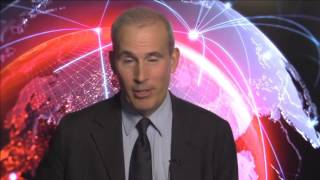
TJ Walker (live stream) explains that while the oft-cited 1972 UCLA statistic misrepresents the original research, body language still matters in communication. He advises speakers to preserve the natural movements they use when relaxed (e.g., hand, face, and body movement) and to avoid nervous fidgeting (grabbing a lectern, holding a pen, fiddling with rings) when speaking to larger audiences.
Chapters
The words out of your mouth are important when you're communicating, but your body language also is communicating on your behalf. Now, if you're giving a set business speech, political speech, something in the professional arena, your words are tremendously important. It is a myth. You may have heard the old survey from 1972 from UCLA purporting to show a professor measuring that when you look at all communication, 55% of it is your body language. A mere 7% the words, and the rest 38% your voice. Turns out that is a complete misconstruing of the researchers findings. That's not at all what his research showed. But it doesn't mean that body language is unimportant. You do need to exude the appropriate body language, regardless of the context. If you are speaking to one associate, one family member or friend, having them sit down and you standing up behind a lectern, grabbing the lectern would be considered weird and very uncomfortable for them. That wouldn't work. You, you need to be sitting down and relaxed as well. For most people, communicating one on one, family, friends, colleagues, the body language part is easy. You just move in a natural way. The hard part for most people is once you're outside of your comfort zone. You're used to speaking to five people sitting down. Now you have to stand in front of 30 people. What do you do? You get scared, you stiffen up, you grab a lectern, your body stops moving, your hands stop moving, your face stops moving. That's the real problem. So the key for most people is figure out how does your body move when you're completely comfortable talking to one friend, and then do the same thing in any context, whether you're talking to 1,000 people, 10,000 people on a stage as a part of a panel, you might not be standing, but you're sitting. You still want your hands to move, your face, to move your body move. The biggest body movement problem most people have is when they are nervous. They stop doing most of the things they do when they're comfortable and they start adding new things like grabbing a lectern or holding a pen or fidgeting with a ring finger. You want to avoid the new fidgety things because you're nervous and you want to continue doing the natural movement you do when you are completely relaxed, having a conversation with one friend.
More from TJ

The Breakout Cases - What Actually Caused Famous Speaking Career Breakthroughs | Ultamize

The Red Circle Sessions Finale - Build the Speaking Career You Came Here For | Ultamize

Two Stages, One Logo, Two Completely Different Realities - Main Stage vs Independent Events | Ult...

Pre-Reset - Why Repetition Builds Better Speaking Decisions | The Red Circle Sessions | Ultamize

Your Decision, Your Framework, and What Happens After - Build Your Speaking Career First | Ultamize

The Red Circle Sessions Trailer - The Speaking Career Truth Nobody on That Stage Will Tell You | ...

The Two-Minute Ultamize Reset - Your Platform, Your Audience, Your Voice | The Red Circle Sessions



