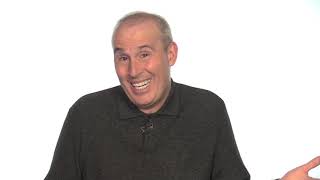
TJ Walker trains a former football player turned bone surgeon on camera presence. The surgeon's problem: acting scared. Walker's fix: stop performing and speak like you do when relaxed. He calls it his standard opening exercise.
Chapters
I fly into Houston to a hospital to work with a surgeon there. I walk into the room in the hospital and there's this giant man. Before he was a surgeon, he was a professional football player, actually was a part of a Super bowl winning team. And now he is a bone surgeon, works on athletes all over the world, and is about to try to become an ESPN commentator and host of his own show on Fox Sports. So he's come to me to be trained on how to communicate more effectively to the media. Hi, Mark. Nice to meet you. Tj Great to meet you. Sit down. I put the camera on, I ask him questions, and right away he does this. He tightens his whole body up, answers the questions in a smart, rational, logical, linear way, factually. It's all this was. A very bright guy, had gone to Harvard Medical School. His information was 100% on target. He clearly knew his stuff and he experienced it. He had a lot of surgeries himself, being in that line of work, so he could connect with people intellectually and emotionally. So we did the interview. I turned the light off, dropped the mic on the floor, leaned back and said, hey, Mark. So tell me, how'd that feel? Instantly came alive. Oh, T.J. i felt uncomfortable. That wasn't very good. I want to do it again. I'm glad you're. He was incredibly animated. His hands were moving, his face was moving. Everything was moving. His voice had more volume, more energy. I said, okay, now it's time to review. So I played the tape, stopped at the end of the formal interview, and said, what did you think? He said, tj, I don't know. The facts were there, but I just seemed stiff, uncomfortable, a little frozen, nervous. I said, well, Mark, you may have a point. You did a number of things well. You had good answers. But tell me, Mark, how would you like to see somebody better than you, more comfortable, more confident, more engaging, more charismatic? Would you like a role model like that? He said, oh, T.J. definitely. He thought I was going to show him Terry Bradshaw or some other famous broadcaster. Instead, I just hit play again. Now we're watching the part of the video where he didn't realize I was interviewing him. Just because I turned the light off, dropped the mic, didn't mean I couldn't record. Now he could see his natural movement. His hands were moving, his face was moving, his body was moving. His voice had warmth to it, had variation. He laughed. But when it was over, he said, that's the guy I want to be. Dj, You're a genius. Here's the reality for this doctor and, and in fact, almost all the people I work with, there's no genius in me that teaches them new skills how to act for the camera. What I teach people is to stop acting. What Mark learned at that moment was his problem was not that he needed to learn some new way of acting on camera, he needed to stop acting. He needed to stop acting scared. That's the problem most people have is they get in front of a camera to practice a presentation or a media interview and they start acting, they start acting scared. So when I get together to help people get better at their presentations, whether they're presenting to the media or giving speeches or PowerPoints, so much of it is about teaching them to stop acting. I don't teach them to act. I teach them to stop acting, to stop acting scared, and to simply talk the way they do when they're comfortable, relaxed, sitting down, talking to one person. Okay, so why did I tell that story? The message of the story was that I'm not your guru here to teach you a whole new way of talking when you're giving a presentation. You don't need a whole new way of learning what to do with your hand. Hands you already know what to do. That makes it much easier. You just have to stop freezing yourself. You have to stop acting scared. Now. I do this in pretty much every live media training and presentation skills training workshop I do all over the world. I do it first thing in the morning when I'm working with someone and it's a huge eye opening experience for people because. Because it really makes them see the task at hand as obtainable. Because it's no longer scary when you've already seen yourself do it well. And that's why I tell this story if I'm giving a speech on this subject because I want people to realize this isn't some impossible new task. It's also not as wildly complicated and time consuming as learning how to play the violin from scratch or learning how to be a scratch golfer. It's relatively easy if you just copy yourself. I want people to have a new role model for themselves when they are learning how to give presentations for live audiences and speeches. The role model can't be me. It needs to be themselves. That's the beauty of this story. It's also why this technique works in real trainings when it's face to face.