TJ WALKER - THE HABIT INFLUENCER - Personal Development | LIVE STREAM
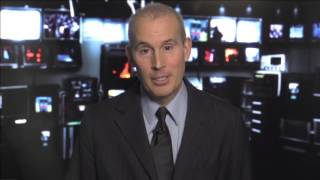
TJ Walker covers public speaking fundamentals like eye contact and eliminating filler words, plus communication lessons from current events like the Volkswagen scandal and Kobe Bryant's Players Tribune move. He highlights Toastmasters and discusses how age discrimination affects communicators.
Questions this video answers
November 30, 2015.
The Players' Tribune (a media organization started by Derek Jeter).
More than 3.4 million copies in just a few weeks.
75%.
70%.
Chapters
Basketball All Star Kobe Bryant announces his retirement through a poem. Brian's announcement struck me as significant. He announced his retirement through a poem on something called the Players Tribune, which is a media organization started by former New York Yankees great Derek Jeter. And this allows star athletes to communicate directly to their fans, to the public, without the intermediary of a reporter. Traditionally, someone like Kobe Bryant would have a big sit down interview with some star anchor at ESPN and ESPN would rake in the revenue, the money. This way, Kobe Bryant presumably is making some money and athletes themselves are capitalizing on their fame, their following. I think we're going to see more and more of this now. My prediction for the future though is that rather than a poem, nothing wrong with poetry, someone like a Kobe Bryant will announce that he is retiring by either just doing what I'm doing right now, speaking to the fans through a video, or by hiring a reporter or someone to just essentially be an actor and ask a few questions. This way, the entire production is owned, controlled by the athlete, and that person capitalizes on all the ad revenue. It is inevitable that anyone who has fame, anyone who has a following is going to essentially be their own media company. With that means you get to produce it. With that, it means you get to monetize it. You may be thinking, well, hasn't Kobe Bryant made enough money? We do live in an era where it is a winner take all mentality. And those who already have huge followings are going to be able to leverage that for more and more. The way this is significant to you, though, you might not be a star athlete. I'm not. But you can be a star within your own niche, whether it's negotiating contracts for real estate, whatever it is. And the real lesson here, don't just wait for the reporter to call you. Don't spend all your time pitching the media. Be your own media. I do think that is a clear cut message for a lot of us for the last at least half decade. This only drives it home even more forcefully in other segments. Today we're going to have a daily body language segment here, this program. And the lesson for today is don't do this at the beginning of the speech. Now, if you're listening to this on audio, you can't see me, but I'm just looking down. I can't tell you how often my clients send me a video of themselves. They want me to critique it. Boom. The first five seconds of the speech, I see someone looking down, staring at paper, ignoring their audience. Well, I understand you don't have Time to memorize a speech. All well and good, but the first 30 seconds, ideally the first minute, look at people the whole time. Don't be staring at them. Do you really need to read off a sheet of paper what your topic is? Your title, your name, rank and serial number, whatever you're going to say. And that isn't how I suggest you start a speech, but start by saying something interesting to the audience. And you really, really need to be looking people in the eyes when you do that. And it establishes a precedent. Even if you look at your notes a great deal after that, even if you have to read whole sections, if you start off the presentation not looking at notes, not having your head down, not futzing around with a bottle of water, you'll really send a strong impression to people that you're prepared, you're ready for them and you care about them. So that is your body tip, your body language tip of the day. Now, behind the news in these segments, we're going to look at things not necessarily that happened in the last 24 hours, but stories from the news that I think have a specific relevance to communicators and speakers and business people. This was in the news earlier this week. There's a new report about age discrimination on the website 538538.com, one of my favorites and spin off from Nate Silver's initial website of the same name. Now, in this survey, it said that not only is age discrimination pernicious, it's especially pernicious against women. Now, folks, I have no doubt that that's true and not being a woman cannot attest to that. But it certainly makes sense to me that that is a big problem. I just want to offer one element that might make things a little better for women and men or anyone who faces age discrimination. Here it is. There are some things in life where people have negative assumptions against you, but there are some things where it can work in your favor. Having the gravitas, the command to stand up and speak on behalf of an organization is something people rightly or wrongly assume that older people are better at. They're more experienced. Now, in my experience, a smart 22 year old can get up and give a great speech to 10,000 people if they're properly trained. But since virtually no 22 year olds are trained, people are left to learn through trial and error, through experience. So if you do have, like I do, a lot of gray hair, male or female, if you're old and hey, I'm old, I'm over 50, use that to your experience and stress your communication skills, stress how you're happy to speak on behalf of the entire organization. You're happy to speak out, trade organizations, events, media, whatever it is. Because there may be younger people in the organization who are still fearful, who are afraid of doing this, or their bosses feel that they aren't savvy and experienced enough to do so. So maybe if you're over 60, you're not the one hired to monitor Instagram or be the main Pinterest relationship expert at your company. Fine. But keep in mind, in this day and age, with all the explosion of social media, there are even more and more conferences where people from your organization may have to speak, present, be on panels, lead discussion groups. That can be the role for those of you over 60, and it's certainly one where there's not an instant bias against you. So if you're not great at public speaking skills and you don't want to become a world class Instagram expert, maybe you pick the easier of the two and become a better speaker. So, food for thought for those of you who believe you are perhaps victims of age discrimination. In other news, new study out this is published in the New York Times saying that contrary to popular belief, campaign promises actually do matter. There was a study done. Now, this has gone on every decade or so, and I've had debates with people on this since I was in college in the early 80s. But the conventional wisdom, of course, is that politicians are full of hot air, don't believe what they say in speeches, that's all irrelevant. Turns out that's just not true because the very same interest groups, political pressures, money groups that ultimately get their way in politics also get their way in lobbying what the politicians say in speeches. This is why in fact, it is in my view, critically important to listen to the speeches that politicians give. Now, according to this survey from a political scientist, Michael Krukonas, if you look at politicians from Woodrow Wilson to Jimmy Carter, 75% of their campaign promises were implemented. Now, according to this same survey, Barack Obama and some of you love him, hate him, that's not what this is about. He has completed 70% of his promises now gave you credit for actually accomplishing it or working towards it and compromising and getting part of it, it gives him 70%. So the reason I stress that is I do think it's important for citizens, even if you're not a huge political activist or political junkie, to listen carefully to the speeches of politicians, because what they're saying is a 70% chance it could actually happen. And that's why speaking does matter in our crisis communications blunder of the day once again. And they're about to be, if not the decade champion, at least the champion of the year. Volkswagen. More studies have come out recently or more reports have come out recently that Volkswagen executives have known for years about the tampering that went on in their cars to trick the regulators into thinking they were much cleaner, their emissions were much better than they were. Here's the problem, folks. Human beings are just lousy at keeping secrets. If you're a big corporation and you uncover some skullduggery, it's not that you have to be a saint and tell everyone you need to do it out of your own self interest, because eventually it will come out. And when it comes out after the fact in dribs and drabs, it's going to absolutely destroy your reputation. And that is exactly what is going on with Volkswagen these days. In our segment on what not to say and not to do, there's a trend I've been hearing more and more as I spend more of my time listening to podcasts. And here's what happens. A podcast host will have on a guest and they'll say, hey, T.J. why don't you introduce yourself to your guest? This is lazy to the nth degree, ladies and gentlemen. If you're going to go to the trouble of inviting a guest on your program, sharing your guest with the audience, then for goodness sake, spend a minute on their bio and think about how to introduce the person in a way that is warm and friendly to your audience and wets your audience's appetite to hear from that person. You don't hear Oprah say, well, you know, here's some guests. Why don't you introduce yourself? It's not that you have to be Oprah, but if you're going to have a show, you might as well be professional. Introduce your guest. Introduce your guest with enthusiasm. Put a spotlight on the credentials of this person that are the most interesting, that will make your audience want to hear from that person. Don't, whatever you do, don't take the lazy way out. In technology news of the day, Chicago police have announced that they are now going to dramatically, dramatically expand the use of body cameras, video cameras on the bodies of police. As you know, there's been recent controversies of video that's come out with some very ugly scenes of a Chicago police officer and the death of a citizen of Chicago. There's a lot of controversy about these video cameras. I, for one, fall firmly in the position of err on the side of having cameras everywhere, police are increasingly under attack. There's more and more suspicion of police doing bad things, misusing force. The video camera can actually help the police if they can show the whole context of how a criminal is perhaps attacking them first and it's in self defense. But if, as we've seen so much of in recent years, there seems to be a suspect fleeing and the police is chasing the person, attacking them, perhaps brutalizing them and then shooting them unnecessarily, the world needs to know about that. Part of the salutary effect of having a video camera that's basically always on, on these police officers is it's going to really make them think twice about using excessive force. Look folks, I'm not a police basher. I think most police officers are honest, ethical, hard working and do not abuse their power. But in a position like this, a police authority, even 1/2 of 1% of police officers misusing their authority on a regular basis or an irregular basis can result in many deaths a year, wrongful deaths in any city. So that's why I think it's a very positive trend. I applaud the political forces in Chicago for expanding the use of body cameras and will perhaps help get some of the reputation back for the Chicago police force. Another segment we're going to be having from time to time on this program is a review of a major politician in the news. A lot. Not necessarily anything they said today or even this week, but political figure that you have seen more and more of recently, not talking about their political positions, nothing I say should be construed as endorsing or condemning their political ideology. With that said, let's look at Ted Cruz today. Ted Cruz is someone getting more and more attention in the Republican primary for president. He is rising in the polls. He is seen by many as perhaps an establishment, someone marginally acceptable to the establishment in case someone like Donald Trump fades from the scene. Now I'll never forget the first time I saw Ted Cruz give a speech. It was at the 2012 Republican convention. I saw him speak very different from all the other politicians. He walked out on stage, didn't get behind the lectern, clearly wasn't using a teleprompter and he was mesmerizing. If you want to look at someone who has pure technical skills off the chart, I would urge you go to YouTube or any other video file sharing site and watch a Ted Cruz speech. Now for those of you who are liberals and find what he says utterly detestable. Or you think he's full of baloney or hypocrite. Put that aside and just listen to his delivery, the confidence he exudes, the pausing Now Interesting tidbit about Ted Cruz. When he was in college at Princeton University and a star of the debate team, he apparently had a minor gambling debt and had a part time job to pay off his debt as a public speaking coach. So that's right folks. Even though he's a young man of 44, he has had a lifetime of study and fascination with public speaking skills. Certainly been at it professionally at some level for the last quarter of a century. So an interesting, interesting fellow. It's question time. As you know, we always take questions from you. You can post your questions here on the forum, on the blog, on our Facebook page, on YouTube, and I'll answer them directly. This comes in from one of my online students, Teresa asks tj, how can I get rid of my ums? And there's a solution I've used for years and I read it in a book somewhere. It's not an original idea of mine. You print the word. You type up the word uh or um just on a keyboard. Print it out on a piece of paper, draw a red mark and a red slash through it. You know, like the no parking, no left hand turn. And then you tape it. In fact, I even have one here left over from and I know you can't see it, but it's tiny little dot. This was from a training last week in Lebanon of all places. And you put it on your watch or your cell phone, your computer screen. After a week, your brain will be reconditioned and you no longer say uh or um. So try it out. I promise you it really will make things much, much better. With the ums and uhs. If you have questions, you can not only post them here, but you can also send them to me at Twitter. It's JWalker. You can send your questions to JWalker and I'll be answering them on this program in an upcoming episode. Our question of the day for you. Who is your favorite speaker? In the sports realm? There's certainly a lot of coaches who've made a lucrative, lucrative living on the after dinner speaking circuit. Lou Holtz of football fame Pat Riley has always made a lot of money as an after dinner speaker and motivational speaker. What speakers who are athletes and coaches do you admire the most? I'd love to hear from you. Send me your comments, jwalker, or post in the forum here in social media News Fascinating story about the singer Adele. Adele has a new album out. Unless you've been living under a rock you've certainly heard about and you've probably heard it, she sold more than 3.4 million copies in just a few weeks. This sets all sorts of records. It means she sold more records than albums and downloads. Well, it's not downloads. She's selling it. She's not selling it as a stream. She sold more than Taylor Swift has and Taylor Swift is a huge star. Here's what's significant about it. Adele is not on any social media outlets. She's not pitching herself on YouTube videos. She's really quiet when it comes to all the ways of speaking and reaching out to people through social media. And yet she has the all time most successful, certainly one of the most successful. And in recent times, she did something that most music observers thought couldn't be done, selling millions and millions and millions of copies in a short period of time. What are the lessons here? One of the lessons is if you have had huge success in the past and you spend years really, really crafting something to make it stunningly beautiful and original, creative, you can find a marketplace. But let me caution you, if you're not already famous like Adele was, you weren't already featured in a James Bond movie with your music. Simply being good isn't enough in the crowded marketplace of music or ideas these days. So I do want to caution you, social media isn't everything. Talent counts for a lot. But you need some kind of platform, some kind of fame, notoriety and talent to really propel into the future the way she did. Because my fear is people look at this and say, oh, I don't need to worry about social media. Let me just make a good song or let me just write a good book. Sadly, I don't think that's quite enough in the modern era, even though Adele has shown you can be quite successful and step away from all social media. So congratulations to Adele. We have a new segment here I want to share with you. It's kind of the insider dope about media training and public speaking training. Now, as many of you know, I've been doing media and presentation training for 30 years, but I still mess up from time to time. I still try to learn, I still try to get better. Last week I was gone all last week, which is why you didn't hear from me doing trainings in Geneva and in Beirut. And as per usual, I did get feedback, I did get critiques. Most of it was laudatory. I'm not going to waste your time with that. But I did get some criticism that stung. It hurt because it was true. One of the critics from the United nations executive I was working with said teachers references were too much focused on North America. His approach was too North America based. And I thought about it. I didn't like the criticism. But then I had to admit it was true. So what do I do with that? I've got to try to do better and use more and more references from other cultures. Tell you, the first thing I did was I went to my RSS feed where I get all my news. And I promptly added the Times, not the New York Times, the Times of London, their international news feed. So I can get, I mean I do read some international news, but I'm going to try to get an even stronger dose of international news, hard business news and political news so that I could be even more sensitive to the international sensibilities and perspectives of the clients I work with. So I urge you, always ask for feedback. Always, always listen to it. And when possible, try to get better so that your craft can improve. In Toastmasters. I like to put a spotlight on Toastmasters from time to time because they are an organization that has hundreds of thousands of people who are devoted to being better at public speaking. And I applaud that they're doing something that I thought was. I didn't even know they did. I thought it was fascinating. But I ran across a story about a gentleman named Lamont Arnold. He wanted to do a better job of communicating with his grandchildren. And here's the thing, he is incarcerated. He's a member of the Toastmasters International Innovators Club 4362 and he's also in the Nebraska State Penitentiary. This club teaches inmates skills on how to communicate, how to set and achieve goals, how to strengthen their confidence to talk to people. So I got to congratulate and applaud Toastmasters for doing this because I'll be honest with you, I don't go to prisons to teach people my skill. Never been invited, not sure I would go. But Toastmasters, they're there, they're helping people learn skills. And I take my hat off to them. In other public speaking news, there are contests. There are public speaking contests all over the world. I got my start in public speaking by going to an optimist oratorical contest and winning second place, I believe. Don't know what happened to the first place person. This was way back in the 1970s. What caught my eye recently is there is an Emirates Environmental group. They held its 15th annual inter college environmental public speaking competition recently at the Dubai Knowledge Village. And this is some form of public speaking contest that has an environmental focus. I just wanted to congratulate the overall winners. They do it individually and by college. The Oman Dental College came in first place. I just wanted to give them a little shout out. We live in a culture where there is so much news devoted to students who smash people's skulls in on the football team or put a ball through a hoop or in a hole. Fine, I'm not anti sports. But there are thousands and thousands of public speaking competitions all over the world. The winners of those rarely get much attention, so I would like to give them a little more attention from time to time here. So congratulations again to the public speakers at the Oman Dental College over there in the Middle East. Time for a community spotlight. I want to sort of tip my hat to somewhat who I admire and respect with what she's done in the field of communication. Her name is Lisa B. Marshall. She is a longtime podcaster and I will confess I have not been a regular podcast listener of hers. I have started listening again and I'm impressed with her craft. It's the Public Speaker Podcast and it's a part of the whole Quick and Dirty Tips organization. They do a great job, but I would urge you to check it out. Just go to itunes, type in. Well, you can just type in public speaking, you'll find it. But it's the Public speaker podcast, part of the Quick and Dirty Tips Network. She has get this more than 10 million downloads since she started this. So if that isn't enough to motivate you to get off your you know what and start a podcast or start communicating people regularly on YouTube as I'm doing here, Facebook or other forums, please do so because a lot of people public speaking that many people really want to hear about it. Well, 10 million people want to hear what Lisa B. Marshall has to say on her public speaking broadcast, her podcast. So congratulations. Thanks for joining me. I'm TJ Walker and as always, may all of your speaking opportunities in life be a success. See you next time.
More from TJ





The Breakout Cases - What Actually Caused Famous Speaking Career Breakthroughs | Ultamize

The Red Circle Sessions Finale - Build the Speaking Career You Came Here For | Ultamize

Two Stages, One Logo, Two Completely Different Realities - Main Stage vs Independent Events | Ult...

Pre-Reset - Why Repetition Builds Better Speaking Decisions | The Red Circle Sessions | Ultamize

Your Decision, Your Framework, and What Happens After - Build Your Speaking Career First | Ultamize

The Red Circle Sessions Trailer - The Speaking Career Truth Nobody on That Stage Will Tell You | ...

The Two-Minute Ultamize Reset - Your Platform, Your Audience, Your Voice | The Red Circle Sessions