TJ WALKER - THE HABIT INFLUENCER - Personal Development | LIVE STREAM
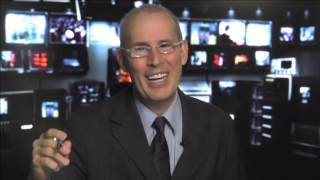
TJ Walker breaks down communication lessons from Willard Scott's career, covering public speaking tips, body language, and sales presentation techniques. He explores what makes effective communication work and how to apply it to your own speaking.
Chapters
NBC's Today show weatherman Willard Scott announces that he's retiring after more than 35 years with the program. Folks, Willard Scott has been around a long time. He is officially retiring after more than 35 years with the Today Show. He is 81 years old and yet still is constantly in demand as a broadcaster, as a speaker, someone doing public appearances, as an endorser. To me, there are a number of communication lessons to learn from Willard Scott and his longevity. For starters, just versatility. Now, as some of you know, but not all of you know, he was the original Ronald McDonald clown. That's right. He was someone who loved to perform, was an entertainer, was a clown. Now he gradually over the years, morphed into a weatherman, but interestingly, he never had a meteorological degree. He's not a certified weatherman by any credentials. He was a communicator. He was a communicator first and foremost. Now, these days it may be hard to get a job as a local weatherman, weather person, if you don't have a specific degree in that. But I still contend there's always going to be a place in this world for people who are first and foremost strong communicators, people who show empathy, people who connect with human beings. Interesting. Over the years, Willard Scott became more known for the birthdays of people 100 years old. That became part of his shtick. The other fascinating thing to me about Willard Scott is he basically retired, I don't know, 15, 20 years ago, but they still let him come back from time to time, basically anytime he wants, certainly for major birthdays celebrations. He had kind of an open door policy at NBC because he had a fan base. He had lots and lots and lots of little old ladies and little old men who loved him because they believed he cared about them. He talked more about their hobbies, their grandkids, their hundredth birthday than necessarily all the high pressures and barometric pressures of the weather that day. But that's what allowed him to, to really connect with his audience. So regardless of your profession, whether you're a clown, whether you are a weather person, a forecaster, a politician, please remember there are some skills to learn from Willard Scott, which is focus on taking whatever information you have and making it as entertaining as possible, making it relate to human beings and seeming like you're having a good time with it. If you do that, you can have an extraordinarily long career. Now, I don't know why he specifically decided to say this is officially. That's. It may have been for health reasons. At some point, if you feel like you are just not able to communicate or your health is bad and you just don't want to have to get out of your bed or your house, I understand wanting to retire, but let's face it, what I do, what Willard Scott does or did or what most broadcasters do or public speakers do, it's not heavy lifting. It's just talking. And that's something people can do until the day they die, or until they've lost their mental faculties or until there's some physical infirmity. So please keep that in mind as you're planning your career, even if you don't want to be the executive putting in the 85 hours, 90 hours a week, or traveling all over the world. And if you have genuine insights and the ability to communicate, you can have a long, long, long career, as Willard Scott did at 81 years. But, Willard, at this point, you deserve to relax and do things completely as you want to. So hoping you enjoy the rest of retirement. Now, in our body language segment of the day, every day, we bring to you a segment on body language. But here it is, and it relates to Willard Scott. Smile. Now, some people hear that and they think, oh, well, here's another public speaking coach saying, have a big fake phony smile on your face at all times. No, that's not what I'm suggesting. It can't be plastered on your face. It can't be frozen. It can't be totally unrelated to what you're doing. But if you are talking to another human being, if you're finding something positive that they're doing, letting that smile come out, letting people know you're having a good time. Because here's the thing about Willard Scott. When you saw him, whether you're a big fan of his or not, you got the sense that he was having the time of his life. I mean, he had to get up at 4am to do these weather segments. And to be at NBC for all those years, he still acted. His tone of voice, his smile, his body language, his gestures, all of it exuded the sense that he's having the time of his life, that he's giving off the sense that he just won the lottery. Folks, that is great body language. I don't care if you are the cfo. Maybe you're not quite as jokey if you're the CFO and you're going through results from a bad quarter. I understand that. But still, a little bit of a smile goes a long way. Leaning forward, looking at people carefully when you're talking to them or addressing them. That works if you're Willard Scott in the streets outside of NBC. It also works for a CFO who leans forward, leans in to listen to a question from a disgruntled investor. It still works the same. So remember the body language tip, a little bit of a smile as it relates to talking to people and simply acting like you're having a good time and it will help you come across as a much more effective communicator. If you're looking for other ways of being a more effective communicator, don't forget our sponsor. If you go to mediatrainingworldwide.com you can sign up for a free no cost, no obligation public speaking course or a free media training course. So if you aspire to be a meteorologist and you already have your degree but you're uncomfortable speaking in front of a camera, you may want to go into this course. So both courses are free. There's no obligation. Just go to mediatrainingworldwide.com and sign up for your free course today. Now time for questions from you and questions from around the web. This question comes from a great website. It's called questions about publicspeaking.com pretty straightforward. I'm linking to that website so you can check it out for yourself. But one of the questions there today is what's the best way to close a sales presentation? And I want to give you my own take on that. The best way to close a sales presentation is to ask for the sale. Now it doesn't have to be ham fisted, twisting someone's arm saying here, here's a pen, sign the contract. Now it doesn't have to be super pushy, but a lot of people in life like to be asked for their business. Now it doesn't matter what you're selling. If you are a politician and you're running for office and you've given people your core messages, what you're going to do, don't be afraid to thread the needle all the way through and conclude by asking for their vote. Because if you're a politician running for public office, what you're trying to sell is yourself and you specifically want, not money, but you want a vote. There have been numerous situations documented and some may have been apocryphal, but voters say, well, I like that politician, but I didn't vote for him. He didn't ask for my vote. People like to be asked. Now sometimes it's going to be more subtle than others. Sometimes the ask has to be implicit. But I do believe in any sales presentation that the facts simply don't speak for themselves. You can't simply lay out all the facts, lay out all the specs, lay out all the features of a product or a service and say, that's it. Any questions? Okay, thank you very much, and walk off. That's the problem many people have. That's the blunder many people make, is they think the facts speak for themselves. Well, facts don't speak for themselves. If they did, we could all stay home in our pajamas each day and simply email people's facts. Doesn't work that way. So if you're giving a sales presentation, regardless of what you're selling, you may be selling an idea of how to turn an abandoned lot in your town into a public park. Nothing in it for you. You're not making any money. You're probably losing money donating it, but you're still trying to sell the idea to a city commission, a zoning board. Don't be afraid to ask for the very specific thing you want so people know they're not confused, and it gives clarity to them as to what you want. So that's my answer to the question of the day. Now, there's also a question of the day here from me to you. My question of the day is, what is your routine when preparing for a presentation? I know some of you are diligent and you start a month in advance brainstorming ideas. Some of you say, oh, I like to be fresh. I don't want to be canned. And I just wing it. I just jot down a couple of notes on a napkin on my way up to the lectern. There's all sorts of different ways of doing it. I'd like to hear from you. How do you prepare for a presentation on a regular basis? I'd love to hear from you. So send your comments to infoediatrainingworldwide.com or post your comments below in the discussion section. Whether you're seeing this on YouTube, Facebook, or any other platform, I'd like to hear from you now in our community Spotlight in the public speaking contest. I want to once again, it seems like we're doing this regularly. Go over to Great Britain. They seem to have so many contests for public speaking because it is a culture that does. In fact, this is the land of Churchill, after all, and they do put a great respect on public speaking. There are two students from Charville CBS Secondary School, Mark Mullins and C.N. cotter. The they successfully represented their school recently in a competition. This was Sponsored by the Mallow Speakeasy. Sounds like a great place to have a public speaking club. This is the Mallow Speakeasy Toastmasters Club. It was a competition for seven secondary schools, all from North Cork, sponsored by the Mallow Credit Union, and wanted to give again a spotlight. A special pat on the back to Mark Mullins and CN Cotter for winning that. Now, the other reason I point this out is quite often in my travels around the world, I find that no matter what country I go to, people believe that people in their country are uniquely bad at public speaking and that people in another country are somehow genetically uniquely good at public speaking. And a lot of countries I go to, whether it's India or whether it's Serbia, people think Americans are just naturally gifted at public speaking. And I can tell you, every American I know thinks that Americans are horrible public speakers and that it's the British who are great. Well, the British are good in general. Although I guarantee you, if we talked to some British people today, they would say that most public speakers that they have to see in business and politics are awful. But they do have some good ones, in part because it is a valued skill, because they actually encourage young people, students, to participate in public speaking competition. So we want to encourage that, applaud that. And if you have news about any public speaking competitions in your own community, please send them to me. We'll give them a spotlight here at the end of the show. We'd love to hear from you. Infoediatrainingworldwide.com is the email or you can post comments wherever you're finding this. Thanks for joining us today. This program, as always, brought to you by Media Training Worldwide. For all of your public speaking and media training needs, go to mediatrainingworldwide.com that's also the home of this show. You'll find the show there as well anytime you don't have to get lost on YouTube or iTunes or other places. I'm TJ Walker. Thanks for joining me. As always, may all of your speaking opportunities in life be a huge success.
More from TJ





The Breakout Cases - What Actually Caused Famous Speaking Career Breakthroughs | Ultamize

The Red Circle Sessions Finale - Build the Speaking Career You Came Here For | Ultamize

Two Stages, One Logo, Two Completely Different Realities - Main Stage vs Independent Events | Ult...

Pre-Reset - Why Repetition Builds Better Speaking Decisions | The Red Circle Sessions | Ultamize

Your Decision, Your Framework, and What Happens After - Build Your Speaking Career First | Ultamize

The Red Circle Sessions Trailer - The Speaking Career Truth Nobody on That Stage Will Tell You | ...

The Two-Minute Ultamize Reset - Your Platform, Your Audience, Your Voice | The Red Circle Sessions