TJ WALKER - THE HABIT INFLUENCER - Personal Development | LIVE STREAM
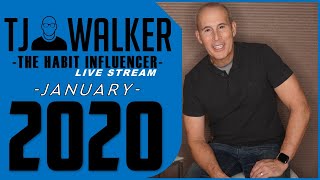
TJ Walker covers habit formation across seven life areas: self-agency, health, relationships, learning, creation, leisure, and wealth. He answers questions about public speaking and interviews, discusses phone hygiene data, and explains how to align your identity with daily habits that move you toward your goals.
Chapters
One and you're live. Welcome to the Habit Influencer. I'm your host, TJ Walker. Thanks for joining me. We are live. It is Friday, January 31, 2020. We've got a great program for you. The next two hours, everything and anything you want to know and talk about regarding habits, personal habits to lead a more fulfilling life. How to build better, stronger habits to empower your goals, your dreams, your aspirations for yourself. How to minimize your negative habits. One negative habit we'll talk about in the news. Disgusting habits people are doing with these things. Cell phones and what to do about it. Some surprising data on really how filthy your cell phone is because of habits. Other top news stories we'll be looking at today. Elon Musk has released a new EDM and for those of you who are more my age, that stands for electronic dance music. Not getting rave reviews. That's not why I'm interested in it. We'll talk about that later on in the program. We'll also be looking at some intriguing morning time habits of billionaires and successful people. Also kind of a new take on affirmations. All that and more. Plus I'll be talking to you and really laying out some fundamental cornerstones of my philosophy about habits. I'll be looking at the seven foundations of habits in my view and my philosophy and what we try to work through right here. All that plus your comments, your questions. You can comment live on Facebook, on YouTube, Twitch. Unfortunately, our friends on TikTok have been locked out today. I'm locked out of the live stream there for some complication. We'll try to get to the bottom of that. If any of our friends on TikTok have come over to Facebook or YouTube or any of the other platforms we're on, we're very happy to have you here and hoping to get the situation resolved with TikTok soon. This is two shows in one. On the one hand it's a live show talking about habits. On the other hand, it's also live office hours. I'm the teacher and these are live office hours for my online students all over the world. I have text, depending on how you count it, nearly a million online students who come to my online courses on personal development, habit formation, public speaking, communication skills. So my students get to ask questions, anything related to those topics, anything related to those skills and personal development. I answer them here. Of course, I also answer anyone else's questions on that topic as well. I wanted to go through some of the mail from some of my top students over on the UDEMY platform. This comes in from Bramina. She writes, employers usually ask employees about a range or specific years of experience. I believe she's in my job interview skills course, but sometimes the employees are just fresh graduates. How does the employee resolve this? Well, if you're 22 years old, no one expects you to talk about 10 years of experience and managing 50 people in teams that raised $100 million. You're being judged through the lens of expectations of what people have for you at that age. But I can tell you as someone who's interviewed a lot of young people and middle aged people, it's still extremely impressive if a 22 year old who's never had a full time job outside of a summer job can talk about. I saw this problem on campus. I raised money from 12 different organizations. We built the new style, whatever it was. If you can talk about a situation where you solve a problem, you used your people skills, your communication skills, your social skills, maybe your technical skills to solve a problem. No one really cares at your age that you didn't do it in a large for profit business. So talk about your successes. This is exactly why it's so important when you're in school to not just spend time in the books and in classroom. Yes, do that. But you have your holidays, you have summer vacations, you have other times, you have volunteer times, you have extracurricular activities where you have the ability to show your creativity, your competence and your capabilities. Use those examples as a case study when an employer, a prospective employer, asks you questions. So Briyama, good luck with your job interviews. Hope they all go well. This next question is from student Mahesh in one of my online public speaking courses asking about how do you know your audience? I'm confused about what you say in the beginning of the course about knowing your audience. How do you really know your audience? What I learned from books and talks about know yourself. You must know what you're talking about. I get that. Can you please clarify? Well, by audience I mean you need to have some sense of what is of interest to them. If you're speaking to a certified public accountant trade association, you may want to talk about something that relates to their profession, their industry that will help them make more money. If you're talking to Career Day and it's a seventh grade class, they're going to have different interests. You can never completely read the mind of your audience, but you can make certain assumptions when you know a little more about who they are. So always ask who they are. Another technique I like to use is to simply get to the venue early, Ask questions, talk to people, introduce yourself, find out what is their concern, what's on their mind, what's their biggest sore spot, what's their biggest source of conflict, frustration in their business, their field of endeavor, whatever it is they do, ask questions. And you can do this in advance sometime. If you're giving a speech in another city in a week, email the organizer or a couple of other people and ask for more information on who your audience is. Sometimes you may want to brainstorm on five or 10 topics you think might be a good fit. Send them to two or three people in the audience and ask them to put it in priority. See what they come up with. One of the best habits you can have as a communicator, as a public speaker, is to not just pander to your audience, but to look at everything that's important to you to communicate, and then overlay that with what is important to your audience. Look at the overlap, try to figure out what's important to you and important and interesting to the audience, and then spend your time focusing on that. That is really the best habit when it comes to preparing for your audience. Rupa writes in she's one of my students in my Complete Communication Skill course on the UDEMY platform. I want to know different types of communication. What is the most efficient and effective type, and how to execute the same. Oh, Rupa, if only it were that simple. With all communication, it is dependent upon context, the subject matter, the time frame, the urgency, the relationship you have to the audience. The most efficient way of communicating any message might be to dictate a text. But if you're proposing marriage to someone, or if you're asking for a $50 million contract for a new consulting arrangement, a one sentence text is probably not the most effective. So what is efficient is not necessarily the most effective. I look at all communication through the lens of three main options. One text when you're writing, Another speaking on video where people can see or see you in real life, and the third audio where they just hear your voice. Now you can further split that down and say, well, there's body language. Yes, that is important too. But one of the advantages and disadvantages of being a human being on planet Earth in 2020 is there are millions of ways of communicating these days. You can write an old fashioned letter, you can put an ad behind an airplane, and you can have skywriting, you can take out a full page ad in a major newspaper, you can write a letter, you can do a text, you can do an email, you can FaceTime. So there's so many things you have to look at. Who are you trying to communicate with? How are they expecting it? How can you exceed their expectations and yet not seem weird or strange? So you have to kind of fit into people's expectations or at least have them understand why you are doing that. A lot of times prospects will call me or write to me and say we want a proposal for a personal development workshop or public speaking workshop. They're expecting me to send a text proposal. I don't do that. I send them a proposal in a video format so they can see how I speak and I speak about how I can help them speak in that situation. It's completely relevant. I switched the format that they were expecting, but it's relevant. But you can't do that all the time. If someone is asking me for a proposal and I send a book, that doesn't work. So you have to look at all your options, look at your audience, look at the message you're trying to communicate, look at the action you're trying to get them to do and filter all that in and come up with a particular strategy. So Rupa, I wish you luck in all your communication in life. The focus of my online course is primarily about spoken communication, how to speak as effectively as possible. So that is the focus. A few interesting comments from our friends at TikTok who unfortunately cannot join us yet today. We're temporarily banned from live streaming on TikTok for the next hour. Not quite sure why but was happy to get a couple of interesting comments. TikTok this morning someone wrote on a video I posted there today, your eyes look spooky dark. Just the lighting or are you from another realm? This is from someone named Kipper. I don't think they were really trying to be mean. It is. Look, you have to have some self awareness folks. I do have dark eye. They are very dark. Some people like it, some people think it's spiritual. So I just wrote back, sorry, they really are spooky dark. No special rel I try to take a light heart when someone is saying something less than complimentary. Again, I don't think this person was trying to be mean. The reason I bring it up is I know that perhaps you, one of your friends, colleagues, a family member, isn't posting video on YouTube or Facebook or Twitter. Not because you don't have good ideas. You may have ideas 10 times better than mine, but you're not posting your ideas, your creativity online in a video format because you're afraid of comments like that. Oh, what if someone attacks me? What if they say I'm too bold or too old or too gray or too fat or too this or too thin or too young or too skinny or too ugly? It's human nature to want to look your best. It's human nature to not want to put yourself out there to be attacked. I get it. But if you don't put yourself out there, then you've already failed because zero of your ideas has reached the outside. Zero percent of your creativity has helped other people. It's a trade off. Like everything else in life. Those of you young enough to remember your teenage years and our TikTok friends are not with us at the moment. But if you're a teenager, there's that awkward stage for a lot of people. You know you're asking people out on dates the first time. For most people, myself included, a lot of rejection. Is the solution really to just go into a cocoon and never socialize ever, because of fear of rejection? I think not. So please don't worry about little comments like this. It doesn't really hurt that much because for every comment like that these days I probably get 100 comments like another one that came in just today also from the TikTok platform. And this one is from a gentleman, Hayter, who says, I just wanted to let you know your speeches really motivate me to do my best self. So keep doing what you're doing. 100. 100. Which I guess means 100%. I said thanks and he wrote back no thank you. Yesterday I was thinking about the he referenced a video I made the other day. You should be comparing yourself to your yesterday, not your friends who are ahead of you or other people who are billionaires and successful. Compare yourself just to where you were yesterday. And he says, I've been getting a lot more done lately, so he's getting some motivation. And that's from the little 15 second videos I do every day on TikTok, Twitter, Snapchat, Pinterest and Instagram. And for any of you who like those 15 second ones, please check out the 10 minute videos that we do daily on YouTube and Facebook as well. So thanks for all the great viewer mail today. Appreciate that. Check in with some of our friends on social media. Heading on over to Facebook today we have Ravinda writing in. This is Robin from India saying thanks for being there. Please accept my gratitude. Well, thank you. And I'm very grateful for your time today, especially since it's now, I guess, prime time on A Friday night in Italy or, excuse me, in India. So really a special especially appreciate you giving us your time on a Friday evening. Clarence writes in Amen. Okay? Amen to that. Ravinda says, is it important to make a video in quantum or less video of quality? I guess you're saying, is it more important to have quality video or quantity? So some of you may get tired of me referencing this fellow, but he is sort of the poster child of social media success these days. Gary Vaynerchuk famously says you can't differentiate quality and quantity when it comes to video and social media, that the more quantity of video you have, the more quality you have. Because if you're putting out video regularly, you'll get feedback. And if you put out 10 videos a week, one will really resonate with people. And then next week you'll do more videos like that. And the videos, the other nine videos that no one liked and were ignored, you know not to do that. If you keep doing that, within six months or so, you'll have really high quality video and your video can continue to get better. If, however, you only do one video every three months, for example, because you're polishing it and making it perfect and adding in special effects and making it into a movie, at the end of the year you've only done four videos and you just, you might not have enough data to figure out what works and what doesn't work. What's quality in the eyes of your audience. Can't forget that if you are a creator, you do want to create something you like and enjoy, but you're creating it for your audience. Even someone as successful as Oprah Winfrey points out that she doesn't have guests on just for who she likes to talk to. She said, if it were up to me, I would have a week of shows or a month of shows of Eckhart Tolle. I do a whole year's worth of shows of Eckhart Tolle, but that would tank in the ratings, so she has to have other people. So you do need to be aware of what your audience wants. And by doing a greater quantity of videos, you're much more likely to find that out. Good luck with all of your video production, Ravinda. Can we monetize public speaking? Well, Ravinda, that is a question that has intrigued people for millennia. I'm fortunate enough to have been trained by one of the first really serious professional speakers in the United States, gentleman by the name of Bill Gove, who is one of the original founders of the National Speakers association and this is many, many, many decades ago. He's not with us anymore. But Bill is telling me that he was basically, I think he was just an executive at an insurance company or somewhere and somehow fell upon a speech, someone asked him to do another one. Before he knew it, he was getting asked to give the same speech. Companies and trade associations all over the country and making a very nice living. He wasn't a consultant, he wasn't an author, he just gave the same speech. So there was a time when people could just give a speech, market it and go on. These days, it's a little more complicated. There's never in the history of humankind been more people making money from speaking than today. But it's not necessarily what you think of as you get up on a big stage. A nice introduction. Anthony Robbins just finished. You're in front of 5,000 people and you're getting the big keynote speech check that does exist for some people. Typically not until you're extremely well known, have a huge following, have a level of fame and branding behind you. But let me tell you, the absolute best opportunity for you to start making money. Maybe not today, but you could by Monday if you really tried, by just by speaking. And the way to do that is by speaking in online video for your own online course. Now, if you just make a nice video on YouTube, very, very hard to make money if you just make money. And Marcel, are we having any trouble with connections? I'm seeing all sorts of flickery things. Have we lost people? Are we offline at the moment? No, no, we're on. We're on. I was trying to fix the TikTok situation. Okay, gotcha, gotcha. Excuse us, we're having a couple of little technical problems there. But to your question about how can you monetize public speaking, what I would suggest you do is reframe your thinking just a little. Don't think of yourself as a public speaker or professional public speaker. My advice to you is think of yourself as an expert. Pick a particular subject, doesn't matter if it is negotiation, doesn't matter if it's conflict resolution, doesn't matter if it's artificial intelligence. Figure out what it is that you know about and try to become the best in the world about it. And then create content around it. Create content that's written. Write books, write blog posts, write special reports, write posts on Facebook, Then make short videos and medium sized videos on this. So speak in a video format. Let the world know that you're available for keynote speaking. But don't just Wait for the phone to ring. Put videos out on a daily basis, ideally or at least once a week. And you need to make an online course. You might not get rich quick. It's not a get rich quick game. But if you have true expertise and you're willing to speak, you can make a lot of money. I have spoken and made thousands of videos for 144 online courses of my own. Right here from this room, I'm in a little, tiny little studio. This is video of my living room, but I'm in a six foot by, I think 12 foot closet that's been turned into a TV studio. This is where I make all of my online courses. Where I speak, I speak, I make a whole series of videos. I package it in a course, I add books and other things and people pay money for it. So if you want to be a professional speaker, my advice to you is start today making an online course, because there's no gatekeepers. The old fashioned way of trying to make money as a speaker was to practice a speech on your own. Do a one sheet, mail it around to every Rotary club in your town, knock on doors, beg and beg and beg to speak for free, everyone who's in the room. You try to get referrals and there are people who work their way up that way. But it is a long, slow, laborious way. And I don't see anyone working their way up that way. In the last quarter of a century, frankly, 60s, 70s, early 80s, it did work for some, but that's not the way to do it. If you want to speak and you want to speak for money, you need to build a following. You need to be recognized as an expert. Because if you're not recognized as a true expert, yeah, maybe someone will hire you, maybe they'll give you $1,000 for a speech. But by the time you factor in all the time it took to market you and to get a contract signed and to go over details and travel and flight and reimbursement and everything else that is going to add up to a minimum wage job. Now, I realize the economics can sound very different in different countries. In India, $1,000 for a speech might sound great, but what if it's only $100? That might sound great for a day's work, but it's not a day's work. So you're not going to make real money as a speaker unless you become a true expert. The days are gone of simply being someone who is seen as a good speaker, being able to charge money for it. So that's my advice on the easiest way to monetize public speaking. Professional speaking, I should point out. And I try not to be overly self serving. We're not bombarding you with ads for Coca Cola, McDonald's every 10 seconds here or every 10 minutes the way commercial TV is. But I will occasionally mention something that I think will help you but also helps me too. I do have an online course on how to be a professional speaker. So if you just type in professional speaking and my name online, you'll find those courses. If you go to a platform like Udemy or my own website, Media Training Worldwide, you will find courses on how to be a professional speaker. And by professional, I mean specifically how do you make money? Because you're not a professional. If you're not making money, you could be good at it, but it's not really a true profession at that point. I'm T.J. walker. I want to thank you for joining me today. It is Friday. I am looking forward to a fantastic weekend. A lot of festivities, events, parties, plans, social events here in Long Island. I'm hoping you have a great Friday as well. We are open for business here. If you have questions, comments, thoughts, we would love to hear from you. You can post your comments on Facebook, LinkedIn, Twitter, YouTube, any forum and we're going to try to grab them. If for some reason I miss you, you can do what some of the colleagues, I read their comments to you earlier today, just send me an email. Then you're pretty much guaranteed of having your issues addressed. You can always reach me tj@tjwalker.com let's check in with our friends from Instagram. And is it up? I always have trouble with this name. Uplive. Uplive is joining us. Mona has joined, Moana has joined. Thanks so much for spending some time with us this Friday. And there were a couple of other people there I missed too. Can you flip back? Masha has joined and is giving us. Is it a thumbs up or a heart? I can't quite make out the icon, but it doesn't look, it doesn't look like you're just a clown and a devil. Okay, well, I'll take both of those things. And also I see several other colleagues have joined us on both of those platforms. Let's hop over to Facebook. Luke is with us. Also a renowned trainer and communications expert and one of my former students too. So Luke, good to see you, hear from you. Please, please give us an update on what you're doing now. I'd love to Share it with the group. And by the way, I'm happy to share the spotlight. So if you've got any new product course, just mention it right there on the Facebook page. I'm happy to send people your way. Peggy has joined us as well. She says hello to me and Marceau. I'm joined, as always, by my colleague, the fantastic producer Marceau. Thanks for joining us today and doing a great technical job, as always. By the way. This is a difficult thing, technically what we're doing. It looks simple. It looks like, well, there's just a camera on a guy. How simple can that be? This isn't exactly World Cup Soccer or NFL super bowl, but what we are doing is simulcasting this to more than a dozen and approaching 20 different platforms all at the same time. There's bandwidth issues, there's technical issues. Every website has slightly different rules. TikTok said we did something wrong today and kicked us off. So there's always some little snafu and it's very hard for one person to do it. I can't keep it all straight, especially while talking to you. So that's why I'm very happy my colleague Marceau is handling all that. And by the way, we're operating virtually, it's increasingly a virtual world. We're not together in a big TV studio in Manhattan. I'm in a small studio in my home in Long Island, N.Y. and Marceau is mostly in Brooklyn, but today I believe he's in Philadelphia, working from facilities there. So happy you're with us. If you have any other comments on topics of the day, news of the day, please let me know. But tell you what, I have something so big I want to say. I may just keep this for the second hour because there's some other other really interesting news stories that I saw today that I thought were extremely relevant to this whole habit community. By the way, I'm trying to figure out what's the best way, what's the best word for us? Habit Influencers. Do you mind if I call you Habit Influencers? I was also kicking around the idea of habit design. I'm really trying to design my own habits and help you design your own habits too. But habit designer, I don't know if that has quite the same ring to it as Habit Influencer. So if you have any particular thoughts on what would be a good name for a community like this, I would love to hear from you. While you're thinking of that, I wanted to share with you some daily habits of some of the most successful People in the entire world. Some of them are not particularly shocking, but some of them actually are very surprising. So these are some habits of people who are billionaires. Now, I'm not one of those people who says, wow, money is the only thing that matters in life. And if you're a billionaire, you're a genius and we should respect you for everything and follow you. And if you're not a billionaire, you're a failure. Now the there are some self help gurus, especially in the wealth financial arena, who either overtly or tacitly endorse that worldview. I'm not endorsing that view now. I'm not demonizing the rich. I'm certainly not someone who says if someone is rich, they stole it or they're a bad person. I don't think that's the case either. I do want to share with you. This is from People. Now, I'm not a huge fan of People magazine, but every once in a while they come up with something quirky. They of course, do mention Jack Dorsey, the CEO of Twitter. We've mentioned him here before. He famously has one meal a day. I would be the least productive human being on planet Earth if I had one meal a day, because I'd be walking around all day long. I'm so hungry. Marceau, feed me, feed me. I'm dying. I would make everyone else miserable. So a lot of these particular habits I put in the category of okay, these people are really successful despite this habit, not because this habit. Part of being a rational human being, I believe, is always looking for a causal relationship and not simply a correlation. You know, someone can jump up and down on one foot. Doesn't mean they make rain. Jack Dorsey eats one meal a day. I don't think that's why he's a billionaire. Next person on the list is Oprah Winfrey. And she talks about her morning routine of exercising every day in her gym by 7am each day for at least an hour. I think it's great to exercise. I go to my gym every day. I like to exercise. And let me be very careful here. I have tremendous respect for Oprah Winfrey. I. I'm not sure that Oprah is a billionaire because she has the best exercise habits or if she has consistently demonstrated the best exercise habits. I don't know about that. Some of these I do think are useful. The next person up in the people, Bill Gates. Now this one is a little surprising. Bill Gates, depending on what year it is, is the most wealthiest or the second or third or fourth Wealthiest human being on the planet. Guess how he likes to relax in the evenings. According to this. He likes to wash dishes. He likes to wash dishes in his home, which you've heard stories about his, you know, gigantic 40,000 square foot or 100,000 square foot mansion he lives in. I just imagine all of these white gloved servants there and butlers and maids and apparently he somehow likes to enjoy just doing something mundane. I guess for other people it could be gardening or some other simple task. I want to interrupt. Could you just imagine Bill Gates with like those big giant yellow gloves on, like scrubbing a plate, a dinner plate? Actually I could imagine Bill Gates scrubbing a plate with a big yellow glove sounding like, looking and sounding kind of geeky so that he doesn't seem like the kind of guy who's going to be, you know, out at the hottest nightclubs, ending his evening that way. So good for him. If he enjoys washing dishes and that relaxes him, that's good. Now let's go a little younger Kylie Jenner, and she is part of the whole Kardashian Caitlyn Jenner crowd. Wildly successful, depending on how you define it. The youngest self made, if you believe in being self made, billionaire according to Forbes. And what she talks about is she can't stay asleep past 8am so she likes to go to bed early and get up early. Well, I think that's a great habit. I think that is a habit that serves everyone well, getting a good night's sleep. We talk about sleep a great deal on this and here's one that I do think is more relevant to most of us and is a habit that is completely related to why this person is a billionaire. This is Mark Zuckerberg and he implements a yearly challenge for himself. Sometimes physical, sometimes intellectual, but he likes to take on a really big personal challenge to learn something new every year. So one year it was learning Mandarin, one year it was visiting every state. One year it was running 365 miles. One year it was building artificial intelligence for his home. So to me that is highly relevant to challenge yourself to be in the habit of really expanding yourself. I especially admire him for learning Mandarin and he's even given speeches in Mandarin. That's a tough language to learn. I can tell you that firsthand because I haven't been able to get past one or two words. But I didn't focus on it the way Mark Zuckerberg did Warren Buffett. Now here's another one where I would say this is purely a habit that is correlated to A successful person, but in no way causes the success. Warren Buffett is about to turn 90 years old. He says he eats 2,700 calories a day, which is about normal. You could argue it's maybe a couple hundred calories more than a man his size might need. But here's the part that's interesting. I drink at least five 12 ounce servings of coca Cola a day that I do not recommend. I do not think that's why he's a billionaire, why he's successful, or why he's 90 years old and still seemingly completely lucid, has all of his wits about him. And you do have to give him credit for a sense of humor and light heartedness. He said there's a method for why he's drinking so much Coca Cola. He says, I checked the actuarial tables and the lowest death rate is among six year olds. So I decided to eat like a six year old. Six year olds like sugar. That's profoundly bizarre. I'm not advocating that you drink five Coca Colas a day that he's still alive, but not because of the Coke. This next one is someone you probably haven't heard of. Francoise Bettencourt Meyers. She is supposedly the richest woman in the world. She is an heiress from the l' Oreal family. So she's a billionaire many times over. She likes to spend her time with the arts and playing the piano by day. When you're born into billions of dollars, you don't get a lot of credit from anything. It's hard to make your mark, no doubt. And I guess she's just so tired. All the attention, everyone begging her for money and attention. She just likes to stay out of the limelight. Now this next one is a little bit. So nothing particularly surprising about a wealthy aristocrat wanting to stay behind and live in a cloistered environment. Jeff Bezos, who is the wealthiest man in the world at the moment, CEO, founder of Amazon. He does have an interesting habit. I like to put her in the mornings. This according to a speech he gave at the Economics club in Washington D.C. a couple of years ago. He likes to read the newspaper and have coffee. He likes to have breakfast with his kids before they go to school. It's important to me to putter around. What do you make from that? Because most people would say, well, that's how I like to start my day. Why am I not a billionaire? Again, I don't think that is one of the significant habits that propelled him to Success. The next one. Elon Musk. He famously works 85 to 100 hours, not per month, but per week. And this is what he told the folks on Recode Decode, very prominent tech podcast. That's a tremendous amount of work that would break most. Most people would have a nervous breakdown if they tried to work 100 hours a week. It somehow works for him because he is wildly successful. PayPal, Tesla, his energy companies. I'll be talking more about him in just a moment from another story. Something I think does represent why he is successful. Let's just go to him right now. The other thing that Elon Musk is in the news for right now is he has released a new song, an EDM electronic dance music. He's released it on the cloud, he's put it out to the world, and he is getting savaged in the reviews. The reviews are saying, this is. I can't even quote the reviews. They're so obscene in their vitriol towards his music. Now, if you're Elon Musk, you, you know, he's a smart guy. You know that he knows that if he releases new music that he has composed and put together, he's going to be criticized. There's no way a respectable music reviewer is going to say, what do you know? Elon Musk is the greatest music creator performer in the world. It's just not going to happen. Even if he were great. So he knows he's going to get lot of criticism. Why does he do it? What would prompt Elon Musk to do this? I think it has to be that he is just someone brimming over with creativity. It's a part of his identity, it's a part of his DNA. He likes to create companies, he likes to create financial solutions. He likes to create solutions to big problems, like how do we colonize Mars, how do we get to the moon, how do we have transportation that's more efficient, how do we capture energy from the sun? How do we create more frictionless economic exchanges between people? He's somewhat known for wanting to create constantly in all different realms. If you're creative, you are creative, and your mind, even in relaxing times, likes to create. Now, he may like to listen to music for part of those hundred hours a week he's working, and that may stimulate ideas for other creations. So I gave him credit for creating and for not sticking to one niche. So many people think, well, I was trained for this, I went to school for this. I have a degree in this. And my whole life I'm going to get narrower and narrower and narrower Elon Musk doesn't do that. He says, I can do Internet stuff, I can look at Finance, PayPal, I can look at transportation, cars. I can look at infrastructure and dig tunnels, I can look at energy, batteries, solar. He says, I can do whatever I want. If I want to create music, I will. That, to me, is the habit that makes him a success. This idea of no one else can put him in a box. Now, is he a perfect guy? Some of his companies done odd things. Has he done inappropriate things? Tweeting, giving guidance that the SEC doesn't approve of? Yeah. I'm not saying he's perfect. I'm not star worshipping here. But when you look at the big picture of what someone like that has done with his life, he's done a lot. Now, we can't all go out and raise a billion dollars and start a car company. In fact, starting a car company has got to be pretty much the hardest thing a human being could do in the last 20 years, because nobody's raised enough money to start a successful car company in decades. That's really, really hard. But you know what? Anybody can make their own EP these days. Anyone can make music, upload it to SoundCloud or wherever you upload music you make these days. My own niece has done that. There are eight year olds doing that. What's stopping you? If you love music, you love creation. Okay, you can't create the Tesla. I get it. I can't do that either. But you can create a song that captures your spirit, your video, some audio vision of beauty. If Elon Musk has the time to do it, and he's already running, what, three, four huge publicly traded companies and he's working 100 hours a week. And if he can make music, why can't you? I'm TJ Walker. We're going to take a very brief 30 second break and I'll be back in a moment. 1, 2, 3. You're live. Would you fix a fabulous Thanksgiving dinner or special holiday meal and then eat it in the bathroom on your toilet? Probably not. You probably think it's crazy. I would even ask you to do that or contemplate that it sounds disgusting beyond belief. But would you be at a nice restaurant or a nice dinner in your own home, enjoying a nice meal and then casually just check for a text or an email. Picking up this thing now. I'm so nervous about the germs, I dropped it myself. The cell phone. These are some of the most disgusting things in the world. If you believe in scientists who've examined it. I want to share with you a story this is courtesy of Fox News, but it's not a political story. So I think we can. We don't have to worry about any sort of left right bias. But this is according to a new survey by a health organization. What they found is that cell phones are some of the dirtiest things on planet Earth. And they did a survey of 1200 United States residents over the age of 18. Some of the details will shock you. A whopping 88% of people surveyed admitted to using the phone in their bathroom. That's not particularly surprising. An overwhelming 89% said they used the phone while cooking. Now, here's the part that where I got lost. 41% of adults in the United States, according to this survey, put their phone in their mouth when their hands are not free. I cannot fathom that. Now, I'm not a germaphobe. I'm not someone who is anal retentive and extra neat and bleaching everything down. But I cannot imagine under any scenario putting a telephone in my mouth. I do put my phone in my mouth sometimes. I'm not going to lie to you. Oh, I wish you. Marceau admits he's put his phone in his mouth. That to me, is profoundly bizarre. Now here's the other thing that is shocking. One in four people have never cleaned their phone. Just hearing that makes me want to do this right now. And I don't do this every day, but I do it probably once a week, spray down with Lysol to kill all the germs or at least some of the germs. But I just can't imagine. My guess is that the people who put their phone in their mouth are probably the very same ones who've never cleaned their phone. Marceau, I'm not even going to ask you because I don't want to know the answer to that. I clean the phone, but it's like I do, bizarrely, I do put my phone in my mouth when my hands are not free to. Okay, I'm not even going to ask if you wash your hands after you go to the bathroom. I'm fearful of that. So, folks, these are habits. These are not habits as far reaching as do you get a good night's sleep, eat the proper amount and create every day. But it's habit nonetheless. Habits are by definition stuff you do without thinking. And these days we all pick up our phone, check email, take it all over the place constantly without thinking, but putting it in your mouth. Now here's the big problem. One more statistic I want to share with you. 89% use their phone on public transportation. Baby boomers are twice as likely as millennials to not wash their hands after traveling on public public transportation. And they're quoting one of the officials saying, come cold and flu season, boomers are the most likely to share the love. The report explained, because of all of these germs that survive and are transported on the phone. So these phones are major host to bacteria. The E. Coli bacteria resides on these. That makes people, especially infants and young children, deathly ill. E. Coli bacteria makes everyone else sick. It's injecting bacteria right into the body. Everybody has bacteria. You can't get rid of bacteria. But do you want to go out of your way to put more and more E. Coli back? I'm going to just thinking about it. I'm going to give it another quick shot of Lysol. Now, you may have another preferred way of cleaning. You may want to use some sort of alcohol cloth. I'm not saying spraying Lysol is the best way, but it's a lot better than nothing. I'm TJ Walker. I appreciate you joining me here today. This is the Habit Influencer. This is the program where we focus on every little tip, trick, tool, hack and technique to help you become a better you by improving your habits and by decreasing bad habits. One bad habit right now that I'm displaying, I'm talking to someone, you and holding a phone. So I'm going to put my phone down. And you know what? I want to be even more polite to you. So I need to make sure that I've put my phone on do not disturb the theater mode because I don't want my phone ringing in the middle of our conversation. Do you have any questions, comments about any aspect of habits, anything that you want to talk about? It is Friday and we try to open the floors open for keep them open for discussion really every day of the week, but especially Friday. We're a little less structured here. Want to give you even more time for your thoughts. So let's check in with a live chat. Sai has joined us on Instagram. Sai, thanks for joining us today. Coming to us from South India and did we have a couple of others there? Marisa, Did I? Okay. Well, Sai, I'm very happy to have you with us. Indeed, I wanted to share with you something from another pop culture magazine. In my mind, it's a little higher brow than people. It's not one I regularly subscribe to, but I do check out contents from time to time. This is from Men's Health magazine, their website and they have a whole series of suggestions on self care just for men because it's a magazine for men. Here's one of the tips quoted by an expert in the article Big recommendation to men. I want to hear your opinions on it. I have mixed feelings therapy. I turned 40 this year, so I'm not 50 plus. But if there's anything I can recommend people start sooner, it's therapy. Find a therapist, even just to talk for a little while about why you are disconnected from with your life. That's what another person they interviewed on Reddit shared. So let's step back. When they say therapy, they don't mean a physical therapist. They are presumably talking about seeing a psychologist, a psychiatrist, a PhD or a master's in social work, someone who is officially licensed as a therapist. There are varying degrees of acceptance of these around the world. Some countries it's rare. Others it's quite commonplace even within a country. It can be rare in certain regions and very commonplace. Here where I am in New York City, New York City area, it's extremely commonplace within certain social demographics. It's almost considered embarrassing not to go see a psychiatrist or a psychologist. So let me weigh in on this in a a way that I think is fair and even handed and delicate and not in any way demagogic. I am going to have to respectfully decline this author's endorsement that everybody should see a therapist. I think if you want to see a therapist, if you have a particular problem in your life and you want to speak to someone who is not just a family or friend member who can give you a scientific medical perspective that is unbiased. I think it's fantastic to go see a professional therapist, a psychologist, a psychiatrist, but the idea that everybody needs one and it just should be a default. It's like saying, well, everybody needs to learn how to read, everyone needs to learn how to swim. Everybody needs to go see a therapist. Wait a minute. I don't make that connection again. I'm not like Tom Cruise and other people in certain religious sects believe that all therapy, psychotherapy, psychologists, psychiatrist, Wrong quacks. No, that's not my position at all. I think you have to look at it on a case by case basis. If you are a relatively happy person, if you're enjoying life and you occasionally have a stumble, there is such a thing as talking to a friend. There is such a thing as talking to a spouse. There is such a thing as conversations with other People you respect. I don't know why it necessarily has to go to a therapist. To me it seems a bit self serving of the therapy industry. And it is an industry like any other industry. If you try to convince people that everyone has to do it, it's great for business, everyone can get rich. Doesn't mean it's real. So again, let me be very careful here. I'm not trying to be demagogic. There are great therapists in the world. I have family members who are a part of and aligned with that profession. But therapy is like any other field. There are great ones, average ones, awful ones, below average ones. And the field tends to attract people, from my perspective, disproportionately. How do we say this in a clinical way? Crazy. So if you're having emotional problems, if you're having trauma in your life and you're getting advice from someone who is crazy themselves, to me that doesn't make sense. I like to get advice from people who are several steps ahead of me and are doing things. And I understand psychologists don't tell you everything to do with your life. They're not a coach in that sense. So it's not exactly like saying I only want to take financial advice from someone who's wealthier than I am. But at some level, if you're unhappy in life and you're trying to figure out how do you become happy, does it make sense to go to someone every week, get out of work, travel across town, spend money that you could be spending on enjoyable activities, vacations, fun things with your family, to spend that money to talk to someone who might also be profoundly unhappy? In my experience, a tremendous number of the. I can't prove that it's a higher percentage than the overall public, but a tremendous number of people in the therapy world are profoundly unhappy. Why would I want to get advice on how to be happier from someone who isn't happy themselves? So again, caveat. If you want to see a therapist, I am in no way telling you you shouldn't. If you are experiencing any kind of depression, addiction issues, don't come to me with that. I'm not an expert on that. Please seek the professional services of certified medical experts in the realm of psychiatry, psychology and therapy. Not trying to tell you, just stiff upper lip and handle it yourself. What I'm talking about is this wide swath of people in the world who are basically pretty happy most of the time or occasionally something goes wrong and you're a little bit bummed out. The idea that that person just automatically needs to see a therapist because everyone needs to see a therapist. Well, no, I think that's self serving. As many of you may know, in my previous career, before I really started doing personal development workshops and online courses helping people with habits, I exclusively did public speaking training and media training. As much as I would have liked to have said every person in the world needs a full day of professional public speaking training from a certified expert like me, I couldn't get good conscious say that I think it's nice for people to get trained, but this idea that you can't be successful unless you've gone through professional public speaking training, it's just not true. There are some people in the world who have become fantastic professional speakers or professional quality speakers and never had a day of training. It's just true. And there are some people who lead mentally healthy lives and never saw a therapist. What do you think? Let me know. We are almost at the top of the hour, which means we're going to take a brief break. But when we come back, I want to hear from you. I'm also going to do something a little bit different. I'm going to really lay out to you what I believe are the seven habit spheres of life. That's going to go deep. We're going to go much deeper than we usually go. Certainly a lot deeper than the 15 second videos on TikTok and Instagram, deeper than the 7 to 10 minute videos on Facebook and YouTube, and even deeper than we usually go in a 15 minute segment right here. So you're not going to want to miss that. All that and more on hour two of the Habit Influencer. I'm TJ Walker. Thanks so much. Join us at three past the hour. All right, 1, 2, 3. Welcome back to hour two of the Habit Influencer. I'm TJ Walker, your host. Thanks for joining me. Today. We are live. It is Friday, January 31, 2020, last day of the month. It has been a fantastic first month of the year for me. I hope for you too. This concludes our first month of broadcast of the Habit Influencer. It's been a fantastic month. Yesterday, all time record high audience of thousands of people attending. So the audience seems to be growing. Appreciate the growing community. Appreciate all the support from you. Those of you joining us live demand whether you're watching the edited segments later or leaving comments live. Very happy to have you with me and Marceau and really looking Forward to month two, month three and month 12 of this year. As always, we'll be taking your comments this hour. Your questions, your thoughts, your criticisms. Even if, like our friend on TikTok earlier today saying I have spooky dark eyes, it doesn't matter what your thoughts are, we're happy to hear from you. Although a little unbridled praise is nice too. But we're not just looking for praise. I want to do something a little different this segment. I want to go deep now. So often I come to you and I'm giving a quick tip on how to have a better habit, especially those of you used to watching me on TikTok or Instagram. These are bite sized sound bite nuggets of tips of here's a habit and then sometimes longer ones in a particular sphere. How to eat in a healthier way for a five minute segment, how to have better habits for public speaking and an eight minute segment on YouTube. But part of my frustration as I go really deeper into looking at the whole habits world, the books, the blogs, the videos, the courses, everything is all piecemeal. It's a little piece here, a little piece there. It's kind of like if you are in a boat and it's got 20 giant holes in the hull and water's coming in everywhere. It's like trying to just fix one hole doesn't really matter. You've got 19 more holes, the boat is filling up, you're going to drown. It just doesn't really matter about filling any one hole. It's still going to be a disaster, you're still going to drown. That's kind of how I feel about so many books I read on best habits and practices, or people just want to give diet habits, or people who just want to give habits on finance or just habits on how to be creative. It's too piecemeal, it's too disconnected and that's why it typically doesn't work. So I wanted to lay out for you a broader philosophy of what I think is really important when it comes to your habits. That leads us today to topic A, the seven habit spheres of life. When it comes to your habits, they're not in a vacuum. They're all connected to every part of your life. I see habits divvied up into seven main spheres in your life. The first one, basic self control. You have agency over yourself. This sphere kind of affects all the others. But that's the starting point. Can you actually control your own actions, your own time on a day to day basis? The second sphere, health. What is your physical health going to be like? The third sphere, relationships. Love, friendship, your relationships with human beings. The Fourth sphere of habits, lifelong learning. Are you continuing to grow? Learn more. The fifth sphere of habits, creating and demonstrating purpose. What are you creating in life? More on all this in a moment. The sixth sphere. When it comes to habits in your life, leisure, what are you going to do for fun, for joy, for hobbies? And the seventh sphere of life with respect to habits, wealth, your finances. So here's kind of my macro theory. For every one of these seven spheres, you have an identity, you have self identity. When it comes to all these seven spheres, your habits ultimately flow from your self identity. So if you tell yourself, I'm destined to be poor, I'm always going to be poor, life is unfair, I'm a poor wretch, it's going to be very hard for you to practice the daily habit of saving money or investing money if your fundamental identity is you are destined to always be impoverished and bankrupt. So that's why I think it's critically important at some point all of us do an inventory, a self identity inventory. And that's what I'm going to do for you right now. I'm going to let, if not all of it, a lot of it, hang out and tell you how I do this to myself and at least give you some guidance for how I think you should do it for yourself. So let's look at these. The first big category, the first big sphere is self agency. Do you have some control over yourself? What is your image of yourself? Are you someone who's just sort of passive? Do you believe in fate? Oh, I'm just sort of bouncing around. Whatever good luck happens, maybe I win the lottery. If that's your image of yourself, if that's your identity, it has a profound impact on every other habit you have in life. So you got to isolate what your identity is. My self identity is that I am in control. Now I certainly realize a truck could run over me tomorrow. I couldn't control that. But for the vast majority of what happens in my life, I believe that I am in control. I'm in control of my schedule, I am in control of my actions, I am in control of my thoughts. That's my self identity. It's nothing to do with future goals or daily habits. That's the core of who I am. It's the essence of who I am. Once I've identified my core identity, then and only then can I really figure out what my aspirations are for this sphere and every other sphere. What are my goals in life? What are my aspirations? And my aspiration for myself is to Be someone who is in complete control of schedule, not even beholden to clients, not have to go anywhere in the world. I don't want to go but to live life on my own terms, that is my aspiration for myself, that I can control my schedule completely. Now you may have different aspirations. Your aspirations shouldn't be mine. But I want you to see how things connect. Your self identity is here. From there you can go to your aspirations from your aspirations. Then and only then can you really focus on what your habits should be. They all have to be in alignment. If your identity is, you're really horrible, no good down here and and you're trying to impose habits that are wildly ambitious, there's a disconnect, they're not going to work. And I don't think that most people really look at the interrelationship between your self identity, your aspirations and then the habits you use to support those aspirations and identity. People can do almost anything when their identity is at risk. People will die for their country because our identity is I'm a patriot and I believe in my country they'll give up everything, family, friends, their money, possessions and die because of their self identity. So never underestimate the tremendous power and influence of our self identity to control and shape all of our habits. And that's why you've got to do an inventory. That's what I did for you and I recommend that everyone do on a somewhat regular basis. So you've heard me talk about my identity. I'm someone who wants to control his own life. I want to be in control. I feel like I have control. I want to make my life the best possible life it can be. To be as fulfilling as possible. To fulfill all of my dreams and aspirations. That's my identity. Those are my aspirations. Now and only now can we look at habits to support that. And a lot of this is just mundane stuff. I have habits like I write down on my calendar what I'm going to do every day. I'm not like Elon Musk, he writes down in five minute increments. But I do write down by the hour what I want to be doing every day. I have on my calendar 1 to 3pm every day. Spending time with you on this show I have on my calendar noon to one show preparation, reading one. I know what I'm going to do every hour of the day. So it's specific habits where I write down what I need to do when I need to do it and then I check it off and it's done. The Next huge sphere. And it battles with this first one for supremacy. Health. If you are not healthy, you can't think, you can't create, you can't make money, you can't be useful to other people. It's harder to have good relationships if you're in pain and misery. So this whole category of your life related to your health deals with a lot of habits. In fact, a lot of the time, maybe a disproportionate amount of the time. On this program I do talk about basic health habits. How to eat more vegetables, how to reduce sugar from your diet and drink less coke so you're not injecting as much sugar into you. There is a reason for health getting so much attention. Because without your health, it's a cliche to say it, you know, your health is everything. Without your health, nothing matters. But it is true. If you're in pain, if you're in misery, it's very hard to accomplish anything else in life. It's hard to be creative, it's hard to be useful, it's hard to love. It's hard to be loved if you're in misery. And at some level, if you're not alive because your health is so bad, then nothing else matters. So you've got to have a self identity when it comes to health. What is your perception of your health? If you think you don't deserve to be healthy or if you think, well, you know, whenever you go, you go, so if I'm going to drink, smoke, do drugs, whatever, because you know you can't control it, it's just fate, you go, you know, when your time's up, your time is up. If that's your attitude, it's virtually impossible you'll ever develop good health habits. What is your identity of your own health? My identity of my health is that I am the peak of healthfulness and vibrancy and strength and energy. My self image is of someone who is in peak physical condition. My self image is of someone who's active and strong and energetic and capable of at least trying any sport. I don't have the self image of I'm a world class athlete. That might be yours, but my self image is of someone who has been healthy his whole life, deserves to be healthy, wants to and should live to be a hundred years old or more. That is my self identity again. I could be run over by a truck tomorrow or this afternoon, but that's my self image. Someone healthy deserves to be healthy, wants to be healthy and will live disease free. I hope till I'm way past 100. My identity is that I am in better shape than 99% of people my own age. I don't know if that's completely true, but that's my identity. That's my guiding belief in terms of my weight, my energy, my strength. I'm in the top 1%. That is my image, my self image. So now, what are my aspirations? My aspirations are to continue to be healthy. My aspirations are to continue to exercise, do fun, ski, play tennis, do everything I can with my 6 year old daughter and to live a vibrant life. Those are my expectations for my health. My expectations are to keep my wits about me, which is why I don't ever want to retire. I hope to be doing this show with you 40 years from now, maybe longer. We'll see. Because I want to be physically energetic and capable of doing a show like this standing. And I'm not sitting, so I'm using a little more energy doing that. So those are my aspirations for myself and to keep myself fit and ideally getting stronger. I'm 57 years old. I'm stronger today than I was a week ago because I'm doing one more push up every day this week than I did last week. I'm doing one more pull up each day this week than I did last week. So I'm headed in the right direction now. Am I going to end up in the Olympics? No. But in relative terms, I'm getting stronger. Those are my aspirations. How do I do that? I have specific habits each day. You've heard me talk about a number of my habits to maintain health. I do things like every single day, lift weights only for five minutes. I sprint every day at 10 miles an hour, only for 60 seconds. I start every day with 20 jumping jacks. I do stretching exercises every single day. I walk 6.5 miles every day. I have numerous specific health habits, the most important of which is probably trying to get eight full hours of sleep and never using an alarm clock to disrupt when my body wants to sleep. So all of those habits flow in a natural, logical way to support my aspirations of my vision for health. All of those support my self identity when it comes to how I view myself and my health. The third sphere of habits, relationships. Human beings need to have relationships. No, not everyone has to be in a heterosexual marriage and a husband and wife, there's all sorts of ways of being happy. And you don't have to be married, you don't have to have a spouse. You can form meaningful relationships through friendships. But as human beings we crave connection with other human beings. You have to have some sense of an identity. I have an identity for myself when it comes to relationships. I think I'm a loving person. I love others and I deserve to be loved. That is my I see myself as someone who is happily married, will be married, hope I'm not jinxing myself, will hope to be married for a long long time. I'm in a loving relationship with my family members and have strong relationships with friends. That is my self identity. I'm someone who has friends, has lifelong friendships, lifelong relationships with family members, long term loving relationship. That's my self identity. Now what are my aspirations? My aspirations are to build even stronger relationships with friends, to make even more friends in my life, to build even more meaningful relationship with my daughter as she grows and gets older. So those are my aspirations. To spend even more time having fun, friends, vacations, time socializing with friends and family. So those are specific aspirations. How do I make that happen? Daily Habits A lot of people say family is important and yet they spend all their time at the office. They say family is most important, but their schedule, their time says family is least important. They may leave the office before their kids and spouse wake up and come home when their kids are already asleep. And they never spend any time with their family. That's a real problem. So you have to have habits to make things better. Here are some of my habits. I try to reach out to a friend at least every single day, typically by calling. Could be text, email, but I try to have a real conversation or exchange with a friend every day. I have a family meal with my whole family, sometimes extended family for dinner every night unless I'm traveling. Sometimes I have three meals a day with my family. So these are specific habits. I actively try to spend a couple of minutes a day planning some social out. It doesn't have to be a trip to Tahiti for three weeks with three other families. It could be just getting together as I am this Sunday with a Super bowl party with just a couple of family friends. So it's about planning every day. Not a lot of time. Maybe it's only 60 seconds, but thinking every day. That's a habit I have that supports my aspirations for relationships, that supports my overall identity for myself when it comes to having strong, positive, healthy relationships in life. Habit Sphere Number four Lifelong Learning My self image is of someone who is a learner, a thinker, a public intellectual. In some ways. I realize that sounds pretentious, but you know what? I've decided I'm just going to bear it all here or most of it here. I think of myself as a smart person who has studied his whole life, learned his whole life, has a lifelong interest in reading, learning new ideas. So my image of myself is that I'm a smart person who learns a lot, who is a reader, who is a thinker, who's constantly looking for new ideas. That is my identity. Next, what are my aspirations? My aspirations are to learn more, to become renowned as one of the greatest experts in the world on habits, to learn more about habits for you and for myself. To increase the velocity of my learning and to go deeper and deeper and learn in more meaningful ways. So those are my specific aspirations when it comes to learning. Now how do I turn it into reality? That's the habit part. It's easy to have an identity. It's easy to have aspirations. The habits are what make them all come together consistent and real and meaningful. So because I have a self identity as a lifelong learner, I read a book every day. I actually have a goal and a checklist item to read a new book every single day. Now I read a digital abridged version of a book every day. I listen to an abridged audio version of a book, a separate book every day. And I read at least part, if not all of part of a paperback or hardback book every single day. Additionally, I try to read every single blog and news story that relates to habits. Additionally, I do read other news sources. Additionally, I try to watch one video every day that's not about news and it's not entertainment, but it's about learning something new. It could be how to swim, a different stroke, the butterfly stroke could be about anything. But I'm trying to learn something new. So all of these habits create in me new ways of learning on a daily basis. It supports my aspirations and it supports my self identity that leads to the next. And these all connect. And I have put these in an order in a way that is most logical for me. But the fifth giant sphere of habits in life is this creation. Be a creator. I think the most powerful thing a human can do is create. Whether it's creating a work of music, a work of art, a business, a software program that solves a problem, something, a book, a course, something meaningful, a novel creation is something human beings have been compelled to do since early cavemen were drawing on the sides of caves with berries. We are creators now. Unfortunately, a lot of people tell themselves after about third grade, oh, I'm not creative. You know, I did a Little doodling in kindergarten, but I'm not creative. If that's your self identity, it's going to have a huge impact on lots of habits that are going to decide how creative you are. My self identity is that I am creative. I'm a creative person. No, I'm not a Pulitzer Prize winning novelist, but I am a creator. My whole life I've created books and radio shows and TV shows and DVDs and CDs and online courses and a lot of them were not successful. But enough were that. I'm here today talking with you. I am a creator. I see that. I see myself as someone who has brilliant, innovative ideas. And I realize that sounds pretentious, especially if you don't know me, like who in the world is this guy telling us how brilliant he is? That's for others to decide. Yeah, it's not something I walk around talking about a lot, but it is my self identity. I view myself as fundamentally a creative person who's able to come up with new interesting ideas that can be useful, intriguing and helpful to a lot of other people. So that is my fundamental self identity. So what are my aspirations? Because I view myself as creative, my aspiration is to create this live show with you to the point where millions are watching it every day. I've written half a dozen books. My aspirations are to write, starting in 2021, one new book every year for the rest of my life. To have my blog resume and capture more than a million readers every single month. So I have very, very specific, we could spend the next two hours on that. But I have very specific aspirations when it comes to what I want to create in my life. Now because of that, I've developed specific habits. I have habits. A lot of people say, oh, I want to be a novelist, but they've never written the first page. Well, I'm kicking around ideas in my head. They've been germinating for three years. No, they haven't been doing anything. You've been lazy. You need specific habits to support your aspirations which support your self identity. I have specific habits. Every single day. I get up and I dictate 500 to 1000 words every day on the subject that interest me of habits. I didn't do that today. I did about 20, 20, 100 words today. I just couldn't stop because the creative juices were flowing. Every single day I create at least one 15 second video for a number of media outlets. A 7 to 10 minute video and then a 2 hour show with you, plus at least one new online course a month. So these are specific habits that I do to create. I also write a quote of the day that many of you see on Facebook and other places. A question of the day, a thought tip of the day. So I'm creating with these habits every single day. Is every one of my quotes of the day brilliant. But I'm creating 365 a year. How many are you creating? At least 10 or 12 of mine are going to stand out as useful and insightful over time that I'm convinced of. So creation daily habits of creation are important if you have an identity of being a creator. Habit sphere number six leisure. Yes, if you want to be a fulfilled human being, lead a truly enjoyable life. I don't believe the Elon Musk way of working 100 hours a week and not taking a day off for 20 years is really the way to go. If it works for him, fine. That's not how I want to live my life. So the sixth major sphere of habits that people control in their life deal with leisure hobbies. What do you do? Well, rounded human beings like to have fun from time to time. They want to enjoy themselves. So my self identity is that of someone who enjoys life, who's well rounded, who is well traveled, who enjoys the finer things in life. Yes, I enjoy good caviar and yes, I enjoy wine and yes, I enjoy fancy restaurants and five star hotel. I don't mean to suggest that all my leisure has to do with money. I enjoy a walk in the woods. I enjoy playing a silly little game with my daughter on the floor in the living room. It's not about money. We'll talk about money in a minute. But I do enjoy having fun. That's why I enjoy playing tennis, I enjoy skiing, I enjoy ice skating. I don't want to do any of those professionally. I'm doing them just for fun. I enjoy attending Broadway shows. I don't ever need to perform on Broadway or sing on Broadway, but I love watching Broadway shows. I love going to Stand Up Comedy Live Stand Up Comedy and seeing some of the most famous comedians in the world in comedy clubs in New York City. I love, absolutely love going to the Comedy Cellar. And whether it's seeing Chris Rock there or Ray Romano, all the best comedians are there. So I love that ability to enjoy life. So that is my identity of myself. My aspirations are to do more of that, to have even more free time, to see even more of the world. There are certain parts of Southeast Asia I haven't been to yet enjoyed my time In China and India and Thailand. But you know what? I haven't seen Cambodia and I haven't seen Vietnam. Vietnam. I'm planning on going there at some point soon. I want to see every part of the world that's interesting. And I've been to more than 40 countries and I've seen a lot. I want to see more, I want to do more. I want to eat more good meals, spend more time with more friends, make even more friends, go to more shows, go to more comedy. I want to enjoy myself even more, have a lot more backyard pool parties and barbecues. I want to do all of these things because that's a part of life. It's a part of enjoying life. So those are my aspirations. So what are my habits to make that happen? Part of enjoying life and leisure is related to the relationships one we talked about earlier. I try to text or call a friend each day and reach out. Especially important for those of you like me. I work at home. It can be isolating. My wife and daughter and sometimes my mother in law, sometimes here. I almost said my sometimes mother in law. She's always my mother in law, but she's sometimes living with us. It could still be isolating if you work in a home, even with family. So I have to reach out to people. I have to schedule times to get together, be proactive in inviting friends over for parties, for dinner parties, saying, let's go to the city and see a show. So those are the habits. I try to spend about five minutes a day looking for specific activities to do cultural Whether it's taking my daughter to see an off Broadway show designed for children, whether it's going to a magic show, whether it's going to a concert, but actively looking for opportunities to enjoy leisure and to explore new habits, they all connect again. If you tell yourself life is short, I have to be serious and it's just about money and I don't have time for nonsense. None of those habits will ever come to play. I have unfortunately seen a high percentage of adults who tell me that, oh, they'd love to have a million dollars or $100 million, then they'd be set and they do everything they want and have fun. And I always ask, well, what would you actually do? They never have a good idea because their whole sense of identity is work more, work more, save more money for kids. And then they take their kids skiing or they take their kids to the ice skating rink or the swimming pool or sledding and they just stand on the sidelines. To me, that's sending a powerfully negative message to their kids. It's telling your kids, hey, you better enjoy this now, because as an adult for the most of your life, you can have no fun, you can have no leisure. Being an adult is about no fun, being grumpy and sitting on the sidelines. And I can tell you that's not a message I'm sending my daughter. If we go to the playground, I am on the swings and the slides, too. If we're going skiing, I'm skiing, too. If we're going ice skating, I'm holding her hand, ice skating. And if we're going sledding, as some of you saw on social media just last week, I'm in the sled there with her, going to. I believe life is to be lived and there has to be fun. So those are the habits I'm doing. I'm trying to live life to the fullest and have fun in my leisure time. And those are habits you have to do. And if your identity says you don't deserve fun, you'll not get on the sled. If your identity says fun is just for kids, that's not serious. That's not what adults do. You're not going to have any fun, and you will not lead as fulfilled a life. This leads us to the seventh sphere of habits. This is what I put as the last one. This is what a lot of people put as their first one, their number one financial habits. I don't mean to suggest that finance is not important. It is important, but I put it last, because if you do all these other things, the finances will often take care of themselves. I find if you don't do those other things, then you're going to probably have problems with finances or, you know, if you don't believe you deserve fun or good health, you're not even going to need any money because you won't ever be doing anything fun. And you'll be eating cheap garbage fast food all the time. You won't even need money. So let's dive deeper into the seventh sphere of habits, the sphere of finance, your personal wealth. Everybody's different. I might seem to have low aspirations and goals in your mind because you want to be a billionaire. I don't need to be a billionaire. You might think I'm greedy and materialistic because I want more than you want in a certain level. There's no one perfect place that you need to be in your finances, except for this. If you can get to the point in your life where you have all the money you need for your needs, for what you really want and what you really need, the products and services you want need, and you feel like you're taking care of yourself, living your dreams and taking care of your family. By that definition, you're wealthy. Now for some people, that could mean a net worth of $10,000. For other people, $100 million isn't enough to meet that. But I believe to achieve true fulfillment and happiness, you need to have this sphere of finance habits in place and feel comfortable where you are the starting point. As with all the others, you need to have a self identity of your financial life. Who are you when it relates to finance? I'll tell you who I am. My identity is someone who is successful, wealthy. Again, I'm not a billionaire, but by my standards of do I have the money I need for the stuff I want, the services and stuff I want, the houses, cars, toys I want, Do I have it? Yes. So in my mind that makes me wealthy. My image of me is someone who's wealthy, successful, who has all the money he needs and who likes money and more money will come. That is my image of my success. Someone who's smart, successful, who has money, makes money, deserves money. That's my self image. So what are my aspirations? My aspirations are to make more money, to become even wealthier, to have enough money to leave a real legacy, not just for my family, but for causes I care about, to accumulate more wealth, to have an even greater positive impact in the world. So those are my aspirations. It doesn't have to be an entire wing of a Hospital for $100 million. But there are certain aspirations I have that if I had more wealth would help me. So I have aspirations to specific things in a financial and wealth related way. Where does that take me? Well, it takes me to the habits. What habits do I have on a day? Because let's face it, most people would love to be rich. That's just the aspiration part. But their self image is, oh, life is tough. I'm poor, I'll always be poor. And their habits are let me spend every money on lottery tickets and cigarettes and booze and rent. So it does no good to have your aspirations really here for wealth. But your self image of your financial status is here and your habits are way down here. You have to have an identity even it doesn't matter if you're dirt poor. Now I can tell you, 20 years ago I had $400 to my name. My perception of myself, my self identity was I am destined to be Wealthy, Call it delusional, but that was my identity for myself 20 years ago when I had $400 to my name. So my identity was I am going to be wealthy, I deserve to be wealthy. My aspirations then and now are to make more money, to be even more successful, help more people sell more products, more online courses, be more successful. But then it comes down to my habits. I have a high level of habits because every single day I make new products to make more money. I create new parts of online courses that I sell. Every month I have new courses that go online and I make more money. Doesn't mean every single month my income goes up, but every quarter pretty much that's the way it is if you create new products continuous, continually. So I create again. This is why it ties back to the earlier habits. Because I'm a lifelong learner that allows me to create. Because I can create, I can make more money. See how they all connect. That's why I have the finance, the last part, because if I'm healthy, I feel good enough to read and learn and come up with new ideas and I feel good enough of that, then I can create. And because I can create, then I can create more affluence, create more wealth. So I have specific habits on a daily basis that help me make more money. One of the habits is I create new products every day or parts of products by writing, by creating shows like this, by creating new online courses, by things like promoting courses I did before, which by the way you can see in the show notes, a link and a pass to my latest course, a discount to that. So it's about daily habits. It's also about weekly and monthly habits too. For finance, I don't buy anything on credit unless it's a house, okay, I still have some mortgage left, or if it is an income producing investment, rental property, which I have. Other than those two things, I don't buy anything on credit. If I want a car, I pay for it. And if it's not a brand new car, I'd rather have a used car with some mileage on it than a brand new car with debt. That's how I keep my finances straight now. It wasn't always like that. I was someone who had credit card companies chasing me 20 some years ago. So don't let it sound like I'm holier than that. I got myself out of that fix in part by getting my habits in alignment with my aspirations, in alignment with my self identity. So I pay off all credit cards. A basic principle keeps me in good shape is I spend less money every single month than I make. It's pretty hard not to get in good financial shape if you make more money than you spend every month. And I realize it's not that easy for everyone. Wasn't easy for me for a long time, but that is a daily habit that I got myself into. It took a while, but if you decide that's what you want to do, if your identity is someone who has wealth, your aspirations are to have more wealth. And at some point you can align your life in such a way that you make more money than you spend each month. I actually spend my time and get joy in my life by doing things that make money. I tend to spend my money by investing it in things that help me make more money and help me learn more and help me grow more. I spend a lot of my money books. I probably bought a dozen books in the last three days. It all costs money, but it's all investing in lifelong learning, investing in my creativity, and it does result in helping build wealth. The habits are in alignment. So that's my challenge, too. That's how I did it. I've. I've laid a lot out here. At the risk of. For. Some of you may sound pretentious, some of you may think what I said sound delusional or materialistic. I don't want you to have my aspirations, and I guarantee you, at least some of the habits I have don't work for you. I'm not asking you to accept my habits, but what I am asking you to do is sort of step back rather than just saying, oh, you know, I got to stop going to McDonald's and lose some weight, rather than looking at it through just the piecemeal thing. Rather than trying to put your finger in one hole in the die, step back and look at how things are interrelated. Because I think it's a piece of your entire life that involves all seven spheres of habits. Maybe you're going to McDonald's and eating because you don't have your finances straight. Maybe your finances are not straight because you're not creating enough at work. You're not getting any promotions. You're not making more money. Maybe you're not making more money because you're not reinvesting in your own brain. Maybe you're not reinvesting in your own brain because you're too tired to work and hustle, because you're staying up late playing video games all night long, drinking Coca Cola. And that's also why you're overweight. All of these things are interconnected. So it's very, very difficult to fix one problem. It's very difficult to just fix the problem of oh I want to lose 20 pounds, let me stop eating fast food. If you don't have enough money to buy healthier foods and you're in a big hurry because you're spending all your time commuting to a job you don't like and spending all your free time watching video entertainment. There is a connection to everything in your life. Everything that's going well in your life is often connected to all seven spheres. If one thing is off, it often has a ripple effect, a negative effect on every other sphere. So please, I ask, you can't do it every day, you can't do it in the 15 seconds of looking at a TikTok video. But this weekend spend some time really questioning your self identity and make sure your goals, your aspirations in life consistent with your self identity and then make sure the habits you do on a daily basis are in complete alignment and support your aspirations and your identity. I'm TJ Walker. Thanks for listening to me. I went a little longer than I typically do but I really wanted to flesh out for you kind of macro theory of what I'm about here, this Habit Influencer because I have tremendous respect for people like James Clear, Stephen Guy, Charles Duhig, other experts who've written best selling books on habits. But I've never seen anyone really spell out how the habits in any one area are all connected to your aspirations and those are all connected to your self identity and they're all related to basically seven aspects, seven big spheres in life. I haven't seen anyone lay it out like that so I felt it was really important to me for you to understand how I feel about that. We're going to take a very short break, come back to you and then remaining time will be all for you for questions, comments, thoughts, Back in a moment. Sa. Welcome back to the Habit Influencer. I'm your host, TJ Walker. We are live, it is Friday, January 31, 2020. I'm broadcasting to you today from the greater New York City area in the United States. So happy to be joined by you wherever you are. We have viewers and community members from India, China, Egypt, Europe, all Africa, South America, all over. It's great to be a part of this international community of people who are all positive trying to figure out how to build better habits in life to lead a more fulfilling life. Let's check in with some of our friends on social media. Marceau, I think we had a couple of folks just to say hello. I'd like to say hello back to them and looks like we have. Linus has joined us, says thank you. Linus, thank you for joining us today. And if this is one of your first few times watching, let us know what city you're in. It's always nice to connect people's names with places. There were a couple of other people there. I'm not sure I addressed them. Marceau or perhaps I already did. Let's see, El Ammon has joined us. Gabrielle has joined us. Gabrielle, so good hear from you and see from you and see you. Hope you're doing well in Central Europe today. Patience Freeman has joined us. Karuna has joined us. Such a great international crowd. Maria has joined us as well. Apando Alf says hello. Abu Dwayne Marlow, one of our regulars and one of my top students students in our online training courses has joined us. Duane, thanks for being with us today. And Duane, I think you're doing some courses too. I'd love to hear what's new in your world of training and development and speaking. I know that you're a great thinker and trainer in your own right as well. So Duane, happy that you're here. Diamond Sohal has joined us, David has joined us, Yakuwu has joined us and Ravindra we spoke to earlier. So very happy to hear from all of you today. Realize I did a little bit of a filibuster there. I typically try not to talk for more than about nine minutes and then we mix it up and we take emails, calls, videos from you. We'll start having guests. We were going to have a guest today, the co instructor of my latest course on on PowerPoint, the complete PowerPoint course. We're going to have my co instructor on as an interview guest. We're going to try to reschedule that for early next week. But by the way, if you are interested in PowerPoint, I have a great new course. There's a special link in the show notes. If you click on that link you will get a substantial discount. And unlike a lot of online courses you have access to the teacher at any time because this show every day is open free access to any of my students. They have questions about anything habit related, personal development related or skills involving communication habits. You can reach me, I'm very accessible. Unlike a lot of online course instructors. You're like look I made the course once, don't ever bother me, just send me the money here for you and easily accessible. We don't have a lot of time left, but I did want to put a spotlight on an article and an idea I thought was important. This is courtesy of the folks at Thrive. You've heard me mention this before. Thrive Global. It's a great organization and media organization. Kind of a spin off from the Huffington Post. Arianna Huffington behind this and they put together so much great information on a daily basis to help people thrive. It's more personal development oriented. It's not a hard news type of media outlet and they always have great information, statistics, tips on how people can better themselves, improve themselves, and a lot of great habits tips. One Today is their story on how to create a meaningful reading habit in your life. I do think that the habit of reading, especially reading books. Sorry to sound like an old fashioned snob or an okay boomer type, but I think there's something fundamentally different about reading books than simply reading Facebook feeds and stories from People magazine. Even though we read a story from People magazine today day reading books, you're going to get deeper ideas. Even a bad book is going to have more thought and deeper thought than a typical news story or magazine article. So here's what the authors of the story on Thrive Global found the statistics on reading are fascinating. The average American reads far less than those in other countries, and yet CEOs and those who make more money tend to be avid readers. But why would anyone want to read? Well, time in books leads to new knowledge, shifts in perspectives, and the motivation to make change. So they give some very specific tips. I think they're all fine on how to start reading more, because I have to confess, I've had stretches of years in my life where I was reading so much news and it might have been serious journalism and respected authors and pundits. I didn't spend a lot of time in books and about a year and a half ago I made a real decision that I was going to spend most of my reading time in a day in books and it's made a profound difference in my life. I feel so much better, more upbeat, learning more. I can go so much deeper in my insights helping you and helping myself by reading books that are well written and well edited and thoughtful. Tip number one Start small. It's unlikely you're going to turn into a voracious reader overnight and finish War and Peace in a week. You could start with the goal of reading three pages according to this authority. Some according to Steve Guise of the mini habits author fame. He says he started by just reading one page a day. That's right. You could start with the goal of reading one page a day. Anyone can do that. Then you can build momentum. Step 2 Build it into your routine. You can't expect a beneficial reading habit if it doesn't have a firm place in your day, on your calendar, in your schedule. Consider your morning and night routines. Is there a time the reading would fit in? Well, perhaps right when you wake up or before you sleep? For me personally, I like to do both. I like to read right when I get up and other times in the day, but definitely the hour before I go to sleep when all screens are off and I'm reading a paper book. Tip 3 Now this is one I'm not into as much Find a reading buddy. Accountability always helps us improve. Find a friend that also wants to read more and check in with him or her every day for a short period of time. Send a quick pic of your reading and it will motivate your friend as well. I don't know how I feel about that. It certainly sounds like a great idea. I don't see myself doing it that much. But but I do like to share. If I have a great book or something I just read that I think is just brilliant, I do like to share that with a few friends. Choose here's the next tip. Choose good books. Choose books you find interesting but also bring value to your life. Either they will help you grow, give you a needed escape, or show you a new perspective. That's an excellent criteria. Find books that have fantastic reviews and a purpose in your life. Now the purpose could be just pure entertainment. You might want to read a comedian's autobiography for some laughs, but read good books. And these days it's never been easier to find good books. Here's what I found. If you go to Amazon, type in a book, ignore the ones that are advertised, and you look at the top book on a subject. It has more than 1,000 reviews and it has a 4.5 rating. It's probably a good book. There are exceptions. I won't mention the author's name, but I just read a book that is one of the worst books I've ever read in my entire Life. It had 4,000 reviews and a four and a half star rating, but that's the only time that's ever happened to me. It's easy to find good books to read if you look at the reviews on Amazon. The next tip Pay attention. In order to change your life with reading, you need to take notes and internalize what's in front of you. Experiment with what you learn and most important, take action on what you learn. There have been times in my life when I've tried to speed read and all that, and I finally came to grips six months ago or so with the idea that I just don't like to speed read. Takes the fun out of it. I want to read it at a normal rate so I can think about it and take notes and come up with ideas to figure out how can I use this idea for other parts of my life. And those are some good, quick tips on how to build the habit of reading. I very much appreciate you turning this show into a habit. Maybe today's your first day, but I appreciate you making a habit of spending a little time with me. Whether you could be here every day this week for the last month or whether you've just tuned in two minutes ago, I really appreciate your time. I hope you have a wonderful weekend. I'm TJ Walker. I hope all of your habits get stronger and healthier over the weekend. See you Monday.
More from TJ





The Breakout Cases - What Actually Caused Famous Speaking Career Breakthroughs | Ultamize

The Red Circle Sessions Finale - Build the Speaking Career You Came Here For | Ultamize

Two Stages, One Logo, Two Completely Different Realities - Main Stage vs Independent Events | Ult...

Pre-Reset - Why Repetition Builds Better Speaking Decisions | The Red Circle Sessions | Ultamize

Your Decision, Your Framework, and What Happens After - Build Your Speaking Career First | Ultamize

The Red Circle Sessions Trailer - The Speaking Career Truth Nobody on That Stage Will Tell You | ...

The Two-Minute Ultamize Reset - Your Platform, Your Audience, Your Voice | The Red Circle Sessions