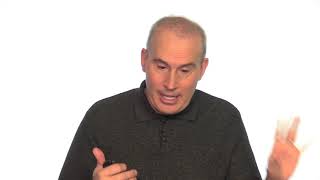
TJ Walker argues that natural hand movement is essential to public speaking. Rigid rules about gestures hurt you. Instead, use the same hands-on style you'd use talking with a friend: it reduces tension, improves your voice, and makes you look confident.
Chapters
I talked a little bit about hands in an earlier lecture. I want to go more in depth here because it really is such a huge, huge, in some cases, dominant part of your body language. And there's a lot of information out there about hands. There's a lot of complexity, a lot of misinformation. I want to cut through that and make life easy for you. Here's a little secret I'll share with you when I'm doing in person workshops, public speaking workshops and seminars. Typically, I tape someone right in the beginning of the morning, several times. I'll ask them tough questions, ask them to stand up and speak. Typically, they get nervous, they tense up, they hold their hands awkwardly, they freeze their hands, or they're at least much lower than usual. And then without turning the camera off, I'll turn the light off, I'll sit back, I'll drop the microphone on the floor, and I'll say, tell me, how'd that feel? And they'll say, oh, T.J. it felt awful. I didn't like that. I'm no good on camera. So we'll then watch the video, the formal part, and I'll ask them what they think. They'll typically say, well, T.J. i look a little scared, nervous, uncomfortable. And then I just ask them, how would you like to see somebody better than you, more comfortable than you, more confident? They think I'm going to show them video of some world class leader, Winston Churchill, Ronald Reagan? No, instead, I just show them video of themselves, where their hands are moving and their hands are expressive. Here's the dirty little secret most body language experts won't tell you. You don't need to learn how to do new things with your hands. What you need to do is to simply move your hands the way you do when you're relaxed and comfortable and talking to one friend about your favorite sporting event or music event or something you like doing. Because most people move their hands naturally when they're in a work situation, especially if it's a talk, a briefing, a presentation, a PowerPoint, a Skype video. We tense up. And once you stop moving your hands, you stop moving your arms. You tense your arms, you tense your shoulders, you tense your vocal cords. Next thing you know, you get this sort of tone of voice. See how my voice is more monotone now? My head's not moving, my face isn't moving, my body isn't moving. It sets off a negative chain reaction. So my recommendation is you want to move your hands again. You heard me say it before. Sorry if this seems Repetitive. Of course, it's theoretically possible someone could be doing this and being distracting. In real life, I find it doesn't really happen. So try to move your hands. Because the second you move your hands, if you are in a work situation and you're a little bit out of your comfort zone, you'll at least look more comfortable to your audience because you'll be doing the things that comfortable, confident people do when they speak. And this is also a problem when you're standing. Sometimes people hold their hands in front of them, fig leaf position. Or they put their hands behind them like they've been arrested and handcuffed. When you're speaking, you can't go wrong with moving your hands. Now there's a lot of bad information out there. People who say, well, never ever let someone see you point. So you have to like do this. Well, this looks really weird. Angela Merkel, the Chancellor of Germany, does this weird thing where she's holding her hands like this, which looks ridiculous. Nobody in real life is comfortable and relaxed ever held their hands like this. You don't go up to a friend at the workplace cafeteria the day after the Olympics and say, wow, did you see that great downhill racing last night? No, that's not how people move their hands. So don't need to worry about doing this. Doing this. I think it's baloney, this idea that your fingers can never point in a direction. Yeah, you probably don't want to be going like this. Maybe someone could see that as threatening. But again, in my experience, that's not what most people do. There are other body language experts who will tell you, well, you've got to narrow it and it has to be in this box. I find that's over complicated for most people. In most situations, what you're after is natural movement. If you do that, people will feel you're relaxed and comfortable. You'll feel more relaxed and comfortable. Your voice will be richer, more conversational, have greater range. Everything will be in sync and you won't look like you're acting and being phony and trying to have powerful body language. By the way, if you're going to be good at body language, you shouldn't ever look like you're trying to do something to have good body language. It should come across much more natural, non noticeable. But please keep in mind the hands. The hands really are key and you don't have to learn anything new, just do what you normally do with your hands.